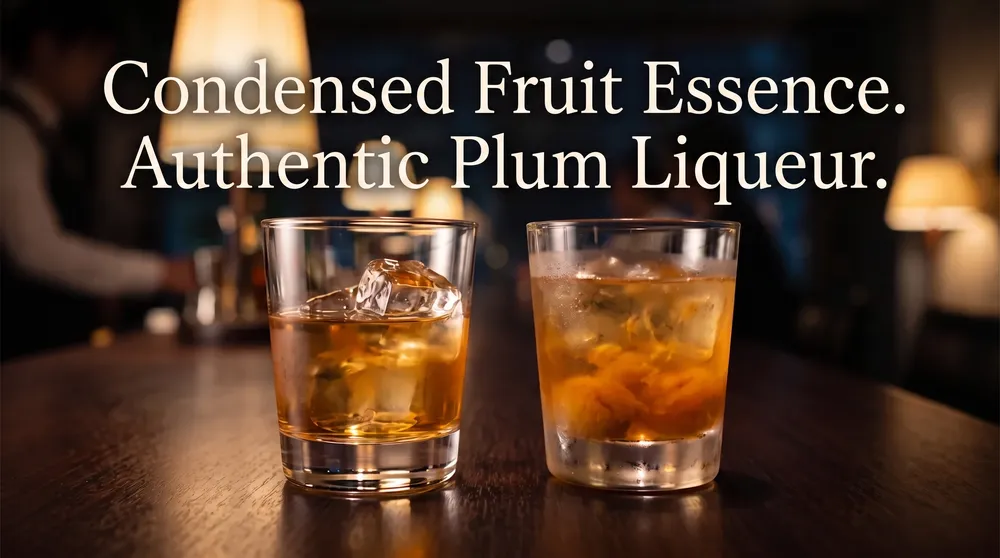
The English name gets it wrong twice.
It is not a wine. Nothing is fermented — whole fruit is steeped in a finished
spirit with sugar until the flavour moves across. It is a liqueur, in the strict sense.
And it is not a plum. Ume is Prunus mume, a small apricot, which
is why the taste is sharper and more perfumed than "plum" prepares you for.
Both corrections matter before you buy, because they change what you should expect in the
glass. After that, there is one word on the label that tells you whether the bottle is
worth the money.
Quick Reference: Reading the Bottle
| What to check | What it tells you |
|---|---|
| "Honkaku Umeshu" | Ume, sugar and alcohol only. No additives |
| Base spirit | Sake, shochu or brandy — three different drinks |
| "Aragoshi" | Crushed fruit left in. Thick, almost a dessert |
| ABV | Usually 8–20%. Lower is not weaker in flavour |
| ⚠ If the ingredients list includes acidulants, flavourings or fructose syrup, it is a sweetened commodity liqueur — fine as a mixer, not what this guide is about. | |
Two Words, Both Wrong
"Plum wine" is not a rough translation. It is two mistakes stacked, and each one sets up a wrong expectation.
Not a wine
There is no fermentation. Whole green ume are put into an already-finished spirit with sugar and left for months or years. The fruit gives up acid, aroma and a little colour; the alcohol was there before the fruit arrived.
That is the definition of a liqueur, and it explains the texture: umeshu is rounder and denser than a fruit wine, with the sugar and the acid holding each other up rather than the tannin-and-alcohol structure you get from fermenting.
Not a plum
Ume is Prunus mume — botanically a small apricot. Anyone who has eaten an umeboshi already knows it does not taste like a plum: the fruit is intensely sour and aromatic rather than sweet and juicy.
Ume is never eaten raw. It is always salted, dried, made into syrup, or steeped in alcohol — which is a fair clue about how sharp the fresh fruit is, and why alcohol suits it so well as a way of getting at the flavour.
What to expect instead, then: a clean sour-sweet balance with an apricot-and-
almond perfume, noticeably more acidic than a dessert wine, and a finish that is short and clean
rather than syrupy.
If a bottle tastes like sugar with fruit flavouring, that is not umeshu failing to be
good. That is a different product, and the next section tells you how to spot it before
you pay.
Why Japanese — One Word on the Label

In 2015 the Japan Spirits & Liqueurs Makers Association established a standard for
the term Honkaku Umeshu — "authentic umeshu."
To carry it, a bottle may contain only three things: ume, sugar and alcohol.
No acidulants. No flavourings. No colourings.
That is unusually useful, because it turns a taste judgement into a label check.
The mass-market alternative is made by adding acid to sharpen it, flavouring to make up for thin extraction, and high-fructose syrup to sweeten it cheaply. It is not fraudulent and it is perfectly drinkable in a highball — but it is a manufactured soft drink with alcohol in it, and it costs a third as much for good reason.
So the single best piece of advice for buying umeshu is: read the ingredients.
Three items, and you are holding the real thing. Five or six, and you are holding something
else.
Sake breweries make some of the best of it, because a good base spirit is half
the drink — which is why so many bottles worth buying carry the name of a brewery you may already
know for its sake.
The Base Spirit Decides Everything
Three bases are common, and they produce three genuinely different drinks from the same fruit. This is the choice to make deliberately.
| Base | Character | Drink it |
|---|---|---|
| Sake (nihonshu) | Softest and most aromatic. Rice sweetness underneath; lower ABV | Chilled, neat. Ice dilutes it |
| Shochu | The classic. Clean and neutral, so the fruit leads | On the rocks, or with soda |
| Brandy | Richest. Oak and dried fruit alongside the ume | Neat, as a digestif |
Sake-based is the most popular in Japan, and it is the one most likely to surprise someone who thinks they do not like umeshu — it is gentler, lower in alcohol, and reads much more like a delicate fruit liqueur than a sweet dessert drink.
Shochu-based is the reference version. A clean, near-neutral distillate contributes almost nothing of its own, which is exactly the point: everything you taste is ume.
A brewery making umeshu on its own sake is doing something specific: using a finished product as an ingredient, rather than buying neutral spirit. It costs more and it is the reason those bottles taste of something beyond the fruit.
Aragoshi, and the Fruit Liqueurs Beyond Ume
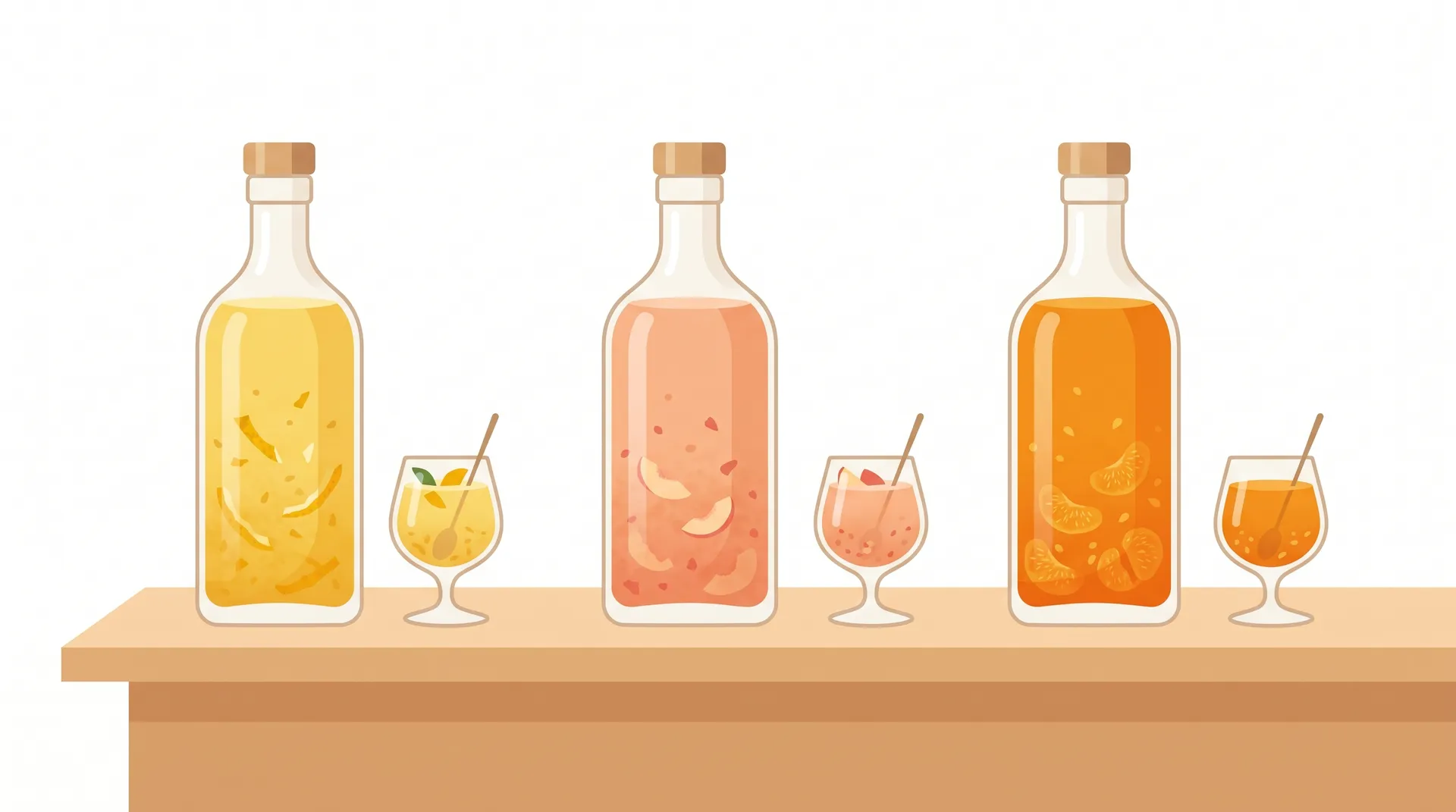
Aragoshi means coarsely pressed. Instead of straining the liqueur clear, the fruit is crushed and left in — so the bottle is cloudy, the texture is thick, and you can feel pulp on the tongue.
These drink more like a dessert than an aperitif, and they are the style that has travelled best. Poured over ice, or over vanilla ice cream, or shaken into something — the body carries flavour in a way a clear liqueur cannot.
The same technique is applied well beyond ume. Japanese fruit liqueurs now cover yuzu, peach, mandarin, strawberry and more, usually on a sake base, and the good ones taste startlingly like the fruit rather than like a syrup of it.
Shake the bottle
Aragoshi bottles separate — pulp settles and the top goes clear. That is normal
and not a fault.
Turn it gently before pouring. The first glass from an unshaken bottle is thin,
and the last one is sludge.
What to Buy
Umenoyado Aragoshi Umeshu — the one to start with
A Nara brewery founded in 1893, making its aragoshi umeshu
on its own premium sake and pressing it coarsely so the fruit pulp stays in.
12% ABV, thick, and unmistakably fruit rather than syrup.
Crucially, this is the premium umeshu that is genuinely easy to find in English-
speaking markets — stocked by specialist wine and spirits retailers across the US.
It took a silver medal at the International Wine & Spirit Competition in 2022.
- Base
- The brewery's own sake
- Style
- Aragoshi — cloudy, thick, pulp retained
- ABV
- 12%
- Availability
- Widely stocked in the US and Europe
- Price range
- $30–$45 for 720ml
Perfect for: A first bottle. Over ice, or poured over vanilla ice cream, which is not a joke.
Hakkaisan umeshu — a sake brewery's three answers
The Niigata brewery best known abroad for its sake makes three different
umeshu: one steeped in undiluted sake, and two in
its own rice shochu.
This is the clearest demonstration of the base-spirit point in one place. The
sake version is delicate and best served cold without ice; the shochu versions take ice
happily and let the fruit lead.
- Bases
- Undiluted sake (×1), rice shochu (×2)
- Sake version
- Chilled, no ice — dilution flattens it
- Shochu versions
- On the rocks
- Availability
- Good — Hakkaisan exports widely
- Price range
- $35–$60
Perfect for: Anyone who already drinks their sake and wants to understand what the base does.
Choya — the one you have probably already had
Choya is umeshu's ambassador abroad, and there is no point being sniffy about
it: it is on more shelves than everything else combined, and their better lines are honest
umeshu.
Read the range rather than the brand. Choya's additive-free bottlings are a
genuinely good introduction; the cheapest sweetened ones are the product this guide is
steering you away from. The ingredients list settles it either way.
- Availability
- The most widely stocked, by far
- Range
- From additive-free to heavily sweetened
- How to choose
- Three ingredients or walk away
- Note
- Choya state they use no acidulants, colourings or flavourings
Perfect for: Finding out whether you like umeshu at all, without ordering anything.
Why you cannot just order this from Amazon
Amazon does not sell spirits or liqueurs in the United States, so umeshu is bought from wine and liquor retailers instead — either a local shop or one of the specialist online merchants that ship within your state.
Wine-Searcher is the practical tool here: put the bottle name in and it lists who
has it near you. That is how the Umenoyado link above works, and it is a better route than any
marketplace.
The exception is the non-alcoholic version — Choya make an alcohol-free umeshu
soda, and because it is not alcohol, it ships like ordinary groceries.
Making it yourself: probably not, and here is why
Home-made umeshu is a genuine Japanese household tradition — green ume, rock sugar, a jar of
high-proof neutral spirit, and several months of patience.
The obstacle abroad is the fruit. It has to be hard, unripe green
ume, and the season is a few weeks in June. Prunus mume is barely grown outside
East Asia, and fresh fruit imports are restricted in most countries.
If you do find green ume — an Asian grocer, or a tree in your neighbourhood — the
ratio is roughly equal weights of fruit and rock sugar, covered with a neutral spirit of around
35% ABV or higher. Lower strength risks spoiling rather than steeping.
Serving, Pairing, and Bottles as Gifts
- Soda is the default and it is not the ceiling. One part umeshu to two or three of soda makes a superb aperitif — but a good bottle neat, slightly chilled, is a different and better drink.
- Do not put ice in a sake-based umeshu. It is already low in alcohol and delicate; dilution flattens it. Chill the bottle instead.
- Over vanilla ice cream. Particularly an aragoshi. This is the single most persuasive thing you can do with a bottle in front of a sceptic.
- Hot, in winter. Warmed gently, umeshu turns into something closer to a spiced fruit drink. Do not boil it.
- Pair it with salt and fat — cheese, cured ham, fried food, grilled skewers. The acidity does the work that a dry white wine would.
- It keeps. An unopened bottle improves for years; once opened, refrigerate and drink within a few months.
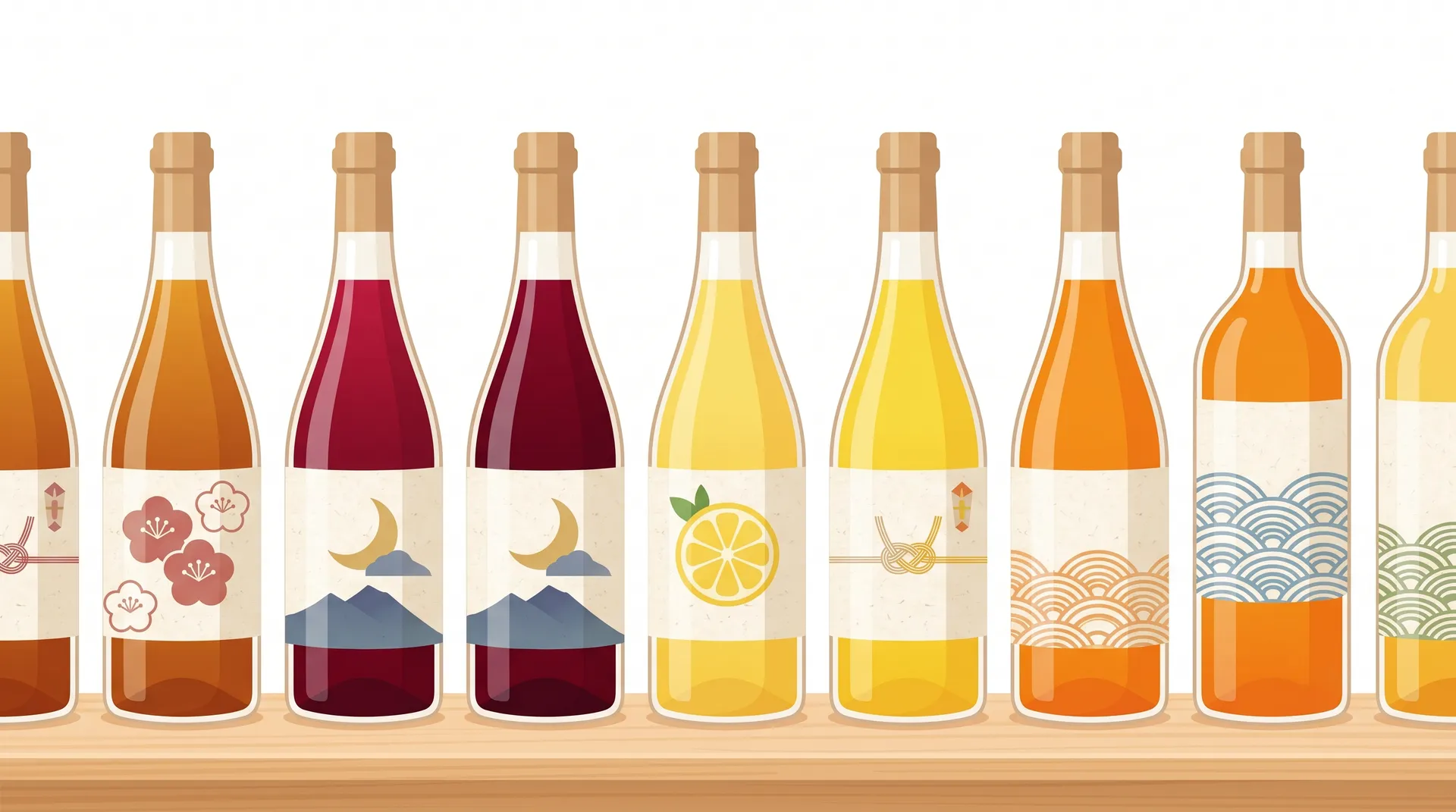
Umeshu makes an unusually good gift because the bottles are beautiful, the
contents keep indefinitely unopened, and almost nobody outside Japan already owns
any.
Aragoshi styles look best — the cloudy fruit in glass is the whole presentation.
A smaller 300ml bottle of something good beats a large bottle of something ordinary.
Frequently Asked Questions
Is umeshu really plum wine?
Neither word is right. It is a liqueur, not a wine — nothing is
fermented, the fruit is steeped in a finished spirit with sugar. And
ume is a small apricot, Prunus mume, not a plum.
Expect a sharp, aromatic sour-sweetness rather than a syrupy dessert wine.
How do I tell good umeshu from cheap umeshu?
Read the ingredients — there should be three: ume, sugar, alcohol. Since 2015 the
term "Honkaku Umeshu" has been a formal standard guaranteeing exactly that, with
no acidulants, flavourings or colourings permitted.
Anything with fructose syrup or added flavouring is a different product — fine in
a highball, not worth the shelf space otherwise.
Does umeshu expire?
Unopened, no — it improves. High sugar and alcohol make it very stable, and aged
bottlings are sold deliberately.
Once opened, refrigerate and finish within a few months. Not for safety, but
because the aromatics fade.
There is sediment in the bottle. Is that a problem?
No, and in an aragoshi bottling it is the product. Coarsely pressed
umeshu retains fruit pulp, which settles.
Turn the bottle gently before pouring. Unshaken, the first glass is thin and the
last is sludge.
I do not like strong alcohol. Can I still drink it?
Yes — this is one of the gentler things Japan makes. Sake-based umeshu is often
around 8–12% ABV, and with two or three parts soda it is weaker than most beer.
Warm it in winter, or pour it over ice cream. Neither of those tastes like a
spirit at all.
Is it safe during pregnancy or breastfeeding?
No. Umeshu is alcohol — typically 8–20% ABV, comparable to or stronger than wine
— and the low sweetness and fruit flavour make that easy to forget.
There is no safe amount of alcohol in pregnancy. Non-alcoholic ume syrup
(ume shiroppu) is made the same way with sugar alone and is genuinely good with soda, and
Choya bottle an alcohol-free umeshu soda that is easy to find.
Final Thoughts: Three Ingredients
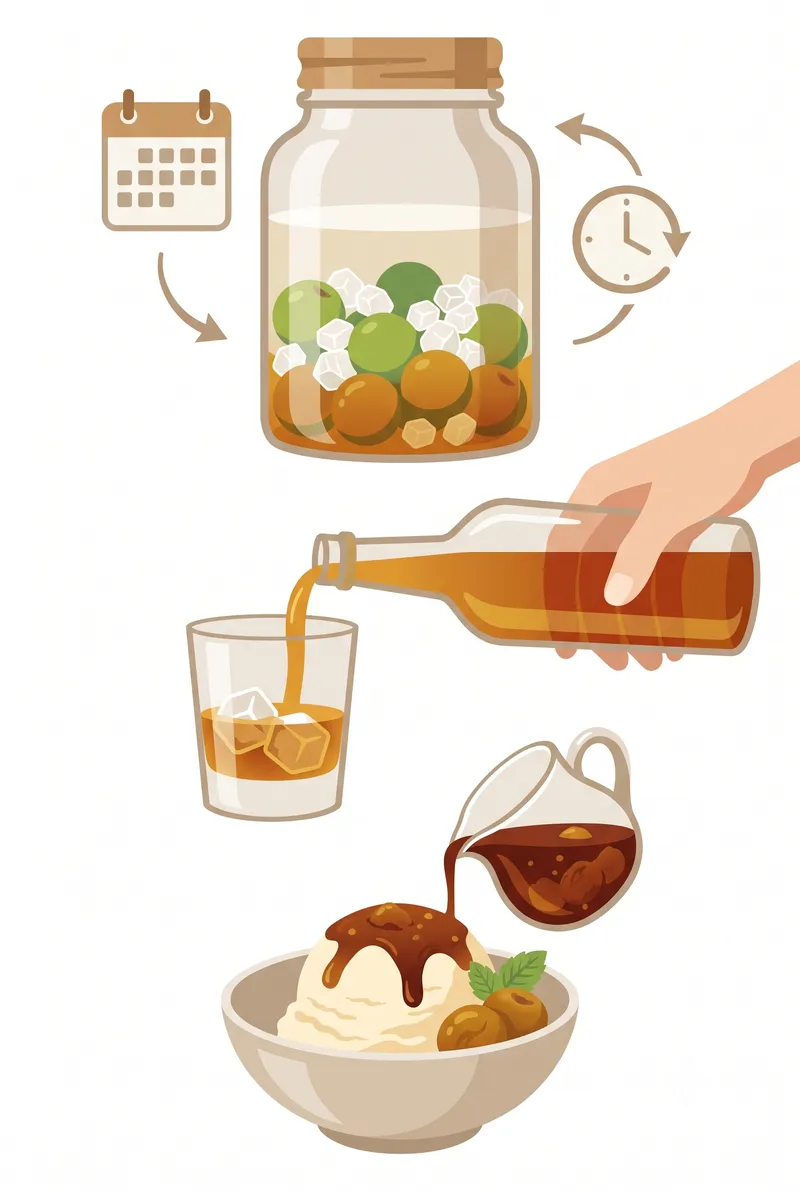
Forget "plum wine" entirely. It is an apricot liqueur made by steeping rather than fermenting, and once you stop expecting a sweet dessert wine the drink makes immediate sense.
Then buy on the ingredients list, not the label design. Three items — ume, sugar, alcohol — is the whole test, and since 2015 there has been a formal term for it. Bottles that need six ingredients are telling you why they are cheap.
Start with an aragoshi over ice, and try it once over vanilla ice cream before deciding what you think. That is not a novelty serve — it is the one that converts people.
Umeboshi: The Other Thing Ume Becomes
Sake Cups: How the Vessel Changes the Drink