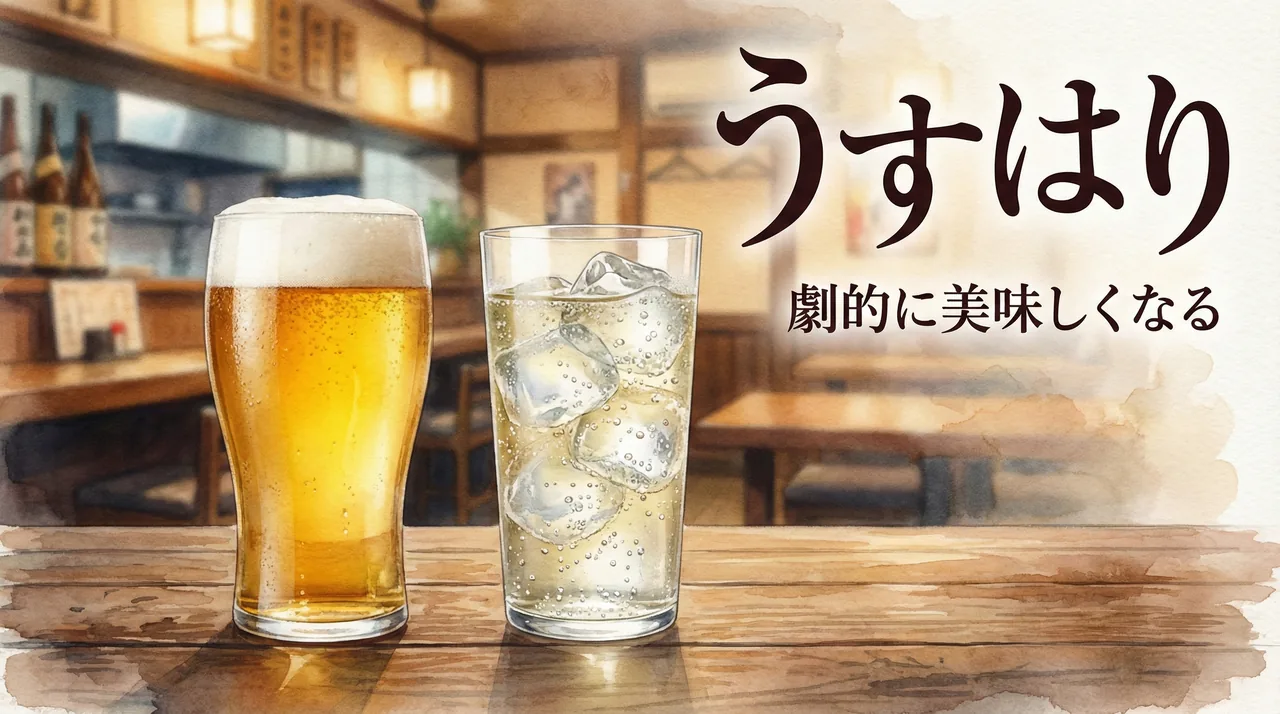
The same beer tastes different in a great bar than at home. Most people assume this is the
atmosphere. Some of it is. But a significant part is the glass.
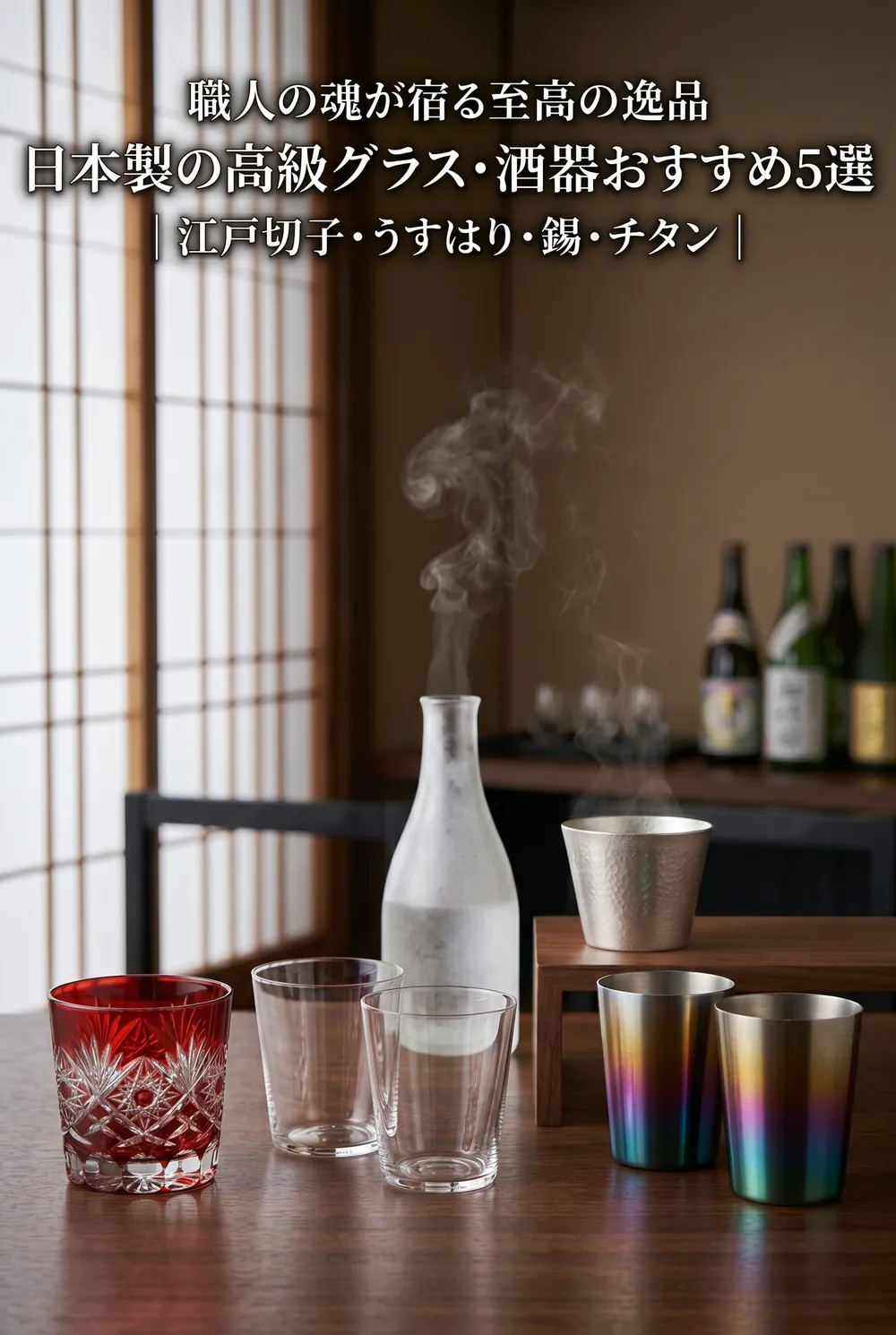
The micro-texture on the inner surface of a Tsubame-Sanjo beer tumbler causes CO₂ to nucleate
differently, producing denser, creamier foam that traps aroma and delays flatness. Nousaku's
100% tin sake cup contains no lead or impurities — the ionic properties of tin measurably soften
astringent notes in sake. A SUSgallery titanium vacuum tumbler maintains ice temperature for hours
without condensation. Edo Kiriko's hand-cut patterns transform incoming light into a visual
experience that the brain registers as part of tasting.
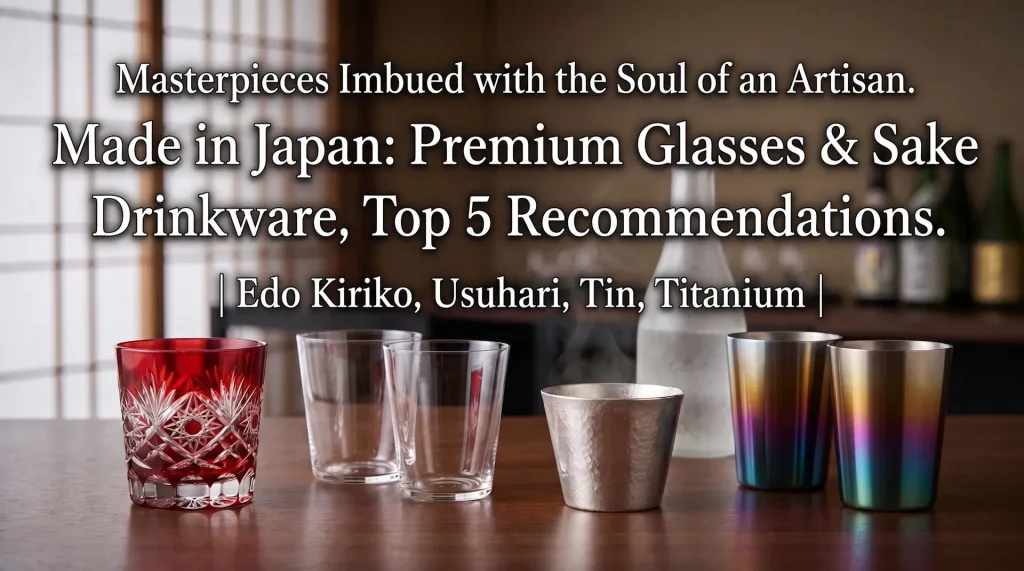
This guide covers the science of each material and four Japan-made drinkware picks across tin,
titanium, double-wall stainless, and cut glass.
Quick Reference: Material Effects on the Drink
| Material | Effect on the drink | Best drink |
|---|---|---|
| Tin (錫 / suzu) | Ionic effect removes astringent off-notes; sake and wine taste rounder, smoother | Sake, shochu, wine |
| Vacuum titanium | Ice stays for hours; no condensation; no metallic taste | Highball, whisky on the rocks, iced spirits |
| Mirror-polished stainless (double-wall) | Controlled inner surface nucleates beer foam into dense, creamy head | Beer |
| Edo Kiriko (cut glass) | No chemical effect — but the visual experience becomes part of the tasting event | Chilled sake, whisky water cut, sparkling drinks |
1. Why the Vessel Changes the Drink
Inner surface texture and carbonation
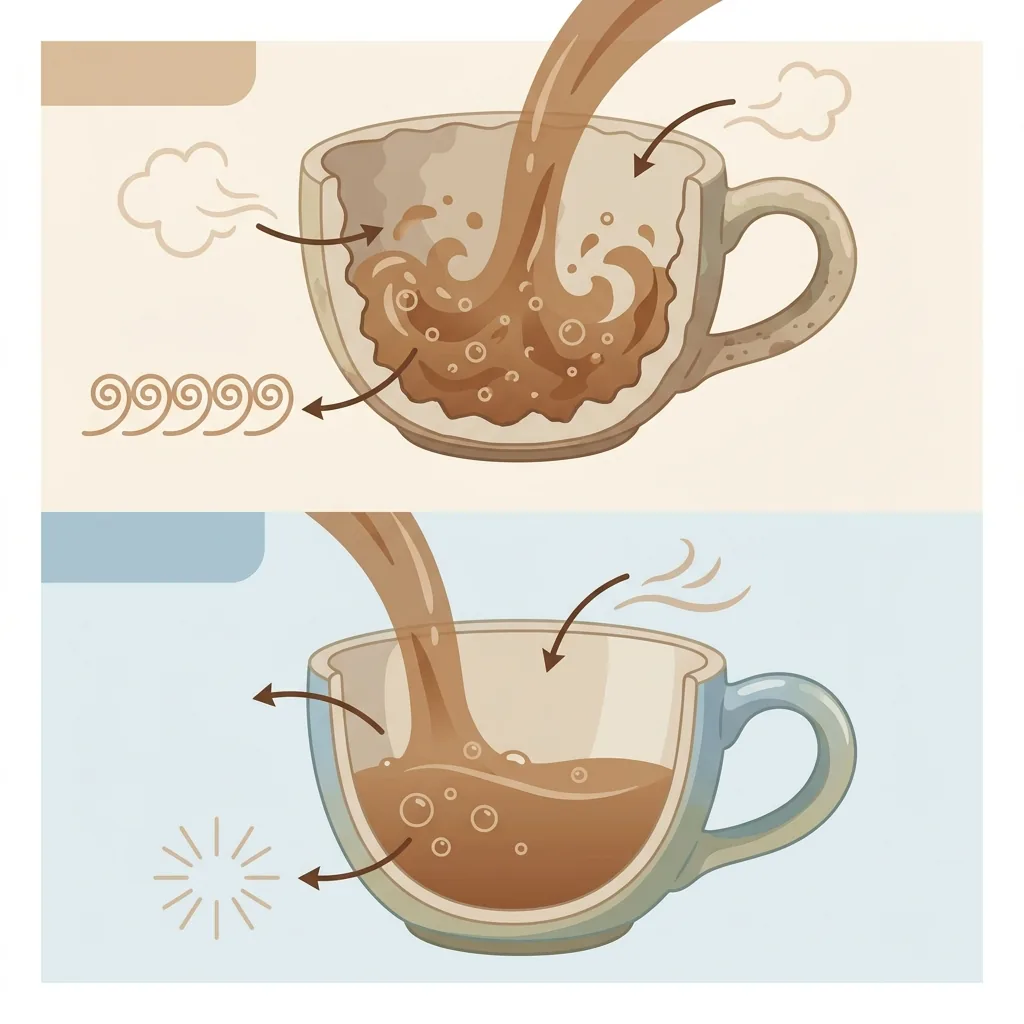
The inner surface of a drinking vessel determines how CO₂ behaves. Perfectly smooth glass surfaces have few nucleation sites — bubbles form slowly and the carbonation dissipates quickly. A surface with controlled micro-texture provides more sites, producing a faster, denser stream of smaller bubbles that collect as a compact, stable foam head. This is not cosmetic — the foam traps aroma compounds and delays the beer going flat. The Migakiya Syndicate's Tsubame-Sanjo polishers apply different finishing treatments to the top and bottom of the tumbler's interior to optimise these variables separately.
2. Choosing by Drink Type
Temperature control is the first variable
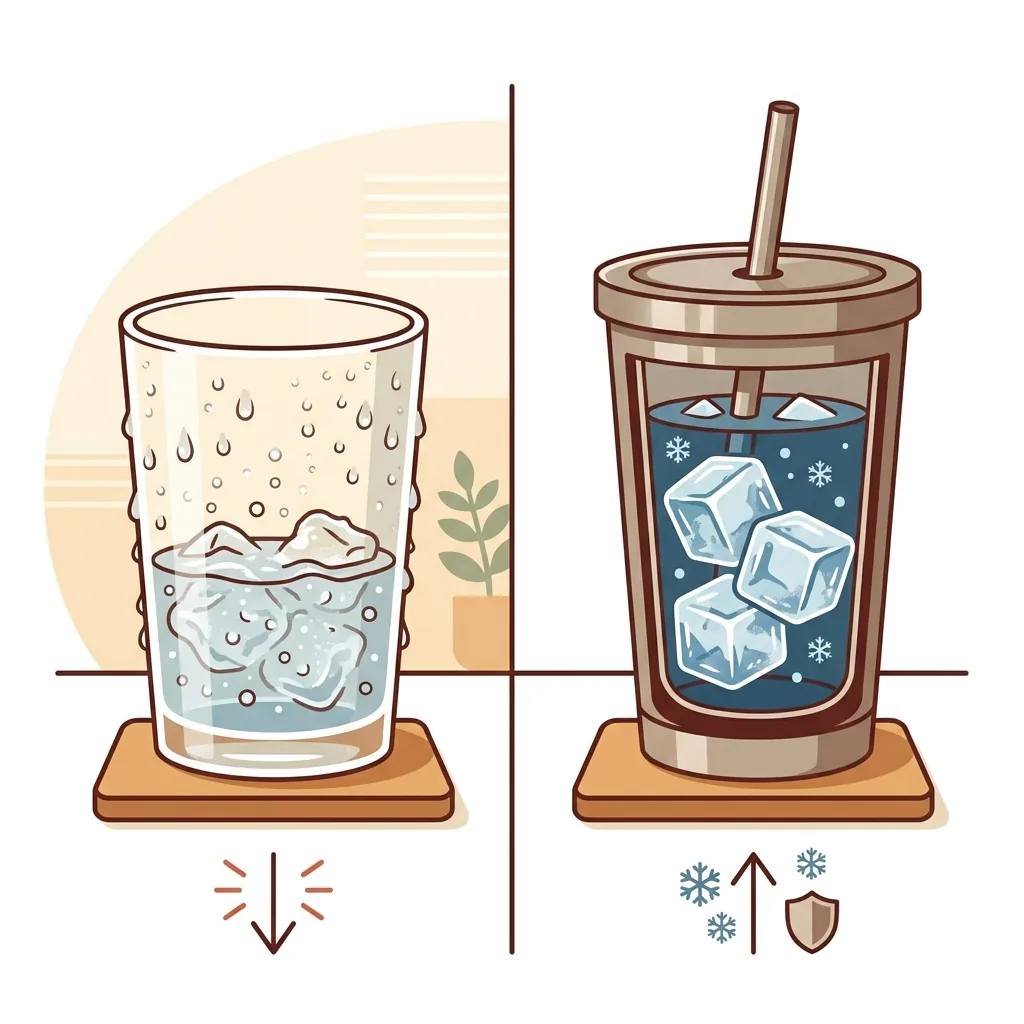
For drinks with ice (highball, whisky on the rocks, iced spirits): a vacuum double-wall
structure is essential. The vacuum layer between the inner and outer walls prevents heat
transfer — no condensation on the outside, ice that takes hours to melt rather than minutes.
The drink stays cold and undiluted through the glass.
For drinks you want to feel the temperature of — chilled sake, cold white wine, cold beer —
high thermal conductivity is the priority. Thin-walled glass or cold tin against the lips
transmits cold directly. A vacuum insulated vessel would be counterproductive here.
3. Tin: Nousaku Sake Cup
Nousaku (能作) has been casting in Takaoka, Toyama — Japan's metalworking capital — since 1916. Their tin products are cast from 100% pure tin: no lead, no antimony. This is important because the traditional tin alloy (pewter) often contains lead; Nousaku's food-safe purity certification distinguishes their products from lower-quality alternatives.
Tin's ionic interaction with liquid is the claimed mechanism for its taste effect. The scientific consensus is that tin ions in solution at food-safe concentrations don't produce a measurable taste difference. What does change is the cold-transmission quality: tin has high thermal conductivity, so a refrigerator-chilled tin cup feels distinctively cold against the lips in a way a ceramic or plastic cup doesn't. Additionally, tin is soft enough to bend by hand — Nousaku's cups can be shaped to fit individual lip profiles. This is genuinely unusual.
Nousaku Tin Sake Cup — Guinomi Set
100% food-safe tin, cast at the Takaoka foundry. The standard guinomi form — palm-sized, slightly flared rim — is shaped for the moment of drinking sake. Chill in the refrigerator for a few minutes before use: the high thermal conductivity of tin means the cup transfers cold immediately to the lips and hands. Flexible enough to gently reshape. The set format makes it a natural gift. Available on Amazon.com.
- Material
- 100% food-safe tin, cast in Takaoka, Toyama
- Best drink
- Cold sake; chilled shochu; cold white wine
4. Titanium & Stainless: SUSgallery & Migakiya Syndicate
SUSgallery TITANESS — Vacuum Titanium Tumbler
SUSgallery (株式会社S) is a Tsubame-Sanjo manufacturer that developed the technology to fold
titanium into a vacuum double-wall structure — a process considered impossible before they
achieved it. The visible crystalline surface pattern is titanium's natural oxidation under
controlled anodising conditions, not paint or coating. It doesn't chip or fade.
The vacuum layer provides the best insulation of any material in the tumbler category. Ice
placed in this tumbler at room temperature can last 4-6 hours under normal conditions. No
metallic taste — titanium is inert at food contact. No condensation. Used by APEC summit
organisers as a host gift. Available on Amazon.com.
- Material
- Vacuum double-wall titanium, made in Tsubame-Sanjo, Japan
- Best drink
- Highball; whisky on the rocks; any cold drink with ice
Migakiya Syndicate — Double-Wall Beer Tumbler
Migakiya Syndicate (磨き屋シンジケート) is a collective of Tsubame City metalworkers whose speciality is mirror polishing — among the most technically demanding surface treatments in precision metalwork. Their beer tumbler uses differential interior finishing: the upper portion retains a hairline texture to nucleate CO₂ into foam; the base is polished differently to encourage liquid circulation. Pour a standard can of beer with momentum and it produces a dense, creamy head that a standard glass cannot replicate.
- Material
- Mirror-polished double-wall stainless, made in Tsubame, Niigata
- Best drink
- Beer — specifically designed for beer foam quality
5. Cut Glass: Edo Kiriko
Edo Kiriko (江戸切子) is the cut glass tradition that developed in Tokyo during the Edo period. A layer of coloured glass is applied over clear crystal, then cut by wheel grinding through the colour to the clear beneath. The patterns — geometric, traditionally named (ya-rai diamond, kikko tortoiseshell, hoshi star) — catch light and reflect it through the body of the glass. No two pieces are identical: the cut is made by hand, by eye, and the colour-to-clear boundary varies with each grind.
The glass doesn't change the chemical composition of what you're drinking. The effect is visual and experiential: the way light interacts with a cut kiriko tumbler becomes part of the sensory context of the drink. This is not trivial — the brain processes what the eyes see as part of flavour perception. An Edo Kiriko tumbler makes drinking sake or whisky-with-water in a dim room a qualitatively different experience.
KAGAMI CRYSTAL — Edo Kiriko Tumbler
Kagami Crystal (株式会社カガミクリスタル) is among the oldest established Edo Kiriko producers, founded in 1934. Each piece is hand-ground by certified artisans. Their tumbler range includes traditional coloured-over-clear designs in the standard Edo Kiriko patterns. KAGAMI CRYSTAL has an official international shipping store. Authentic pieces — not the mass-produced imitations of the pattern that are common in tourist shops and on marketplace platforms.
- Material
- Crystal glass with colour overlay, hand-cut, made in Tokyo
- Best drink
- Cold sake; whisky with a little water; sparkling drinks — anything that benefits from visual presentation
6. Care for Each Material
Tin (Nousaku)
Soft sponge and mild dish soap only — never abrasive pads or scouring powder. Tin is soft enough to scratch visibly with a rough sponge. Rinse and dry immediately. Long-term: if darkening develops, baking soda dissolved in water, applied with a soft cloth, restores the original tone. The tin cup's malleability means you can gently reshape it if it gets bent — this is not a flaw to avoid, it's how it responds to use.
Titanium and stainless (SUSgallery, Migakiya)
Mild soap and water. The titanium anodised surface is permanent — it's a change in the metal's oxide layer, not a coating applied on top. Fingerprints on the surface are visible against the crystalline pattern; a quick wash with diluted dish soap removes them and restores the original colour response. Dishwasher: not recommended — the thermal cycling of dishwasher cycles can stress the vacuum seal over time.
Edo Kiriko glass
Hand wash only — dishwasher heat and pressure can crack the glass. Use warm water and a soft cloth. Avoid sudden temperature changes (no boiling water; no ice-cold water immediately after hot washing). Store individually rather than stacked — the cut patterns can catch and chip other pieces.
7. Frequently Asked Questions
Is tin safe for food and drink contact?
Yes — Nousaku's products are 100% food-safe tin. The key distinction is between tin (Sn, atomic number 50) and lead (Pb, number 82). Traditional pewter alloys often contained lead; Nousaku's pure tin contains none. Tin has been used for food vessels for centuries — tin-lined copper cookware, tin food cans — and is classified as safe at normal use concentrations by food safety authorities internationally.
Can I put hot drinks in the vacuum titanium tumbler?
Yes — the vacuum double-wall structure works equally for heat retention. The outer wall stays at near room temperature regardless of whether the contents are hot or cold. Hot coffee, hot sake, or hot tea in the SUSgallery tumbler maintains its temperature for extended periods without the risk of burning your hand on the outside.
Can I put the tin sake cup in the freezer?
Avoid the freezer — use the refrigerator instead. At extreme low temperatures (well below freezing), pure tin can undergo a structural phase change known as "tin pest," causing the metal to become brittle and crumble. This requires extended exposure to temperatures around -30°C or lower — far beyond normal freezer temperature — but the precaution is worth noting. A few minutes in the refrigerator is sufficient to bring tin to a satisfying chill via its high thermal conductivity.
Are these drinkware items dishwasher-safe?
None of the items in this guide are dishwasher-safe. Edo Kiriko glass can crack under dishwasher heat and pressure. Vacuum-insulated pieces (SUSgallery, Migakiya) can have their vacuum seal degraded by repeated dishwasher cycles. Tin can warp. All four items are hand-wash items — which is also why they're treated differently and maintained appropriately rather than run through an industrial cleaning cycle.
Does the Edo Kiriko pattern actually affect the taste?
Not chemically — the glass doesn't interact with what you're drinking. What changes is the sensory context. Research in neurogastronomy (the study of how the brain constructs flavour perception) consistently shows that visual input — the colour of the vessel, the visual complexity of the glass, the way light behaves around the drink — modulates how flavour is experienced. A drink in a beautiful glass isn't chemically different, but the perceived experience is measurably different for most people.
Are these good gifts?
Among the most universally well-received gifts in the Japanese craft category. Drinkware is used regularly — unlike decorative objects, it earns its place daily. The Nousaku tin set works well for anyone who drinks sake or wine. The SUSgallery tumbler is appropriate for whisky or cocktail drinkers. Edo Kiriko is typically the premium gift choice — it carries cultural weight alongside its aesthetic quality.
Final Thoughts: Better Equipment for the Same Drink
The drinks themselves don't change. What changes is the context in which you consume them —
temperature maintenance, foam structure, visual experience, the physical quality of the
vessel against your lips and hands.
Each of the four picks in this guide does something specific and measurable. The Nousaku
tin cup transmits cold. The SUSgallery tumbler holds it. The Migakiya Syndicate tumbler
makes foam. The Edo Kiriko glass makes light part of the experience.
Buy the one that matches the drink you're already committed to improving.
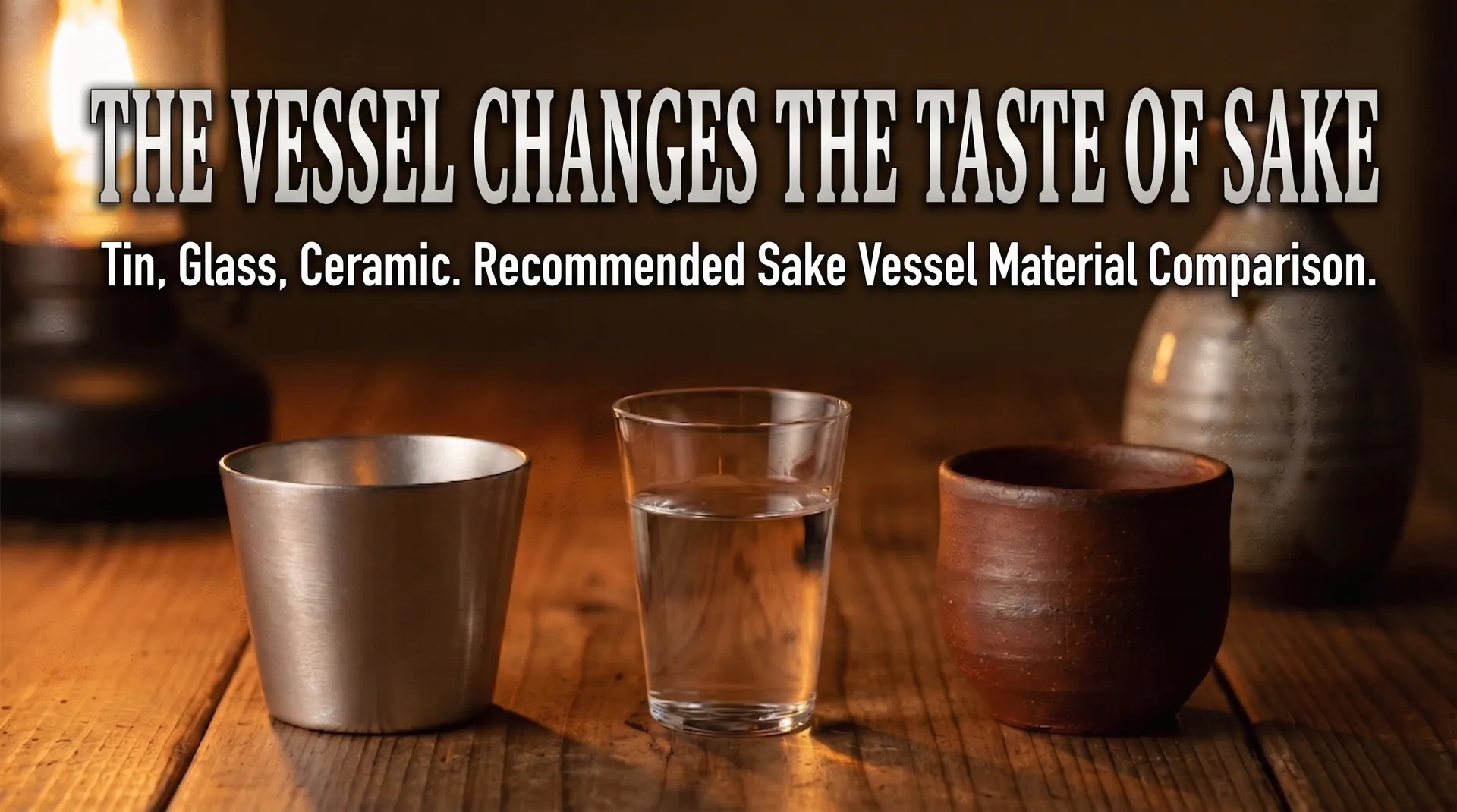
Japanese Sake Cups: Material Comparison — Tin, Usuhari Glass & Ceramic

Japanese Whisky Gift Guide: 3 Brands You Can Actually Buy