What image comes to mind when you hear "kokeshi"?
"That slightly unnerving doll sitting on a shelf at my parents' house?"
If so, the kokeshi boom happening right now might genuinely surprise you.
Japanese folk crafts are experiencing a passionate revival — celebrated globally as "Mingei" (民芸, folk art) —
embraced by designers, artists, and a new generation of admirers who see them as serious art.
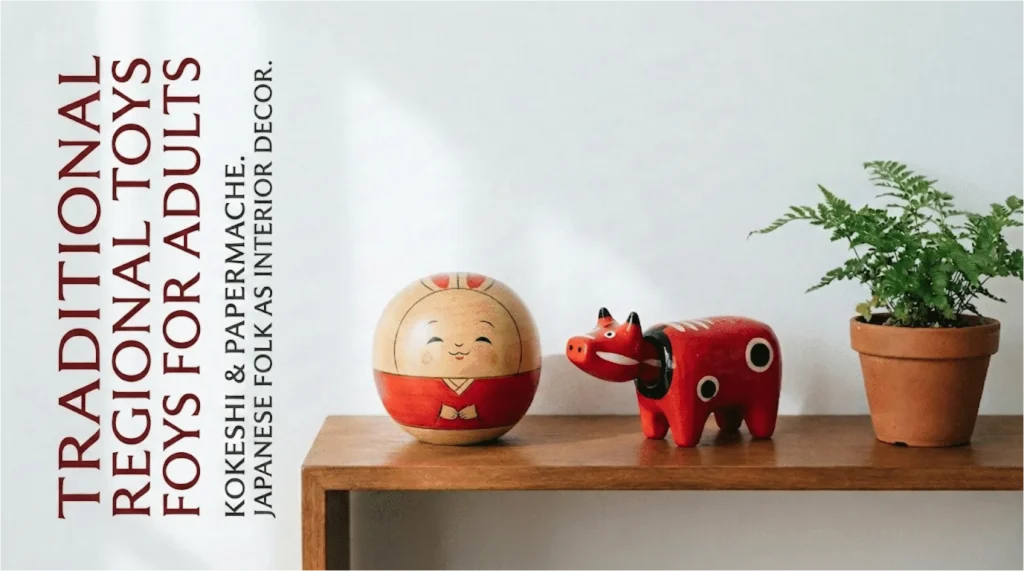
The charmingly round creative kokeshi from Gunma. The bobble-headed Aizu aka-beko (red bull) that
sways at a touch.
These are no longer just souvenir shop trinkets — they've evolved into modern art pieces that sit
beautifully alongside Scandinavian design.
This guide introduces the world of Japanese folk toys as interior objects for adults — small companions that catch
your eye and quietly warm the room.
Series: This article is part of the "Savoring (Coffee, Sake & Culture)" collection.
Quick Reference: Kokeshi Styles at a Glance
| Style | Origin | Head Shape | Body Character |
|---|---|---|---|
| Miyagi (Tsuchiya) | Tsuchiya Onsen, Fukushima | Round, slightly large | Slender and straight; chrysanthemum motif |
| Yamagata (Togatta) | Togatta Onsen, Miyagi | Flat and wide | Stout and stable; chrysanthemum & diamond pattern |
| Iwate (Naruko) | Naruko Onsen, Miyagi | Fitted/squeaky head | Distinctive lathe-turned ring pattern |
| Creative (Sosaku) | Nationwide | Round, stylized / chibi proportions | Contemporary designs and colors |
1. From Souvenir to Art | The Mingei Revival
Why are old Japanese toys suddenly feeling so fresh? The answer is in the purity of their design.
The Origin of "Kawaii" — Made by Anonymous Artisans
The folk art philosophy championed by Soetsu Yanagi (Yanagi Muneyoshi) resonates directly with modern product
design sensibilities.
Simple forms made from local wood and paper, crafted as wishes for a child's healthy growth.
Bold colors. Exaggerated, expressive faces.
These are the roots of the global "Kawaii" phenomenon — and they carry a visual power that feels utterly at home
in a contemporary room.
2. Kokeshi | Traditional vs. Creative Styles
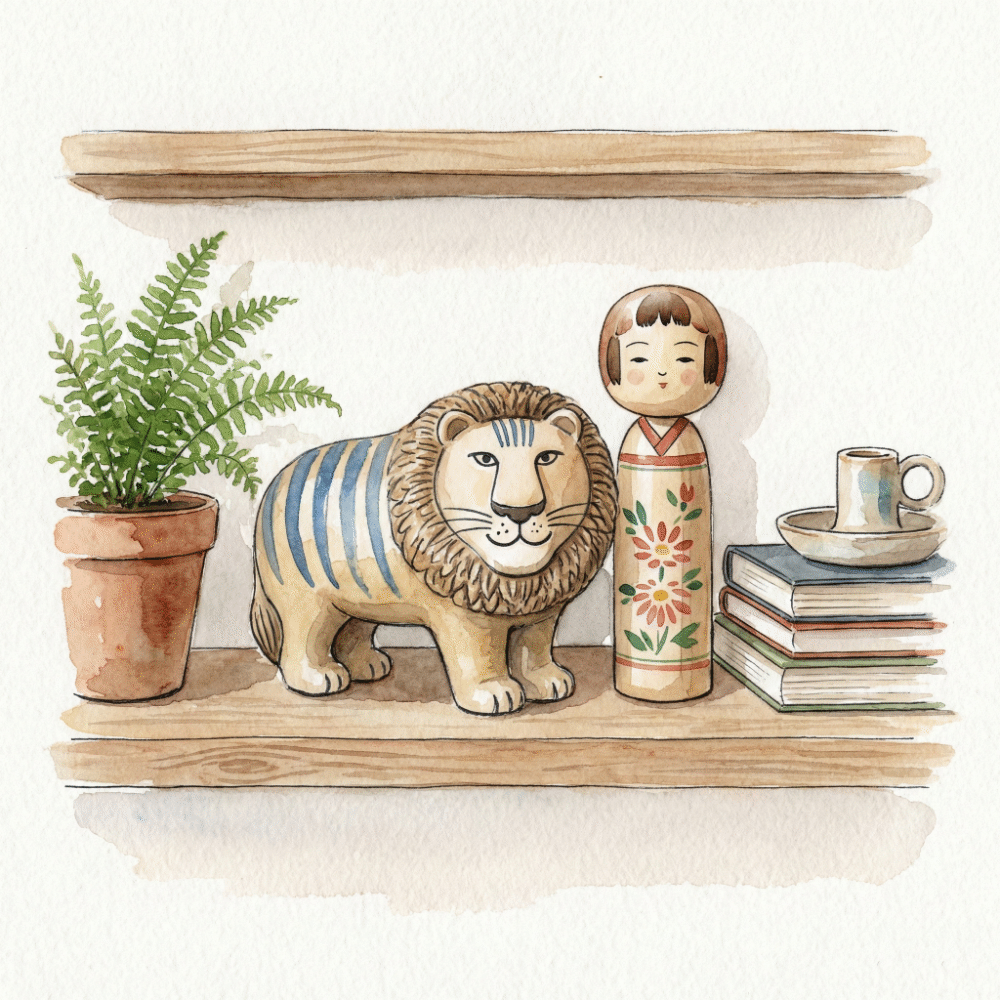
Kokeshi fall into two broad categories: "traditional kokeshi" (dentou kokeshi), made in the Tohoku region for centuries, and "creative kokeshi" (sosaku kokeshi), free-form contemporary interpretations.
Usaburo Kokeshi
Like a little dumpling — the face of modern kokeshi.
The defining name in creative kokeshi, made in Hanto village, Gunma Prefecture.
Unlike the traditionally slender silhouette, Usaburo kokeshi have oversized, rounded heads in a two-headed
chibi proportion.
The natural wood grain finish and the gentle bowl-cut expressions have won fans worldwide.
Frequent character collaborations (Miffy, Doraemon and more) make these the perfect starting point for anyone
new to kokeshi.
3. Papier-Mâché (Hariko) | Aizu Aka-beko & Inu-hariko
Where kokeshi are carved from wood, hariko (張り子) folk toys are built from paper — layers of washi pasted over a mold, dried, and then hollowed out.
Nozawa Mingei Aka-beko
A nodding guardian spirit — the beloved red bull of Aizu.
A folk toy from the Aizu region of Fukushima Prefecture.
Its all-red body with black spots and the gentle bobbing head motion at the slightest touch are its defining
charms.
Long treasured as a talisman against illness, the aka-beko is finding new appreciation among modern workers as
a desk companion that breaks the tension of a long workday.
It's hollow and remarkably light — perfectly safe even on a high shelf.
4. The Modern Folk Toy | Nakagawa Masashichi & BEAMS JAPAN
Select shops and lifestyle brands are paying close attention to the design language of Japanese folk crafts.
A wave of products has emerged that honor traditional roots while fitting naturally into contemporary living.
The New Face of Japanese Gifts
Nakagawa Masashichi Shoten:
Through their "Nihonichi" brand, they curate folk-toy-inspired lifestyle goods from around Japan.
Their ceramic "mikuji kazari" fortune ornaments — each hiding a fortune slip inside — are almost impossible to
stop at just one.
BEAMS JAPAN:
Curating folk art through a fashion lens.
Special-edition daruma in gold, silver, and other unexpected colors turn traditional lucky charms into striking
interior accents.
5. Displaying Kokeshi with Scandinavian Décor
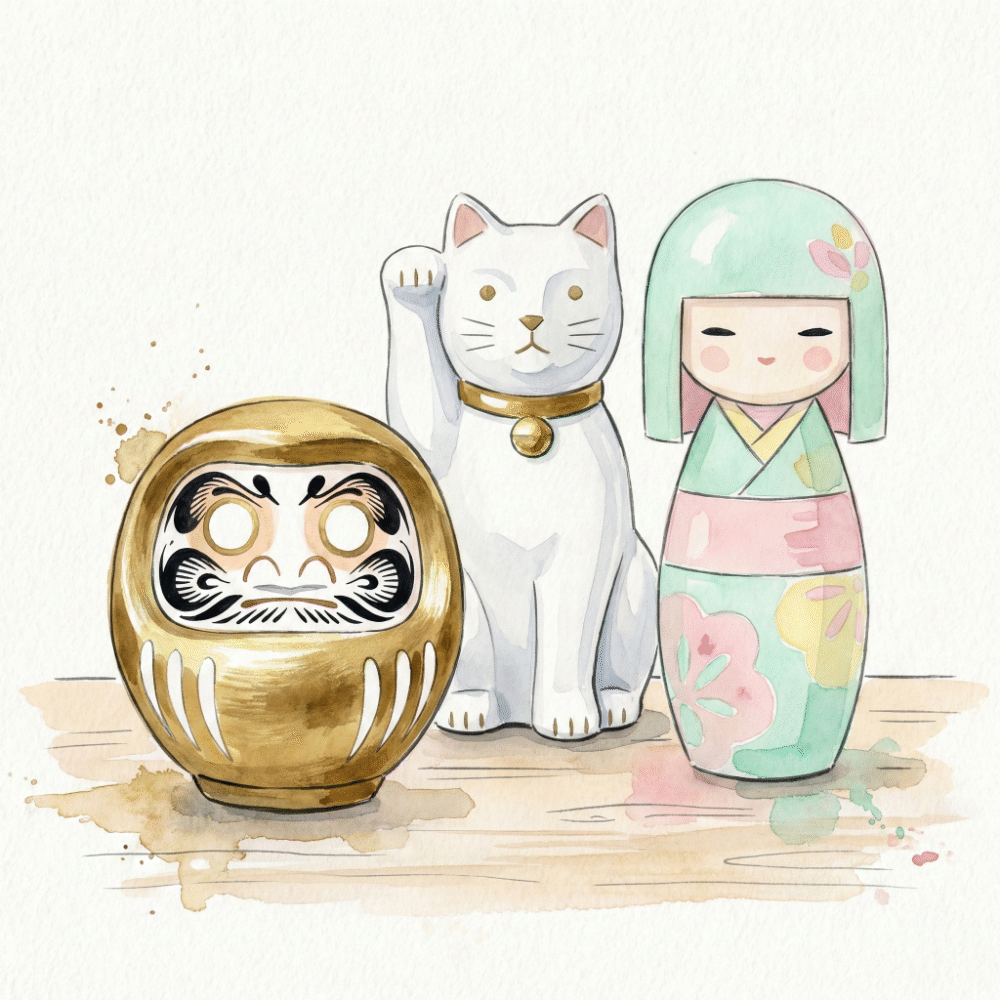
The key to displaying folk toys in a modern home is "negative space" and "pairing."
The "No More Than Three" Rule
Too many pieces in one spot and it starts to look like a souvenir shop.
The sweet spot is one to three carefully chosen pieces displayed with room to breathe.
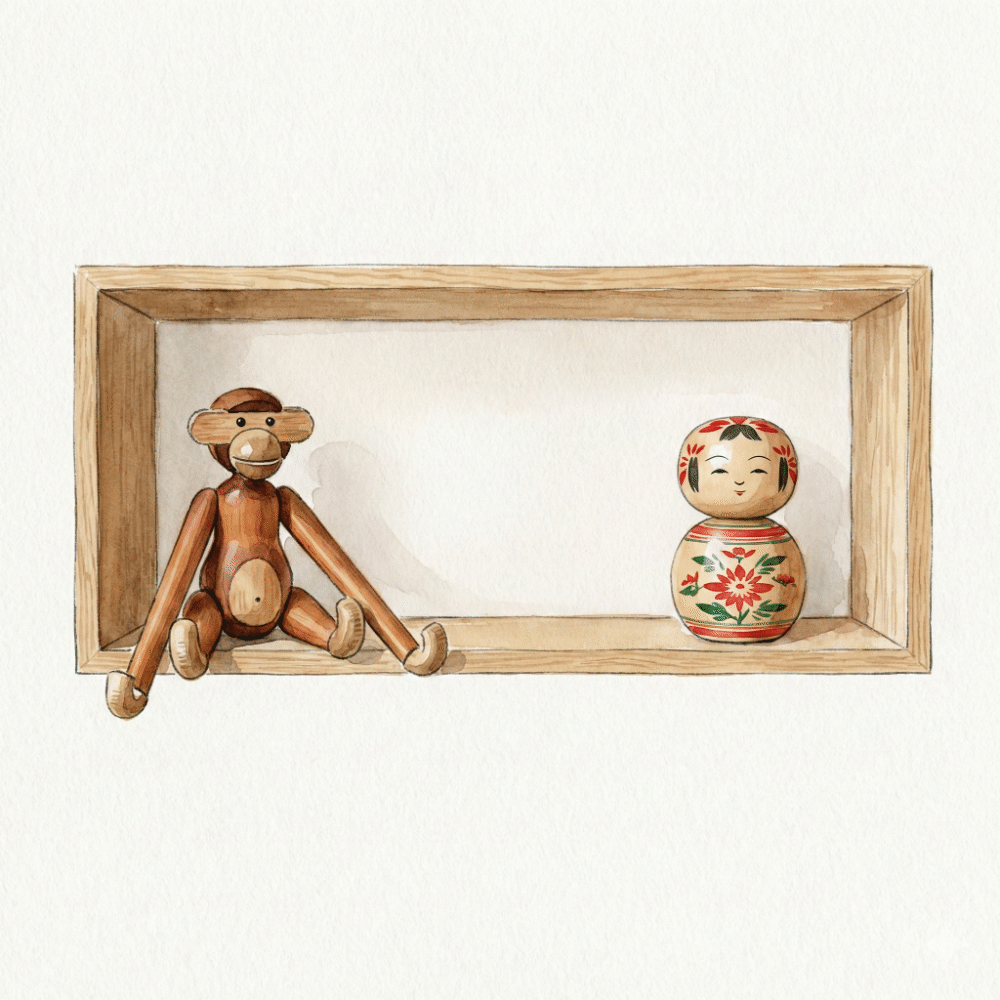
Kokeshi and hariko pair especially well with Scandinavian objects — Lisa Larson figures, Kay Bojesen
animals.
The shared warmth of natural wood and the shared language of stylized, expressive forms means they sit side by
side without looking forced.
6. Collecting in Miniature: Capsule Toy Folk Figures
No space for a full-size piece? The world of capsule toy (gacha) folk figure miniatures is exactly for you.
Kaiyodo's Extraordinary Craft in the Palm of Your Hand
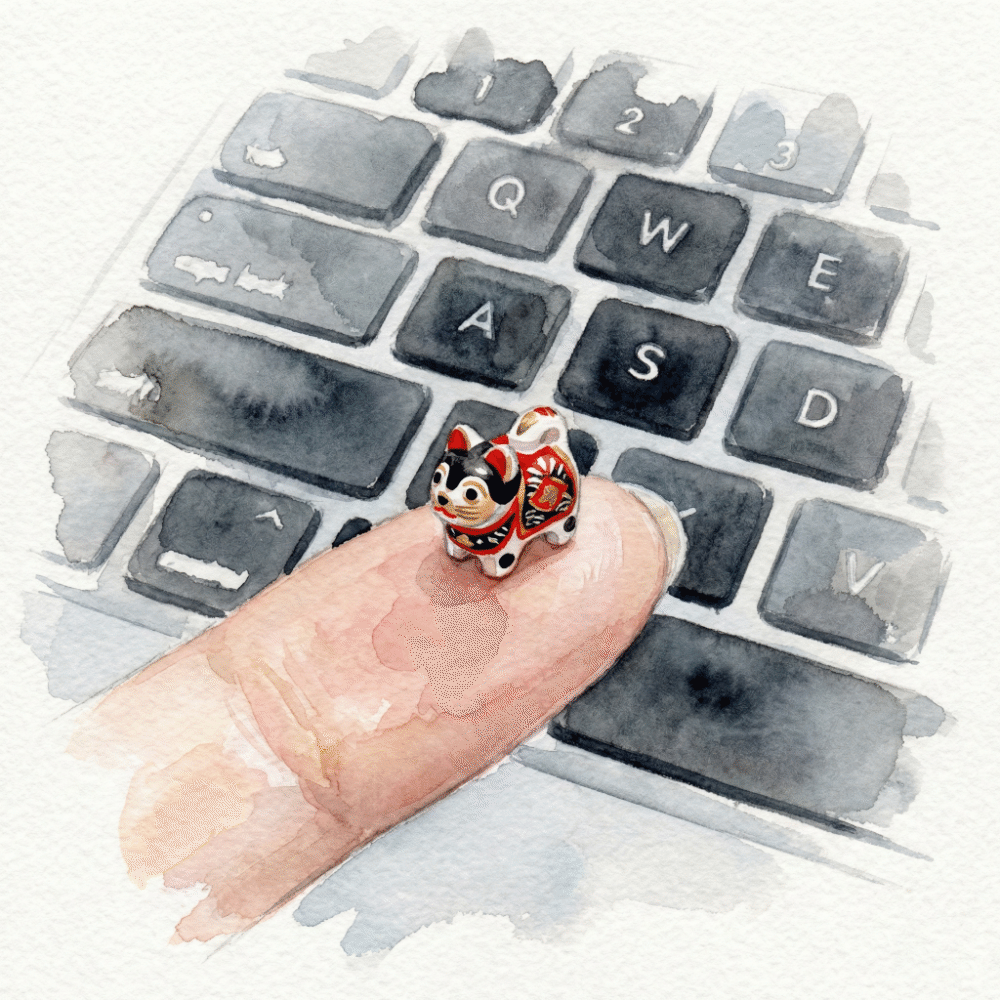
Series like "Japan's Regional Folk Toys in Miniature" recreate beloved pieces at just a few centimeters — with
faithful textures and weathered paint finishes worthy of an adult collector.
Perch one on the rim of a plant pot, or line them up next to your monitor. It's a quiet, playful way to bring
Japan's living traditions into the small spaces of your everyday life.
7. Lucky Charm Meanings & Gift Ideas
Every Japanese folk toy carries a specific wish or meaning.
Knowing the story makes the gift that much more personal.
Key Meanings at a Glance
- Kokeshi: Recovery, fertility, blessings for children's growth (originated as onsen resort souvenirs).
- Aka-beko: Protection against illness, household safety, perseverance.
- Inu-hariko (dog papier-mâché): Safe childbirth, protection for children (dogs are symbols of easy delivery).
- Daruma: Resilience ("fall seven times, rise eight"), wish-making, good health.
- Maneki-neko: Right paw raised = money luck; left paw = attracting people / customers.
Gifting an inu-hariko at a baby shower or a maneki-neko at a business opening — with the story attached — is the most meaningful way to give.
Usaburo Kokeshi — Daruma of Happiness
A daruma-shaped kokeshi that brings warmth just by looking at it.
One of the most beloved pieces in the Usaburo kokeshi lineup — a daruma-form kokeshi.
The gentle natural wood grain coloring and the ever-smiling expression create a feeling of ease and warmth for
anyone who sees it.
A "good fortune" interior piece ideal as a housewarming gift or a present for international friends.
Nozawa Mingei — Aizu Hariko Aka-beko
A nodding guardian — the protective spirit of Aizu, beloved for 400 years.
A traditional papier-mâché doll made in the Aizu region since the 17th century.
The gentle, irresistible bobbing head has an almost magical ability to ease tension and bring a smile.
Newly valued as a thoughtful gift that wishes good health on the people you care about.
Hariko Inu-hariko (with Den-den Daiko drum)
A timeless wish for safe birth and happy childhood — the classic baby gift.
Dogs have long been associated with easy delivery and the protection of children.
A dog-shaped hariko wearing a bamboo sieve (zaru) combines the characters for "bamboo" (竹) and "dog" (犬) to
form something resembling "smile" (笑) — a wish for a home full of laughter.
Light and paper-made, it fits beautifully in a child's room as well.
Takasaki Daruma (Color Daruma)
Set your intention, ink one eye — your partner for achieving goals.
Gunma Prefecture produces more daruma than any other region in Japan.
Beyond the traditional red, color daruma in gold (wealth), black (business success), and pink (love) have
become popular for their versatility as interior pieces.
A wonderful gift for anyone tackling an exam, launching a new venture, or setting out on a challenge.
Seto-yaki Maneki-neko
Inviting fortune and people — a classic lucky charm in sleek ceramic.
From Seto City, Aichi Prefecture — one of Japan's two great maneki-neko production centers.
A slender, refined silhouette and clean contemporary design set this apart from the typical tourist
version.
Perfect for a shop entrance blessing or for welcoming good connections and happiness into your home.
8. Frequently Asked Questions
I want to part with an old kokeshi. How should I dispose of it?
A shrine or temple "doll memorial" (ningyo kuyo) is the respectful approach.
It feels wrong to throw away a doll with a face. Check whether a nearby shrine or temple accepts dolls for
ceremonial disposal (kuyo).
If you must put it in the regular trash, it is considered respectful to wrap the face in white cloth or paper,
sprinkle a little salt over it, and offer a quiet word of gratitude before letting it go.
The color on my kokeshi has faded. Can I repaint it?
Repainting yourself is difficult and not recommended.
Traditional kokeshi are finished with a wax coating over artist's pigments — attempting to paint over the top as
an amateur is unlikely to give satisfying results.
The best approach is to enjoy the fading as natural patina, and keep the piece away from direct sunlight to
prevent further discoloration.
How do I care for a hariko (papier-mâché) piece?
Never use water — dry-dust only.
Hariko is made from paper and paste, so contact with water causes warping and paint bleeding.
When dust accumulates, brush it off gently with a dry soft-bristle brush or a feather duster.
Direct sunlight will cause fading, so avoid placing hariko near windows.
My kokeshi fell and the head snapped off. Can it be repaired?
Wood glue works well for this.
Apply wood adhesive to both broken surfaces, press firmly together, and leave to cure. It will hold.
If the break line bothers you, filling it with a kintsugi kit and gilding the join turns the repair into something
genuinely beautiful.
Are kokeshi a good gift for someone from overseas?
Very much so — they're consistently well-received.
Creative kokeshi like Usaburo's are especially popular: the form is playful and unique, the wood grain warmth
reads as distinctly Japanese, and the word "Kokeshi" is increasingly recognized internationally.
They're light, sturdy, and easy to pack — ideal as a souvenir.
Should I choose a traditional or creative kokeshi?
It depends on what you're looking for.
Traditional kokeshi carry the lineage of Tohoku craftspeople and offer a deep folk art aesthetic — ideal for
someone who appreciates craft history.
Creative kokeshi (like Usaburo) have a contemporary design sensibility that fits more easily into modern rooms and
makes a great first purchase or gift.
The most practical tip: match the piece to the atmosphere of the room where it will live.
Final Thoughts: A Small Guardian for Your Room — One That Catches Your Eye and Warms Your Heart
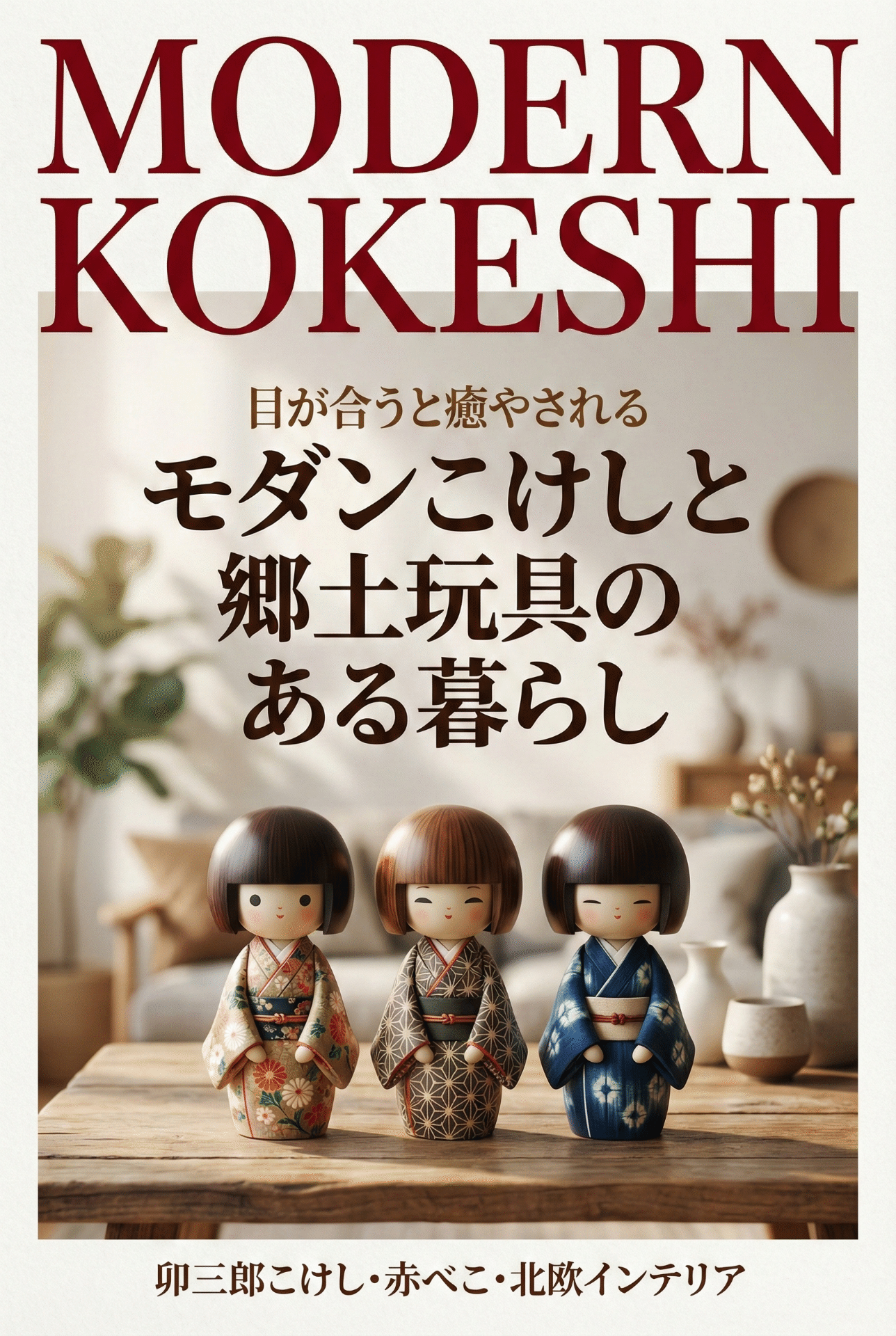
They have no clever function. They don't light up or talk.
And yet kokeshi and folk toys have an inexplicable gravitational pull.
It's because every hand-painted face holds the warmth of the person who made it.
The quiet reassurance you feel when your eyes happen to meet theirs — that wordless comfort is something nothing
else can replace.
One piece of Japanese "Kawaii" in a modern interior.
Why not welcome a small guardian into your home?
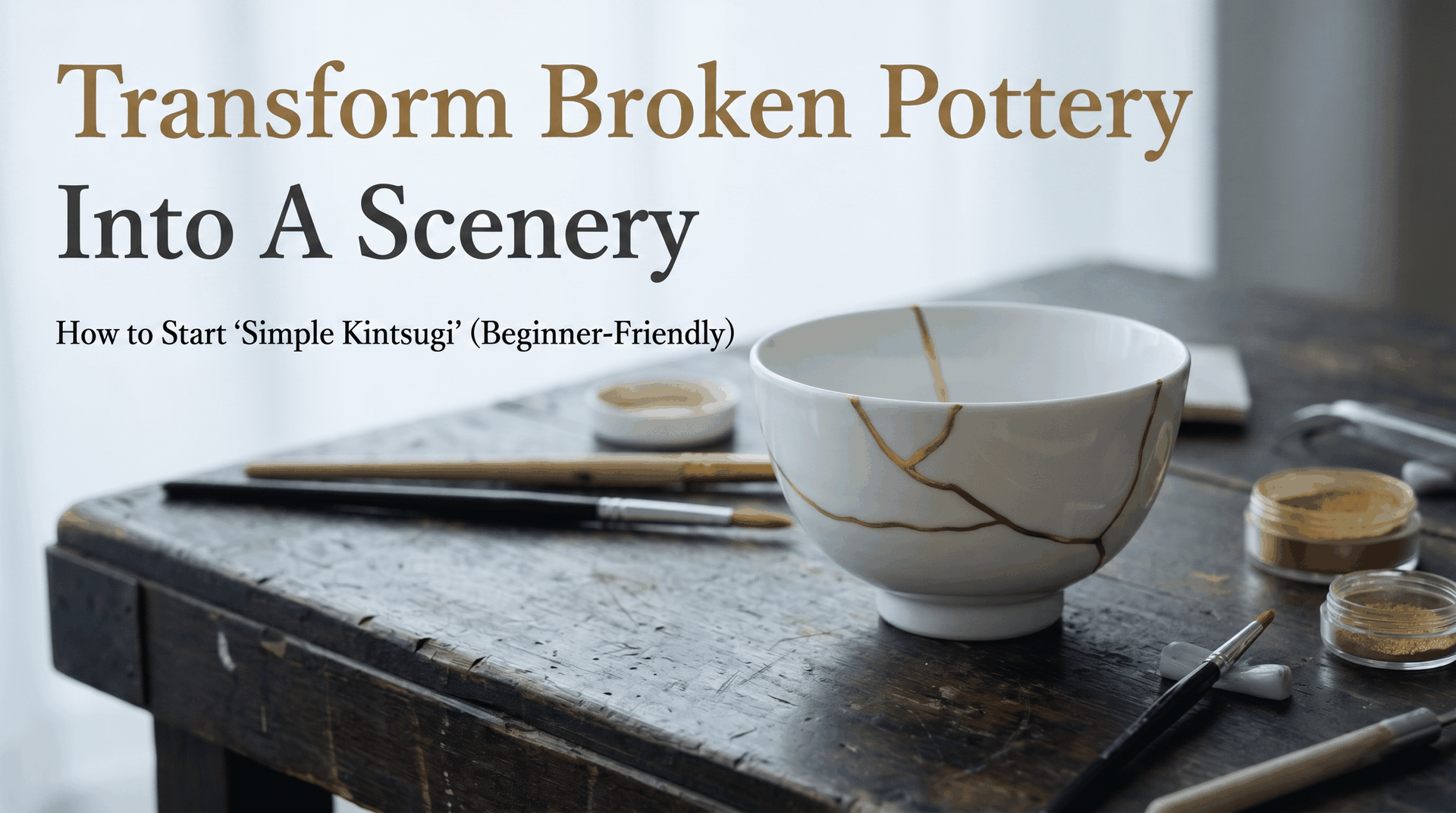
Best Kintsugi Kits | The Art of Repairing Broken Ceramics with Gold
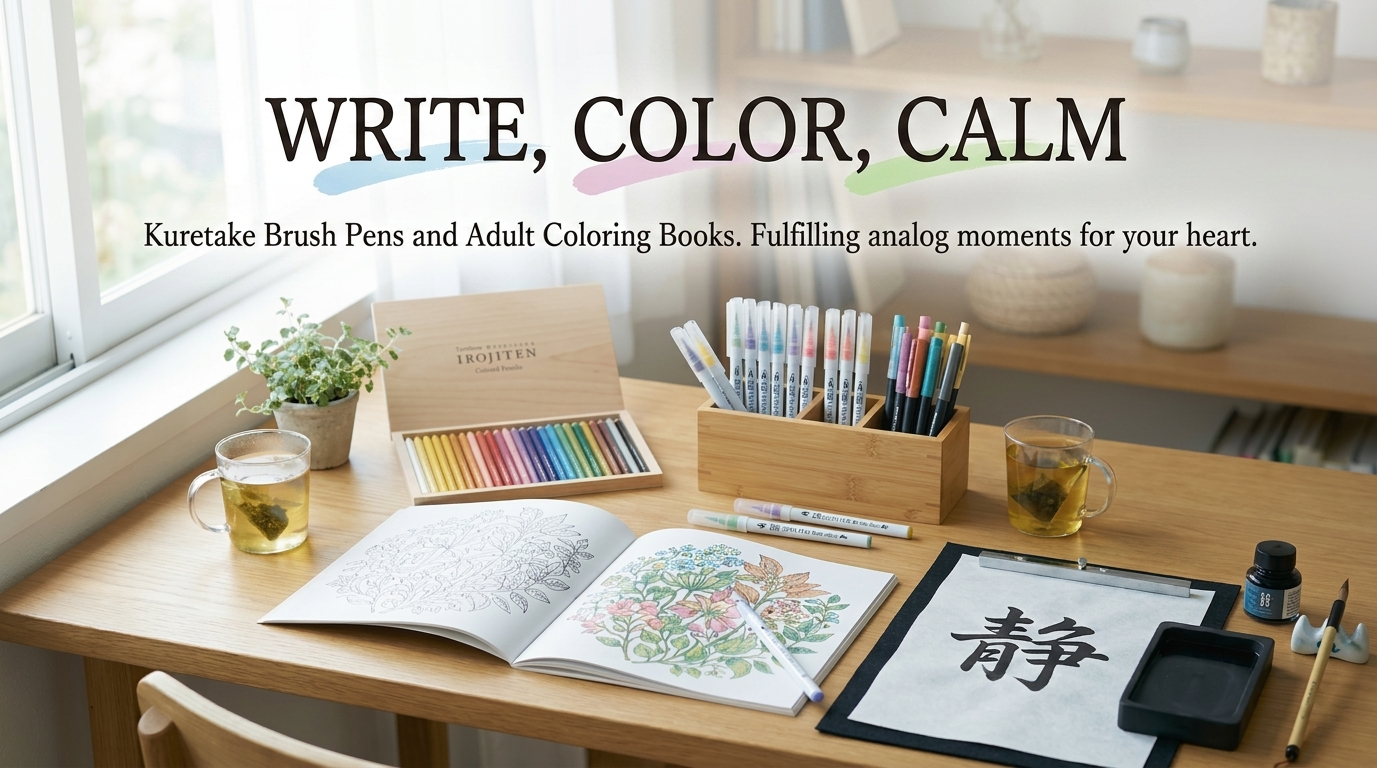
Japanese Calligraphy & Coloring | Brush Pens and Color Pencils for Mindful Creativity