
"That clear, pure tone — just hearing it for a moment felt like it washed something away."
Have you ever had that experience?
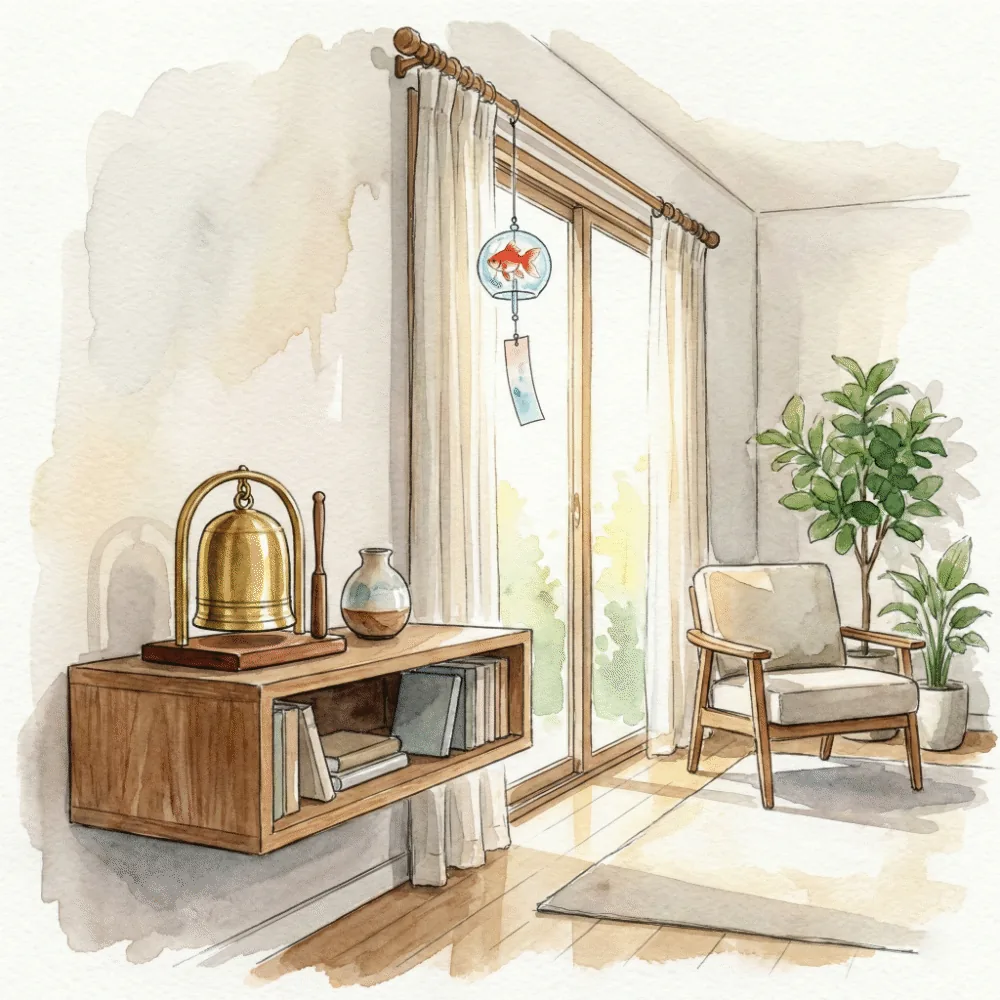
Traditional Japanese homes were full of gentle, resonant sounds: wind chimes hanging from the eaves, the ring of a
Buddhist altar bell. In modern airtight apartments, these sounds have gradually disappeared.
Consider bringing Japanese-made
wind chimes and orin bells into your space — and rediscovering that refreshing, crystalline tone
that so many people have forgotten.
Leading the way is Kyujo Orin (久乗おりん), made by a Buddhist altar craftsman in Takaoka, Toyama. These
beautifully crafted sound objects have transcended their religious origins to become celebrated worldwide as
sophisticated, meditative home décor.
This guide explores how to choose wind chimes and orin bells as tools for shaping your space through invisible
sound.
Series: This article is part 8 of the "Savor (Coffee · Spirits · Traditional Culture)" series.
Quick Reference: Wind Chime & Orin Materials at a Glance
| Material | Sound Character | Best Setting | Origin |
|---|---|---|---|
| Nanbu Iron | "Reen" — high, clear, hard tone; long resonance | Eaves · entryway · large rooms | Iwate Prefecture (Nanbu Tekki) |
| Glass | "Chiri-chiri" — short, dry friction sound; refreshing | Windowsill · summer veranda · indoor display | Tokyo (Edo Furin) |
| Ceramic | "Kon" / "Pohn" — soft, warm, muted tone | Indoor décor · Japanese-style rooms | Various (Mashiko, Arita, etc.) |
| Brass (Orin) | "Cheen" — fluctuating resonance; 1/f pattern | Living room · bedroom · desk | Takaoka, Toyama (Kyujo Orin) |
1. Beyond Summer: Wind Chimes and Orin as Year-Round Sound Décor
Wind chimes (furin) are strongly associated with summer in Japan — but the ringing of a bell (suzu or rin) has historically carried meanings of purification and protection, enjoyed year-round and across all seasons.
A Sound That Shifts the Atmosphere
A beautiful tone induces alpha brainwave activity, coaxing the mind into a relaxed state.
Coming home after work and giving the orin a gentle tap. The small "chirin" that rings as you settle in with
morning coffee.
That single sound acts as a switch — a micro-ritual for transitioning between modes.
Modern wind chimes and orin have evolved beyond seasonal novelties into spatial atmosphere
tools, much like candles or ambient lighting — something to live with every day.
2. Kyujo Orin: Buddhist Altar Craftsmanship and the 1/f Fluctuation Bell
The most talked-about name in Japanese sound objects right now is Kyujo Orin (久乗おりん), a line created by Yamaguchi Kyujo — a Buddhist altar instrument maker based in Takaoka, Toyama, the center of Japan's traditional copperware craft.
Kyujo Orin — Mawarin (Wobble Bell)
It spins, sways, and rings — a roly-poly orin for daily life.
Born from the idea that people without a Buddhist altar should still be able to enjoy the healing sound of an
orin, the Mawarin is designed for everyday use.
Touch the decorative figure on top — a bird, butterfly, or flower — and it sways gently, ringing "chirin,
chirin" in a soft, unhurried rhythm.
The sound has been scientifically confirmed to carry 1/f fluctuation — the same natural rhythm
found in murmuring streams and campfire crackle — which induces deep relaxation.
Popular as a desk companion, a pet memorial piece, and a thoughtful gift.
- Material
- Brass · Made in Japan (Takaoka, Toyama)
- Sound
- 1/f fluctuation resonance · long sustain
- Care
- Dry cloth only · avoid water and abrasives
- Brand
- Yamaguchi Kyujo (山口久乗) · Founded 1927 · Takaoka, Toyama
3. Nanbu Tekki Iron Wind Chime: A Clear, Resonant Tone from Iwate
"Reen" — a piercing, crystalline tone that hangs in the air long after it's struck.
For many people, this is the quintessential sound of a Japanese wind chime: cast iron from Nanbu
Tekki.
Iwachu — Nanbu Tekki Wind Chime (Hanging Lantern, Black)
A 3,000 Hz frequency that soothes the mind.
The high-frequency sound produced when hardened iron pieces strike each other sits in a range that is
exceptionally pleasant to the human ear.
Its long resonance — the tone continues to fade slowly after each ring — is part of what makes it so
meditative.
Beyond traditional bell shapes, Iwachu now offers modern colorways and designs, and the iron wind chime has
become popular internationally as a door chime for entryways.
- Material
- Cast iron (Nanbu Tekki) · Made in Japan (Iwate Prefecture)
- Sound
- High, clear tone ~3,000 Hz · long sustain
- Placement
- Eaves · entryway · covered outdoor area
- Brand
- Iwachu (岩鋳) · Founded 1902 · Morioka, Iwate
4. Edo Furin: The Lightweight Friction Sound of Hand-Blown Glass
For sheer visual refreshment, nothing beats the Edo Furin — a hand-blown glass wind chime from
Tokyo.
Its "chiri-chiri" tone: short, dry, airy. The sound of a Japanese summer distilled into a single object.
The Secret Is in the Jagged Edge
If you look at the opening at the bottom of an Edo Furin, you'll notice it's uneven and serrated — not
smooth.
This isn't a defect. It's intentional: the edge is left unpolished after the glass is cut.
When the inner glass rod brushes against these rough edges, it creates that distinctive friction-based sound —
somewhere between a whisper and a chime.
Because each piece is mouth-blown by a single craftsperson, no two Edo Furin have exactly the same shape or
sound.

5. Creative Uses: As an Entryway Chime or Desk Bell
No place to hang it, no breeze to move it — there are still plenty of ways to enjoy these sounds in a modern home.
Kyujo Orin — Doarin (Magnetic Door Bell)
A beautiful sound every time the door opens.
The Doarin attaches to a door with a built-in magnet. Each time the door opens or closes, the vibration produces
a soft, clear "chirin" — a graceful alternative to electronic buzzers.
It announces arrivals from family members or guests with a tone that feels welcoming rather than intrusive.
Deep and clear, the sound is said to dispel negative energy and welcome good fortune — a meaningful touch for
any entryway.
- Material
- Brass · Made in Japan (Takaoka, Toyama)
- Attachment
- Magnet mount · suitable for most interior doors
- Brand
- Yamaguchi Kyujo (山口久乗) · Founded 1927 · Takaoka, Toyama
6. Choosing by Sound or Material: How to Compare Before You Buy
Sound preference is deeply personal. Learn the general tonal characteristics by material, then listen to actual recordings on YouTube before committing — it's the surest way to avoid regret.
Sound Characteristics by Material
- Brass (Orin):
"Cheen" or "Reen" — long-sustaining resonance with natural fluctuation. Strong relaxation effect.
Recommended for: bedroom, living room, meditation space - Iron (Nanbu Furin):
"Reen" — high, clear, hard tone that carries far.
Recommended for: eaves, large rooms, entryways - Glass (Edo Furin):
"Chiri-chiri" or "karan" — short, dry friction sound with a cooling, summery feel.
Recommended for: windowsill, summer veranda - Bamboo / Wood:
"Koron" or "kapo" — earthy, warm, quiet tone with low volume.
Recommended for: Asian-inspired rooms, minimal sound environments
7. Apartment Etiquette and Indoor Placement Tips
In shared housing, consideration for neighbors matters. Here's how to enjoy the sounds without causing friction.
Indoor Placement: The Modern Approach
Hanging a wind chime from the eaves the traditional way can become noisy on windy nights or in dense
neighborhoods.
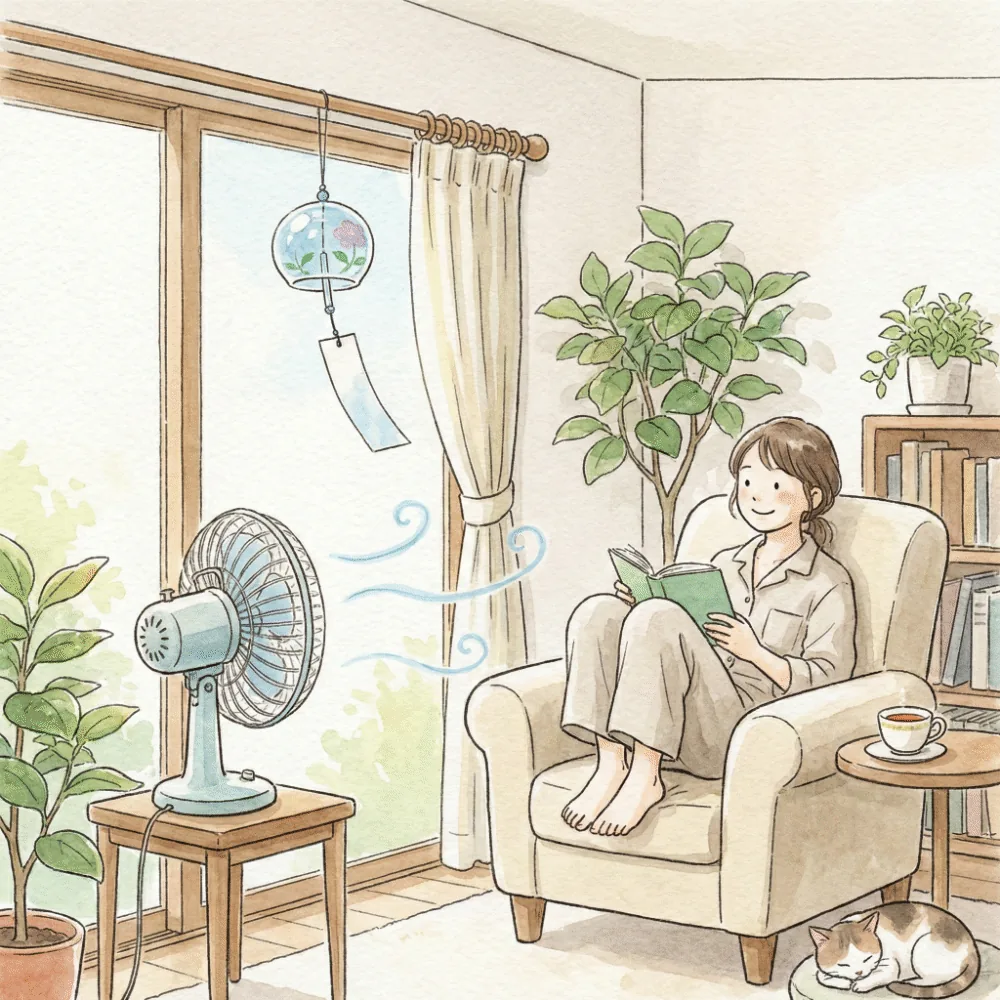
The contemporary solution: hang it where it catches air conditioning airflow, or where
gentle movement naturally occurs — a doorway you pass through often, or near a fan.
This keeps the volume low and makes the experience yours alone to enjoy.
You can also swap the strip of paper (tanzaku) for a heavier card stock, so the chime only rings in a
significant breeze rather than any small draft.
8. Frequently Asked Questions
Is it acceptable to display a wind chime outside of summer?
Absolutely.
Before the Edo period, wind chimes were displayed year-round as protective talismans. Nanbu Tekki and brass orin
especially hold up as beautiful objects in any season, and more and more people use them as year-round interior
décor.
Glass furin, with their distinctly summery character, are typically stored away in autumn — but the choice is
entirely personal.
My Nanbu Tekki wind chime is starting to rust. What should I do?
Embrace it as natural aging — the sound won't be significantly affected.
Surface rust is a normal characteristic of iron. If the appearance bothers you, wipe gently with a cloth moistened
with green tea — the tannin reacts with the iron to produce a dark patina that blends in.
Keeping the chime sheltered from direct rain is the best way to slow oxidation.
How should I clean and maintain a Kyujo Orin?
Wipe with a soft dry cloth only.
Kyujo Orin is made from brass or copper alloy. Water and cleaning products cause discoloration.
After handling, wipe away fingerprint oils to preserve the natural luster.
Never use abrasive polishes — they strip the plating and coloring.
How do I stop a wind chime from ringing too often?
Modify the tanzaku (paper strip).
Trim it smaller, or replace it with a heavier card — this way the chime only rings in stronger gusts, not every
light breeze.
At night, clip the strip to silence it, or bring the chime indoors. That's the considerate thing to do.
Can I give an orin as a gift?
Yes — they're very well received as a wellness gift.
The Mawarin and Doarin in particular feel more like artisan home goods than religious objects, making them great
choices for housewarming gifts, moving-in presents, or birthdays.
Since sound preference is personal, choosing a piece with a high, clear tone tends to be a safe bet for most
recipients — or pick one together if possible.
Between Edo Furin, Nanbu Furin, and Kyujo Orin — which should I choose first?
Think about where you'll use it and which type of sound speaks to you.
For outdoor hanging (eaves, balcony): Nanbu Tekki iron wind chime — the tone carries far and it
weathers beautifully.
For summery visual charm and variety of designs: Edo Furin glass wind chime — there's real joy in
browsing the patterns.
For year-round indoor use and a genuine relaxation effect: Kyujo Orin (brass) — the 1/f resonance
works on a level you feel more than hear, and it looks stunning on a desk or shelf without needing wind at all.
Final Thoughts: Decorating Your Space with Invisible Sound
Decorating with sound, the way you'd hang a painting or arrange flowers.
It's an invisible luxury — one that resonates not on the walls, but somewhere deeper.
The crisp ring of Nanbu Tekki that straightens your posture.
The slow, swaying resonance of Kyujo Orin that gently unwinds the day.
The lingering overtones of a wind chime or orin create a kind of "ma" — pause and space — within the rush of
ordinary life.
Find the tone that feels like yours, and let it into your home.
That single sound might just make your room the most peaceful place you know.

Japanese Wind Chimes: Nanbu Tekki, Edo Glass & Ceramic — Sounds and How to Choose
Japanese Wax Candles (Warosoku): Healing Flame and Living Light