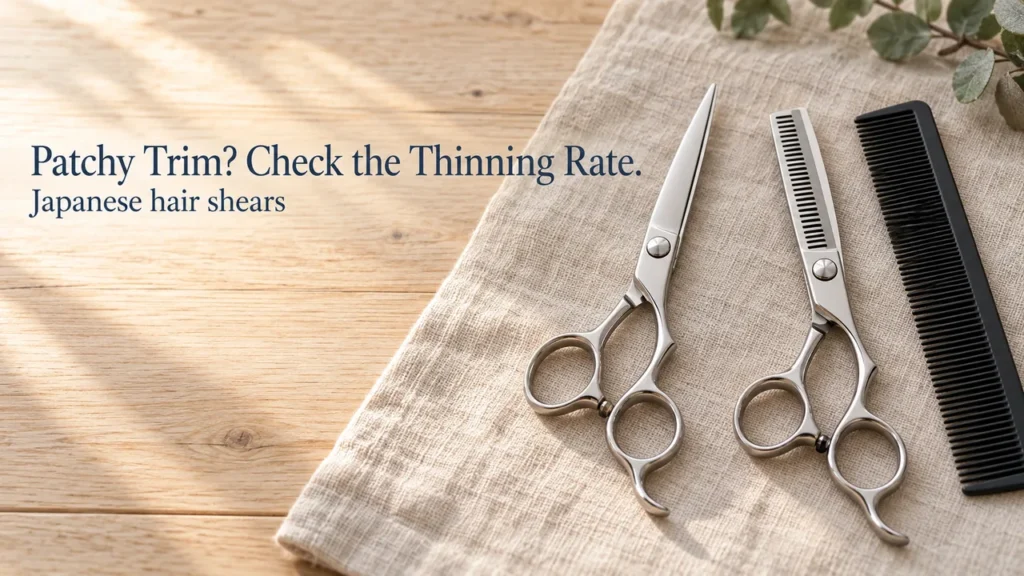
When a home haircut leaves the hair patchy and see-through, the cause is usually the thinning shears' "thinning rate," not your hand. Some thinning shears remove half the hair in a single cut; use one on a fringe and anyone would get the same result.
At the other end, Japanese shears are used in salons around the world. Tokosha, in Iwate, has made scissors since 1917 and ships about 70% of its output abroad, to more than 50 countries, under the name JOEWELL. Professional shears like these are resharpened and kept for years.
This guide covers both: the right thinning rate for a home trim, how to read steels, blade shapes, sizing and handles, Japan's salon shear makers and how to buy from them abroad, and how to keep a pair cutting.
Quick Reference: Choosing Hair Shears by What You'll Do
| What you'll do | What to choose | Thinning rate |
|---|---|---|
| Just tidy a fringe | One pair of thinning shears | 10–15% |
| Full family trims | Cutting shears + thinning shears | 20–30% |
| Cutting your own hair | Straight-blade cutting shears | — |
| Daily professional use | Choose by steel and how it fits your hand | Use several |
| Caution | — | 50% and over removes half in one cut. Not for home use. |
1. Patchy Trims Come From the Thinning Rate, Not Your Hand
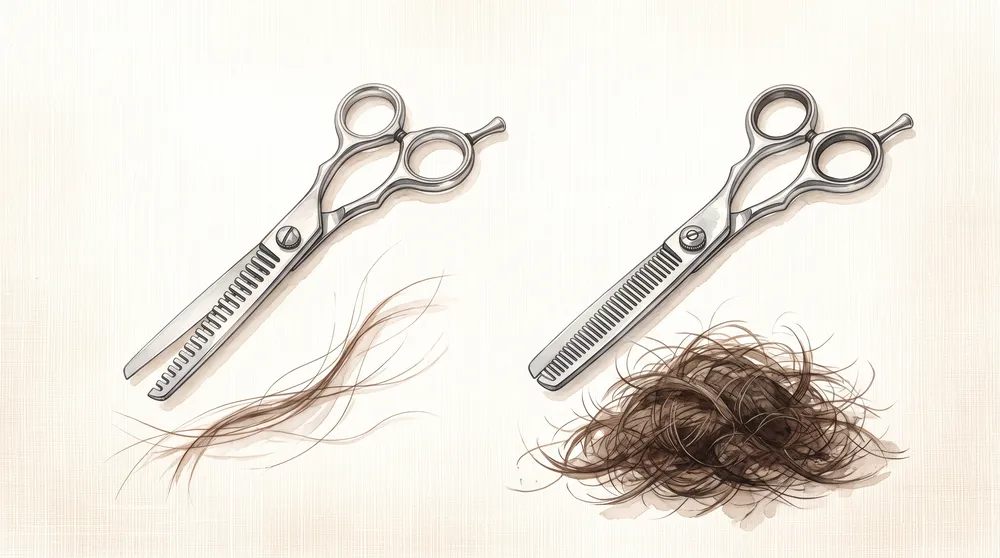
Thinning shears have a comb-like row of teeth on one blade, and the number and spacing of those teeth decide what share of hair one cut removes — the thinning rate. Few people check it before buying, and packaging doesn't always show it prominently. Put a 50% thinning shear into a fringe and half of it goes in one stroke. The mistake was in the tool, not the technique.
For home use, start at 10–15%
Thinning shears are made across roughly 10% to 40%. For a first pair, choose 10–15%: each cut removes little, so you can work gradually in the mirror, and if it isn't enough, cut again.
| Thinning rate | Removed per cut | Suits |
|---|---|---|
| 10–15% | Very little | Home use, a first pair. Fringes here |
| 20–30% | Standard | Experienced users, thick hair |
| Around 40% | A lot | Professional bulk removal |
| 50% and over | Half in one cut | Not for home use |
For thick, heavy hair, or once you're comfortable, move to 20–30%; in that range, an instant see-through mistake is unlikely.
Thinning shears don't make hair shorter
As the name says, thinning shears only reduce bulk. Use them to change length and you'll reduce volume while the outline stays where it was. Length is for cutting shears; volume is for thinning shears. They do different jobs, so for full family haircuts you need both.
2. Why Japanese: The Shears Used in Salons Worldwide
Tokosha, founded in 1917 in Iwate Town, Iwate Prefecture, began with medical scissors and moved into barber scissors in 1921. Under the JOEWELL name it makes 2,000–3,000 pairs a month at its Iwate factory, and about 70% go abroad, to more than 50 countries. The shears in a Japanese salon are the same ones held in salons in London and New York.
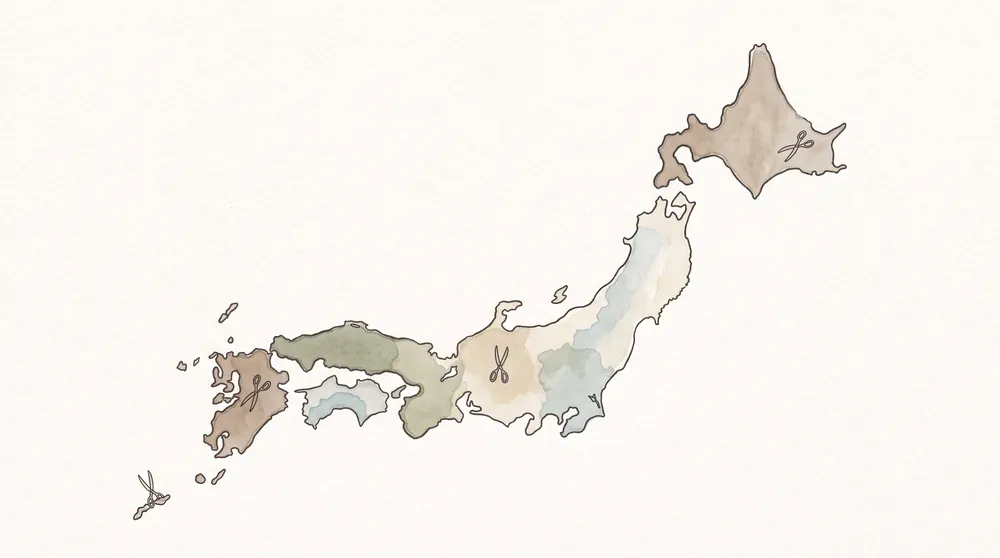
What's interesting is that these makers aren't gathered in one place. Kitchen knives have clear towns — Seki, Sakai, Tsubame-Sanjo — but hairdressing shears don't:
| Maker | Founded | Base | Known for |
|---|---|---|---|
| Tokosha (JOEWELL) | 1917 | Iwate Town, Iwate | About 70% of output exported, 50+ countries |
| Naruto Scissors | 1963 | Takarazuka, Hyogo | Bearing-equipped shears |
| Hikari (Kouhou Scissors) | 1969 (began hairdressing shears) | Osaka | Hand-made, fitted to the user's hand |
| Kikui Scissors | 1953 | Wakayama | Precision machining combined with hand work |
Founding years range from 1917 to 1969, and the map runs from Iwate to Wakayama. It looks like a field where each workshop built its own skill independently, rather than one region doing it all.
3. Professional vs Home Shears: What's Actually Different
The price is for how long the edge lasts, and the strain on your hand
Professional shears are not ten times sharper than home shears. What differs first is how long that sharpness lasts. Harder steels and blades adjusted by a craftsperson keep cutting through hundreds of openings a day — and when they dull, they go off to be resharpened and come back.
The second is the strain on your hand. Shears with a bearing built in, like Naruto's, open and close lightly, which matters most to someone holding them for hours. Some makers even hold patents on handle shapes designed to help prevent tendon strain.
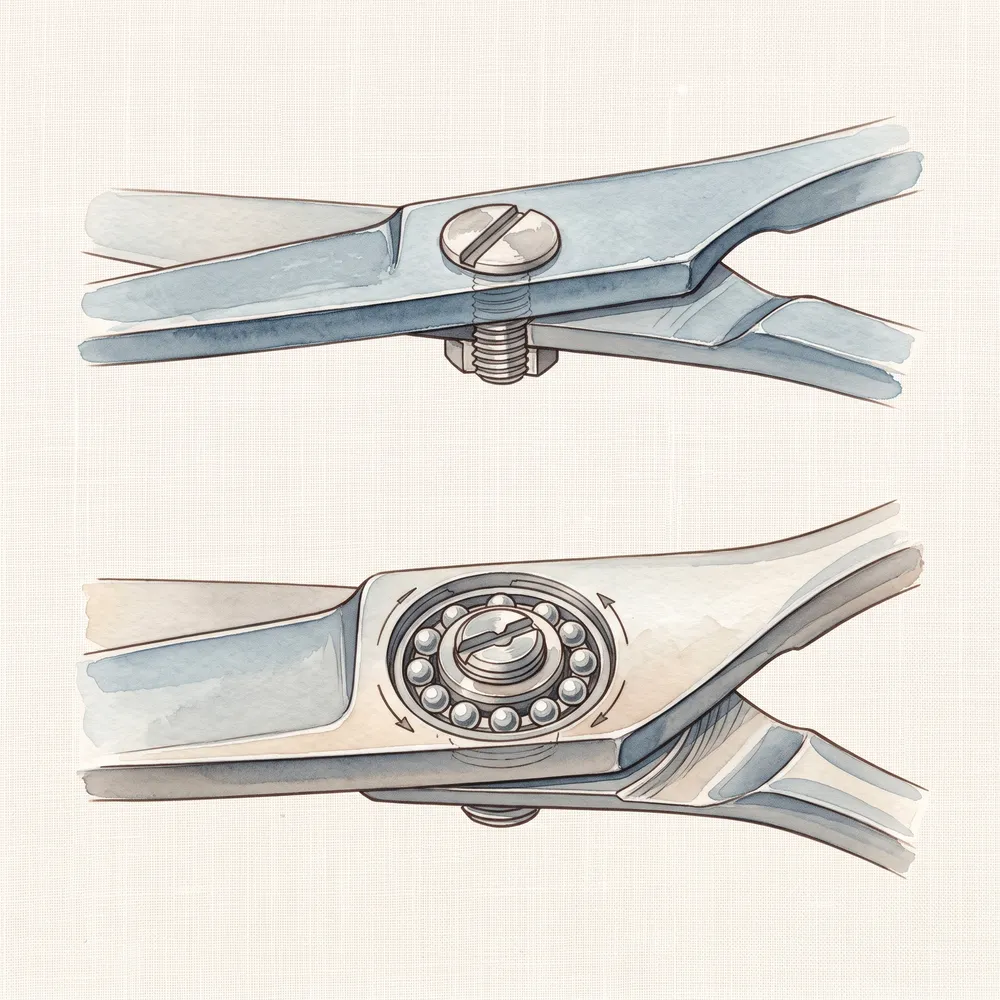
Put the other way: for trimming the family's hair once a month, you don't need that endurance. Professional shears aren't "better"; the hours in hand are just of a different order.
A tool fitted to your hand
Some makers, such as Hikari, make shears fitted to the size of the user's hand and their cutting habits — looking at finger length and grip depth before making them, like a shoe or a suit. For someone holding them all day, they're less a tool than part of the body.
4. Five Things to Choose: Steel, Blade, Length, Handle, Origin
1. Steel: 440C is the standard; cobalt alloys sit above it
The standard steel for hairdressing shears is 440C, at HRC 57–59 — high chromium for rust resistance, high carbon for cutting. Above it is ATS-314, which adds a cobalt alloy for hardness and wear resistance, at a higher price. Some shears use VG10, familiar from kitchen knives: 15% chromium with 1.30–1.80% cobalt, reaching HRC 61. The same steels appear in knives, so our knife steel guide helps the numbers make sense.
2. Blade line: if in doubt, a willow (yanagiba) curve
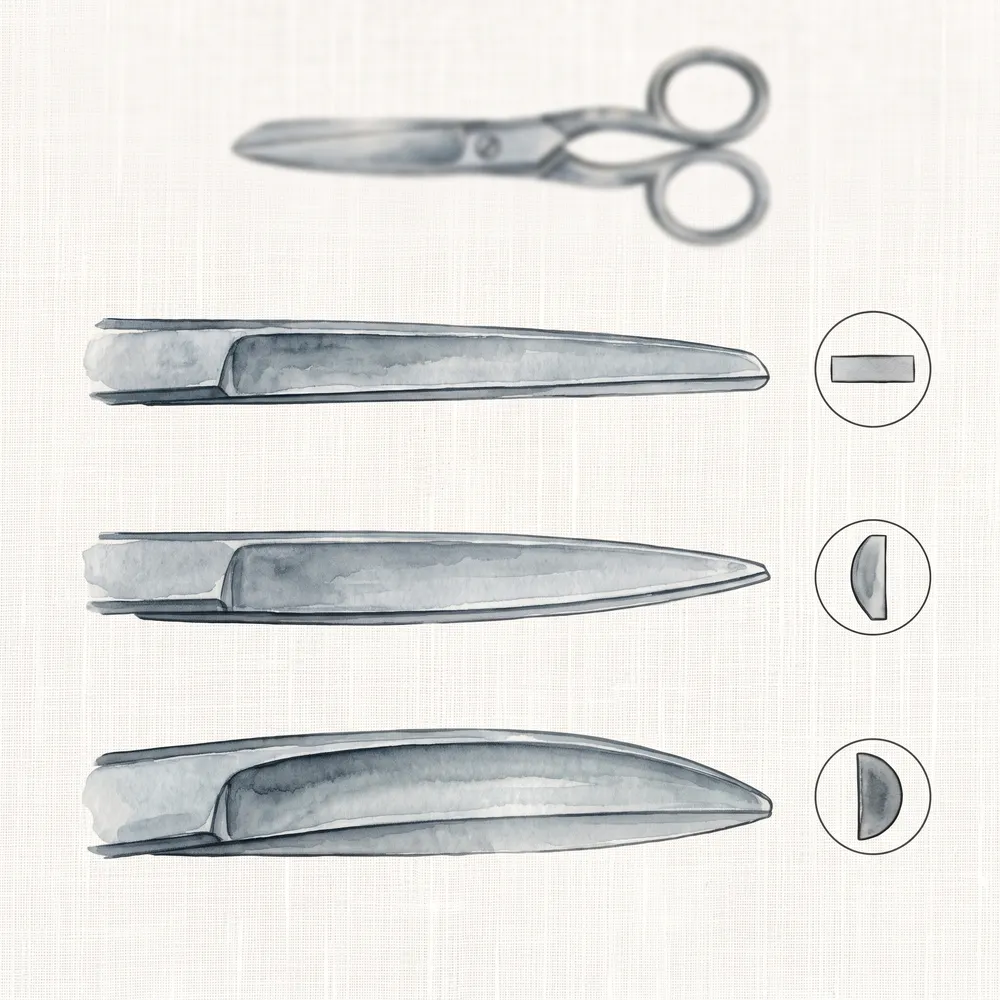
There are three blade outlines. Straight blades give a crisp cut line, for lining ends up precisely. Convex (sasaba, "clam" edge) blades suit slide cutting along the hair. Willow (yanagiba), with a gentle curve, sits in between and is the most standard — the natural place to start.
3. Length: measure it on your own hand
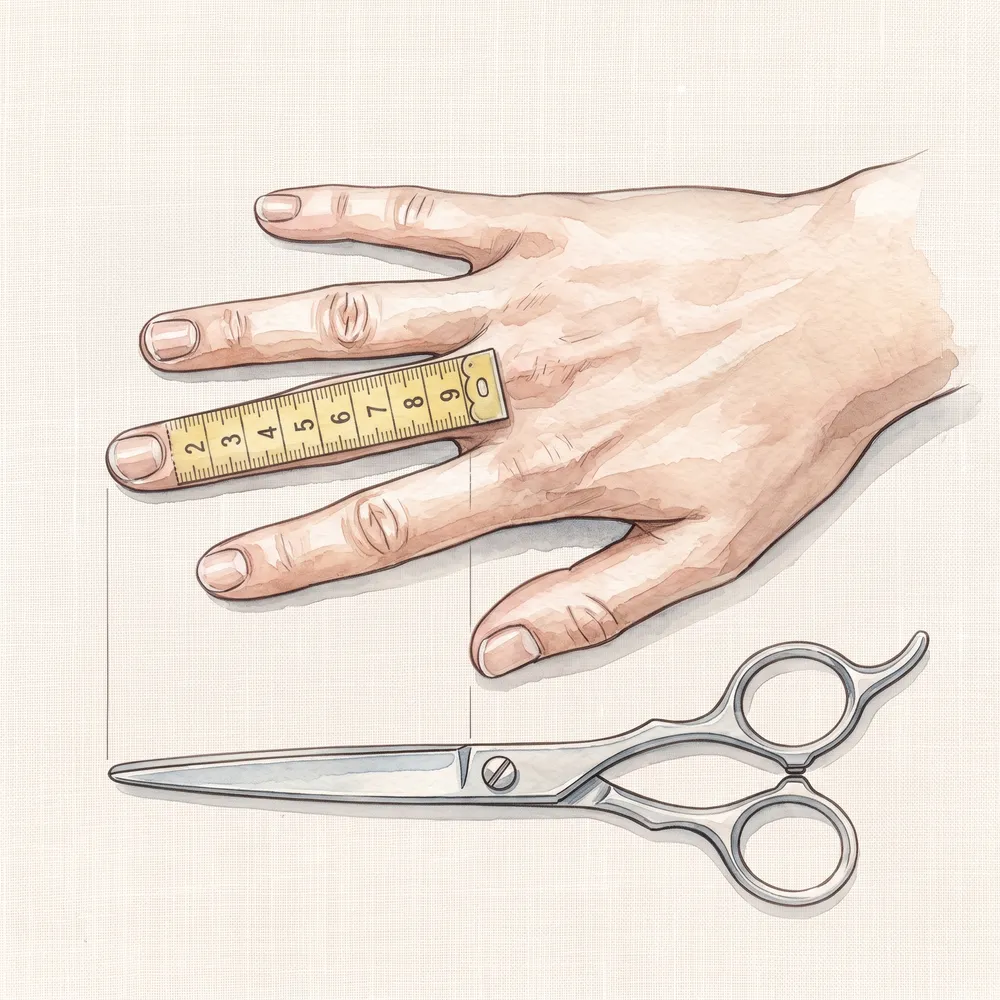
Blades run from the mid-5-inch range to the 7-inch range. Open your non-dominant hand and measure from the tip of the middle finger to between the second and third knuckles; match the blade length to that and it won't be too big or small for your hand. Longer cuts more at once; shorter moves more finely. For fringes and around the ears, shorter is easier.
4. Handle: offset for long sessions
Finger rings come symmetrical or offset, with the thumb ring set back toward you. An offset handle puts the thumb ring where your thumb naturally bends, reducing twist in the wrist and fingers — it matters more the longer you hold them. For a few minutes at home it matters less, but avoid any pair that feels painful or cramped when you put your fingers in; that discomfort lasts the whole haircut.
5. Origin: a place name doesn't say where it was made
If you're looking for Japanese-made shears, there's one more thing to check. A Japanese cutlery town in a brand name doesn't guarantee that a particular pair was made there, and retailers' product names aren't reliable either. Look at one place: the country of origin or production on the maker's own product page. If it says Japan there, it's made in Japan.
5. Picks by Use
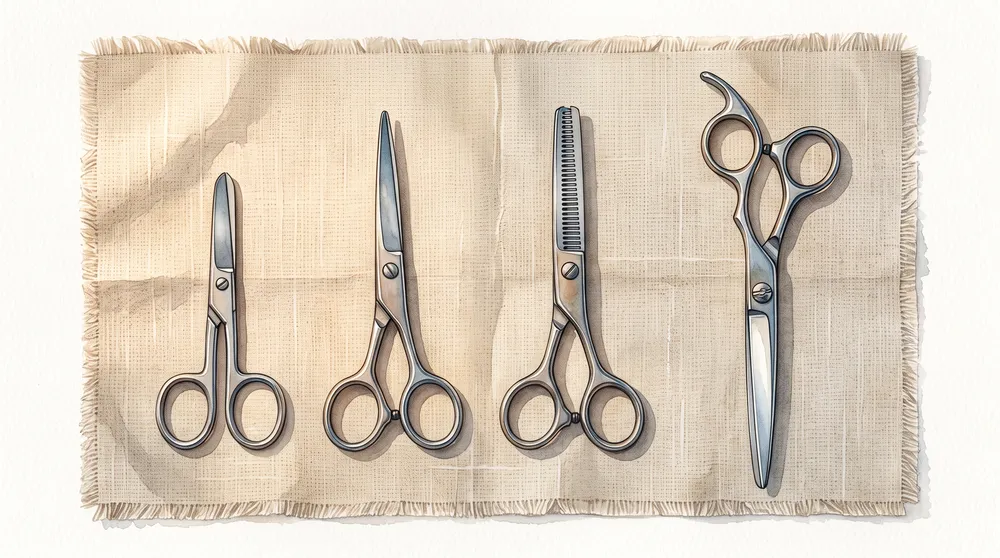
Choose by where you'll use them, not by ranking — it's a tool decided by how it fits your hand.
Thinning shears for a fringe (10–15% thinning rate)
Start here. Little comes off per cut, so you can go step by step in the mirror. Choose one that states its thinning rate — if it doesn't say, it's usually on the high side. Check the maker's stated country of origin if you want Japanese-made.
Home cutting shears (for length)
Length is this pair's job. Thinning shears don't change the outline; evening ends and taking off growth need cutting shears. A fine tip reaches around ears and fringes, which helps with children's hair. A matching cutting-and-thinning pair is the quickest first set — and a cape is usually sold separately.
For daily professional use: Tokosha JOEWELL New Cobalt
A tool you resharpen and keep for years. The brand Tokosha sends to more than 50 countries. "New Cobalt" uses a cobalt-based alloy — the step above 440C in section 4 — and received a Good Design Award in 2017. The NC-6F, for example, is 167 mm overall with a 65 mm blade and weighs 41 g; thin and light, for detailed cutting. Sizes run from 5.0 to 6.0 inches, so you can match the length you measured. Hold one before you buy if you can.
For left-handers: Tokosha JOEWELL left-handed cutting shears (LSF)
Right-handed shears in a left hand don't mesh. Shears cut by rubbing two blades together; reverse the direction of force and they just fold the hair. JOEWELL's dedicated LSF line — the LSF-60 is 6 inches, 171 mm overall with a 71 mm blade — has a left-specific semi-offset handle, not a right-hand pair flipped over. Sizes from 5.5 to 7 inches. Online, left-handed shears sometimes turn up under pet-grooming categories; search by model number.
6. Buying Japanese Salon Shears Outside Japan
Unlike many Japanese crafts, hairdressing shears are built for export, and the makers have English routes. When we checked in October 2026:
- JOEWELL (Tokosha) publishes an English page of its authorized distributors, covering Asia, Oceania, North America, South America, and Europe.
- Kikui Scissors has an English site, with testimonials from salons in the US and UK.
- Hikari has an international English site.
Buy through an authorized distributor where you can — it's the surest way to get the genuine maker's shears and its resharpening and repair support.
7. Keeping Them Sharp, and When to Resharpen
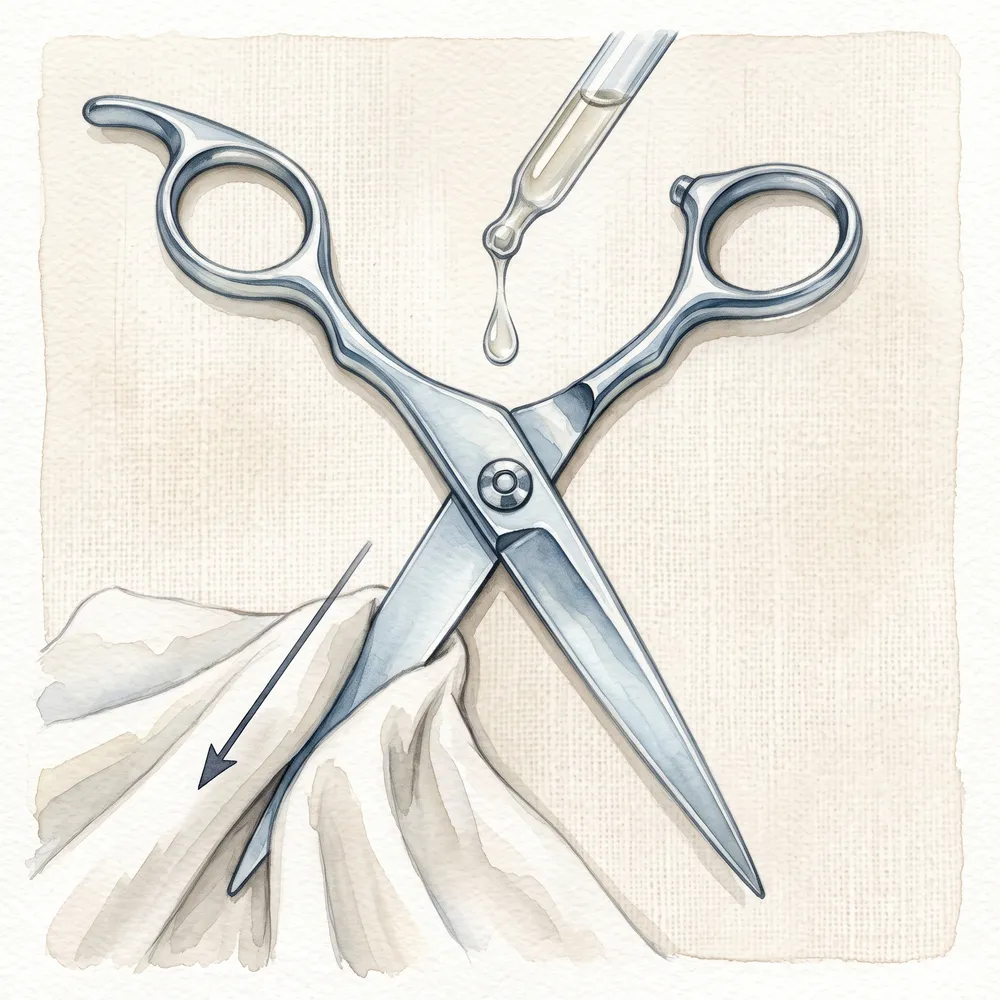
After use: wipe dry, then a drop of oil
Don't leave them wet — wipe gently with a soft cloth or tissue, because rust starts where the blades meet. Then put a few drops of scissor oil at the pivot, and wipe from the heel of the blade to the tip, pinching lightly, to spread it. It takes under a minute, and the professionals who use them daily never skip it.
If the cut drops off, check the screw first
Sometimes the problem is the tension screw, not the edge. Too loose and the blades don't close fully, folding the hair; too tight and they won't move. Neither is an edge problem, so check before sending them for sharpening. If that doesn't fix it, resharpen: for daily professional use, roughly once a year; for a monthly home trim, much less often. Many makers repair their own shears, and there are specialist sharpeners. It costs less than replacing them, and you get back a pair already fitted to your hand.
8. Frequently Asked Questions
Every time I trim a fringe with thinning shears, it goes patchy. Why?
The thinning rate is too high. A 50% shear removes half in one cut. Switch to 10–15%: less comes off each time, so you can build up in the mirror. If the packaging doesn't state a rate, assume it's high.
What's the difference between home and salon shears?
Mostly how long the edge lasts. Salon shears use harder steels and adjusted blades that stay sharp through hundreds of cuts a day, and some use bearings to lighten the action. For a monthly trim, home shears are enough.
What steel should I look for?
440C (HRC 57–59) is the standard, balancing rust resistance and cutting. ATS-314 adds cobalt for hardness and wear resistance; VG10 reaches HRC 61. Harder steels hold an edge longer and cost more.
What size shears should I get?
Measure your non-dominant hand from the middle fingertip to between the second and third knuckles, and match the blade length to it. Blades run from the mid-5-inch to 7-inch range; shorter is easier for fringes and around the ears.
Can I buy Japanese salon shears outside Japan?
Yes — this is one Japanese craft that's built for export. JOEWELL publishes its authorized distributors by region, and Kikui and Hikari have English sites. Buying through an authorized distributor also gets you the maker's resharpening and repair support.
My shears aren't cutting well. Should I get them sharpened?
Check the tension screw first. If it has loosened, the blades won't close and will fold the hair; if it's too tight, they won't move. If adjusting doesn't help, send them to the maker or a specialist sharpener.
Final Thoughts: Check the Thinning Rate First
A patchy home trim usually comes down to the thinning rate. Start at 10–15%, and remember that thinning shears reduce volume — length needs cutting shears.
Japanese makers are spread from Iwate to Wakayama, each with its own approach, and their shears are used in salons worldwide — Tokosha alone sends about 70% of its output abroad. Choose by steel, blade line, length measured on your own hand, and handle; and if Japanese origin matters, read the maker's stated country of production.
Wipe them dry, oil the pivot, check the screw before resharpening, and a good pair will keep cutting for years.
Japanese Knife Steel: VG10, SG2, Blue and White
Best Japanese Nail Clippers: SUWADA, Green Bell & 5 More