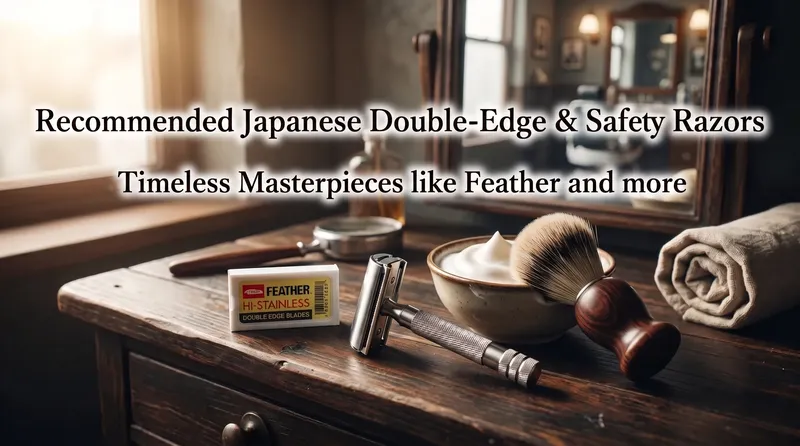
If you want the best razor Feather makes, it is the AS-D2. If you want to find out
whether double-edge shaving suits you before spending $300, buy the Feather Popular for
about $15 and a pack of Hi-Stainless blades. Both use the same blades, and the blades are
where most of the performance lives.
You probably already know the name. "Feather sharp" has become shorthand in the wet shaving
world — and that reputation cuts both ways, because plenty of people are told these blades
are too aggressive for beginners.
That advice is half right, and the half that is wrong costs people the best shave they could be
getting. This guide explains why, covers the four things Feather makes that are worth owning, and
tells you which pairing suits which face.
Quick Reference: What Feather Makes
| Product | What it is | Price | Buy it if… |
|---|---|---|---|
| Hi-Stainless blades | Double-edge blades | ~$20 / 100 | Start here regardless of what razor you own. Fits every DE razor made |
| Popular | Entry DE razor | ~$15 | You want to try DE shaving without committing |
| AS-D2 | All-stainless DE razor | ~$250–320 | Sensitive skin. Mild head, 90 g of weight doing the work for you |
| Artist Club | Single-edge barber razor | ~$70–150 | You want a straight-razor shave without the honing |
| The cheapest useful upgrade is a pack of blades, not a razor. Feather blades fit every double-edge razor ever made — the format has been standardised worldwide for over a century. A $20 pack of 100 lasts most people two years. | |||
Why Japanese Razor Blades?
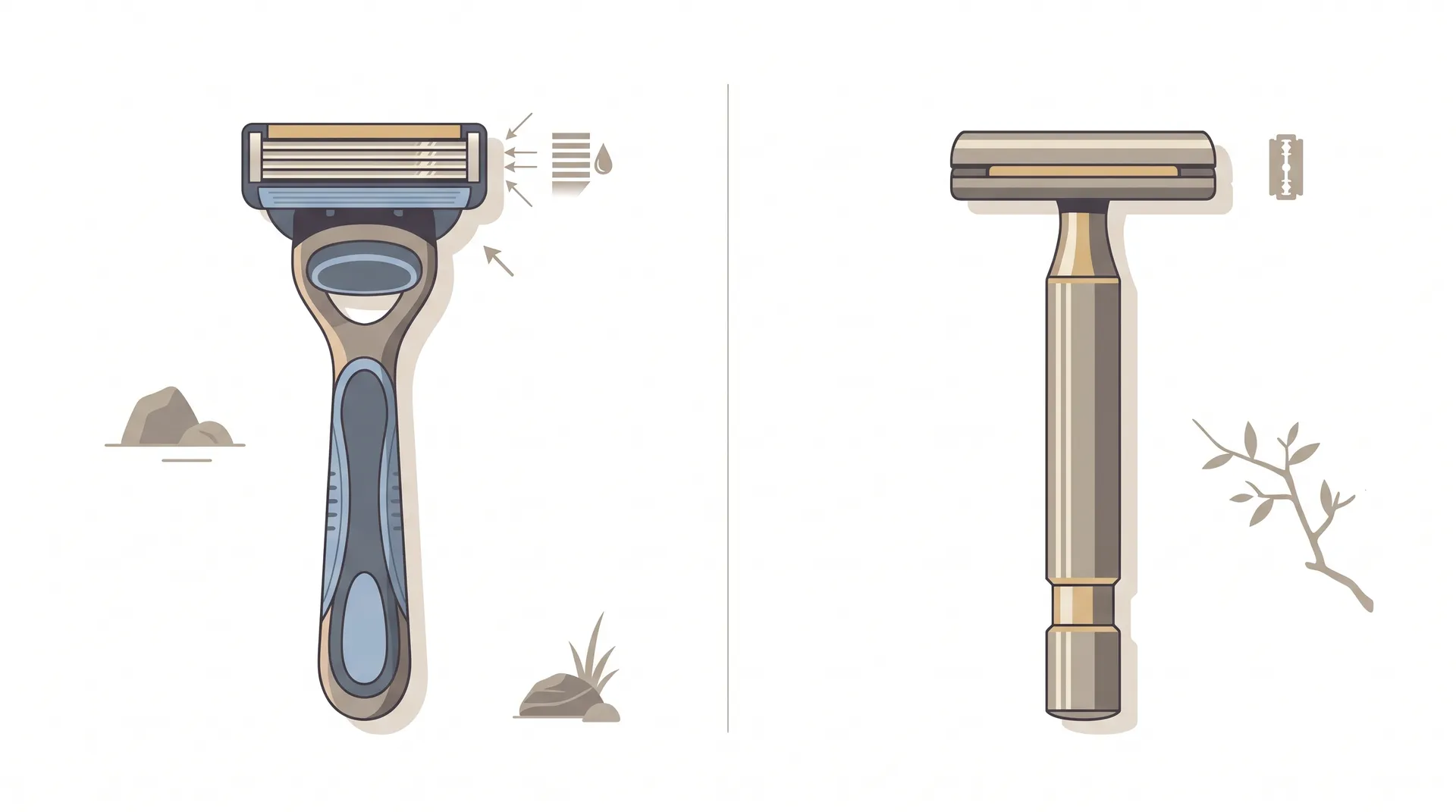
Feather manufactures in Seki, Gifu Prefecture — the same town that has been making blades for roughly 800 years. Seki became a sword-making centre in the Kamakura period because it had everything the work needed in one place: iron sand, charcoal from the surrounding forests, and clay for the tempering process.
When the samurai era ended and sword demand collapsed, Seki's smiths did what Solingen and Sheffield also did — they moved into scissors, pocket knives, kitchen knives and razors. Feather was founded there in 1932, and the company also makes surgical scalpels and medical blades. The tolerances that business demands are the reason its shaving blades are what they are.
The specific thing Feather does well is edge consistency. A razor blade edge is measured in fractions of a micron, and the difficulty is not achieving sharpness once — it is achieving it identically across millions of blades. A Feather blade being predictable is arguably more valuable than it being sharp, because you can learn a blade that behaves the same way every time.
Did you know: it is called a "safety" razor for a literal reason
Before it existed, shaving meant an open straight razor — a blade with nothing between its edge
and your throat, where a wrong angle meant a real injury. The safety razor's innovation was a
metal guard that covers most of the edge and fixes the angle mechanically, so the
blade physically cannot meet skin at a dangerous attitude.
The name was not marketing. It described what the guard did.
"Too Sharp for Beginners" — The Half-Truth
Search any shaving forum and you will find the same advice: don't start with Feathers, they'll shred you. This is repeated so often that many people never try them.
Here is what that advice gets right: a Feather blade is unforgiving of bad technique. Pressing down, shaving against the grain on day one, or dragging the razor sideways will draw blood faster than it would with a duller blade. That much is true.
Here is what it misses. How a blade feels is not determined by the blade alone — it is determined by the razor holding it. The head geometry decides how much edge is exposed and at what angle. That is called blade gap, and it varies enormously between razors.
A sharp blade in an aggressive head is genuinely punishing. The same blade in a mild head is one of the most comfortable shaves available, because the sharpness means it severs hair rather than tugging it — and tugging is what actually irritates skin.
Feather's own razors are deliberately mild. The AS-D2 in particular is known in the wet shaving community for how gentle it is, which surprises people who expect a company famous for sharp blades to build an aggressive razor. It does the opposite: sharp blade, forgiving head. That combination is the entire design philosophy.
So the honest version of the advice is this: don't put a Feather blade in an aggressive vintage razor as your first experience. In a mild modern head, it is the blade most likely to make you understand what the fuss is about.
Weight, Blade Gap, and What Actually Matters
Weight does the work, not your hand
This is the hardest habit to unlearn coming from cartridge razors. With a cartridge you press,
because the blades are dull and spring-mounted. With a double-edge razor you must not — you rest
it on the skin and let it fall.
A heavier razor makes this easier, because there is enough mass that you can feel it working
without adding pressure. The AS-D2 weighs about 90 g. Light plastic-bodied
razors shave perfectly well but demand more discipline, since nothing stops you from pushing.
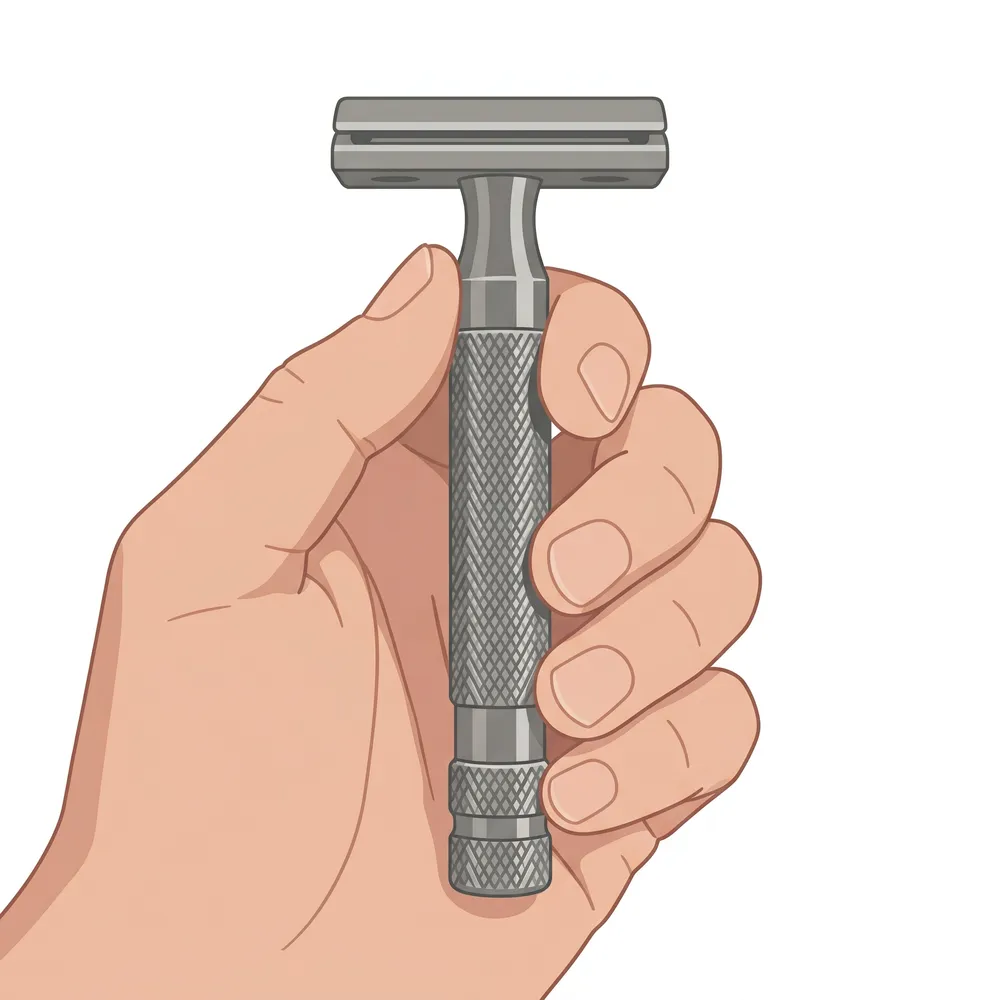
Blade gap: mild versus aggressive
The gap between the blade edge and the safety bar decides how much blade meets skin. A small gap is "mild" — forgiving, comfortable, needs more passes on heavy stubble. A large gap is "aggressive" — efficient, closer in one pass, punishing if your angle drifts.
Feather builds mild. If you have very coarse, fast-growing stubble you may eventually want something more aggressive, but that is a second razor problem, not a first razor problem.
Did you know: the running cost difference is roughly 20×
Cartridge refills commonly work out around $3–5 each. A Feather double-edge blade
costs about 20 cents, and gives five to seven comfortable shaves.
Even the $300 AS-D2 pays for itself in a few years against cartridges — and unlike a cartridge
handle, a solid stainless razor has no wear parts. People are still using the ones their
grandfathers bought.
The Four Feather Products Worth Owning
Feather Hi-Stainless blades — start here whatever razor you own
Platinum-coated, and the sharpest mass-produced double-edge blade you can buy. Because the DE format has been internationally standardised for over a century, these fit every double-edge razor ever made — Merkur, Rockwell, Edwin Jagger, a 1950s Gillette from eBay, all of them.
- Type
- Double-edge, platinum coated
- Made in
- Seki, Gifu, Japan
- Life per blade
- 5–7 shaves
- Price range
- ~$20 per 100
Perfect for: Anyone who already owns a DE razor and has never tried the blade everyone talks about.
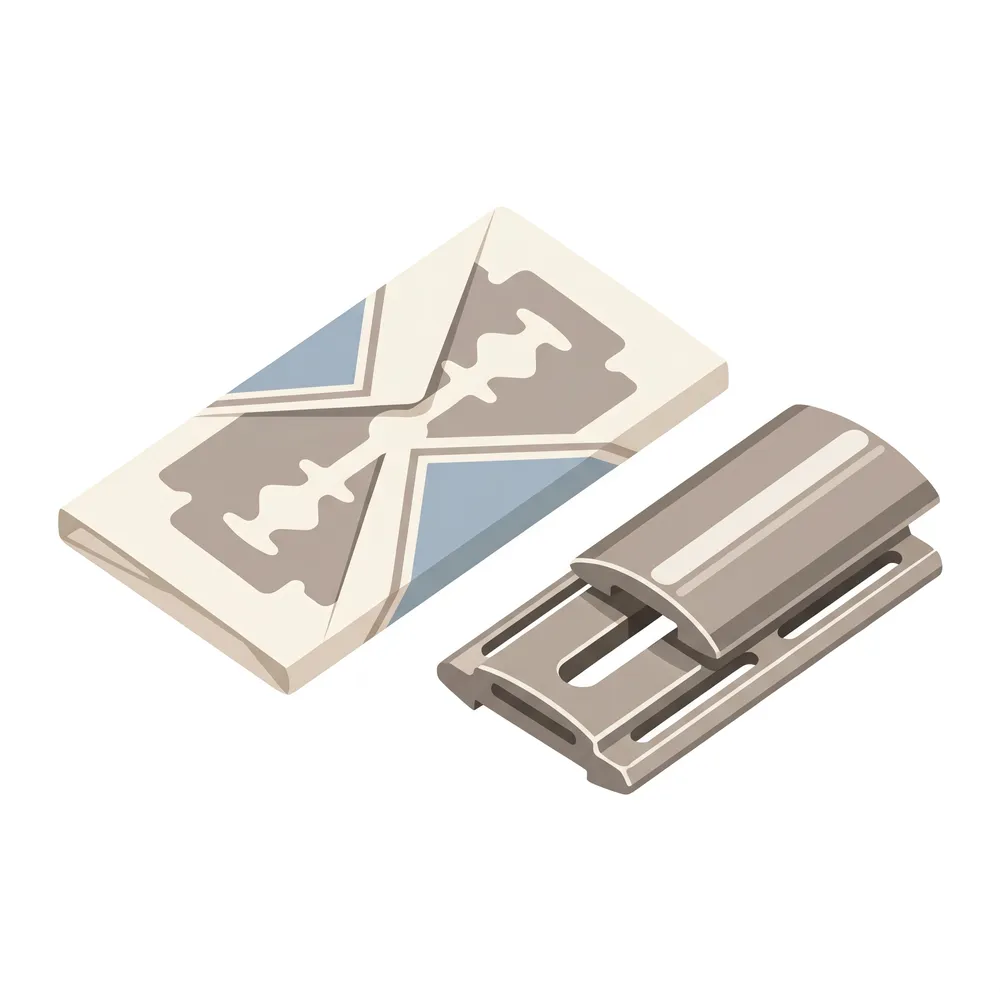
Feather Popular — the $15 way to find out if this is for you
A plastic-and-metal butterfly razor: twist the handle and the head opens to swap the blade. It costs almost nothing and it shaves properly, because the blade is doing the work and it is the same blade the expensive razor uses. Being light, it punishes pressure more than a heavy razor does — which arguably makes it a good teacher.
- Type
- Butterfly (twist-to-open) DE razor
- Made in
- Japan
- Best for
- Trying DE shaving; travel
- Price range
- ~$15
Perfect for: Anyone curious but unwilling to spend real money on a maybe.
Feather AS-D2 — the one people keep for life
Machined from solid stainless steel in Seki, three pieces, no plating to wear off, nothing to corrode. The head holds the blade with no flex at all, which is what separates it from cheaper razors — a blade that moves under load is a blade that bites. Roughly 90 g, and deliberately mild.
- Material
- Solid stainless steel, 3-piece
- Weight
- ~90 g
- Made in
- Seki, Gifu, Japan
- Aggressiveness
- Mild
- Price range
- ~$250–$320
Perfect for: Sensitive skin, and anyone who would rather buy once than three times.
Feather Artist Club — a straight razor shave without the honing
Not a double-edge razor. This is the replaceable-blade single-edge system that barbers use — the shape derives from the kamisori, the traditional Japanese razor. You get the straight-razor experience and control, without stropping, honing, or ever maintaining an edge. More blade is exposed, so it demands respect.
- Type
- Single-edge, replaceable blade
- Made in
- Seki, Gifu, Japan
- Best for
- Straight-razor feel; precise edging and line-ups
- Price range
- ~$70–$150 (handle), blades ~$25 / 20
Perfect for: Readers who want the ritual, not just the result — and are willing to learn.
Handles and blades are sold separately. Buy both.
How to Actually Shave With One
Prep is not optional here
Soften the beard first with a hot towel or by shaving straight after a shower. Then build lather
with a brush and a shaving soap — not canned foam.
Canned foam is mostly air. Brush-built lather is dense, so it holds water against the hair and
creates a slick layer the blade glides on. With a cartridge you can get away with foam. With a
single sharp blade, the lather is the protection.
30 degrees, and no pressure at all
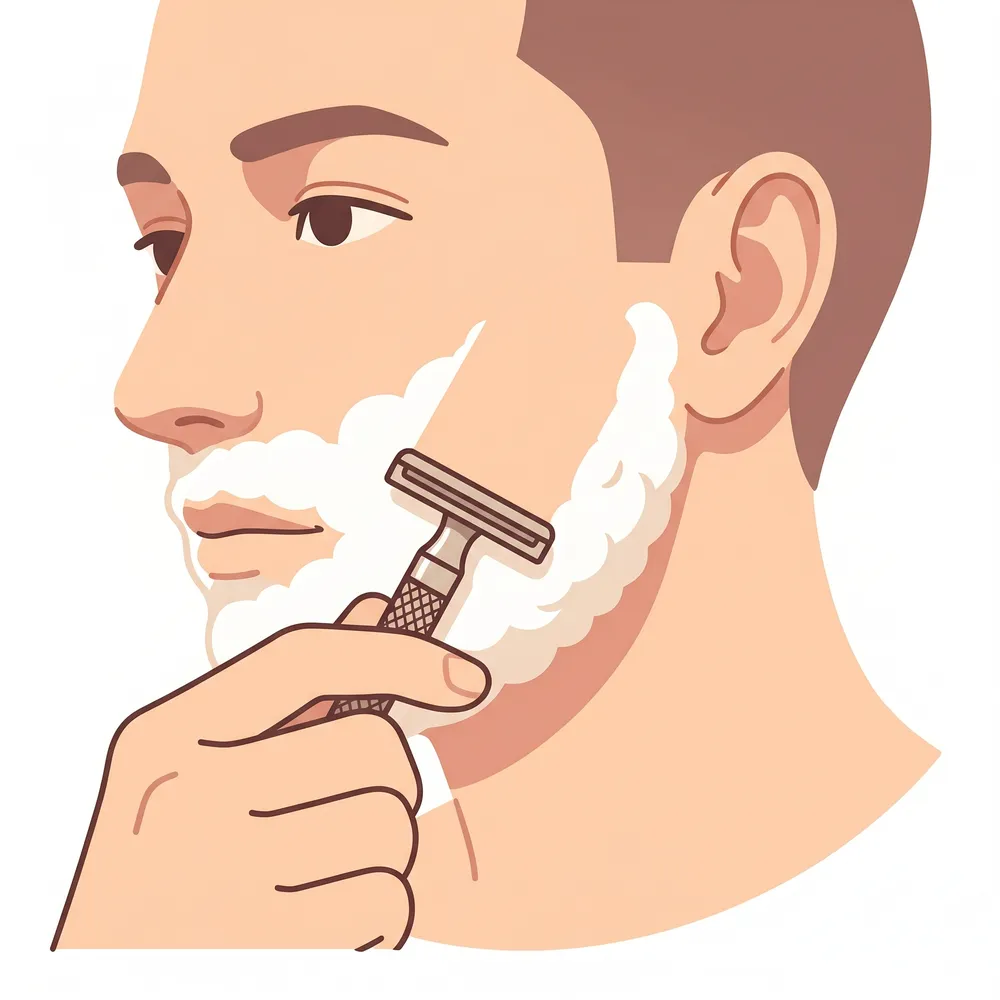
Hold the handle so the head sits at roughly 30 degrees to your skin. Too steep
and the blade scrapes; too shallow and it skips.
Then let the razor's weight do everything. Short strokes, with the grain first.
Rinse, re-lather, and only then go across the grain if you want it closer. Chasing perfection in
one pass is how people cut themselves.
Afterwards
Loosen the head, rinse the razor, and pat it dry — do not wipe the blade edge with a towel, which rolls the edge and kills it early. Stand it somewhere with airflow. Stainless will not rust, but water sitting under the blade will shorten the blade's life.
Frequently Asked Questions
Are Feather blades too sharp for beginners?
Not in a mild razor. The advice comes from people pairing Feather blades with aggressive vintage heads, where a lot of edge is exposed. In a mild head — including Feather's own razors — the sharpness means the blade severs hair instead of tugging it, which is what actually causes irritation. What Feathers genuinely punish is pressure, not inexperience.
How often should I change the blade?
Every 5–7 shaves, or the moment it starts tugging. Tugging means the edge has gone and the blade is pulling hairs before cutting them — which is exactly what causes razor burn and ingrown hairs. At around 20 cents a blade there is no reason to push it.
Do Feather blades fit non-Feather razors?
Yes — double-edge blades are a worldwide standard. Feather blades fit Merkur, Rockwell, Edwin Jagger, Muhle, vintage Gillettes, everything. It works the other way too, so you can try other brands in a Feather razor. Many wet shavers do exactly this: keep the razor, rotate blades until one suits their face.
Is a safety razor cheaper than cartridges?
By roughly 20× on consumables. Cartridge refills run $3–5 each; a Feather blade is about 20 cents. Even the $300 AS-D2 pays for itself within a few years, and the razor itself has no wear parts — solid stainless razors regularly outlive their owners.
Will a safety razor help with razor burn and ingrown hairs?
Usually yes, and the reason is mechanical. A multi-blade cartridge works by pulling the hair slightly proud of the skin with the first blade so later blades cut it below the surface. That is what produces ingrown hairs. A single blade cuts the hair at the surface and passes over your skin once instead of five times.
Can I take a safety razor on a plane?
The razor yes, the blades no — in carry-on. Most authorities including the TSA allow the handle and head in hand luggage but require loose blades to go in checked baggage. Blades are cheap and sold everywhere, so the simplest answer is to travel with the razor and buy a pack at your destination.
Final Thoughts: Buy the Blades First
Spend $20 on a hundred Hi-Stainless blades before you spend anything on a razor. If you already
own a double-edge razor, that alone may be the entire upgrade you needed.
If you do not, the Popular costs less than two packs of cartridges and answers the question
honestly. The AS-D2 is there when you know you want to keep doing this.
The smiths in Seki spent eight hundred years learning to put an edge on steel, and then spent
the last ninety applying it to the least glamorous object imaginable. Five minutes at the sink
every morning is a strange place to find that kind of history — but that is where it ended up.
Japanese High-End Tweezers: Pain-Free Precision
Japanese Kitchen Knives: Best Types & Brands