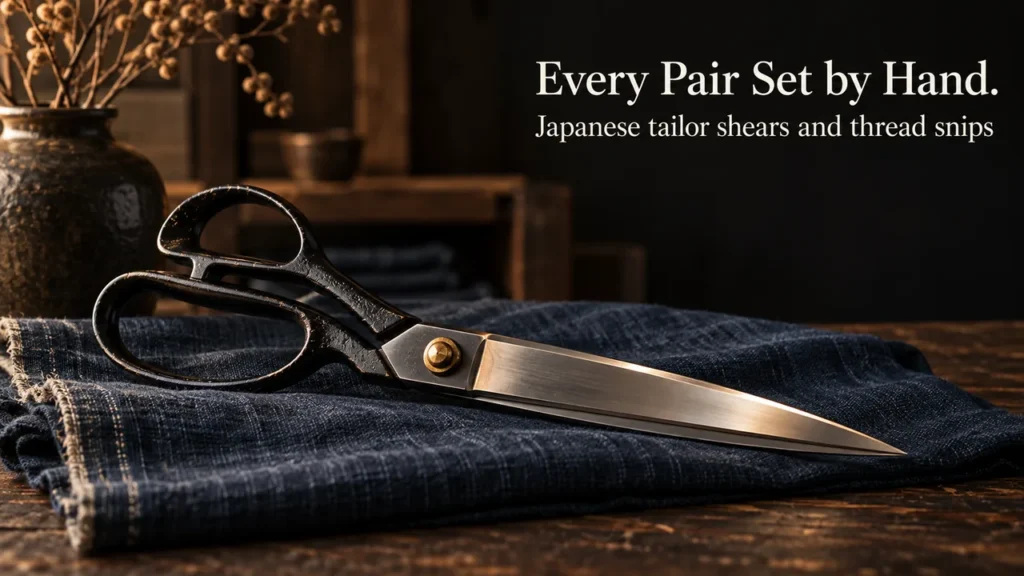
A Japanese pair of fabric shears doesn't cut well because its blades are sharp. It cuts well because its two blades rub against each other with great precision — and that one part is still set by hand.
Shozaburo, the Tokyo shear maker, puts it this way on its site: today most of the work has been mechanised, but "the important part that determines sharpness — the fine rubbing of the blades — can only be achieved by the long-practised skill and dedication of the maker." On its process list, second from last, that work has its own name: chōsei, adjustment. Each pair is set by a person.
So you can feel the difference in your hand, and when it goes out of true, it can be fixed. This guide covers where these shears came from, what they feel like to hold, the thread snips Japan kept when the rest of the world moved on, and how to make a pair last.
Quick Reference: Tailor Shears and Thread Snips
| Rasha-kiri (tailor shears) | Nigiri-basami (thread snips) | |
|---|---|---|
| Shape | X-type. Open the blades, then cut | U-type. Just squeeze |
| Used for | Cutting fabric | Snipping thread; embroidery and fine work |
| Size and weight | 24 cm (about 9.5 in) is standard; around 300 g (10–11 oz) | 105 mm (about 4 in) is standard; around 20 g |
| Blade construction | Both laminate hard steel to soft iron — which is why they can be re-trued | |
| In common | A person sets the blades last. Open and close them in your hand and you'll feel it. | |
1. Why Japanese: A Swordsmith's Sharpness, Still Cutting Cloth
Japanese tailor shears were made by a swordsmith
Yoshida Yajūrō, known by the smith's name Yakichi. His name appears on the sites of two entirely separate companies: Shozaburo in Tokyo and Misuzu in Hyogo.
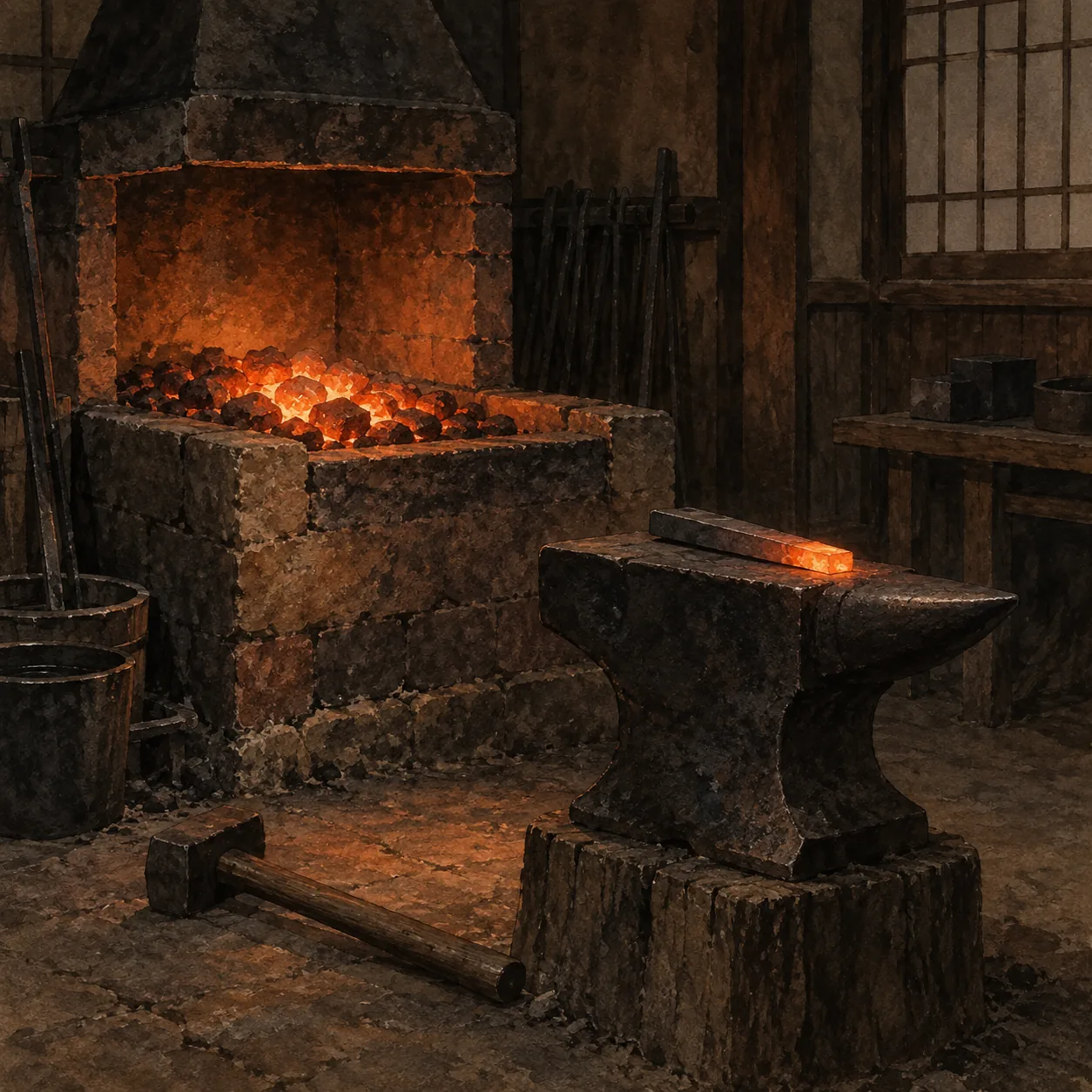
Shozaburo writes that Yajūrō, a swordsmith, "used his sword-making skills to research and make 'Japanese scissors'" and that he "gave Western-style shears the sharpness of a Japanese sword and made the whole pair lighter — this is regarded as the prototype of today's Japanese scissors." Misuzu explains the circumstances: apprenticed to a swordsmith at twelve, he could no longer make swords after the Meiji government banned them, and went on to create Japan's own rasha-kiri shears, handed down "by his apprentices, their apprentices, and theirs."
The imported ones were too big and heavy
From the end of the Edo period into Meiji, Western clothing spread, and its sewing tools came with it. Shozaburo notes that Western shears, able to cut curves through heavy cloth, "became absolutely essential in sewing" — yet "though functionally satisfactory, they were by no means satisfactory in quality." Misuzu adds that the rasha shears of the day were "large and heavy, and not easy for Japanese tailors to handle." The shape was right; it didn't suit Japanese hands. Yakichi remade it, and the Japanese shears you can buy today descend from that remaking.
"A sword's sharpness" isn't a figure of speech
A Japanese sword combines hard steel with soft iron: hard alone chips, soft alone won't cut. Today's shears are built the same way — Shozaburo's specification reads "high-grade cutting steel laminated with extra-mild steel" for the blades. The construction itself was carried over. And as section 4 explains, that lamination is also what makes them repairable.
Shozaburo tailor shears, 24 cm standard — the centre of that lineage
Made by Shozaburo in Adachi, Tokyo. Its founder, Miura Shozaburo, was a craftsman who inherited Yakichi's shear-making skills, the company says. Blades of high-grade cutting steel laminated with extra-mild steel; about 312 g with packaging. 24 cm is the standard size for tailor shears. If in doubt, this is the safe choice — most of this guide is also the story of this one pair.
2. Each Pair's Cut Is Set by a Person
The one step that wasn't mechanised
Shozaburo's process page says that once, every step — shaping the handles, attaching the steel, forging, grinding — depended on human hands, and that "today most of it has been mechanised." What was mechanisable was mechanised. Then: the fine rubbing of the blades, which determines sharpness, can only come from the maker's long skill. The single point that decides the cut stayed in human hands.
The second-to-last step is called "adjustment"
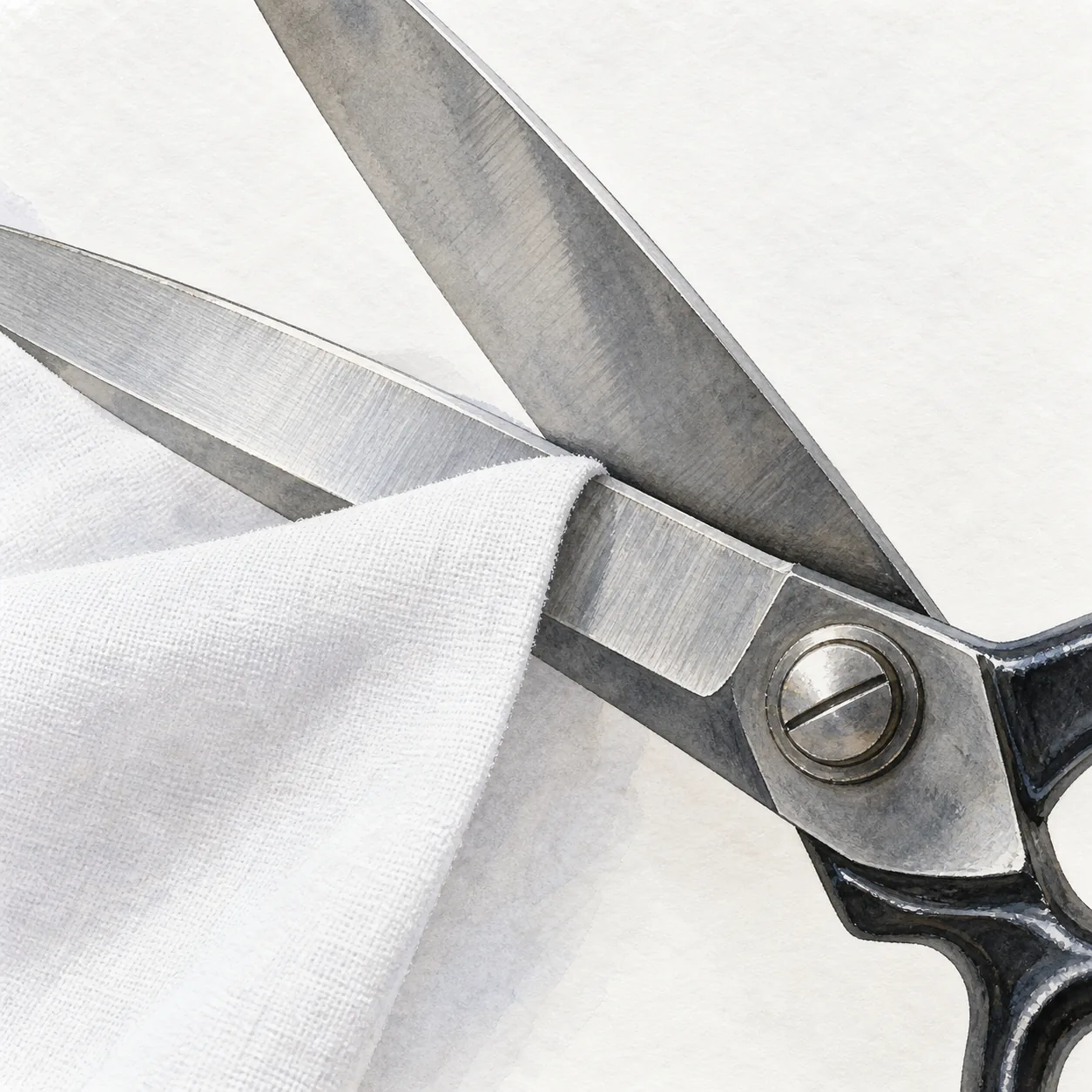
The process list runs: welding, forging, deburring, hardening and tempering, grinding, polishing, back-polishing — then adjustment: "the two blades are adjusted to rub against each other optimally; because the subtlety of the adjustment greatly affects sharpness, it is done carefully, one pair at a time." Last comes inspection, where a craftsperson who knows every step checks each pair and test-cuts fabric. Before a pair reaches a shop, it has already cut cloth once.
Left and right are made differently
Shozaburo's page on left-handed shears begins: "Cutting with scissors means rubbing two blades together." And it offers two kinds. The fully left-handed type has "a structure completely opposite to right-handed scissors," reversed down to how the blades overlap, so you can cut with the natural force of the left hand — though if you've been using right-handed shears left-handed, the company warns, the force you apply will be different. The left-handed-grip type has "only the handles made for the left hand"; the blades are the same as right-handed, so you can keep the same grip you're used to.
Don't tighten the screw — for the same reason
With use, the screw may seem to loosen and you'll want to tighten it. Shozaburo says plainly: "Please do not tighten the screw of the scissors. The blades will rub poorly and may be damaged." The blades are assembled with a certain play so they can rub; that setting is what the craftsperson adjusted, and tightening undoes it. If the cut seems to drop off, first wipe the blades: when cutting hard modern fibres, the company notes, debris and thread fragments stick to the blades and get in the way of smooth rubbing. Usually, that's the cause.
Shozaburo left-handed-grip STS-E2, 260 mm — made for the left hand
Shozaburo's left-handed-grip type: left-hand handles, right-hand blade structure, so if you've been using right-handed shears in your left hand, you can switch without changing your grip. For blades reversed too, there is the fully left-handed type, which takes relearning but cuts with the left hand's natural force. Left-handers don't have to settle for "nothing fits."
On Amazon.com, Shozaburo’s left-handed tailor shears — check the length on the listing:
Shozaburo Left-Handed Tailor Shears
Loading product details…
3. Pick One Up, and It's Heavy
24 cm, and around 300 g
First-time holders are usually surprised. Shozaburo's 24 cm weighs about 312 g with packaging — nothing like a pair of desk scissors. Bare steel blades, black-painted metal handles, and a weight that drops into your palm. It's not something to put up with: Misuzu writes that "once you're used to them, the weight of rasha shears is no burden at all; rather, it gives the user a pleasant feel."
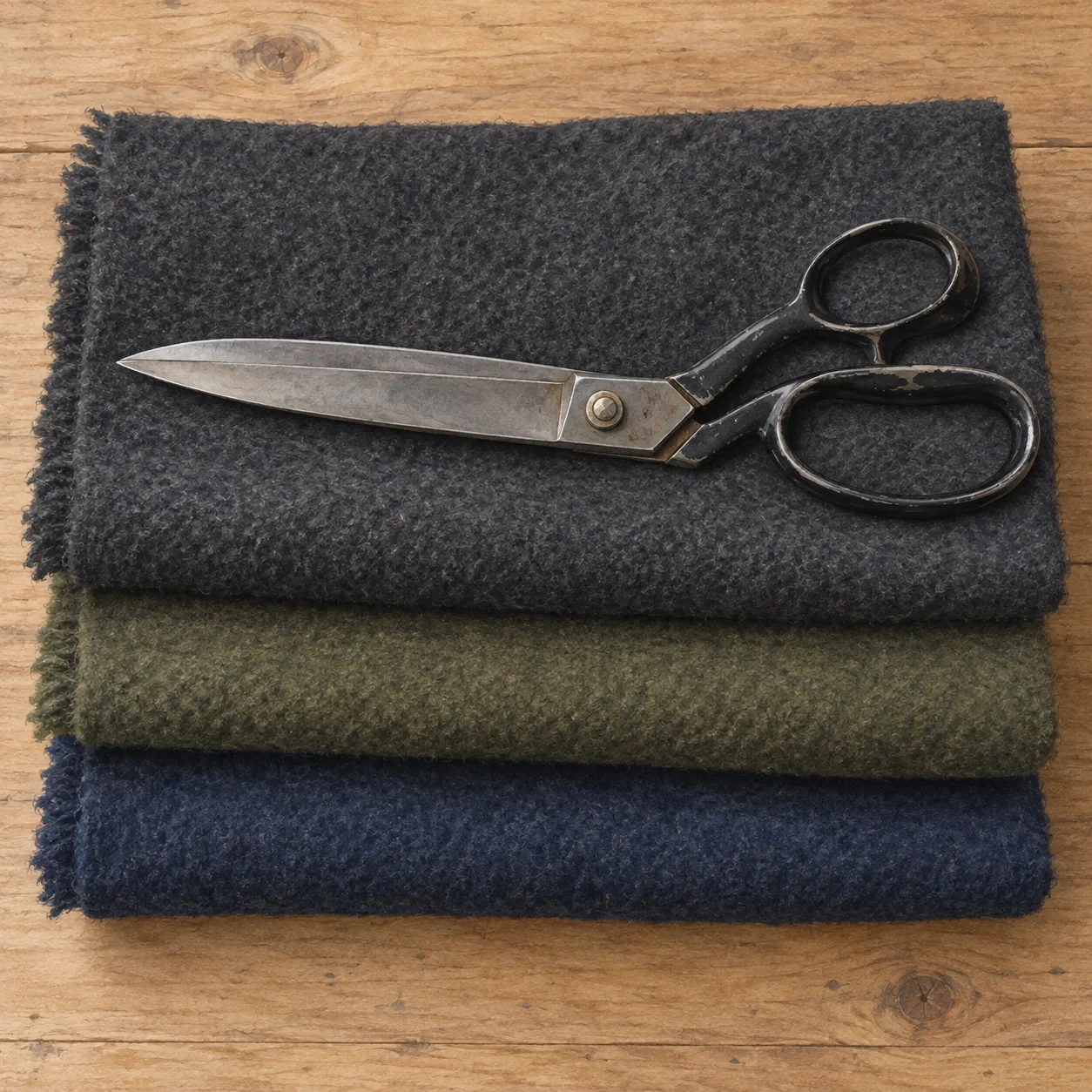
Made for heavy cloth — so light cloth is easy
They were made to cut thick woollens, which is why they're heavy, and that weight goes straight into the blade. And a tool built for heavy cloth cuts light cloth easily too — Misuzu notes they cut even the thin fabrics of kimono-making "with real ease." Cotton, linen, several layers of quilting: one pair covers most fabric at home.
"Rasha" was the name of a cloth
You'll see "rasha-kiri" shears in shops. Misuzu explains: the "rasha" in rasha-kiri is a transliteration of the Portuguese raxa — a heavy, finely woven woollen with a raised nap. "Rasha cloth, indispensable for winter clothing until before the war, has completely died out today, but the name is still used." The cloth disappeared; the tool kept its name. Rasha-kiri and tailor shears are the same thing.
Misuzu "Edogiku" tailor shears, 240 mm — a first pair
Made by Misuzu Hasami in Ono, Hyogo, founded in 1949, which describes itself as centred on Japan's traditional thread snips and rasha shears. Item 808, about 250 mm overall; blades of high-grade cutting steel, handles of white-heart malleable cast iron, country of production Japan. The listing's words: "remarkably light and smooth blade engagement." Here too, what's being described is how the blades meet.
4. Out of True? It Can Be Fixed
Only laminated blades can be re-trued freely
Shozaburo publishes a table of Japanese tailor-shear types and their properties. One column is correction — whether a bent or out-of-true blade can be set right. Only the laminated types (steel joined to soft iron) are marked "freely correctable." All-steel types are "difficult to correct," and cast types "cannot be corrected." Whether the blade is laminated decides whether that pair can be kept going. The sword-style construction from section 1 pays off here: because there's soft iron in it, it can be brought back into true.
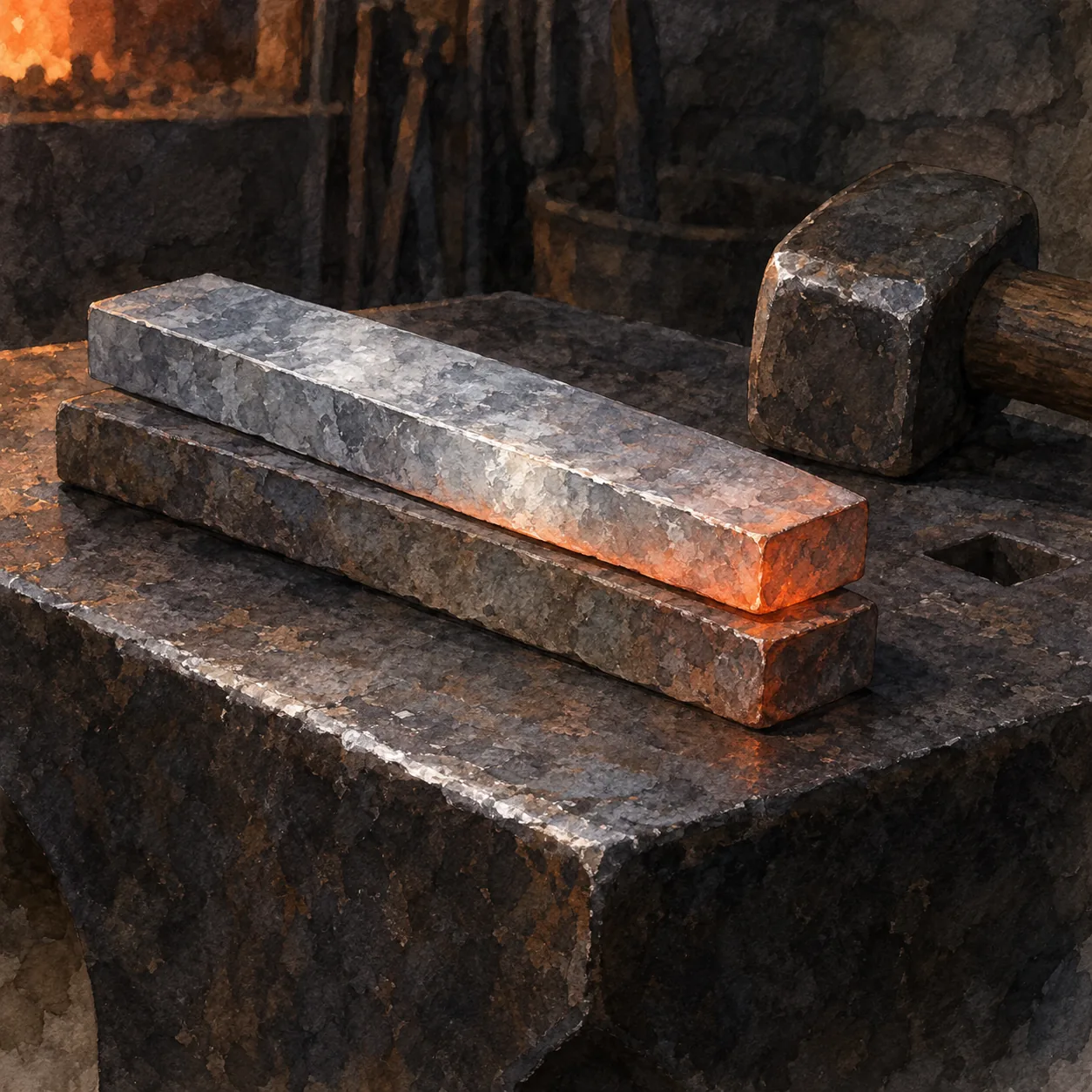
The makers take repairs
Shozaburo writes that "if repair makes them usable, we will repair them for a fee on request," and Misuzu lists a resharpening service on its site. Shozaburo's caveat is honest too: "because of the nature of edged tools, metal wears, so sharpness cannot be maintained permanently." Not forever — but repairable as it wears. A tool you can send back to the people who made it.
Where the laminate comes from changes the price
There are two ways to laminate, as Misuzu's catalogue explains. "Most thread snips made in Japan today use a 'composite steel' with iron and steel already joined" — buy the material, then shape it; that's the majority. The other is sōhizukuri, full fire-forging: "without composite material, iron and steel are heated to about 1,000°C and joined by hammering, shaping the form at the same time." Misuzu is frank: it's "extremely difficult, with many failures, an inefficient method," but allows "detailed finishing of the spring's strength, the grip, and the blade's balance." When the same shape comes at two prices, this is usually why.
Banshu Hamono, Mizuike Chōya hand-forged thread snips — from a single iron bar
From Banshu Hamono in Ono, Hyogo, finished by hand, one at a time, by the craftsman Mizuike Chōya, in blue steel (aogami). The listing describes it as made "from a single bar of iron to the final step by hand-forging, which is now rare" — the full fire-forging described above. The same maker also offers a composite-steel version of the same shape and use; the only difference is where the laminate comes from, and you can see it as two prices.
5. A Tool the World Dropped, Kept in Japan
Thread snips cut without opening
Nigiri-basami — thread snips: one U-shaped band of steel with facing blades at each end, and no screw anywhere. Also called wa-basami, Japanese scissors. Misuzu explains the difference from tailor shears: "the X-type must be opened before cutting, whereas U-type snips have the convenience of a one-touch squeeze." No opening needed, so they're a pleasure for small, frequent jobs like snipping thread. They're "indispensable for kimono tailoring and embroidery," Misuzu says.
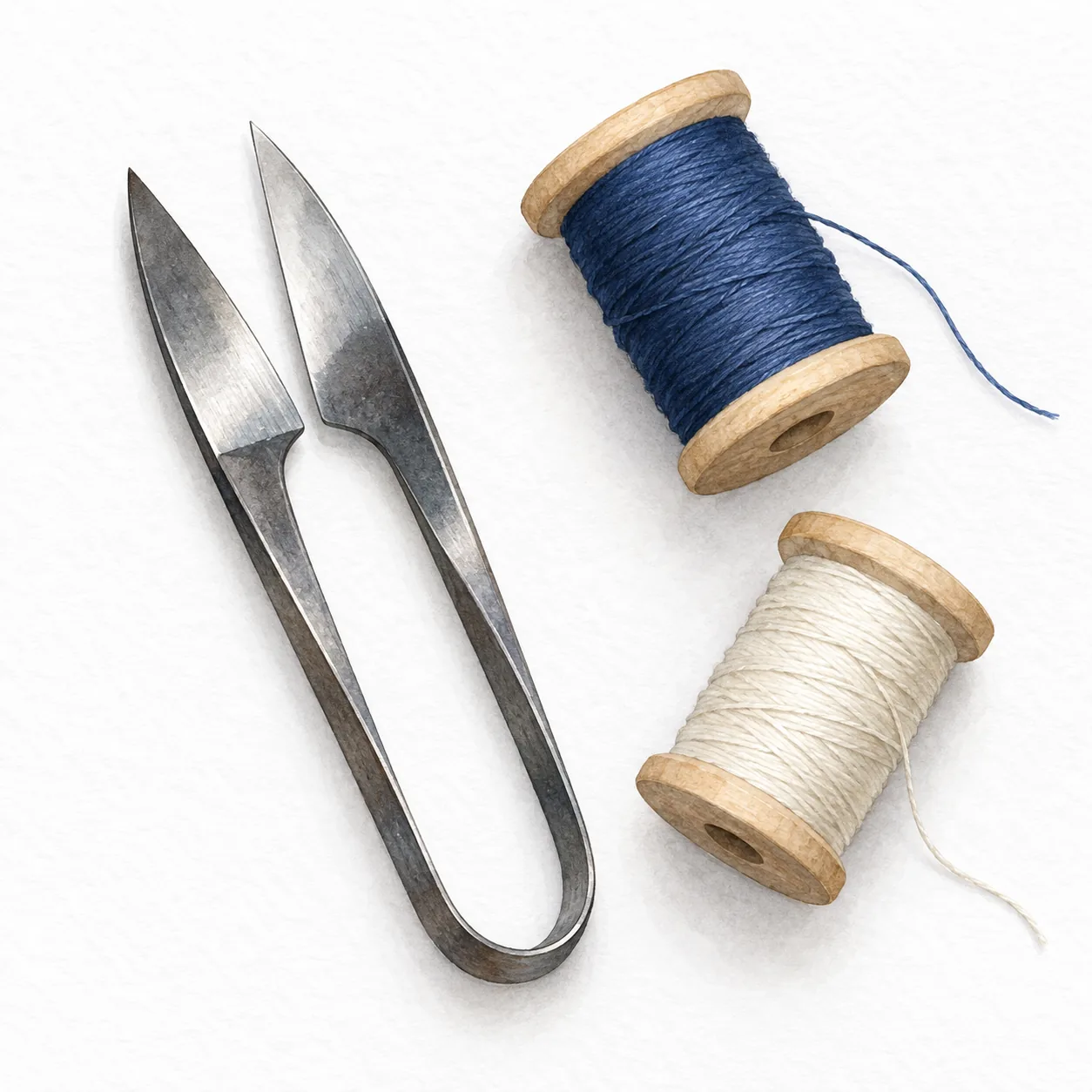
A tool the Japanese didn't let go
The same page says these snips have "the oldest history of any scissors, yet today are used almost only by the Japanese" — "traces remain in countries around the world, yet today they are used almost exclusively in Japan." Elsewhere they gave way to the more forceful X-type; in Japan they didn't, presumably because for fine handwork they were better. An example of their age: among the cosmetic implements of Hōjō Masako (1157–1225) preserved at Tsurugaoka Hachimangū in Kamakura are "thread snips with chrysanthemum patterns engraved on the blades." An 800-year-old tool and one you can buy today share the same shape.
Made in Ono, Hyogo
Misuzu's history of Banshu cutlery says production is concentrated in Ono (Hyogo) and Sanjo (Niigata), and that "thread snips still boast Japan's largest production volume" — meaning Ono. In 1980, Ono made 9 million scissors in total, 5.12 million of them thread snips and 2.35 million rasha shears; output has "declined substantially (1.04 million in 1995)," yet the town still leads. It began in the Edo period: "the founder of Ono's thread snips was Morimachi Sōbei, who returned home in 1783 after training in Osaka." One man's skill, still the town's industry two centuries later.
A town of abacuses and scissors
Ono has two local industries, according to Misuzu: scissors and the abacus (soroban) — the town makes "75% of the nation's abacuses," a trade going back about 400 years. Neighbouring Miki is the carpentry-tool town — saws, planes, sickles, trowels, chisels — but "makes few scissors." Each town makes its own thing. A tool you flick with your fingers and a tool you squeeze in your hand, gathered in one place.
Misuzu "Choki Choki" thread snips, short blade, 105 mm — start here
Misuzu's thread snips, item NO.505. 105 mm is the standard size; the blades are marked "high-grade cutting steel SK5." The most affordable item in this guide — a tool of an 800-year-old shape. Short and long blades are available; short tips are easier to aim at small spots, and fine if you mainly snip thread.
On Amazon.com, Misuzu’s 105 mm thread snips in a gold finish:
Misuzu Thread Snips, 105 mm (Gold)
Loading product details…
6. Testing in the Shop, and What to Do on Day One
- Open and close them in your hand. Misuzu writes: "the difference between top and ordinary is great, but hard to see from the shape alone. Open and close the blades in your hand, and even an amateur can tell from how the two blades rub." You can't see it, even in photos.
- Start with soft fabric. Shozaburo's usage page begins: "the edge is extremely sharp. Cutting thick or hard fabric from the start may damage the blades. Cut soft fabric several times before use." And wipe off the rust-preventive oil first, carefully, so it doesn't mark your fabric.
- Thick near the screw, thin at the tip. "For thread or thin material, use the tip of the blades." "For thick material, open and close only the part of the blades near the screw." The closer to the screw, the more force; if the tip slips on heavy cloth, feed the fabric deeper before closing.
- After use, oil and sheathe. "Wipe off dirt and dust with a dry soft cloth, lightly wipe the back of the blades and the screw with a cloth moistened with sewing-machine oil, and store in the sheath." And: "to keep them sharp longer, we recommend using separate scissors for each material." Keeping fabric shears for fabric is the extension of that.
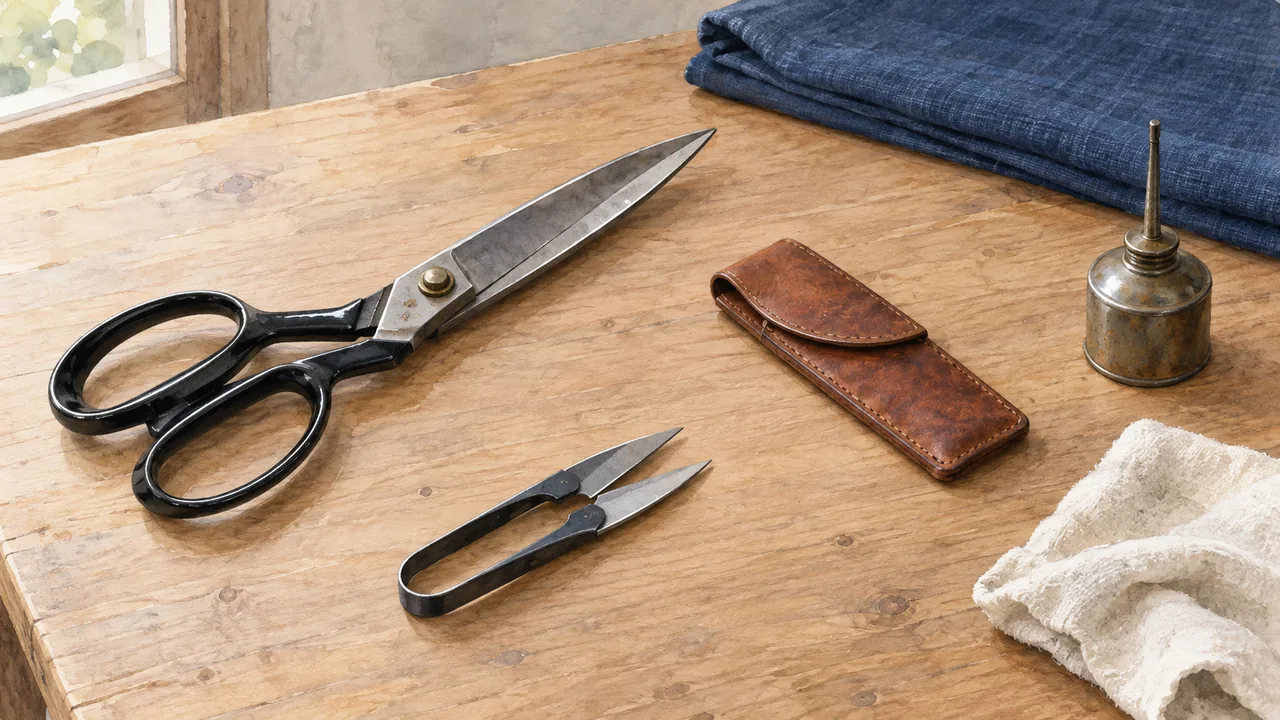
A Tochigi leather sheath for tailor shears — decide where they live
Shozaburo says to store them "in the sheath"; this is that sheath. The listing states it fits Shozaburo's 24 cm, in about 2 mm vegetable-tanned Tochigi leather, handmade by the maker's own shop. Shears loose in a drawer knock and chip. Leather darkens with use, growing alongside the tool.
7. Buying From Outside Japan
Shozaburo has an English site — built in the late 1990s and still online — with its story, production process, product line, and care instructions, plus its address, phone, and email. It doesn't mention international shipping, so contact the company to ask. We didn't find an English page for Misuzu.
We will add listings you can buy from abroad here as we confirm them, one product at a time.
8. Frequently Asked Questions
The screw feels loose. Should I tighten it?
No. Shozaburo says not to tighten it: the blades will rub poorly and may be damaged. They're assembled with some play so they can rub, and that setting is the craftsperson's adjustment. If the cut drops off, first wipe the blades — debris and thread fragments are usually the cause.
Can I cut paper with fabric shears?
Shozaburo doesn't say "never cut paper." It recommends keeping separate scissors for each material to make the edge last, and notes that debris from hard materials interferes with the blades' smooth rubbing. What you're protecting is the rubbing the maker set. Keeping fabric shears for fabric is the surest way.
24 cm or 26 cm?
24 cm (240 mm, about 9.5 in) is standard; choose it if unsure. Shozaburo's 24 cm is about 312 g with packaging. 26 cm is longer and heavier — useful for long cuts, but there's little reason to choose it as a first pair. The weight becomes pleasant once you're used to it.
I'm left-handed. Can't I just use right-handed shears?
You can, but there are two left-handed types. The left-handed-grip type has left-hand handles and right-hand blades, so you keep the grip you're used to. The fully left-handed type is reversed down to the blades, cutting with the left hand's natural force, though the force you apply changes. Keep your current grip, or cut naturally — that's the choice.
Can they be resharpened when they dull?
The makers may take them. Shozaburo repairs them for a fee where possible, and Misuzu offers a resharpening service. Not forever — metal wears — but because the blades are laminated, they can be kept going.
Do I need both tailor shears and thread snips?
They do different jobs. Shears cut fabric; snips cut thread, and with no opening motion they're a pleasure for small, frequent work. Snips are the cheaper to buy first. Using shears to snip thread wears their tips; two tools last longer than one.
Final Thoughts: Tools Set by Hand Can Be Repaired
Japanese shears cut because two blades are set by hand to rub just right — the one step their makers kept when everything else was mechanised. That's also why you shouldn't tighten the screw, why left-handed shears come in two kinds, and why you can feel quality by opening and closing them.
The lineage runs back to Yakichi, a swordsmith who gave Western shears a sword's construction; Shozaburo in Tokyo carries it on, and Misuzu in Ono, Hyogo, makes the thread snips Japan almost alone still uses. Laminated steel and iron means they can be re-trued and resharpened. Wipe them, oil them, sheathe them — and send them back when they need it.
Japanese Sewing Needles: How to Read Hiroshima Needle Sizes
Japanese Sewing Machines: The Ones Still Made in Japan