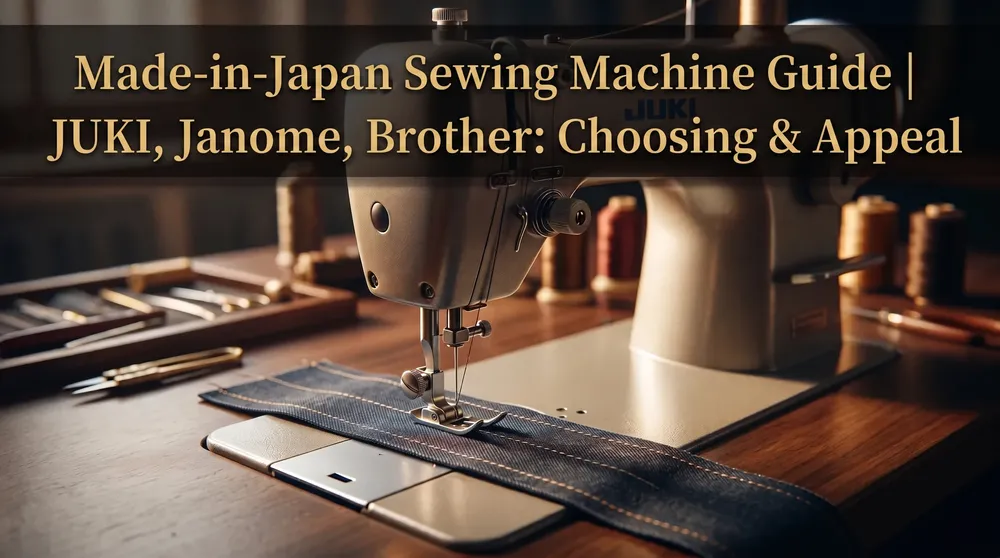
Most of the good domestic sewing machines in the world are Japanese. JUKI, Janome and Brother between them account for an enormous share of what is sold under every price point and, in the industrial world, under other names as well. If you are shopping for a serious machine, you are almost certainly shopping for a Japanese one already.
Which is exactly why you should not import one. All three sell locally, in your voltage, with a warranty and a dealer who can service the machine. This guide covers what actually separates these machines from cheap ones, how to choose between the three, and why the Japanese-market model is the wrong thing to chase.
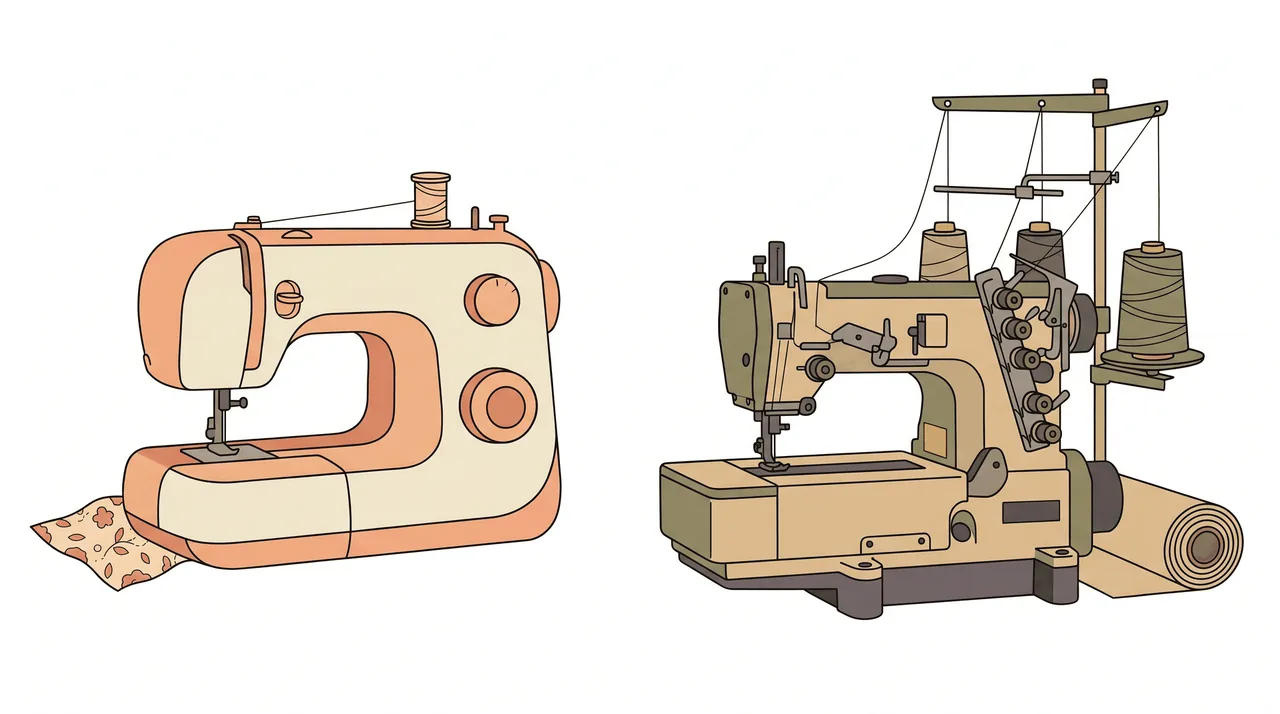
Home vs. Professional Machines
| Feature | Home (Computerized) | Professional (Straight-Stitch) |
|---|---|---|
| Stitch Variety | Dozens of patterns | Straight stitch only |
| Speed | Moderate | Extremely fast |
| Piercing power | Fine for everyday fabrics | Handles thick denim and leather |
| Buttonholes | Automatic, one step | None — needs a second machine |
| Repairable in 20 years | Depends on the circuit board | Usually yes — it is mechanical |
1. A Legacy of Mechanical Perfection
Sewing machines were one of post-war Japan's first export successes, and the reason is not romantic: they were a precision-machining product in a country that had a great deal of precision-machining capacity and needed something civilian to point it at. The designs were Western in origin. What Japanese makers did was refine the tolerances, and then keep doing it for forty years while most Western brands were bought, merged and moved.
That is the honest version of the story, and it explains something practical. The advantage is manufacturing consistency rather than any single invention. It is why a mid-priced Japanese machine feels notably better than a cheap one costing half as much, and why the difference is hard to see in a specification list — it lives in how well the parts fit each other.
Where the Names Come From
"Janome" translates to "Snake's Eye." The company was named for its pioneering round bobbin system, which looked exactly like a snake's eye and replaced the old, inefficient shuttle system, revolutionizing sewing speed.
2. The Secret to Beautiful Stitches
Why Weight Fixes Skipped Stitches
The complaint that sends people shopping for a better machine is almost always the same: skipped stitches, and fabric that puckers along the seam. Both usually trace back to the machine moving when it should not. A light chassis flexes as the needle bar reverses, and the feed dogs — the metal teeth that pull the fabric through — lose their grip for a fraction of a stitch.
The better machines answer that with mass. A die-cast aluminium frame instead of a plastic one, and feed dogs held to tighter tolerances. This is also why a good machine is heavy and an inexpensive one is easy to carry — the weight is doing work.
The result is consistency rather than perfection: stitch length that stays put as you change speed, and tension that does not need re-dialling every time you switch fabric. On silk and on canvas alike, it is the sameness you are paying for.
3. Piercing Power: Denim and Leather
Industrial Motors for the Home
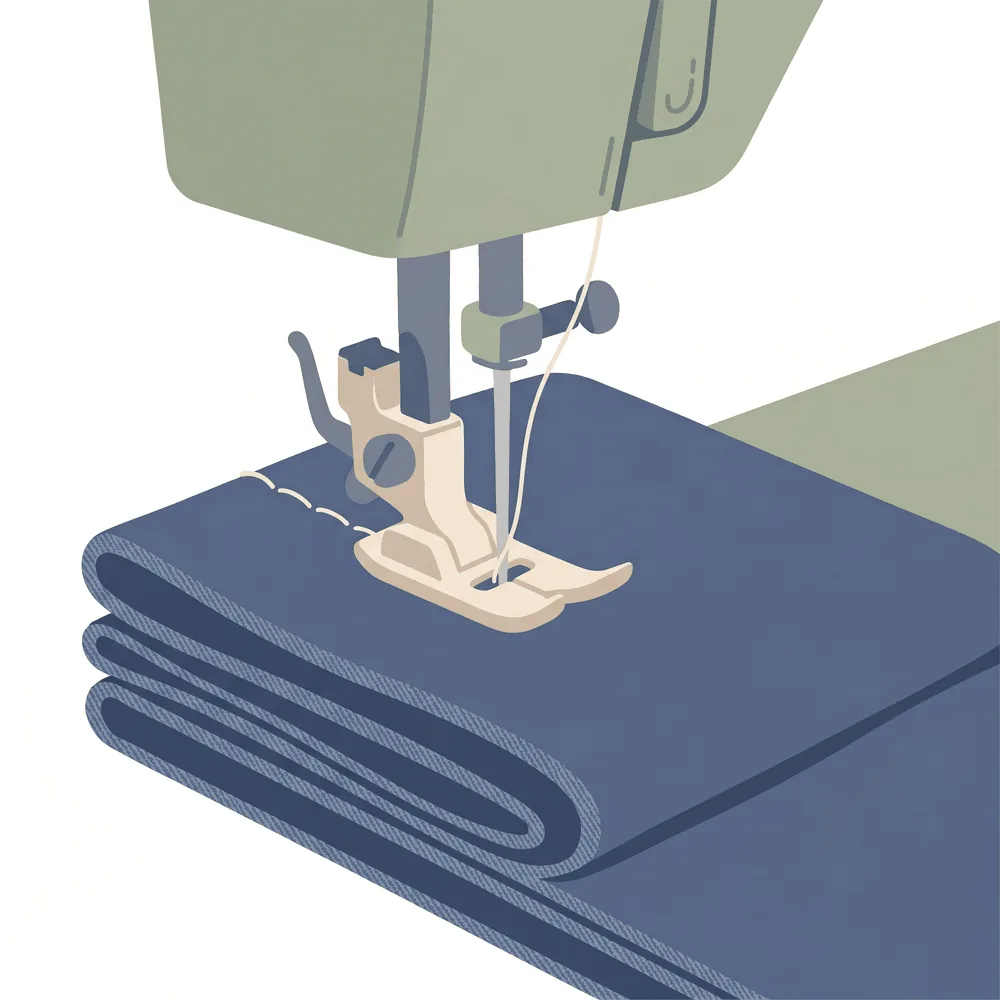
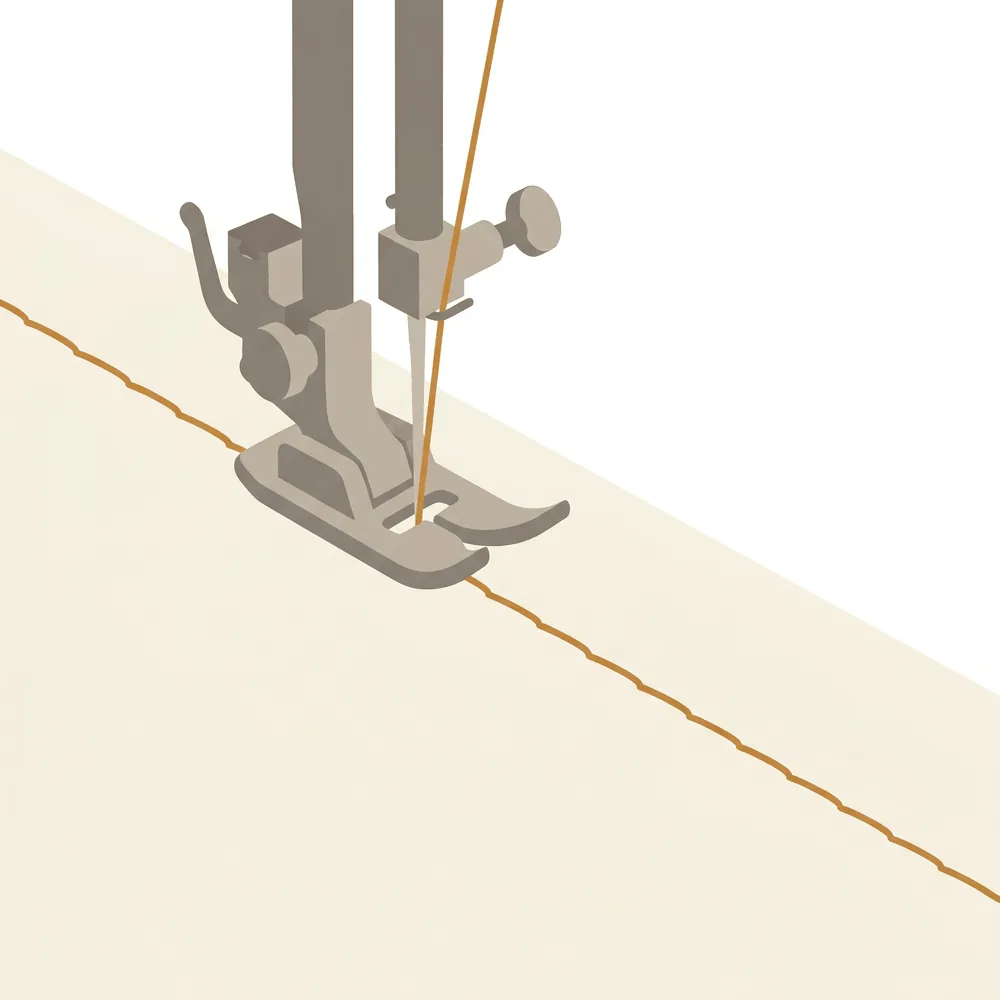
Semi-industrial machines such as the JUKI TL series borrow directly from the factory floor: a box-feed mechanism, a heavier motor, and an all-metal drive train. Box feed moves the fabric in a rectangular path rather than an oval one, which means the feed dogs stay level with the fabric for longer and do not drag the top layer against the bottom one.
In practice, that is the difference between sewing through eight folded layers of denim and stalling at six. The needle is not what fails first — the feed is. A machine that cannot keep hold of thick fabric will stitch on the spot, bunch the seam, and eventually snap the needle against a jammed layer.
⚠ The trade-off is real, though. These machines sew straight and nothing else. No zig-zag, no buttonhole, no stretch stitch. If you make bags, jeans and canvas goods, that is no loss at all. If you hem knit fabrics or make clothes with fastenings, you will need a second machine, and you should budget for it now rather than discover it later.
4. The Three Brands, and What Each Is For
All three sell worldwide, in local voltage, through their own dealer networks. The question is not which is best — it is which one matches what you sew.
JUKI
Choose it if you sew heavy things.
JUKI is first and foremost an industrial manufacturer, and it is one of the largest in the world. The domestic TL series is essentially a factory machine scaled for a table: straight stitch only, all metal, and genuinely fast. The Exceed line is the computerised home range if you want stitch variety from the same maker. For denim, canvas, bags and upholstery, this is the obvious first place to look.
Janome
Choose it if you want stitches and space.
Janome — the name means "snake's eye", after the round bobbin it introduced — built its reputation on computerised home machines that are pleasant to live with. Quilters gravitate to them for the throat space (the gap to the right of the needle, which decides how much rolled-up quilt you can physically fit) and for how quietly they run. If you want a hundred stitch patterns and a machine that is easy to learn, start here.
Brother
Choose it if you want embroidery.
Brother makes perfectly good ordinary machines, but the reason to single them out is embroidery: they lead the home and small-commercial embroidery market, and the software side — turning a logo into stitch data — is where the gap is widest. Brother is also the easiest of the three to buy and to get serviced in most countries, which counts for more than it sounds.
⚡ Do not import the Japanese-market model
Most of our guides end by explaining how to get hold of something that is hard to buy abroad. This one ends the other way round. All three of these companies sell in your country already, and the machine on the shelf there is the same engineering built for your supply.
Japan runs on 100V. A machine bought in Japan and shipped to a 120V country will usually run, and a 240V country will need a transformer outright — but that is the smaller half of the problem. The larger half:
- The warranty does not travel. A domestic Japanese warranty is not honoured by the local subsidiary.
- Neither does the dealer. Sewing machines need periodic servicing, and timing adjustments are not a home job. A local dealer will not take on a grey import, and parts are ordered against the local model number.
- The manual is in Japanese, and on a computerised machine so is the screen.
- Model numbers differ by region even when the machine is essentially the same, which makes accessories and feet a guessing game.
Buy the JUKI, Janome or Brother sold where you live. You are getting the same company's machine, plus the two things that decide whether you still own a working machine in fifteen years: a warranty, and someone who can service it.
5. How to Choose Your Machine
There is no best machine, only a machine that matches what you actually sew. Work out which of these you are, and the shortlist writes itself.
- Bags, denim, canvas, upholstery: a semi-industrial straight-stitch machine — the JUKI TL family is the reference. Straight stitch only, but it will go through layers that stop a home machine, and it is mechanical enough to still be serviceable decades from now.
- Clothes with fastenings and knits: a computerised home machine. You need a one-step buttonhole, a zig-zag, and a stretch stitch, and you will use all three constantly. Janome and Brother both compete hard here.
- Quilting: a computerised machine, but choose on throat space before anything else. A quilt has to be physically rolled up and fed through that gap, and no number of stitch patterns compensates for not fitting.
- Logos and monograms: a dedicated embroidery machine, which is a different category rather than a feature. Budget for the software and the stabiliser as well — they are not optional extras.
Two specs worth more than the stitch count
Throat space. The distance from needle to the machine's upright. It decides what you can physically manoeuvre, and it is the number quilters and bag makers regret ignoring.
How the presser foot pressure is adjusted. On thick or slippery fabric this is the dial that fixes problems, and cheaper machines simply do not have it. A machine with 200 decorative stitches and no pressure adjustment is worse for real garment sewing than one with 20 and a dial.
6. Lifelong Maintenance Tips
A Japanese sewing machine can easily last 20 to 30 years if cared for correctly. Follow these simple rules:
- Clean the bobbin area: After every major project, open the bobbin case and use a small brush (never canned air!) to remove lint. Lint buildup is the #1 cause of tension issues.
- Oil regularly: If you use a mechanical or professional machine, add a single drop of sewing machine oil to the designated metal joints every few months. (Note: Many computerized machines are self-lubricating).
- Change the needle: Needles blunt long before they look blunt. Roughly every 8-10 hours of sewing, or at the start of any project you care about. It is the cheapest fix for skipped stitches and pulled fabric, and the one people leave longest.
- Match the needle to the fabric: A ballpoint needle for knits, a sharp for wovens, a heavy gauge for denim. Using the wrong one causes exactly the faults people blame the machine for.
- Cover it: Dust in the tension discs and the feed mechanism does slow damage. The hard case or dust cover it came with is not decoration.
- Have it serviced: Every few years for a machine in regular use. A technician sets the hook timing and the needle-bar height — adjustments that drift slowly and cannot sensibly be done at home.
7. Frequently Asked Questions
Do Japanese sewing machines work on US/EU voltage?
The question is worth turning around: there is no reason to be buying a Japanese-supply machine in the first place. JUKI, Janome and Brother all sell locally in your voltage, with a warranty and a dealer. A machine bought in Japan runs on 100V, will need a transformer in a 220-240V country, and — more to the point — arrives with no warranty you can use, a Japanese manual, and a model number your local dealer cannot order parts against. Buy the same company's local model.
What is a "straight-stitch" only machine?
A machine built for pure power and speed. Because the needle does not need to swing left and right for zig-zags, the mechanical structure is incredibly rigid, allowing it to sew beautifully straight lines through very thick fabrics.
Is a computerized machine fragile?
No, modern boards are very durable. However, they are sensitive to power surges. Always plug a computerized machine into a high-quality surge protector.
Can I use generic thread?
You can, but you shouldn't. Cheap thread produces excessive lint that clogs the machine and breaks easily, causing tension issues. Always use high-quality thread like Gutermann or Mettler.
Why is my machine skipping stitches?
90% of the time, it is the needle. The needle is either dull, bent, inserted backwards, or the wrong size/type for the fabric you are sewing.
Are JUKI machines still made in Japan?
Some are; many are not, and this is true of all three brands. Higher-end and semi-industrial models are the ones most likely to be built in Japan, while volume home models are assembled in other Asian plants. That is normal for the category and not by itself a reason to avoid a machine — the design, tolerances and quality control are the company's either way. But it does mean "Japanese brand" and "made in Japan" are different claims, and if the second one matters to you, check the specific model rather than the badge.
8. Final Thoughts: Decide What You Sew First
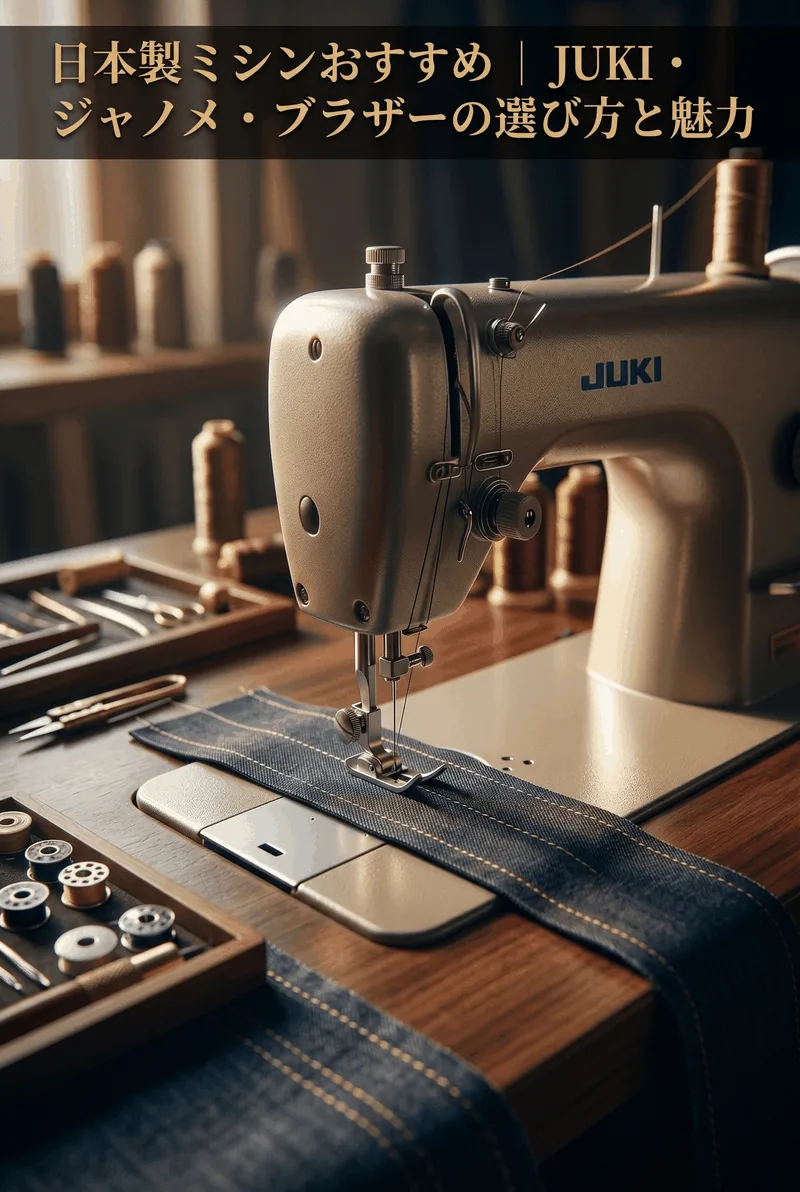
The short version: decide what you sew before you compare anything, because it settles the question almost by itself. Heavy goods point to a semi-industrial straight-stitch machine; clothes point to a computerised one; quilting points to whichever has the throat space.
Then check the two specs that get overlooked — throat space and presser foot pressure — rather than the stitch count on the box.
And buy it where you live. These are Japanese machines wherever you find them, and the local one comes with a warranty and someone who can service it. That is the version worth owning.
Japanese Selvedge Denim: 7 Best Brands for Life
Japanese Aprons: Why the Straps Cross at the Back