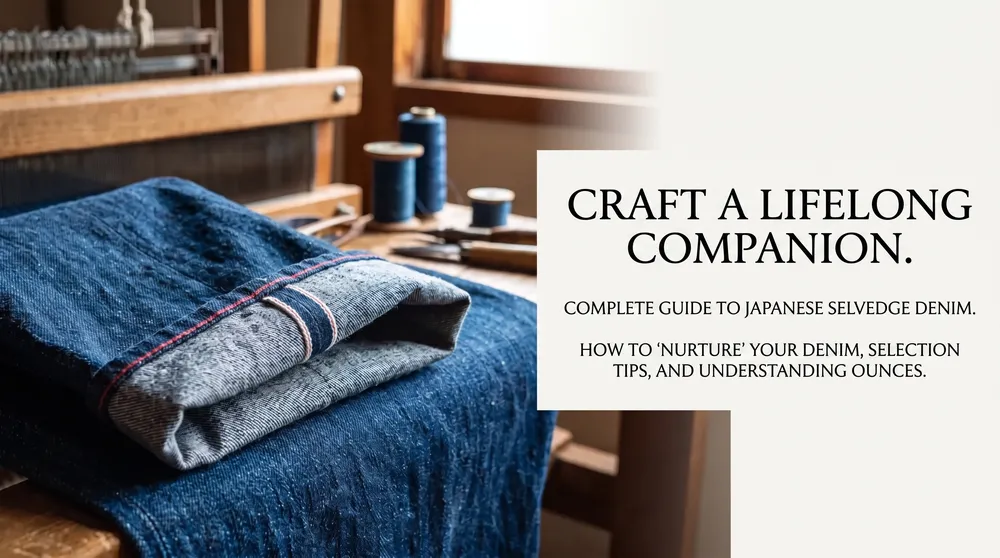
If you want one pair of jeans that gets better for the next ten years, buy Japanese selvedge denim in the
14–15 oz range, unwashed, in a straight fit. That is the short answer, and for most people it is the right one.
Nearly all of it comes from one town: Kojima, in Okayama Prefecture. The mills there still run
shuttle looms that were retired everywhere else in the world sixty years ago, and that single decision is
why denim obsessives in Los Angeles and Berlin buy jeans made in rural Japan.
This guide covers what the ounce number actually means for you, whether to buy rigid or one-wash, seven
brands worth your money, and — the part most English articles skip — where you can actually buy them
outside Japan.
Quick Reference: Japanese Selvedge Denim at a Glance
| Decision | Pick this | Why |
|---|---|---|
| Weight | 14–15 oz | Fades sharply but stays wearable year-round. 12 oz is soft but fades slowly; 19 oz+ is a project, not a wardrobe staple |
| Rigid or one-wash | One-wash for your first pair | Rigid shrinks up to 5% and you must size up correctly. One-wash has already shrunk — what you try on is what you keep |
| Fit | Straight or slim-straight | Heavy denim does not drape. Skinny cuts fight the fabric and blow out at the thigh |
| Sizing | Size up one from your usual | Japanese cuts run 1–2 sizes smaller than US sizing. This catches almost every first-time buyer |
| Budget | $150–$400 | EDWIN and Samurai sit at the accessible end; Resolute and Warehouse at the top |
| Buying from outside Japan? Only EDWIN and Samurai Jeans have a real presence on Amazon US. The other five are stocked by specialist shops that ship worldwide — covered in each brand section below. | ||
Why Japanese Selvedge Denim?
In the 1950s, American mills replaced their shuttle looms with projectile looms. The new machines were roughly ten times faster and produced wider, more uniform fabric. By every measure a factory cares about, it was an improvement. The old looms were sold off, and a great many of them were bought by mills in Japan.
Those Japanese mills — concentrated in Kojima, Okayama — kept running them. Not out of nostalgia, but because the slow shuttle loom produces something the fast one cannot: fabric with uneven tension, slubs, and irregularities baked into the weave. That irregularity is exactly what makes denim fade into a pattern instead of just going pale. A modern loom weaves flat, consistent cloth. It also fades flat and consistently, which is to say, boringly.
Okayama's other advantage is dyeing. The region's indigo rope-dyeing houses run cotton through indigo baths up to thirty times, building color in layers around a white core. When the outer layers abrade, the white underneath shows through. That is the fade. Denim dyed in fewer passes has less to give up, and the fade stops early.
Did you know: Kojima made school uniforms before it made jeans
Kojima's textile industry started with tabi — split-toe work socks — then moved to school uniforms,
and by the 1960s it was Japan's uniform capital. When domestic jeans production began in 1965, the town
already had everything it needed: heavy-duty sewing machines, indigo dyers, and workers who could handle
thick cotton.
Kojima did not become the denim capital of the world because someone planned it. It happened because a
town that made durable work clothes was handed a new kind of durable work clothes.
What "Selvedge" Actually Means
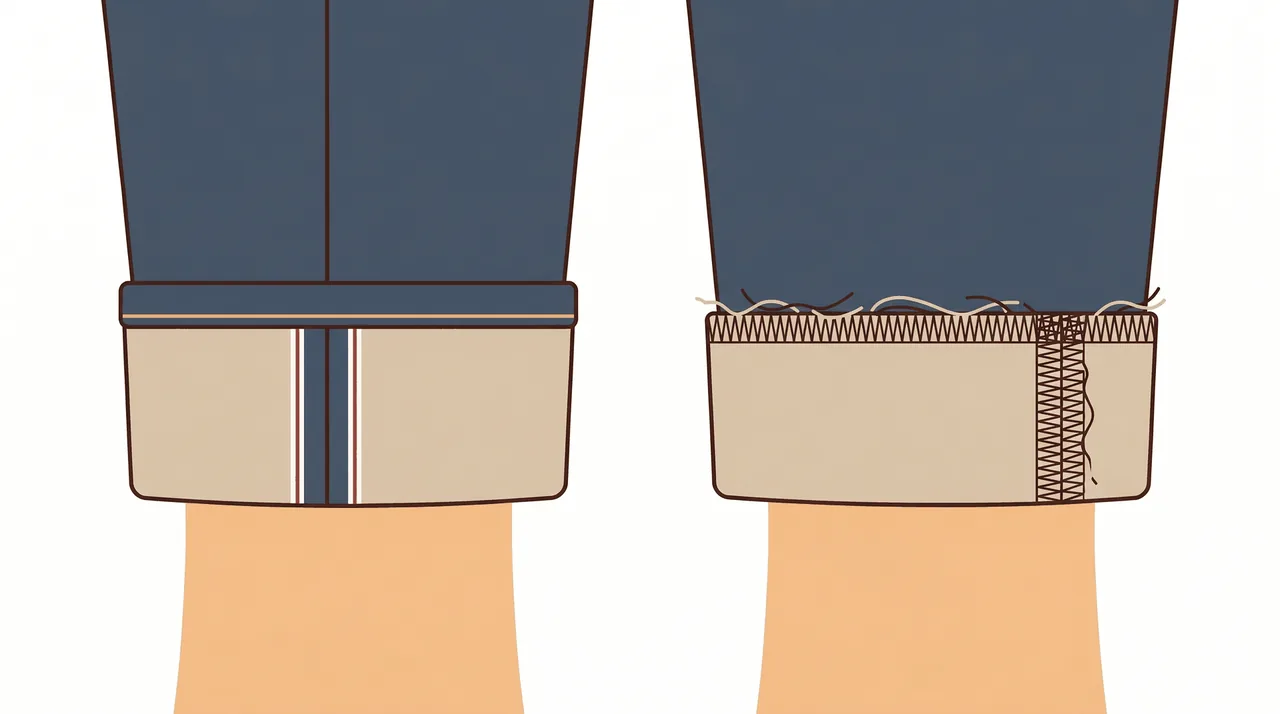
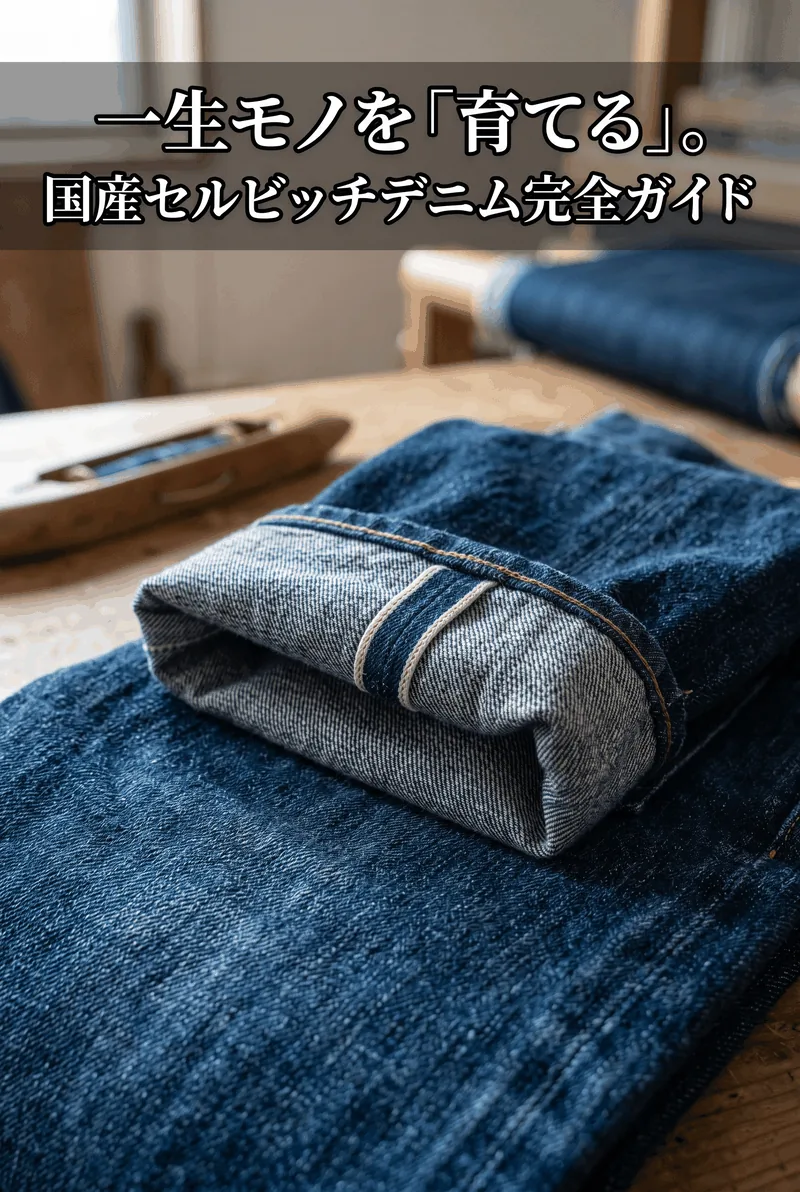
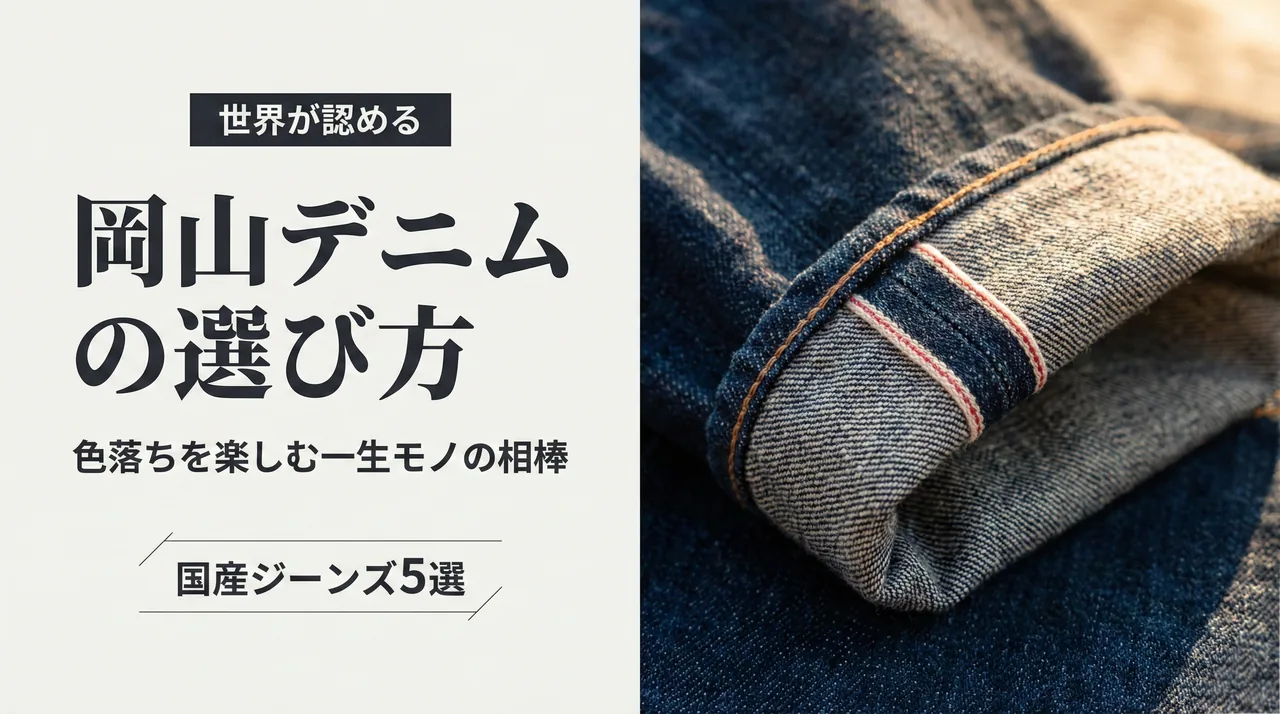
"Selvedge" is a contraction of self-edge. On a shuttle loom, a single continuous weft thread travels back and forth across the warp, turning at each side. Because the thread never gets cut at the edge, the fabric finishes itself — no fraying, no need for overlock stitching.
That is the entire technical meaning. It is a description of how the edge of the cloth was made, and nothing more. It is not a guarantee of quality, and this trips up a lot of first-time buyers: cheap selvedge denim exists, and excellent non-selvedge denim exists.
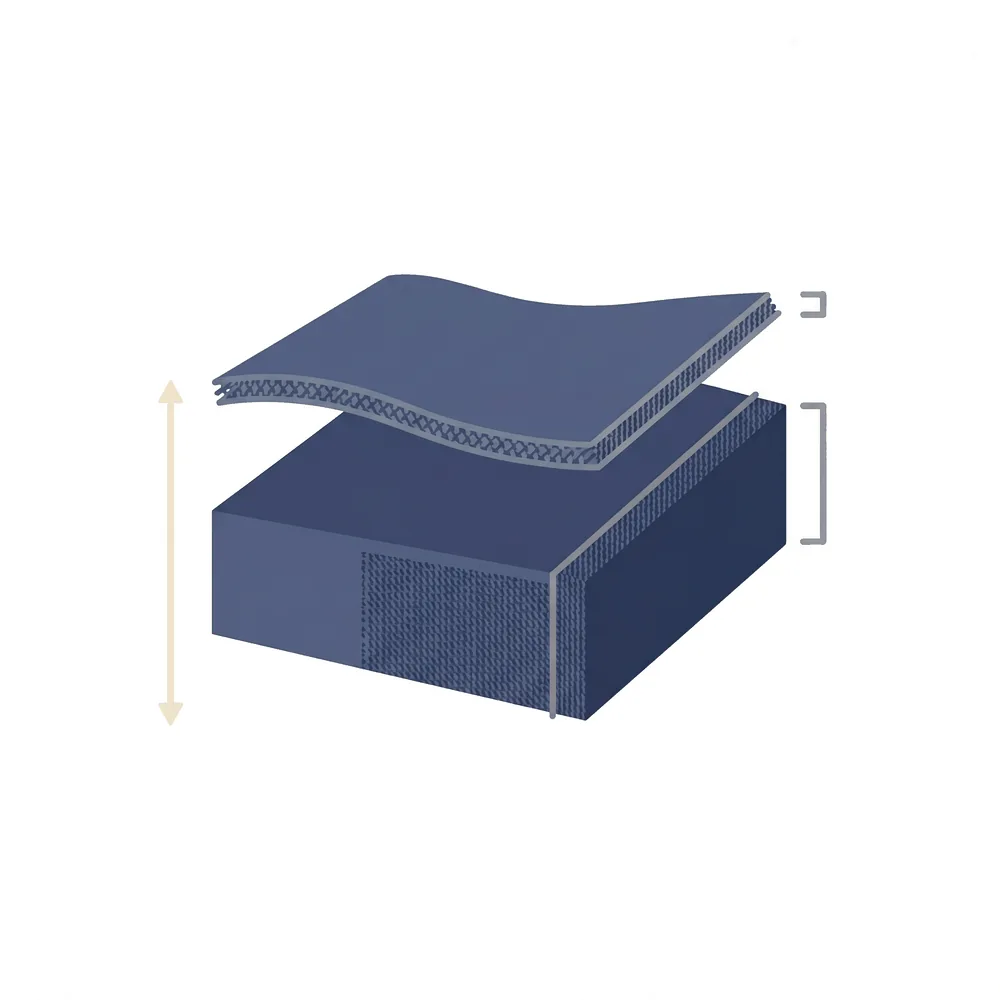
What selvedge does tell you is that the fabric came off a shuttle loom, and shuttle looms are slow. A shuttle loom weaves roughly one metre per minute against a projectile loom's ten or more, and it produces fabric about 80 cm wide instead of 150 cm. Nobody runs equipment that inefficient unless they are chasing a specific character in the cloth. So selvedge is a reliable signal — just not the thing itself.
The coloured line running down the outseam — the red line most famously — was originally a mill's way of marking its own fabric. Different mills used different colours. It has no function today beyond identification, which is why people cuff their jeans: it is the one part of the construction you can show someone.
How to Choose: Weight, Wash, and Fit
Weight: the ounce number, translated
Ounces measure the weight of one square yard of fabric. It is the single number that tells you the most
about how a pair of jeans will feel and behave.
12–13 oz is comfortable immediately and fades gradually. 14–15 oz is the
sweet spot most people should start at: substantial, fades with real contrast, still wearable in summer.
16–18 oz takes a few weeks to break in and holds its shape almost architecturally.
19 oz and above is genuinely difficult — stiff enough to stand up on its own, and hot.
Brands like Samurai build these deliberately for people who want the challenge.
Rigid or one-wash: the decision that ruins first pairs
Rigid (also sold as "raw" or "unsanforized") has never been washed. It will shrink — up to 5% in the waist and more in the length — the first time it meets hot water. You are expected to buy it oversized and shrink it to fit, which requires knowing the shrink rate for that specific fabric.
One-wash has been washed once by the maker, so the shrinking is done. What you try on is what you keep.
Buy one-wash for your first pair. The fade you get is nearly identical, and you skip the part where a $300 pair of jeans comes out of the bath three inches too short. Save rigid for when you know exactly what you want.
Fit: and the sizing trap
Heavy denim does not drape — it holds a shape. Straight and slim-straight cuts work with that. Skinny cuts fight it, and the fabric usually wins by blowing out at the thigh.
Then the part that catches almost everyone: Japanese sizing runs one to two sizes smaller than US sizing. A Japanese 32 is not a US 32. Ignore the tag, find the measurements in centimetres, and compare them against a pair you already own. Every specialist retailer worth buying from publishes a full measurement chart — use it.
Did you know: the "cheapest" jeans are usually the expensive ones
A $60 pair worn twice a week lasts about two years before the crotch goes. A $300 pair of Japanese selvedge,
worn the same way and repaired once or twice, routinely runs ten years or more.
Run the arithmetic per year and the gap closes almost entirely — and only one of the two ends up looking
better than the day you bought it.
7 Japanese Denim Brands Worth Your Money
These are grouped by what they are actually best at, not ranked. Availability outside Japan varies a great deal, so it is noted for each one.
RESOLUTE — the one to buy if you only buy one
Founded by Yorimitsu Hayashi, who previously created DENIME. Resolute does one thing: a small number of cuts, refined continuously, with no seasonal collections. The 710 is the reference point — a straight leg that reads as clean rather than vintage-costume.
- Weight
- Around 14 oz
- Made in
- Okayama, Japan
- Best for
- Anyone who wants selvedge denim that looks like well-cut trousers
- Price range
- $300–$400
Perfect for: The reader who wants one excellent pair and no hobby attached.
Not stocked on Amazon US. Specialist retailers in Japan and North America carry it and ship internationally.
WAREHOUSE & CO. — reproduction taken seriously
Warehouse reverse-engineers specific vintage garments down to the yarn irregularities and thread composition, then reproduces the fabric rather than approximating it. The Duck Digger line is their reference work.
- Weight
- 13–15 oz depending on model
- Made in
- Osaka / Okayama, Japan
- Best for
- Getting a 1940s–50s fade without owning a museum piece
- Price range
- $300–$400
Perfect for: Readers who care which decade their jeans are pretending to be from.
Not stocked on Amazon US.
FULLCOUNT — the soft one
Fullcount was the first Japanese brand to build jeans from Zimbabwe cotton, which has an unusually long staple length. The result is denim that feels broken-in far earlier than its weight suggests, without giving up fade contrast.
- Weight
- 13.7 oz (1101 model)
- Made in
- Osaka, Japan
- Best for
- People who have tried raw denim before and hated the break-in
- Price range
- $250–$350
Perfect for: Anyone who wants the fade without the first three uncomfortable weeks.
Not stocked on Amazon US.
SAMURAI JEANS — the heavyweight specialists
Samurai built its reputation on fabric other brands consider impractical — 19 oz, 21 oz, and beyond — and on some of the most aggressive fade contrast available. Their standard 15–17 oz models are far more wearable and still fade hard.
- Weight
- 15 oz to 21 oz+
- Made in
- Osaka, Japan
- Best for
- Maximum fade contrast; heavyweight denim as a deliberate project
- Price range
- $250–$400
Perfect for: Readers who want their jeans to be a five-year commitment, visibly.
Sizing runs 1–2 sizes small against US sizing — check measurements, not the tag.
STUDIO D'ARTISAN — the one that started it
Founded in 1979, Studio D'Artisan is the oldest of the Osaka brands and the one that established the whole category of Japanese repro denim. The pig mascot on the patch is a genuine piece of denim history rather than a marketing device.
- Weight
- 14–15 oz on core models
- Made in
- Osaka, Japan
- Best for
- Buying the original rather than an interpretation of it
- Price range
- $250–$350
Perfect for: Readers who want the brand with the longest continuous history.
Runs its own English-language store with international shipping.
SUGAR CANE — American workwear, made better
Part of the Toyo Enterprise group. Sugar Cane is best known for blending sugar cane fibre into the cotton, which produces a slightly drier hand and a distinctive slub. The Hawaii model is the one people mean when they mention the brand.
- Weight
- Around 14 oz
- Made in
- Japan
- Best for
- A fade with visible texture rather than smooth gradients
- Price range
- $200–$300
Perfect for: Readers who want something recognisably different in the weave.
Occasionally appears on Amazon US through third-party sellers; stock is unreliable.
EDWIN — the easiest one to actually buy
Edwin has been making jeans in Japan since 1947 and is the only brand here with a proper Amazon US storefront. Watch the label: most of Edwin's range is produced outside Japan. The Made in Japan line is the one relevant to this guide.
- Weight
- Varies by model
- Made in
- Japan (Made in Japan line only)
- Best for
- A first selvedge pair without an import order
- Price range
- $150–$250
Perfect for: Readers who want to try Japanese denim without committing $300 up front.
Confirm "Made in Japan" on the specific listing — the wider Edwin range is produced elsewhere.
How to Fade Them Properly
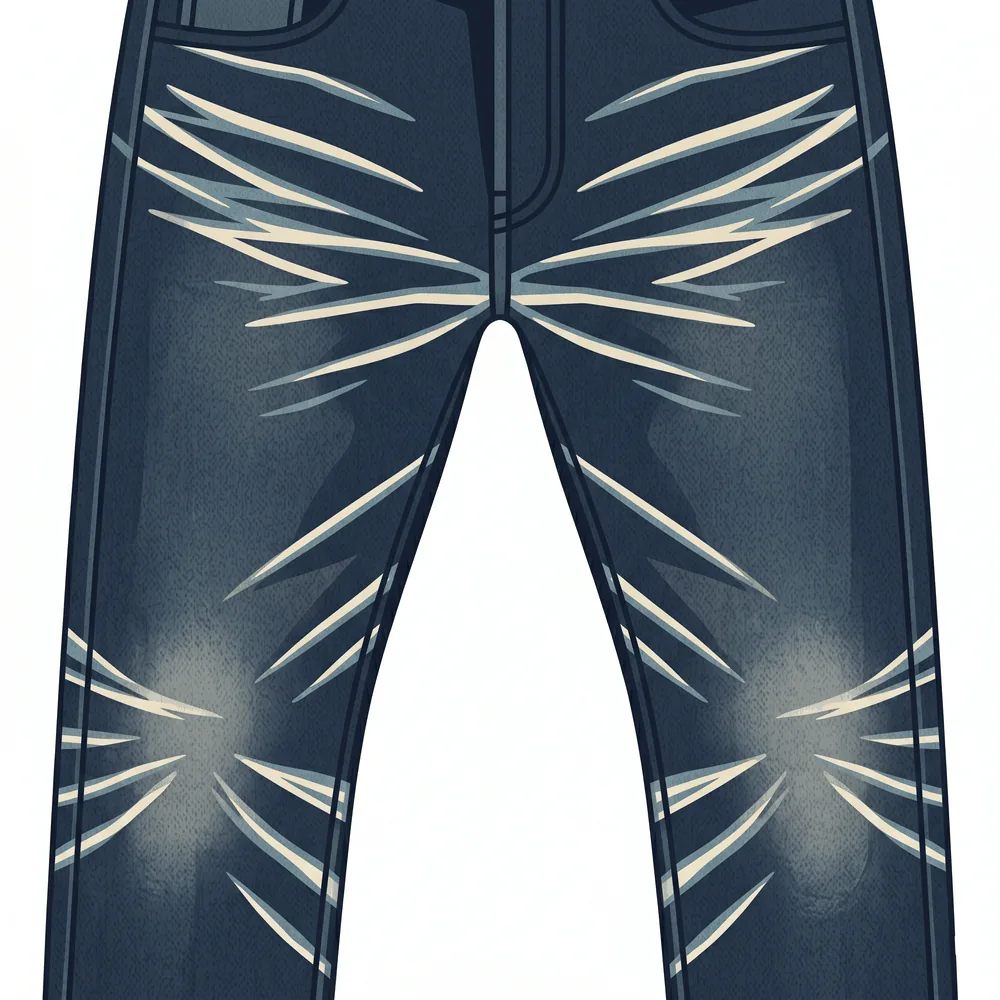
Fades are just abrasion. Where the fabric bends and rubs repeatedly, indigo leaves and the white core
shows. The named patterns — whiskers at the hips, honeycombs behind the
knees, stacks at the hem — are simply the places your body creases the denim most.
This means the fade is a record of how you actually live, which is the entire appeal. It also means you
cannot rush it, and attempts to force it look forced.
The washing question
You will read advice to avoid washing for six months. Ignore it. That idea comes from an era when contrast was prized above everything, and it does real damage: trapped grit acts like sandpaper on the fibres, and denim that is never washed wears through at the crotch far sooner.
A practical rhythm: wash when they smell or look dirty, roughly every one to two months of regular wear. Turn them inside out, use cold water and a small amount of mild detergent, and hang them to dry. You lose a small amount of contrast and gain years of wearable life.
Skip fabric softener entirely — it coats the fibres and flattens the fade. And do not use a dryer on rigid denim unless you have already shrunk it and know what it does.
Repairs are normal, not failure
The crotch and the knees go first. Both are routinely repaired by darning specialists, and a repaired pair of Japanese denim is not a compromised pair — it is the expected midpoint of a ten-year garment. Most cities with a denim shop have someone who does this; many Japanese brands offer repair services directly.
Frequently Asked Questions
What is the difference between selvedge and raw denim?
They describe two completely different things, and a pair of jeans can be one, both, or neither. Selvedge refers to how the edge of the fabric was woven — on a shuttle loom, which finishes its own edge. Raw (or rigid) means the finished garment has never been washed. Most Japanese selvedge denim is sold raw, which is why the terms get used interchangeably, but they are not the same claim.
Are Japanese jeans worth the price?
If you wear jeans regularly, yes — on cost per year they are competitive with cheap denim. A $60 pair worn twice weekly typically lasts around two years. A $300 Japanese pair, worn the same way and repaired once, commonly runs ten years or more. The arithmetic works out close to even, and only one of them improves with age. If you wear jeans a few times a month, the case is much weaker.
How do I know what size to buy?
Ignore the tag size and compare measurements in centimetres against jeans you already own. Japanese sizing runs one to two sizes smaller than US sizing. On top of that, rigid denim shrinks up to 5% on first wash, so a rigid pair must be bought deliberately large. Every specialist retailer publishes a full measurement chart — waist, thigh, front rise, hem — and that chart is the only reliable guide.
How often should I wash raw denim?
Every one to two months of regular wear. The popular advice to hold out for six months maximises fade contrast at the cost of the garment's life — dirt trapped in the weave abrades the fibres from inside. Wash cold, inside out, with a small amount of mild detergent, and hang dry. Never use fabric softener.
Where can I buy Japanese denim outside Japan?
Two routes: Amazon US for Edwin and Samurai Jeans, and specialist retailers for everything else. Denimio ships worldwide from Japan and carries most of the brands here. In North America, Blue in Green (New York) and Division Road stock the Osaka brands. Studio D'Artisan runs its own English-language store. Buying through a specialist is usually better anyway — they publish full measurements, which Amazon listings rarely do.
Can I put selvedge jeans in the dryer?
Not if they are rigid and you have not shrunk them yet. Heat will shrink unsanforized denim unpredictably, and a pair that fit before the dryer may not fit after. Once a pair has been through its first hot soak and settled, a cool tumble is survivable — but hang drying is still better for the fabric and costs you nothing but time.
Final Thoughts: Buy Once, Then Wear Them Out
Start with 14–15 oz, one-wash, in a straight fit, sized off measurements rather than the tag. That
combination has the highest chance of becoming the pair you actually reach for.
Then wear them. Wash them when they need it. Get them repaired when they tear.
The mills in Okayama kept those slow looms running because someone believed the fabric mattered more than
the throughput. Six decades later, that decision is why a pair of jeans made in a small Japanese town
will outlast almost anything else in your wardrobe — and why, in three years, they will look like
nobody else's.

Best Okayama Denim Brands: 5 Japanese Jeans for Life
Japanese T-Shirts: 7 Heavyweight Brands That Won't Go Sheer