"I want to find one great pair of jeans and let them become my own over time."
If that sounds like you, Okayama denim is where to look — though with so many brands, knowing where to start takes some guidance.
I've been wearing Japanese-made jeans since my 20s. The short answer: if you're buying your first pair, start with a heritage brand that doesn't cut corners on fabric.
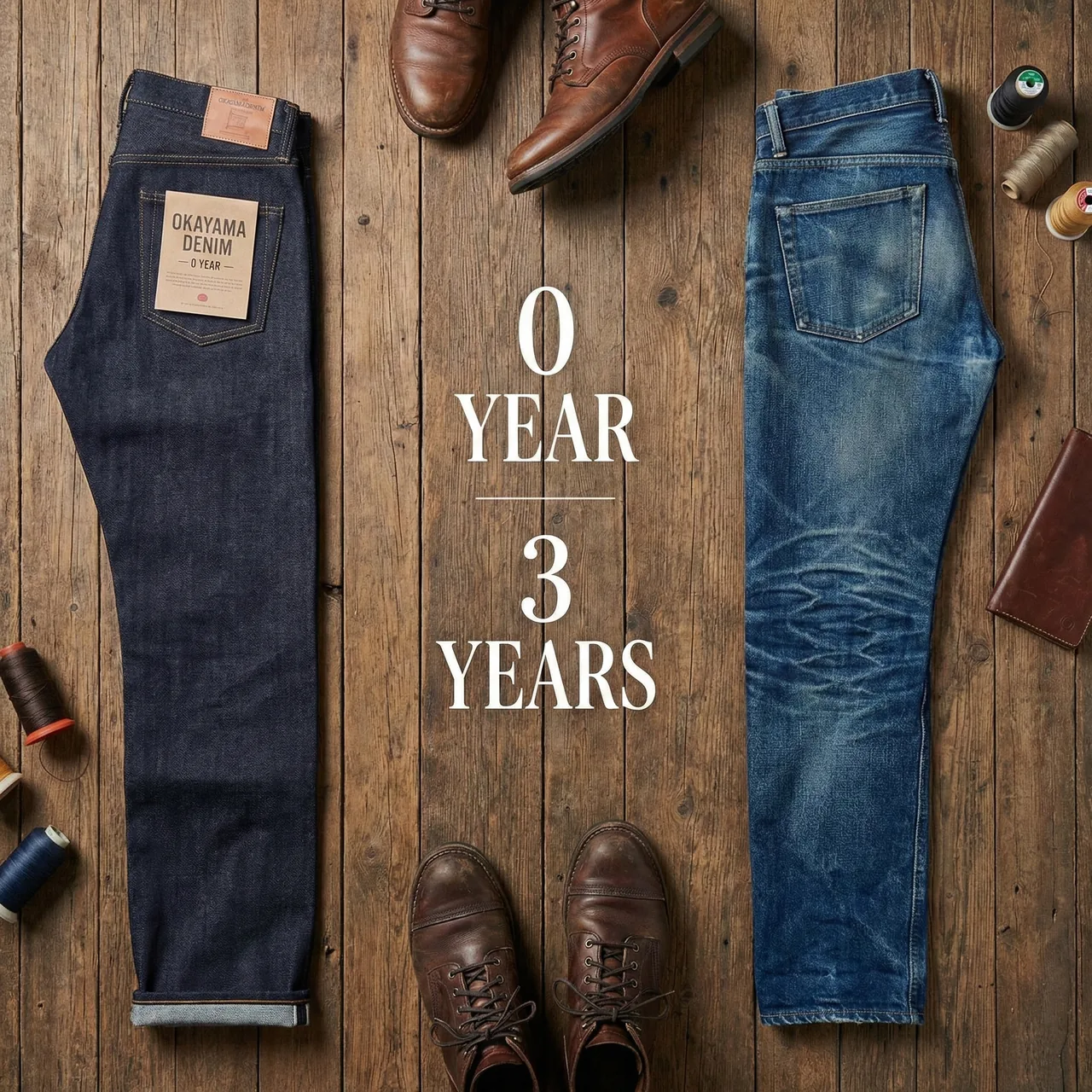
The reason: the real payoff of Okayama denim isn't how it looks when you buy it — it's the beautiful fading that emerges after three years of honest wear.
In this guide, I draw on years of personal experience to recommend 5 brands worth owning for life, and explain exactly how to choose a pair you won't regret.
Fast fashion will never give you what these jeans can. Find your pair.
Quick Reference: Okayama Denim Brands at a Glance
| Brand | Highlights | Silhouette | Best For |
|---|---|---|---|
| Momotaro Jeans | Japanese selvedge, deep indigo, dramatic fading | Straight / relaxed | Purists who want to grow them over years |
| JAPAN BLUE JEANS | Comfort-first, stretch options available | Tapered / slim | First Okayama denim purchase |
| Douniemu | Vintage reproduction, fading-first philosophy | Straight | Vintage enthusiasts |
| TCB JEANS | Extreme weight, built tough for hard wear | Straight | Those who want rugged, dramatic wear patterns |
1. Why Is Okayama Denim World-Class? The Old Loom Behind Color and Durability
The jeans made in the Kojima district of Kurashiki, Okayama are considered some of the finest in the world — and it comes down to one commitment: using old shuttle looms that most manufacturers abandoned long ago for being too slow.
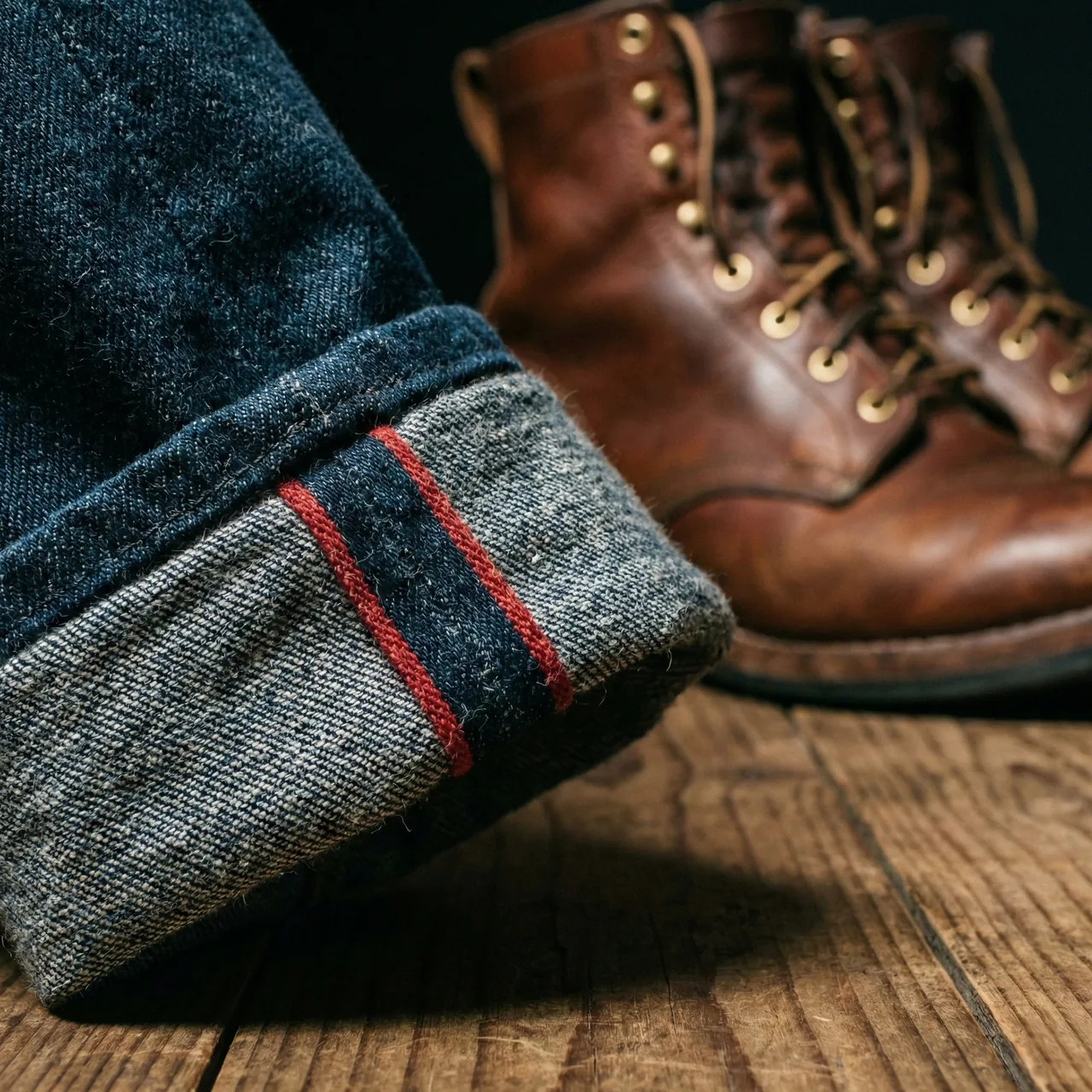
Selvedge (red ear): the mark of the old loom
Mass-produced denim has a uniform, flat surface. Okayama denim has a subtle texture — small irregularities woven into the fabric at the thread level.
As you wear the jeans, friction works those ridges down into the distinctive highlights of serious denim: the sharp vertical "tate-ochi" fading along the thigh, and the "ten-ochi" whisker spots that form at stress points.
When you roll up the hem and see a red woven edge — the "selvedge" — that's proof the fabric came off a shuttle loom. It's not just a finish: it becomes part of the look.
Three years to completion: the joy of growing your denim
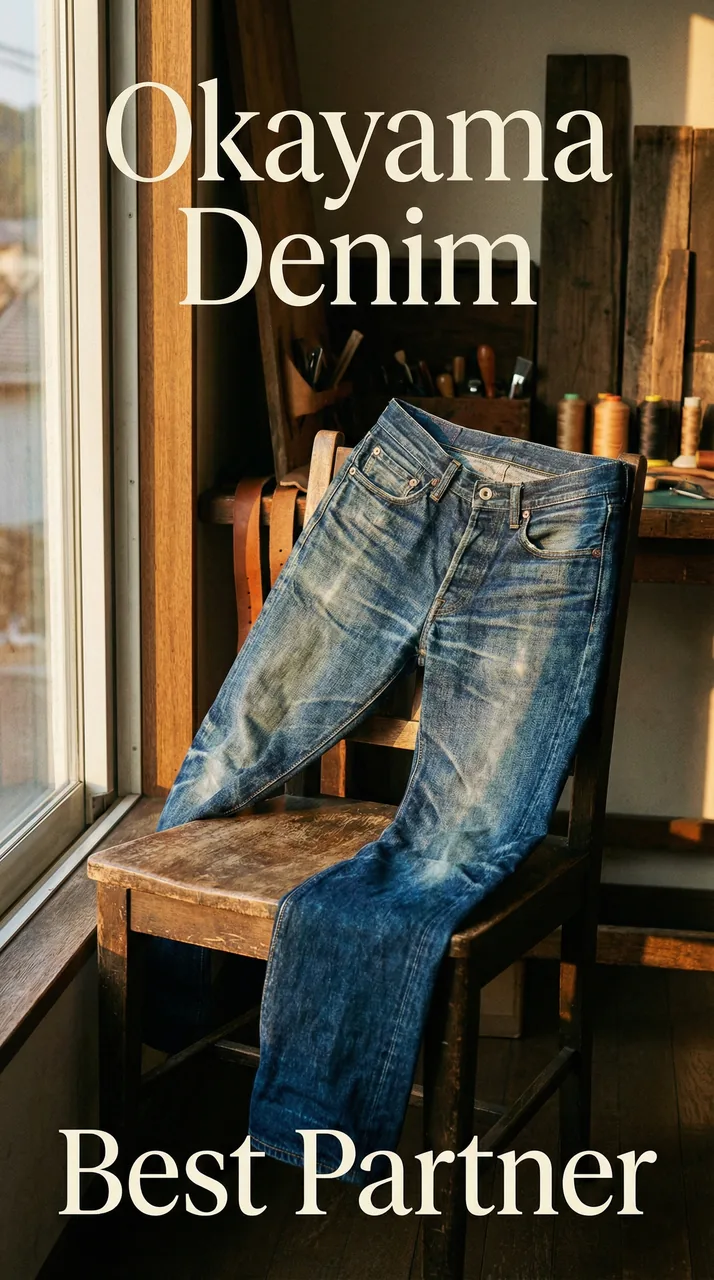
When you first buy them, Okayama jeans are stiff and a deep, inky indigo. That's not the finished product — that's the raw material.
Slowly, they take on the shape of your body. Creases form at your thigh (hige) and behind your knee (hachi no su). The dye fades exactly where you bend and move. No two pairs end up the same.
My own pair has been through three repairs now. They're still going, and they look better than the day I bought them.
2. 5 Recommended Okayama Denim Brands — What Makes Each One Different
From the many brands based in the Kojima area, here are 5 that combine proven quality with real staying power — suitable for a first purchase and worth coming back to.
[Kurashiki] Momotaro Jeans
The face of Okayama denim — built to last 10 years and then some.
Momotaro is the brand most people think of first when they hear "Okayama denim," and for good reason. The signature "Tokino" deep indigo — denser and richer than standard dyeing — is unmistakable.
Two embroidered "Battledress Lines" run down the right back pocket as a mark of Japanese craftsmanship. The fabric uses Zimbabwe cotton, among the finest in the world, and the fading it produces is dramatic and structured: the kind of wear pattern that makes people ask where you got your jeans.
View the Momotaro Jeans brand profile
Momotaro Jeans
Japanese selvedge denim in the iconic Tokino deep indigo. Zimbabwe cotton, dramatic vertical fading, Battledress Lines detail on the back pocket.
Visit Official Site[Kojima] JAPAN BLUE JEANS
Modern cut, serious fabric — the best entry point into Okayama denim.
JAPAN BLUE JEANS was built on the belief that jeans are everyday clothes, not collector's items. Without compromising on fabric quality, the brand offers contemporary tapered silhouettes (see the CIRCLE series) that work with modern wardrobes where classic straight cuts can look dated.
The design earned recognition in Europe and the US before becoming a domestic favorite. Many models start well under ¥20,000, making this the natural first step into the world of Japanese selvedge.
View the JAPAN BLUE JEANS brand profile
JAPAN BLUE JEANS CIRCLE Series
Tapered selvedge jeans designed for modern wardrobes — the most accessible entry into serious Okayama denim.
Visit Official Site[Kojima] KOJIMA GENES
Playful craftsmanship at a price that's hard to believe.
KOJIMA GENES takes pride in making things nobody else makes. That means jeans with different fabrics on the left and right leg, and ultra-heavy-ounce builds up to 23oz that wear like armor. Despite the ambition of the design, prices remain remarkably fair. If you want something tough and genuinely different, start here.
View the KOJIMA GENES brand profile
KOJIMA GENES
Ultra-heavy Kojima selvedge with bold design choices — split fabrics, extreme weights — at surprisingly reasonable prices.
Visit Official Site[Kojima] F.O.B FACTORY
Made for people who know what they're looking at.
F.O.B FACTORY doesn't chase trends. Instead, it reconstructs the best qualities of vintage workwear using modern Japanese manufacturing. The result is understated — no flashy branding — but the stitching and the hand of the fabric communicate quality instantly to anyone who's worn enough denim to know the difference. This is the quiet option for the experienced buyer.
View the F.O.B FACTORY brand profile
F.O.B FACTORY
Vintage-reconstruction jeans for the experienced buyer — understated, precisely sewn, and built to develop beautiful character over years.
Visit Official Store[Kurashiki] ETERNAL
Handcrafted vintage fading — no waiting required.
If the fading is what you're after but you don't want to spend years getting there, ETERNAL is for you. Their craftspeople recreate the whiskers, honeycombs, and worn-in highlights of long-worn jeans entirely by hand, one pair at a time. The results look genuinely aged — not washed-out or over-processed, but like something that has been lived in and loved.
View the ETERNAL brand profile
ETERNAL Hand-Distressed Denim
Handcrafted vintage wear patterns applied by craftspeople in Kurashiki — the look of years of honest wear, without the wait.
Visit Official Site3. How to Choose Without Regrets: Weight and Silhouette
Weight (oz): 13–15oz is the standard starting point
Ounce weight describes the density of the fabric — the heavier the weight, the stiffer and more durable the denim.
● Light (under 10oz): Good for summer. Soft from day one, but fades more subtly.
● Mid (13–15oz): The most common range. Wearable year-round with excellent fading. When in doubt, start here.
● Heavy (17oz and above): Stiff, substantial, almost armor-like. The fading that develops is dramatic and deeply structural — but you have to earn it.
Silhouette: tapered is the modern standard
● Straight: The classic American fit — no tapering from thigh to ankle. Works well with boots and the Americana look.
● Tapered: Narrows below the knee toward the ankle. Works with sneakers, looks cleaner overall, and is currently the most versatile everyday option.
● Tight straight: Slim all the way down. Shows the body's lines and suits a cleaner, more fitted aesthetic.
Frequently Asked Questions — Washing, Hemming & Sizing
Do raw (unwashed) jeans shrink?
Yes — and significantly.
"Raw" or "rigid" denim (non-washed from the factory) can shrink 2–3 cm in the waist and 5 cm or more in length after the first wash.
When ordering online, always check the brand's post-wash size chart. If in doubt, choose a "one-wash" model (already washed once before shipping) — it has already done most of its shrinking.
How often should I wash them?
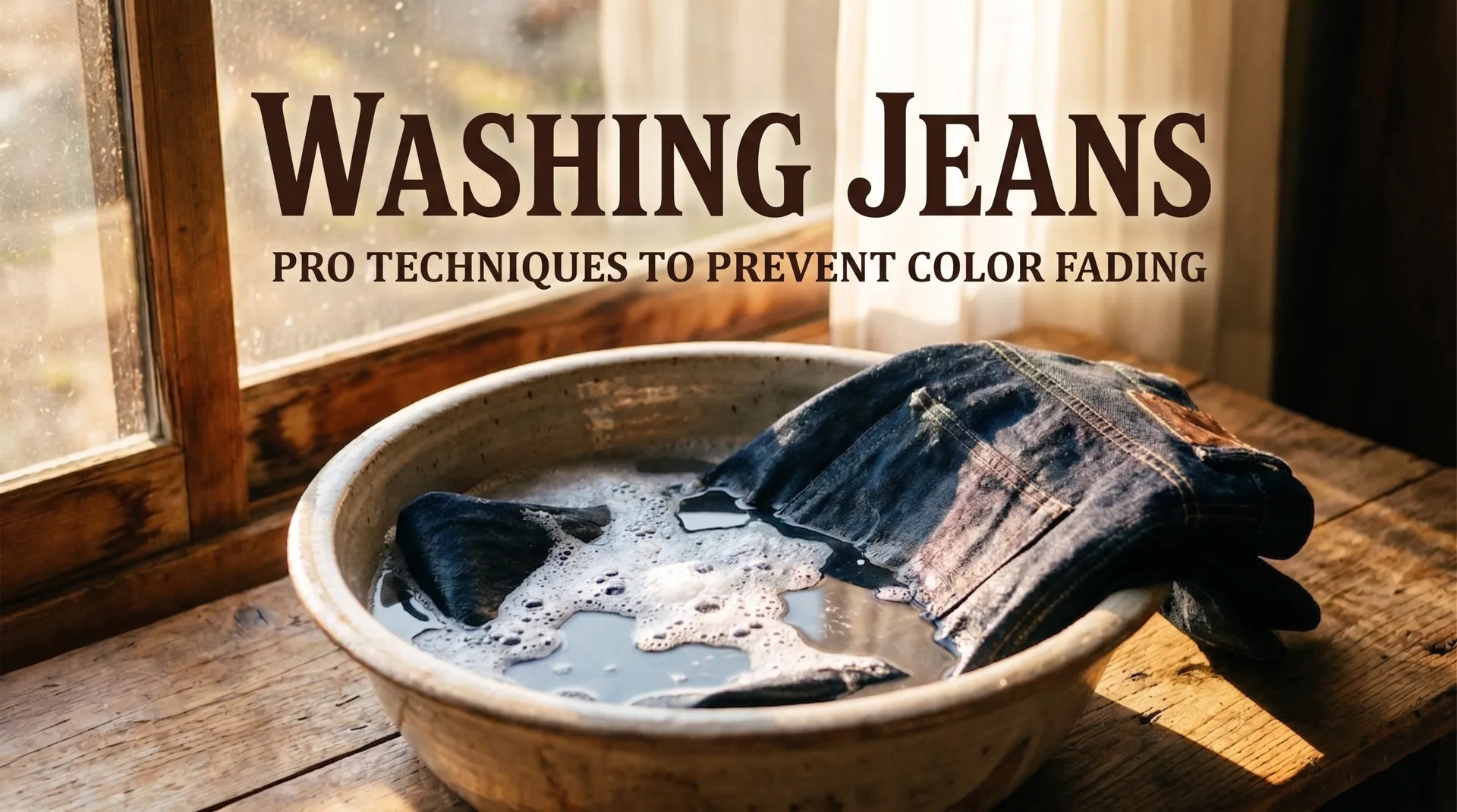
In summer: every few wears. In winter: roughly once a month.
The old idea that you should "never wash jeans" has been debunked. Body oil and sweat left on the fabric will oxidize the fibers and cause them to break down faster.
The right washing frequency keeps the color fading beautifully while protecting the fabric.
Should I hem with chain stitch?
If you care about fading near the hem, yes — chain stitch is worth it.
Chain stitch (circular stitch) creates a slight puckering (roping) at the hem when the fabric shrinks in the wash. As that roped hem rubs against your shoes, it fades in a spiral pattern called "rope fading" — one of the most distinctive marks of well-worn selvedge denim.
Standard single-needle hemming won't produce this effect.
Is there stretch Okayama denim?
Yes — JAPAN BLUE JEANS is a good option.
That said, if long-term fading and durability are your priority, 100% cotton is the better choice.
Stretch fabrics (those containing polyurethane) degrade faster than pure cotton, which works against the "wear for 10 years" philosophy that defines this category of denim.
Will the indigo bleed onto white sneakers or sofas?
In the early months: absolutely yes. Plan accordingly.
Real indigo dye transfers through friction, especially when the jeans are new. For the first several months, avoid wearing them with white canvas sneakers, and be careful around light-colored leather seats and sofas.
Consider it a characteristic of the real thing — something to work around rather than something broken.
Where can I buy Okayama denim? What should I watch out for when ordering online?
Official online stores or the Kojima select shops are your best options.
Most brands sell through their own sites as well as Rakuten and Yahoo! Shopping. When buying raw denim online, the fabric will shrink 5–8% after washing — size up 1–2 waist sizes from your usual and always check the post-wash measurements in the size chart before ordering.
Final Thoughts: You Don't Buy Jeans. You Grow Them.
Okayama denim is not a cheap purchase.
But after 5 years of wear — after 10 — you'll understand why the price was worth it. These jeans don't just hold up: they change, season by season, into something that couldn't have been bought. They're made by the life you live in them.
When they wear through, you repair them. Then you wear them again.
That kind of relationship with the things you own — that's what a single pair of good jeans can teach you. Start there.
How to Wash Jeans — Does Vinegar Set the Color? Detergents & Drying Tips
Japanese Leather: Tochigi, Himeji & Cordovan — What Sets Each One Apart