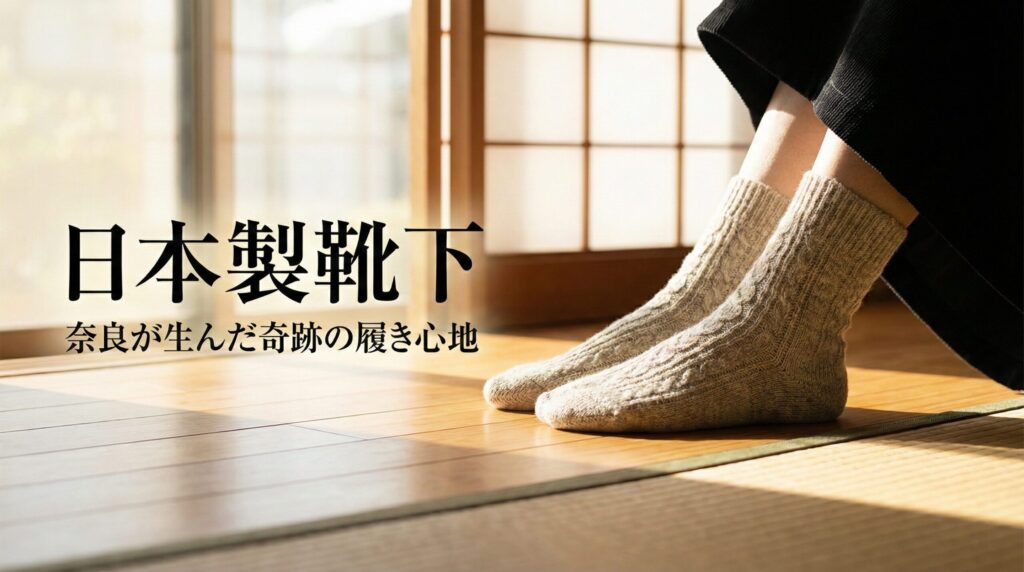
Your feet are swollen and aching by the time evening comes. Or you're at a dinner party, shoes off, and the odor is
a problem you'd rather not think about.
If either of those sounds familiar, the culprit probably isn't your shoes — it's your socks.
Most people treat socks as a consumable: a 3-pack for a few dollars, replaced when they wear out. But socks are the
one item of clothing you wear against bare skin for 10+ hours a day. The quality gap is enormous — and once you
experience it, the cheap version feels like a downgrade you can't accept.
Nara Prefecture
produces roughly 60% of all socks made in Japan — a tradition of over 100 years of craft refinement focused entirely
on how a sock feels on a foot. The elastic tension, the fiber twist, the toe seam — every detail has been iterated
on for a century. The result is what locals call "second skin" comfort.
This guide covers the best Japanese sock brands for gifting or daily wear, the material science behind sweat-free,
odor-free feet, and the simple care habit that doubles your socks' lifespan.
Quick Reference: Japanese Sock Materials by Use Case
| Material | Key Properties | Best For | Key Brands |
|---|---|---|---|
| Cotton | High moisture absorption, soft | Everyday wear, gifting | ROTOTO, Tabio |
| Wool | Insulating, naturally odor-resistant | Autumn/winter, outdoor | Darn Tough, ROTOTO |
| Silk blend | Smooth feel, low moisture retention | Business, formal occasions | Tabio |
| Five-toe | Odor control, absorbs inter-toe sweat | Odor prevention, long walks | Tabio Rex, various |
1. Why Nara Prefecture Is Japan's Sock Capital
Nara Prefecture — and in particular the town of Koryo — accounts for roughly 60% of all socks produced in Japan.
How did one small region come to dominate an entire industry?
A Century of Craft in Koryo Town
The history begins in 1910 (Meiji 43), when knitting machines from overseas were introduced to the region. But
what developed in Nara was never simple mass production.
Makers in the region adapted their craft to Japan's humid climate — refining yarn twist angles, experimenting
with natural fibers, and insisting that toe seams be finished by hand (a technique called linking) to
eliminate the ridge that causes discomfort.
The relentless prioritization of how a sock feels — over how cheaply it can be made — has
continued for over a century, and it shows in every pair.
2. The Real Difference from Cheap Socks: Elastic and Durability
"By the end of the day, there's a deep red line around my ankle."
This is a signature problem of inexpensive socks that compensate for poor construction with overly tight elastic.
Graduated Compression That Doesn't Cut Off Blood Flow
Premium Japanese socks use graduated compression — different elastic tensions at the ankle, arch, and toe. This is
calculated so the sock stays up without ever feeling tight.
No slipping. No constriction. The result: blood circulation stays unimpeded throughout the day,
dramatically reducing the swelling and fatigue that many people have simply accepted as part of wearing
shoes.
Flat Toe Seams — The Linking Technique
Cheap socks are closed at the toe with a machine seam that creates a thick ridge inside the sock. After a few
hours, that ridge pushes against your toes — often causing discomfort or even blisters on long walking days.
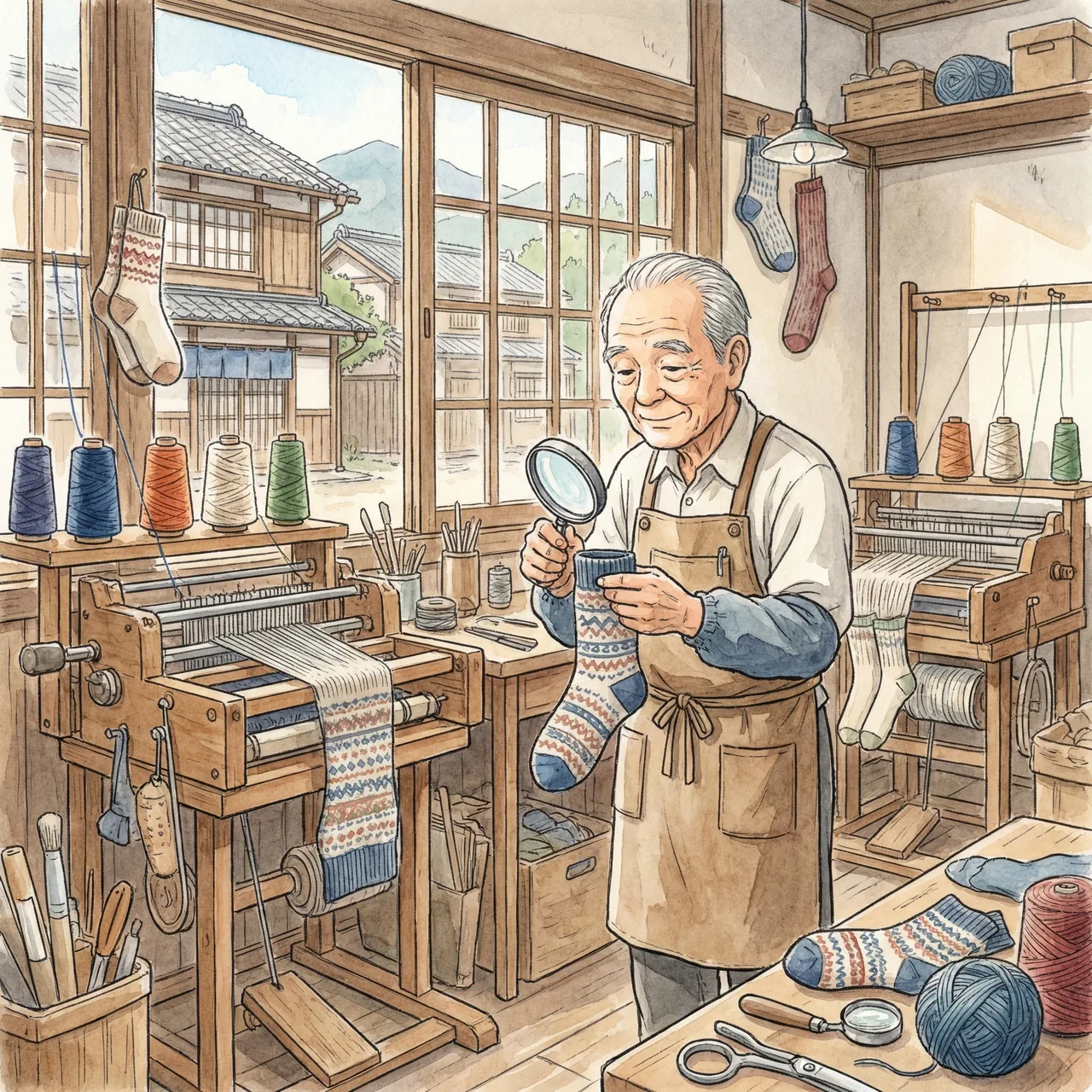
Nara artisans close toe seams using linking — aligning each stitch loop individually by hand to create a
completely flat join. The difference is felt immediately on the first wear: zero friction, zero pressure point at
the toe.
3. Top 5 Japanese Sock Brands — for Yourself or as a Gift
Five brands with no weak entries — reliable for daily use and appreciated as a thoughtful gift.
Tabio
The global standard for Made-in-Japan socks.
Tabio's retail stores ("Kutsushita-ya") are well known across Japan, but the premium Tabio line is in a
different category.
Their business socks — particularly the "Banner Bullet" series — are reinforced with high-tenacity nylon in
the high-wear zones, giving them a lifespan that makes the per-pair cost genuinely economical over time.
Available in stores nationwide, so recipients can browse and feel the material in person before selecting
future pairs.
Tabio — Japanese Made-in-Nara Socks
Japan's benchmark for quality socks. Nylon-reinforced high-wear zones and linking-finished flat toe seams — built to last and designed to feel like a second skin. Browse the full collection on the official US site.
Visit Official US SiteROTOTO
"A consumable you can love for a lifetime" — the brand's own philosophy.
Made at a factory in Koryo Town, Nara, ROTOTO bridges the outdoor and everyday worlds with a design
sensibility that has earned them an international following.
Their standout product is the "Double Face Sock" — outer layer in insulating wool, inner layer in organic
cotton. The combination is unlike anything else: warm but breathable, with a plush feeling underfoot that has
been described as wearing a quality sweatshirt on your feet.
For anyone who suffers from cold feet in winter, this is the sock.
ROTOTO Double Face Crew Sock — Wool × Organic Cotton
Made in Koryo, Nara. Wool outer layer for warmth, organic cotton inner for skin comfort. A cult-favorite sock for cold-feet sufferers — plush, breathable, and built to last.
View on AmazonGlen Clyde
Holes appear? We'll replace them for life. Japan's first lifetime warranty sock.
The "LIFE LONG" series was the first sock in Japan to carry a lifetime replacement guarantee — and the promise
is backed by engineering.
The yarn incorporates Cordura nylon — the same fiber used in bulletproof vest panels — blended for
approximately 10 times the abrasion resistance of standard socks.
For anyone whose socks never last more than a few months, this is the gift that solves the problem
permanently.
Glen Clyde LIFE LONG — Cordura Nylon Lifetime Warranty Socks
Japan's first lifetime-guaranteed sock. Cordura nylon blend — ~10× abrasion resistance of standard socks. Holes appear: they replace them. Browse the collection on the official CHUP site.
Visit Official SiteNISHIGUCHI KUTSUSHITA
"Made with thought for the wearer" — a factory brand since 1950.
A factory brand with over 70 years of continuous production, NISHIGUCHI KUTSUSHITA specializes in natural
fiber construction: Egyptian cotton, linen, silk, wool — each selected and processed to maximize what the
fiber naturally does best.
Their Egyptian Cotton Rib Socks in particular have a devoted following: they stay up perfectly without any
sense of compression — an almost paradoxical combination that, once experienced, makes everything else feel
like a compromise.
HALISON
The OEM specialist behind many premium labels — and the definitive business sock.
HALISON has spent decades manufacturing socks under contract for well-known brands and select shops — the kind
of maker whose name you may not recognize but whose product you have likely already worn.
For business dress wear, their over-the-calf long hose (knee-height socks) are in a category of their own.
They stay in place at the calf without slipping, so crossing your legs in a meeting never exposes bare shin —
and they maintain their position cleanly from the first morning to the end of the day.
HALISON — Over-the-Calf Business Dress Socks
Japan's premier OEM sock maker, available under their own label. Over-the-calf length stays put all day — no slipping, no bare shin when seated. The serious business sock.
Visit Official Site4. Choosing by Function | Materials That Stay Dry and Odor-Free
Foot odor is caused by bacteria that thrive in moisture. The most effective odor prevention is not a deodorizing chemical — it's a sock that simply keeps your feet dry.
Summer: Washi (Japanese Paper Fiber) and Linen
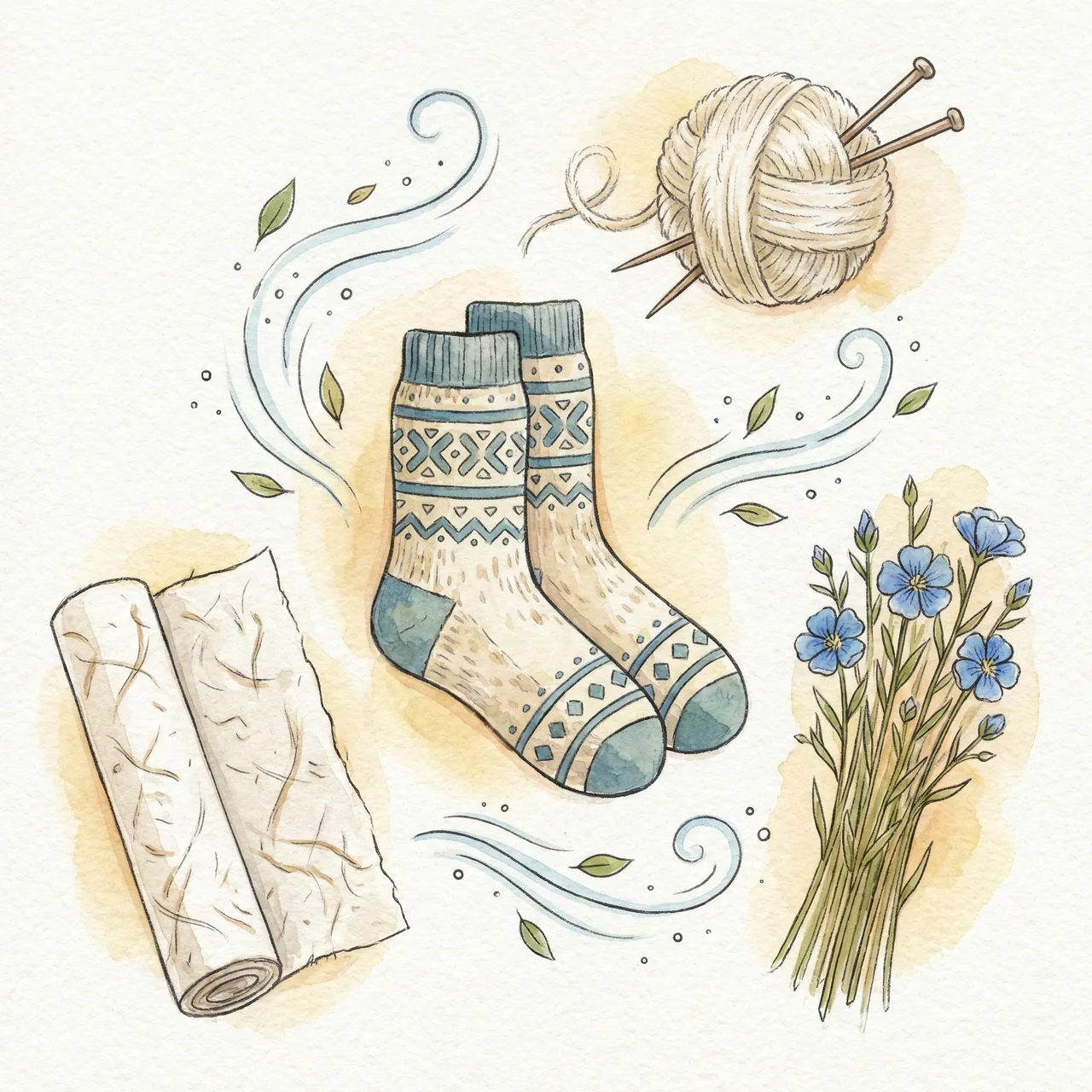
It sounds unexpected, but socks made from washi yarn — Japanese paper spun into thread — are among the most
effective moisture-wicking materials available.
They absorb sweat several times faster than cotton and release it into the air quickly, keeping feet dry even in
high summer heat. The slight crispness against the skin is distinctive and, for most people, immediately
addictive.
Winter: Wool
Wool feels warm — but it is also a natural moisture manager. Unlike cotton, which becomes cold and clammy when
damp, wool continuously wicks moisture away from the skin and releases it as vapor.
This prevents the "sweat chill" that makes cold feet worse indoors. For winter foot comfort, a wool or
wool-blend sock consistently outperforms cotton.
5. Care Tips That Double Your Socks' Lifespan
Even the best sock deteriorates quickly with poor washing habits — pilling on the surface, elastic stretched out of shape. One simple rule makes a significant difference.
The Rule: Always Wash Socks Inside Out
When you take your socks off, put them straight into the laundry inside out — don't flip them back the right
way.
This accomplishes two things:
- Cleans where it matters: Skin oils and dead skin cells accumulate on the inside of the sock. Washing inside out puts these deposits directly in contact with the water and detergent.
- Prevents pilling: The outer surface doesn't rub against other laundry, so the face of the fabric stays smooth and presentable far longer.
For best results, use a mesh laundry bag as well.
6. Frequently Asked Questions
Are $15–$20 socks really worth it?
When you factor in durability and comfort, the cost per wear is excellent.
A cheap multi-pack typically loses its elastic within a few washes and develops holes within months. A quality
Japanese sock worn daily can last one to two years without losing its shape.
Beyond cost, there is a comfort argument: eliminating the constant low-level discomfort of a poorly made sock for
10+ hours a day has a genuine quality-of-life impact that is hard to put a number on.
Do five-toe socks actually reduce odor?
Yes — they are the most effective sock shape for odor prevention.
Most foot perspiration occurs between the toes. A five-toe sock wraps each toe individually, absorbing that sweat
the moment it forms rather than letting it pool in the toe box.
With no moisture accumulation, bacteria have nothing to thrive on — and the evening odor and stickiness that many
people accept as normal are dramatically reduced. Contemporary five-toe designs come in a wide range of colors and
patterns, so aesthetics are no longer a barrier.
How do I choose the right size for a gift?
Men's "25–27 cm" and women's "22–24 cm" cover the majority of recipients.
Socks have meaningful stretch, so a size range covers a wider range of actual foot sizes comfortably.
If you're unsure, ROTOTO and similar brands offer one-size options and rib-knit constructions with high elasticity
— these are the safest choices for gifting without knowing the recipient's exact size.
Can I use a dryer?
As a rule, no.
Tumble dryer heat degrades polyurethane elastic — the component that gives socks their stretch and hold. The
damage is cumulative and irreversible: elastic goes limp and the sock loses its shape permanently.
Air-dry with the cuff facing upward and away from direct sunlight for longest life.
What color should I choose for business dress socks?
Match the sock to the suit, not the shoe.
Navy suit → navy sock. Grey suit → grey or charcoal sock. This creates a clean visual line from trouser hem to
shoe.
White is for athletic wear only. Black is safe but generic — choosing a dark tone that echoes your suit color
creates a more polished, lengthening effect at the ankle. The difference is subtle but noticeable to anyone paying
attention.
Isn't it rude to give socks as a gift?
That concern is outdated — quality socks are now a genuinely appreciated gift.
The old superstition (that socks implied "walking all over" the recipient) has largely faded from modern gifting
etiquette. Today, a pair of Tabio or ROTOTO socks ranks consistently among the most-liked practical gifts —
precisely because they are something people enjoy but rarely buy for themselves. The better the brand, the better
the reception.
Editor's Note: I Can't Go Back to Cheap Socks
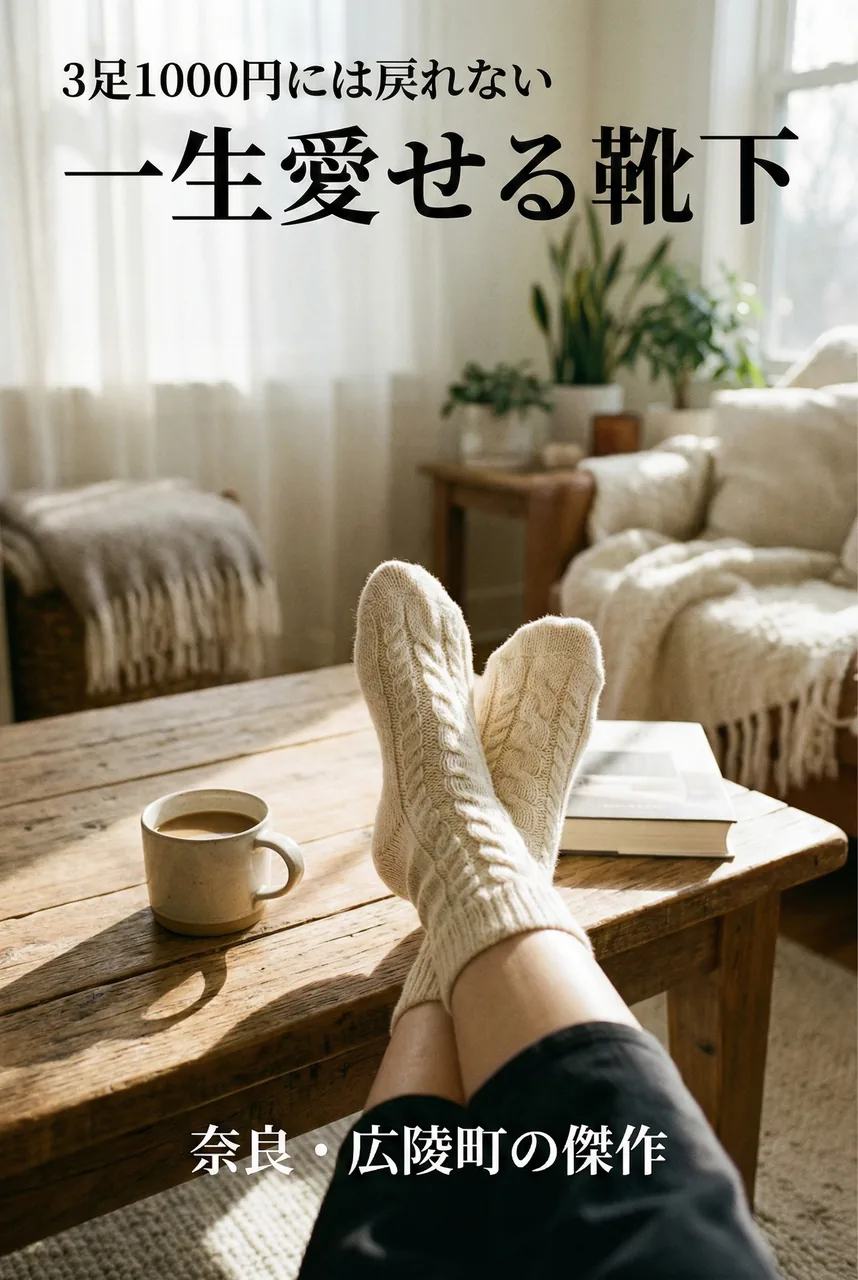
I used to think socks were socks. The same thing in different packaging.
Then my wife worked at Tabio for a while, and I started accumulating better pairs. My thinking shifted gradually
— and then a gifted pair of ROTOTOs arrived and shifted it completely.
My feet felt light.
Just walking around — on hard floors, in leather shoes — with the sensation of a plush rug underfoot. And by the
end of the day, none of the familiar clamminess or heaviness I had simply assumed was normal.
Once you know what a well-made sock actually feels like, the thin, quickly-holed alternative stops being
acceptable. Try one pair from Nara. Consider it an experiment. Your feet will tell you the result.
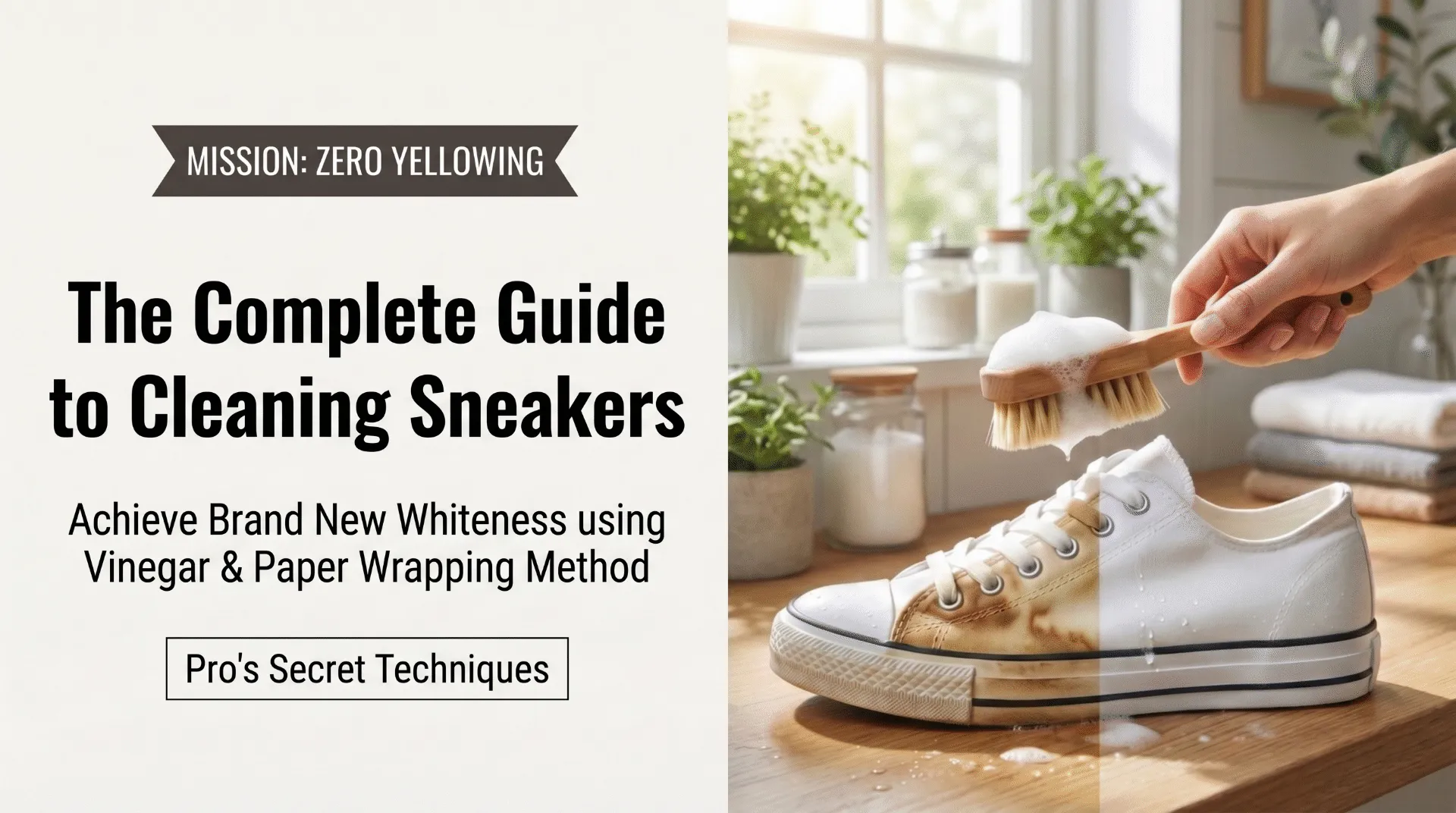
How to Wash Sneakers | Prevent Yellowing and Restore Whiteness at Home
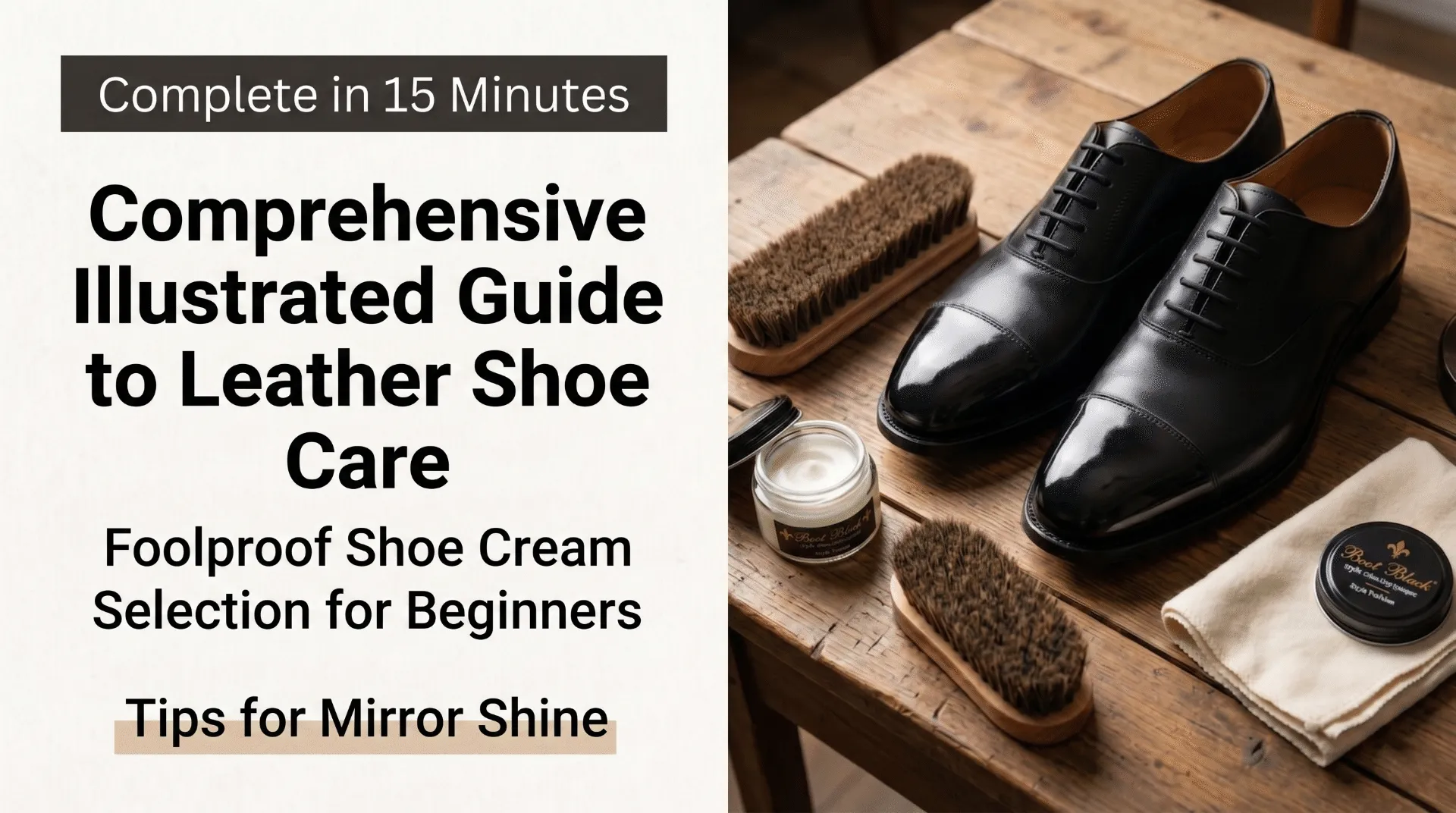
Leather Shoe Care & Mirror Polish Guide | Step-by-Step for Beginners