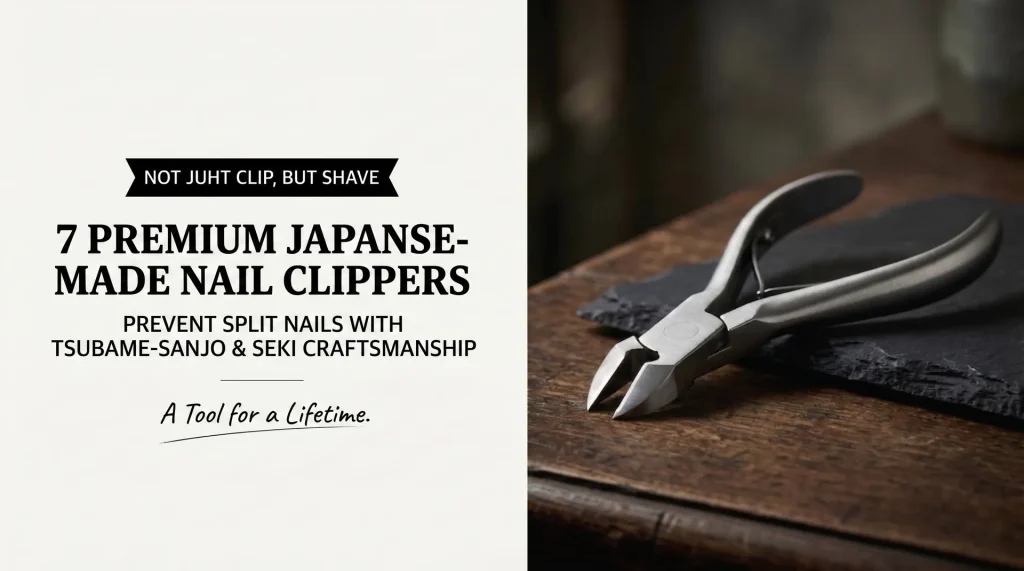
The best Japanese nail clippers are made by SUWADA, Green Bell, Kai (Seki Magoroku), KIYA, MARUTO,
FEATHER, and Kershaw — artisan makers from Tsubame-Sanjo and Seki whose hand-aligned blades slice
nails clean in one stroke instead of crushing them.
Because if you struggle with peeling or splitting nails, the problem might not be nutrition — it might be
your nail clipper.
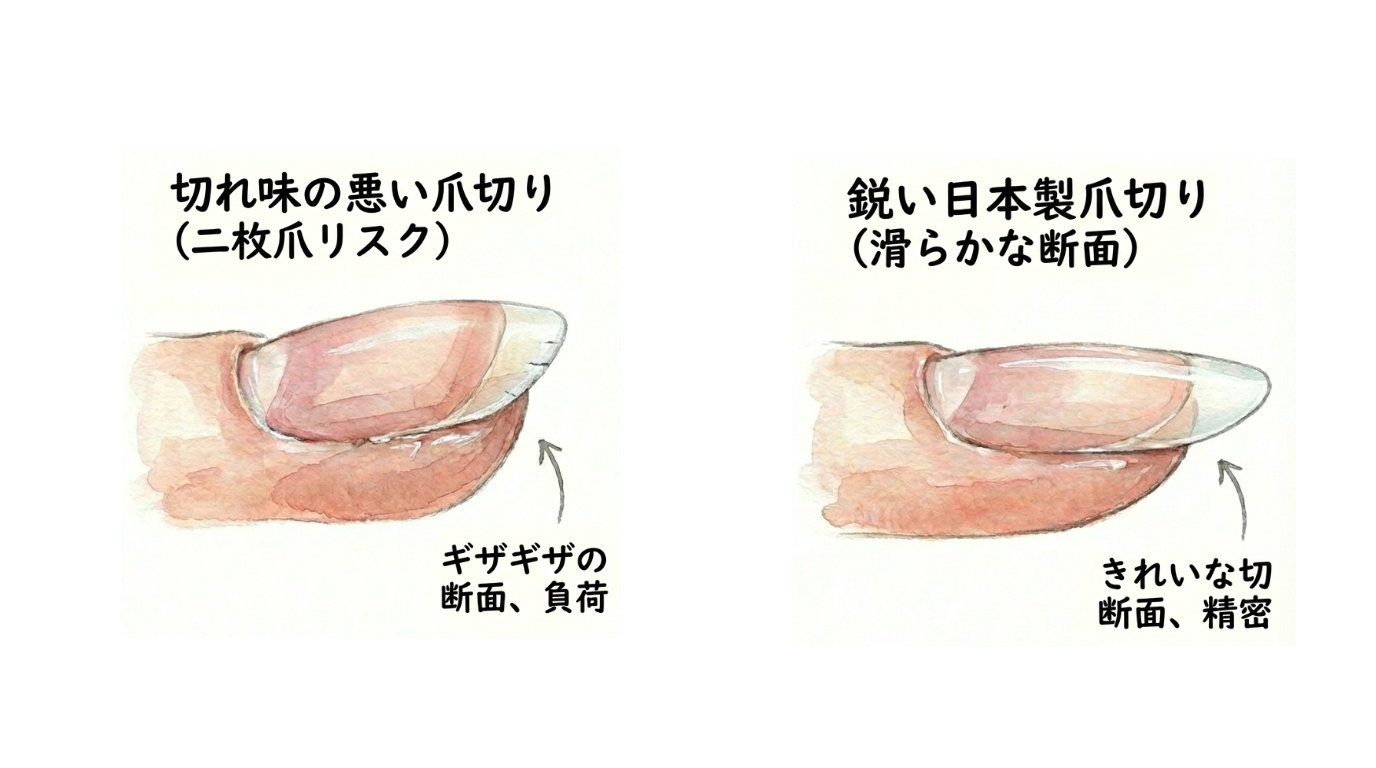
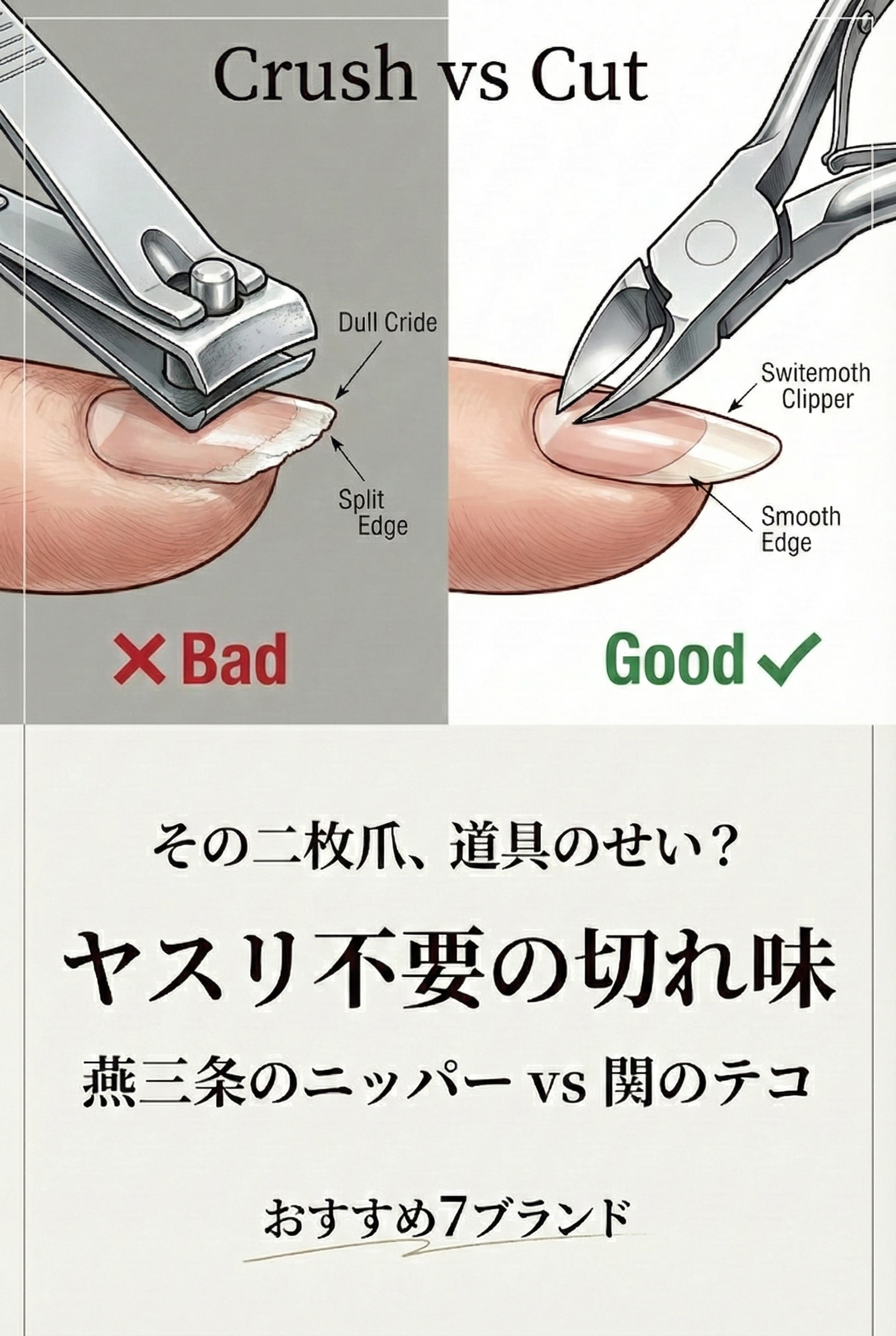
Cheap clippers have poorly matched blades. They don't cut nails — they crush and tear them under pressure. The cross-section is ragged, and cracks start from there. It's completely predictable.
A Japanese luxury nail clipper, where an artisan hand-sharpens and aligns each blade, cuts like butter. The cut edge is so clean you don't need a file.
This guide introduces 7 pieces from Tsubame-Sanjo and Seki — the nail clipper you'll use for the rest of your life.
Quick Reference: 7 Japanese Nail Clipper Brands at a Glance
| Brand | Type | Origin | Best For | Price |
|---|---|---|---|---|
| SUWADA | Nipper | Tsubame-Sanjo | The absolute best — professionals worldwide | ¥7,000+ |
| Green Bell | Lever | Seki | Best value — recommended first purchase | ¥1,500+ |
| Kai 関孫六 | Lever | Seki | Traditional sword-city blade heritage | ¥2,000+ |
| KIYA | Lever | Nihonbashi (since 1792) | Carbon steel blade, collectors & men | ¥3,000+ |
| MARUTO | Nipper | Tsubame-Sanjo | Lighter spring — women & gentle grip | ¥5,000+ |
| FEATHER | Lever | Seki | Beautiful gift packaging | ¥2,000+ |
| Kershaw | Lever | Seki | Design-first, MoMA-worthy aesthetic | ¥5,000+ |
1. Two Blade Cities: Tsubame-Sanjo (Nipper) & Seki (Lever)
When choosing a Japanese nail clipper, understanding the difference between Tsubame-Sanjo, Niigata and Seki, Gifu matters. Both are world-class metalworking cities — but with different specialisations.
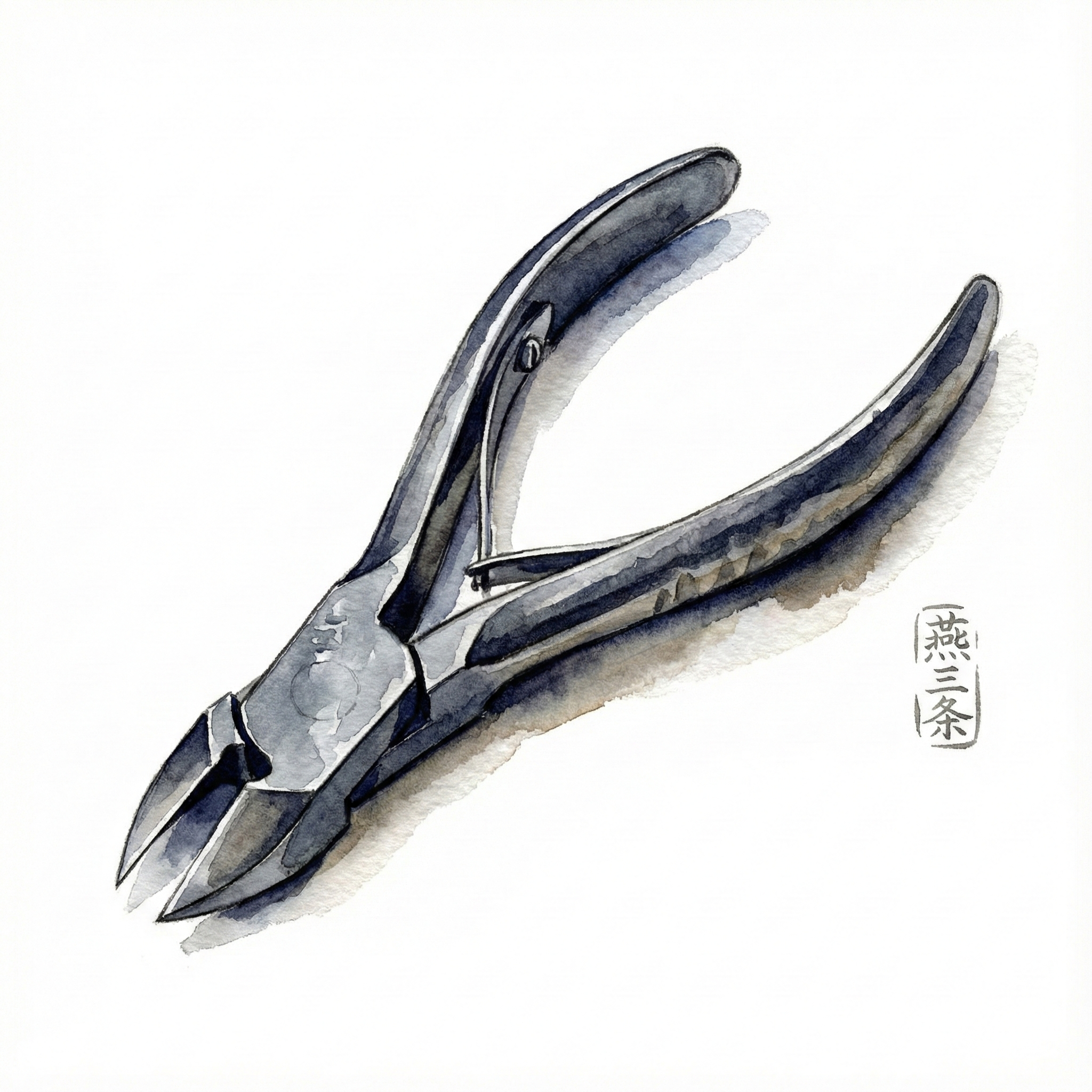
Tsubame-Sanjo — The Home of the Nipper
Tsubame-Sanjo's craft tradition began with hand-forged nails in the Edo period — a heritage of "shaping metal by striking it." That forging skill translates directly into nipper-type (pliers-shaped) nail clippers: SUWADA, the world's most celebrated nail clipper brand, comes from here.
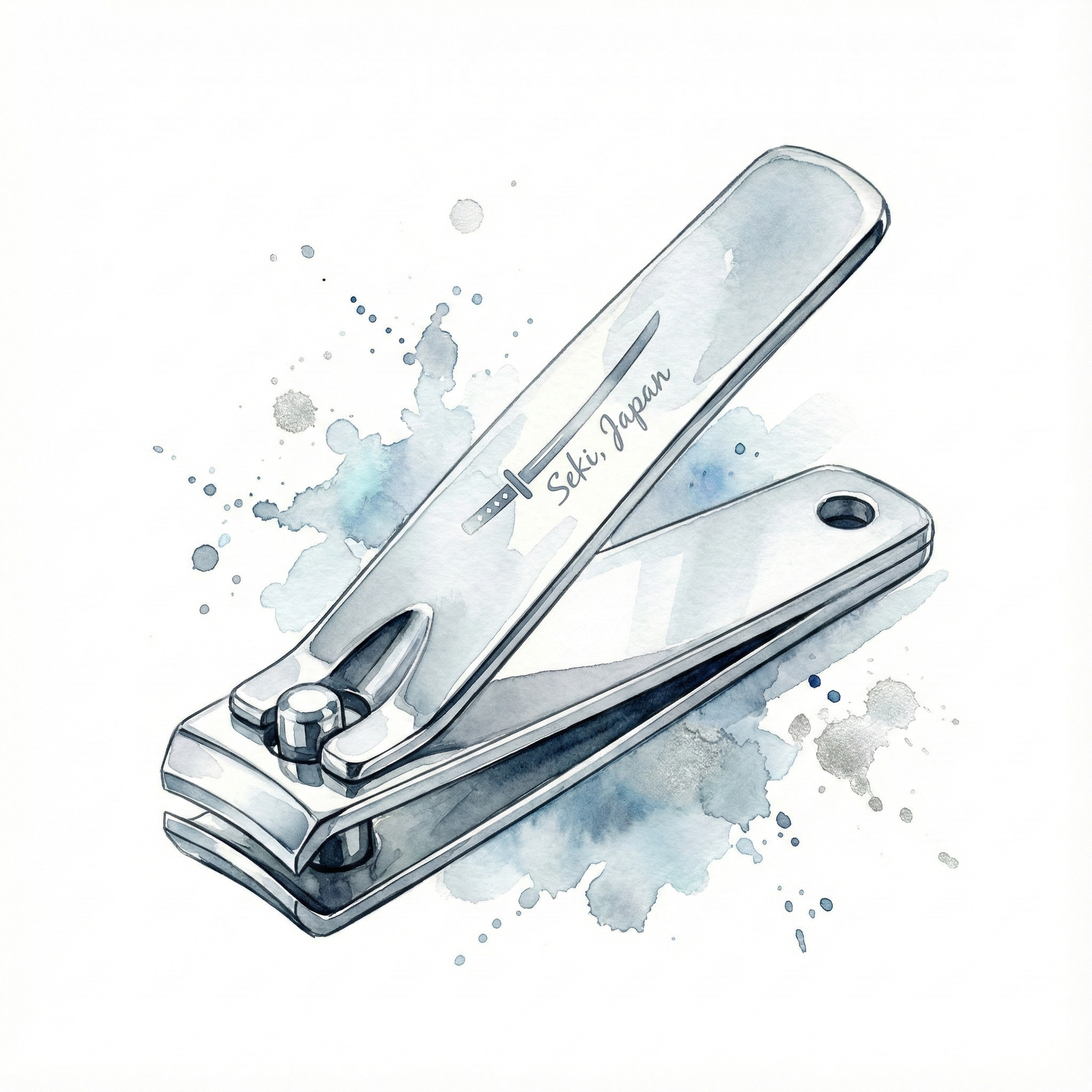
Seki — The Sword City and Home of the Lever Clipper
Seki has made Japanese swords since the Kamakura period (13th century) — a heritage of grinding and refining blades to razor sharpness. That tradition carries forward into lever-type (clipper-type) nail clippers: Kai's Seki Magoroku series and FEATHER, among others, are made here.
2. Which Type? Nipper vs. Lever Clipper
Not sure which style suits you? Here's the comparison.
① Nipper Type (Professional Grade)
Best for: ingrown nails, toenails, demanding users
The exposed blade lets you target exactly where you want to cut, to the millimetre. Excellent for thick or misshapen nails. The main drawback: clippings can fly — though models with a catch cover are available.
② Lever / Clipper Type (Standard)
Best for: everyday use, those who dislike flying clippings
The familiar form that most people grew up with. At the premium tier, lever design is engineered around the physics of the lever — far less effort than a cheap clipper to cut through thick nails.
3. 7 Japanese Nail Clippers Worth Buying
A few thousand yen buys you a lifetime free of nail-cutting frustration. Here are the seven pieces worth it.
No.1 — SUWADA: The King of Nail Clippers
The Tsubame-Sanjo treasure that nail technicians worldwide seek out. Not a "click" — a "slice." Artisans align each blade under a microscope, producing a cut edge so smooth you won't reach for a file. The Classic can be sent back for resharpening and passed to the next generation.
- Based in
- Tsubame-Sanjo, Niigata
- Type
- Nipper — exposed blade for precise targeting
- Best for
- The absolute best cut; professionals worldwide; multi-generational ownership
No.2 — Green Bell "Takumi no Waza": Best Value
Consistently ranked #1 on Amazon Japan. The "Takumi no Waza" (Artisan's Skill) series is the entry point to Japanese precision clippers. Stainless steel resists rust; the zinc die-cast lever is crisp and efficient — thick nails yield with noticeably less effort. The file on the back is also high quality. When in doubt, start here.
- Based in
- Seki, Gifu
- Type
- Lever — standard form, full clipping shield
- Best for
- Best value entry to Japanese precision; recommended first purchase
No.3 — Kai "Seki Magoroku": Legacy Blade
Named after Seki's legendary sword master — Kai's most serious offering. The Seki Magoroku series has substantial, satisfying weight and a U-groove nail file integrated into the side. The blade is razor-sharp, and the lever snaps with a clean, resonant click that immediately signals quality.
- Based in
- Seki, Gifu
- Type
- Lever — sword-city blade heritage
- Best for
- Those who want traditional Seki blade quality in everyday form
No.4 — KIYA: Black Steel, Edo Heritage
Founded in 1792. An Edo-period cutlery institution in Nihonbashi. KIYA's signature matte-black nail clipper uses carbon steel rather than stainless — resulting in sharpness that tops the category, at the cost of needing careful drying after use. The utilitarian design has a devoted following among those who appreciate tools that make no concessions to appearance.
- Based in
- Nihonbashi, Tokyo (founded 1792)
- Type
- Lever — carbon steel blade, matte-black finish
- Best for
- Collectors; men who prefer pure function over aesthetics
No.5 — MARUTO: The Gentle Nipper
SUWADA's peer in Tsubame-Sanjo — lighter spring, beautiful design. MARUTO's Nail Nipper Wing is slightly lighter than SUWADA, with a softer spring return — making it the preferred choice for women, elderly users, or anyone with less grip strength. A patented blade geometry minimises shock transfer to the nail on each cut.
- Based in
- Tsubame-Sanjo, Niigata
- Type
- Nipper — lighter spring, patented shock-reducing geometry
- Best for
- Women, elderly users, or anyone who prefers less hand effort
No.6 — FEATHER: Medical-Grade Edge, Gift-Ready
Famous for barber-grade straight razors — and serious about nail tools too. FEATHER's Special Selection nail clipper comes in an elegant presentation box ideal for gifting. A proprietary double-hardening blade process produces a blade that punches above its weight class. The lever feel is confident and grips the finger naturally for precise work.
- Based in
- Seki, Gifu
- Type
- Lever — double-hardened blade; elegant gift packaging
- Best for
- Gift-giving; those who appreciate medical-grade sharpness
No.7 — Kershaw (by Kai): Design Object
Sold in the MoMA New York Design Store. Made in Seki by Kai. The Leaf Type uses an entirely different mechanism from a standard lever clipper — endlessly satisfying for the mechanically curious. The blade is made using MIM (Metal Injection Moulding), a high-precision process that produces exceptional sharpness.
- Based in
- Seki, Gifu (Kai premium line)
- Type
- Leaf mechanism — unique non-lever design; MIM precision blade
- Best for
- Design lovers; those who want a nail clipper as a desk object
4. The Right Way to Clip: Why Dry Nails Are Better
Dry Nails Cut Better Than Wet Ones
Conventional wisdom says clip after a bath while nails are soft. But this can actually cause peeling — wet nails have layers that separate more easily when cut.
With a sharp Japanese clipper, cutting dry nails gives a cleaner result: the layers don't separate, and the cut edge is smoother.
Technique tips:
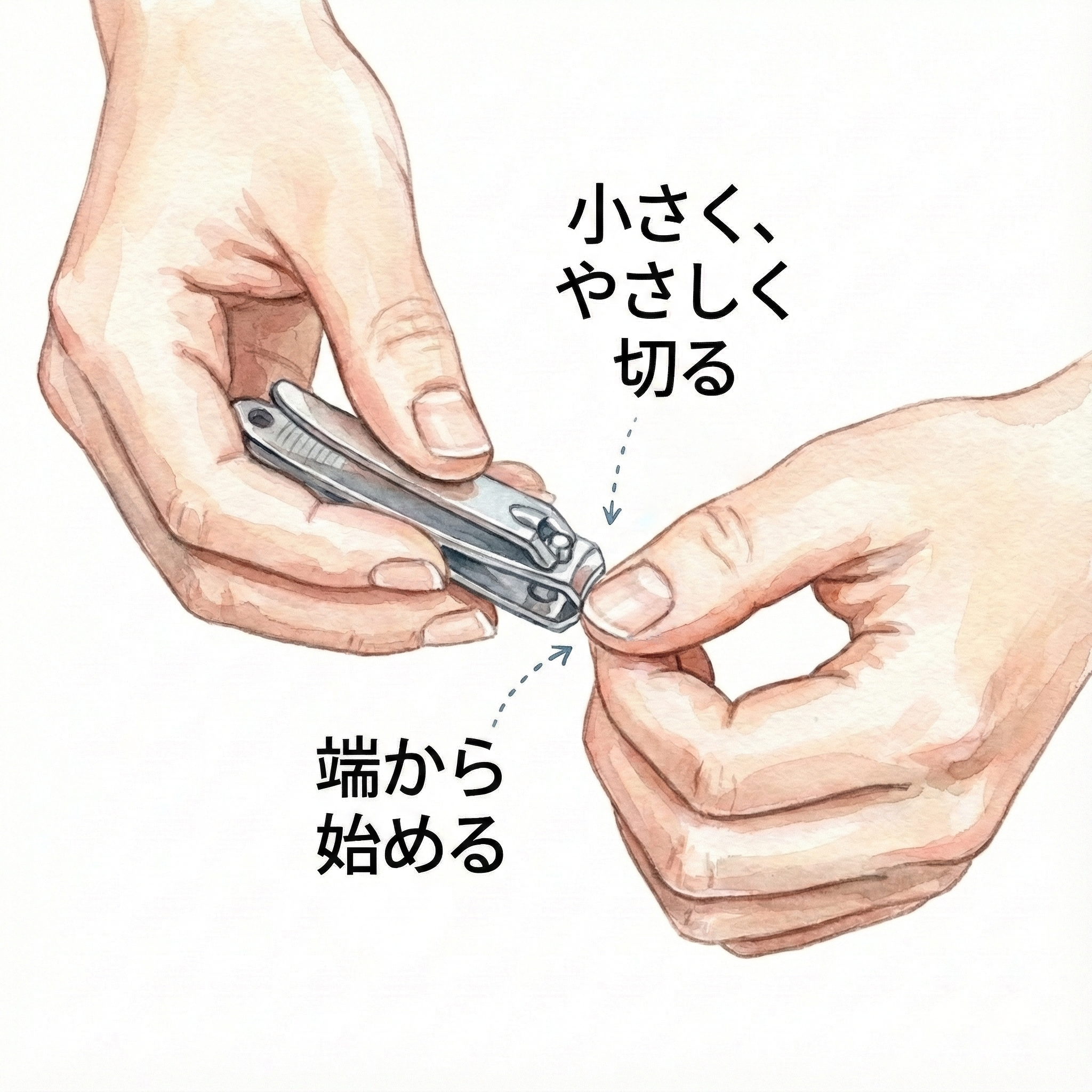
· Cut in small segments from one corner to the other — never one big clip straight across
· File the corners smooth when done
· Finish with a hand cream or cuticle oil to moisturise
5. Final Thoughts: Nails as a Health Indicator
Just a nail clipper. And yet.
A ¥100 clipper gets the job done, but a ¥7,000 clipper brings something entirely different — a small moment of genuine satisfaction, and a kindness toward your own body.
Using a well-made tool is a form of self-care. Nails clipped cleanly with a sharp instrument look better, feel better, and give you a quiet lift each time you notice them.
Try the Japanese artisan's edge at your fingertips.

Japanese Socks: Nara & Nishiwaki — What Makes Them Last
Kumano Makeup Brushes: The 3 You Need First & 4 Top Studios