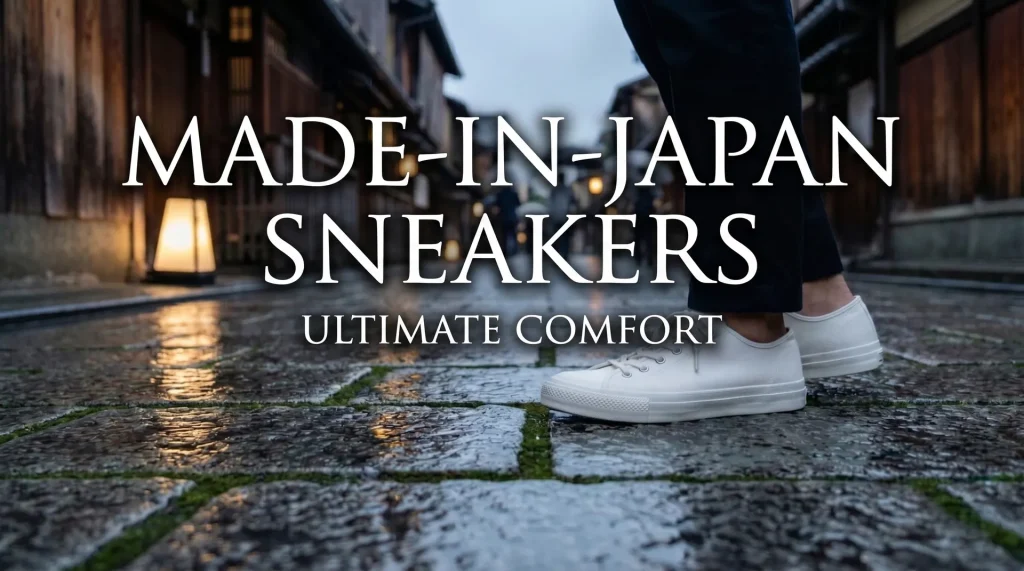
The seven made in Japan sneaker brands most worth buying are MoonStar, SHOES LIKE POTTERY, Asahi Shoes,
PRAS, SPINGLE MOVE, Onitsuka Tiger NIPPON MADE, and blueover — brands that build shoes on lasts shaped
for wider, higher-arched feet, many using Kurume's traditional vulcanized method.
"I bought a pair from a big-name brand, but the pinky toe never stops hurting…"
"After a full day of walking, my feet are completely wrecked by late afternoon…"
That discomfort might not be about shoe quality at all — it could come down to the last (the foot-shaped
mold the shoe is built on).
Most Western brands are designed around narrow, elongated feet. Japanese feet tend to be wider across the ball and
higher at the arch.
If comfort is your priority, switching to a Japanese-made sneaker might be the answer.
In particular, shoes made using the vulcanized method — a tradition long rooted in Kurume, Fukuoka — bond
the sole so firmly to the upper that the shoe bends like an extension of your own foot, and the bond almost never
separates.
In this guide, a writer who has been repairing and wearing the same sneakers for over a decade picks 7 exceptional
Japanese-made brands worth knowing.
Series: This article is part 3 of the "Wearable Japanese Masterpieces" series.
1. What Makes Japanese Sneakers Different? The Vulcanized Method & Foot Shape
Why are Japanese sneakers so consistently praised for comfort? Two things: a labor-intensive traditional construction method, and a last designed around actual Japanese feet.
Baked in a kiln: the durability of the vulcanized method
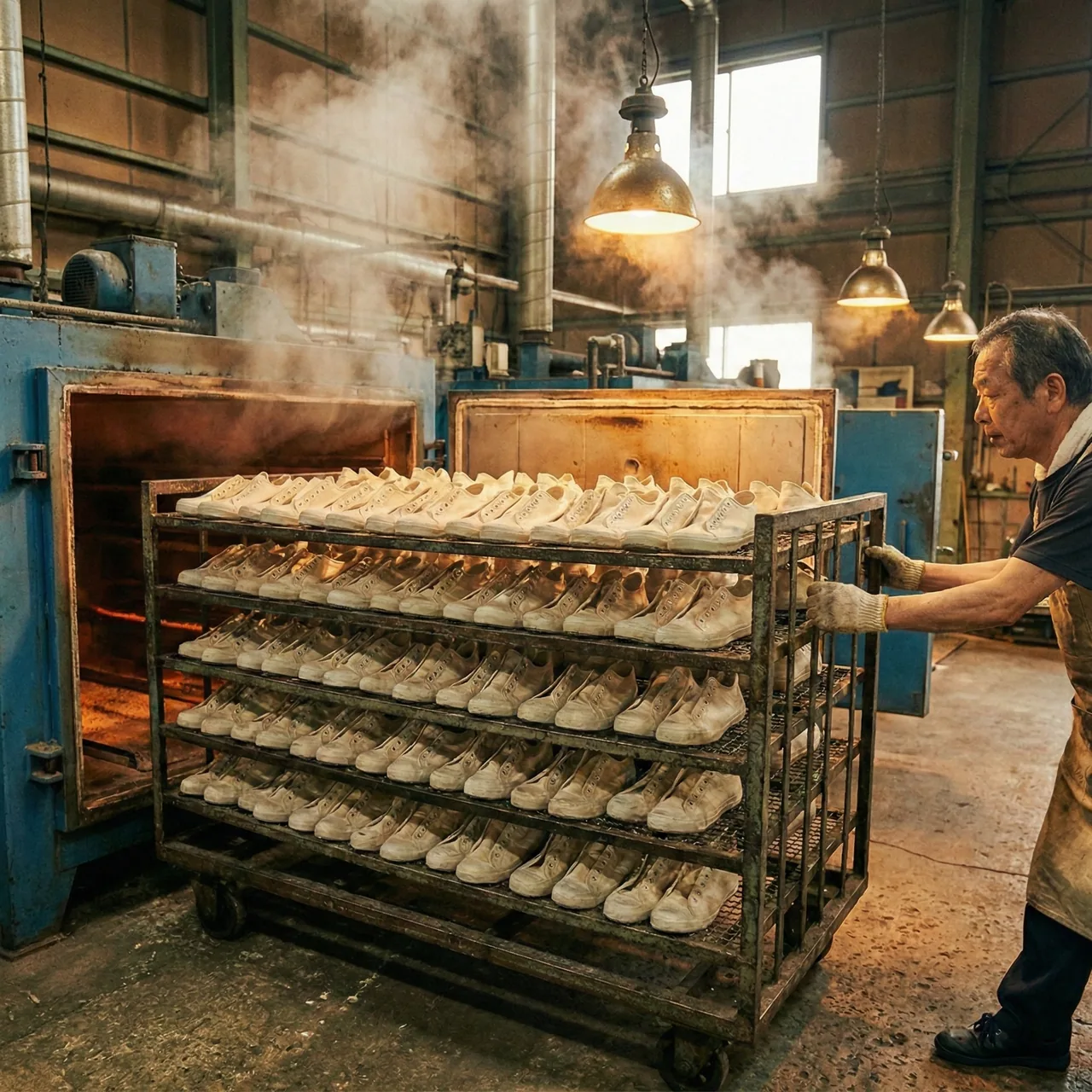
Most Japanese canvas sneakers are built using the vulcanized (加硫) construction method.
After the upper and rubber sole are bonded together, the entire shoe goes into a specialized kiln and is baked
at high heat.
The sulfur in the rubber undergoes a chemical reaction, fusing the fabric and sole into a single unit.
The result: soles that don't peel, shoes that hold their shape, and a sole flex that feels completely
natural underfoot. The process requires extensive handwork at every stage, which is why only a
handful of factories in Japan still do it.
Built for wider, higher-arched feet
Brands like Nike and Adidas are engineered around the long, narrow foot profile common in Western countries —
which can leave Japanese wearers feeling squeezed across the ball of the foot.
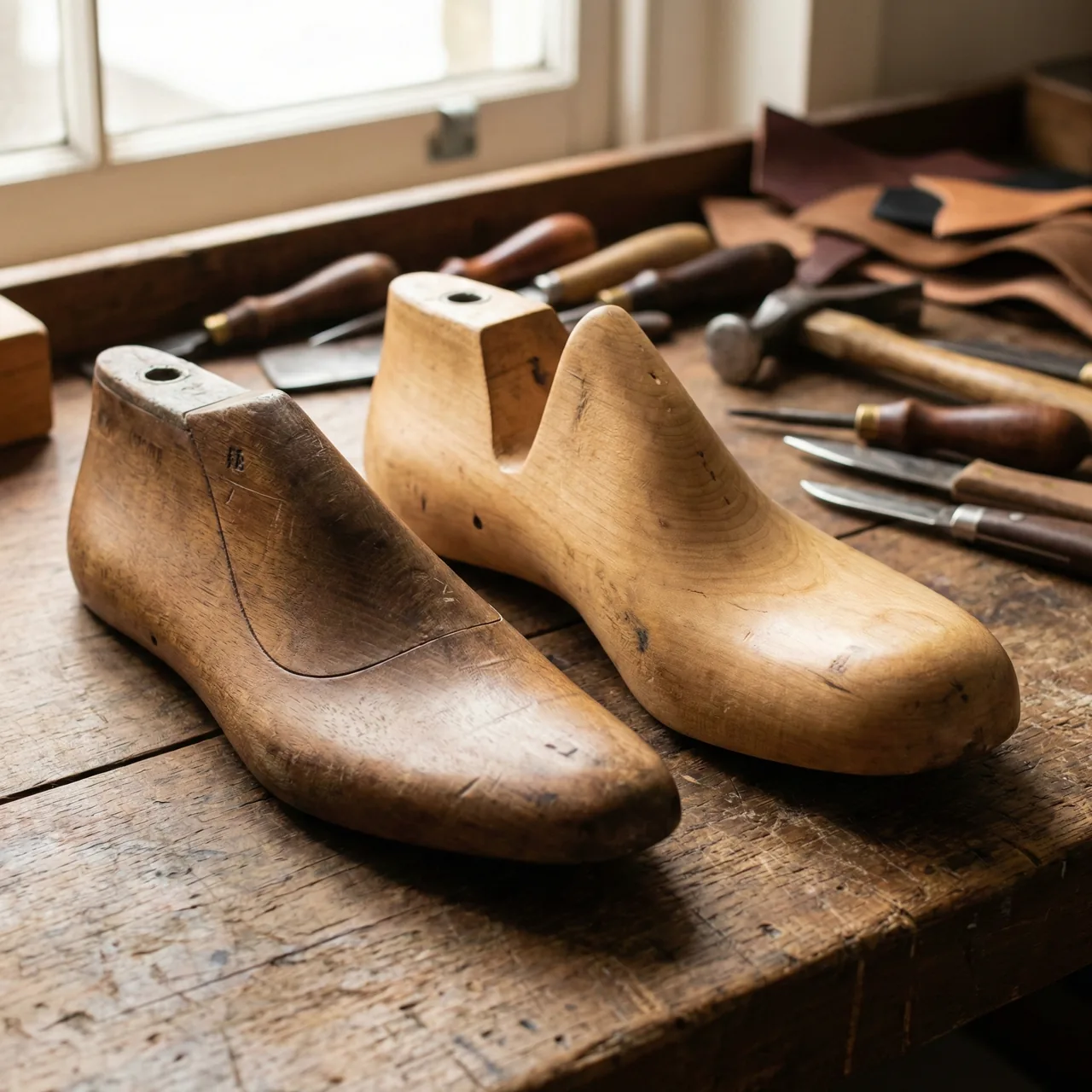
Japanese manufacturers, by contrast, build their lasts using foot measurement data from hundreds of thousands of
Japanese people.
The heel locks in snugly while the toe box opens up with room to breathe. Once you've worn a pair built this
way, it's hard to go back.
2. Japanese Sneaker Brands from Kurume — The Rubber Capital (4 Makers)
Kurume, Fukuoka, grew its rubber footwear industry out of a long tradition of making tabi (split-toe work boots). It remains the heartland of vulcanized sneaker craftsmanship in Japan.
MOONSTAR — Fine Vulcanized
Not just a school shoe anymore. 150 years of heritage — one perfect everyday sneaker.
You probably wore the "Moon Star" brand as a child without knowing it. The premium Fine Vulcanized line is a
different proposition entirely: each pair is finished by hand by skilled craftspeople, with a clean silhouette
and a fit that seems to mold itself to your foot.
The GYM CLASSIC is the one to start with — versatile enough to work with anything.
View the MoonStar brand profile
MOONSTAR Fine Vulcanized GYM CLASSIC
A handcrafted vulcanized canvas sneaker built on a last shaped for Japanese feet. Timeless silhouette, everyday comfort.
View on AmazonSHOES LIKE POTTERY
Made like pottery — finished one pair at a time in a kiln.
Also produced in the MoonStar factory, but with a stronger emphasis on craft identity. The most distinctive
detail: a light blue wax-seal stamp pressed into the side of the sole on every pair, marking the moment it
came out of the kiln.
The brand has built a dedicated following in select shops internationally.
View the SHOES LIKE POTTERY brand profile
SHOES LIKE POTTERY
Kiln-fired vulcanized canvas sneakers from Kurume, each pair stamped with a light blue wax seal when it leaves the kiln.
Shop Official US StoreASAHI — ASAHI DECK
A 1970s American deck shoe, faithfully recreated by Japanese craftspeople.
Asahi Shoes' DECK line takes the original lasts from that era and produces the shoe today at the Kurume
factory. The outsole has a distinctive wavy cut pattern that keeps its grip even on wet surfaces.
The fit — snug but not constricting — is the kind that makes you want to wear them barefoot.
ASAHI DECK
Kurume-made vulcanized deck shoe with a non-slip wave-cut outsole and a fit that improves the more you wear it.
View on AmazonPRAS
The best of both worlds: Kojima canvas meets Kurume rubber.
The upper is made from high-quality canvas woven by Shibata Textile in Kojima, Okayama — the same region
famous for its selvedge denim. The sole and construction are handled by MoonStar in Kurume. The result is a
sneaker with a utilitarian, almost military look and the kind of durability that only comes from pairing the
right materials with the right craftsmanship.
PRAS SHELLCAP LOW
Kojima canvas upper, MoonStar vulcanized sole — rugged design with serious longevity built in.
Visit Official Site3. Japanese Sneaker Brands from Hiroshima — The Leather Hub (2 Makers)
The Fuchu area of Hiroshima Prefecture has a long tradition of leather sneaker production. If you're looking for a grown-up sneaker made from real leather, this is where to look.
SPINGLE MOVE
A wraparound sole that only a craftsperson's hands can build.
The SPINGLE MOVE silhouette is instantly recognizable: the rubber outsole wraps up and over the sides of the
upper, a construction that can only be done by hand. Models in kangaroo leather are extraordinarily soft — the
sensation when you first slip your foot in is unlike anything you've felt in a sneaker.
SPINGLE MOVE is also one of the rare sneaker brands that offers genuine repair service, including heel
restoration and full sole replacement.
View the SPINGLE MOVE brand profile
SPINGLE MOVE SPM-110
Hand-wrapped sole, premium leather upper, and one of the few Japanese sneaker brands that offers full sole replacement repair.
Visit Official SiteOnitsuka Tiger — NIPPON MADE
The world admires it. Japan's master craftspeople build it.
NIPPON MADE is the pinnacle line within the Onitsuka Tiger brand — a direct predecessor of ASICS. Every step,
from dyeing the materials to the final finishing touches, is done by hand, one pair at a time.
The vintage-washed models in this line look like heirlooms rather than sneakers. Wearing them is a reminder
that footwear can be art.
View the Onitsuka Tiger brand profile
Onitsuka Tiger NIPPON MADE MEXICO 66 DELUXE
Entirely handcrafted in Japan, with vintage-distressed detailing that improves with every wear.
View NIPPON MADE Collection4. Japanese Sneaker Brands from Osaka & Kobe (1 Maker)
The Kansai region has its own voice in Japanese sneaker design — understated, refined, and very wearable.
blueover
"New, yet timeless" — a grown-up running shoe from Osaka.
blueover works directly with domestic tanneries and shoe factories to pursue the simplest possible design. The
silhouette reads as retro running shoe, but the cushioning is thoroughly modern — you can walk for hours
without feeling it.
Branding is minimal to the point of near-invisibility, which makes it ideal for business casual environments
as well.
View the blueover brand profile
blueover Mikey
Osaka-made leather runner with a near-invisible logo, modern cushioning, and a look that works from commute to weekend.
Visit Official Site5. Can You Wear Them to Work? Choosing the Right Leather Sneaker
"I'd love to commute in sneakers, but I don't want to look too casual."
If that sounds familiar, run through these three criteria before buying.
Three conditions for office-appropriate sneakers
- Material — go leather: Canvas reads as casual no matter how you style it. Smooth leather or suede is the move.
- Color — keep it simple: White, black, navy, and brown are the safe calls. The closer the palette to a dress shoe, the better. Avoid bold logos.
- Sole — keep it slim: Chunky tech soles belong in the gym. A low-profile court-style sole is what actually works with trousers or a blazer.
From this guide's lineup, SPINGLE MOVE in black leather and blueover are the two strongest choices for jacket-and-trouser combinations.
6. How to Keep Them Looking Great: Maintenance Tips
The longer you want to keep a pair, the more care matters. One question that comes up constantly: "Can I just throw sneakers in the washing machine?" It depends entirely on the material.
Canvas vs. leather — the cleaning rules are completely different
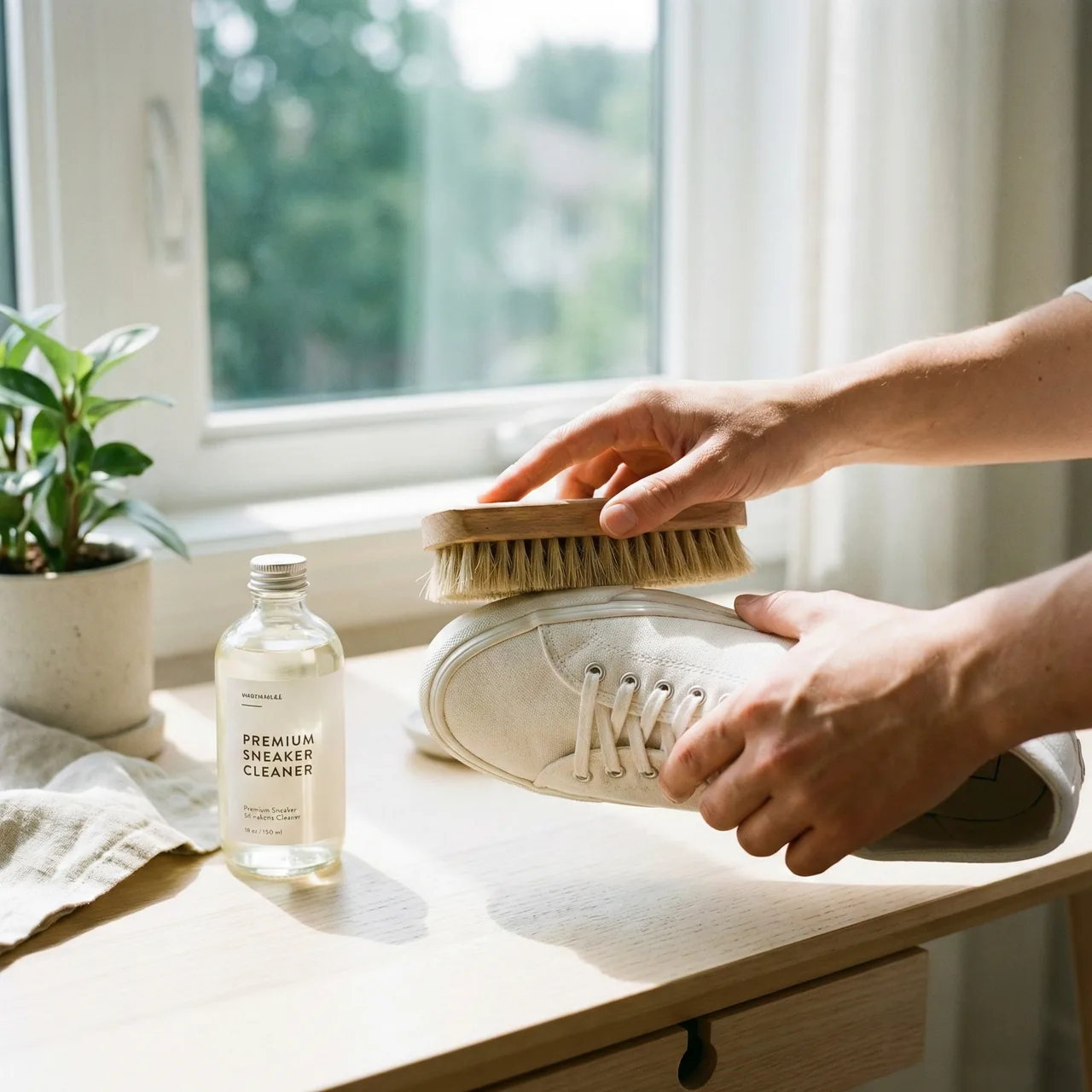
● Canvas:
Water washing is fine. Use a mild detergent and a soft brush. Rinsing with a small amount of white vinegar is a
professional trick that prevents the yellowing that plagues white canvas shoes.
● Leather:
Water is generally off-limits. Use a dedicated leather cleaner to remove dirt, then follow up with a
conditioning cream to restore suppleness.
● White rubber sidewalls:
The white rubber edge of the sole ages faster to the eye than any other part of the shoe. A damp melamine sponge
— the eraser-type cleaning pad — lifts grime and surface oxidisation off rubber in seconds, with no cleaning
product at all. It is the single highest-return minute of maintenance on a vulcanized sneaker.
For a full step-by-step method — including how to get white canvas back to bright white using only things you
have at home — see the guide below.
7. Frequently Asked Questions
Can the soles be replaced (repaired)?
It depends on the brand — and for most, unfortunately, no.
Vulcanized sneakers bond the sole and upper together so powerfully that separating them for a sole swap isn't
feasible.
That said, SPINGLE MOVE is one of the few Japanese sneaker brands that actively supports repair
service, including heel restoration and full outsole replacement.
Before buying any pair with longevity in mind, check the manufacturer's official site for "repair" or "リペア"
options.
How do I choose the right size?
A good starting point: your actual foot length (heel to longest toe) plus 1.0 cm.
Japanese-made shoes tend to have more room across the width than comparable Western sizes.
If you normally wear a US 9 in Nike, you may find a Japanese size 26.0–26.5 cm fits perfectly in MoonStar or
similar brands.
Try them on in the afternoon when your feet are at their fullest — that's the most reliable time to judge fit.
Can I wear them in the rain?
Yes, if you choose the right model.
MoonStar's ALWEATHER series, for example, covers more than half the upper in rubber — it sheds rain and mud almost
like a rubber boot.
Standard canvas sneakers are porous by design, so a waterproofing spray is essential if you plan to wear them in
wet conditions.
Editor's Note: The Quiet Luxury of Repairing Your Shoes
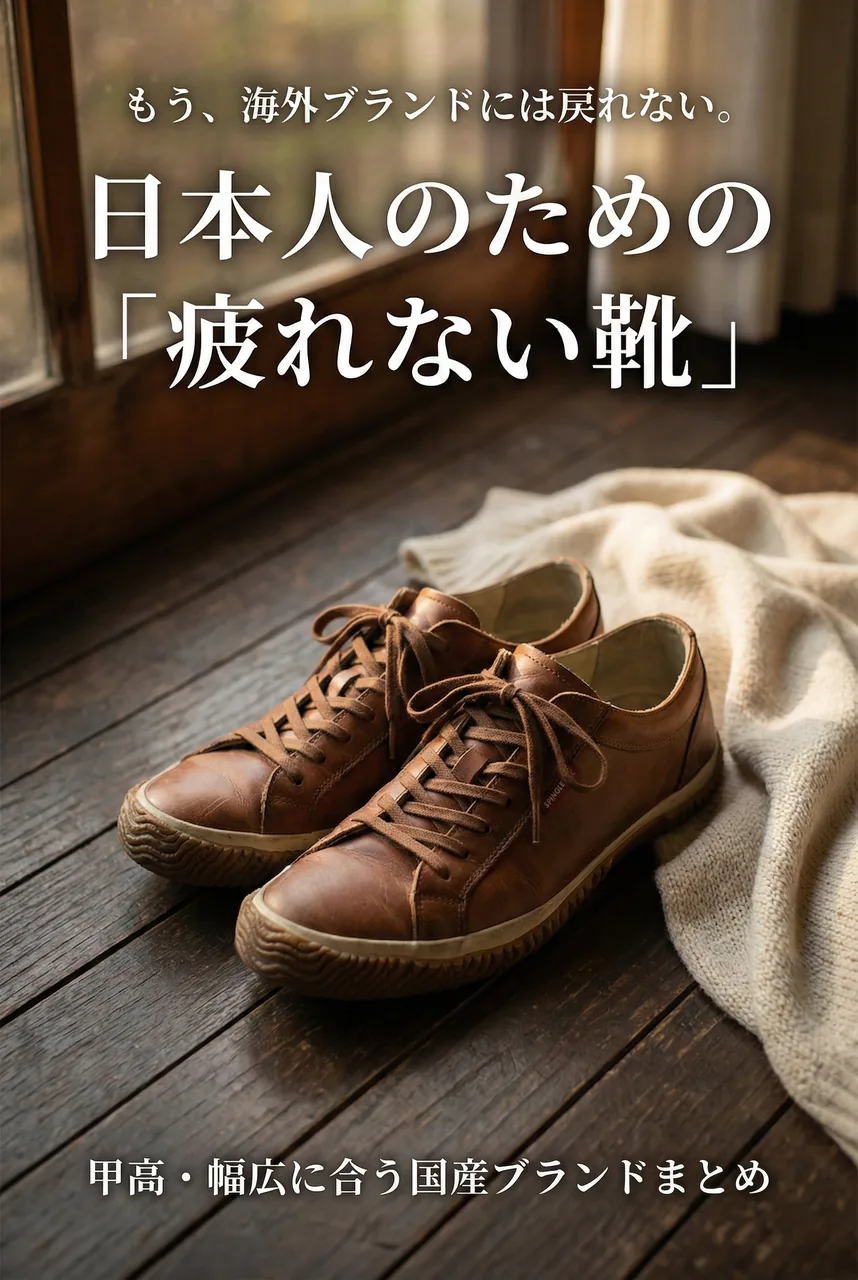
"Sneakers are something you wear out and throw away."
That's what I used to think.
Then I got my first pair of SPINGLE MOVE — and the next time the heel wore down, I took them in for repair
instead of replacing them. When the leather scuffed, I cleaned and conditioned it.
What I noticed was strange: the more attention I gave them, the better they fit, and the better they looked. Not
despite the wear, but because of it.
Mass-produced shoes are designed to be replaced. These aren't. They're built to become yours — shaped by your
foot, improved by your care. I hope you find a pair like that.