
Until 2018, a bottle labelled "domestic wine" in Japan could legally be made from
concentrated grape must shipped in from Chile. Pressed abroad, fermented and bottled in
Japan, sold as a Japanese product. It was not a scandal — it was simply what the rules allowed.
That ended on 30 October 2018. Since then, the words "Japan Wine"
on a front label are legally restricted to wine made from 100% grapes grown in
Japan, and "domestic wine" is no longer a permitted term at all.
So there is now a two-word test that tells you what is in the bottle, which is
more than most wine countries offer. This guide covers what to look for, what Koshu actually
tastes like, and — the harder question — where to buy any of it.
Quick Reference: Japanese Wine at a Glance
| Question | Answer |
|---|---|
| What to look for on the label | The words "Japan Wine" |
| The signature white grape | Koshu — pale, dry, low alcohol |
| The signature red grape | Muscat Bailey A — light, soft tannin |
| Main regions | Yamanashi, Nagano, Hokkaido |
| Typical price abroad | $39–$49 a bottle |
| Where to buy | Wine-Searcher, not Amazon |
| If you drink one Japanese wine, make it a dry Koshu. It is the grape that exists nowhere else, and the only style with reliable international distribution. | |
The Label Rule, and What It Replaced
Japan makes far more wine than it grows grapes for, and for decades the labelling did not distinguish between the two things.
| Term | What it means | Status |
|---|---|---|
| Japan Wine(日本ワイン) | 100% grapes grown in Japan | Legally protected since Oct 2018 |
| Domestic wine(国産ワイン) | Bottled in Japan — grapes from anywhere | No longer permitted |
| Region on the front label | 85%+ of the grapes from that place | Only allowed on Japan Wine |
Under the old voluntary rules, "domestic wine" was a manufacturing statement, not an
agricultural one. It told you where the fermenting and bottling happened. It said
nothing whatsoever about where the fruit was grown, and much of it arrived as concentrated must
from South America or Europe.
That wine still exists — it simply cannot use either term now. Which means the
presence or absence of "Japan Wine" on the front is a genuine, enforceable signal rather than
marketing.
For a buyer abroad this matters less than it does in a Japanese supermarket, because almost nothing gets exported except the good stuff. But it explains something confusing: why Japanese wine has a reputation for being both excellent and mediocre. Both were true, and they were sold under the same words.
Why Japanese — Koshu, and the Registration That Opened Europe
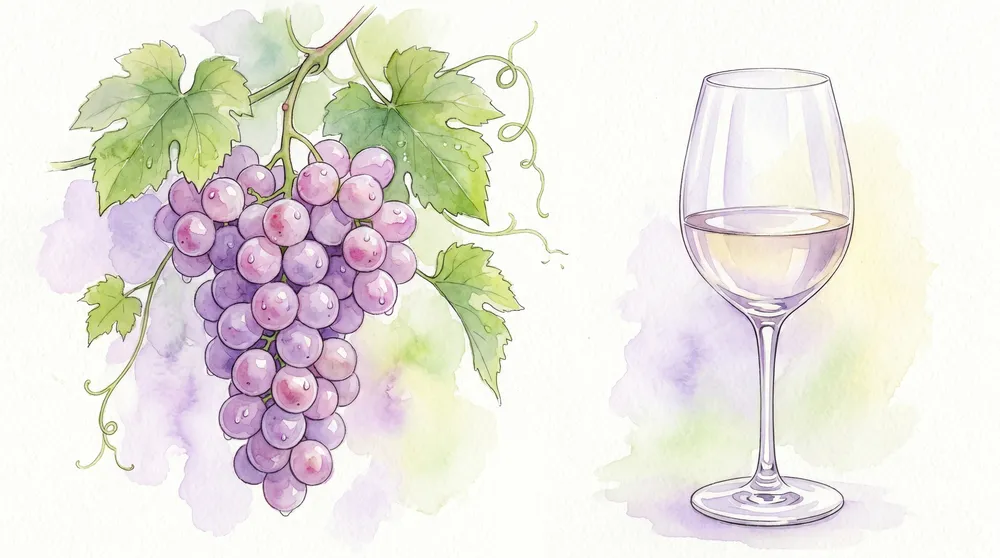
Koshu is a pink-skinned white grape that has been growing in Yamanashi for something like a thousand years, and it is genetically a Vitis vinifera — the European wine species — with some Asian wild-grape ancestry mixed in.
It exists essentially nowhere else, which is unusual: most "local" grapes turn out on DNA testing to be a familiar variety under another name. Koshu does not.
The wine is very pale, very dry, low in alcohol — often around 12% — with high acidity, citrus and white peach, and a faint bitterness on the finish that is characteristic rather than a fault.
Why you could not buy this in 2009
To export wine to the EU, the grape variety has to appear on the OIV's international list of vine varieties. Until it does, you legally cannot put the variety name on the label for the European market.
Koshu was registered in August 2010 — the first Japanese variety ever listed —
and Muscat Bailey A followed in June 2013.
That is the actual reason Japanese wine appeared in London and New York when it did.
Not a change in quality or in fashion, but a registration that made the label legal.
The food argument, which is real
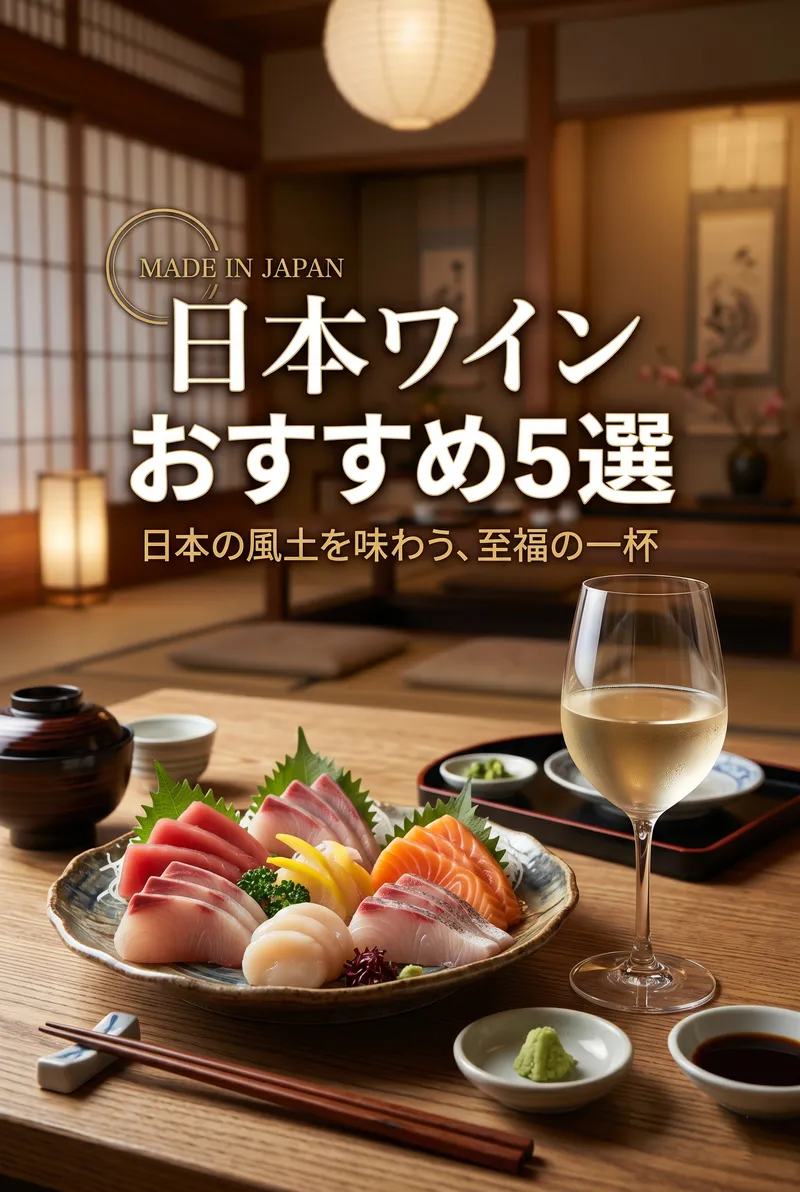
Koshu's low alcohol, high acid and near-absence of oak make it one of the few white wines that does not fight raw fish. Big oaked whites overwhelm sashimi; aromatic whites clash with soy and dashi. Koshu sits underneath all of it.
It also handles the things that defeat most wine — vinegared rice, pickles, yuzu, delicate simmered vegetables. If you eat Japanese food at home and have never found a wine that works, this is the answer, and it is not a patriotic claim: it is what the grape is like.
Muscat Bailey A, the Red You Will Not Recognise
Japan's signature red is a 1920s crossing of Bailey and Muscat Hamburg, and it makes a wine unlike anything in the European canon.
Expect light body, soft tannin, and a pronounced strawberry-and-candy aroma that
divides people sharply. Some find it charming; some find it confected.
It is genuinely useful if you dislike tannin. Anyone who finds Cabernet drying
and Nebbiolo punishing will find this an easy red — and it takes a slight chill better than most
reds, which suits it to summer and to grilled food.
Serious producers now work against the candy character rather than leaning into it, using whole-bunch fermentation and oak to build structure. Those bottles are much better wines and much harder to find abroad, so treat any Muscat Bailey A you meet outside Japan as a bonus rather than something to hunt.
Three Regions
| Region | Known for | Character |
|---|---|---|
| Yamanashi | Koshu — the historic heartland | Warm, humid; the Katsunuma valley |
| Nagano | Merlot, Chardonnay, Cabernet Franc | High altitude, big day-night swing |
| Hokkaido | Pinot Noir, Kerner, Zweigelt | Cool climate — the growth area |
Yamanashi is the answer to "where is Japanese wine from" — an hour and a half west of Tokyo, in a valley ringed by mountains with Mt Fuji at one end, and it has been growing Koshu since long before anyone thought of making wine from it.
Hokkaido is the one to watch. It is cool enough for varieties that struggle in the humidity further south — Pinot Noir, Germanic whites — and as summers warm it is quietly becoming the more interesting half of the industry.
What to Buy, and Where
⚠ Do not search Amazon for this
Amazon does not sell wine in the United States, so a search there returns
glassware, books and unrelated imports. The tool for this job is
Wine-Searcher, which takes a wine name and shows you which shops near you have it.
Japanese wine is far better distributed than Japanese spirits or umeshu, so this
usually works. Specialist merchants in New York, London and California carry it as a matter of
course.
Grace Koshu — the one to start with
Grace Wine (Chuo Budoshu) was founded in Katsunuma in 1923 and is now run by
its fifth-generation winemaker, Ayana Misawa. It was the first Japanese winery ever to
take a Gold at the Decanter World Wine Awards, and this bottling has since won
Platinum twice and Gold three times.
It is also the most widely distributed Japanese wine in the world, which
makes it both the best introduction and the easiest to actually find.
- Style
- Dry white, unoaked
- Alcohol
- About 12%
- Tastes of
- Citrus, white peach, pear; a clean bitter finish
- Region
- Katsunuma, Yamanashi
- Price
- $39–$49
Perfect for: Sashimi, oysters, delicate vegetables — and anyone who finds most whites too heavy.
A California importer also sells it direct, but currently ships only to California and the District of Columbia — US interstate wine shipping is restricted state by state, so check before ordering.
Coco Farm & Winery — worth knowing about
In 1958 a teacher and a class of students with intellectual disabilities cleared a steep hillside in Tochigi and planted vines. The care facility that grew from it, Kokoromi Gakuen, opened a winery alongside in 1980 and was licensed to make wine in 1984. The people who live and work there farm it.
The wine is chosen on its merits, not as a gesture. Their sparkling was served at the G8 summit in 2000, and Japan Airlines has poured their wines in international first class since 2013.
- Where
- Ashikaga, Tochigi — 80 km north of Tokyo
- Style
- Natural-leaning, wild ferments
- Abroad
- Occasional. Check Wine-Searcher
Two things worth drinking that we could not find abroad at all: Katsunuma
Jozo's Aruga Branca Clareza, a benchmark dry Koshu, and Hokkaido Wine's Otaru Niagara — a wine so
sweet and so grapey that it barely reads as wine, and which Japanese drinkers love.
Both are easy to buy in Japan and we found no English-language route to either,
so we are not going to send you looking. Note them for a trip.
Temperature and Glass
- Serve Koshu cool but not cold — around 10–12°C. Straight from a cold fridge it is mute; its aromatics are delicate and they need a few degrees to appear. Fifteen minutes out of the fridge is about right.
- Use a normal white wine glass, not a flute or a tumbler. There is not much aroma to begin with, and a narrow opening loses what there is.
- Muscat Bailey A takes a light chill — around 14–16°C, cellar temperature rather than room temperature, which suppresses the candy note and helps the fruit.
- Once opened, three to four days in the fridge with a stopper for a Koshu. Its acidity holds it together longer than a soft white would manage.
- Do not decant either of these. Both are low-tannin, delicate wines that lose rather than gain from air.
Frequently Asked Questions
Are "Japan Wine" and "Japanese wine" the same thing?
"Japan Wine" is the regulated term and it means 100% Japanese-grown grapes.
Since October 2018 nothing else may use it.
"Japanese wine" in casual English is just a description, so on a bottle look for
the specific phrase — or for 日本ワイン, which is the same rule in Japanese.
What does Koshu taste like?
Very pale, dry, light and high in acid — citrus and white peach, almost no oak,
typically around 12% alcohol, with a slight bitterness at the end that is part of the grape.
If you like Muscadet, dry Riesling or Picpoul, you will recognise the territory.
I do not like tannin. Is there a Japanese red for me?
Muscat Bailey A, yes. It is light-bodied with soft tannin and a distinct
strawberry aroma, and it is one of the gentlest reds you can buy.
Serve it slightly chilled, which keeps the sweet-smelling side in check.
Where can I buy Japanese wine outside Japan?
Through specialist wine merchants — use Wine-Searcher to find one holding stock.
Amazon does not sell wine in the US, so searching there is wasted effort.
Grace Koshu is the most widely stocked; anything else is a matter of luck and
your local importer.
Why is it expensive for what it is?
Japan is a difficult place to grow wine grapes — the rainy season arrives during
the growing season, humidity brings disease pressure, and land is costly. Yields are low and
labour is high.
Then add shipping and import duty. A $40 Koshu is not overpriced so much as
honestly priced for the conditions.
Can I visit the wineries?
Yes, and Katsunuma is unusually easy — about ninety minutes from Shinjuku by
train, with dozens of wineries within walking and cycling distance of the station, most of them
open for tasting.
It is one of the few wine regions in the world you can do without a car, which
given the tasting is a considerable advantage.
Final Thoughts: Two Words on the Front
Japan spent decades selling two completely different products under one name, and then fixed it with a labelling rule that is clearer than most countries manage.
What that rule protects is genuinely worth protecting. Koshu is a grape that grows nowhere else, makes a wine that does what almost no other white can do at a Japanese table, and only became legally exportable in 2010.
Buy a dry Koshu, serve it at 10°C in an ordinary wine glass, and drink it with fish. If you have ever poured a big Chardonnay next to sashimi and known something was wrong, this is what was missing.

Umeshu: Not a Plum, Not a Wine, and How to Buy It

Japanese Whisky Gift Guide: 3 Brands You Can Actually Buy