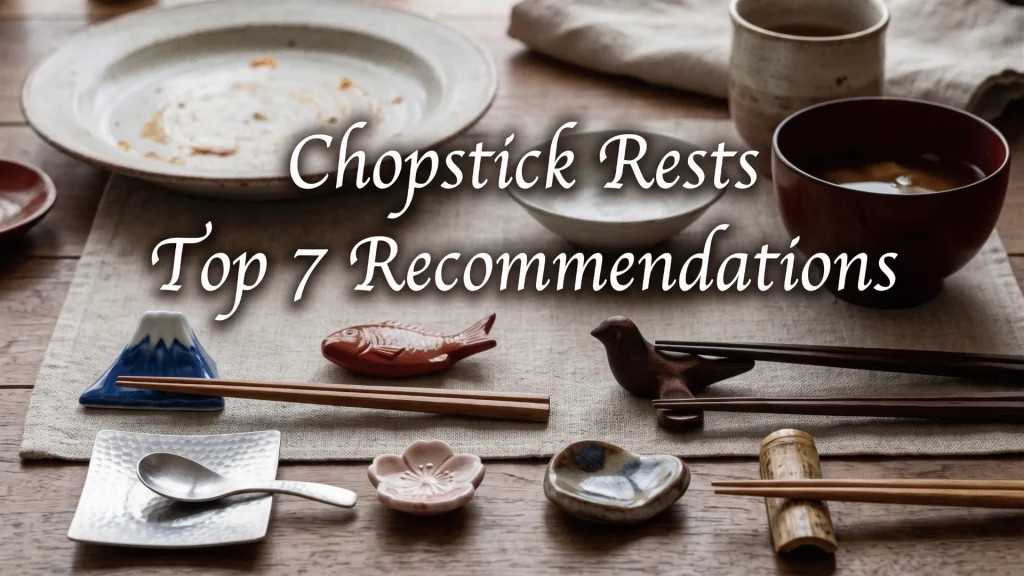
"Do I really need a chopstick rest?" You might have been getting along fine without one for years.
But a single hashioki (chopstick rest) can completely change the feel of your table.
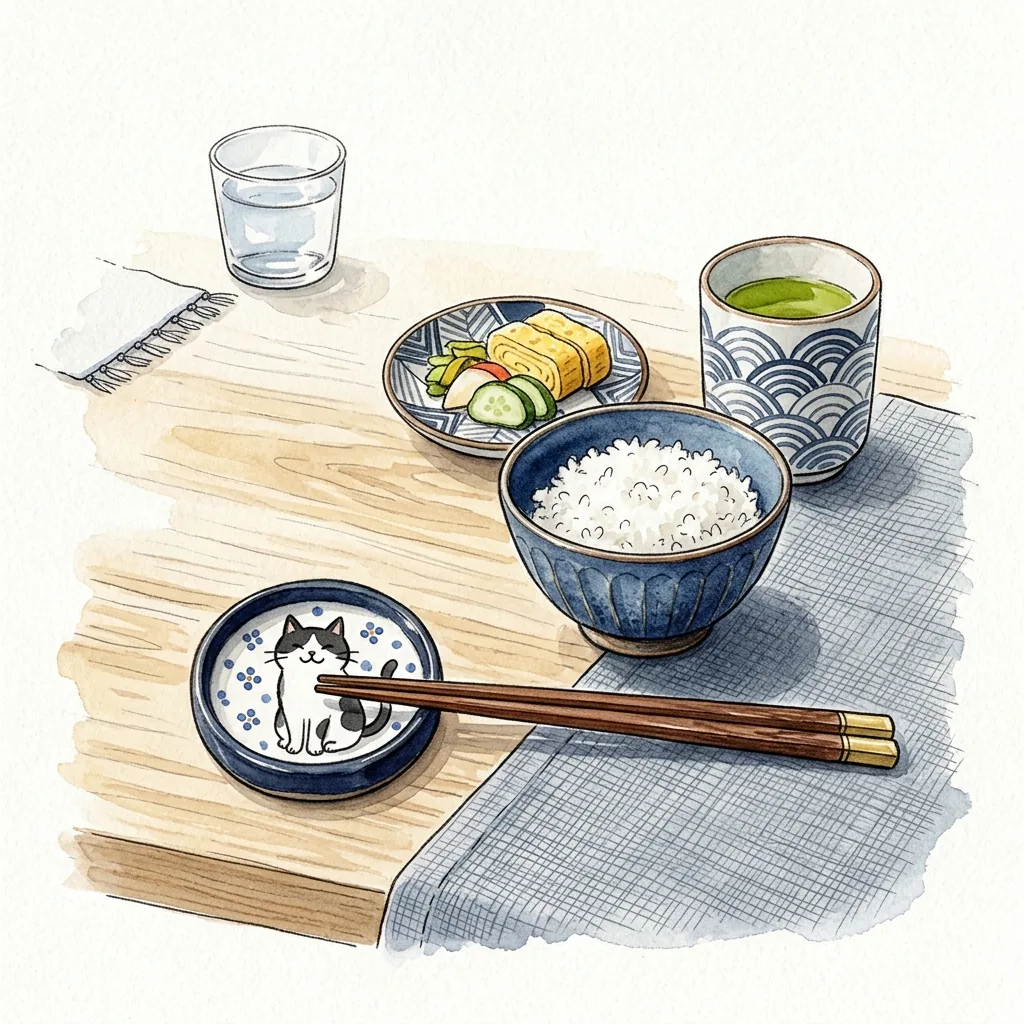
Picture chopsticks tossed casually beside a bowl — then picture them resting neatly on a ceramic stand. Same meal,
same dishes, but the second setting reads as noticeably more considered. That impression isn't imagined.
This guide covers chopstick rests by material and region — ceramics from Mino, Hasami, and Arita,
lacquerware from Wajima, tin, and wood — all available online. Whether you prefer a matched set or enjoy
collecting one piece at a time, you'll find what you're looking for here.
Quick Reference: Chopstick Rests at a Glance
| Material | Characteristics | Price Range | Best For |
|---|---|---|---|
| Ceramic / Porcelain (Mino-yaki, Hasami-yaki, Arita-yaki) |
Wide design variety, pairs well with any dish | $5–$40 | Those who want a lively, expressive table |
| Lacquerware (Wajima lacquerware, etc.) |
Elegant sheen, formal Japanese aesthetic. Often sold in sets with chopsticks | $40+ | Gifts, New Year's & special occasions |
| Tin (Nousaku, etc.) |
Soft metallic luster, develops character with use | $30–$55 | Modern tableware fans |
| Wood (Japanese timber) |
Warm texture, lightweight and easy to handle | $5–$20 | Casual everyday use |
| Kyo-yaki (Kiyomizuyaki, Kyoto) |
Refined hand-painting, artisan Kyoto ceramic | $15–$35 | Those who appreciate artisan painted ceramics |
Do You Really Need a Chopstick Rest?
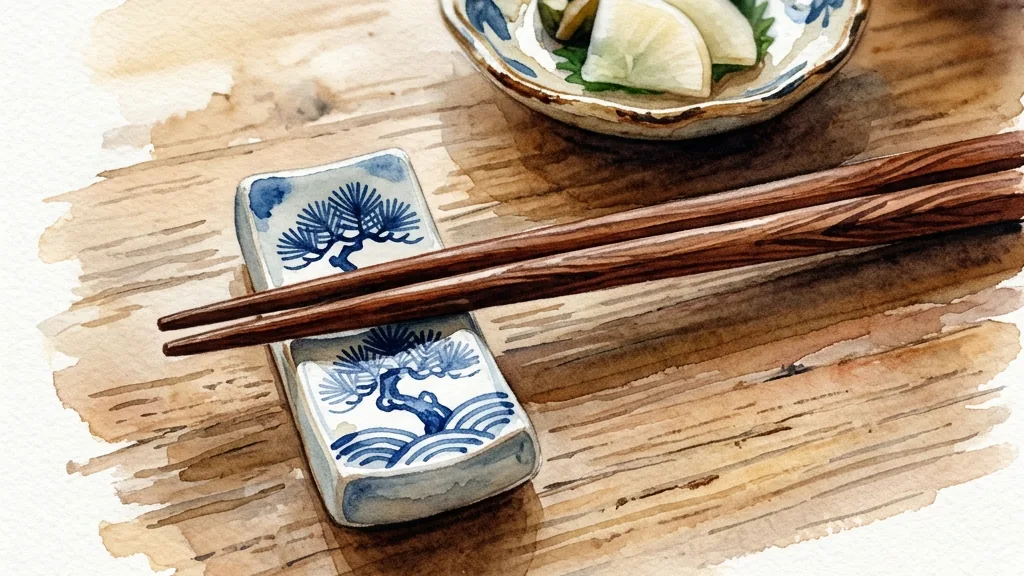
The chopstick rest is one of the most cost-effective upgrades you can make to your table setting.
Without replacing a single dish, a set of hashioki changes the mood of any meal.
From Bowl-Resting to the Dedicated Stand
The hashioki as we know it didn't become part of everyday Japanese dining until the Meiji era
(1868–1912).
Before that, the practice of utsuwa-watashi — resting chopsticks across the rim of a bowl — was the
norm.
The Western tradition of the cutlery rest entered Japan during the Meiji westernization period, and the Japanese
created their own version: a small, dedicated stand for chopsticks.
What began as a borrowed concept became uniquely Japanese.

Fun Fact: The chopstick rest arrived with Meiji-era Westernization
Before the Meiji era, chopsticks in Japan were simply rested on the rim of a bowl. When Western table culture began to influence Japanese dining habits, the idea of a small stand for utensils — analogous to a cutlery rest — took hold. The Japanese adapted this concept into something entirely their own: the hashioki. It is, in a sense, one of Japan's most elegant cultural translations.
There's also a practical hygiene argument for using a chopstick rest.
Chopsticks laid flat on the table pick up whatever is on that surface. A hashioki keeps the tips elevated throughout
the meal — clean from start to finish.
"I can live without one" has a way of becoming "I don't know how I managed without it."
Choosing by Material | Ceramic, Lacquer, Tin & Wood
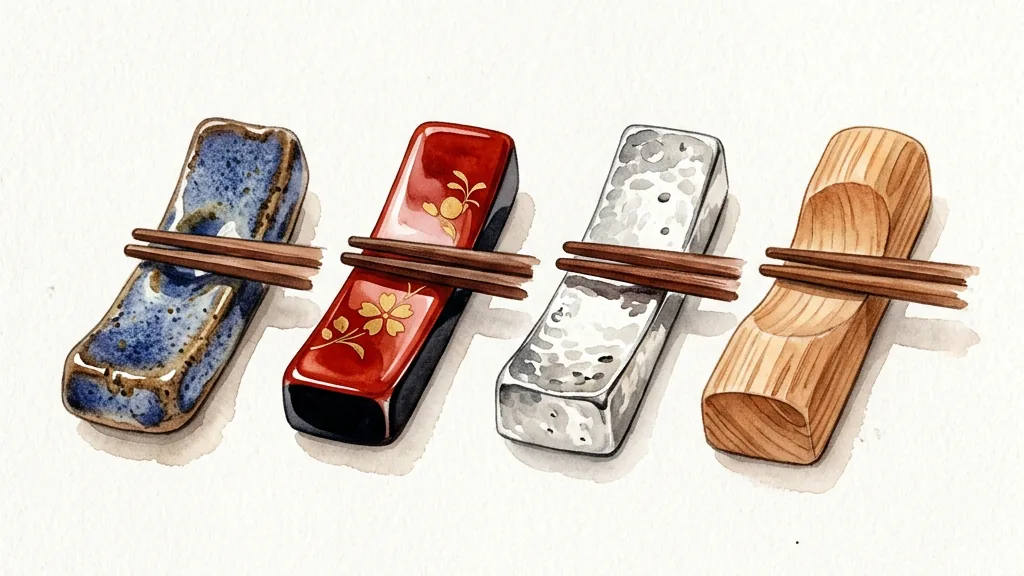
Ceramic & Porcelain | The Most Versatile Everyday Choice
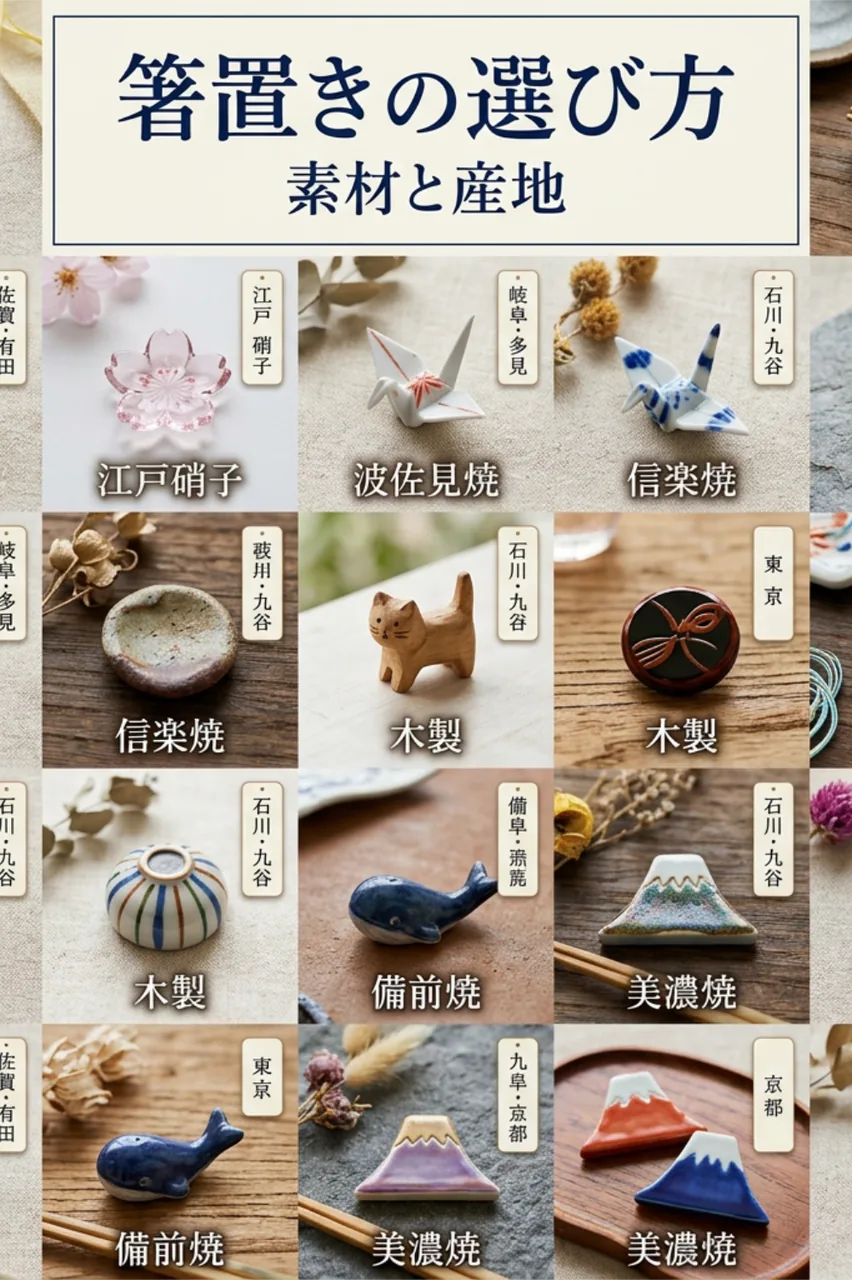
Ceramic and porcelain are the most common materials for chopstick rests.
Each producing region — Mino-yaki in Gifu, Hasami-yaki in Nagasaki, Arita-yaki in Saga — brings a completely
different aesthetic.
Glazing and hand-painting techniques offer an enormous range of designs, letting you match the season or your
dishes. The price range stretches from budget-friendly to collector-grade, making ceramics the ideal starting
point for anyone new to chopstick rests.
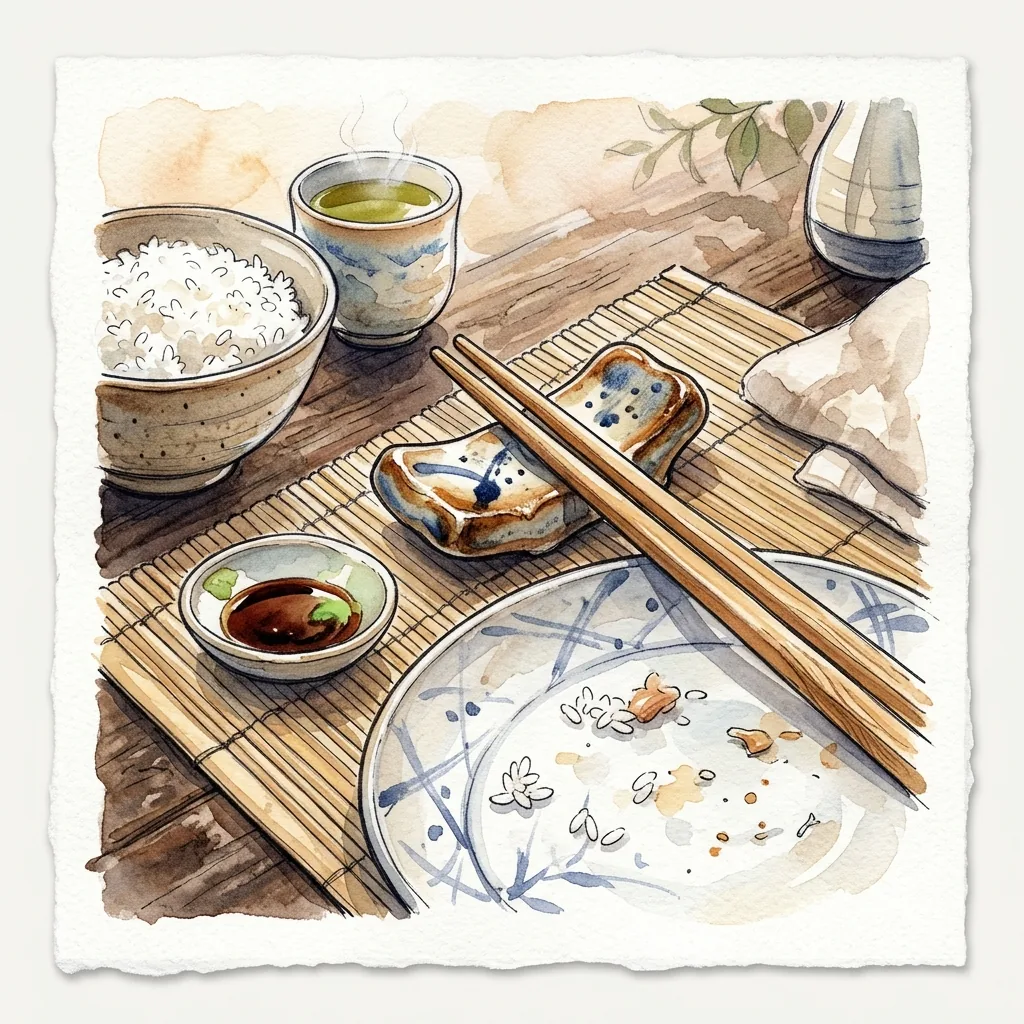
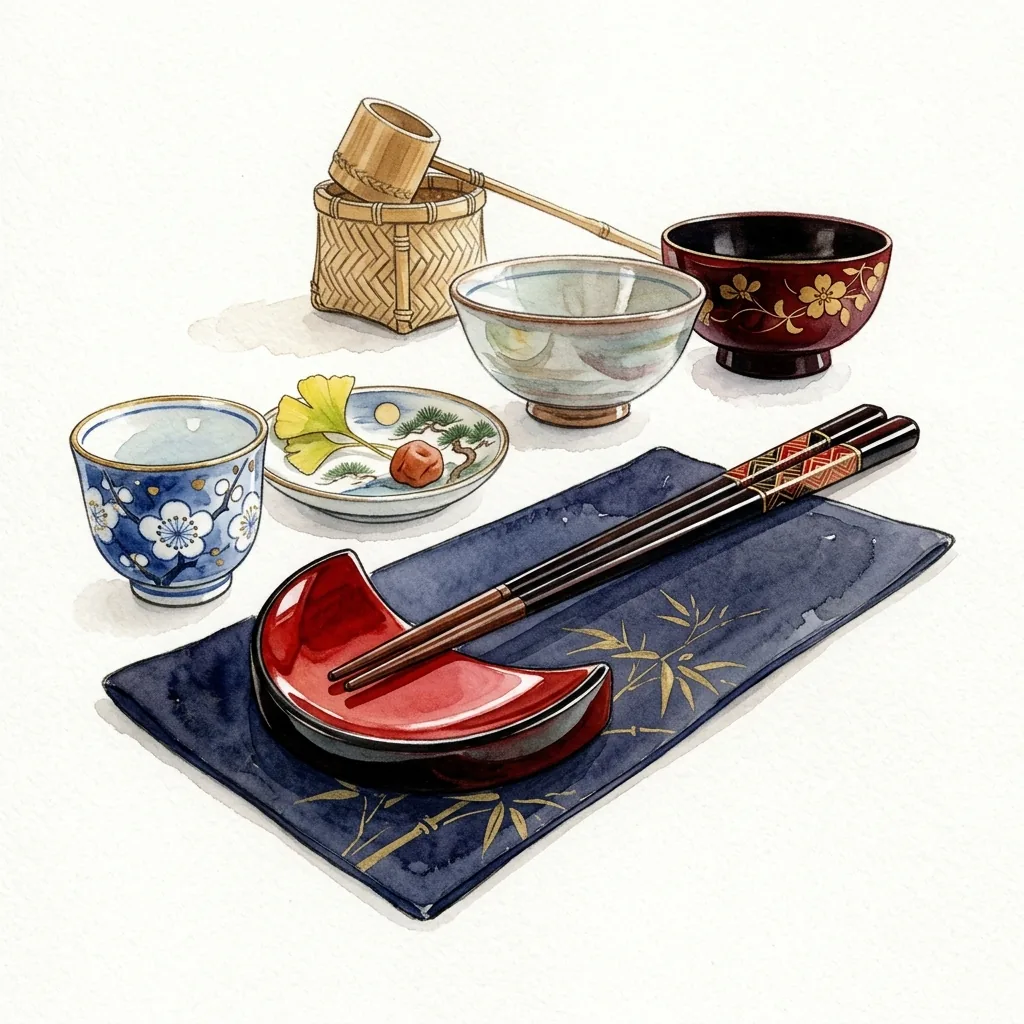
Lacquerware | Formal Elegance for Special Occasions
Lacquered chopstick rests — Wajima lacquerware (Wajima-nuri) being the finest example — are prized for their
deep, luminous sheen and rich color.
Better suited to New Year's celebrations and guest meals than daily use, they elevate any formal table setting.
Pairing them with lacquer soup bowls or jubako (stacking boxes) creates a beautifully unified presentation.
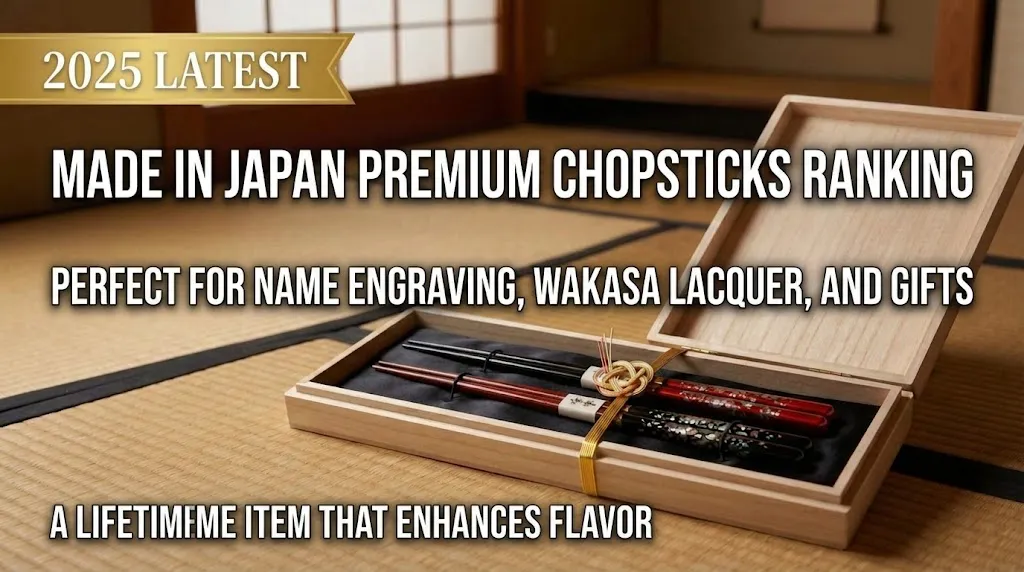
They're frequently sold as sets with lacquered chopsticks, and are a popular gift choice for weddings and
milestone celebrations.
Tin (Suzu) | A Modern Metal That Gets Better with Age
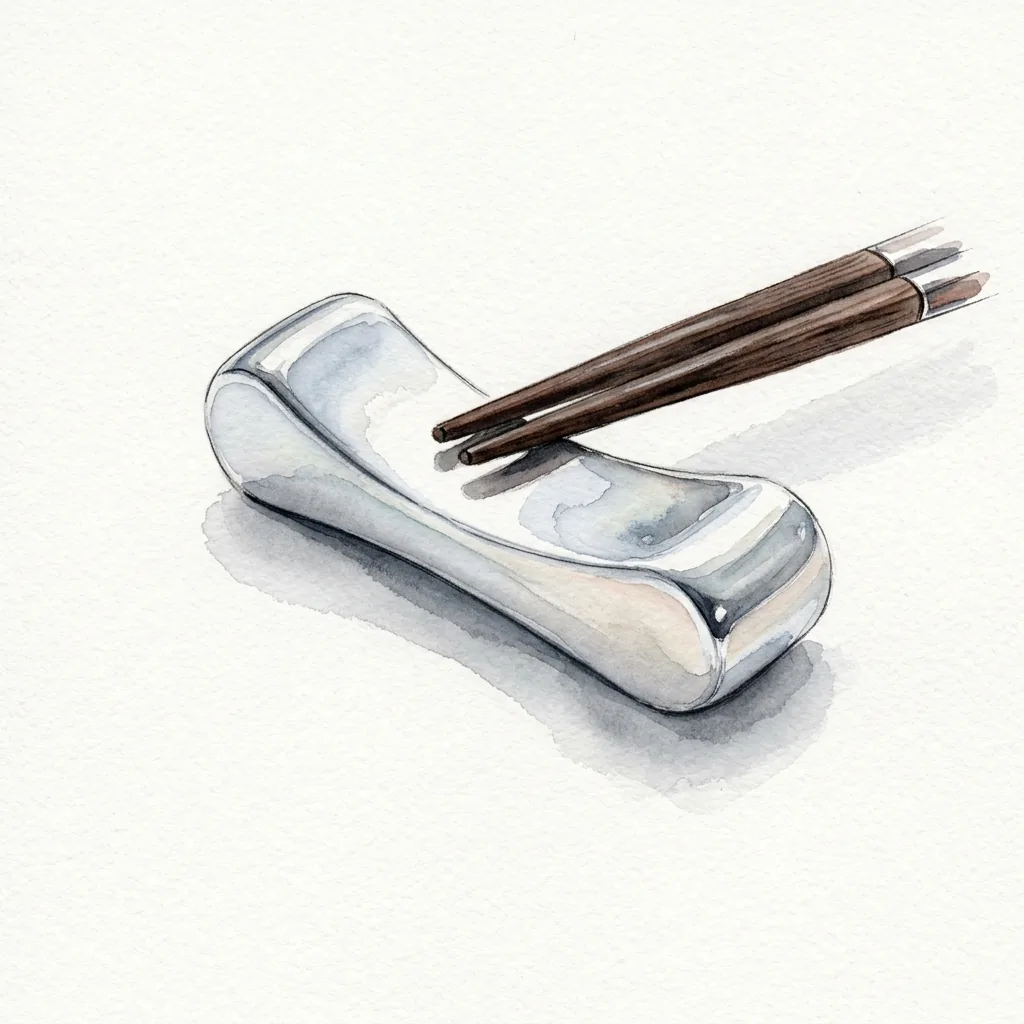
Tin chopstick rests, most famously from Nousaku (能作) in Takaoka, Toyama, have a soft silvery luster and a
satisfying weight.
Tin is an unusually soft metal — the oils from your hands gradually give the surface a warm, lived-in glow that
develops uniquely over time.
It works equally well alongside traditional Japanese tableware and Western pieces, and it makes an excellent
gift for anyone who appreciates understated craft.
Fun Fact: Tin has been used in sake vessels for centuries
Tin has been prized as a material for sake cups since ancient times. Trace amounts of tin ions are believed to neutralize some of the harsh notes in sake, making it taste smoother and more refined. Placing a tin chopstick rest on your table brings a touch of this centuries-old metalworking tradition into your daily meal. Nousaku products are famously "pure enough to bend" — which is, paradoxically, a mark of quality.
Choosing by Region | Mino-yaki, Hasami-yaki, Arita-yaki & Wajima
Japan's Chopstick Rest Heartlands
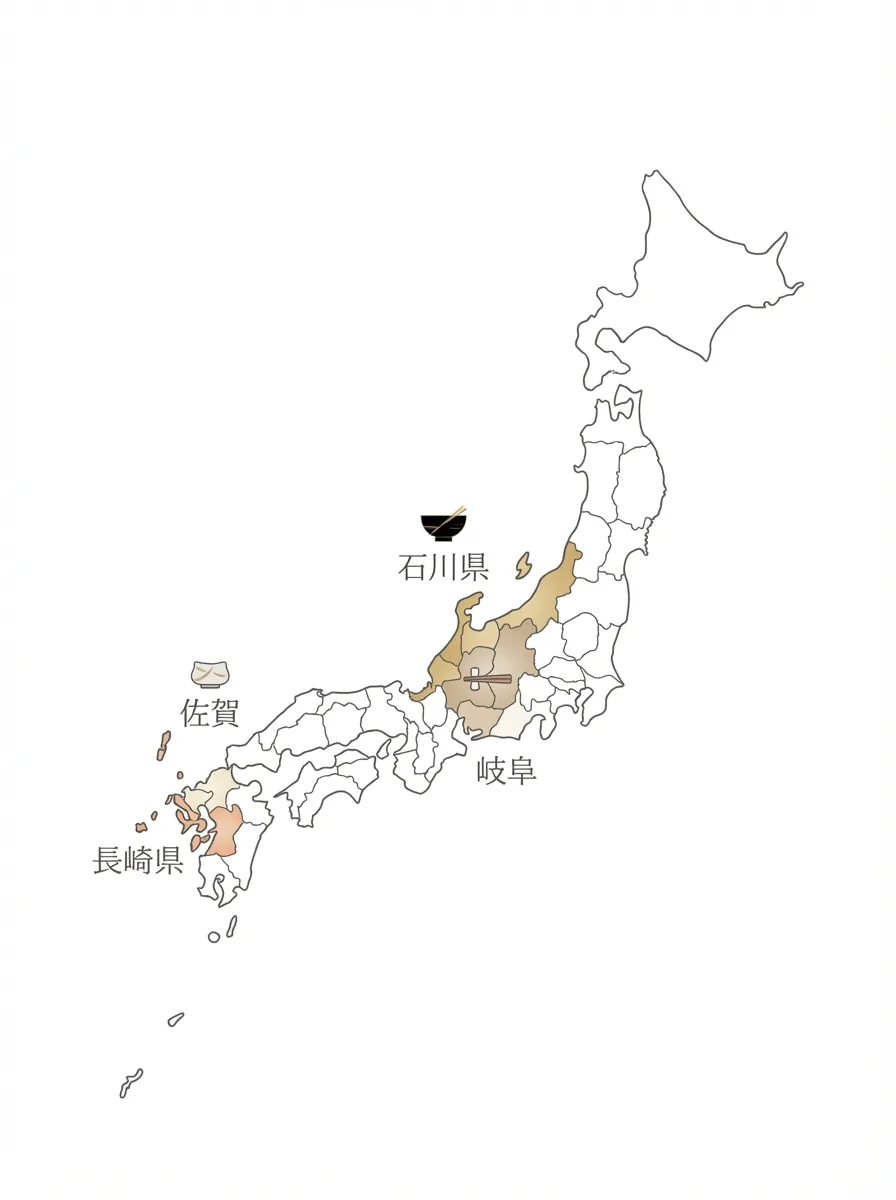
Japan's chopstick rest culture is built on a network of regional ceramic and lacquerware traditions.
Mino-yaki in Gifu Prefecture, Hasami-yaki in Nagasaki,
Arita-yaki in Saga, and Wajima lacquerware in Ishikawa each bring distinct
histories and aesthetics.
Knowing the regions opens up a whole new dimension of enjoyment when choosing.
Mino-yaki (Gifu) | Japan's Largest Pottery Region
Mino-yaki accounts for roughly half of Japan's entire ceramics production — making it the backbone of the
Japanese table. The range of glazes is extraordinary: Oribe-yaki (deep green), Shino-yaki (creamy white), and
Ki-Seto (amber yellow) are among the most recognized styles.
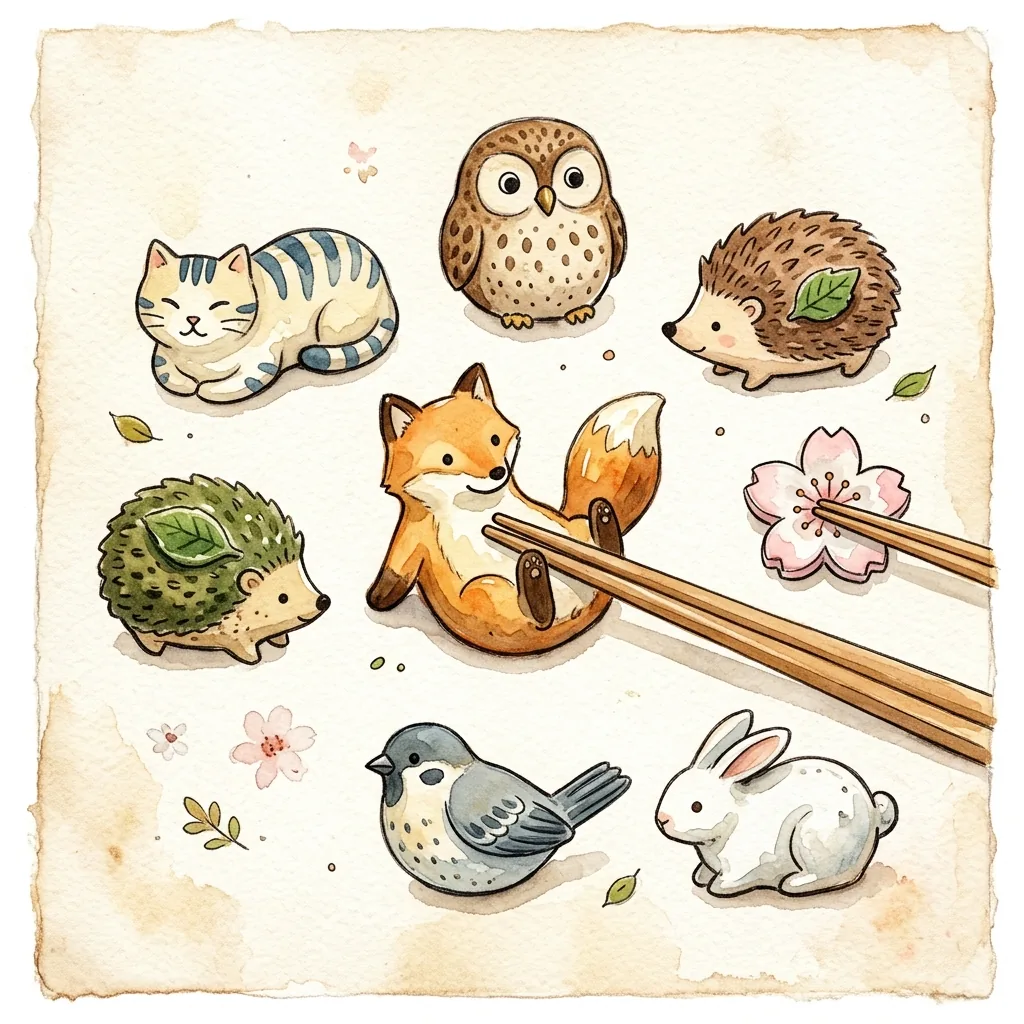
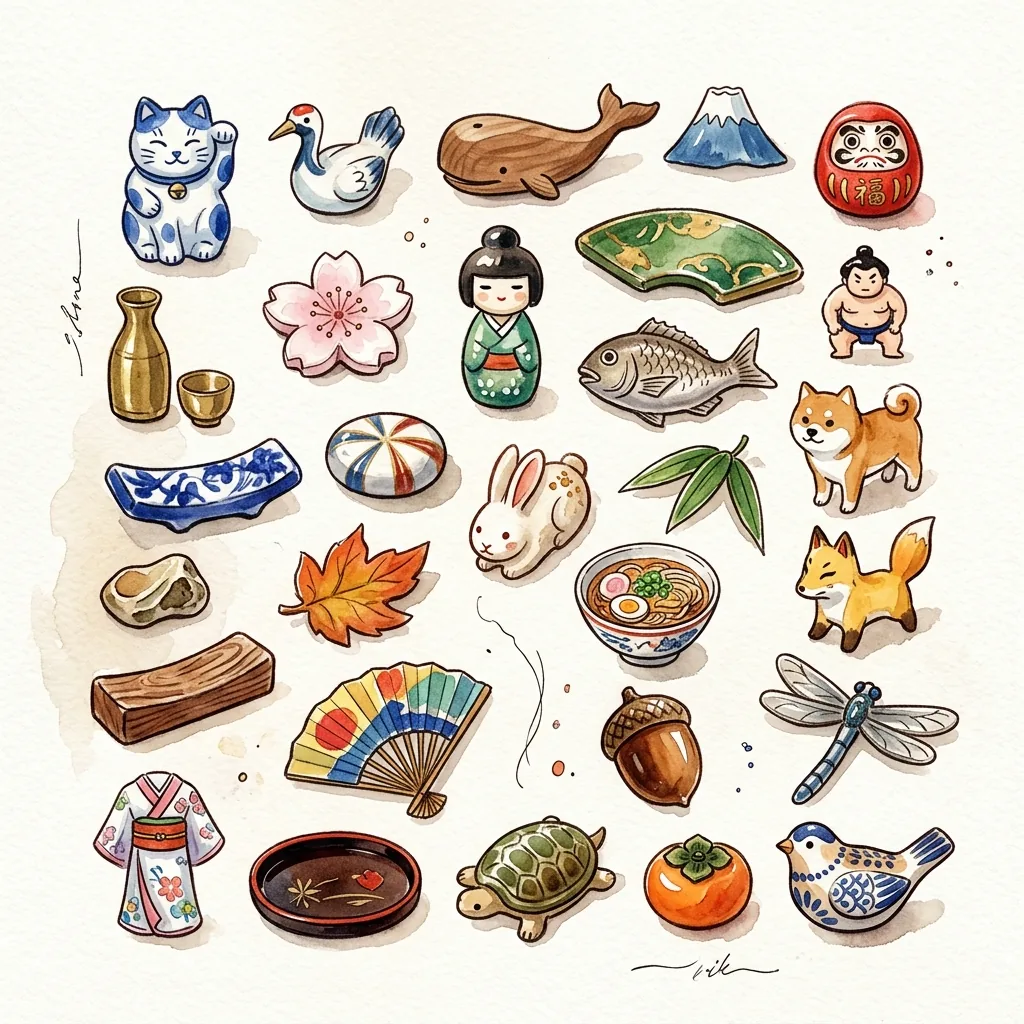
Chopstick rests from this region come in playful shapes — animals, foods, flowers — and there's an almost
addictive quality to collecting them piece by piece.
Hasami-yaki (Nagasaki) | The Region That Found Its Own Voice
Produced in Higashisonogi District, Nagasaki, Hasami-yaki has surged in popularity alongside the contemporary
Japanese tableware revival.
Simple, practical designs and accessible prices make it especially popular with younger generations.
Animal-shaped rests — whale sharks and hedgehogs among the most beloved — consistently trend on social media.
Fun Fact: Hasami-yaki was sold as "Arita ware" for centuries
Hasami and Arita are neighboring regions in Kyushu, and for much of their shared history, pottery made in Hasami was sold under the Arita-yaki name. It was only in the 2000s that Hasami-yaki established its own distinct brand identity — and it has grown into a nationally recognized name in its own right. Today the two are understood as occupying different niches: Arita for formal occasions, Hasami for the everyday table.

Our Top 7 Chopstick Rest Picks
Nousaku (NOUSAKU) / 100% Tin Chopstick Rest "Musubi" — Knot Design
- Material & Origin
- 100% tin / Takaoka City, Toyama Prefecture
- About
- Handcrafted using Takaoka's 400-year casting tradition. "Musubi" (knot) is an auspicious motif in Japanese culture, rendered in clean, understated form. Sold individually — pick up as many pieces as your table needs, or give one as a thoughtful standalone gift.
- Recommended for
- Weddings, housewarming gifts, a personal treat
For those who want to bring a touch of Japanese metalwork craft into their everyday table.
View on Amazon ↗Hasami-yaki / Ishimaru Pottery — Cat-Shaped Chopstick Rest
- Material & Origin
- Porcelain / Higashisonogi District, Nagasaki Prefecture
- About
- Charming cat-shaped rests from Ishimaru Pottery in the Hasami-yaki region. Available in white, black, tabby, and tuxedo patterns — a natural conversation-starter at the table. Porcelain construction resists staining, making these practical for daily use.
- Recommended for
- Daily use, families with children, small gifts for cat lovers
For those who want a touch of playfulness at the table without sacrificing quality.
View on Amazon ↗Mino-yaki / Handmade Chopstick Rest — Set of 5
- Material & Origin
- Stoneware / Toki and Tajimi area, Gifu Prefecture
- About
- From the region that produces roughly half of Japan's ceramics, these handmade rests carry small natural variations that only add to their appeal. Each piece develops a slightly different character over time — a quality you start to appreciate the longer you use them.
- Recommended for
- Daily dining, gifts for Japanese food and culture enthusiasts
For those who want to enjoy Japan's pottery heritage through everyday use.
View on Amazon ↗Arita-yaki / Hand-Painted Chopstick Rest — Set of 5
- Material & Origin
- Porcelain / Arita-cho, Saga Prefecture
- About
- Japan's oldest porcelain region with over 400 years of history. Traditional sometsuke (cobalt-blue painting) and overglaze-red decoration bring a formal elegance unique to Arita. The crisp white porcelain body and precise hand-painting are unmistakably Arita in character.
- Recommended for
- Formal dining, gifting, collectors
For those who want to bring Japan's oldest porcelain tradition to the table.
View on Amazon ↗Wajima Lacquerware / Urushi Chopsticks & Rest Set for Two
- Material & Origin
- Lacquerware / Wajima City, Ishikawa Prefecture
- About
- Hand-finished by craftspeople in Wajima. This couple's set includes a pair of lacquered chopsticks and a chopstick rest, presented together as a matched gift. Multiple coats of urushi lacquer deepen with age, developing a rich luster that grows more beautiful over the years — a classic choice for weddings and milestone celebration gifts.
- Recommended for
- Wedding gifts, longevity celebration gifts, New Year's table
For those who want to elevate a special occasion, or are looking for a truly lasting gift.
View on Amazon ↗Natural Wood Chopstick Rest (Wooden Hashioki)
- Material & Origin
- Natural wood (Japanese-made)
- About
- Warm-toned natural wood, with each piece showing its own grain and coloring. Lightweight, easy to handle, and safe for households with children. A timeless design that doesn't compete with your dishes.
- Recommended for
- Casual daily dining, natural-style table settings
For those who prefer the warmth of wood and a design that works with any table.
View on Amazon ↗Kyo-yaki / Kiyomizuyaki — Handcrafted Kyoto Porcelain Chopstick Rest
- Material & Origin
- Porcelain / Kyoto (Kiyomizuyaki)
- About
- Kyo-yaki (Kyoto ware), and its most celebrated style Kiyomizuyaki, is renowned for delicate hand-painting by skilled artisans near Kiyomizudera Temple. Each piece features refined brushwork in traditional motifs — far removed from industrial ceramics, and unmistakably Japanese in character.
- Recommended for
- Those who appreciate artisan painted ceramics, Japanese aesthetic gifts
For those who want a chopstick rest that doubles as a small piece of Kyoto craft heritage.
View on Amazon ↗Matching Sets or Mix-and-Match?
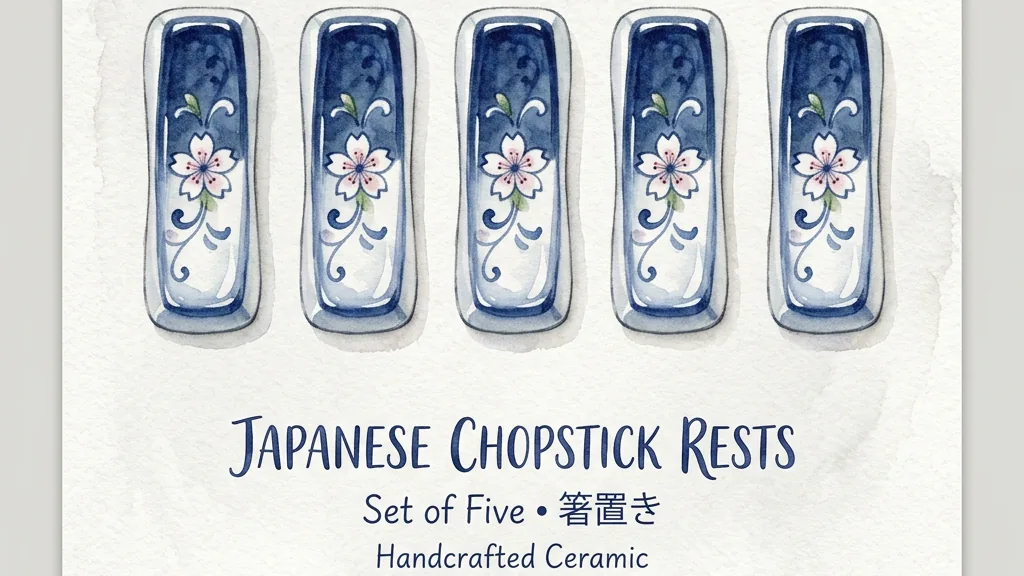
For a Unified Look, Start with a Set of Five
For most households, a set of five is the practical starting point — enough for the family with one spare for
guests.
A matched set creates visual harmony and looks polished for company. Formal materials like lacquerware and
Arita-yaki read as especially refined when matched.
Sets also tend to come in gift packaging, making them a natural choice for presents.
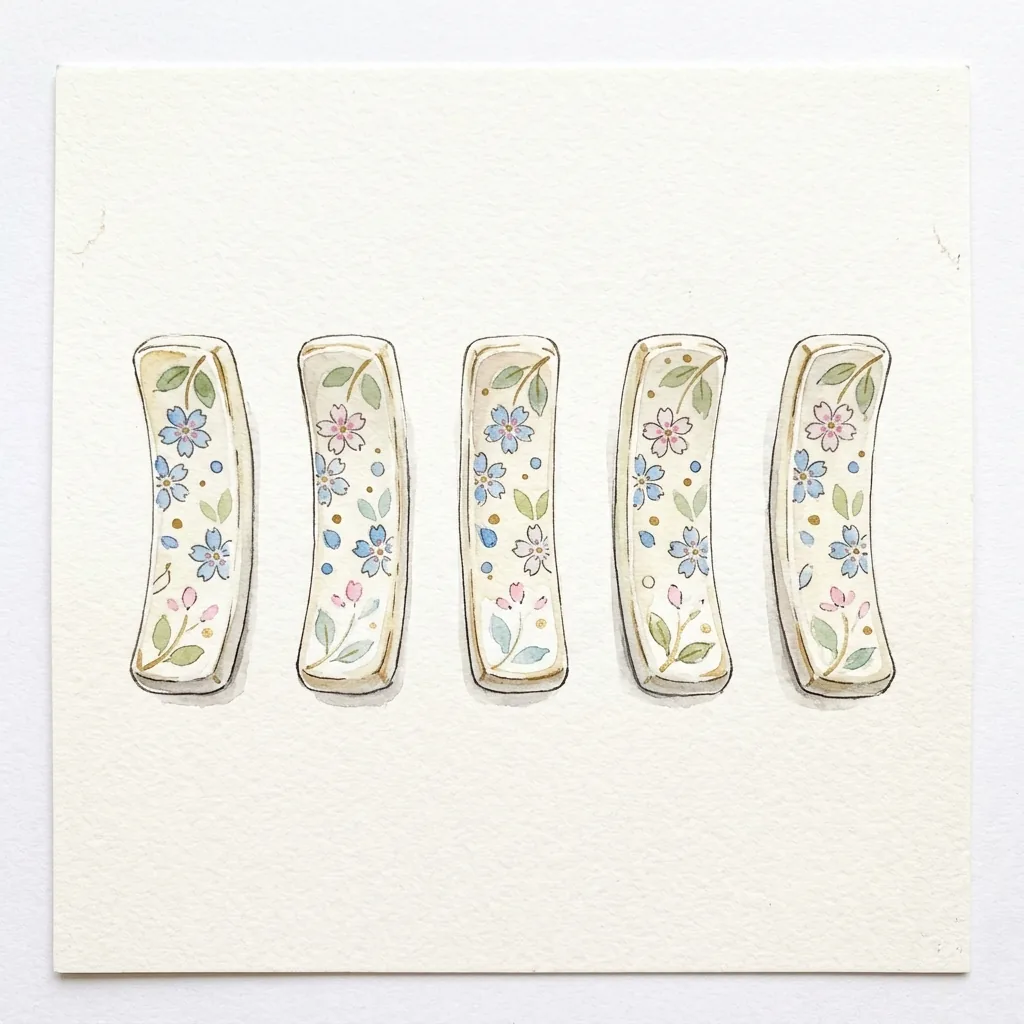
Collecting One by One | Let Travel Be Your Curator
There's another approach: picking up a piece here and there — at pottery fairs, craft markets, or on trips
through Japan's ceramic regions.
Mismatched materials and shapes create a table that's unexpectedly personal. "This one came from the Hasami
fair; that one was from an Arita kiln tour" — that kind of table tells a story.
A good starting point is one or two pieces. If you fall in love with a particular maker or region, slowly build
outward from there.
Care and Storage
Ceramic & Porcelain | Simple Water Washing Is Enough
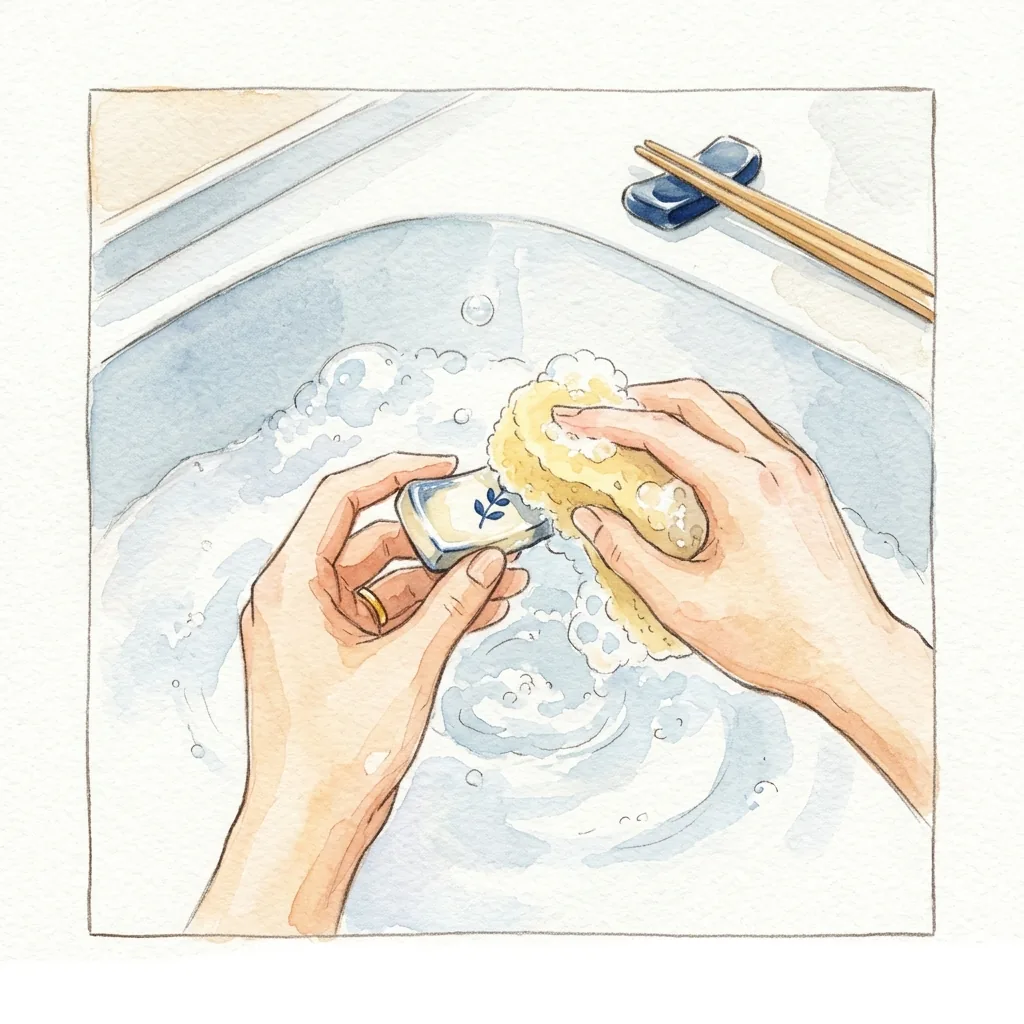
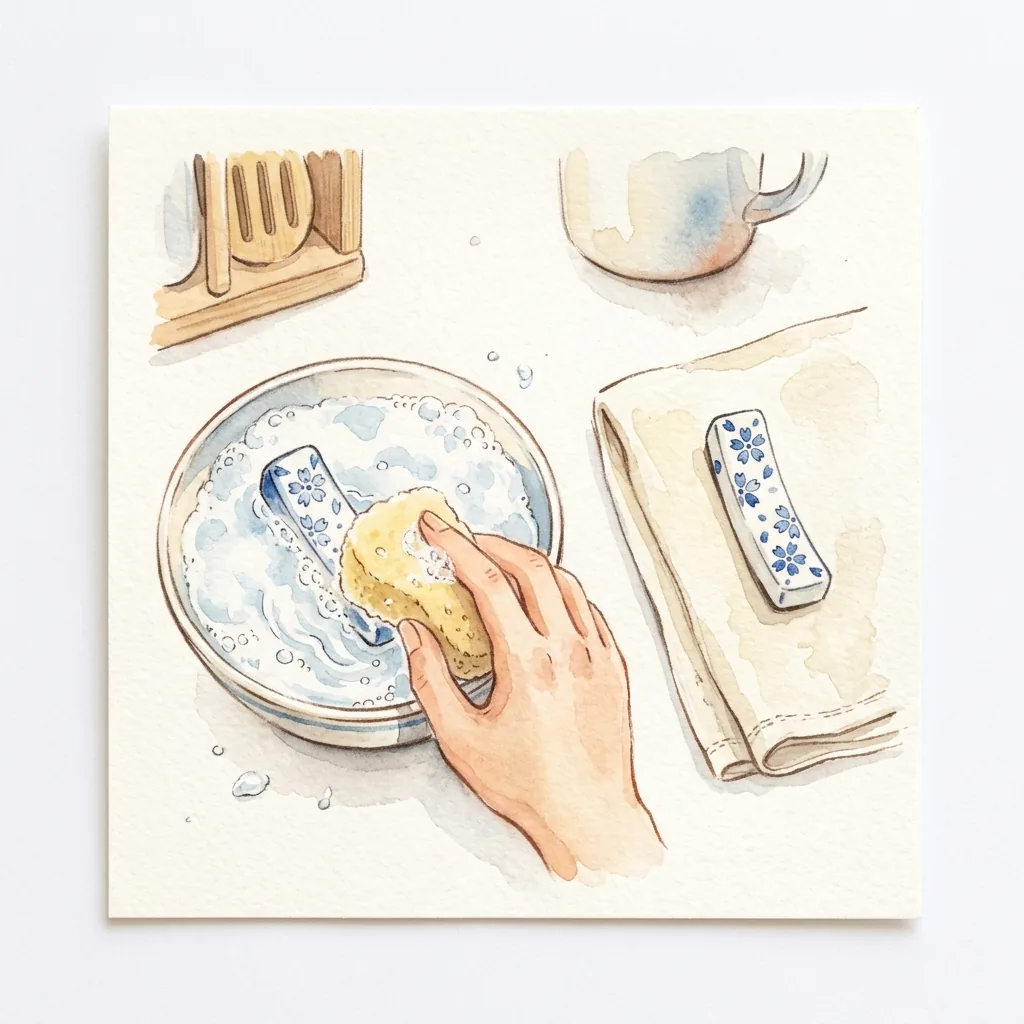
Wash with a soft sponge and mild dish soap — that's all that's needed for most ceramic and porcelain rests.
Many are dishwasher-safe, but hand-painted or gold-trimmed pieces should be washed by hand to preserve the
decoration. After washing, dry thoroughly before storing. Porous stoneware in particular can absorb moisture;
insufficient drying can lead to mold over time.
Lacquerware, Tin & Wood | What Not to Do
All three materials share the same no-list: no dishwashers, no microwaves, no direct sunlight, no
prolonged soaking.
Lacquerware can crack with sudden temperature changes.
Tin is very soft — use a gentle sponge rather than an abrasive scrubber, as even light scratches show on the
surface.
Wood absorbs water, so dry it immediately after washing and store somewhere with good air circulation.
Frequently Asked Questions
How many chopstick rests should I have?
One per person plus one or two spares is a sensible rule of thumb.
A family of four would do well with five or six — enough to accommodate guests without scrambling. Since ceramic
and porcelain rests can chip, having a spare or two provides peace of mind.
You can always start with one to try, then expand into a set once you know the style suits you.
Is there a substitute if I don't have a chopstick rest?
You can fold a chopstick paper wrapper into a makeshift rest.
A crane fold or simple mountain fold are the traditional techniques — and you'll still see them at high-end
Japanese restaurants. That said, for hygiene and appearance, a dedicated hashioki is always the better option.
Which material lasts the longest?
Porcelain (Arita-yaki, Hasami-yaki, etc.) is the most durable.
Non-porous and stain-resistant, it will last indefinitely as long as it doesn't chip. Tin can deform if dropped;
wood is sensitive to prolonged moisture. Lacquerware is long-lasting if cared for carefully, but it's sensitive to
direct sunlight and very dry air.
What's a good budget for a chopstick rest gift?
$10–$30 works well for a small gift; $50+ for a formal occasion.
Sets of five from Hasami-yaki or Mino-yaki in the $20–$40 range make thoughtful, accessible presents. For weddings
or milestone celebrations, Wajima lacquerware sets or Nousaku tin pieces are often chosen.
What's the difference between Hasami-yaki and Arita-yaki?
They're neighboring regions but occupy very different niches.
Arita-yaki has 400 years of history as Japan's first porcelain region — its traditional cobalt-blue sometsuke and
overglaze-red styles give it a formal, distinguished character. Hasami-yaki is known for simple, practical designs
at accessible prices, and has become a favorite in the contemporary Japanese tableware revival.
Is tin high-maintenance?
Not particularly — hand-wash with mild soap and a soft sponge, and that's about it.
The main things to avoid are dishwashers, abrasive cleaners, and metal scrubbers. Think of tin as a material to
grow with over time: the surface develops its own patina as you use it. That's the appeal, not a problem.
Final Thoughts: A Small Piece with Outsized Impact
The chopstick rest is one of the most cost-effective upgrades you can make to any table. Without touching a
single dish, a set of hashioki quietly elevates the whole meal.
Ceramic, lacquer, tin, wood — each material shifts the mood of the table in its own way.
Start with one piece that speaks to you. Your daily meals will feel just a little more considered — and that
feeling compounds over time.
Matching Chopstick Sets for Couples | Choosing by Craft Region and Material
The Best Japanese Tableware Brands — Ranked by Craft Region
