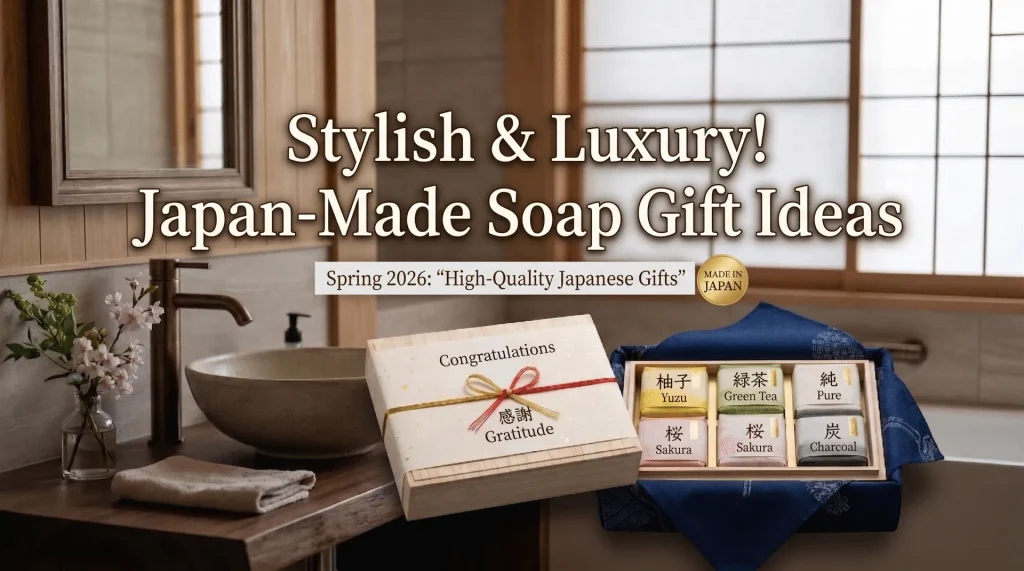
"I want to give something tasteful — but I worry about leaving them with an object they feel obligated to keep." That tension is exactly what premium Japanese bar soap solves.
Soap is a consumable: it disappears after use, leaving no burden on the recipient. And yet Japanese artisan soap — cold-process bars scented with yuzu or hinoki (Japanese cypress), or a gift set wrapped in washi (traditional Japanese paper) — elevates every bath into a small luxury. This guide explains why Japanese soap has become a culturally meaningful gift, covers the science behind washi wrapping and paulownia boxes, and presents our curated picks by budget, from ¥1,000 to over ¥10,000.
Quick Reference: Premium Japanese Soap Gifts by Budget
| Budget | Recommended Brand / Highlight | Best Occasion | Details |
|---|---|---|---|
| ¥1,000– ¥2,000 |
Tamanohada (TAMANOHADA) Tai-shaped Welcome Soap |
Small thank-you gifts, housewarming presents, wedding favors | See details ↓ |
| ¥3,000– ¥5,000 |
Matsuyama Yushi / Kimura Soap Additive-free body care & household gift sets |
Baby shower gifts, uchiwai (return gifts), Mother's Day | See details ↓ |
| ¥5,000– ¥10,000+ |
Hakuichi (Gold Leaf) / Mutenka Honpo Paulownia box sets & cold-process luxury assortments |
Formal gifts for seniors, ochugen / oseibo (seasonal gifts), special anniversaries | See details ↓ |
1. Why Japanese Premium Soap Is the Perfect Gift
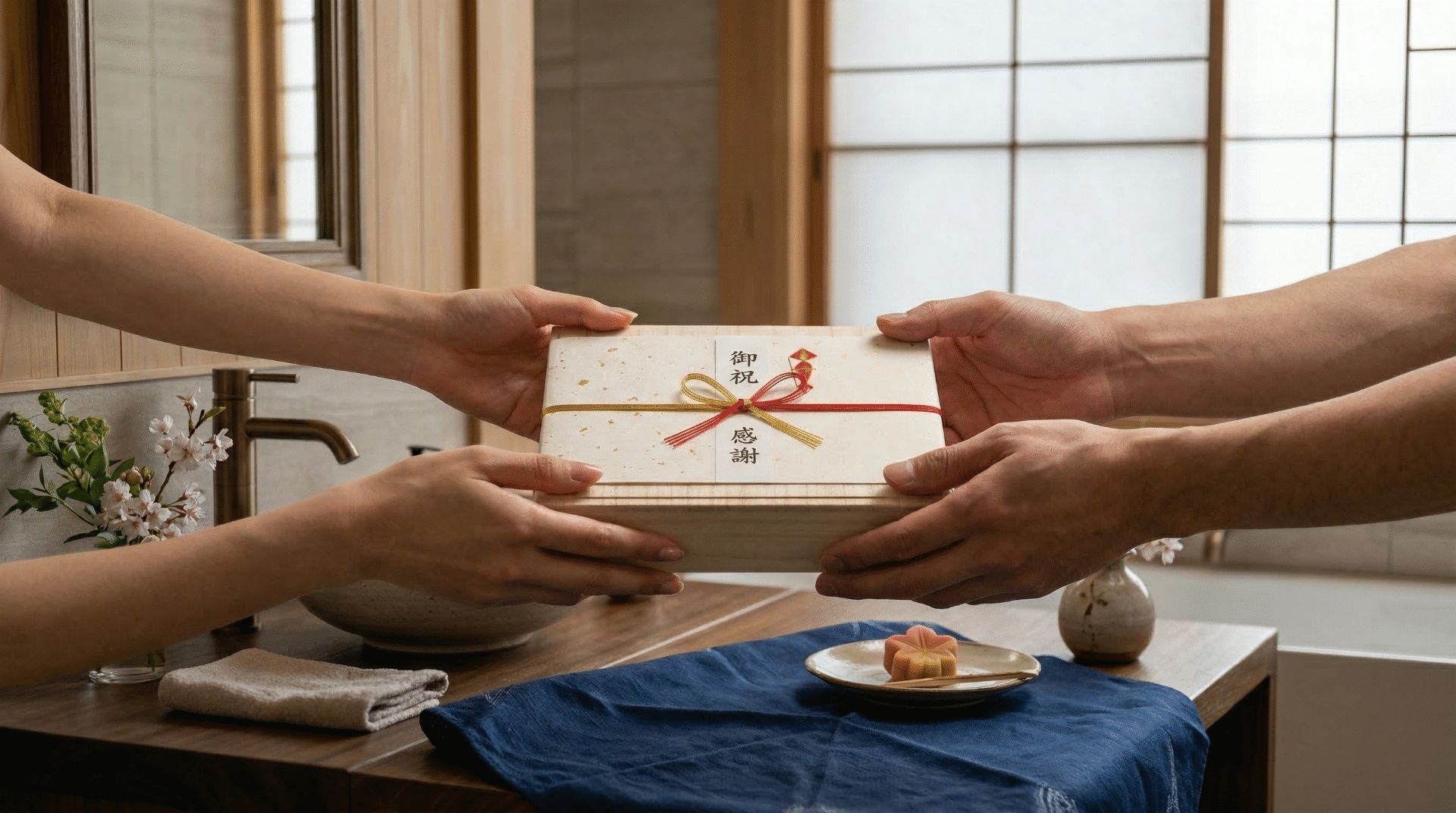
In Japan, consumable gifts — items that are used up rather than kept — are called "kiemono" (消えモノ) and are highly valued for their thoughtfulness. They don't occupy shelf space, don't create storage pressure, and carry no obligation to display. For a culture that places enormous care on not burdening a recipient, a beautiful soap set is among the most considerate presents you can give.
"Washing Away Illness" — The Auspicious Meaning of Soap as a Gift
In Japanese tradition, soap carries a genuinely auspicious meaning. Because it washes away dirt, soap is associated with "washing away illness" and "washing away bad luck." This makes it a classic choice for kaiki-iwai (快気祝い — gifts sent after a recovery from illness) and a standard in ochugen and oseibo (mid-year and year-end gifts to superiors and mentors).
Japanese premium soaps, in particular, often use natural essential oils derived from yuzu (Japanese citrus) or hinoki (Japanese cypress), rather than synthetic fragrance. Opening a gift to a gentle rush of these natural aromas is an experience that landing a commercial soap from a drugstore simply cannot replicate.
2. The Craft Behind the Packaging | Washi Wrapping and Paulownia Boxes
Japanese premium soaps are often wrapped in washi (和紙, traditional handmade paper) or packed in paulownia wood boxes (桐箱, kiri-bako) rather than plastic film. This isn't merely an aesthetic choice — there are real functional reasons behind each material.
Washi Lets the Soap Breathe
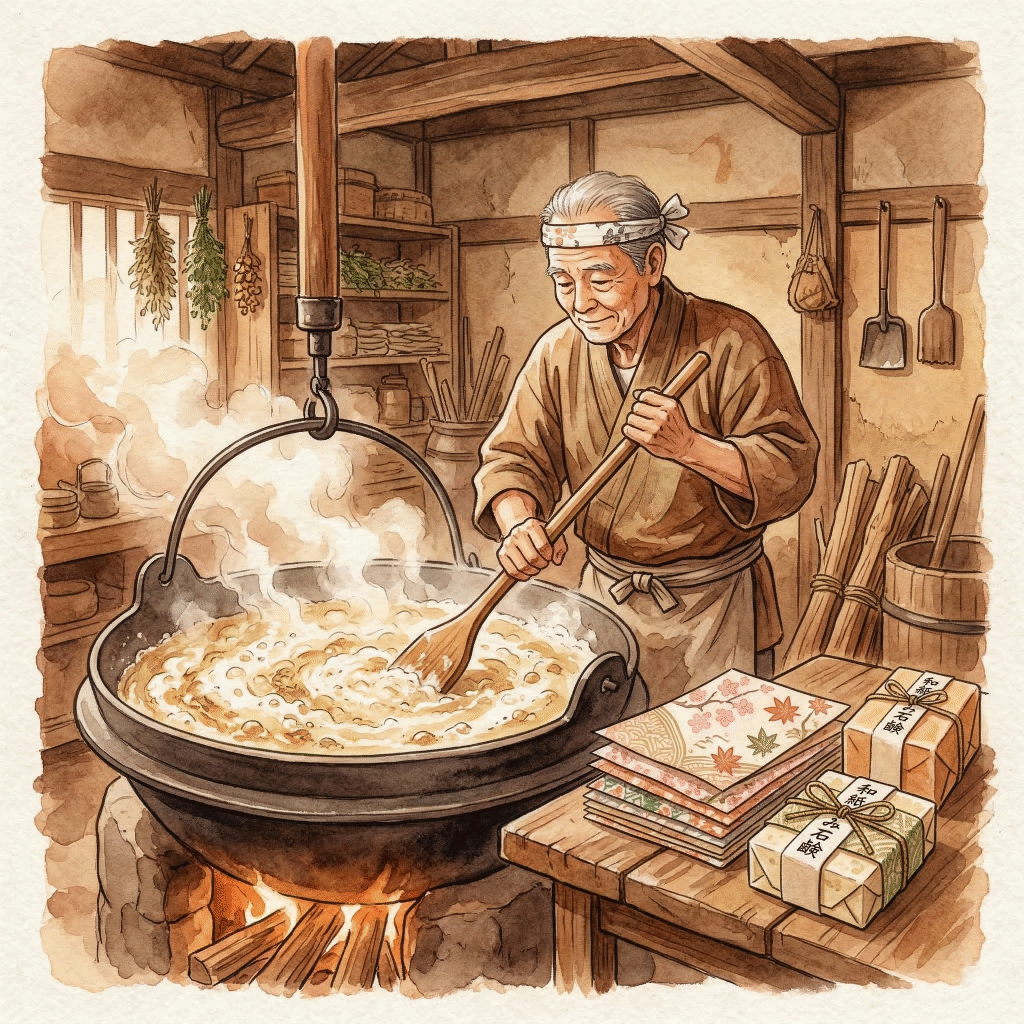
High-quality artisan soaps made by the kama-daki (kettle-boiling) or cold-process method retain large amounts of
natural glycerin. Glycerin draws moisture from the air, and if a glycerin-rich soap is sealed tightly in plastic
wrap, it sweats and begins to dissolve from the inside out.
Washi's breathability and moisture-absorbing properties allow the soap to exchange air
naturally — preventing both surface condensation and melt-down, while allowing the natural essential oil
fragrance to diffuse gently outward.
Paulownia Wood: A Natural Climate-Control Container
The most premium gift sets, typically ¥5,000 and above, come in paulownia (kiri) wood boxes. Paulownia is a remarkable material: when humidity rises, the wood expands and seals its gaps (blocking moisture); when the air is dry, it contracts and ventilates. This natural humidity-regulating property protects the soap inside from both mold and desiccation. Paulownia also contains tannins and other compounds with natural insect-repelling properties. In short, a paulownia box isn't decorative packaging — it's a precision storage system.
3. How to Choose the Right Soap for Your Recipient and Occasion
For New Parents or Families with Infants: Choose Fragrance-Free & Additive-Free
For baby shower gifts or gifts for households with young children, avoid anything with a strong fragrance. Infants have highly sensitive skin and olfactory systems. The safest and most appreciated choice is a pure soap (junsekkenn) — no fragrance, no colorant, no preservatives, made by the kama-daki method. Matsuyama Yushi's "M-Mark Series" is the benchmark for this category.
For Female Friends or Colleagues: Prioritize Fragrance and Packaging
For birthdays or casual thank-you gifts to women, the two deciding factors are the scent and the packaging. Look for natural essential oils like rose, lavender, or geranium that promote relaxation rather than stimulation. Beautiful packaging that photographs well is a genuine bonus — pieces from Tamanohada consistently land in this category.
For Men or Senior Recipients: Practical Utility and Japanese Heritage Ingredients
For male recipients or gifts to mentors and senior relatives, function and historical backing tend to land better than aesthetic alone. Charcoal or clay soaps for deep-cleansing, gold-leaf skincare sets, or kitchen/laundry specialist soap sets from Kimura Soap are all strong options — practical, quality-forward, and grounded in Japanese craft tradition.
4. Budget ¥1,000–¥2,000 | Small Gifts & Party Favors
Accessible in price but unmistakably not a drugstore pick — both of these create a visible moment of surprise when the recipient opens the box.
Tamanohada (TAMANOHADA) | "Welcome Soap" — Tai-Shaped Bar
A soap shaped like a tai (red seabream fish) — the most auspicious shape in Japanese
culture.
Open the box and you're greeted by something that looks exactly like a taiyaki (fish-shaped pastry) — but made
of premium soap. "Tai" (鯛) is a homophone for "omedetai" (おめでたい), a Japanese word for celebration, making this
a favorite at weddings and housewarming events.
The humor and the symbolism work together perfectly, and the quality underneath the shape is serious:
Tamanohada has been making luxury soap since 1892. Rich fragrances — pomegranate, brown sugar, lily — fill the
bathroom from the first use. The cord attachment means it can also be hung in a closet as a room fragrance
before you unwrap it.
Visit the Tamanohada brand page
View on Amazon ↗Pelican Soap | Wa-Sekkenn Series (NINJA, GEISHA & 6 designs)
Japanese cultural icons meet pop packaging — an irresistible small gift.
Traditional Japanese figures — ninja, geisha, kabuki — rendered in vibrant, contemporary packaging alongside
four-character Japanese proverbs. The combination of visual wit and cultural depth makes these a natural fit
for thank-you gifts and international presents alike.
Beneath the eye-catching wrapper, the soap is genuinely well-made: Japanese green tea (matcha) extract, free
of colorants, preservatives, and synthetic surfactants. The clean, subtly vegetal fragrance calls to mind the
calm of a Japanese forest after rain.
5. Budget ¥3,000–¥5,000 | Baby Showers & Return Gifts
Substantive enough to feel like a proper gift, practical enough to be used rather than displayed. These are the picks that reliably generate genuine appreciation.
Kimura Soap (SOMALI) | Household Cleaning Gift Set
"Give someone a break from hand damage" — a new kind of soap gift.
From Kimura Soap, founded in 1924 in Osaka, the SOMALI (そまり) household gift set contains kitchen soap,
bathroom cleaner, and laundry liquid — not bath soap. That's the point. This is the soap gift for the person
who spends hours a day doing housework.
Made from a pure soap (junsekkenn) base without synthetic surfactants, SOMALI products clean effectively
without stripping the hands — addressing chronic hand dryness at the source. Giving someone genuinely better
tools for daily household chores is, in its own way, a deeply caring gesture.
Visit the Kimura Soap brand page
Visit Official Website ↗Matsuyama Yushi | LEAF&BOTANICS Mother Soap — Set of 6
Natural essential oils, botanical ingredients — a bath ritual in a box.
The LEAF&BOTANICS line from Matsuyama Yushi offers a set of six pure bar soaps, each scented with a different
natural essential oil: lavender, geranium, lemongrass, and others. You can mix and match to build a custom
set, which makes the gifting feel considered rather than generic.
Made using traditional methods that retain the soap's natural glycerin, the lather is soft and dense — the
kind that leaves skin visibly calm rather than stripped. The clean, minimalist packaging holds up beautifully
from presentation to bathroom shelf.
Visit the Matsuyama Yushi brand page
Visit Official Website ↗6. Budget ¥5,000+ | For Senior Recipients & Truly Special Occasions
Gold leaf, paulownia boxes, Japanese medicinal herbs processed by cold-press — gifts at this level communicate something beyond "here's a nice soap."
Hakuichi (HAKUICHI) | KINKA Gold Leaf Skincare Gift Set
Pure gold leaf suspended inside premium soap — skincare as art.
From Hakuichi, Kanazawa's leading gold leaf specialist, the KINKA cosmetics line presents a gift set that
includes a gold-leaf facial soap, lotion, and their iconic blotting paper. Gold has been prized in Japan for
centuries as an anti-aging ingredient: trace micro-currents are believed to stimulate cellular metabolism and
promote skin renewal.
The soap itself, with gold flakes suspended in a translucent bar, is almost too beautiful to use. The full set
covers cleansing through moisturizing in gold leaf beauty — a statement gift for ochugen or oseibo to a
superior, or a truly memorable 60th birthday present.
Mutenka Honpo (Marubishi Soap) | Cold-Process Additive-Free Soap — 4-Variety Gift Set
No heat, no shortcuts — premium beauty ingredients locked inside by nature's own
chemistry.
Mutenka Honpo (無添加石鹸本舗), based in Miki, Hyogo, handcrafts all its soap using the cold-process method: no
applied heat, just the natural reaction heat from saponification, followed by over a month of curing.
Heat-sensitive beauty ingredients — sake kasu (sake lees), rice bran, honey — are preserved intact inside each
bar.
The lather is unlike anything from a factory-made bar: dense, cushioning, and almost serum-like in how it
leaves the skin. The four-variety gift set arrives in an elegant gift box and is one of the most frequently
chosen options for dryness-prone skin recipients or hard-to-impress seniors.
Visit the Mutenka Honpo brand page
View on Amazon ↗7. Frequently Asked Questions
Common questions about soap etiquette and choosing the right gift.
Is soap an appropriate gift for a senior or superior?
Completely appropriate — in fact, it's a traditional choice. Soap's association with "washing away illness and misfortune" gives it genuine auspicious meaning in Japanese culture. It has long been a standard for ochugen, oseibo, and kaiki-iwai (post-illness gifts). The key is choosing something that conveys the level of care you intend: a paulownia-boxed set or an artisan brand, rather than a multipack from a convenience store.
What's the right choice for a pregnant recipient or a household with a newborn?
Pregnant people often have heightened sensitivity to fragrance (especially during morning sickness), so strong-smelling soaps should be avoided. Choose fragrance-free, additive-free pure soap. For households with infants, look for something explicitly labeled "free of synthetic surfactants, preservatives, and colorants" — Matsuyama Yushi's M-Mark Series is the gold standard here.
What if I don't know the recipient's fragrance preferences?
When fragrance preferences are unknown, citrus (yuzu, orange, bergamot) and woody-green notes (hinoki, Japanese cypress) are the safest bets — they're widely appealing across genders and don't compete with food. Avoid strong synthetic florals or musks, which are more polarizing.
Do bar soaps have an expiration date?
Unopened bar soap, stored correctly, maintains quality for approximately three years under Japan's pharmaceutical and cosmetics standards. Natural and cold-process soaps, however, can lose fragrance or develop surface discoloration from oil oxidation over time. As a general courtesy, it's kind to mention when gifting: "Best used within about a year of receiving."
What are the noshi (gift envelope) etiquette rules for soap?
The water-knot tie (mizuhiki) varies by occasion. For gifts given at events that can happily recur — baby showers, uchiwai return gifts, ochugen — use a bow knot (cho-musubi), which can be untied and retied. For weddings or post-illness recovery gifts — events you'd prefer happen only once — use a single-knot tie (musubi-kiri). Most Japanese soap brands' official stores offer appropriate noshi wrapping upon request.
8. Final Thoughts: A Gift That Arrives Before It's Opened
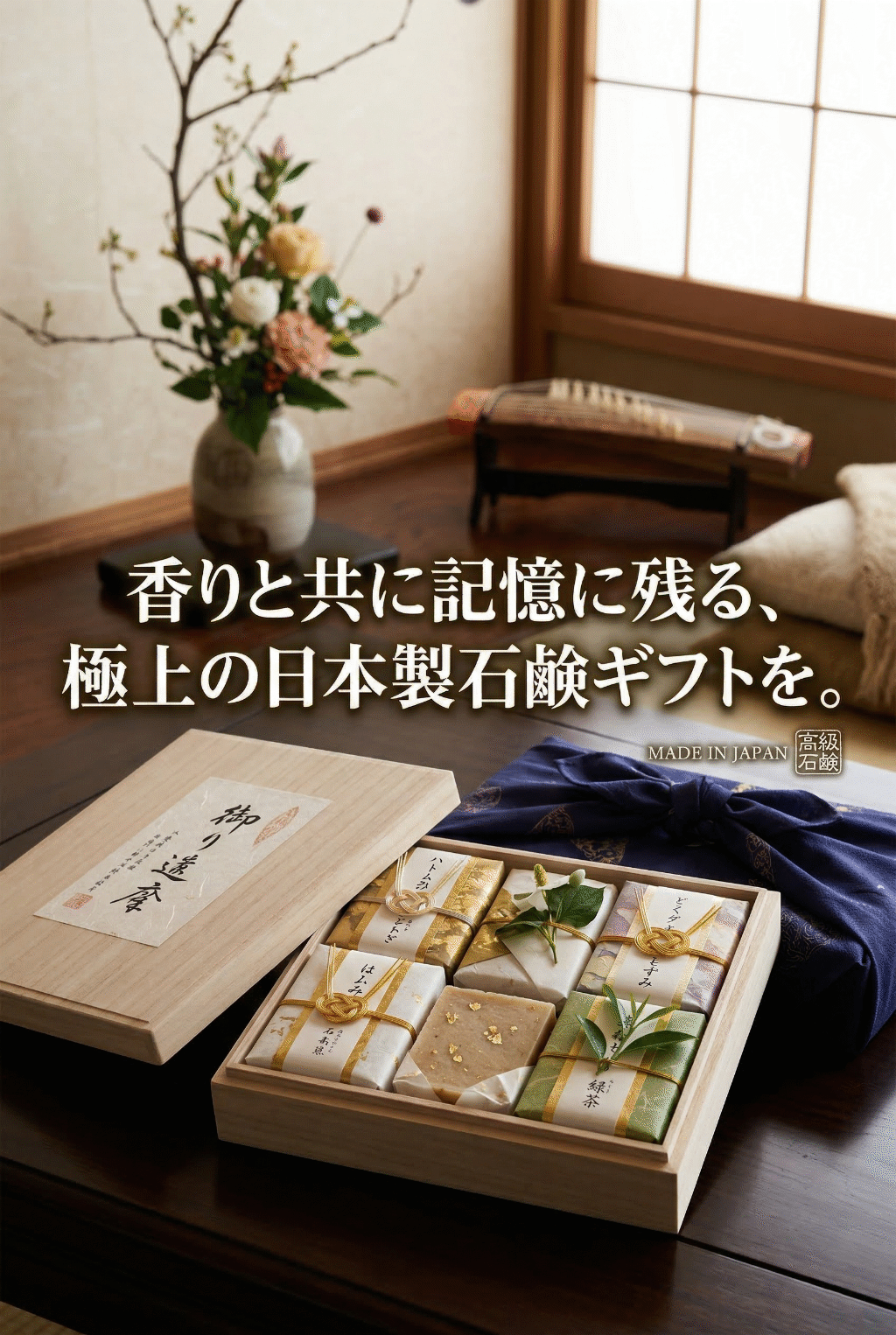
Japanese premium soap disappears with use — but the experience of opening a beautiful washi-wrapped bar and
letting the natural fragrance fill the room stays with the recipient in a way that a physical object rarely
does.
The thought behind the packaging, the tradition embedded in the fragrance, the craft of the making — all of this
is communicated before the first lather. When you want to give something tasteful without burdening anyone, this
is the answer.
Use the budget guide above as your starting point, match the choice to your recipient, and let the soap do the
rest.
Want to learn more about Japanese soap and skincare? See these related guides: