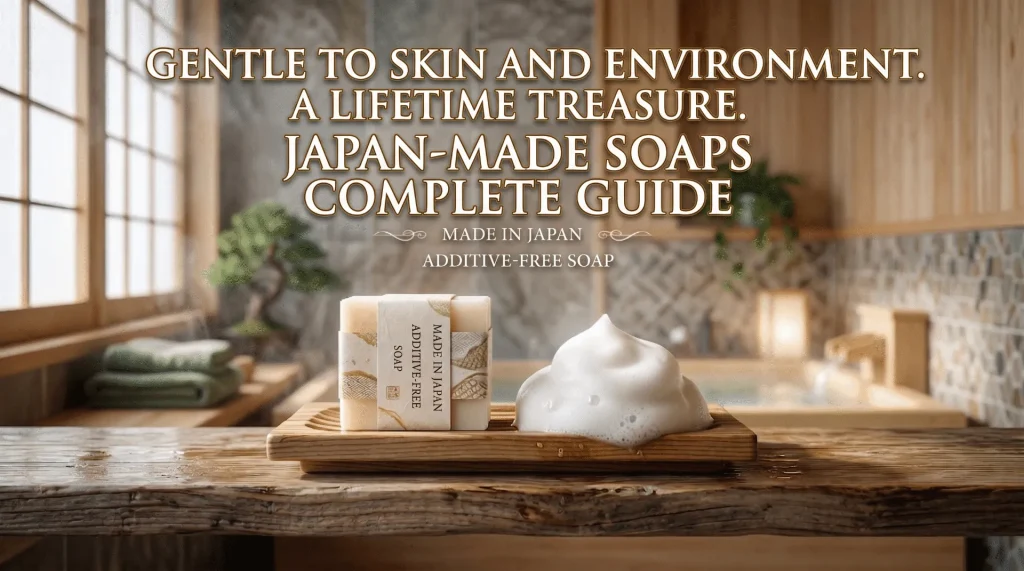
The five Japanese soap brands most worth buying are Matsuyama Yushi, Tamanohada, Kimura Soap, Pelican Soap,
and Chi no Shiosha — makers who still use the slow kama-daki (kettle-boiling) or cold process method,
which leaves the natural glycerin in the bar instead of stripping it out.
"I switched from body wash to bar soap and my skin actually improved." You're hearing that more and more — and the
reasons are real. Rising awareness around plastic packaging, a resurgence of interest in additive-free skincare, and
a broader move toward slower, more deliberate daily routines have all converged to make traditional bar soap one of
the most reconsidered products on the shelf.
Japanese bar soap is particularly well-suited for use in Japan — and anywhere with soft water.
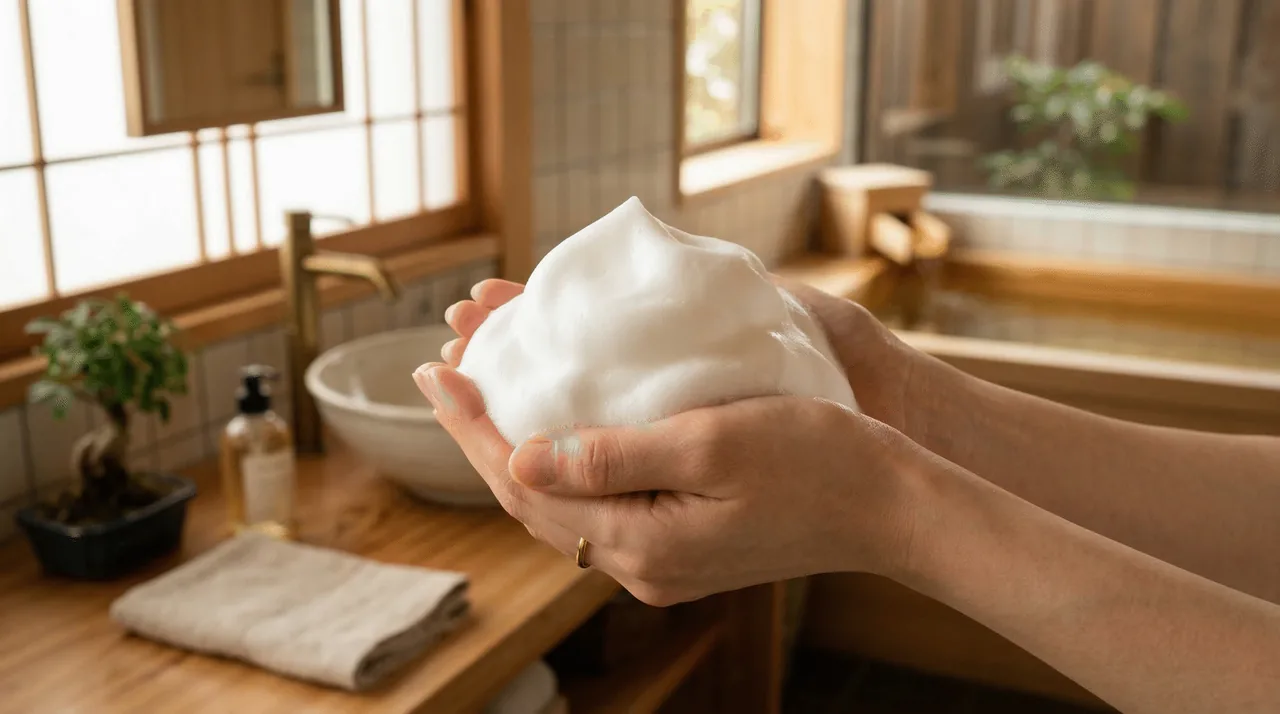
Japanese manufacturers calibrate their formulas to Japan's naturally soft water, which means the lather is richer,
the rinse is cleaner, and the finish is softer than many imported soaps can achieve in the same conditions.
This guide covers everything from the manufacturing methods that determine quality to the base oils that shape
lather and moisture, to our curated recommendations across five of Japan's most trusted artisan soap brands.
Quick Reference: Recommended Japanese Bar Soaps at a Glance
| Brand | Method & Highlights | Best For | Details |
|---|---|---|---|
| Matsuyama Yushi (M-Mark Series, etc.) |
Traditional kama-daki method Additive-free, high-moisture |
Sensitive or dry skin — a trusted daily staple for the whole family. | Details ↓ |
| Tamanohada (TAMANOHADA) |
Luxury fragrance & sculptural design Welcome Soap |
People who want a sensory bathing experience, or the perfect gift. | Details ↓ |
| Kimura Soap (SOMALI, etc.) |
Est. 1924 Pure-soap household cleaners |
Preventing hand damage from daily dishwashing and laundry. | Details ↓ |
| Pelican Soap | Japanese botanical ingredients (clay, charcoal, persimmon tannin) |
Targeting specific skin concerns: pores, back acne, body odor. | Details ↓ |
| Chi no Shiosha | Kumamoto natural farming herbs Mugwort, dokudami (houttuynia) |
Using traditional Japanese herbals to gently balance skin condition. | Details ↓ |
1. Why Japanese Bar Soap? The Case Against Synthetic Surfactants
Walk the body wash aisle of any pharmacy and the ingredient lists tell the same story: most products are built not on soap but on synthetic surfactants. Synthetic surfactants are highly effective at removing dirt and are easy to manufacture at scale. The trade-off is that they strip the skin indiscriminately — taking away the sebum the skin actually needs to maintain its barrier function. The tight, dry feeling after a shower is often caused by exactly this.
Traditional pure soap (junsekkenn) operates differently. It removes dirt effectively, but once diluted and rinsed away, its cleansing action largely neutralizes — it doesn't linger on the skin stripping moisture after the fact. The result is the "squeaky but moisturized" feeling that frequent bar soap users describe: a cleanness that doesn't cost the skin anything.
Why Japanese Soap Lathers Better Than Many European Imports
France and Italy produce excellent soaps — but "excellent in Europe" and "excellent in Japan" aren't the same thing.
Water hardness is the variable.
European water is typically hard, mineral-rich water. Soap reacts with calcium and magnesium ions in hard water to
form insoluble "soap scum," which kills lather. Japanese manufacturers, by contrast, formulate for Japan's naturally
soft water — calibrating the formula to produce maximum foam in Japanese tap water. The same bar
that produces modest lather in Marseille will produce extraordinary lather in Tokyo.
2. The Method That Determines Quality
Two bars of soap can both list "sodium palmate" on the label and cost very different amounts. The difference is almost always in the manufacturing method — and once you understand the three methods, soap shopping becomes much more intuitive.
The Traditional Artisan Method: Kama-Daki (Kettle Boiling)
Natural oils and fats are combined with lye and boiled slowly in a large cauldron by a craftsperson over several days. Matsuyama Yushi uses this method. The key advantage is that the saponification process naturally produces glycerin — a powerful humectant — which remains distributed throughout the finished soap. The result is a bar that rinses clean but leaves skin noticeably softer than a factory-made equivalent. Time-consuming and unsuitable for mass production.

The Industrial Standard: Neutralization Method
Most inexpensive soaps are made by the neutralization method. Fatty acids are extracted from oils in advance and then reacted with lye over a matter of hours rather than days. The process is fast, clean, and consistent, but glycerin is separated out as a by-product during manufacturing — it doesn't stay in the bar. Without glycerin, the soap has excellent cleansing power but little of the softening benefit, which is why machine-made bar soaps often leave a tight, stretched feeling on the skin.
The Premium Method: Cold Process
No heat is applied. Oils and lye are mixed at room temperature, generating only the natural heat of the chemical reaction, and the soap is then left to cure for a month or more. Because the process never gets hot, heat-sensitive beauty ingredients — sake kasu (sake lees), rice bran, honey, Japanese medicinal herbs — are incorporated intact rather than degraded. The resulting bar has near-serum-like moisturizing properties, but it's softer and more soluble than a kettle-boiled soap — proper storage is essential.
3. The Base Oil Decides the Lather
Bar soap is fatty acid sodium salt. The fat used as the starting material determines almost everything about the bar: how it lathers, how hard it stays, how it feels on the skin. Here's what the ingredient list is actually telling you.
| Base Oil | What It Contributes |
|---|---|
| Tallow / Palm oil | Makes the bar firm and long-lasting. Produces a creamy, stable lather. Used in classic Japanese soaps like Cow Brand (Gyunyu Sekken). Gives a clean, light rinse. |
| Olive oil | Rich in oleic acid, which closely resembles human sebum. Delivers exceptional moisturizing effect and a soft, silky post-wash feel. The bar is softer and dissolves faster in water — handle and store carefully. |
| Coconut oil (copra oil) | Produces large, fast, abundant foam and works well in cold water. Very high cleansing power — too drying on its own, so artisan soapmakers always blend it with conditioning oils to balance the formula. |
| Rice bran oil (komenuka) | A traditionally Japanese beauty oil, rich in Vitamin E and gamma-oryzanol. Helps brighten skin tone and restore radiance. Long used in Japan's skincare tradition — women who worked in rice polishing were known for their remarkably smooth hands. |
4. Choosing by Use
With the science understood, here's how to match a Japanese bar soap to your actual situation.
For Dry or Sensitive Skin: Additive-Free, Kama-Daki
If your skin looks powdery or your face feels tight after washing, look for packaging that says
"additive-free," "pure soap content 98%+," and "kama-daki (or cold-process) method."
No preservatives, no synthetic fragrance — and the natural glycerin that remains in the bar works as a built-in
humectant with every wash.
For Gifting: Choose by Fragrance and Visual Impact
Bar soap is a consumable gift (kiemono) — it leaves nothing behind to clutter a shelf — making it one of the most socially graceful gift choices in Japan. For ochugen and oseibo or casual thank-you gifts, look for soaps with natural essential oil fragrance (rather than synthetic perfume) and packaging that looks and smells impressive the moment the box opens. Tamanohada's tai-shaped Welcome Soap is the benchmark in this category.
For Household Cleaning: Pure-Soap Laundry and Kitchen Products
Bar soap isn't only for bathing. For shirt collar grease stains or muddy kids' socks, rubbing a laundry bar directly on the fabric beats any pre-treatment spray. And for people who develop eczema from daily dishwashing, switching from synthetic dish detergent to a pure-soap kitchen liquid (like Kimura Soap's SOMALI) often resolves chronic hand irritation within weeks.
5. Five Recommended Japanese Artisan Soap Brands
Our curated picks — consistent quality, genuine craft, and a clear reason to choose each one.
1. Matsuyama Yushi (M-Mark Series)
The definitive additive-free standard — kama-daki purity since 1908.
Founded in 1908, with factories in Sumida (Tokyo) and Fujikawaguchiko, Matsuyama Yushi has maintained the traditional kama-daki method (saponification with salt-out purification) for over a century. Each batch is boiled for approximately 100 hours — a timeline that allows the natural glycerin to accumulate throughout the bar rather than being removed as a by-product.
The flagship M-Mark Series (Mutenka Sekken — "no-additive soap") contains zero fragrance, zero colorant, and zero preservative. It's the soap you reach for when you want something the whole family can use without a second thought — from infants with eczema-prone skin to adults recovering from skin irritation.
Best for: Dry or sensitive skin; a reliable daily staple that the whole household can share.
2. Tamanohada (TAMANOHADA)
Refined fragrance and sculptural beauty — the soap that turns gifting into an event.
Tamanohada has made luxury soap in Sumida, Tokyo since 1892. The brand became nationally known through two products: a perfectly round ball-shaped soap and the "tai" (sea bream) Welcome Soap — a bar shaped exactly like a taiyaki fish pastry, in a culturally auspicious form.
The quality beneath the design is serious: plant-based soap derived from palm and palm kernel oils, with a soft, billowy lather. The fragrances — rose, orange, musk — are complex, layered, and genuinely more comparable to fine perfume than drugstore soap. Opening a Tamanohada box fills the room with fragrance before you've even touched the bar.
Best for: Gifting with impact; those who want a daily sensory ritual rather than just a wash.
Visit the Tamanohada brand page
View on Amazon ↗3. Kimura Soap (SOMALI)
Household cleaning without hand damage — a pure-soap specialist since 1924.
Based in Yao, Osaka, Kimura Soap is a specialist in making soap work for the home rather than just the bathroom. Their household brand SOMALI (そまり), made from a pure-soap base by the traditional kama-daki method, has developed a devoted following among people who clean their homes daily and need their hands to survive the process.
Kitchen soap, laundry liquid, and bath cleaner — all formulated without synthetic surfactants or synthetic fragrance, scented naturally with orange essential oil. The products clean just as effectively as their chemical counterparts; they simply do it without stripping the hands. For chronic hand dryness caused by daily dishwashing, switching to SOMALI is often a complete solution.
Best for: Preventing household-task hand damage; anyone who wants effective cleaning products that are kinder to skin and the environment.
4. Pelican Soap
Clay, charcoal, persimmon tannin — targeted solutions for specific skin concerns.
Founded in 1947, Pelican Soap operates its own factory in Saitama with strict in-house quality standards. The brand occupies a distinctive niche: highly targeted soaps formulated with Japanese botanical and mineral ingredients to address specific skin issues rather than general cleansing.
The flagship "Deitanseki" (泥炭石) series is the best-known example — fine charcoal and clay (bentonite) blended into the bar absorb sebum from deep within pores, leaving the kind of clean that other soaps don't manage. There are also dedicated products for back acne and body odor (using kaki-shibugawa — persimmon tannin extract), all made in Japan without harsh additives.
Best for: Addressing specific concerns — pore blackheads, back acne, body odor — with targeted Japanese ingredient formulation.
Visit the Pelican Soap brand page
View on Amazon ↗5. Chi no Shiosha (地の塩社)
Mugwort, houttuynia, and mountain-grown herbs from Kumamoto — Japan's quiet natural soap tradition.
Chi no Shiosha operates a factory in Yamaga, Kumamoto, guided by the principle of "coexisting with nature." Their formulations minimize synthetic additives and lean heavily on Japan's traditional medicinal herb repertoire.
Their signature products — yomogi (mugwort) soap and dokudami (houttuynia cordata) soap — use herbs that have been part of Japanese folk medicine and skincare for centuries. Mugwort's moisturizing and soothing properties and dokudami's clarifying and skin-balancing effects are preserved gently in soap form. The lather is simple and quiet rather than dramatic, but the skin feels genuinely different after a week of regular use.
Best for: Those who want to incorporate Japan's traditional botanical skin wisdom (mugwort, houttuynia, etc.) into a gentle daily routine.
Visit the Chi no Shiosha brand page
View on Amazon ↗6. Keep It from Going Mushy: Proper Storage and Tips
High-quality additive-free and cold-process soaps contain high levels of glycerin — which is great for your skin but makes the bar more water-soluble. Proper storage makes a meaningful difference in how long a bar lasts.
The Number One Rule: Let It Drain
A soap dish that holds standing water is the enemy. The bar sits in its own dissolved surface, softening from the
bottom up and wasting itself between uses.
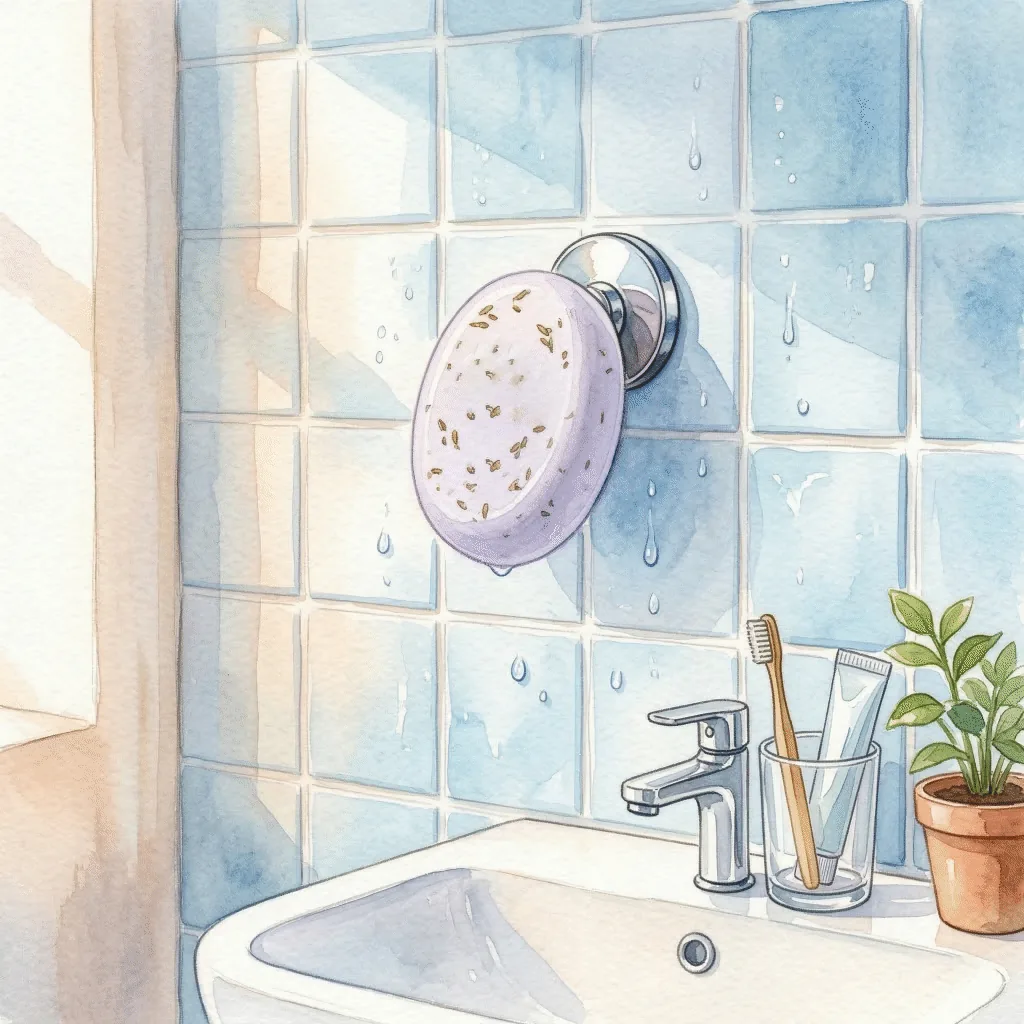
The best solutions are a magnetic soap holder (like DULTON's wall-mount version) or a soap dish
with a high-drainage urethane foam insert that keeps the bar elevated and dry. After every use, knock the water off
and let the bar air-dry. If possible, take it out of the shower area entirely between uses.
Reviving the Last Thin Sliver
When a bar gets thin and hard to lather, don't throw it away.
Press the worn-down sliver firmly onto the face of a new bar while both are slightly softened from
use. Left to dry overnight, the two fuse together and continue as a single bar. Alternatively,
collect thin scraps in a mesh lather bag — the friction produces foam directly, and nothing goes to waste.
7. Frequently Asked Questions
Common questions from people considering switching to bar soap.
Can you use bar soap to wash your hair?
Yes — pure soap can be used for hair washing. It removes sebum and scalp buildup thoroughly, and many people find their hair has more volume afterward. However, soap is mildly alkaline, which temporarily opens the hair cuticle and makes the texture feel rough and tangled immediately after rinsing. You must follow soap shampooing with an acidic rinse — diluted citric acid or apple cider vinegar — to close the cuticle and restore smoothness. Without this step, the hair will feel matted.
What's the difference between "organic soap" and "additive-free soap"?
"Organic" refers to how the source ingredients were grown — without synthetic pesticides or fertilizers. "Additive-free" (mutenka) refers to what was kept out of the manufacturing process — no synthetic preservatives, colorants, or fragrances. A Japanese-made mutenka pure soap may not carry organic certification but can be formulated with extremely simple, skin-compatible ingredients. Both are worth looking for; they address different parts of the quality equation.
Is bar soap better value than liquid body wash?
Significantly better value, almost always.
Liquid body wash is typically 70–80% water by weight, and you use far more per wash than you realize. A bar soap
is essentially pure active ingredient in concentrated form. A single bar, stored correctly, routinely lasts a
month or more. Add in the eliminated plastic bottle waste and the economics become even more decisive.
What's the difference between "cosmetic soap" and "bathing soap" under Japanese law?
Japan's Pharmaceutical and Medical Device Act (Yakki-hou) classifies "cosmetic soap" (kesho sekken) as a product intended for washing the face or body, subject to rigorous safety standards. "Bathing soap" (yokushi sekken) is a subset specifically for body use. Products labeled for laundry or kitchen use — even if the formula is technically identical pure soap — cannot legally be marketed for skin use. This is purely a regulatory category, not a quality distinction.
My soap has developed a white powdery surface. Is it still usable?
Completely usable. This is called "blooming" (burūmingu) — the wax and fatty acid components migrating to the surface as the bar dries. It looks alarming but has zero effect on cleansing power or safety. Wet the bar and it lathers normally. Blooming is more common in natural and cold-process soaps precisely because they contain higher concentrations of the oils and waxes that cause it — it's a sign of quality, not a defect.
8. Final Thoughts: Turn Every Wash Into a Moment of Craft
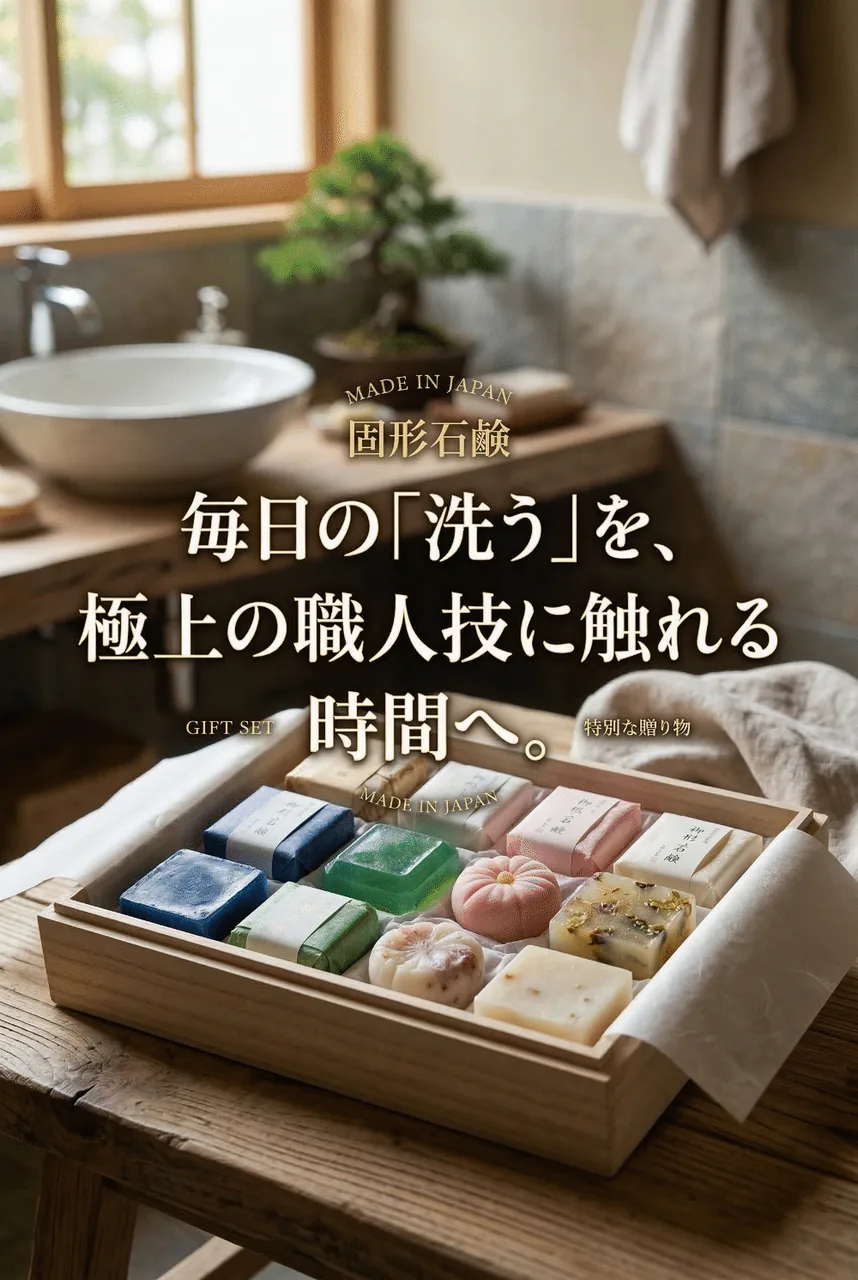
Washing your body is something you do every day. The soap you use for that routine has more influence on how
your skin feels and how the moment feels than most people give it credit for.
The craftsperson who spent days tending a boiling kettle, the natural oils chosen to work with your skin rather
than against it, the soft water that lets the lather reach its full potential — Japanese bar soap brings all of
that into a bar you can hold in your hand.
Pick one that matches your concern, try it for two weeks, and pay attention to how your skin feels after drying
off. You may find you won't want to go back.
Explore more Japanese beauty and daily-life guides: