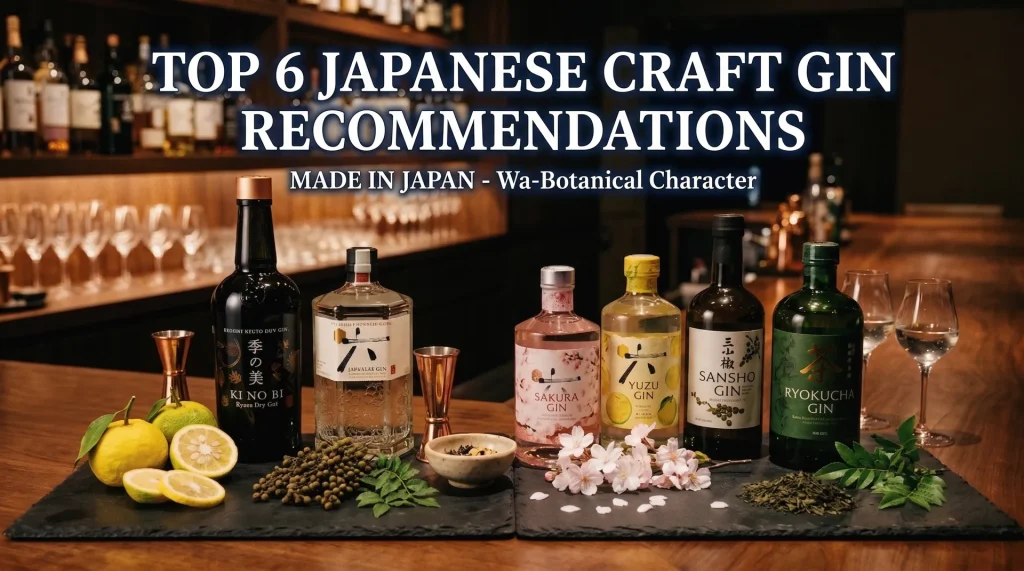
The global craft gin revival has produced excellent spirits from Scotland to Australia. But
Japanese gin occupies a distinct position — not because it reinterprets the European gin tradition,
but because it draws on botanicals that don't exist anywhere else.
Gyokuro (highest-grade shade-grown green tea). Yuzu (a citrus with no European equivalent).
Sansho pepper (a numbing, floral spice unlike black pepper or Sichuan pepper). Sakura blossom
and leaves. Hinoki cypress. These are the flavours of Japanese landscape and food culture, now
distilled.
Kyoto Distillery's Ki No Bi has been served in Michelin-starred bars worldwide since 2016.
Suntory's ROKU is now the Japanese gin most commonly stocked in international bottle shops.
Nikka's Coffey Gin brings whisky distillery precision to the category.
This guide explains the botanicals, compares six bottles, and covers how to serve each one.
Quick Reference: Six Japanese Craft Gins at a Glance
| Gin | Distillery | Key Botanicals | Best Serve |
|---|---|---|---|
| Ki No Bi (季の美) | Kyoto Distillery | Gyokuro, yuzu, sansho, hinoki | On the rocks; light G&T |
| ROKU GIN (六) | Suntory, Osaka | Sakura blossom/leaf, sencha, gyokuro, sansho, yuzu | Gin & tonic; highball |
| SUI (翠) | Suntory | Yuzu, green tea, ginger | Gin soda (1:4 ratio) |
| SAKURAO Gin | Chugoku Jozo, Hiroshima | Oyster shell, Hiroshima lemon, bamboo | On the rocks; cocktails |
| Nikka Coffey Gin | Nikka Whisky, Miyagi | Apple, juniper (Coffey still) | Martini; cocktail base |
| Setouchi Remon Gin | Miyake Honten, Hiroshima | Setouchi lemon, green tea | Gin soda; Negroni |
1. What Makes Japanese Craft Gin Different
Gin requires juniper berry as a primary botanical — everything else is the distiller's choice.
European craft gins differentiate themselves through botanical combinations from the same broad
palette: lavender, cucumber, coriander, citrus peel, herbs.
Japanese craft gin has access to botanicals that exist nowhere else in the same form. Gyokuro
(the highest grade of shade-grown green tea) has an umami richness that changes a gin's midpalate
completely. Yuzu is a citrus that has no direct European equivalent — the zest note falls between
lemon, grapefruit, and mandarin, with a floral quality that distinguishes it immediately. Sansho
pepper (Japanese prickly ash) produces a numbing, electric effect on the tongue — different from
black pepper's heat and from Sichuan pepper's full-mouth numbness.
Japan also brought whisky distillery precision to gin production. Nikka and Suntory, two of the
world's most technically accomplished whisky producers, both make gin with the same analytical
rigour. The results are consistent and precise in a way that very small craft producers sometimes
are not.
2. The Botanicals: What Each Ingredient Contributes
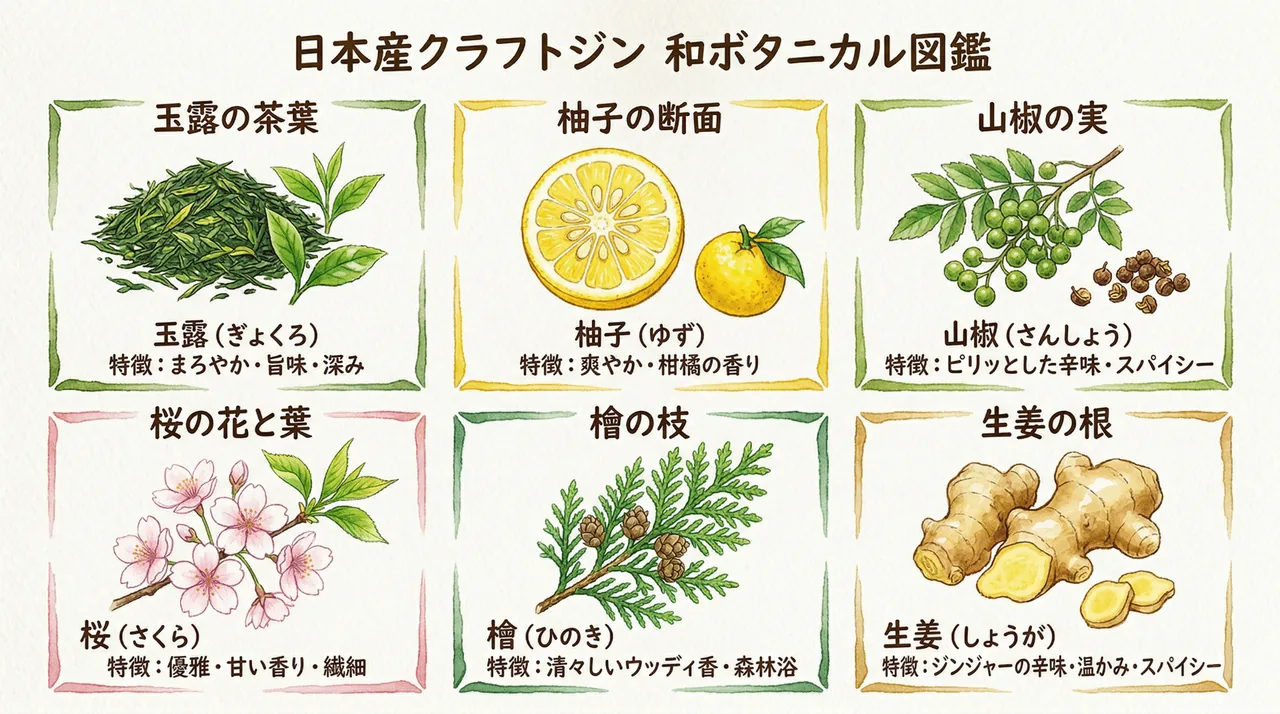
| Botanical | What it contributes to the gin |
|---|---|
| Gyokuro / Green tea / Sencha | Umami depth; an almost savoury midpalate; fresh grass on the finish. Gyokuro (highest grade, shade-grown) gives the most pronounced effect. |
| Yuzu | Bright citrus with a distinctive floral note — somewhere between lemon, grapefruit, and mandarin, but identifiably Japanese. Adds freshness without dominating. |
| Sansho pepper (山椒) | Mild electric tingle on the tongue, lemon-floral scent, clean spice without heat. The Japanese equivalent of Sichuan pepper but with a brighter, cleaner character. |
| Sakura blossom / Sakura leaf | Subtle sweetness; a distinctive pickled-floral note familiar from cherry blossom-flavoured Japanese sweets. Spring character. |
| Hinoki cypress (檜) | Forest-floor freshness; the same clean wood scent as hinoki bath accessories. Adds a structural, almost incense-like quality. |
| Ginger (生姜) | Warmth and spice; clean heat without the burn of chilli. Works particularly well in gin soda, where it adds animation. |
3. Six Bottles: Detailed Notes & Serves
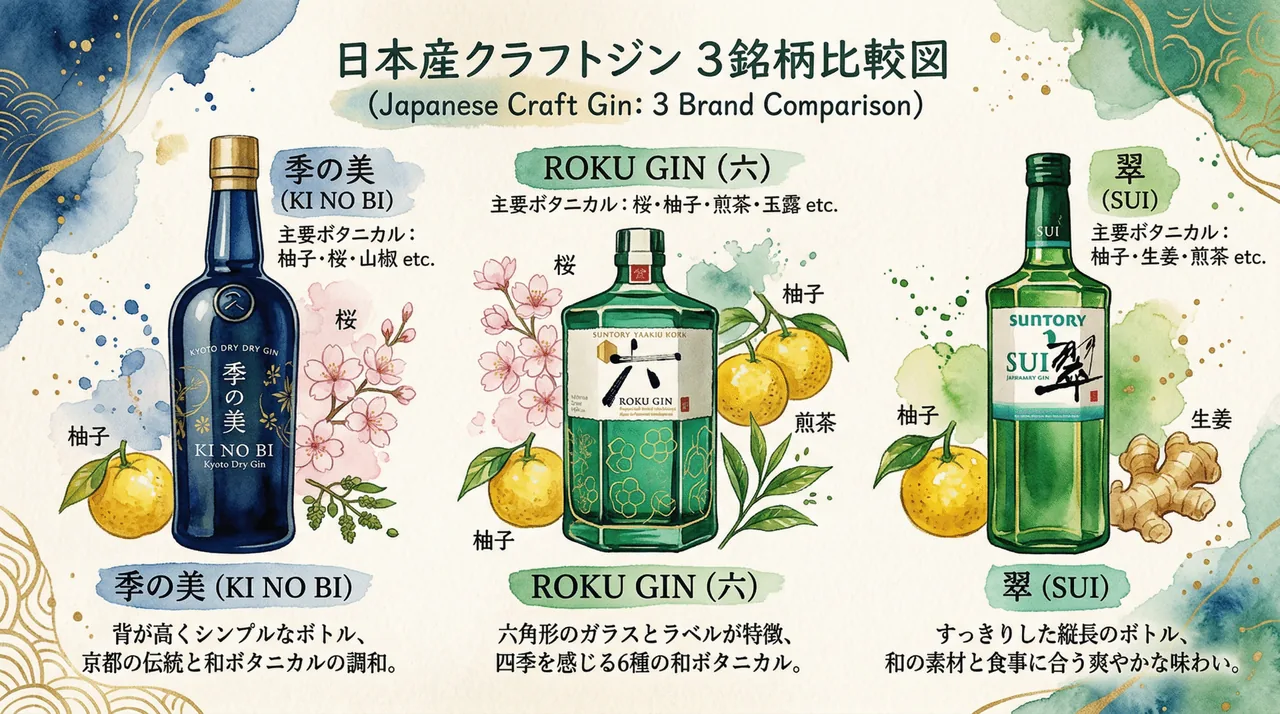
No.1 — Ki No Bi (季の美) — Kyoto Distillery
Japan's first craft gin of international repute. Kyoto Distillery, founded in 2016, distils six
botanical categories separately — herbal, citrus, spice, floral, tea, woody — then blends them.
The result has a complexity that reveals itself differently at different temperatures. Fushimi's
famous soft water is used throughout.
On the palate: gyokuro umami upfront, yuzu's clean citrus in the middle, sansho's electric tingle
on the finish. Floral and refined. Not a gin you throw into a gin and tonic — this one deserves
rocks or a minimal tonic.
- ABV
- 45.7%
- Key botanicals
- Gyokuro, yuzu, sansho, hinoki, ginger, bamboo
- Best serve
- On the rocks; light G&T (1:3) with yuzu peel garnish
No.2 — ROKU GIN (六) — Suntory
The most internationally distributed Japanese craft gin, and the best starting point. ROKU (六,
meaning "six") uses six seasonally harvested Japanese botanicals: cherry blossom and leaf (spring),
sencha and gyokuro (summer), sansho (autumn), yuzu (winter). Each is harvested at peak and
distilled separately before blending with eight standard botanical distillates.
A gin and tonic made with ROKU is the definitive Japanese G&T: citrus freshness, tea depth, the
subtle numbing of sansho. Widely available internationally.
- ABV
- 43%
- Key botanicals
- 6 Japanese + 8 traditional (sakura blossom/leaf, sencha, gyokuro, sansho, yuzu)
- Best serve
- Gin & tonic; highball; Japanese food pairing
No.3 — SUI (翠) — Suntory
Designed as a food-pairing gin for the Japanese table. Where ROKU is about showcasing Japanese
botanicals in a cocktail context, SUI was engineered specifically for what Suntory calls
"shokuchu" (食中) — drinking at the table, with food, through a meal. Yuzu brings freshness,
green tea adds subtle depth, ginger provides animation with carbonation.
The recommended serve is 1 part gin to 4 parts chilled soda water over ice — called "Sui Gin
Soda." Served this way with yakitori, sashimi, or tempura, SUI does exactly what it was designed
to do. Accessible price point.
- ABV
- 40%
- Key botanicals
- Yuzu, green tea, ginger
- Best serve
- 1:4 gin soda over ice; food pairing through a Japanese meal
No.4 — SAKURAO Gin — Chugoku Jozo, Hiroshima
The boldest regional character in this guide. Chugoku Jozo in Hiroshima uses oyster shell (from
Hiroshima's famous oyster farming industry), Hiroshima lemon, and bamboo alongside more conventional
botanicals. The oyster shell is unusual — it contributes a mineral salinity that reads almost
coastal on the palate, a reminder that Hiroshima sits on the Seto Inland Sea.
Lemon is the dominant aroma. On the rocks, the oyster mineral quality emerges. In cocktails, the
coastal character gives it a distinctive identity.
- ABV
- 47%
- Key botanicals
- Oyster shell, Hiroshima lemon, bamboo
- Best serve
- On the rocks; dry martini; Negroni variation
No.5 — Nikka Coffey Gin — Nikka Whisky
Nikka uses their historic Coffey still (a continuous column still) originally installed in 1963
for whisky production. The Coffey still produces a spirit with more body and residual congeners
than pot still distillation — Coffey Gin has richness and weight unusual in gin.
Apple is the base spirit note; juniper is clear; the body is more whisky-adjacent than most gins.
This is the choice for whisky drinkers approaching gin, and for cocktails that need structure —
a martini made with Coffey Gin stands up to vermouth in a way lighter gins don't.
- ABV
- 47%
- Key botanicals
- Apple, juniper, Coffey still character
- Best serve
- Martini; Negroni; served neat to experience the still character
No.6 — Setouchi Remon Gin — Miyake Honten, Hiroshima
Miyake Honten has been a sake and shochu producer in Kure, Hiroshima since 1856. Their Setouchi
Remon gin uses Setouchi-grown lemons as the lead botanical, supported by green tea and juniper.
The lemon quality from Setouchi's mild climate is exceptional — bright, clean, without excess
bitterness from the pith.
The most accessible price point in this guide. In gin soda, the lemon character dominates cleanly.
In a Negroni, the citrus provides brightness against Campari's bitterness. An excellent entry
point to Japanese gin from a traditional producer.
- ABV
- 47%
- Key botanicals
- Setouchi lemon, green tea, juniper
- Best serve
- Gin soda; Negroni; entry-price Japanese gin
4. How to Serve Japanese Gin
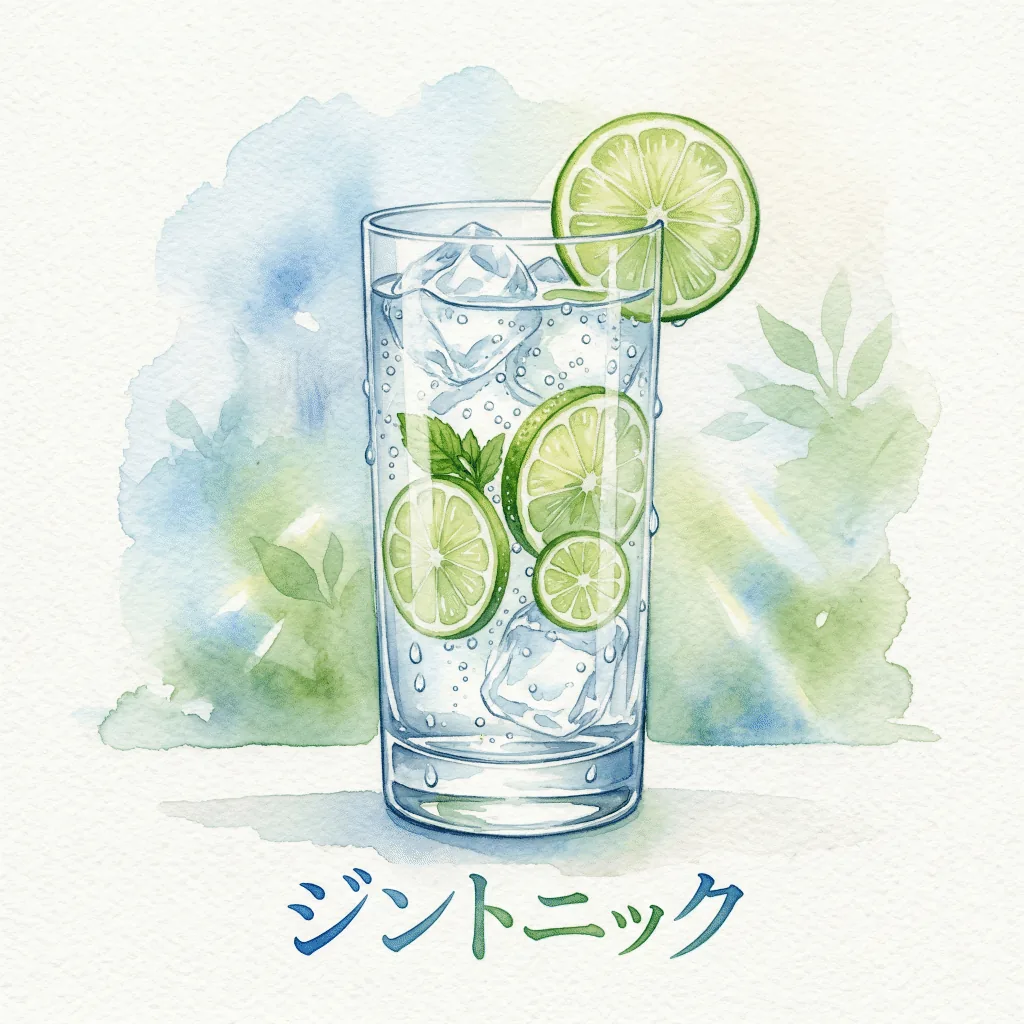
Gin & tonic — the baseline
Standard ratio: 1 part gin to 3–4 parts tonic. Pour over ice, garnish with citrus (yuzu peel for Japanese gins, or lemon or lime if unavailable). Stir once gently to combine — not vigorously, which kills the carbonation. Premium tonic (Fever-Tree Indian or Mediteranean) works better than generic tonic, which has more sweetness that can overpower subtle Japanese botanicals.
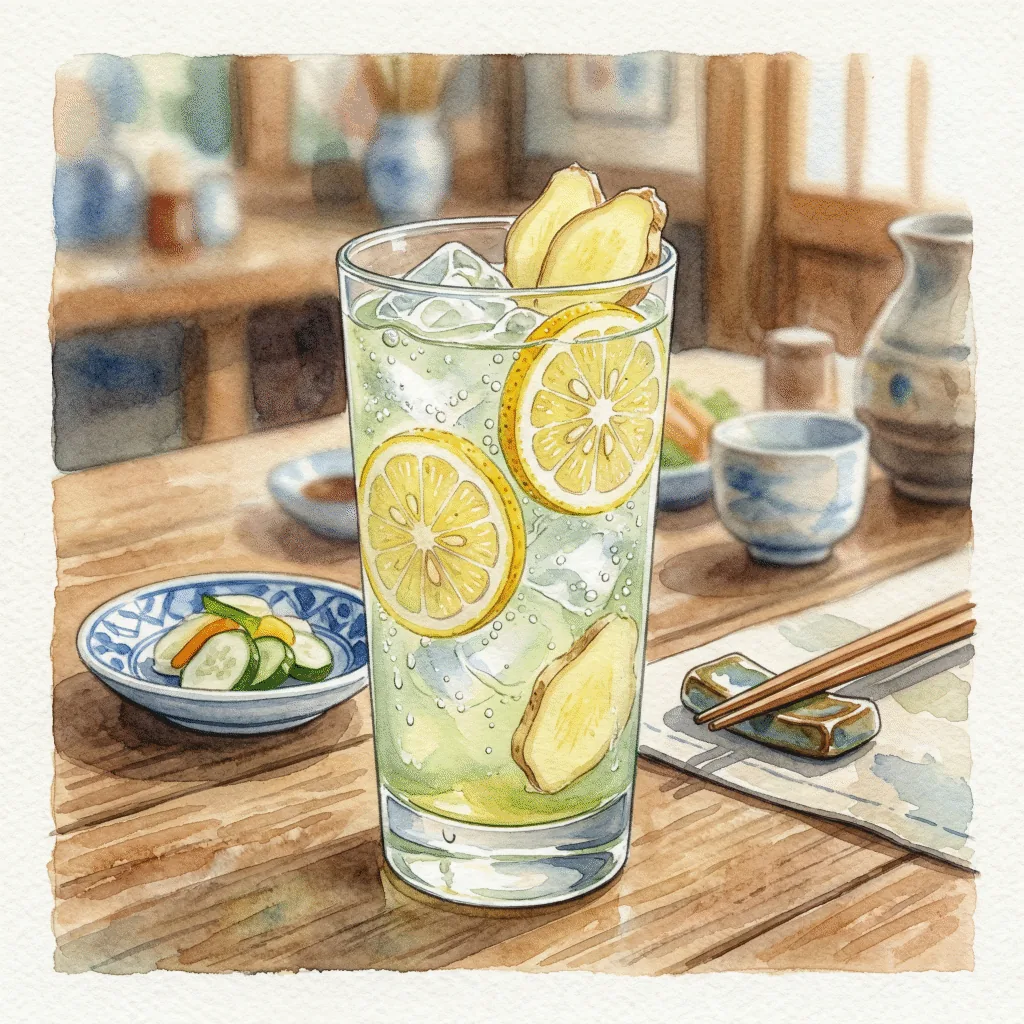
Gin soda — the Japanese food pairing serve
1 part gin to 4 parts plain sparkling water (no tonic). SUI was specifically designed for this serve. The lack of tonic's sweetness and quinine lets the botanical character come through more cleanly, making it a better food companion. Serve very cold — chill the glass and the soda water beforehand.
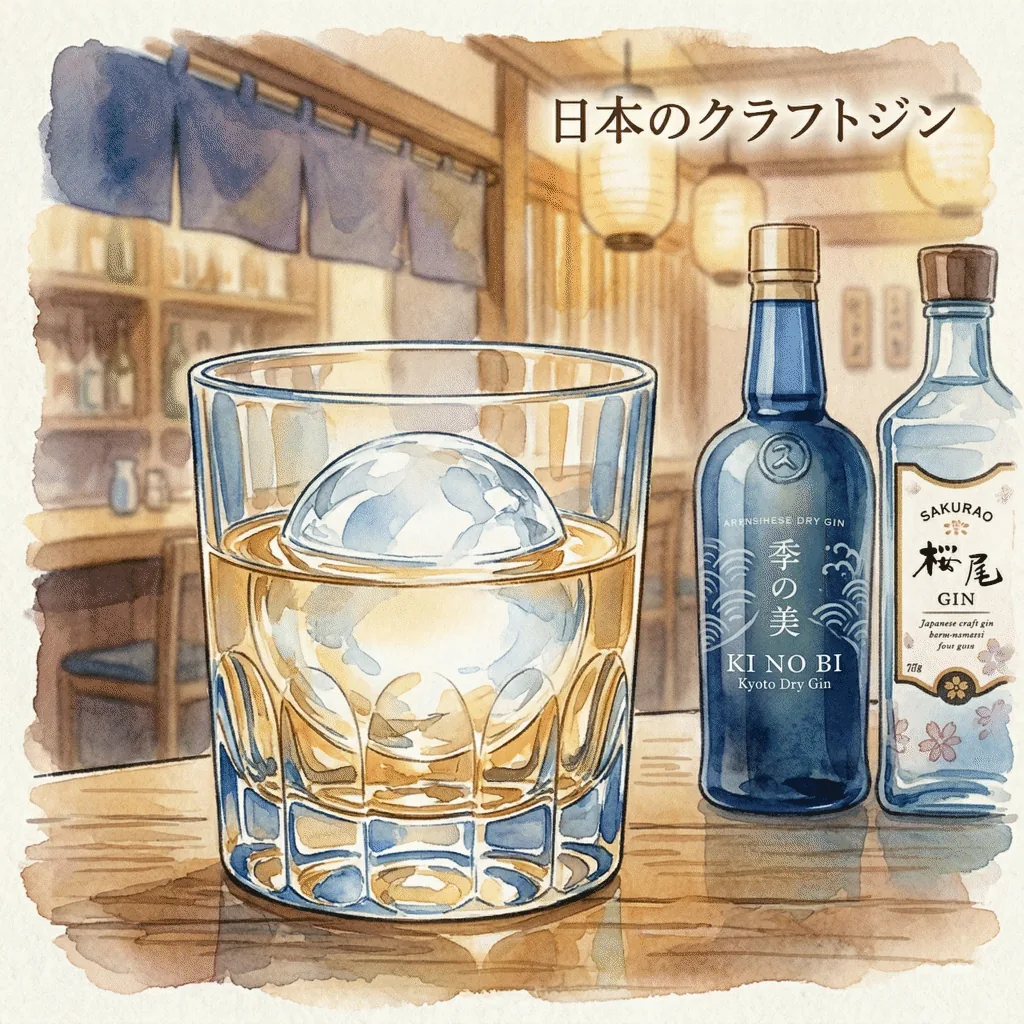
On the rocks — for premium gins
One large ice cube in a rocks glass. Pour gin directly over. No dilution except what the ice provides naturally. Ki No Bi, SAKURAO, and Nikka Coffey Gin all reward this treatment — the botanical complexity unfolds slowly as the temperature drops. This is the serve that most clearly communicates what makes each gin distinctive.
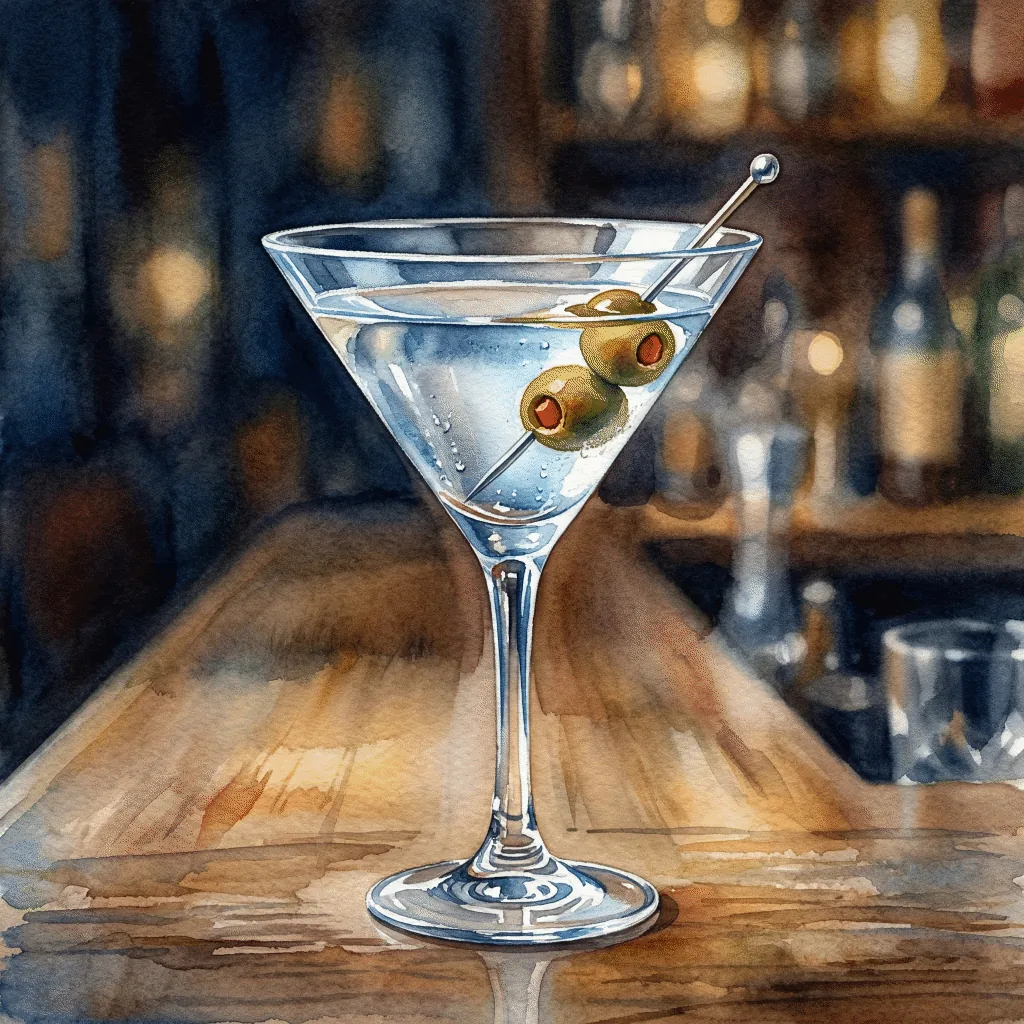
Martini — for structured gins
5 parts gin to 1 part dry vermouth, stirred over ice and strained into a chilled glass. Olive or lemon twist garnish. Nikka Coffey Gin's body makes it particularly suited to this serve — the richness from the Coffey still holds up to the vermouth in a way lighter gins don't.
5. Glassware & Ice
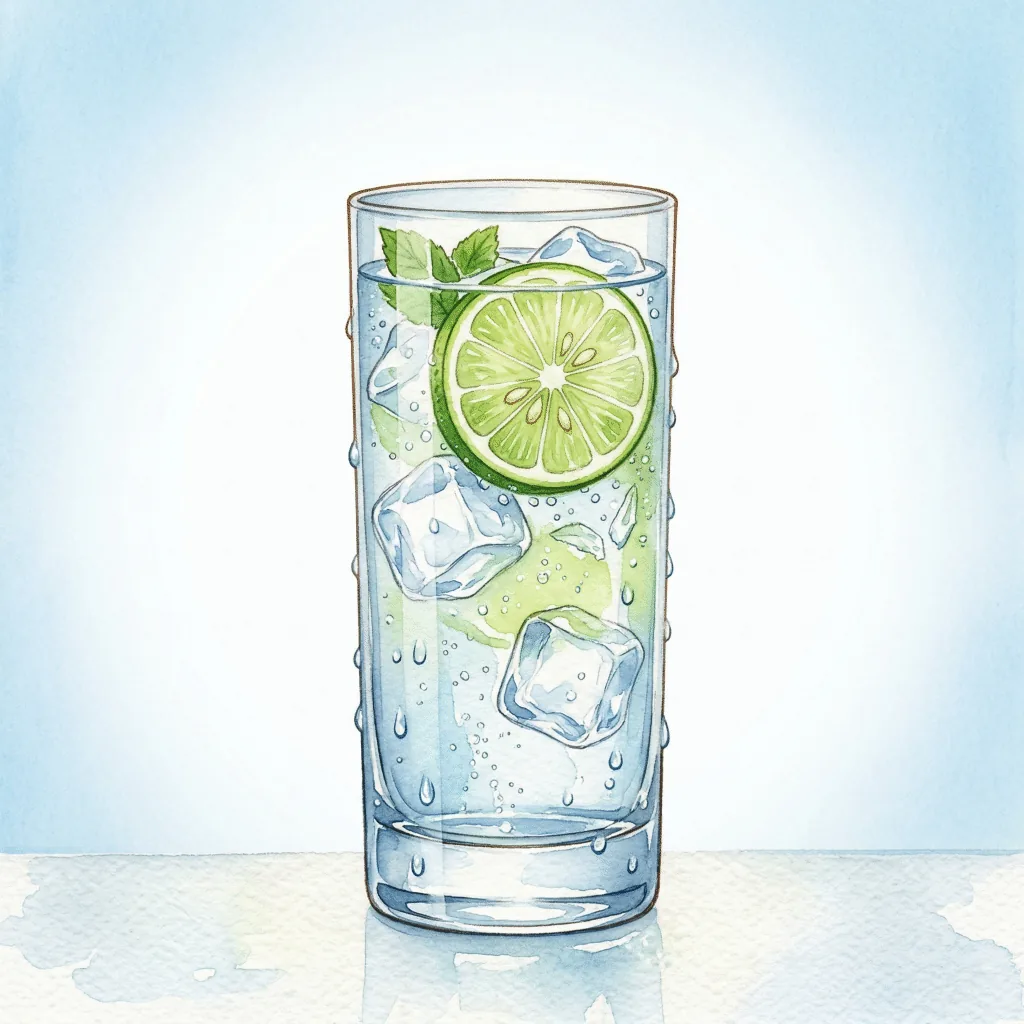
Highball glass (gin & tonic, gin soda)
Tall, straight-sided glass. Holds carbonation longer than a wide glass. The height allows ice, liquid, and garnish to layer visually. Standard Japanese bar format for any long drink with carbonation.
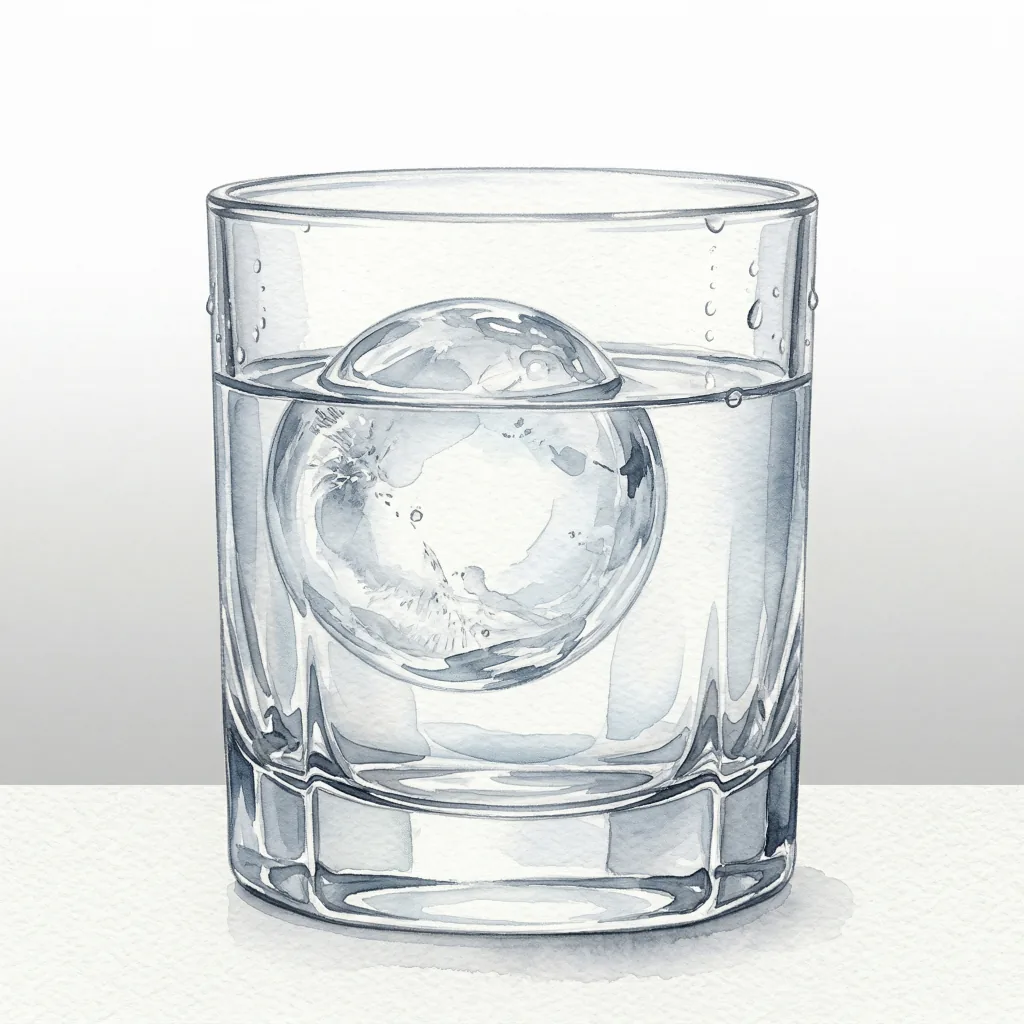
Rocks glass (on the rocks)
Wide, low glass. A single large ice ball or cube melts slowly, diluting the gin gradually rather than flooding it. The wide opening allows the botanical aromas to gather above the surface. Use this for Ki No Bi, SAKURAO, or any premium gin you want to taste slowly.
Thin-rimmed crystal glass (aroma focus)
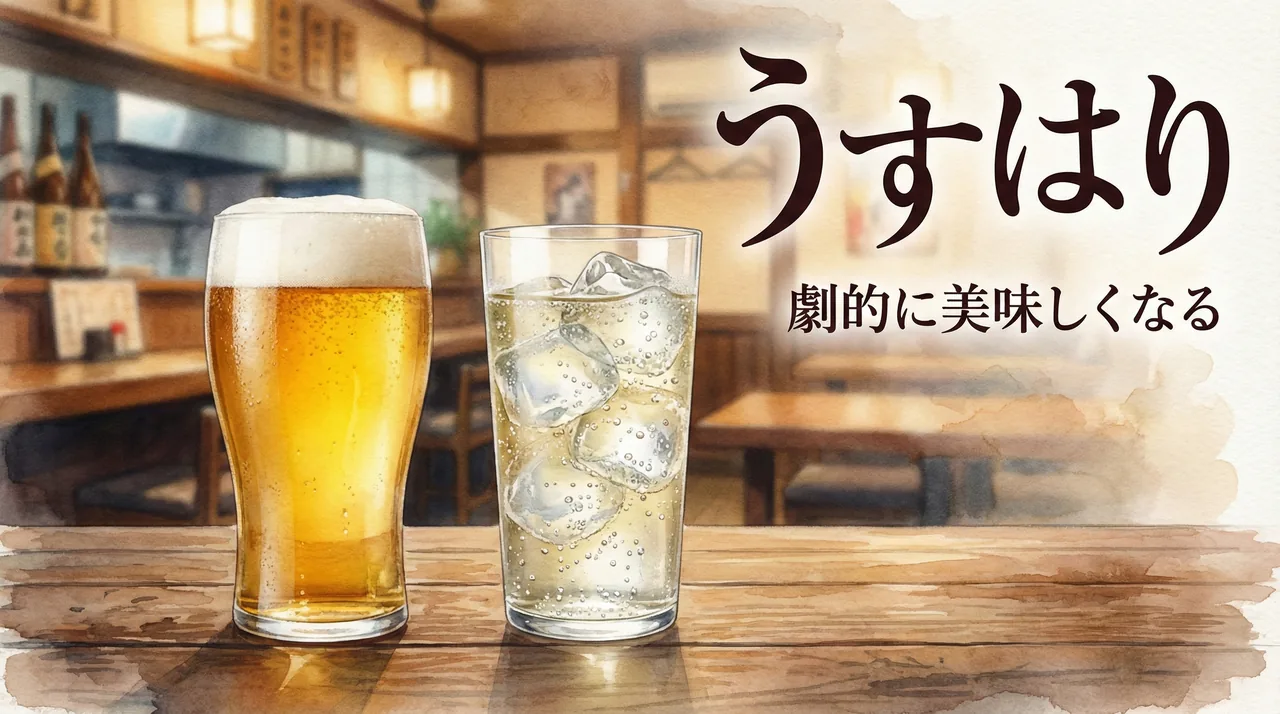
A thin-rimmed glass — like Shotoku's Usuhari series — makes a noticeable difference to how botanical aromas reach the nose. The thinner the rim, the less interference between glass and palate. For Ki No Bi in particular, this combination is genuinely revealing.
6. Japanese Gin as a Gift
Japanese craft gin is among the most well-received spirits gifts — it carries cultural context, it's visually distinctive (especially Ki No Bi's minimalist packaging and ROKU's hexagonal bottle), and it's genuinely useful for a range of serves.
| Budget / Occasion | Recommended |
|---|---|
| Under $40 | SUI or Setouchi Remon — accessible, well-designed bottles, good food pairing |
| $40–60 | ROKU GIN — the defining Japanese craft gin; international reputation; widely recognisable |
| $60+ | Ki No Bi — the premium choice; Kyoto Distillery is considered the category's origin point |
| Gin + glassware | ROKU or Ki No Bi + an Usuhari thin-rimmed glass makes a remarkable combined gift |
7. Frequently Asked Questions
How is Japanese craft gin different from standard London Dry Gin?
London Dry Gin (Tanqueray, Beefeater, etc.) is made to a consistent specification in large volumes — the botanical signature is familiar and predictable. Japanese craft gin uses a completely different botanical palette specific to Japanese agriculture and landscape. The flavour of gyokuro, yuzu, and sansho in a gin simply doesn't exist in a European gin. The Japanese category also tends to have more botanical complexity and lower production volumes.
Does gin need refrigeration?
No — gin's alcohol content (typically 40–47%) preserves it at room temperature. Store away from direct sunlight and heat. An opened bottle of craft gin will maintain quality for several months at room temperature; in a cool, dark location, indefinitely. For very aromatic craft gins like Ki No Bi, consuming within 3–6 months of opening is recommended to preserve the delicate botanical character at its best.
Which tonic water works best with Japanese gin?
Premium dry tonics with low sweetness — Fever-Tree Indian Tonic Water or Fever-Tree Mediterranean — work best with Japanese gins. Standard supermarket tonic water is sweet enough to mask the more delicate botanical notes of gyokuro and sansho. For gin soda serves (no tonic), any quality sparkling water without flavour additions works.
What's the difference between gin soda and gin and tonic?
Tonic water contains quinine (bitter) and sweetener. Gin soda is just gin and plain sparkling water — no bitterness, no sweetness beyond what's in the gin itself. Gin soda lets the botanical character come through more cleanly and is a better pairing with food (particularly Japanese cuisine). Tonic's quinine bitterness and sweetness can work against the more delicate Japanese botanicals. SUI is specifically designed for the gin soda serve.
Is there a non-alcoholic Japanese gin alternative?
Non-alcoholic spirits have grown significantly internationally (Seedlip, Lyre's, etc.), but Japanese-specific non-alcoholic gins are not yet widely available in English-speaking markets. Domestic Japanese producers (like Japanese Craft Tonic) have made non-alcoholic Japanese botanical drinks with yuzu and green tea, which pair well with sparkling water for a similar food-pairing effect without alcohol.
What's the difference between gin and vodka?
Vodka is defined by the absence of flavour — it's distilled and filtered to near neutrality. Gin is defined by the presence of juniper berry as a primary botanical, with additional botanicals to taste. Japanese craft gin adds a further layer: Japanese-specific botanicals that no other category of spirit uses. They're both clear spirits but the sensory experience has essentially nothing in common.
Final Thoughts: A Category That Could Only Come From Japan
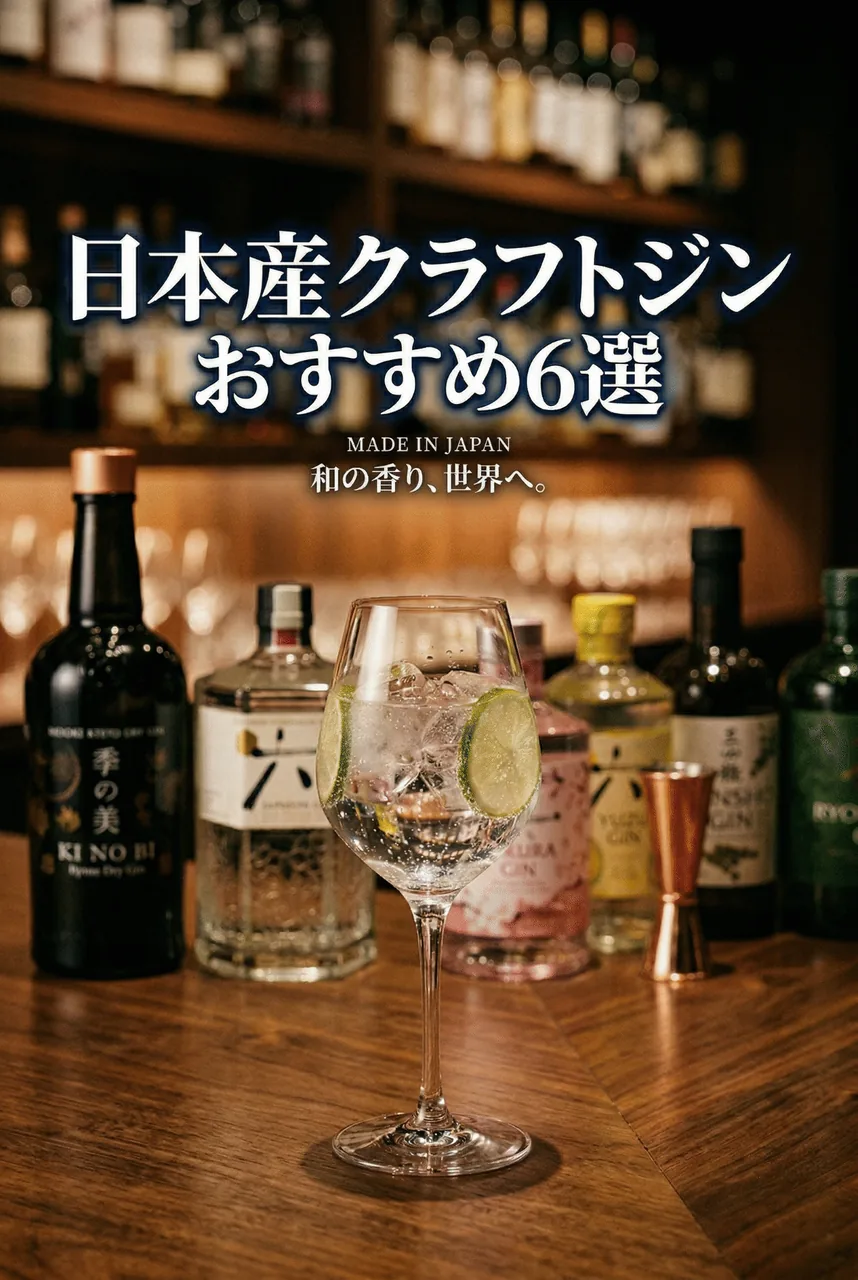
Gyokuro. Yuzu. Sansho. These are not just ingredients — they're aspects of Japanese food culture,
seasons, and landscape, brought into a glass.
ROKU is the obvious starting point — widely available, immediately distinctive, correctly
priced. Ki No Bi is the more considered choice for a special occasion. Nikka Coffey Gin bridges
the gap between gin and whisky in a way that no other spirit does. And Setouchi Remon offers
regional character from Hiroshima's famous citrus coast at an accessible price.
Any of these served in a good glass over proper ice, with or alongside Japanese food, is an
evening well spent.
Japanese Whisky Gift Guide: 3 Brands You Can Actually Buy
Usuhari Glasses: How Japan's Thinnest Beer Glass Changed the Way We Drink