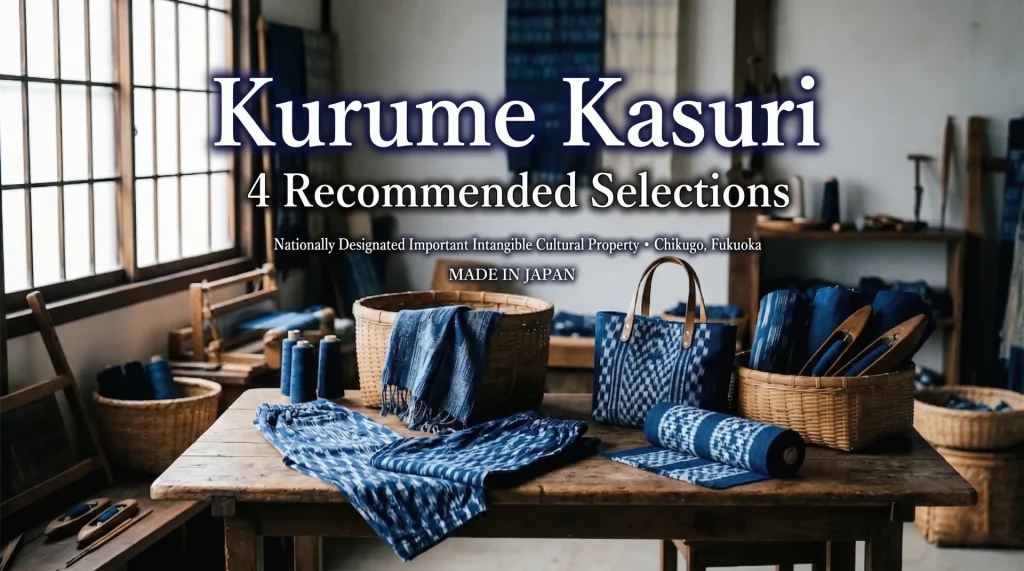
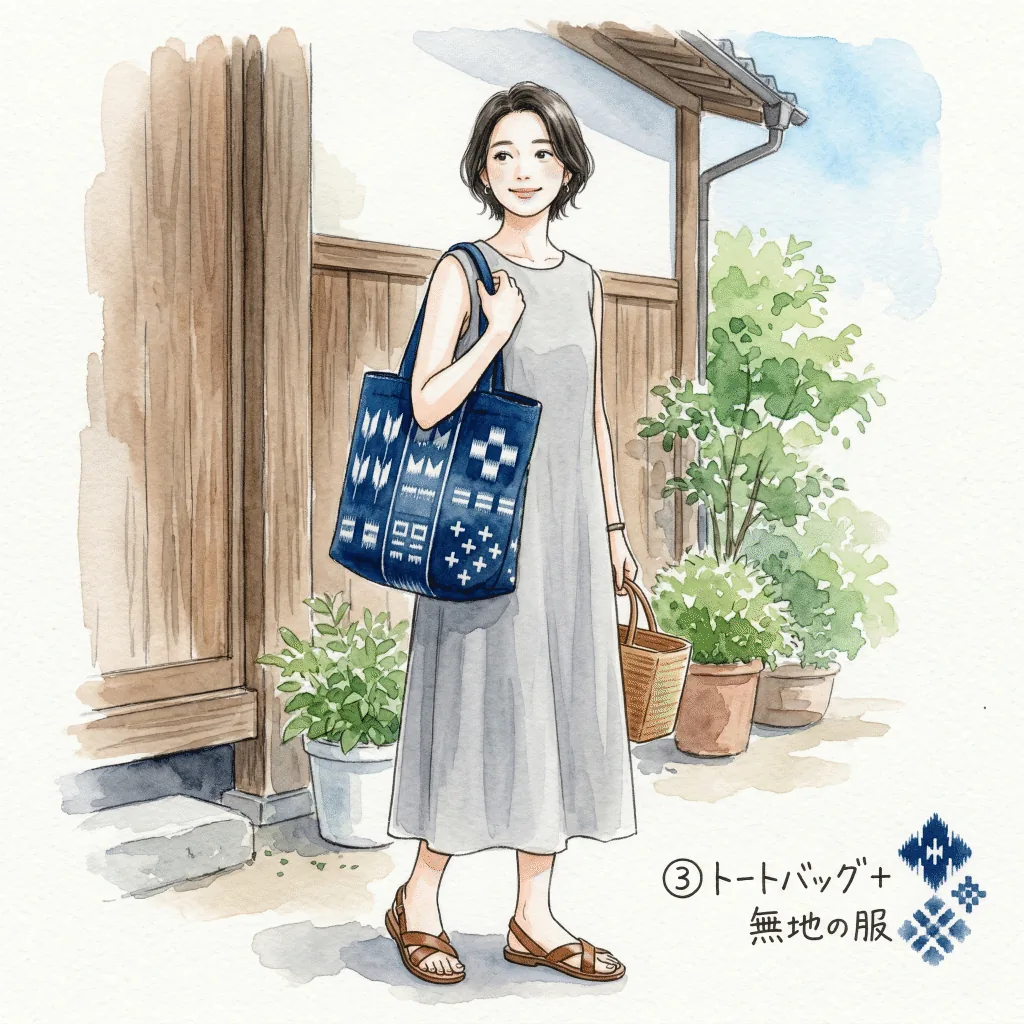
Around 1800, a teenage farm girl in Kurume, Fukuoka noticed the worn patches on an old cloth —
the way white fibres showed through faded indigo in irregular blurs. She spent months figuring
out how to reproduce that effect deliberately. What she invented became one of Japan's great
textile traditions: Kurume kasuri.
Kasuri (絣) is Japan's ikat weaving technique: fibres are bound and dyed before weaving, so
the pattern emerges from deliberate misregistration between warp and weft. The characteristic
blur — slightly hazy edges, no pattern exactly the same twice — is the technique's signature.
In 1957, Kurume kasuri was designated an Important Intangible Cultural Property by the Japanese
national government.
This guide introduces the technique, the craft traditions behind it, and four picks — monpe trousers,
a stole, a tote bag, and a pouch — that bring Kurume kasuri into everyday use.
Quick Reference: Kurume Kasuri — Four Picks
| Product | Workshop / Brand | Type | Character |
|---|---|---|---|
| Unagnbadogo MONPE | Unagi no Nedoko, Yame | Trousers | Contemporary cut; unisex; softens and deepens with washing |
| Miyata Orimono stole | Miyata Orimono, Fukuoka | Stole / scarf | 100% cotton; kasuri blur visible at close range; spring/autumn weight |
| Giemon tote bag | Giemon / Okamoto Shouten, Kurume | Tote bag | 200-year-old workshop; A4-compatible size; indigo-white contrast |
| Giemon pouch | Giemon / Okamoto Shouten, Kurume | Pouch | Compact; gift-appropriate; entry point to the craft |
1. What Is Kurume Kasuri?
Kurume kasuri is a cotton ikat textile produced in and around Kurume City in Fukuoka Prefecture's
Chikugo region. From approximately 1800, production spread throughout the region and became the
standard everyday clothing of farmers and workers across Kyushu.
In 1957, the Japanese national government designated Kurume kasuri as an Important Intangible
Cultural Property (重要無形文化財) — recognition of both the technical sophistication of its
production process and its cultural significance.
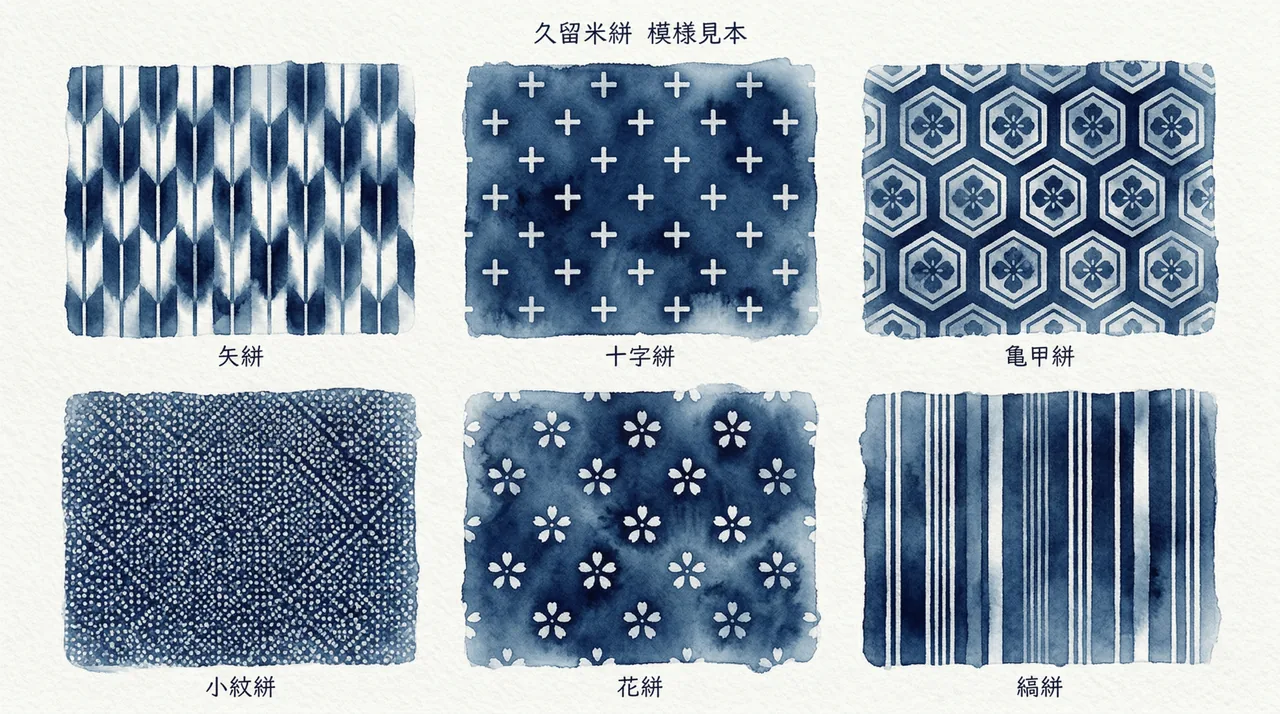
The defining visual quality is the kasuri pattern: the deliberate misregistration of pre-dyed threads produces a blurred, hazy edge to every pattern element. No two pieces are identical. Machine-printed approximations of kasuri patterns can't reproduce this — the blur is inherent to the hand-binding and weaving process.
2. The Kasuri Technique: How the Blur Is Made
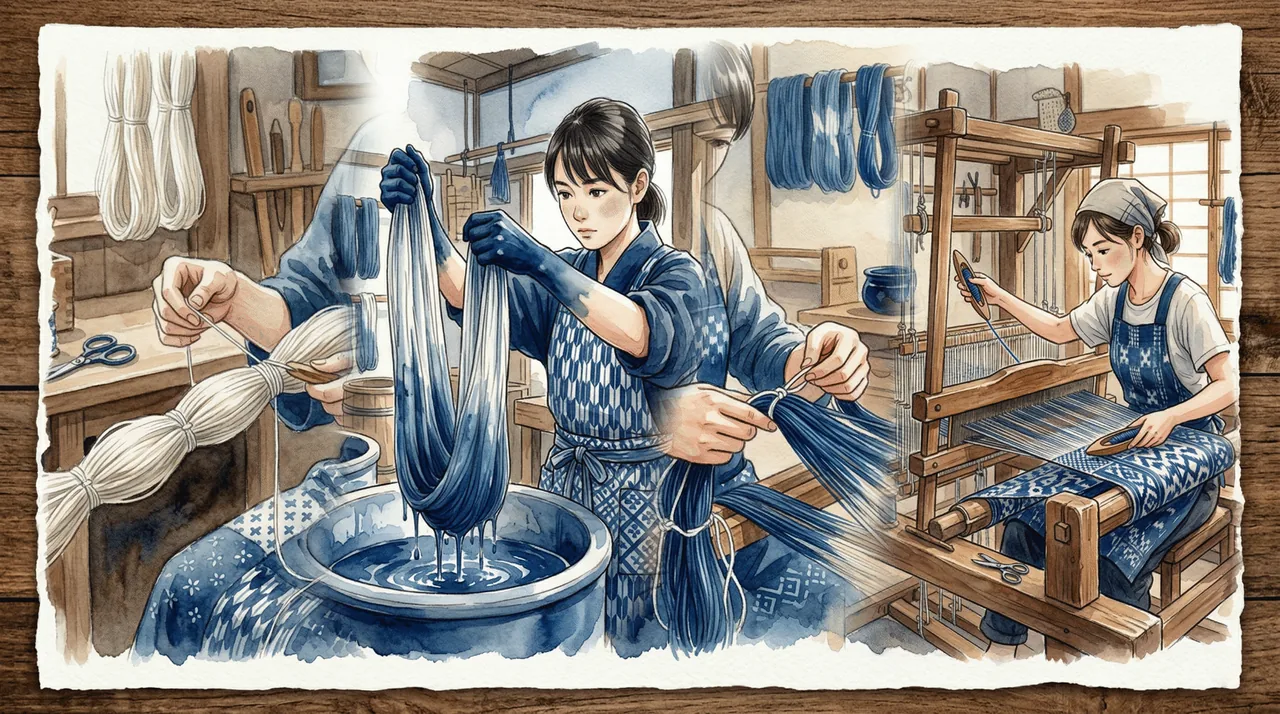
Kurume kasuri production involves 17 distinct steps. The key ones:
Thread binding (糸括り / ito kukuri): Before dyeing, sections of thread that are to remain undyed are tightly bound with rope. The binding precision determines the sharpness or blur of the final pattern edge — deliberately imprecise binding creates the characteristic haze.
Indigo dyeing (藍染め / ai-zome): Bound threads are submerged repeatedly in fermented indigo vats. A single immersion produces light colour; 50–60 immersions are required for the deep indigo associated with the finest Kurume kasuri. Between each immersion, the threads are exposed to air for oxidation — indigo only develops its colour through this reaction with oxygen.
Thread release (絣解き / kasuri-toki): After dyeing, bindings are removed. The undyed sections reveal the pattern in white against the deep indigo ground.
Weaving: The pre-patterned threads are loaded onto the loom. The weaver's skill — aligning the pattern elements across warp and weft — determines how cleanly or blurrily the pattern registers. In hand-woven pieces, this slight imprecision is the signature of hand-made work.
Each completed bolt of fabric holds months of accumulated work. When you hold a piece of Kurume kasuri, that time is present in it.
3. Four Picks: Monpe, Stole, Bag & Pouch
No.1 — Unagi no Nedoko MONPE (Kurume Kasuri Trousers)
Unagi no Nedoko (うなぎの寝床) is based in Yame, Fukuoka, and works directly with Kurume kasuri
weavers to produce products that fit contemporary life. Their MONPE (もんぺ) trousers — the
traditional wide-leg farm trousers of Kyushu — are redesigned with a clean contemporary
silhouette: relaxed at the hips, tapered slightly toward the ankle. Unisex sizing. Pairs with
denim jackets, sneakers, and plain t-shirts as naturally as with traditional Japanese elements.
Cotton softens with each wash; the indigo deepens in some areas and lightens in others over time.
This is a garment that improves with wear.
- Material
- 100% cotton (Kurume kasuri), made in Fukuoka, Japan
- Best for
- Everyday contemporary wear; grows with use; unisex
No.2 — Miyata Orimono Kurume Kasuri Stole
Miyata Orimono is a Fukuoka-based weaver producing kasuri stoles and fabric products. The stole is 100% cotton, Japanese-made, and the kasuri blur is most visible at the close range you'd hold a stole — the white-indigo contrast catching in the periphery as the fabric moves. Lighter in weight than a wool stole; appropriate for spring and autumn when a scarf adds warmth without bulk. Drapes over a coat, jacket, or plain outfit and immediately adds a Japanese textile dimension that nothing else provides.
- Material
- 100% cotton (Kurume kasuri), made in Japan
- Best for
- Layering over coats; spring/autumn; kasuri pattern most visible in stole format
No.3 — Giemon Kurume Kasuri Tote Bag
Giemon (儀右ヱ門) is the workshop name of Okamoto Shouten in Kurume — over 200 years of continuous production. They make traditional kasuri fabric and a range of products from it. The tote bag is A4-compatible, proportioned for everyday use. The indigo-white contrast of the kasuri pattern is particularly striking in bag form, where the fabric has room to show the full pattern repeat. Pairs with plain everyday clothing as a single statement piece.
- Material
- Kurume kasuri cotton, made in Kurume, Fukuoka
- Best for
- Daily bag; traditional workshop with 200+ year lineage; visible kasuri pattern
No.4 — Giemon Kurume Kasuri Pouch
From the same Giemon workshop — a compact pouch suitable for cosmetics, stationery, or small accessories. The kasuri pattern adds Japanese textile character to something inside a bag, seen briefly when you reach for something. The most accessible price point in this guide. An appropriate first purchase if you want to experience Kurume kasuri before committing to a larger piece, or a gift for someone unfamiliar with the textile tradition.
- Material
- Kurume kasuri cotton, made in Kurume, Fukuoka
- Best for
- Entry piece; gift; daily functional use
4. Workshops: Unagi no Nedoko, Miyata Orimono & Giemon
Unagi no Nedoko — Yame City, Fukuoka
Founded in Yame with a mandate to preserve and transmit Fukuoka's craft and cultural industries. Works directly with Kurume kasuri weavers to design products that fit contemporary life. The MONPE project has been the most visible result: traditional farm trousers translated into contemporary clothing that people actually want to wear and buy. International shipping available; English website accessible.
Miyata Orimono — Chikugo region, Fukuoka
A Fukuoka weaver specialising in kasuri stoles and fabric products. 100% cotton, Japanese-made. The kasuri patterns are chosen and produced for their visual effect in stole format — the blur reads differently at scarf scale than at garment scale.
Giemon / Okamoto Shouten — Kurume City, Fukuoka
Over 200 years of continuous kasuri production. One of the remaining workshops that traces its lineage back to the craft's origins in the early 19th century. Makes both traditional cloth and a range of everyday products — bags, pouches, accessories — that bring the weaving tradition into daily use.
5. How to Wear Kasuri
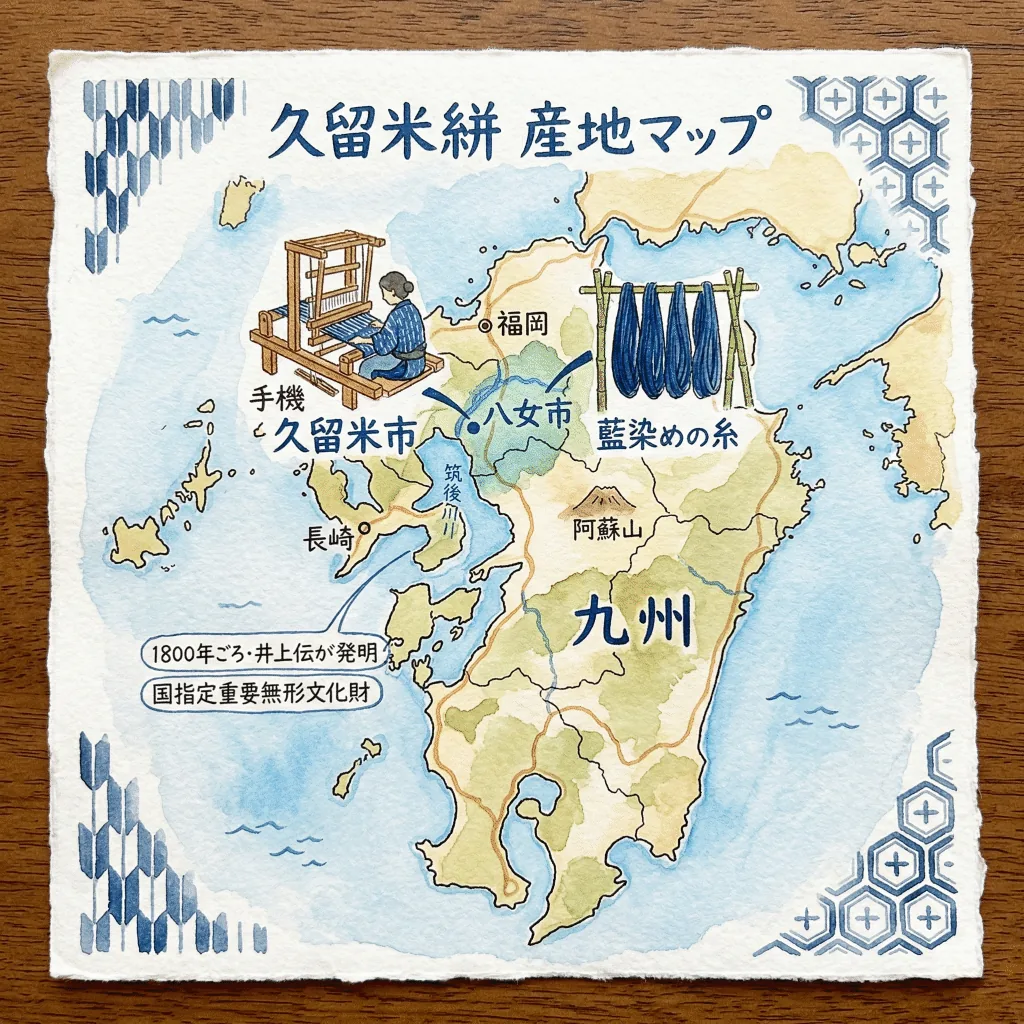
Monpe + plain white t-shirt + sneakers
The indigo kasuri trousers become the focal point; everything else stays neutral. Loose-leg monpe with sneakers is the combination that makes the traditional silhouette feel contemporary rather than costumed. This is the most common styling approach for Unagi no Nedoko MONPE.
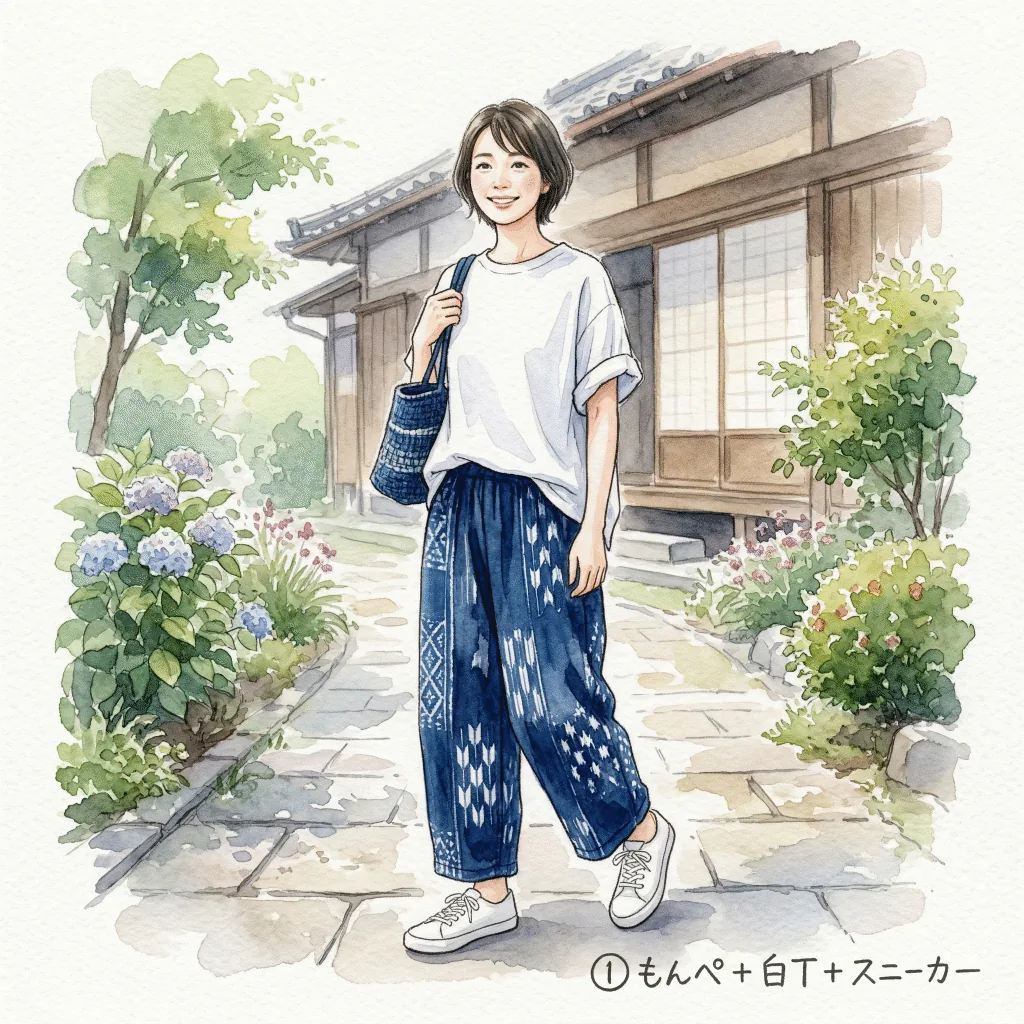
Kasuri shirt + denim
Two indigo fabrics together — the kasuri pattern's blur against the denim's selvedge. Both are cotton; both are Japanese craft traditions; both deepen and soften with washing. This combination works because the two textiles share material logic even as they contrast visually.
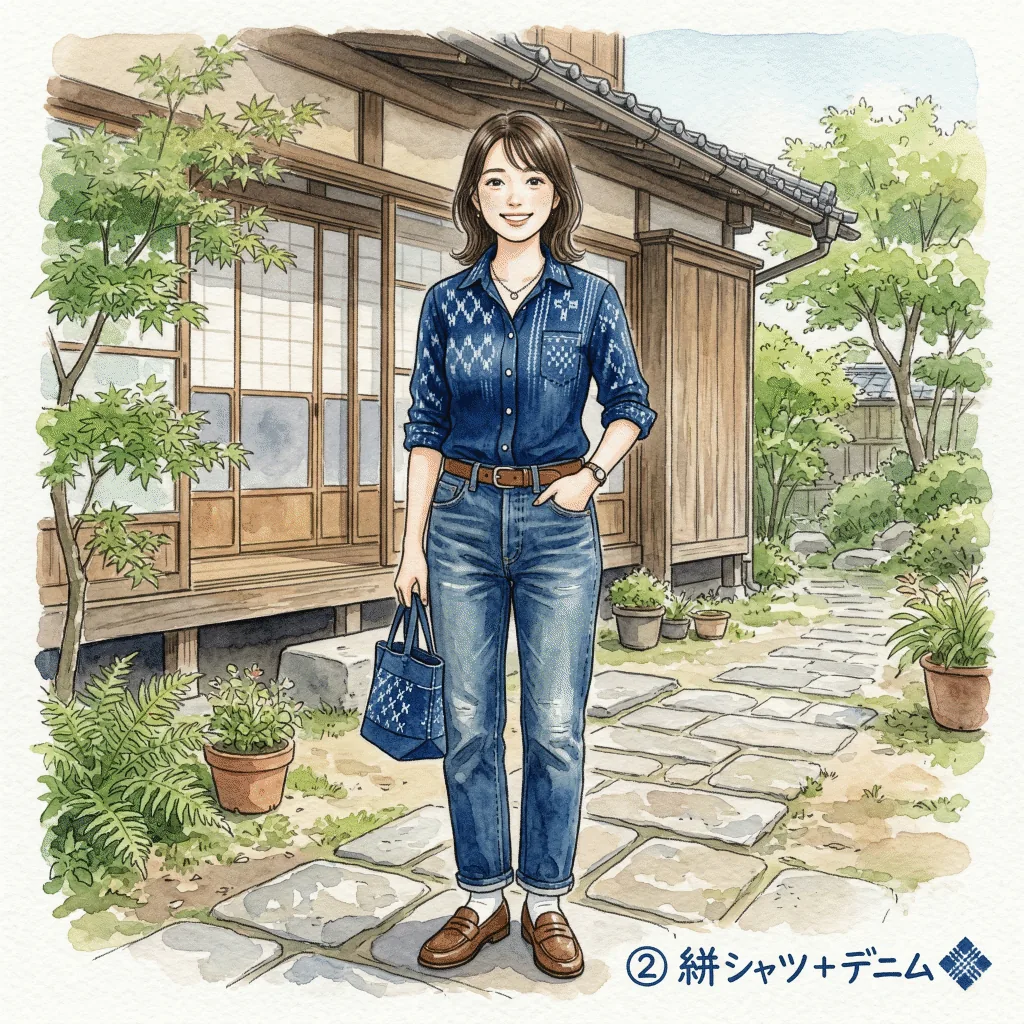
Tote bag + plain outfit
Let the kasuri bag be the only patterned element. Plain shirt and trousers, kasuri tote over the shoulder. The pattern does all the work; the clothes frame it. This is the most accessible entry point to incorporating kasuri — no change to existing wardrobe required.
Stole + dark outerwear
Kasuri stole over a black or dark navy coat. The indigo-white contrast reads well against dark neutral outerwear. The stole's slight irregularity — the blur of the pattern — adds texture to a monochrome look without introducing a competing colour.
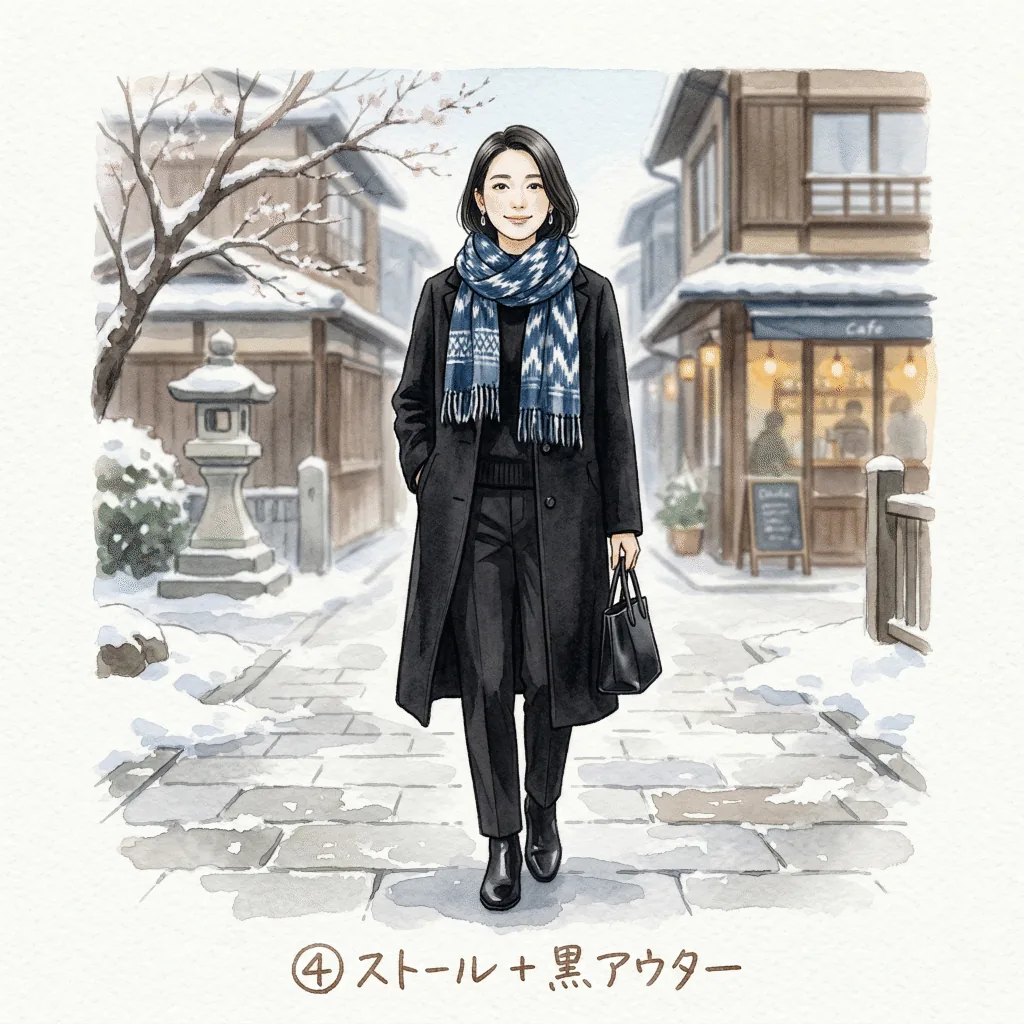
The consistent principle: use kasuri as the single patterned element. The kasuri blur is distinctive enough that it carries the outfit. Other patterned pieces alongside it compete rather than complement.
6. Care Instructions
Cotton kasuri is more forgiving to care for than silk textiles. The main consideration is the indigo dye.
| Care aspect | Method / Notes |
|---|---|
| Washing | Hand wash or delicate machine cycle in a laundry net. Mild detergent. |
| Indigo bleeding | Natural and synthetic indigo both bleed in the first few washes. Wash separately for the first 3–5 washes. A 10-minute soak in water with 1 tablespoon of white vinegar before the first wash helps set the dye. |
| Drying | Dry in shade — direct sunlight causes uneven fading. Reshape while damp and hang straight. |
| Ironing | Medium heat (140–160°C). Iron on the reverse side to protect the surface weave. Steam is fine. |
Cotton softens noticeably after repeated washing, and the indigo develops individual character — lighter in high-friction areas, deeper elsewhere. This differential aging is intrinsic to the material. It's not deterioration; it's the cloth recording its use.
7. Kurume Kasuri as a Gift
Kurume kasuri works particularly well as a gift for people interested in Japanese craft or design. The production story — the 17-step hand-binding and indigo-dyeing process, the 1957 national designation — gives the gift a narrative dimension that purely decorative items lack.
| Budget / Occasion | Recommended |
|---|---|
| Small gift / souvenir | Pouch or handkerchief — compact, lightweight, recognisably Japanese |
| Birthday / Mother's Day | Stole — functional, beautiful, appropriate for any age |
| Special occasion | Tote bag or MONPE — a more substantial piece from a 200-year workshop |
8. Frequently Asked Questions
How is Kurume kasuri different from other Japanese ikat (kasuri)?
Japan has several regional ikat traditions: Kurume kasuri (Fukuoka, cotton), Iyo kasuri (Ehime, cotton), and Oshima tsumugi (Kagoshima, silk) are the most notable. Kurume kasuri is distinguished by its cotton base — it was originally peasant work clothing, designed to be durable and washable, not ceremonial. The pattern range is also distinctive: geometric patterns with characteristic blurred edges, produced by hand-binding. Oshima tsumugi is silk, expensive, and considered formal wear. Kurume kasuri is cotton, designed for daily use.
Can kasuri be worn as Western-style clothing?
Yes — Kurume kasuri fabric is used for shirts, blouses, trousers, and jackets in contemporary Japanese fashion. The MONPE trousers from Unagi no Nedoko are cut in a contemporary silhouette that works with t-shirts and sneakers. The textile's indigo-white contrast and soft cotton weight adapts easily to Western dress. It doesn't need to be styled as "traditional" to work.
Will the indigo colour fade significantly?
Indigo cotton does fade over time — this is intrinsic to the material and is considered desirable rather than problematic. Well-maintained kasuri develops differential fading: deeper in less-worn areas, lighter in high-contact zones. This creates a record of use specific to each garment. For the first few washes, wash separately to avoid transferring dye to other clothes; after that, fading slows significantly.
What's the difference between hand-woven (hon-gasuri) and machine-woven kasuri?
Both are genuine Kurume kasuri. Hand-woven pieces (本絣) are produced on traditional floor looms with each thread placed by the weaver — the slight imprecision of hand positioning creates the characteristic blur. Machine-woven kasuri uses power looms and is produced in greater volume at lower cost. The pattern edges in machine-woven pieces are slightly more regular. Both carry the kasuri character; hand-woven pieces are more expensive and hold the highest craft designation.
Where can I buy authentic Kurume kasuri?
Directly from the workshops listed in this guide — Unagi no Nedoko, Miyata Orimono, and Giemon all have online shops. For the workshop visit experience, Kurume City and Yame City in Fukuoka Prefecture have multiple weaving workshops open to visitors. "Kurume kasuri" designation confirms regional origin and traditional production methods; pieces sold with this designation are certified by the Kurume Kasuri Cooperative.
Is kasuri pattern the same as tie-dye?
No — they're different techniques with different effects. Tie-dye binds sections of finished cloth before dyeing, producing colour patterns on the woven surface. Kasuri binds sections of individual threads before dyeing and before weaving — the pattern is built into the thread structure and only fully appears when the threads are woven together. The blur of kasuri comes from the slight displacement between patterned warp and weft threads during weaving, which no post-weaving dyeing technique can replicate.
Final Thoughts: A Textile With Two Centuries of Use Behind It
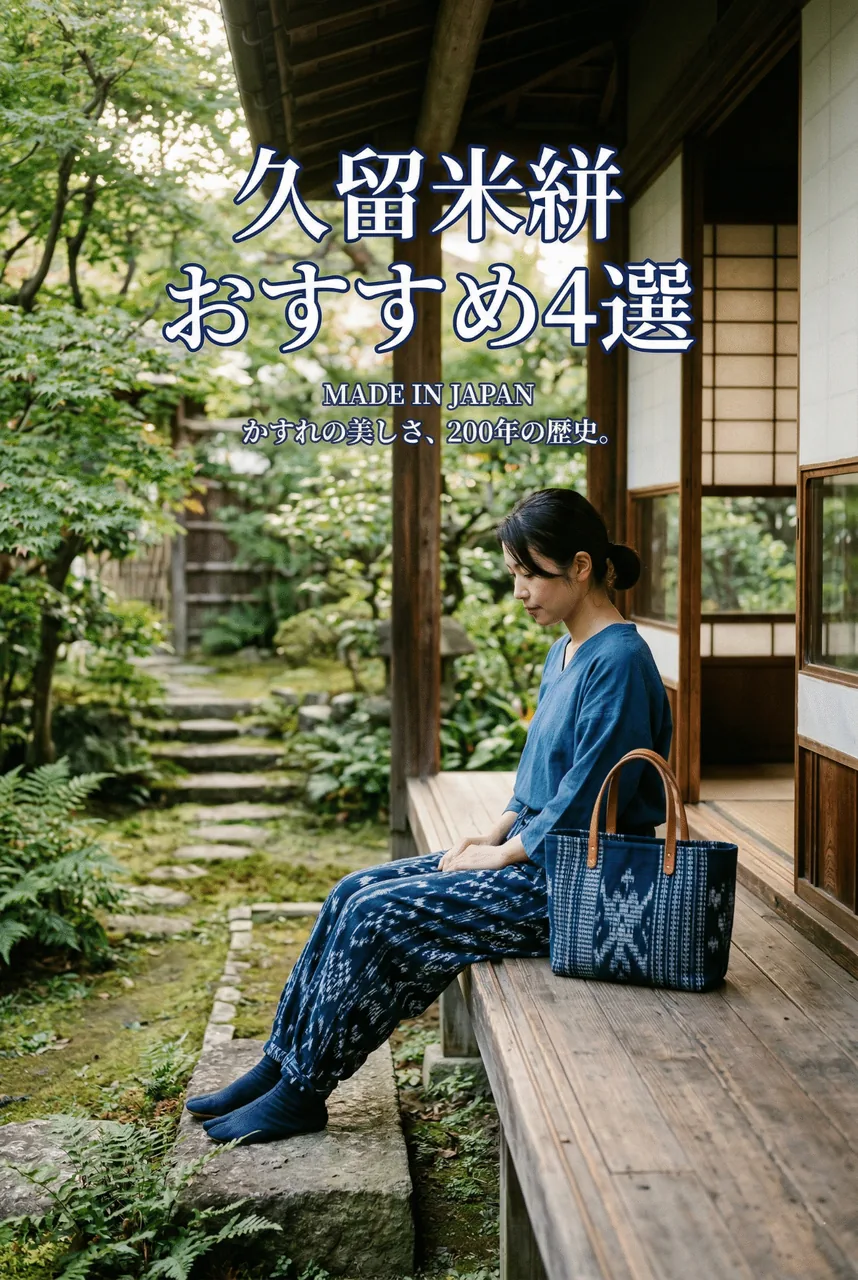
Kurume kasuri has been washed, worn, and passed down for over 200 years. The farmers
who first wore it chose it for durability and practicality. Contemporary wearers are drawn
to the same qualities: cotton that softens with use, indigo that develops individual
character over time, pattern that no machine can quite replicate.
A Giemon pouch brings that history into a handbag. A Miyata stole drapes it over a coat.
Unagi no Nedoko MONPE puts it on legs that can walk anywhere. The technique is the same
as it was in 1800; the form has adapted to where we are now.
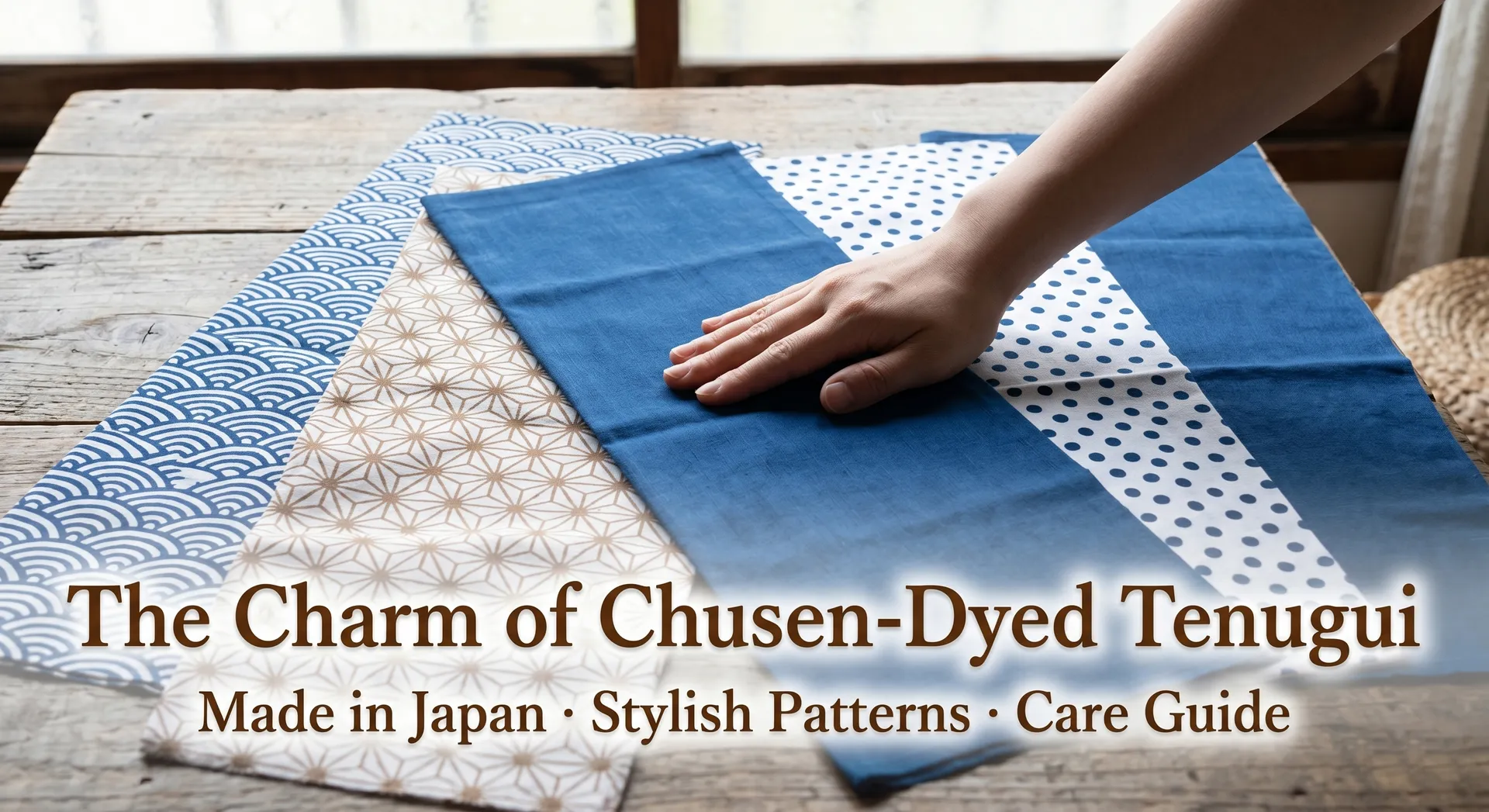
Tenugui Guide: Japan's Versatile Cotton Cloth Explained

Japanese Selvedge Denim: Okayama & Hiroshima's Best 5 Brands