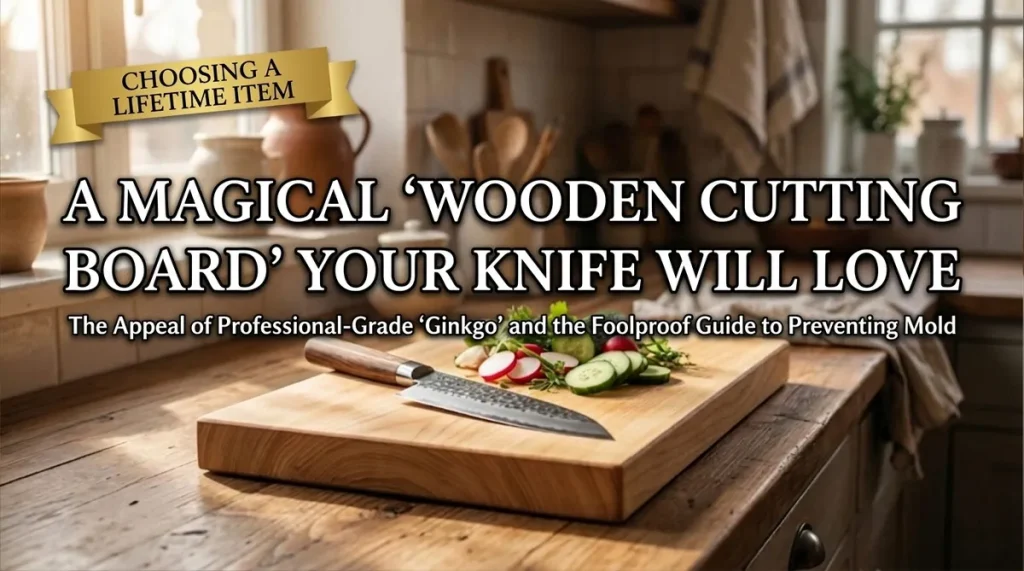
You bought a great knife — but you're still cutting on the same white plastic board from years ago.
Here's a little-known fact: one of the leading causes of dulling a knife blade isn't what you're cutting — it's
the hardness of the surface underneath.
The satisfying "tok tok" sound when the blade meets the board.
A surface that gives just enough to absorb the impact and protect the edge.
And a beauty that makes the board worthy of the table, not just the counter.
This guide focuses on the ginkgo (icho) cutting board — the material professional chefs reach for
above all others — along with everything you need to know about choosing and caring for a wooden board that will
last a lifetime.
Quick Reference: Cutting Board Materials at a Glance
| Material | Characteristics | Care | Best for |
|---|---|---|---|
| Hinoki (Cypress) | Naturally antibacterial, pleasant aroma, moderately firm | Rinse only. Dries quickly | Those who enjoy the scent and a clean aesthetic |
| Ho (Magnolia) | Light, soft, gentle on blades. Resistant to splitting | Avoid over-drying. Store upright | Those who prioritize light weight and ease of use |
| Ginkgo (Icho) | Springy, exceptional blade feel. Natural oils repel water — hygienic and long-lasting | Scrub brush + water. Can be re-surfaced | Those who want professional-grade, lifetime performance |
| Plastic | Hard surface causes blade chipping. Scratches harbor bacteria | Usually dishwasher-safe | Those prioritizing convenience and low cost |
1. Why Wood? The Critical Difference from Plastic
Cutting boards come in plastic, rubber, wood, and more — but if you're using a quality Japanese knife, wood is the only real choice. The reason comes down to hardness.
Wood "Catches" the Blade — Plastic Fights Back
Hard plastic and synthetic rubber send a sharp shock back up the blade the moment it makes contact. Over time,
this chips the edge and kills the sharpness — the surface is the culprit, not the knife or your technique.
Wood, by contrast, gives slightly under the blade. That micro-flex absorbs the impact and lets the edge pass
through cleanly.
Keeping your knife sharp longer is the single biggest argument for switching to wood.
2. The Pro's Choice: What Makes Ginkgo Wood Special
Among all the wood types used for cutting boards — hinoki, magnolia, paulownia — the one professional chefs consistently name as the best is ginkgo (icho).
① Remarkable Self-Healing
The Wood That Closes Its Own Cuts
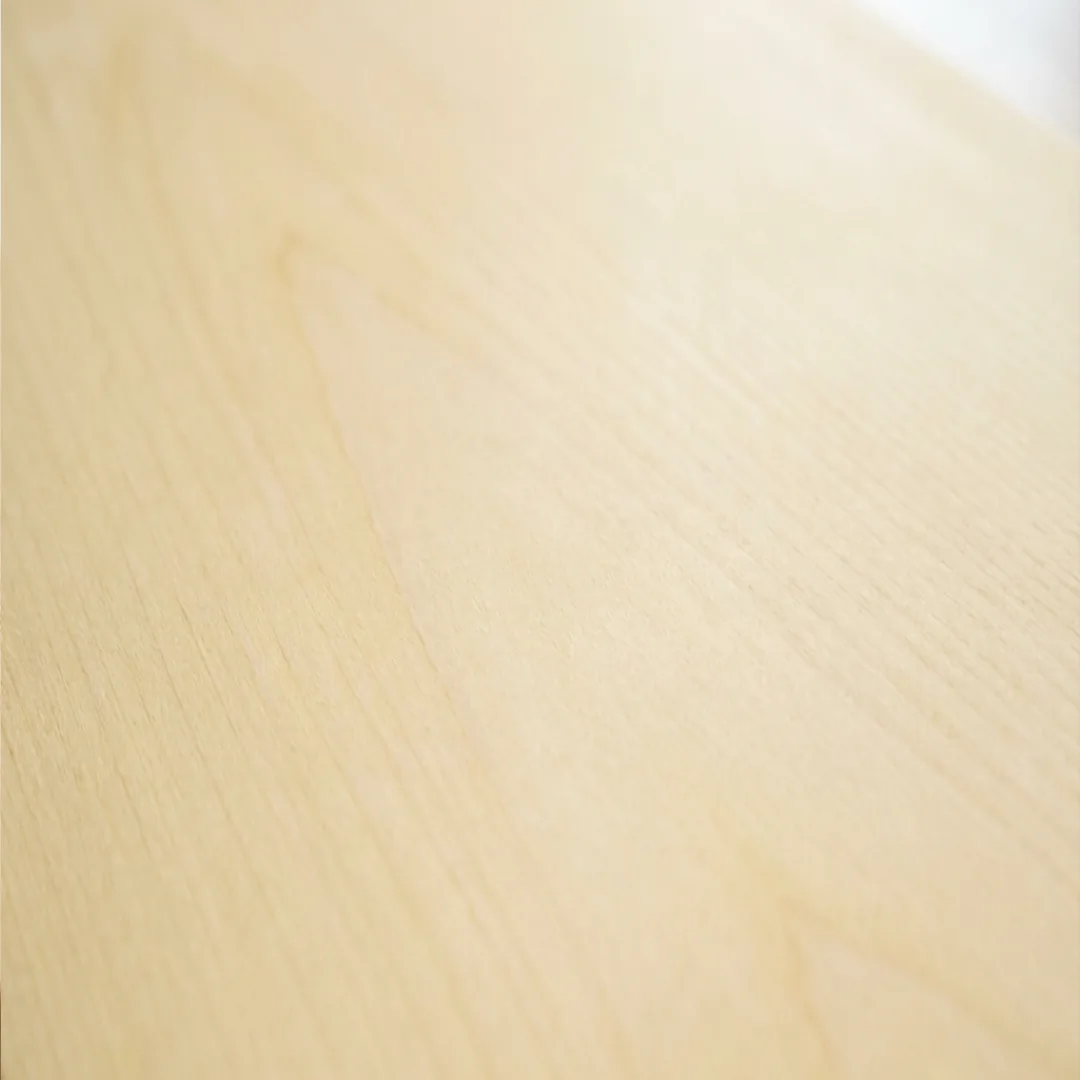
Ginkgo is soft and springy enough that when a knife leaves a cut mark, the wood swells slightly when it absorbs water — effectively closing the groove and making it nearly invisible. Shallow cuts don't stay open. That means fewer gaps for bacteria to settle into, and a surface that stays hygienic far longer than harder woods or plastic. Once you experience the blade-gripping, almost adhesive feel of a ginkgo board under a sharp knife, nothing else quite compares.
② Natural Oils = Natural Water Resistance
Built-In Oil Coating
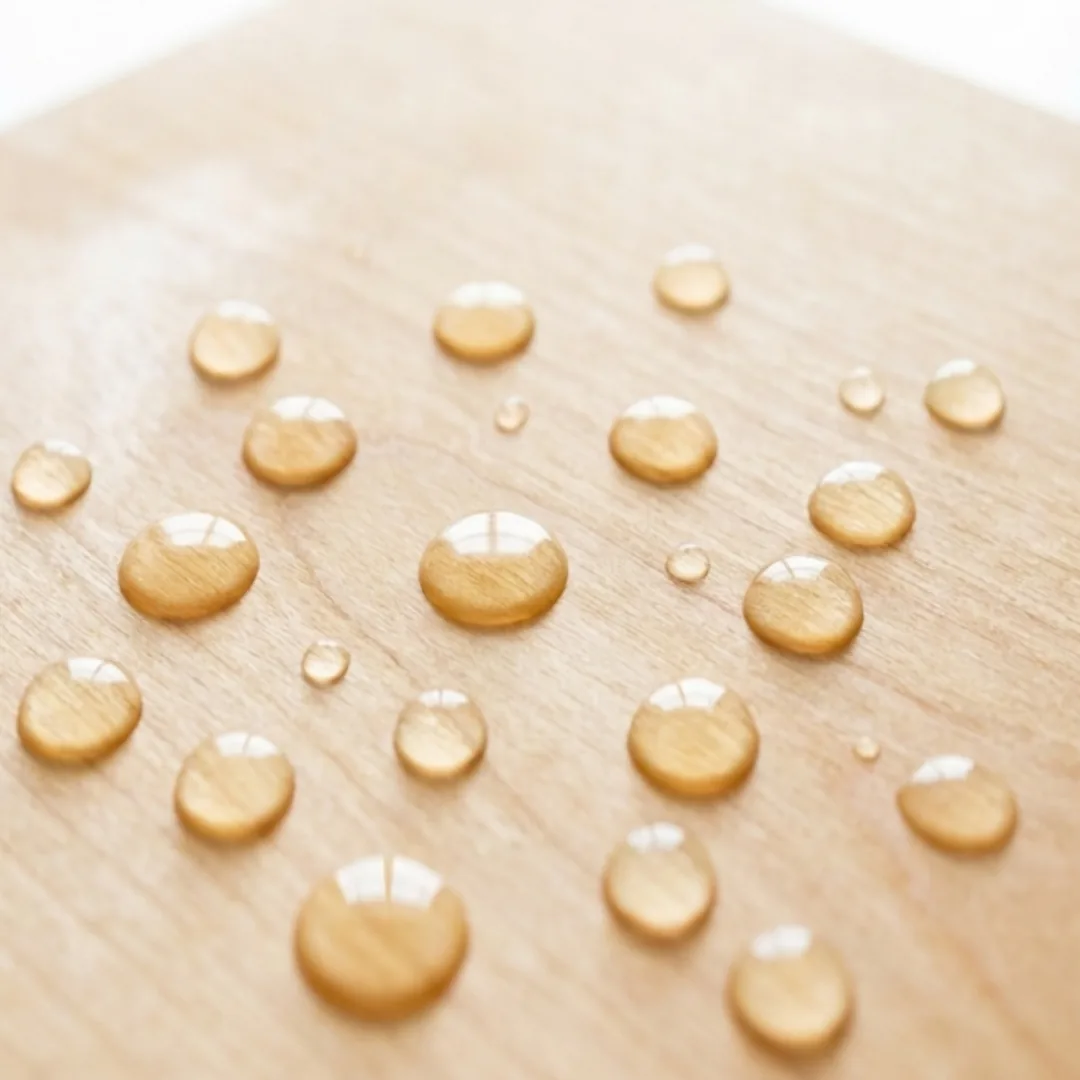
Ginkgo wood contains a moderate amount of natural oils that cause water to bead and run off rather than soak in. The common worry that "wooden boards go moldy" doesn't really apply to ginkgo — its water-shedding ability means it dries far faster than other wood types. The mold risk that people associate with wooden boards is significantly lower with ginkgo than with most alternatives.
3. Two Essential Ginkgo Cutting Board Brands
The ginkgo cutting board world has two distinct personalities.
Here are the two standouts: woodpecker, beloved for its modern design and as a go-to gift, and
Futaba Shoten, the uncompromising craftsman's tool.
Turning Your Kitchen into a Gallery. woodpecker
woodpecker — Ginkgo Wood Cutting Board
Conceived by a woodworker in Gifu prefecture who wanted to create something that "felt natural in a woman's hands," woodpecker's cutting boards bring a modern sensibility to traditional Japanese ginkgo woodcraft. The signature feature is the fully rounded silhouette — no sharp corners anywhere — and a surface so smooth you'll find yourself running a hand across it just for the pleasure of it. Many models include a hanging hole so the board can air-dry on a hook after washing. Among the most-gifted Japanese kitchen items for weddings, housewarmings, and Mother's Day — and for good reason.
Handcrafted Ginkgo Wood Cutting Board — Professional Grade, Large
A solid ginkgo wood cutting board handcrafted by Japanese artisans. No chemical coating, no antiseptic treatment — pure ginkgo. Knife-friendly, water-resistant, and built for a lifetime. Made in Japan.
View on AmazonJapan's Only Ginkgo Specialist. Futaba Shoten
Futaba Shoten — Ginkgo Cutting Board
Japan's only specialty retailer devoted exclusively to ginkgo wood, based in Fukui prefecture. Their boards are cut from single pieces of old-growth ginkgo felled in the deep snow mountains of Echizen — no joins, no lamination, just one solid plank of exceptional wood. The generous thickness resists warping under daily use, and the stability under the knife is something you have to feel to understand. When the surface wears, it can be re-surfaced by a woodworker — which is why these boards are passed down from parent to child. The word "lifetime tool" fits nothing better.
HONMAMON Gingko Wood Chopping Board — Large, Made in Japan
A solid single-piece ginkgo cutting board from a trusted Japanese maker. Naturally water-repellent, knife-friendly, and restorable by re-surfacing. The ginkgo board that earns its place in a serious kitchen. Made in Japan.
View on Amazon4. Beyond the Kitchen: Using Your Board as a Serving Platter
A cutting board this beautiful shouldn't stay hidden on the counter.
The modern way to use it: cut your food on it, then bring it straight to the table as a serving
board.
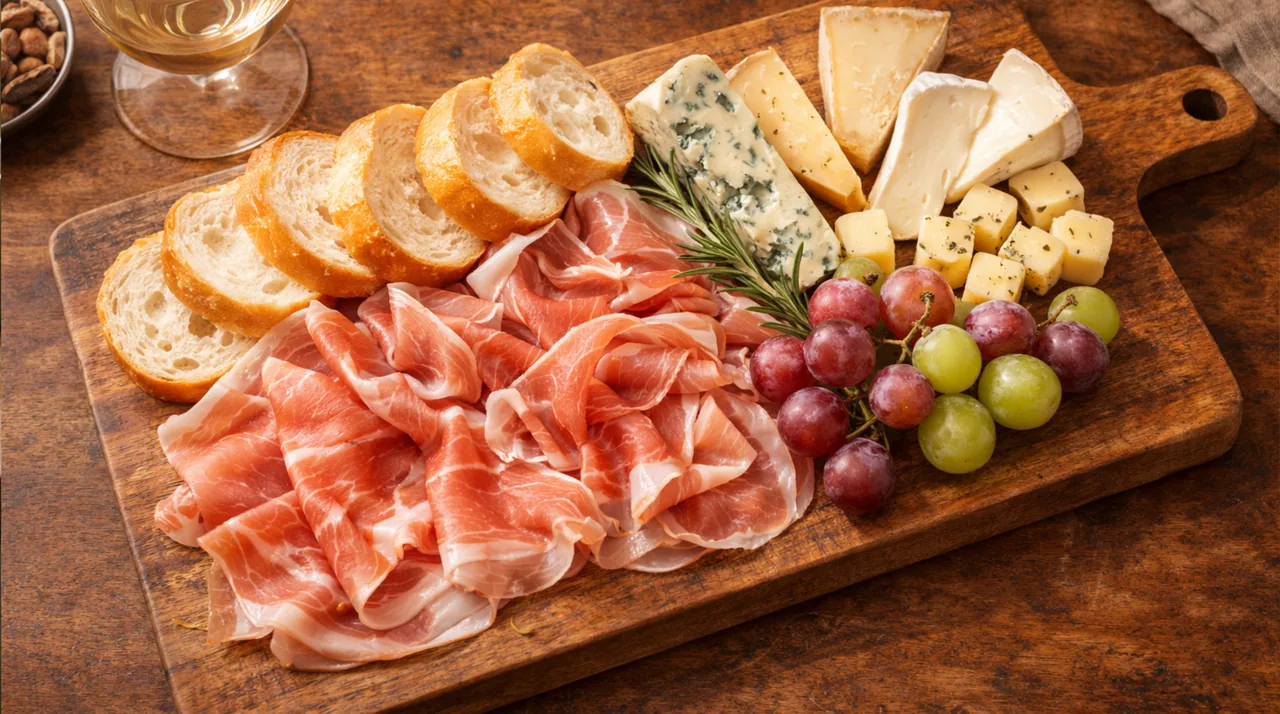
Ham, Cheese, and Bread — Bar-Style at Home
Pick up some charcuterie, cheese, and a baguette.
Slice and arrange everything on the board, then set it in the center of the table — done.
Fewer dishes to wash, and the warm tones of the wood make everything on it look better.
Your dining table instantly has the atmosphere of a small European wine bar.
Perfect for a home gathering or any night when you want to slow down and enjoy a drink.
See Japanese Branded Pork & Ham — perfect on a cutting board ›
5. How to Care for a Wooden Cutting Board
"Wooden boards seem like too much work" — this is the objection that keeps people with plastic. In reality, three simple habits are all it takes to prevent blackening and mold indefinitely.
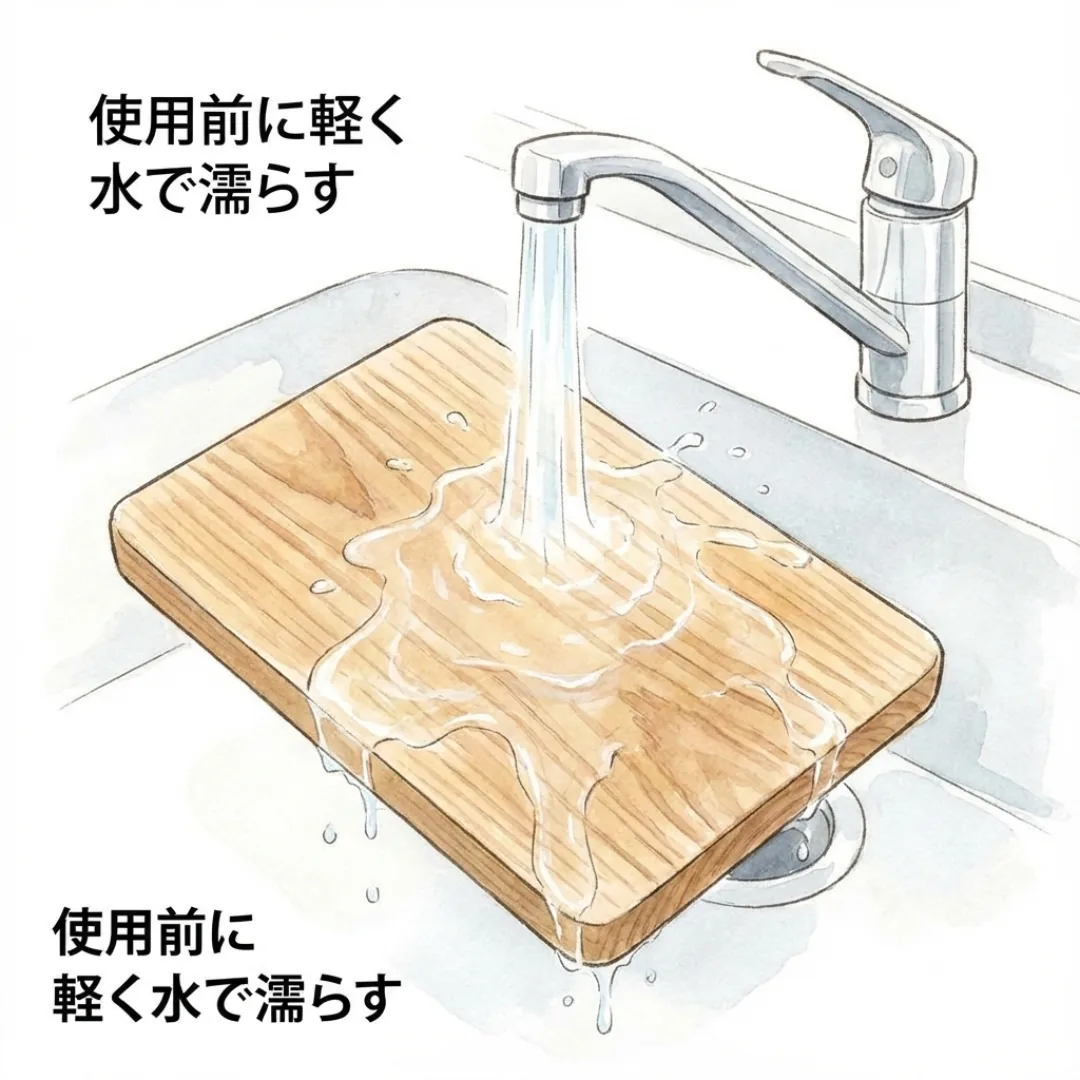
① Always wet the board before use
Placing food on a dry board lets meat juices and vegetable pigments soak straight into the wood grain.
A quick rinse under the tap and a wipe with a cloth before you start creates a water barrier that keeps stains
on the surface where you can wash them off.
② Use a scrub brush, not a sponge
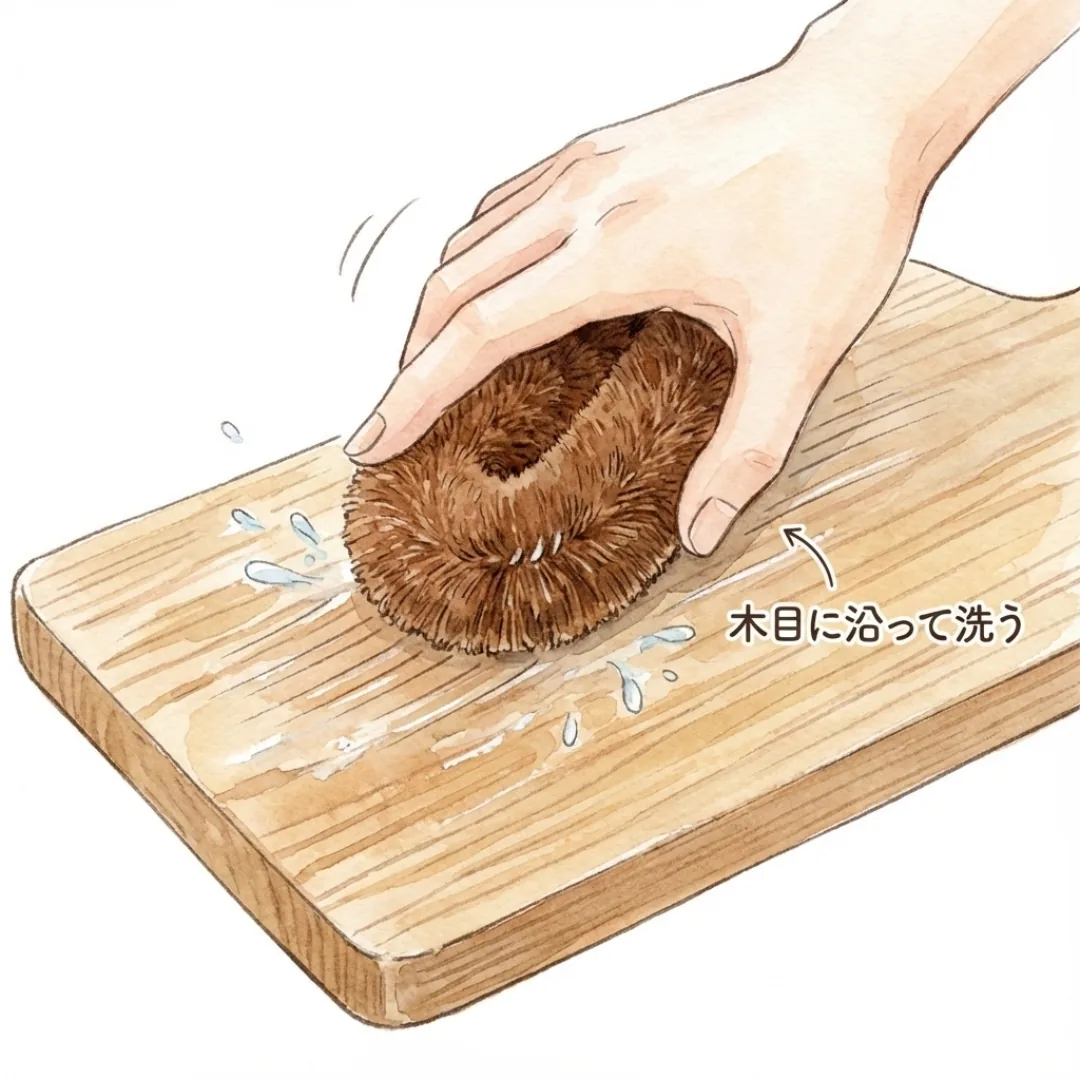
A scrub brush (tawashi) reaches into the grain far better than a soft sponge.
Scrub along the grain with water. Use dish soap only when there's significant grease.
Finishing with a pour of boiling water both sterilizes and helps the board dry faster.
③ Stand it upright so the grain runs vertically
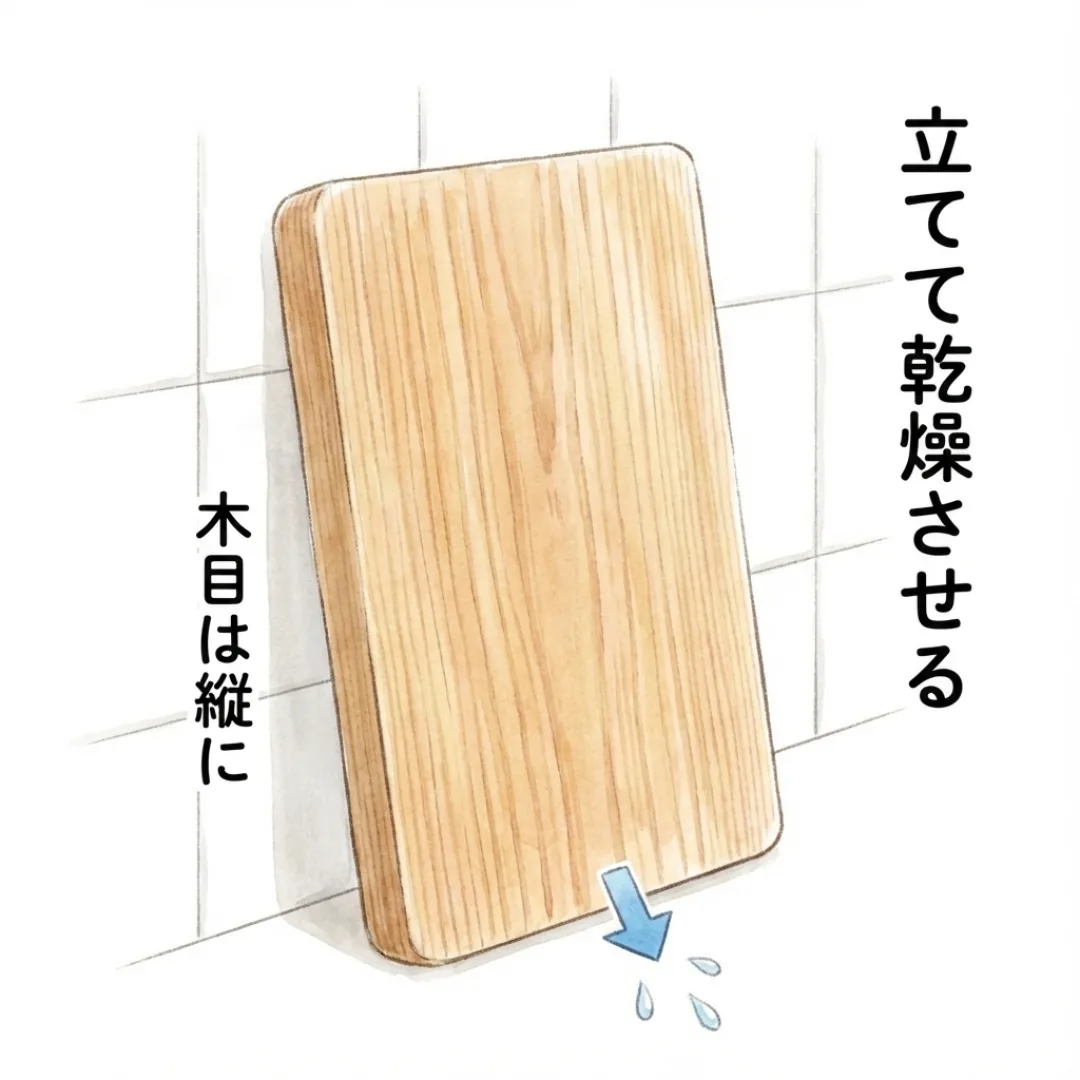
This is the most important step. After washing, stand the board on its edge so the grain runs top-to-bottom.
Water travels through wood along the grain, so with the grain vertical, it flows straight down and out.
The board dries much faster than lying flat, and the bottom edge — the part most prone to blackening — stays
dry.
6. If You're Upgrading the Board, Upgrade the Knife Too
Now that you have a great cutting board, it deserves the right partner: a quality Japanese knife.
With a ginkgo board absorbing the impact, you can use even the most delicate Japanese single-bevel blades without
fear of chipping the edge.
7. Frequently Asked Questions
The surface is darkening. What should I do?
When years of use leave dark patches or noticeable grooves, the answer is re-surfacing — having a thin layer planed off by a woodworker or the original maker. The board comes back looking and feeling new. Many makers and local woodworkers offer this service; it's one of the key reasons good ginkgo boards are described as 20- or 30-year tools.
Should I oil it with olive oil?
Yes — oiling once a month or so prevents the wood from drying out and cracking. A drying oil is ideal, but olive oil or perilla (egoma) oil work fine for home use. Apply a thin coat with a cloth and let it absorb. The signal that it's time to oil: when the surface starts to look dry and whitish.
Can I use bleach to sanitize it?
Avoid chlorine bleach (including spray-type kitchen bleach) — it damages wood fibers and causes discoloration.
For sanitizing, pour boiling water over the surface, or scrub with coarse salt and lemon juice. Both are effective
and gentle on the wood.
Can I put it in the dishwasher?
No — wooden cutting boards are not dishwasher-safe.
The high-temperature steam and rapid drying cycle will cause the wood to warp and crack.
Hand-wash with a scrub brush, then stand it upright in a ventilated spot to dry. That's all it needs.
Mold appeared on the board. What now?
For surface mold, scrub vigorously with coarse salt and lemon juice, then pour boiling water over it. For mold that has penetrated deeper, scrub with cleanser and a metal brush to remove the affected layer, let it dry thoroughly, then apply oil. Long-term prevention is straightforward: wash promptly after use and dry it completely. Never leave it wet.
Which is actually more hygienic — wood or plastic?
The "plastic is cleaner" assumption doesn't hold up to scrutiny. Research has shown that well-worn plastic
boards can actually harbor more bacteria in their scratches than wooden boards maintained properly.
Ginkgo wood in particular contains natural compounds (including flavonoids) with antibacterial and anti-rot
properties.
With the right daily care, a wooden board is fully hygienic.
What matters more than material is the habit: wash it immediately, dry it completely.
8. Final Thoughts: The Joy of a Tool That Gets Better With Age
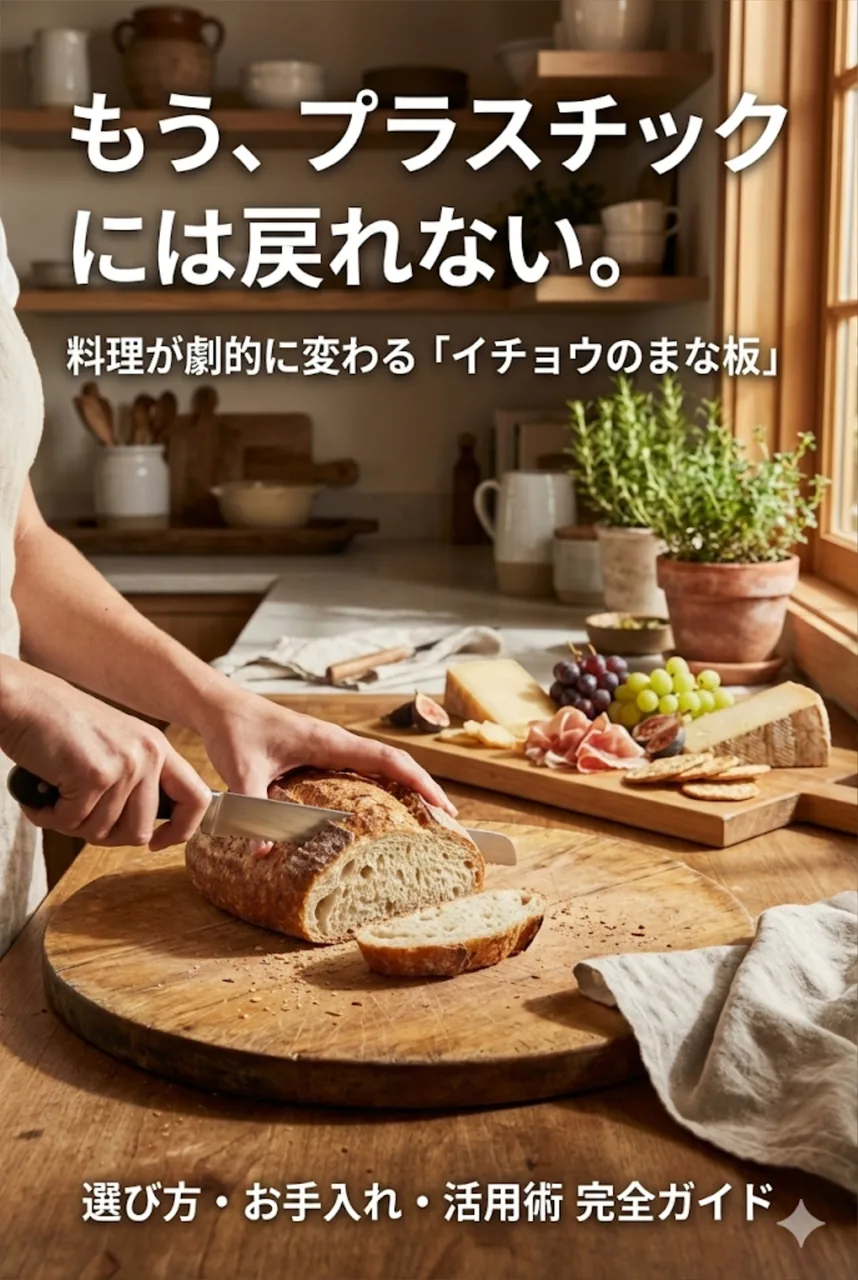
It's just a cutting board — until it isn't.
"Cutting" is the foundation of cooking. Change how that feels, and every session in the kitchen changes with
it.
Rather than treating a board as something to discard and replace, there's a different way to think about it: a
tool you tend, and that tends you back.
The quiet "tok tok" as the knife meets the ginkgo surface is one of the small sounds that make cooking feel like
it should.
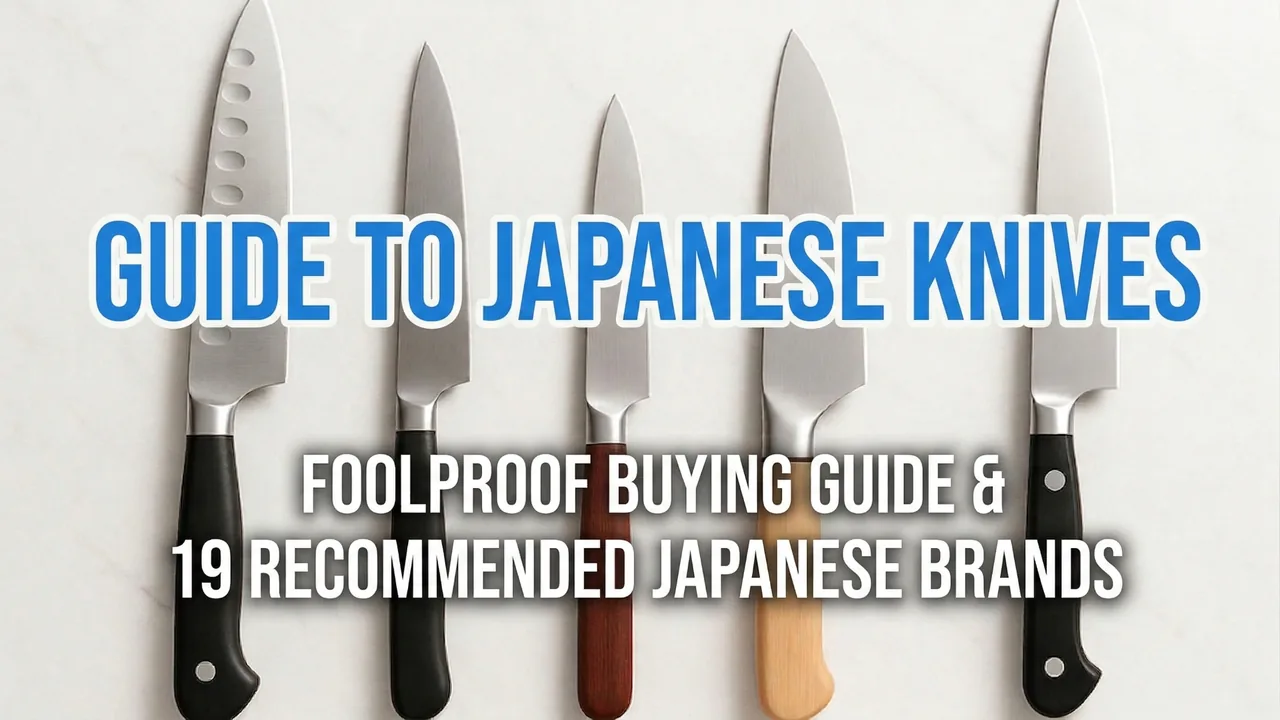
The Definitive Japanese Kitchen Knife Guide — How to Choose and Top Japanese Brands
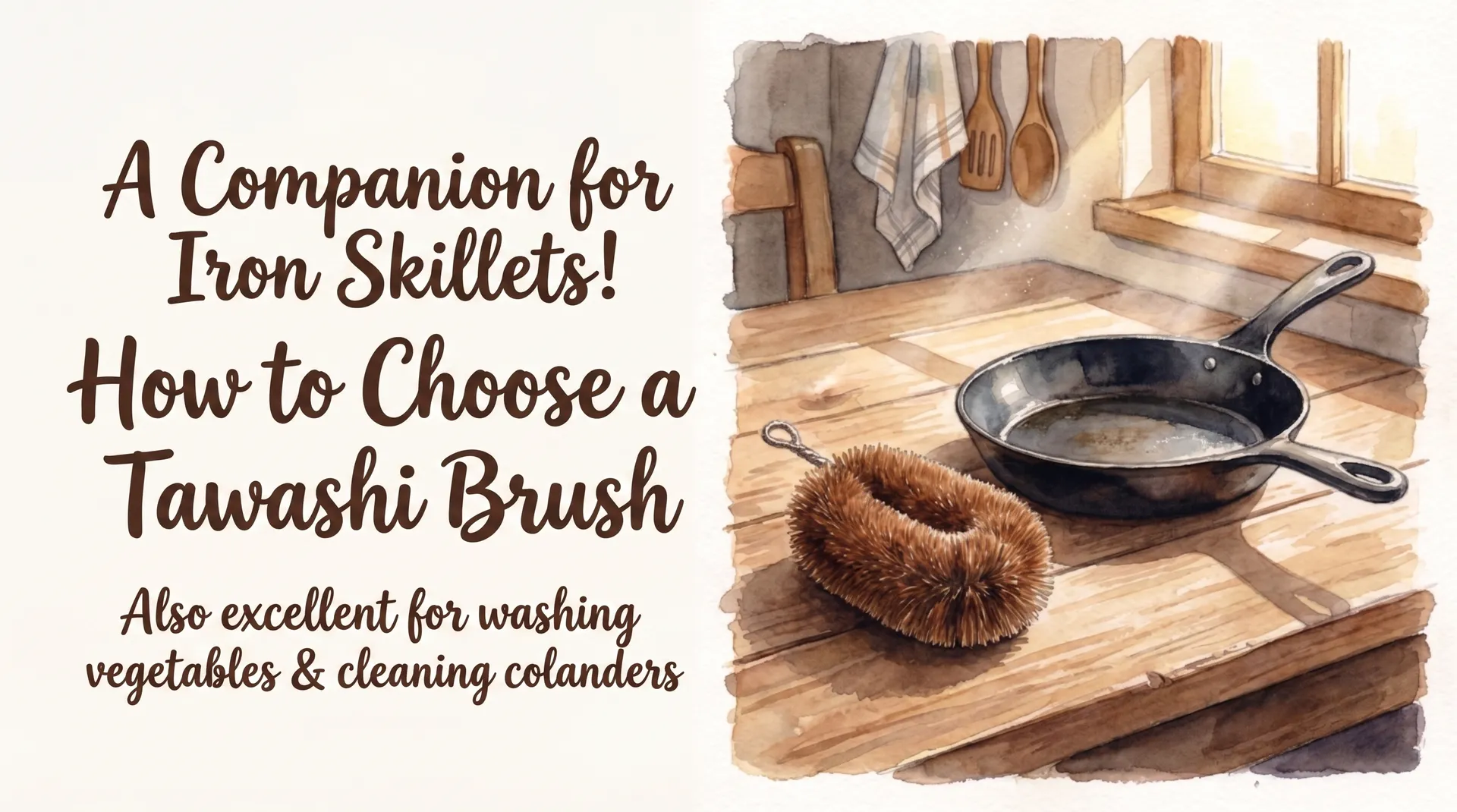
Kamenoko Tawashi — Japan's Century-Old Scrub Brush, Complete Guide