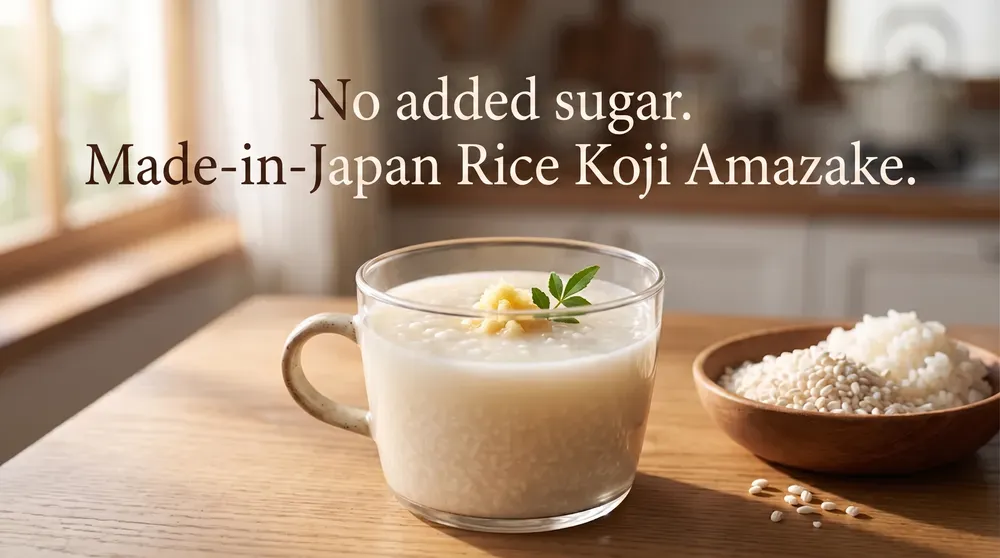
Two completely different drinks are sold under the name amazake, and only one of
them is alcohol-free.
Koji amazake is rice and rice koji, nothing else. No alcohol, no added sugar — the
sweetness comes from enzymes breaking the rice starch down into glucose while it ferments.
Sake-lees amazake is made from the pressed residue of sake brewing. It
contains alcohol, usually under 1%, and sugar has to be added because the lees are
not sweet on their own. Both are labelled "amazake" in English, and you can only tell them
apart by reading the ingredients.
Quick Reference: Which One Is in the Bottle
| Koji amazake | Sake-lees amazake | |
|---|---|---|
| Made from | Rice and rice koji | Sake lees (sake kasu) |
| Alcohol | None | Yes — usually under 1% |
| Added sugar | None needed | Yes — the lees are not sweet |
| Taste | Clean, gently sweet, faintly grainy | Stronger, sake-like aroma |
| Suitable for | Children, pregnancy, drivers, halal | ⚠ None of those |
| The ingredients list settles it in one line. "Rice, rice koji" is the non-alcoholic one. Anything mentioning sake kasu or lees is not. | ||
⚠ The Two Types, and Who Should Avoid One
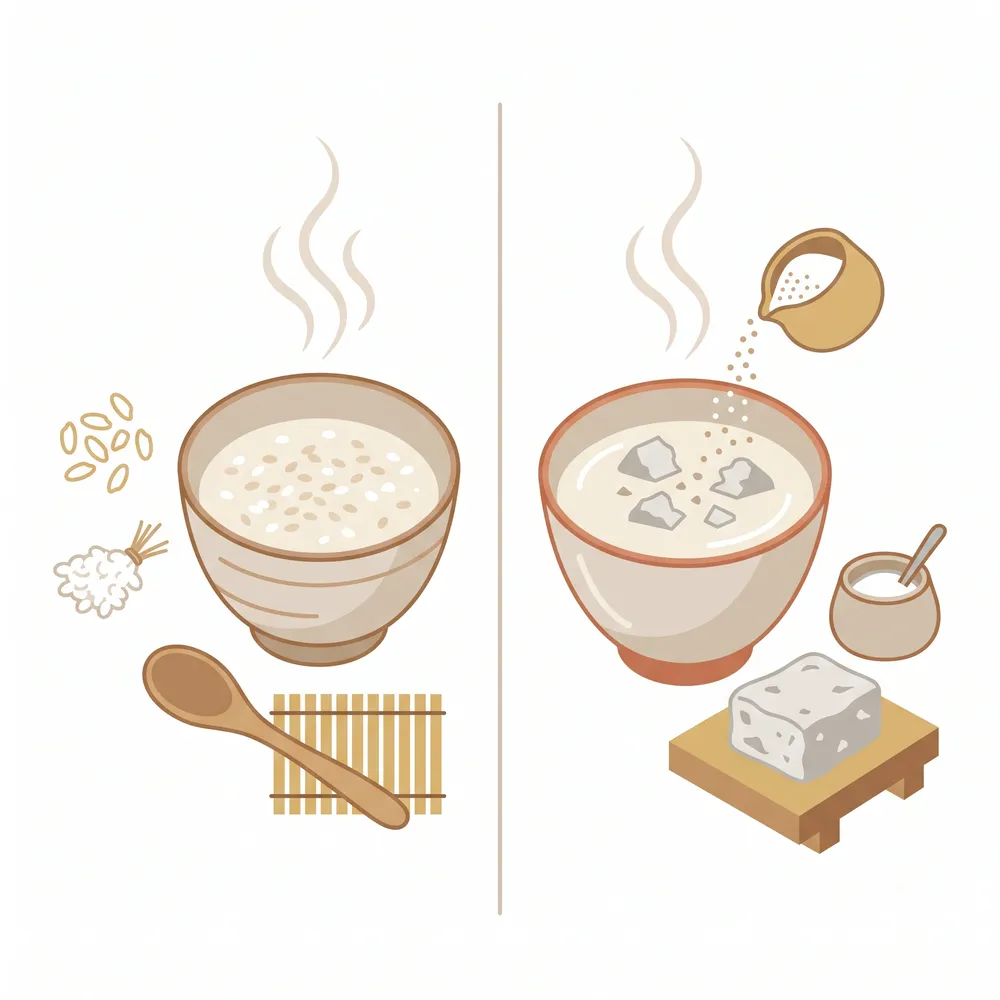
Koji amazake is made by holding rice and rice koji at a warm temperature — not hot enough for yeast to work — so the enzymes convert starch to sugar without any alcoholic fermentation happening at all. The finished drink contains no alcohol whatsoever.
Sake-lees amazake starts from a by-product of brewing. When sake is pressed from its mash, what is left behind is sake kasu — the lees. Those lees still contain alcohol, and they are not sweet, so sugar is added to make a drinkable amazake from them.
The alcohol content of sake-lees amazake is normally below 1%, which sounds
negligible and is not for everybody.
Sources agree it is safer for children, pregnant and breastfeeding women, Muslims and
anyone intolerant to alcohol not to choose the sake-lees version. Drivers in countries
with low or zero blood-alcohol limits should note it too.
Koji amazake carries none of those considerations. It is the one served to
children at shrines at New Year.
How to tell from a bottle
- "Rice, rice koji" and nothing else — the non-alcoholic type.
- "Sake lees" or "sake kasu" anywhere in the ingredients — the alcoholic type.
- Added sugar in the list is a strong hint it is the lees version, since koji amazake does not need any.
- "Non-alcoholic" printed on the front — most exporters of koji amazake say so explicitly, because they know this confusion exists.
Sweet Without Sugar: What the Enzymes Do
Koji amazake is properly sweet — sweeter than most people expect — with no sugar in it. That surprises people, and the explanation is straightforward.
Kōji is rice that has been inoculated with a mould, Aspergillus oryzae, and allowed to grow. As it grows it produces enzymes, and those enzymes are the entire point.
They break the rice starch down into glucose, and they break rice protein down into amino acids. The sweetness you taste was in the rice all along, locked up as starch — the koji simply takes it apart into something your tongue registers as sweet.
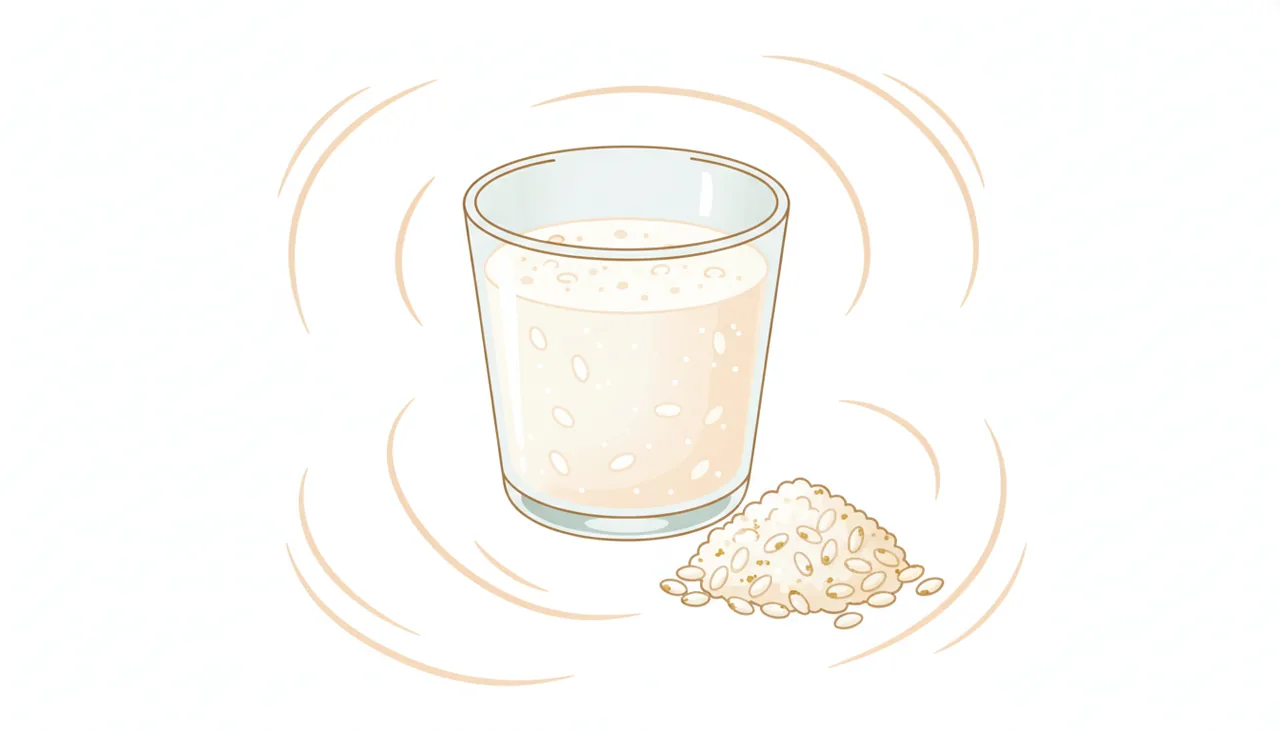
This is also why the temperature matters. Koji amazake is held warm — warm
enough for the enzymes to work, but not in a state where yeast would take over and start turning
that glucose into alcohol.
Sake is the same reaction allowed to continue. Amazake is, in effect, the
brewing process stopped at the sweet stage — which is why the two share a mould, a raw material,
and a name that contains the word for sake.
Why Japanese — The Same Mould as Miso and Sake
If you have followed food writing over the last decade you already know koji — it has become a fixture in Western professional kitchens, used for curing meat, building umami and accelerating ferments.
What is less widely known is that it is the foundation of almost everything in the Japanese pantry. Miso, soy sauce, mirin, sake, rice vinegar — all of them start with the same mould growing on grain. Japan's national fungus is doing most of the work in a Japanese kitchen.
Amazake is the simplest thing you can make with it. Rice, koji, warmth, time —
no salt, no yeast, no pressing, no ageing.
Which makes it a good way to actually taste what koji does, rather than tasting
it through a year of miso fermentation or a brewing process. It is koji, undisguised.
It is also very old. Amazake appears in Japanese records long before sake took its modern form, and it is still served free at shrines over New Year — often to children, which tells you which type is being poured.
Summer, not winter, is the traditional season. It is a seasonal word for summer in Japanese poetry, and was drunk cold as a hot-weather drink long before it became a winter comfort. Both work; the cold version is the older idea.
What to Buy
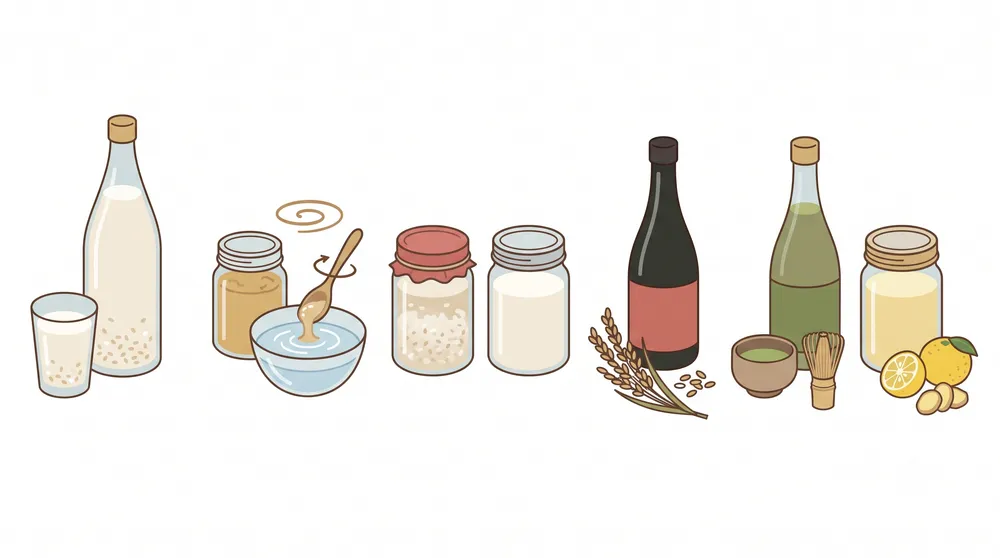
Ready-to-drink koji amazake — start here
A small bottle that states "non-alcoholic" and "no added sugar" on the front
— exporters of the koji type say so explicitly, precisely because of the confusion this
article opens with.
Brown-rice (genmai) versions exist too and are earthier and less
clean-tasting. Try white rice first; the brown-rice one is a different
drink rather than an upgrade.
- Ingredients
- Rice and rice koji
- Alcohol
- None
- Sugar
- None added
- Size
- Around 200 ml — one serving
A litre carton, if you know you like it
Straight-to-drink, 100% domestic rice, no sugar added, made in Japan — the
format Japanese households actually buy. Far better value than single
bottles once you have established that you want it in the fridge.
Concentrated versions also exist and are cheaper still per serving: you
dilute them with water, milk or soy milk to taste, which also lets you decide how sweet it
ends up.
- Format
- 1 litre, ready to drink
- Rice
- 100% domestic Japanese
- Sugar
- None added
- Once opened
- Refrigerate; finish within days
We are not linking sake-lees amazake. It is a genuinely good drink with a
stronger, more distinctly sake-like character, and traditional in winter.
But it contains alcohol, its international distribution is unclear, and it may be
handled as an alcoholic product depending on where you are. If you want it, buy it in
Japan where the labelling is unambiguous.
Drinking It, Hot and Cold
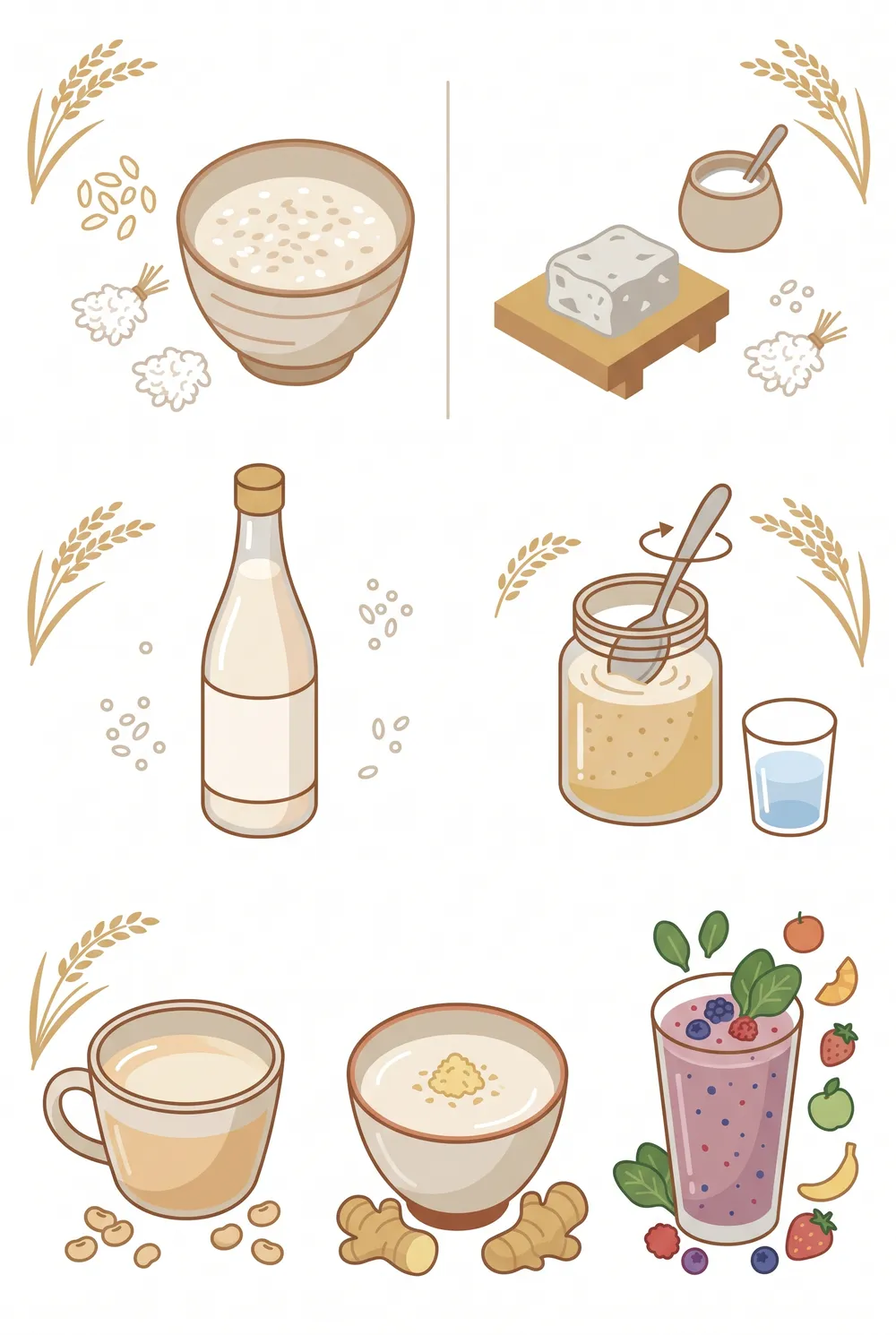
- Warm with a scrap of grated ginger is the standard winter serving, and the ginger cuts the sweetness noticeably. Do not boil it — heat it gently, since hard boiling dulls the flavour.
- Cold and undiluted over ice is the older, summer way, and it is where the clean rice character shows best.
- Blended with milk or soy milk makes something close to a rice horchata, and it is the version most likely to convert somebody who found it too sweet neat.
- As a sweetener. It works in smoothies, in dressings and in baking, replacing sugar with something that brings a little body as well.
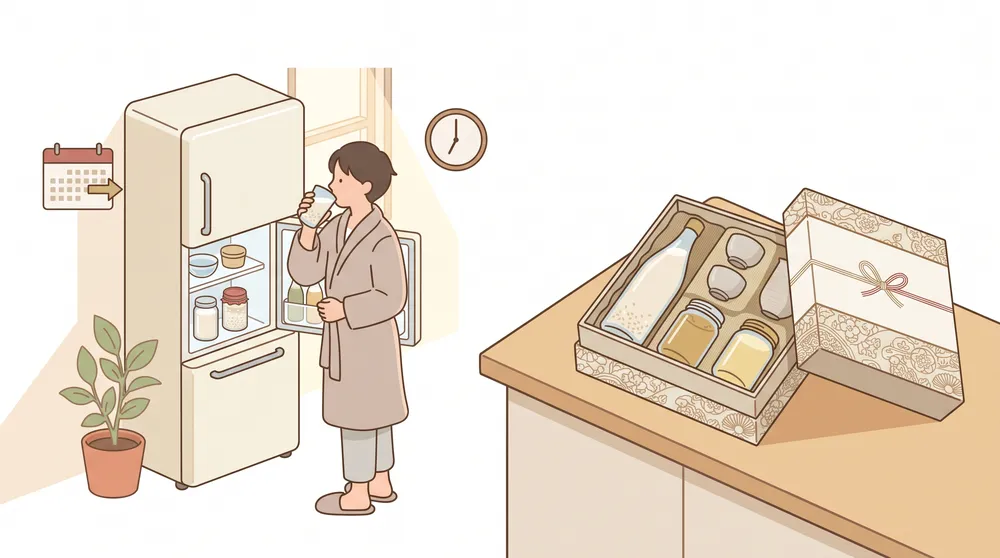
- Refrigerate after opening and finish it within a few days. It is a live product with no preservatives, and it will not sit indefinitely.
Expect a texture. Koji amazake is not a clear drink — there are fine rice
particles in it, and better ones are noticeably thick.
Shake the bottle. It separates, and the good part settles at the bottom.
Frequently Asked Questions
Does amazake contain alcohol?
It depends entirely on which type you have. Koji amazake — rice and rice koji —
contains none. Sake-lees amazake contains alcohol, normally under 1%.
Read the ingredients. If sake kasu or lees appears, it is the alcoholic
one.
Can children or pregnant women drink it?
Koji amazake, yes — it is alcohol-free and is traditionally served to children
at shrines at New Year.
Sake-lees amazake, no. Sources are consistent that children, pregnant and
breastfeeding women, Muslims and anyone avoiding alcohol should not choose the lees version.
Why is it sweet if there is no sugar in it?
Because koji enzymes break the rice starch down into glucose. The sweetness was
in the rice all along, stored as starch — fermentation simply takes it apart.
The same enzymes break rice protein into amino acids, which is where its
savoury depth comes from.
What is koji, exactly?
Steamed rice that has been inoculated with a mould, Aspergillus oryzae, and
allowed to grow. The mould produces the enzymes that do the work.
It is the same organism behind miso, soy sauce, mirin, rice vinegar and sake —
amazake is simply the most direct way to taste what it does.
Is it a summer or a winter drink?
Historically summer, drunk cold. It is a seasonal marker for summer in Japanese
poetry, and the chilled version is the older tradition.
Hot amazake with ginger is now the more familiar image, largely through New Year
shrine visits. Both are correct.
How long does it keep?
Unopened, according to the date on the pack — often months for shelf-stable cartons.
Once opened, refrigerate and drink it within a few days. There are no
preservatives in a plain rice-and-koji product, which is the trade for a two-ingredient list.
Final Thoughts: Read the Two Ingredients
One word covers two drinks, and the difference is whether there is alcohol in your glass. That is worth thirty seconds with an ingredients list.
The one you probably want is rice, koji, and nothing else — sweet because enzymes took the rice apart, not because anyone added sugar.
Buy one small bottle cold, drink it over ice, and see what you think. If you already cook with koji, this is the shortest possible route to tasting it on its own.
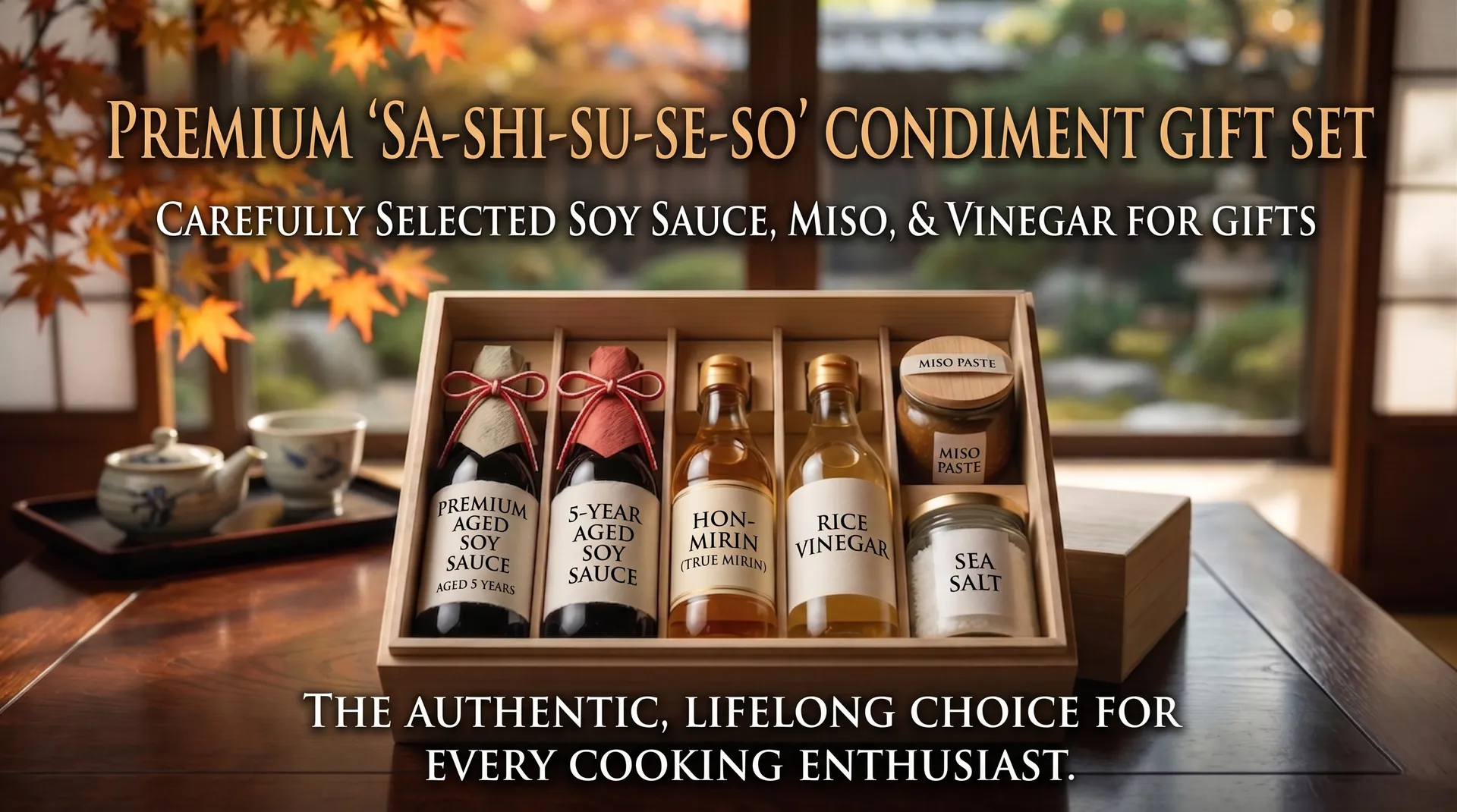
Japanese Seasoning Gifts: Premium Soy Sauce, Miso & Vinegar
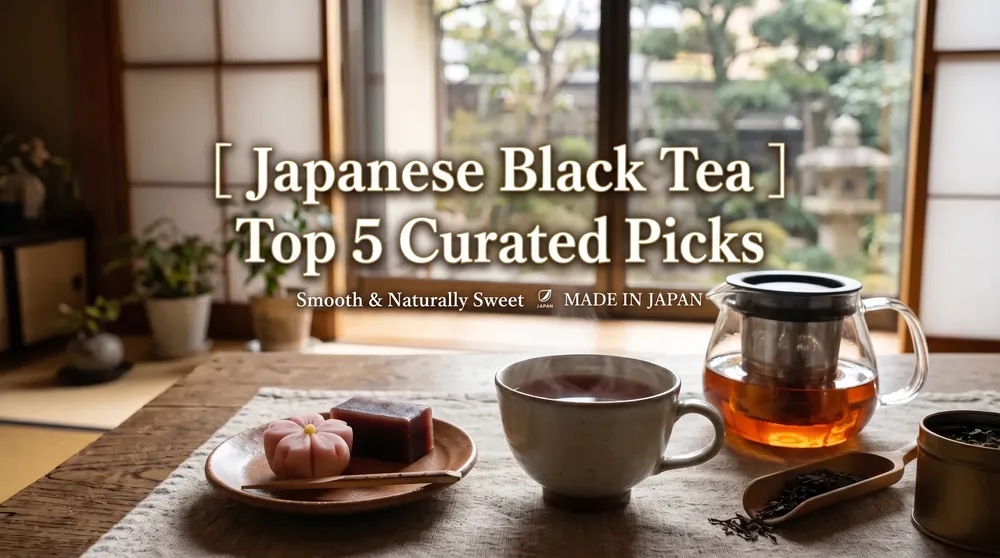
Japanese Black Tea: Wakoucha, and Don't Add Milk