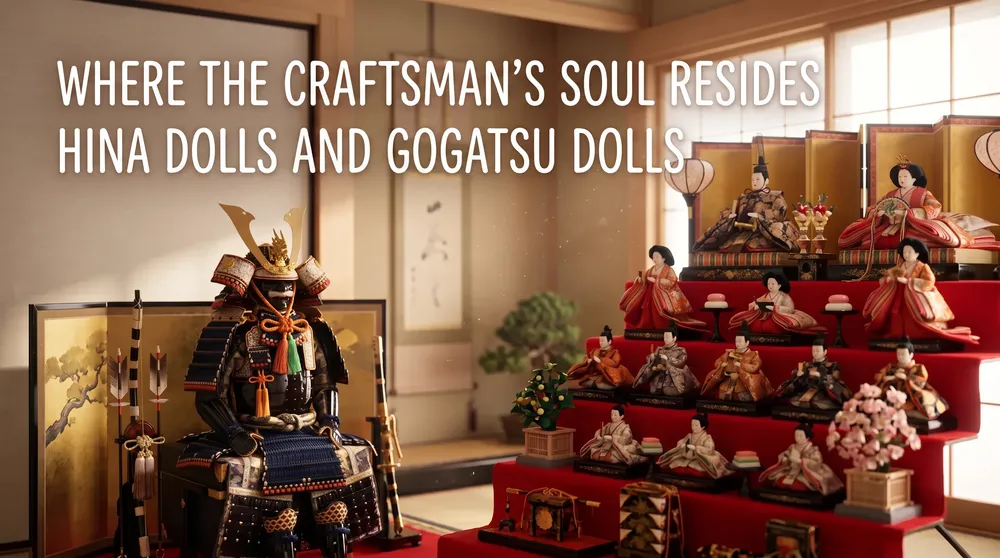
You have probably read that if a family leaves its hina dolls on display after 3 March,
the daughter will marry late. It is the single most repeated fact about Hinamatsuri in
English.
It is also a twentieth-century invention. The saying dates from the Shōwa era and
was made up to get children into the habit of tidying up after themselves — a piece of practical
parenting, dressed as an omen.
There is a real reason to pack them away promptly, and it is better than the story.
Japan's rainy season follows shortly after, and these dolls are silk, paper and painted gesso.
Humidity is what actually ruins them.
Quick Reference: Two Festivals, Two Displays
| Hina-ningyō | Gogatsu-ningyō | |
|---|---|---|
| Date | 3 March | 5 May |
| What it is | An imperial court in miniature | Armour — a helmet or a full suit |
| Put up | Mid-February | Early to mid-April |
| Put away | Promptly — before the rains | Less urgent, but before June |
| Compact version | Kimekomi, or the couple alone | Helmet only |
| Neither is a toy. They are display objects for one date in the year, and in the traditional understanding they take on misfortune on a child's behalf. | ||
The Superstition, and the Real Reason
Hinamatsuri itself is genuinely old — the observance traces back over a thousand years to the Heian period, and to hitogata, simple paper figures onto which misfortune was transferred before being floated away downriver.
The marriage superstition is not. It appeared in the Shōwa era, and its purpose was straightforwardly domestic: to give children a reason to help pack the display away instead of leaving it standing for a month.
It worked, which is why it spread — and it is worth saying that this is a
perfectly sensible piece of parenting rather than something to be smug about.
But the practical reason underneath it is the one that matters if you own a set.
Japan's rainy season arrives not long after March, and hina dolls are silk, paper, hair and
painted gesso over a wood or composition core. Damp is what destroys them.
So the operative rule is: pick a dry day and pack them then. Not because of a daughter's marriage prospects, but because sealing damp into a storage box is the single most reliable way to find mould on a doll's face next February.
Which also means the rule barely applies outside Japan. If you live somewhere with a dry spring, there is no urgency at all — the deadline was always about weather, and your weather is different.
⚠ Which Side He Sits On, and Why 1915 Changed It
There is no single correct arrangement, and the split runs between Tokyo and Kyoto. This confuses people constantly, and the reason is a specific date.
| Style | Emperor sits | Follows |
|---|---|---|
| Kyoto (Kyō-bina) | On your right as you face the display | The arrangement used before 1915 |
| Kantō / Tokyo | On your left as you face the display | Western diplomatic protocol |
⚠ "Left" here means the doll's left, not yours
In the Japanese tradition the left side is the senior side, and at the imperial
court the Emperor's seat was to the left of the Empress.
But that is his left, which is your right when you are looking at him. This is
where almost every explanation goes wrong.
Kyoto keeps the old arrangement — so he is on your right.
Kantō adopted the Western convention — so he is on your left.
The date is 1915
Emperor Taishō's enthronement ceremony in 1915 followed Western protocol, in which the senior figure stands to the viewer's left. Tokyo followed the new imperial practice; Kyoto, the old capital, kept doing what it had always done.
Neither is wrong. A Kyoto-made set will usually be arranged the Kyoto way, and a Tokyo-made set the Tokyo way, and the sensible thing is to arrange yours the way its maker intended rather than trying to pick a winner.
Why Japanese — Kimekomi, and the Face
There are two ways to dress a Japanese festival doll.
The dressed type wears actual miniature garments, layered and tied over a wire-and-straw armature. It is spectacular and it is bulky, and the clothing can shift over decades.
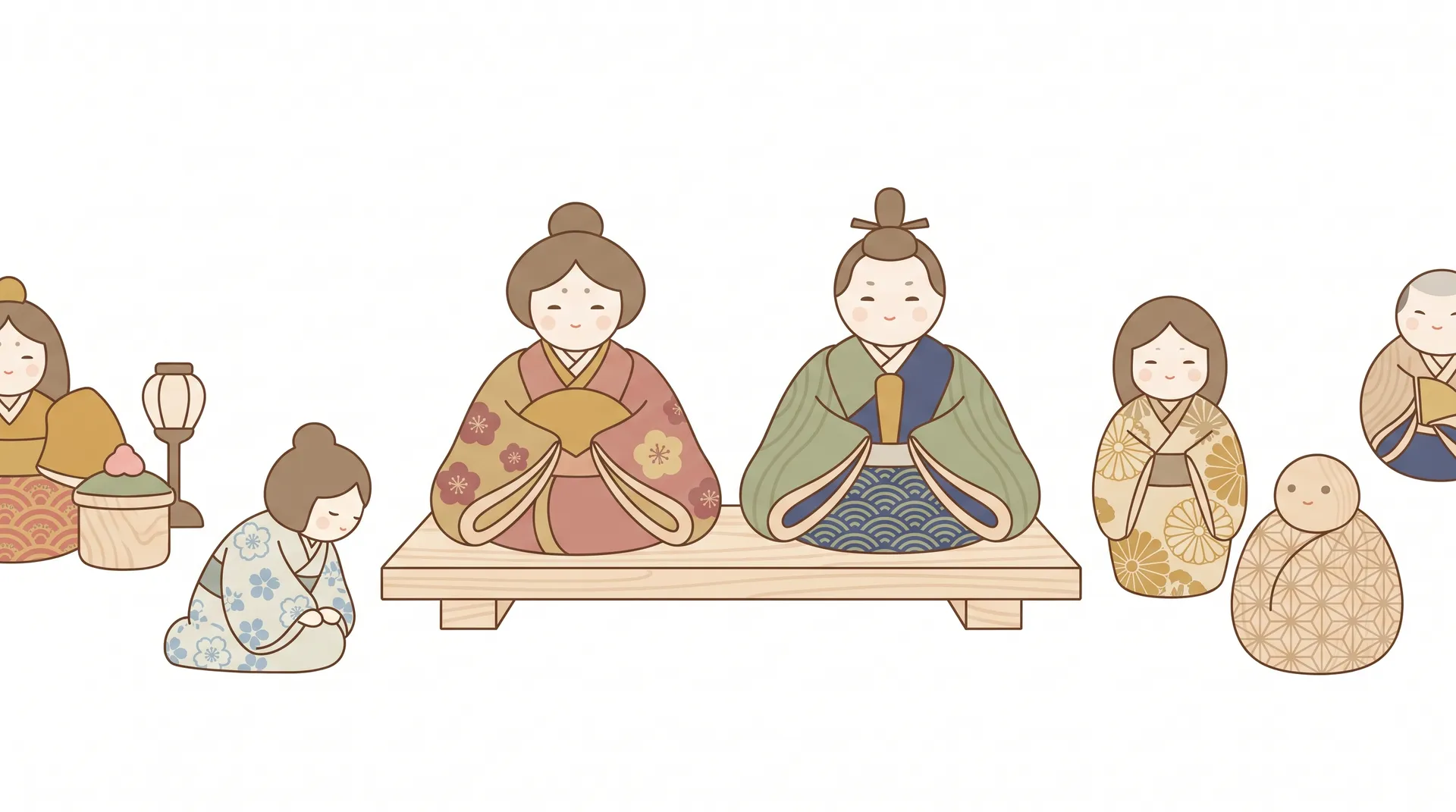
Kimekomi works completely differently. The body is carved from wood or moulded, grooves are cut into it, and the edges of the fabric are tucked — decisively pressed — into those grooves. The cloth is fixed to the form permanently.
The result is smaller, more robust, and holds its shape indefinitely — which is why kimekomi dolls are what Japanese apartment-dwellers increasingly buy, and why they are the sensible choice abroad.
And the face is where the money goes
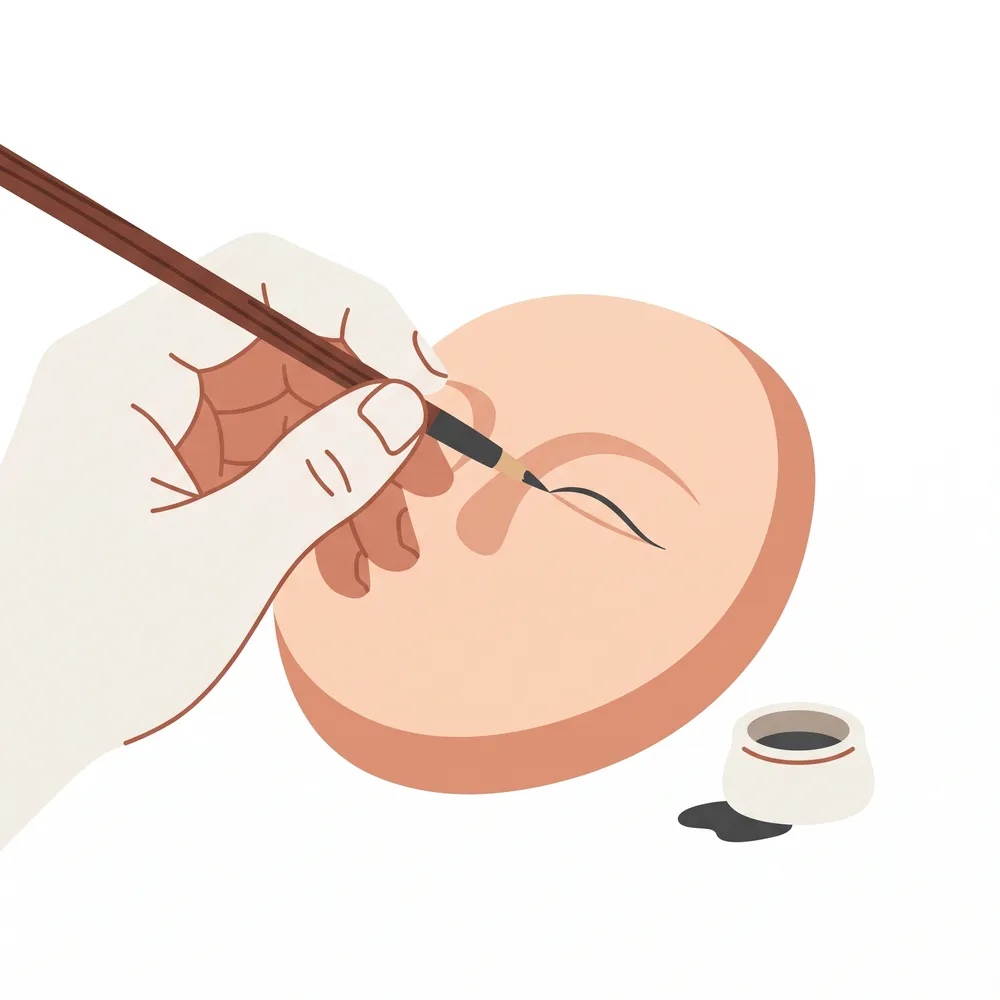
One of Japan's major doll houses trades on the phrase "the face is everything", and it is not marketing. The head is made separately by a specialist — the kashira-shi — and it is what distinguishes a fifty-pound set from a fifteen-hundred-pound one.
Look at the eyes. Cheap dolls have printed or crudely painted eyes; good ones have eyes inserted from behind the face so that the eyelid has real thickness. Then look at the hairline, which on a good doll is individually set rather than moulded.
Everything else — the stand, the screen, the lanterns — can be replaced. The faces cannot, and they are what you will be looking at every February for thirty years.
May Dolls: Helmet or Full Armour
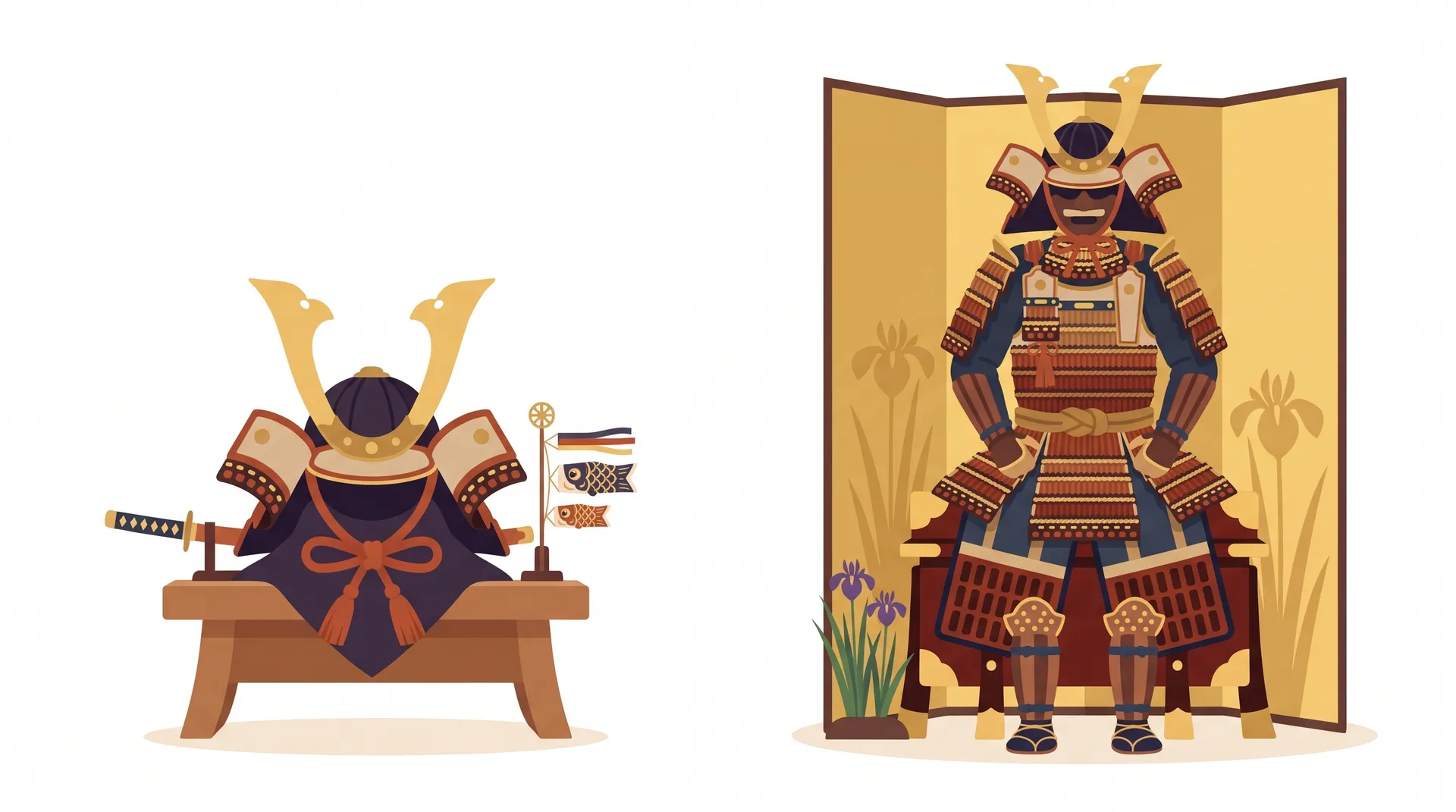
The 5 May display is armour rather than figures, and the choice is between two formats.
Kabuto-kazari — a helmet on a stand. Compact, dramatic, and by far the more common purchase now. The helmet is the piece with all the metalwork and lacing on it anyway, so you lose less than you might think.
Yoroi-kazari — a full suit in miniature. Helmet, cuirass, shoulder guards, the lot. Magnificent and large, and it needs a dedicated space rather than a shelf.
The meaning is protective rather than martial. Armour is displayed as a wish that the child be shielded from harm — the object is a prayer, not a celebration of fighting.
If you are buying one of the two, the helmet is the better object for a Western
home. It reads as a sculpture, it needs a single shelf, and the craftsmanship is
concentrated in it.
Carp streamers (koinobori) are the outdoor half of the same festival,
flown from poles — a completely different purchase and a much cheaper one.
What to Buy
Be realistic about scale
The seven-tier display everyone pictures is enormous — fifteen dolls plus
furniture, on a stand that fills a room and stores in several large boxes.
Almost nobody in Japan buys one now either.
The realistic purchase is the imperial couple alone — shinnō-kazari —
or a kimekomi set, often in a glass case or on a stand that doubles as its own storage box.
That is what to look for.
From a Tokyo doll house, with an English site
Japan's large doll houses maintain English pages and specifically list gifts intended
to go overseas — which is the sane place to start, because they will tell you the
dimensions and the storage arrangement before you commit.
Ask about the packed volume, not just the display size. A set that looks
modest on a stand can occupy a surprising amount of cupboard for eleven months of the year.
- Look for
- Storage-type stands (dolls pack into the base)
- Format
- Imperial couple, or kimekomi
- Check
- Whether it is arranged Kyoto or Kantō style
- Faces
- Inset eyes, set hairline
⚠ Marketplace listings for "hina dolls" are frequently souvenir figurines,
antique odd pieces, or single dolls separated from a broken set.
None of that is a problem if that is what you want — an old single doll can be
lovely. It is a problem if you thought you were buying a festival set, so read
the listing carefully and check the count.
Storage: The Thing That Actually Kills Them
- Pack on a dry day, and only when everything is completely dry. This is the entire rule. Sealing humidity into a box is what produces mould.
- Do not touch the faces with bare hands. Skin oils mark the finish and the mark develops over years. Use gloves, or the paper the maker supplied.
- Wrap each head in soft paper — tissue or the maker's own — and do not use newspaper, whose ink transfers.
- Use moth protection, but keep it away from the dolls themselves. Silk and hair are food for insects; the standard Japanese product for this is designed not to touch the item.
- ⚠ Never mix two types of mothball. Different active ingredients can react and stain fabric permanently — use one product only.
- Store somewhere with a stable temperature. A loft that swings from freezing to baking is the worst place in the house; a cupboard indoors is the best.
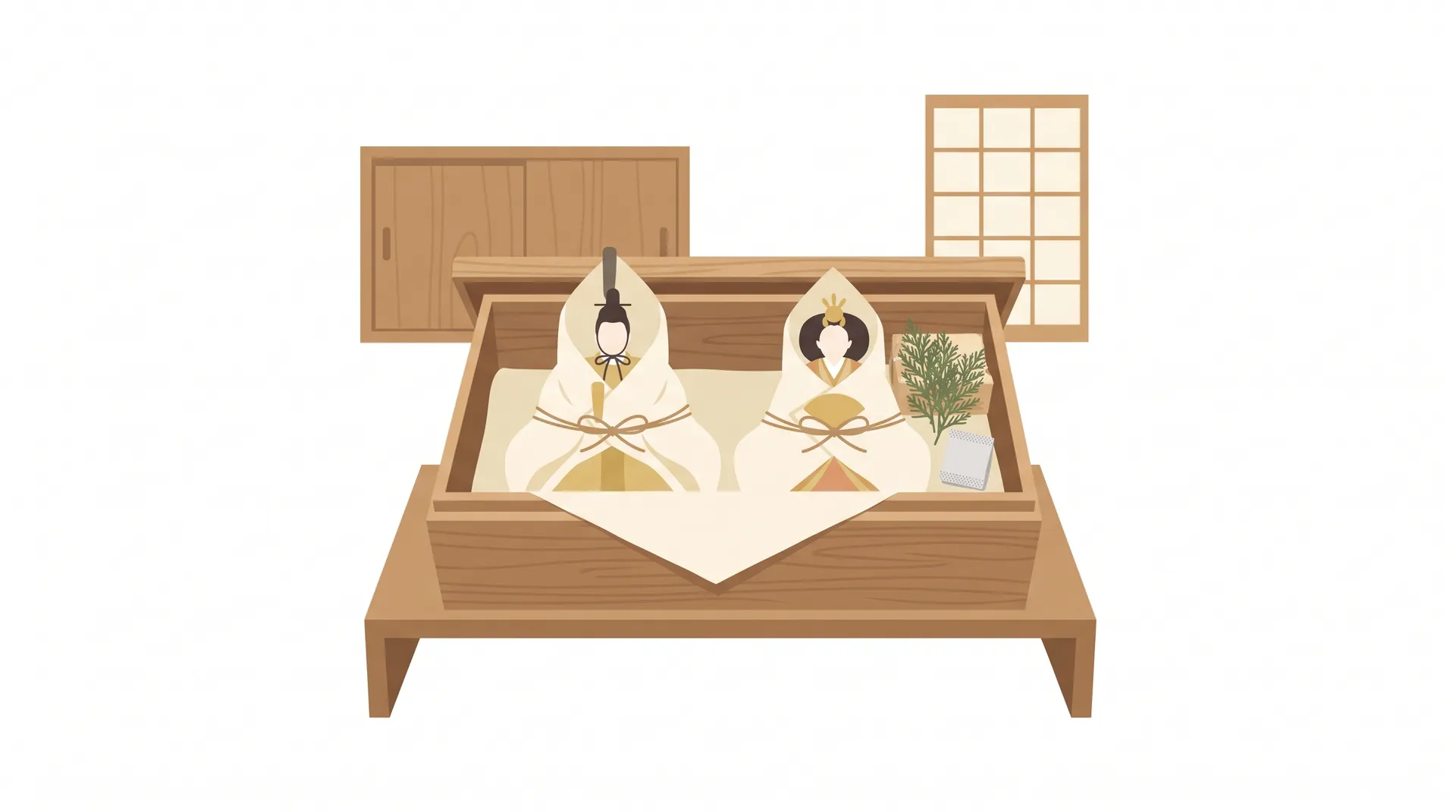
Air them once a year if you can — take them out on a dry autumn day, leave them
out of direct sun for a few hours, and repack.
This is the same practice used for kimono, and for the same reason: textiles
stored sealed for decades need to breathe occasionally.
Frequently Asked Questions
Will my daughter really marry late if I leave them up?
No. The saying dates from the Shōwa era and was invented to encourage children to
tidy up.
The real reason to pack them away promptly is humidity — Japan's rainy season
follows soon after, and damp is what damages silk, paper and painted faces. Outside Japan, follow
your own climate.
Which side does the emperor doll go on?
Kyoto style: on your right as you face the display. Kantō style: on your left.
The confusion is that the traditional rule refers to his left, not yours. Kyoto
preserves the pre-1915 court arrangement; Tokyo follows the Western protocol adopted at Emperor
Taishō's enthronement. Arrange yours the way its maker intended.
Can I hand my own dolls down to my child?
Traditionally each child has their own set, because the dolls are understood to
take on misfortune on that child's behalf — so a used set is thought to already carry someone
else's.
Many families do it anyway, often adding a new doll alongside the inherited ones.
It is a belief, not a rule, and nobody will police it.
Are they toys?
No — they are display objects, handled as little as possible. The faces mark
from skin oils and the costumes are fragile.
Cased sets exist precisely for households with small children or pets, and are
worth the extra if either applies.
What is a kimekomi doll?
One where the fabric is tucked into grooves carved in a solid body, rather than
dressed in miniature garments over an armature.
They are smaller, sturdier and hold their shape, which is why they suit
apartments — and why they are the sensible choice if you are buying from abroad.
Helmet or full armour for 5 May?
The helmet, for almost anyone buying one now. It carries most of the
craftsmanship, fits on a shelf, and stores in one box.
The full suit is magnificent and needs a dedicated space — and the meaning is
identical, since both are displayed as a wish that the child be protected.
Final Thoughts: A Deadline About Weather
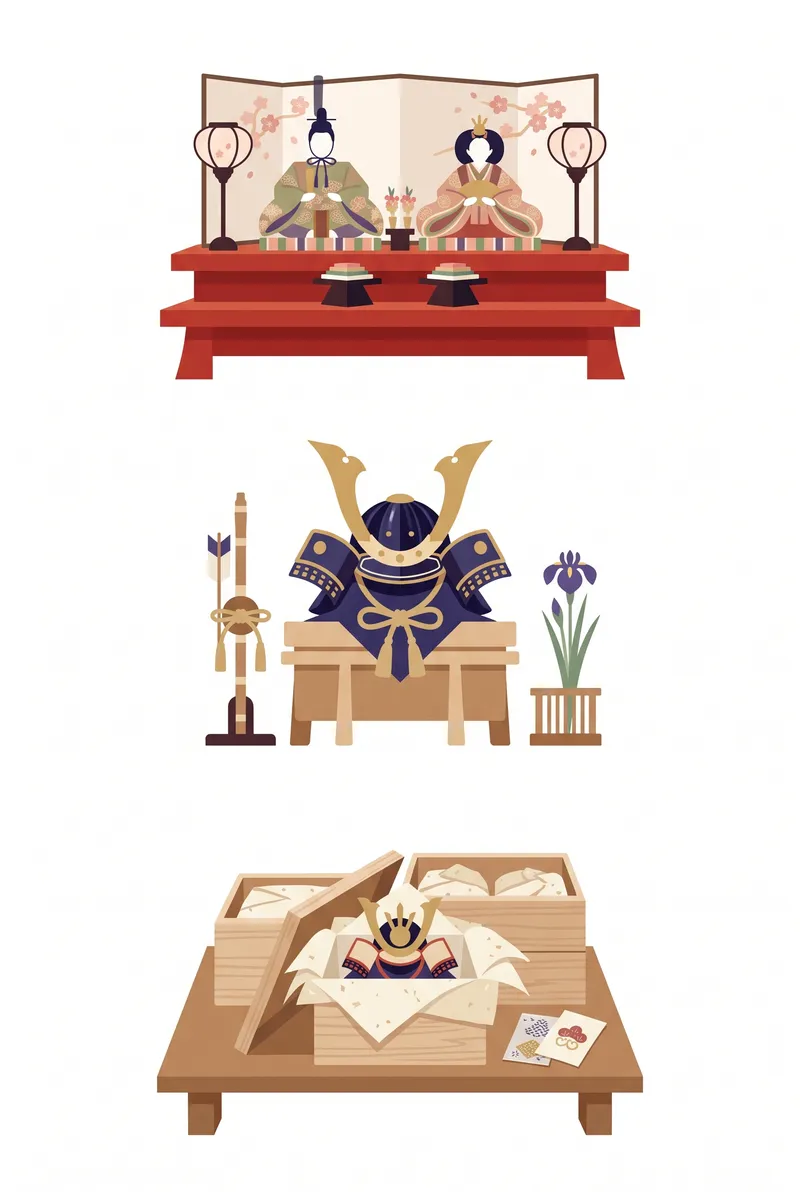
The most famous fact about hina dolls in English turns out to be a piece of twentieth-century parenting. The real deadline is about the rainy season, and it is a better reason.
Buy small — the couple alone, or kimekomi — and buy for the faces, because every other part of a set can be replaced and those cannot.
Then check which way round your set was made to sit. Kyoto puts him on your right, Tokyo on your left, and both have been correct since 1915.

Furoshiki: How to Wrap, Fold and Carry with Cloth
Juzu: How Japanese Prayer Beads Differ from Malas