
Japan spent a hundred years trying to become a black tea exporter. In 1874 the
Meiji government printed a manual on black tea manufacture and distributed it to growers in every
prefecture, because Europe and America bought black tea and Japan needed foreign currency.
It never worked, and then it collapsed. Japan produced 2,000 tons of black tea in
1969. Imports were liberalised in 1971. By 1975 the figure was three tons.
What has come back since the late 1990s is a different product entirely — small
scale, made from tea plants bred for green tea, and so low in tannin that the first thing to say
about it is this: do not put milk in it.
Quick Reference: How It Differs from Assam or Ceylon
| Wakoucha | Assam / Ceylon | |
|---|---|---|
| Astringency | Low | High |
| Sweetness | Noticeable, natural | Slight |
| Milk | No — nothing to cut | Traditional |
| Over-brewing | Forgiving | Turns bitter fast |
| With food | Works through a meal | Usually alongside cake |
| Same plant, different breeding. Japan's tea bushes were selected for mild green tea, so oxidising them makes a black tea with very little tannin in it. | ||
Why Milk Ruins It
If you grew up in Britain or Ireland, "black tea" and "milk" are effectively one word. There is a good reason for that, and it does not apply here.
Milk in tea is a solution to astringency. Assam and strong Ceylon teas are high
in tannins, which is what makes them grip and dry the mouth. Milk proteins bind to those tannins
and round the whole thing off. It is a genuine chemical fix for a genuine problem.
Wakoucha does not have the problem. Its astringency is low to begin with, and
what is left in its place is a soft natural sweetness. Add milk and you are not softening
anything — you are diluting the one characteristic that made it worth buying.
The same goes for sugar. A good wakoucha tastes faintly sweet on its own, and that sweetness is delicate enough that a spoonful of sugar erases it rather than amplifying it.
Drink it plain, hot or cold. If you find it thin without milk, brew it stronger — more leaf, not longer steeping. It does not turn bitter the way an Assam does, so you have room.
One exception, honestly stated: the black-tea-specific cultivars — chiefly
benifuuki — are stronger and more structured than the rest, and a heavily oxidised
benifuuki can take a little milk without disappearing.
Try it plain first anyway. If you are going to add milk to everything, you would
be better served by a good Assam at a third of the price.
Why Japanese — A Century of Failure, Then Six Years of Collapse
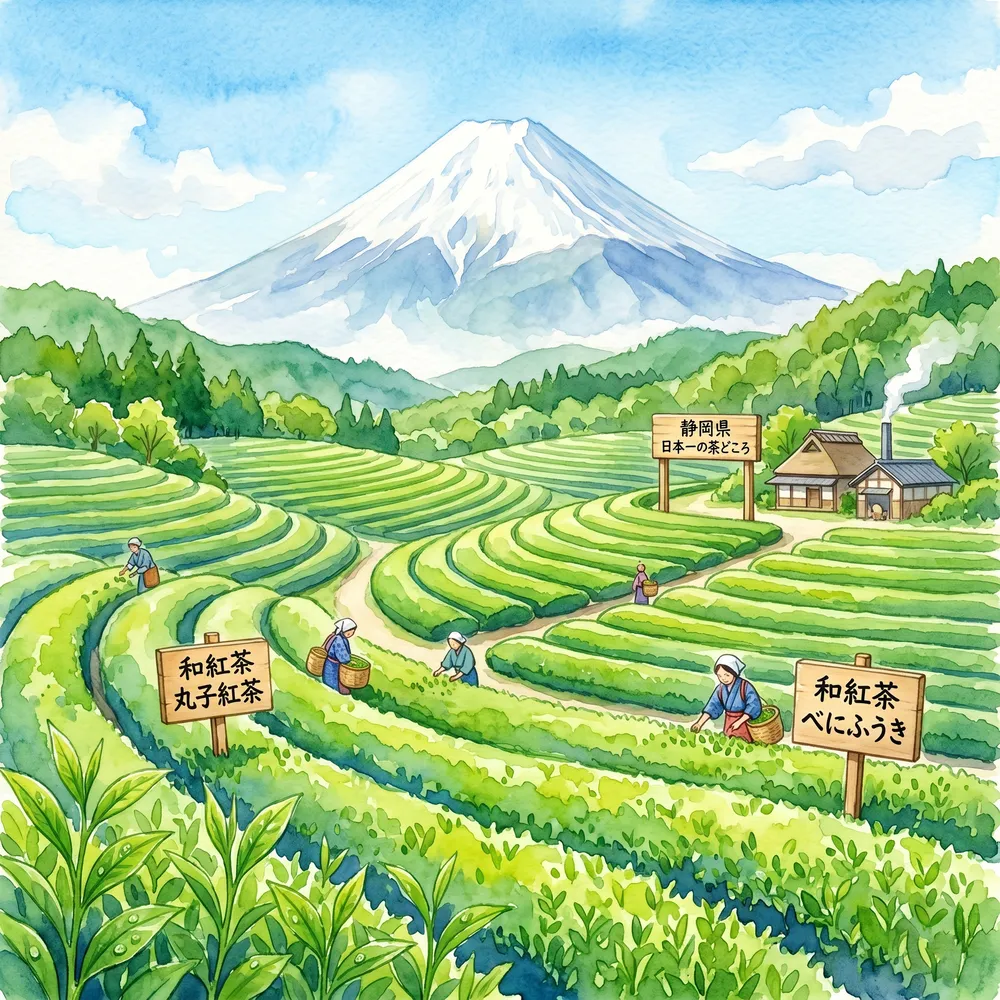
The 1874 programme was a currency policy, not a culinary one. Japan had tea bushes and needed exports; the West drank black tea; therefore Japan would make black tea.
The first attempts used Chinese specialists and produced poor tea. Techniques were then brought in from India along with assamica plants, and the quality improved — but never enough to compete on the world market.
After the war the state propped it up with a linked-import scheme: to be allowed to import foreign black tea, Japanese companies had to buy domestic black tea. It kept production alive at about 2,000 tons a year without ever making it competitive.
Then the props came away
Japan liberalised black tea imports in 1971, and cheap tea from India, Sri Lanka
and Kenya arrived immediately.
1969: 2,000 tons. 1975: three tons.
That is not a decline, it is an extinction — a century of state-backed effort
erased in six years by nothing more dramatic than an honest price.
And then it came back for the opposite reason
The revival began in the late 1990s because green tea demand was falling. Japanese households drank less leaf tea every year, growers had bushes and no market, and some of them started oxidising the leaf instead of steaming it.
Production went from essentially zero in 1990 to around 250 tons by 2015. That is a rounding error against Assam, and the point: wakoucha is not competing on price any more. It exists as a small-batch product made by people who already know how to grow tea extremely well.
Benifuuki, and Everything Else
Green tea and black tea are the same plant. The difference is what happens after picking: green tea is heated quickly to stop oxidation, black tea is allowed to oxidise fully. What matters here is that Japan's bushes were bred for the first job.
Japanese tea breeding has spent a century selecting for mildness — for
sweetness and umami, and against harshness, because that is what makes good sencha.
Oxidise a bush that was selected to be gentle and you get a gentle black tea.
The low astringency is not a processing trick or a marketing line; it is inherited from what the
plant was bred to do. This is why wakoucha tastes the way it does.
| Cultivar | Bred for | As black tea |
|---|---|---|
| Benifuuki(べにふうき) | Black tea, deliberately | Fuller, more structured; the closest to a Western style |
| Yabukita(やぶきた) | Green tea — Japan's dominant bush | Very mild and sweet; light body |
| Other green cultivars | Green tea | Varies widely — often floral or fruity |
If you want something recognisably like the black tea you already drink, buy benifuuki. It was bred for the job and it has the backbone.
If you want to understand what wakoucha is actually for, buy a green-tea cultivar — a yabukita or a regional variety. That is the tea that does not exist anywhere else, and it is much closer to a light oolong than to an English breakfast.
Where It Comes From
- Shizuoka — and specifically Maruko. Japan's largest tea prefecture, and the place most associated with the modern revival. The reference point if you are trying one wakoucha.
- Saga — Ureshino. Famous for rolled green tea, and its black teas tend to come out floral and aromatic.
- Fukuoka — Yame. A high-end gyokuro district, so the bushes are grown for intensity; the black tea has more depth than most.
- Kagoshima. The main home of benifuuki, and the source of most of the wakoucha that reaches English-speaking shops.
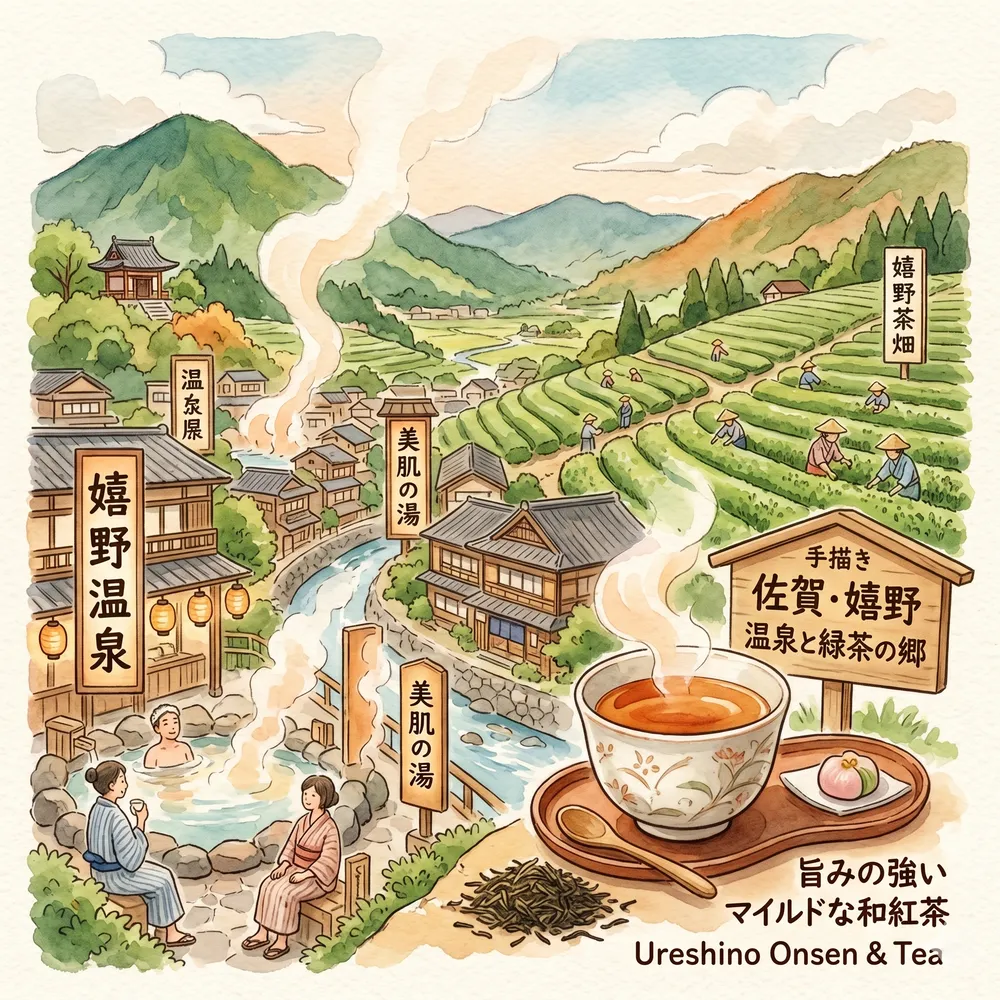
Region matters less here than cultivar and maker, because the whole category is small and experimental. Two growers in the same valley can produce wildly different teas from the same bush, depending on how long they wither and how far they let the oxidation run.
Brewing, and What to Eat With It
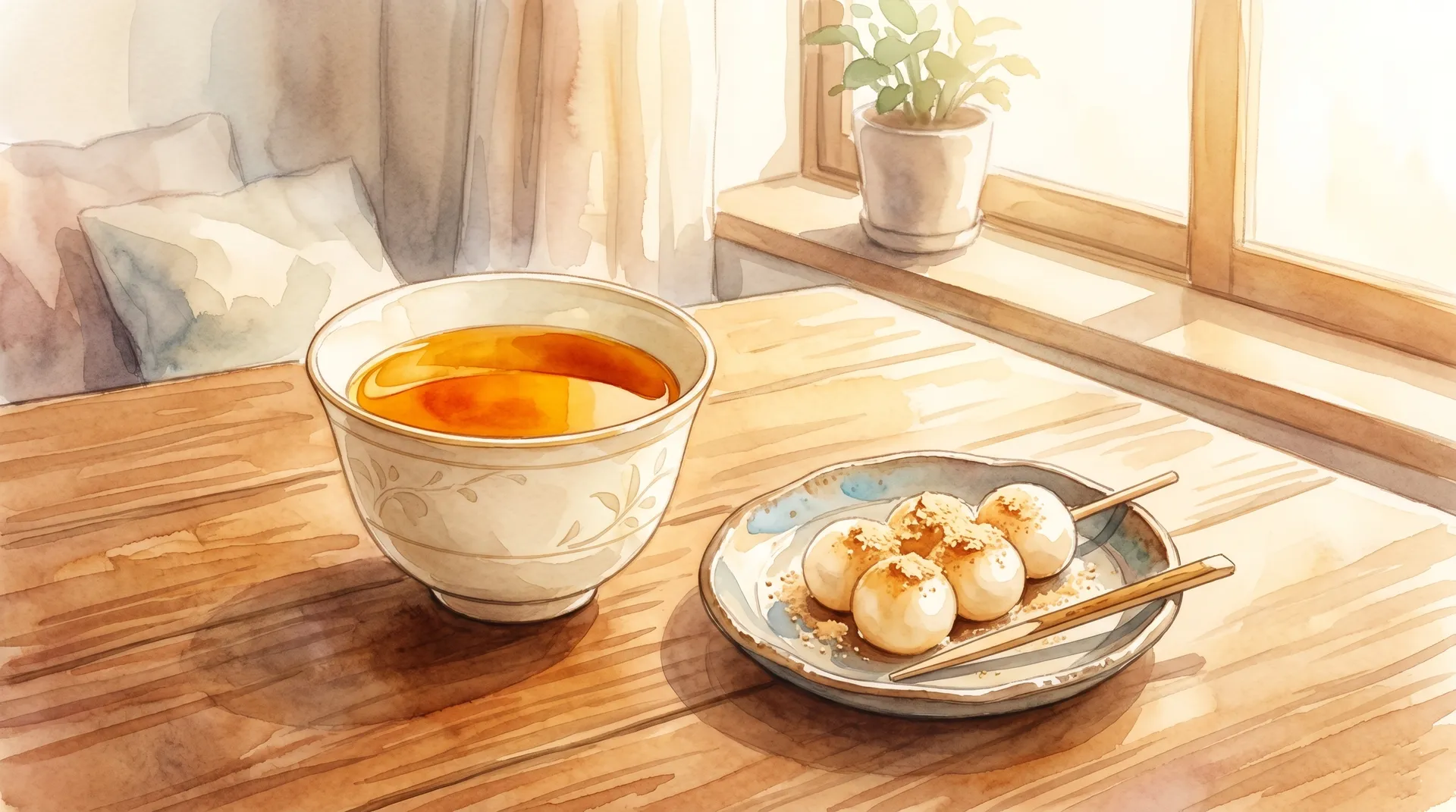
- Freshly boiled water is fine — unlike sencha, this is a fully oxidised tea and full heat does not scorch it.
- Two to three minutes, then taste. Wakoucha is forgiving; leaving the leaf in a minute too long will not wreck it the way it would an Assam.
- Use more leaf rather than more time if you want a stronger cup. That builds body without pulling out harshness.
- Second infusions are worth having. A good leaf will give you two and sometimes three, which is not how Western black tea usually behaves.
- Cold brew is excellent. Leaf and cold water in the fridge overnight — the low tannin means it comes out sweet and clean rather than flat.
It works through a meal, which black tea usually cannot
Strong black tea fights savoury food — the tannin clashes with almost everything
except cake and biscuits, which is why it is served after meals rather than with them.
Wakoucha is mild enough to sit through a meal the way green tea does, and it
handles Japanese sweets particularly well: the gentle sweetness of the tea does not compete with
the sweetness of anko, where a sharp Ceylon would.
It is also very good with chocolate and with anything buttery, where its
sweetness reads as an asset rather than a curiosity.
What to Buy
A Shizuoka wakoucha — the honest introduction
Loose leaf from Shizuoka, made from green-tea cultivars — honeyed on the
nose, sweet and soft in the cup, and it works hot or cold. This is the version that
shows you why the category exists.
Buy a small bag first. Wakoucha is genuinely divisive: people who want a
strong builder's tea find it insipid, and people who like light oolongs tend to love it.
- Origin
- Shizuoka
- Style
- Sweet, low tannin, light body
- Drink it
- Plain. Hot or cold-brewed
- Size
- 60 g loose leaf
A Kagoshima benifuuki — if you want body
The cultivar actually bred for black tea, mostly grown in Kagoshima, and the
one that will feel familiar if you are coming from Assam or Ceylon. Fuller,
fruitier, with real structure behind it.
This is also the wakoucha most widely stocked in English-speaking shops,
often organic and often as a single-harvest lot.
- Cultivar
- Benifuuki
- Origin
- Mostly Kagoshima
- Style
- Fuller-bodied, fruity, structured
- Milk
- Tolerates a little — try it plain first
Loose leaf, not bags, if you have any choice. Wakoucha's appeal is subtlety, and
the fannings that go into most tea bags cannot deliver it — the tea comes out flat and slightly
dusty.
Good Japanese producers do make proper bags with whole leaf in a roomy sachet,
and those are fine. It is the flat paper bag of dust that is the problem.
Several of the best-regarded Japanese producers do not export at all — the
Maruko growers in Shizuoka who effectively restarted the category among them.
We could not find English-language routes to those, so we are not going to send
you searching. Japanese tea shops carry a dozen wakoucha each, and a comparison
set is the single best way to understand the range if you are travelling.
Frequently Asked Questions
Can I really not add milk?
You can, but it wastes the tea. Milk exists in Western tea to soften tannin, and
wakoucha has very little tannin to soften — so it dilutes the delicate sweetness and leaves
nothing behind.
A strong benifuuki will survive a splash. Everything else should be drunk plain.
How much caffeine is in it?
Broadly similar to other black teas, and well below coffee — it is the same
plant, and oxidation does not change caffeine much.
Brewing habits matter more than the tea does. Less leaf and a shorter steep is
the practical lever.
Is wakoucha the same as hojicha?
No — hojicha is green tea that has been roasted, which is a heat treatment
applied after processing.
Wakoucha is oxidised, not roasted, which is a completely different chemical
change and happens before the leaf is dried.
How should I store it?
Airtight, dark, cool, away from anything with a smell. Tea leaf takes on odours
readily, so a sealed tin in a cupboard rather than a jar next to the spices.
Do not refrigerate opened tea — condensation when you take it out does more harm
than the warmth does.
Does it cold brew?
Exceptionally well. Leaf and cold water in a jug, overnight in the fridge, then
strain.
Cold water extracts very little tannin, and since wakoucha barely has any to
begin with, what you get is clean and distinctly sweet.
Is it a good gift for someone who drinks a lot of tea?
Yes, and specifically because they will not have had it. A serious tea drinker
has met Assam, Darjeeling, Yunnan and Ceylon; almost none of them has tried a black tea made from
a green tea cultivar.
Say "no milk" when you hand it over, or the first cup will be wasted.
Final Thoughts: A Failure Worth Repeating
Japan tried for a century to make black tea the world would buy, and could not. The moment the protection came off, the industry went from 2,000 tons to three.
What grew back was never meant to compete. It is made from bushes bred for sencha by people who are extremely good at growing tea, and the result is a black tea with almost no bite and a sweetness that the plant was selected for.
Buy a small bag, brew it strong with more leaf, and drink it exactly as it comes. The milk jug can stay where it is.

Japanese Tea Gift Guide: Best Matcha, Sencha & Gyokuro

Japanese Tea Box & Paulownia Box: Moisture-Proof Storage