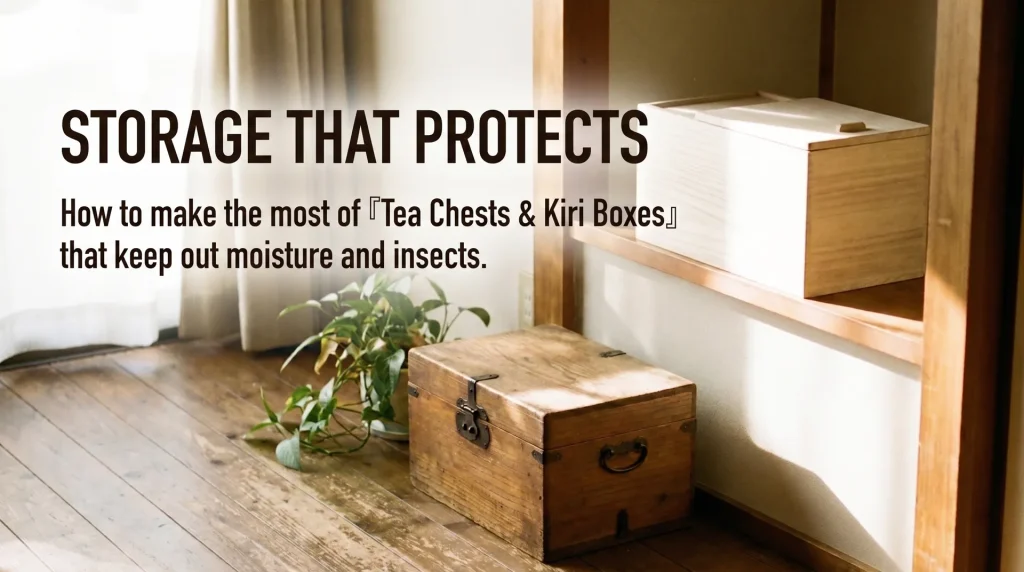
You open the rice canister and find insects inside. You pull a favorite sweater out of storage and find a moth hole.
Japan's hot, humid summers make these frustrations unavoidable — unless you use the right storage.
Plastic containers are handy, but when it comes to actually protecting what's inside, nothing in modern storage matches the ancient wisdom of the wooden box.
Two types stand out: the chabako (tea box) — Japan's most powerful moisture-blocking container, originally built to ship green tea overseas — and the kiribako (paulownia box), heir to the tansu chest tradition of insect-repelling wooden storage.
This guide explains how each works and which makers produce the finest versions available today.
Series: This article is part of the "9 Japanese Housework Tools Worth Owning for Life" feature series.
1. Why Wood? The "Breathing Storage" That Beats Japan's Climate
A sealed plastic container traps moisture inside once humidity gets in, creating the perfect environment for mold. Wood is different.
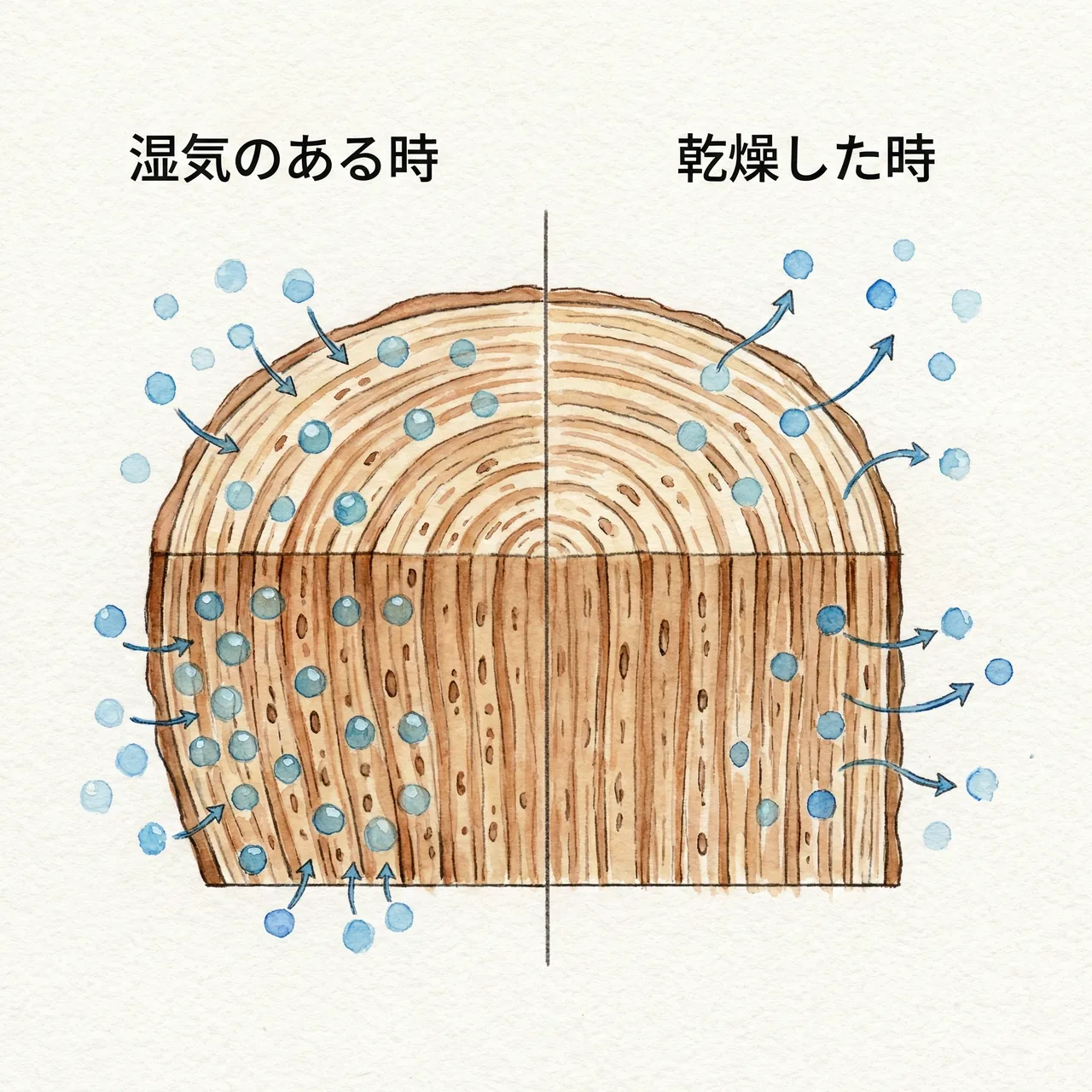
Wood absorbs and releases moisture — acting as a natural air conditioner for your storage
Wood continues to breathe long after it's been crafted into a box.
During Japan's humid rainy season, it draws moisture in. In dry winter air, it releases it back.
This natural humidity regulation keeps the interior environment stable throughout the year — protecting contents from mold during summer and from drying and cracking in winter.
2. The Chabako: Galvanized Tin Interior That Blocks Every Drop of Humidity
Originally developed in Shizuoka Prefecture to ship green tea overseas — a traditional industry that has survived for generations.
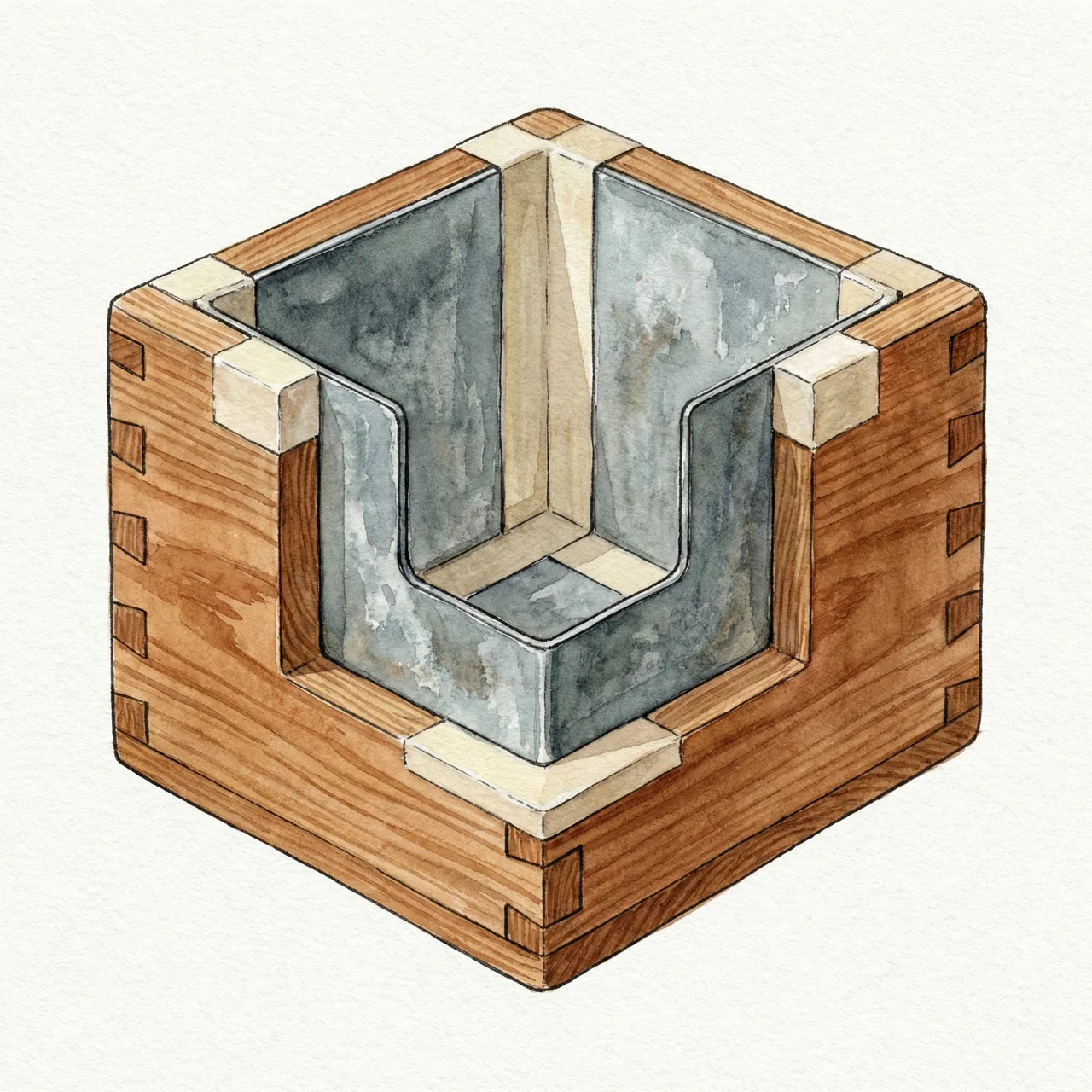
Cedar on the outside, galvanized tin on the inside — no moisture, no odors, no insects
The outer shell of a chabako is Japanese cedar, but the interior is lined without gaps in galvanized tin (zinc-coated sheet metal).
The seams are then sealed with washi paper, creating a box that completely blocks external humidity, light, insects, and odors.
This makes it ideal for storing anything sensitive to moisture: rice, dried foods, camera equipment, hina dolls, and more.
3. Recommended Chabako: Maeda Kobo — Shizuoka Craftsmen, Interior-Grade Design
One of the last remaining workshops in Kawane-cho, Shizuoka, still making tea boxes using traditional methods.
Maeda Kobo (Shizuoka) / Cedar Tea Box
From 5 kg to 30 kg of rice. A pest-free rice canister that fits in the kitchen.
Each box is handmade by craftspeople, and the seal when the lid closes is exceptional — press down on the lid and you can feel the air being pushed out, that's how airtight it is. Rice freshness is preserved for remarkably long periods.
The unpainted cedar grain is beautiful and deepens in color with use. A wide size range makes the 5 kg flat box a popular fit for kitchen shelving.
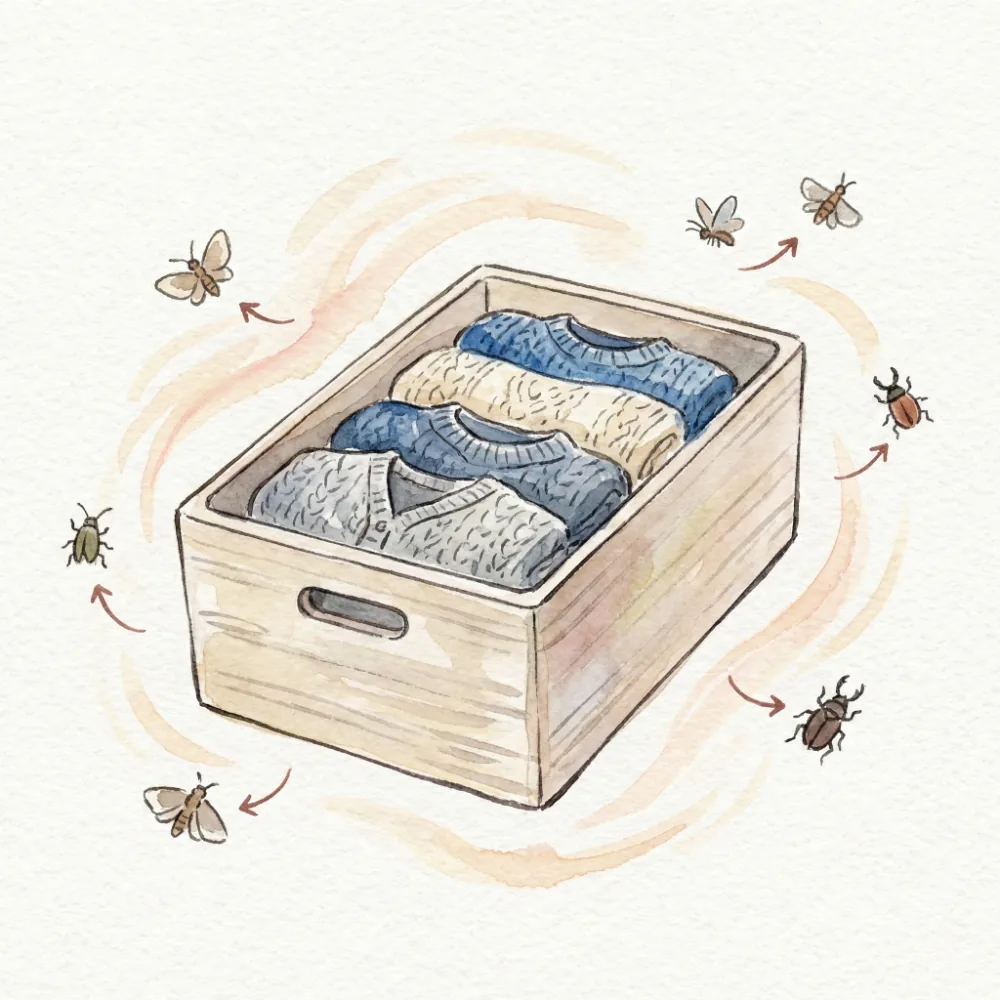
4. The Kiribako: Natural Tannins That Repel Insects Without Chemicals
The paulownia (kiri) wood used in traditional kiri tansu chests is Japan's lightest wood — and one of the most functionally remarkable for storage.
Natural insect-repelling compounds paulownin and tannin — no mothballs needed
Paulownia wood naturally contains insect-repelling compounds (paulownin, sesamin) and tannin, which prevents decay.
This means kiribako keeps insects away without any chemical mothballs, protecting precious kimono, wool sweaters, cashmere, and delicate fabrics from damage.
Paulownia also has an unusual fire resistance — in a fire, the surface chars before heat can penetrate to the interior, protecting contents even in extreme conditions.
5. Recommended Kiribako: Masuda Kiribako — The "Display Rice Box" Everyone Wants
A long-established paulownia box maker in Koga City, Fukuoka — updating centuries of craft for modern living.
Masuda Kiribako (Fukuoka) / Rice Box & Storage Box
Acrylic-panel lid. Paulownia function meets contemporary design.
A modern and elegant design that overturns everything you'd expect from a traditional paulownia box.
The rice box model features an acrylic section in the lid combined with a wood frame (shihosan) — keeping the seal airtight while letting you see the remaining volume at a glance.
The lid-to-body fit, the proportions, every detail is engineered. Good Design Award winner. A piece that functions beautifully and looks equally at home on display.
6. Chabako or Kiribako? The Rule: Food in Tea Boxes, Clothing in Paulownia
Both are exceptional — but they each have a natural domain.
[Chabako] Heavy items and things that absolutely cannot tolerate moisture (rice, dried goods, cameras)
The galvanized tin lining makes chabako rigid and strong enough for heavy loads of rice or jarred preserves.
Because it blocks humidity, odors, and pests completely, it's ideal for nori seaweed, tea leaves, spices, and precision equipment like camera lenses.
Strong enough to sit on, so it doubles as a stool in the living room.
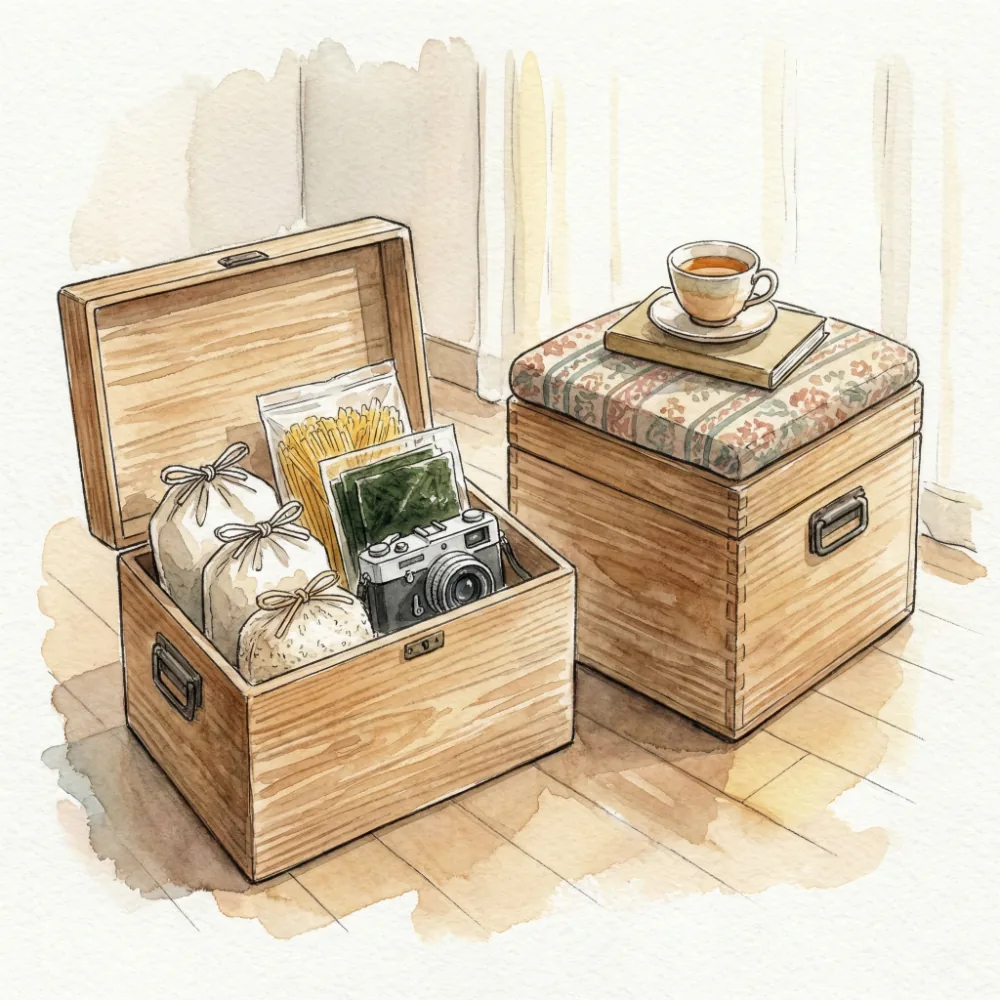
[Kiribako] Soft items and anything you want protected from insects (clothing, documents, dolls)
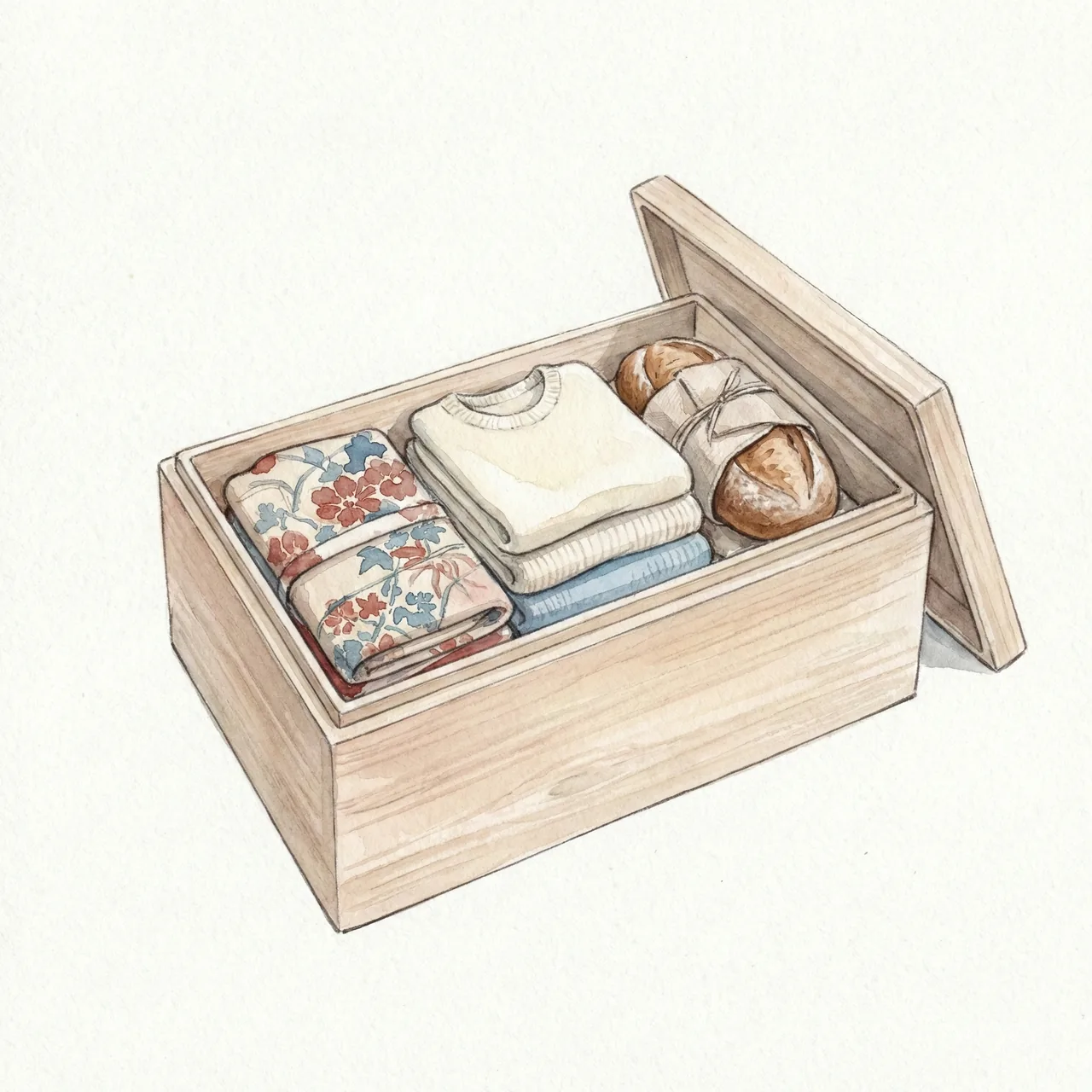
The soft, gentle wood surface makes paulownia boxes ideal for delicate fabrics — cashmere, silk, kimono.
Its natural insect-repelling compounds also make it excellent for storing hina and gogatsu festival dolls, important documents, and cherished keepsakes.
For food, paulownia works best for items that need some airflow, like bread or vegetables.
7. Care: A Dry Wipe Is All It Takes for a Lifetime of Use
No special maintenance required — but there are a few things to avoid.
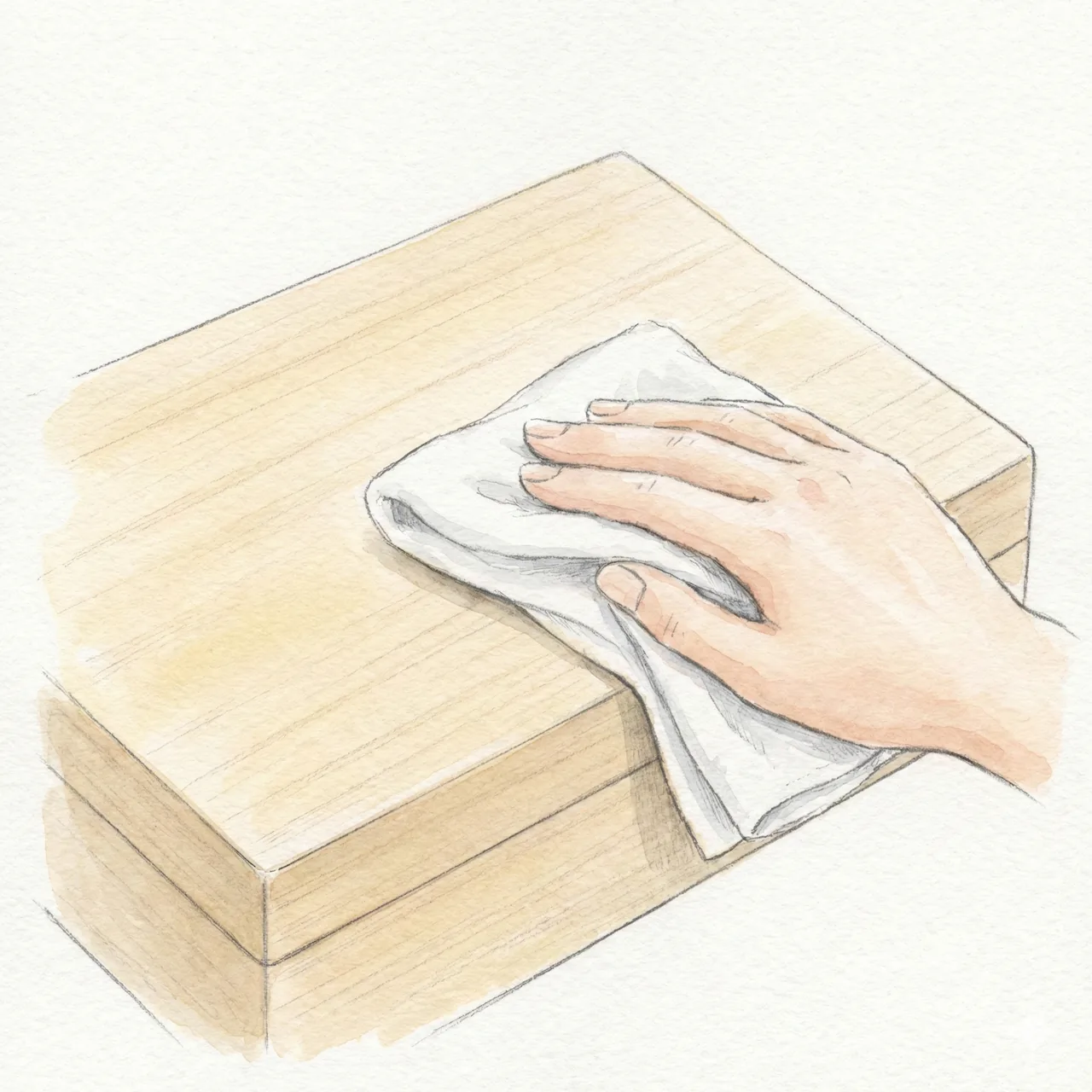
Dry-wipe only — water causes staining and darkening
Unfinished wood (especially paulownia) absorbs moisture easily, leaving stains and dark marks.
For regular upkeep, a dry soft cloth to wipe off dust is all that's needed.
For fingerprints or smudges, a clean eraser rubbed gently along the surface often lifts them cleanly.
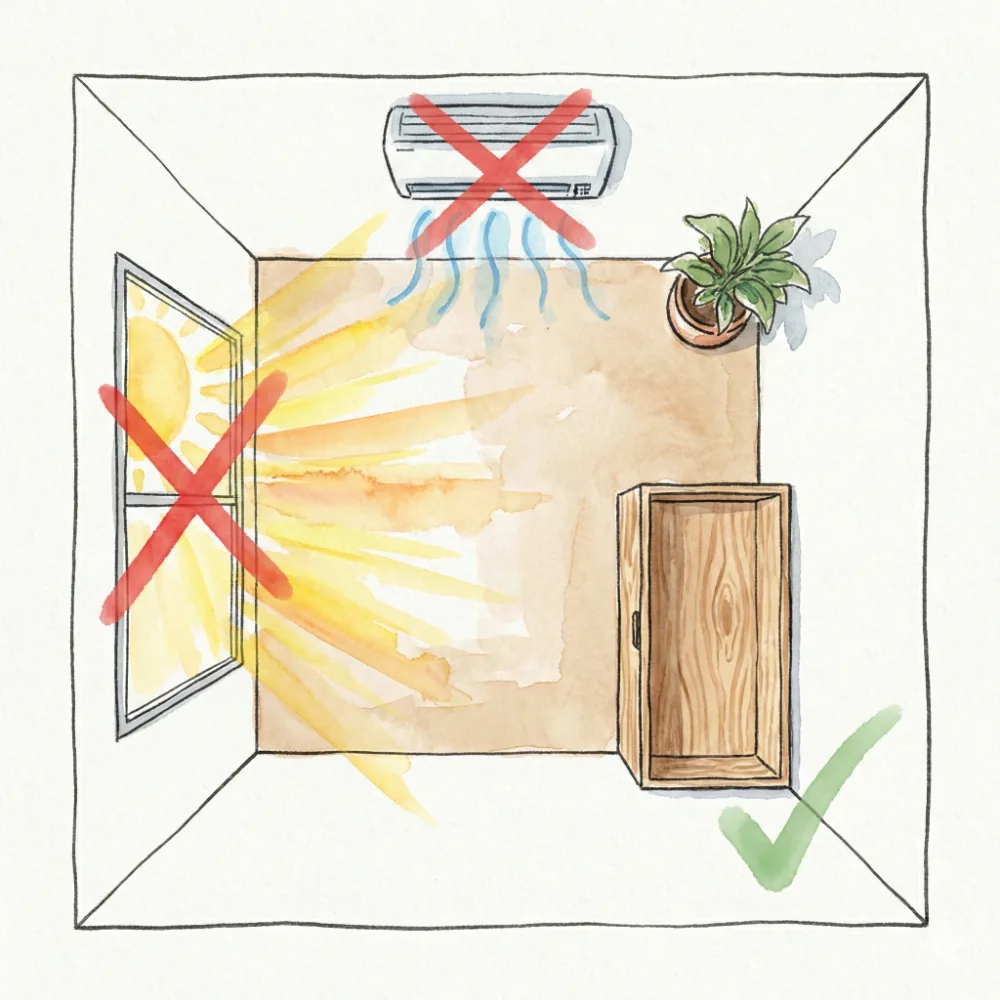
Keep away from direct sunlight and air conditioning vents
Rapid, uneven drying causes warping and cracking in wood.
Avoid placing the box on a windowsill in direct sun, or directly in the path of an air conditioner's airflow.
A location with stable temperature and humidity is ideal — most interior spaces away from windows and vents work well.
8. Frequently Asked Questions
How do I clean a box I'm using as a rice canister?
Each time you refill, remove all residual rice bran (nuka) from the interior.
For a chabako (tin-lined): wipe with a firmly wrung damp cloth, then let it dry completely before refilling.
For a kiribako: use a dry brush or cloth to sweep bran from the corners. Old bran left behind can attract insects.
There's mold growing on my paulownia box. What can I do?
Light mold can be sanded away.
Outside, wipe off visible mold, then use fine-grit sandpaper along the wood grain to remove the affected surface layer. Wipe with rubbing alcohol and allow to dry thoroughly.
Because paulownia is the same material all the way through, sanding reveals a fresh, clean surface underneath — the box essentially renews itself.
Will the tin inside a chabako rust?
As long as you don't introduce moisture, it won't rust for decades.
However, foods with high salt content (pickles, miso) placed directly inside can cause corrosion.
Store food items in sealed bags or containers before placing them in the box.
Should I put mothballs inside a kiribako anyway?
Generally not necessary, but you can add one type if you prefer extra protection.
Don't mix different types of mothball products — chemical reactions between them can cause staining.
In a chabako, the high airtightness means a small amount of desiccant or repellent lasts much longer than in open storage.
Will a wooden box look out of place in a modern interior?
Quite the opposite — "display storage" is exactly what these are trending as.
Chabako is used as a living room stool, or covered in fabric for a decorative cartonnage project. There's a whole creative tradition around it.
Modern makers like Masuda Kiribako produce pieces that blend naturally into Scandinavian or minimalist interiors — a room accent rather than a storage afterthought.
Final Thoughts: Storing Peace of Mind Along with Your Belongings
Plastic containers deteriorate within a few years. A tea box or paulownia box lasts long enough to pass from parent to child.
That's because these aren't just "containers" — they're functional furniture that actively protects what's inside from Japan's demanding climate.
A single grain of rice. A favorite sweater.
Put your things inside with care, close the lid, and you'll be greeted with the scent of wood every time you open it — along with the quiet satisfaction that whatever's inside is genuinely protected.