Nara has been weaving kaya — mosquito netting — since about 1700. Then,
around the middle of the twentieth century, insect repellent got good enough that nobody needed
mosquito nets any more, and an entire regional textile lost its reason to exist.
The cloth was too good to abandon. A Nara merchant house that had been trading
since 1716 suggested using it in the kitchen instead, and in 1995 the hanafukin was born.
In 2008 it won a Good Design Gold Prize — for a dishcloth.
One warning before you order. Your new one will not absorb water at all. That is
supposed to happen, and the fix takes about a minute.
Quick Reference: How It Compares
| Kaya fukin | Terry tea towel | Sponge | |
|---|---|---|---|
| Drying time | Very fast | Slow | Slowest |
| Leaves lint | No | Yes | — |
| Size | 58 × 58 cm | Similar | Tiny |
| Can be boiled | Yes | Usually | No |
| Out of the packet | Repels water until washed | Ready | Ready |
| The point of the thing: it absorbs like a towel and dries like a handkerchief, so it spends far less of its life damp — which is what makes kitchen cloths go sour. | |||
First: Wash the Starch Out
A brand-new fukin is stiff, crisp, and repels water. Wipe a wet worktop with it
and the water beads and runs off. It is not faulty and you have not been sent the wrong
thing.
It is starched — traditionally with sweet potato starch from Kagoshima — to
protect the cloth in transit and keep it crisp on the shelf. Until you wash that out, it
cannot absorb anything.
The fix: rinse it thoroughly in warm water by hand before the first use, working it until the water runs clear. It will soften noticeably and shrink slightly, and from then on it behaves as advertised.
It goes on softening for the first few weeks. New cloth is a little stiff even after de-starching; a month of daily use turns it into the limp, absorbent thing people become attached to. Do not judge it on day one.
Why It Does Not Go Sour
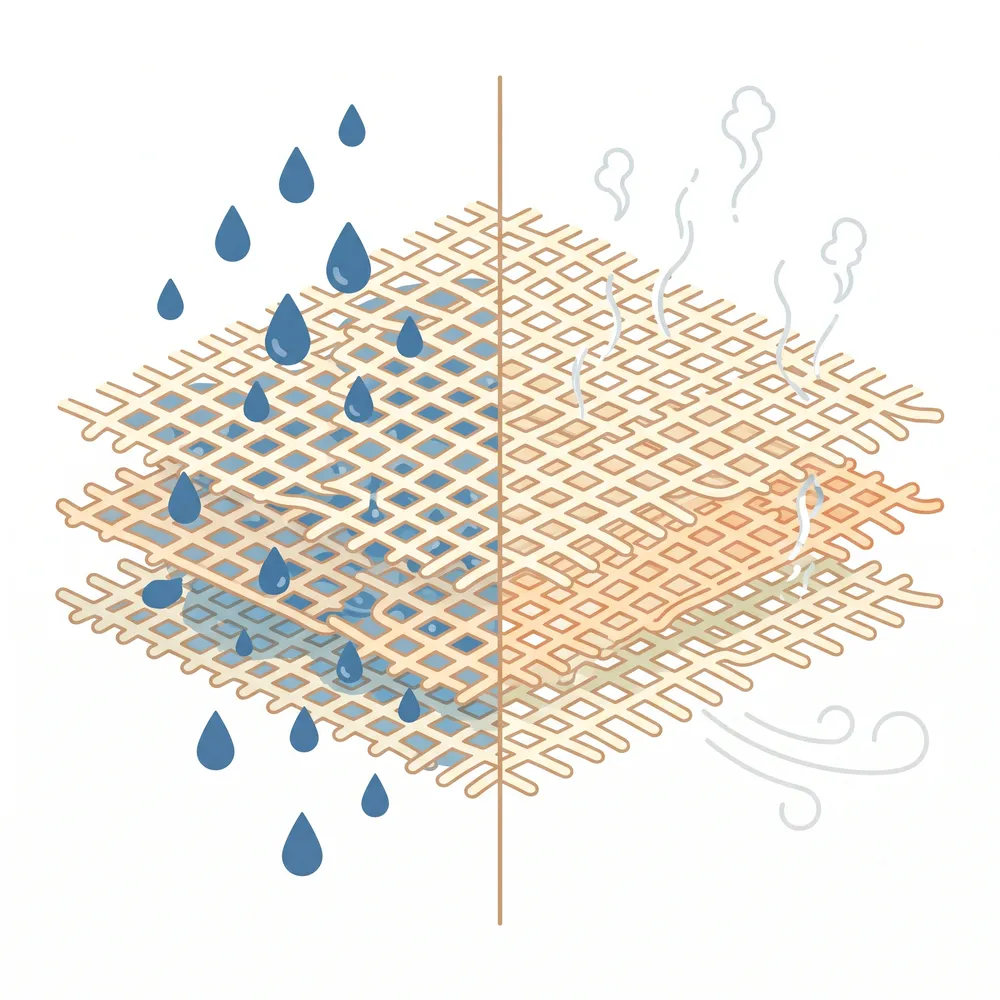
Every kitchen cloth eventually smells, and the cause is time spent damp. A thick terry towel or a sponge holds water deep inside where air cannot get at it, and stays wet for hours.
Kaya cloth solves this by being thin and open, then stacked. Two layers of loosely woven cotton gauze hold a surprising amount of water between them — and release it almost immediately once hung up, because there is nothing thick for the water to hide in.
Absorbent like a towel, dries like a handkerchief. That combination is the whole design, and it is the reason these do not develop the smell.
The other advantage: no lint
Anyone who has polished a wine glass with a terry towel knows the problem — the
pile sheds, and you end up with a clean glass covered in fibres.
A flat gauze weave has no pile to shed, so glassware and lacquer come up clean
in one pass. This is the reason to own one even if you like your existing towels.
Why Japanese — A Fabric That Lost Its Market
Kaya-ori arrived in Nara around 1700 and stayed a local speciality for two and a half centuries. Every household needed mosquito netting, and Nara wove it.
Then chemical repellents and window screens made the netting obsolete. The demand did not decline gradually so much as evaporate, and the weavers were left holding a very good fabric with nothing to make out of it.
Nakagawa Masashichi Shoten — a Nara house trading since 1716 — proposed the kitchen.
The properties that made kaya good at keeping mosquitoes out (open, light, fast-drying) turned
out to make it excellent at drying dishes.
The hanafukin launched in 1995 and took the Good Design Gold Prize in
2008 — an award for a two-layer square of cotton, which tells you something about how
completely the problem was solved.
That history is also the buying advice. The cloth is worth having because it is a genuine regional textile that happens to be perfect for the job, not because a homeware brand designed a dishcloth. Look for kaya-ori — the weave — rather than for a label.
It Is 58 cm Square, and That Is Deliberate
A hanafukin is much larger than a Western dishcloth — a 58 cm square rather than something the size of a face flannel — and people who expect a small rag are briefly baffled.
The size is the point, because you fold it to suit the job. Open flat it drains washed vegetables or covers rising dough; folded in half it dries dishes; folded into quarters or eighths it becomes a thick pad for wiping.
It also works as a steaming cloth, a strainer and a cover — which is how one cloth ends up replacing three things.
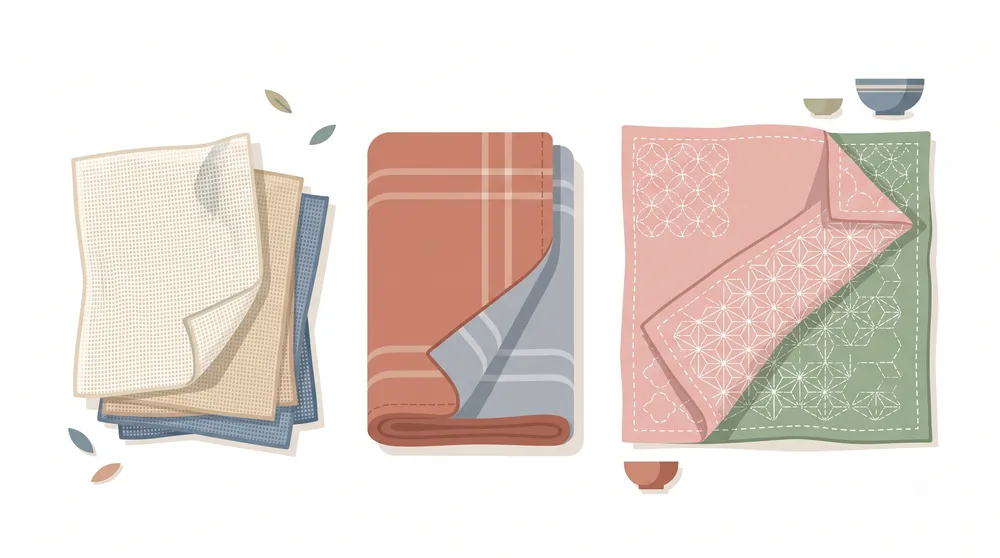
Keep dish cloths and surface cloths separate, and buy different colours so you cannot
confuse them. This is standard practice in Japanese kitchens and it is the reason these
are sold in multi-packs of patterns.
Buy at least three. One in use, one drying, one clean — anything less and you
will end up reusing a damp one, which undoes the entire advantage.
What to Buy
Kaya fukin — the plain version, cheap enough to just try
Mosquito-net-weave cotton in traditional patterns — hemp leaf, cherry
blossom, plum — sold individually and inexpensive enough that there is no reason to agonise
over the choice.
This is the version to start with. If you like it you will buy more; if you
do not, you have lost very little.
- Weave
- Kaya-ori cotton gauze
- Made
- Japan
- First use
- Rinse the starch out
Hanafukin — the one that won the award
The full 58 cm square, two layers, 100% cotton, from the Nara house
that started this whole category in 1995. Sold in sets of three, five or seven, which is
also the sensible way to buy them.
Their own English shop carries the full pattern range, and several
English-language Japanese homeware stores stock them if you would rather order closer to
home.
- Size
- 58 × 58 cm
- Construction
- Two layers, 100% cotton
- Made
- Nara, Japan
- Sold in
- Sets of 3, 5 or 7
This is one of the better-distributed Japanese household goods in English —
several specialist homeware shops in the US and UK carry kaya cloths, and there are other Nara
makers besides the famous one.
What to check is the weave and the layer count, not the brand:
kaya-ori, two layers or more, 100% cotton. A printed flat-woven cotton square
is a different and much worse object.
They post well, which is why they are a standard small gift in Japan. Flat, light, costs almost nothing to send, and useful to absolutely everyone — a set of three in good patterns is a genuinely hard present to get wrong.
Keeping It White: Boiling
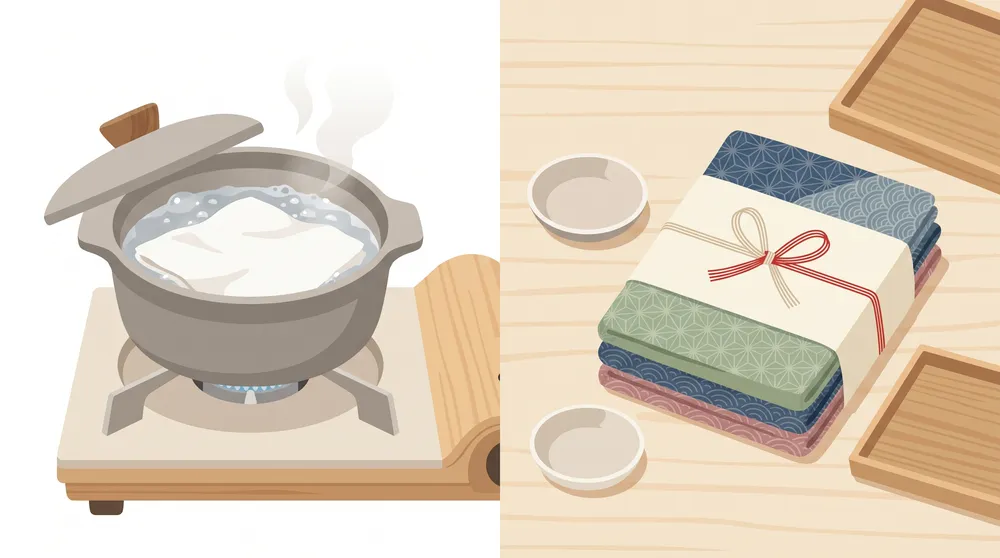
Japanese kitchens boil their cloths, and it is a habit worth importing. Cover the fukin with water in a pan, add a small amount of oxygen bleach, and simmer for a few minutes.
It lifts the yellowing and the smell together, and cotton takes it perfectly well. Dry it in the sun afterwards if you can.
Oxygen bleach, not chlorine — chlorine weakens cotton and yellows it over time, which is the opposite of what you are trying to do. And check the care label first if the cloth is dyed.
- Wring it hard and hang it spread out. Bunched in a heap it stays damp and the entire advantage disappears.
- Wash it daily. It dries fast enough that this is not a chore — which is exactly why keeping three in rotation works.
- Machine washing is fine, though a mesh bag stops it wrapping itself round everything else.
- When it finally goes soft and thin, demote it. A worn-out fukin is an excellent floor cloth, and it is normal in Japan to use one right to the end that way.
Frequently Asked Questions
Why does my new fukin repel water?
It is starched. Makers apply a starch finish — traditionally sweet potato starch
— to keep the cloth crisp until it reaches you.
Rinse it thoroughly in warm water by hand before first use until the water runs
clear. It will soften, shrink a little, and start absorbing properly.
Is it really better than a normal tea towel?
For drying glassware, clearly yes — a flat gauze weave leaves no lint, which
terry towelling always does.
For staying fresh, also yes, because it dries in a fraction of the time and so
spends much less of its life damp. For drying a large roasting tin, a big terry towel is
still easier.
Why is it so big?
Because you fold it to the job. Flat it drains vegetables or covers dough;
halved it dries dishes; folded into eighths it is a thick wiping pad.
It also serves as a steaming cloth and a strainer — one square standing in for
several separate items.
How do I get rid of yellowing and smell?
Boil it for a few minutes with a little oxygen bleach. This is routine practice
in Japan and it restores both whiteness and freshness.
Use oxygen rather than chlorine bleach, which damages cotton, and check the
label on anything dyed.
How many do I need?
At least three, and keep dish and surface cloths separate. One in use, one
drying, one clean.
Buy them in different patterns so you can tell them apart — this is why they are
sold in mixed sets rather than as matching pairs.
How long does one last?
Years of daily use before it thins out, and boiling does not shorten that
meaningfully.
When it is finally too soft for dishes, it becomes a floor cloth, which is the
conventional end of its life rather than the bin.
Final Thoughts: A Solved Problem
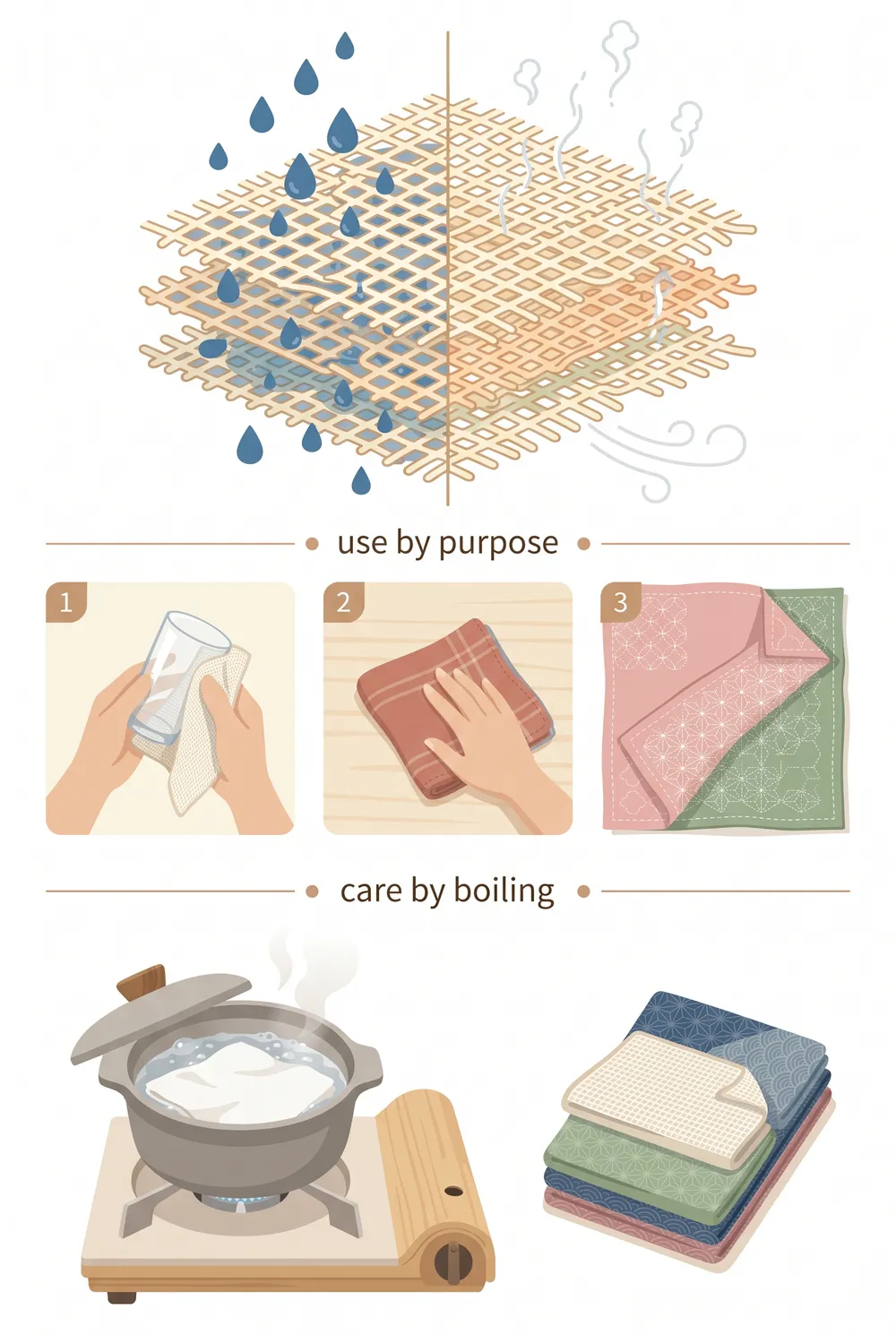
A textile industry lost its entire market and found a better one. The properties that kept mosquitoes out of a Nara bedroom — open, light, fast to dry — turn out to be exactly what a kitchen cloth needs.
Buy three, wash the starch out, and hang them spread rather than bunched. That is genuinely the whole method.
It is a very small purchase for something you will touch every day for years, and it is the rare kitchen item where the Japanese version is both better and cheaper than what you are currently using.
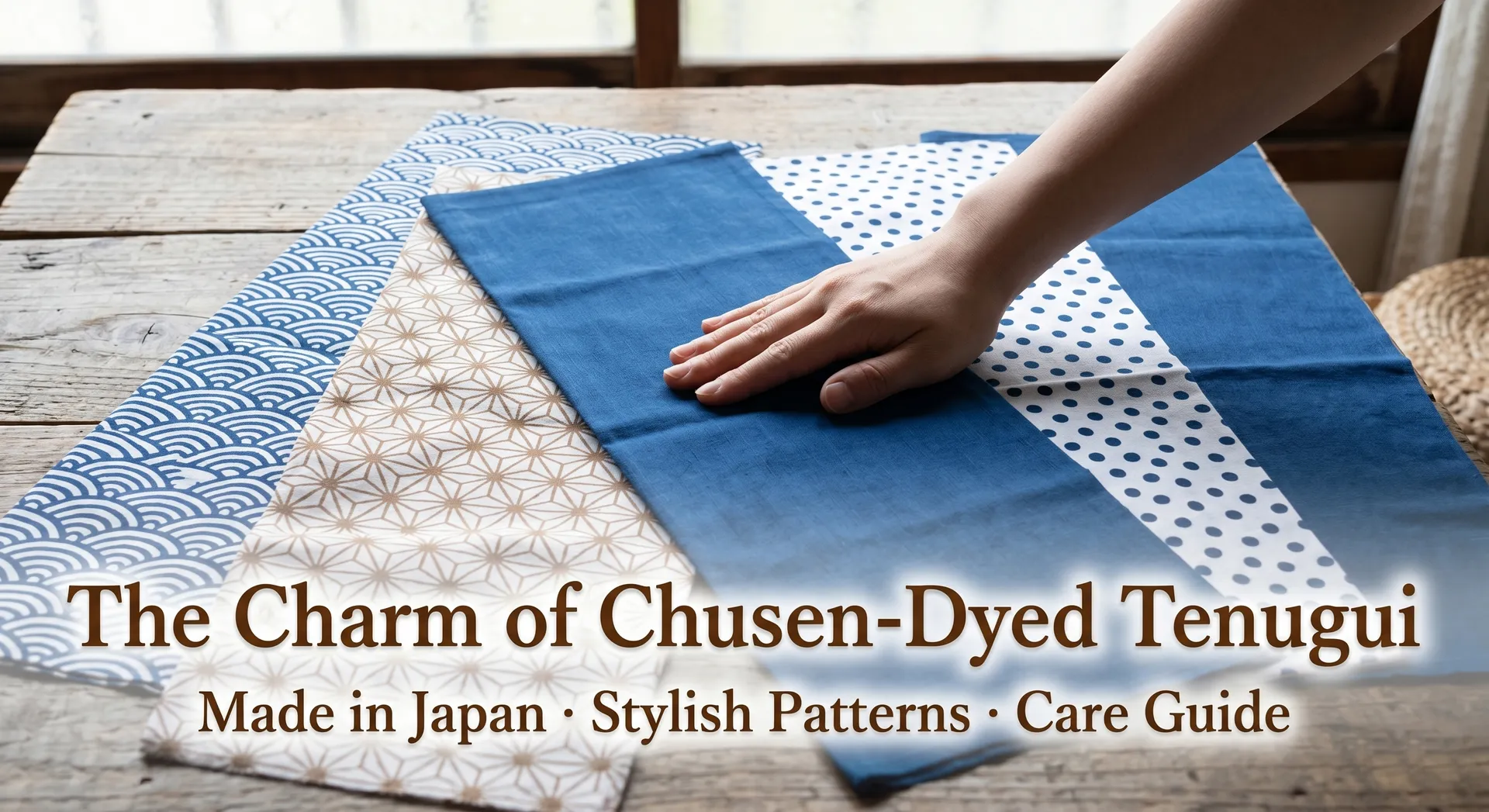
Tenugui: 10 Uses, and Why It Has No Hem
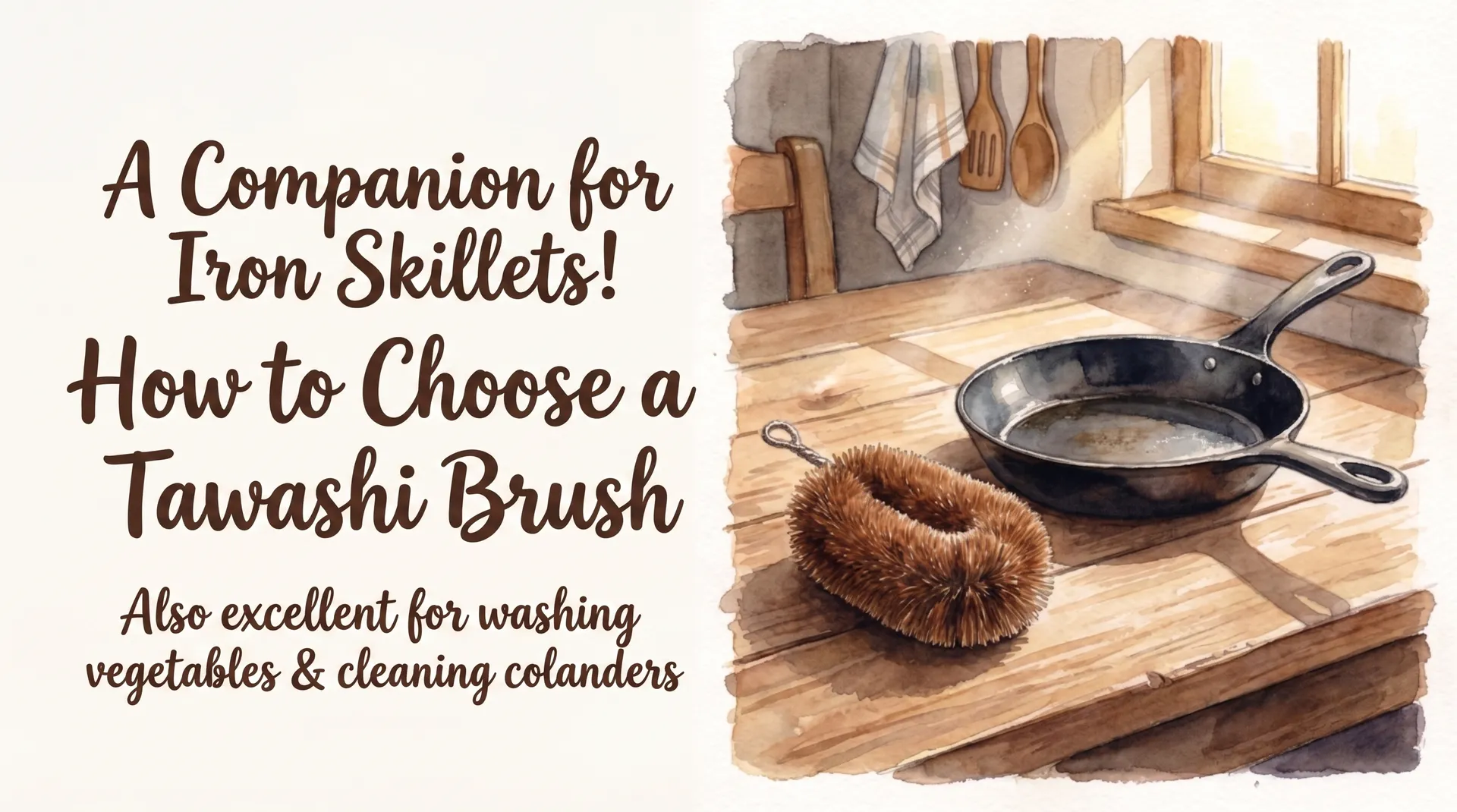
Kamenoko Tawashi: Japan's Best Scrub Brush for Cast Iron Pans