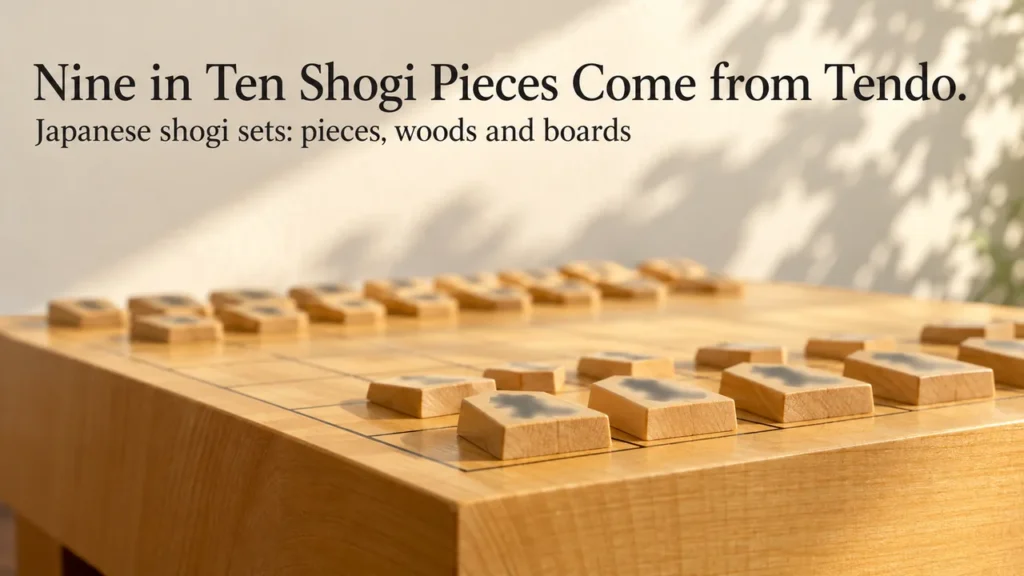
More than 90% of Japan's shogi pieces are made in a single city: Tendo, in Yamagata Prefecture — the only place in Japan where shogi pieces are designated by the national government as a traditional craft. And many of them are still carved by hand.
Piece prices aren't simply "carved, so expensive." Two separate scales are at work — how the characters are made, and what wood is used — and if you don't know that, it's easy to buy something other than what you thought.
Boards have a similar trap. "Shin-kaya" is not kaya wood. It is a different timber that happens to carry kaya's name. This guide covers how to read piece grades, how to choose a board's thickness, and how to look after both.
Quick Reference: Shogi Piece Woods, From Entry to Heirloom
| Wood (kiji) | Where it sits on price | Who it suits |
|---|---|---|
| Maple (itaya kaede) | The entry level | Just starting out |
| Boxwood (tsuge), origin unspecified | A clear step up | Want a set for the long term |
| Satsuma boxwood | Higher again | Care about where the wood is from |
| Mikurajima boxwood | The top of the three | Looking for a lifetime set |
| Remember | Wood moves the price more than carving does. And on boards, "shin-kaya" is not kaya. | |
1. Why Japanese: Over 90% of Pieces Come From Tendo
The only nationally designated production area
Tendo City's own site puts it plainly: Tendo accounts for "about 90% or more of the national total." Shogi pieces were designated a traditional craft by the national government in 1996, and Tendo is the only place in Japan with that designation for shogi pieces. If you're sitting at a shogi board, the pieces in front of you are very likely from Tendo.
It began as a samurai side job
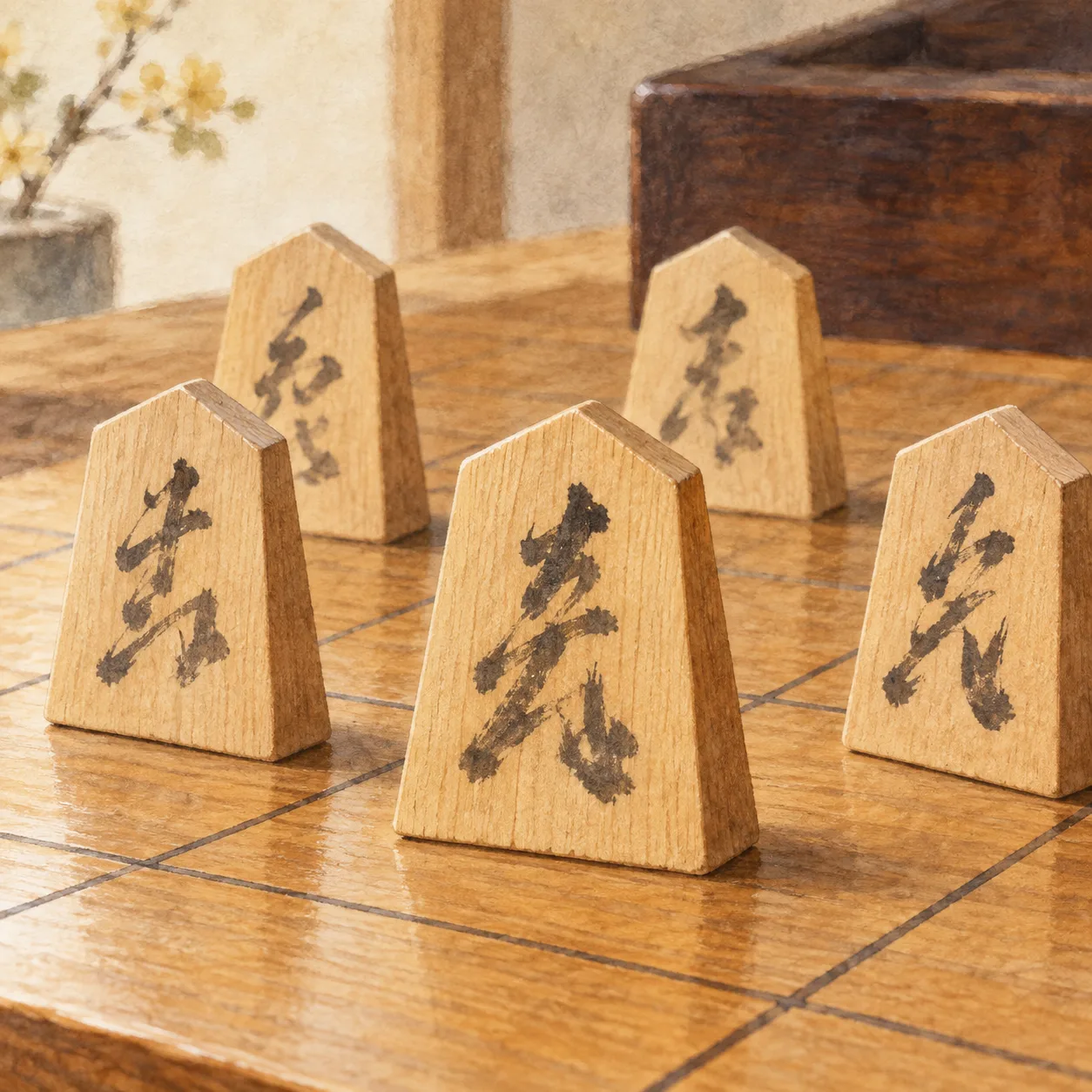
In the late Edo period, the Oda domain that ruled Tendo was struggling financially. A retainer, Yoshida Daihachi, encouraged the domain's samurai to make shogi pieces as side work. Samurai who put down their swords and picked up carving knives became the craftsmen of a production area that, over 150 years later, is still nationally designated — which is why so much hand-carving survives there.
Tendo makes the pieces, not the boards
Tendo's share is of pieces, not boards. Boards are a different map, centred on kaya-producing regions such as Miyazaki in Kyushu. Pieces and boards come from different places and different craftspeople, so it's perfectly fine to choose them separately.
Tendo shogi pieces, maple, "jōbori" carved — hand-carved by Tendo craftsmen
Carved by hand in Tendo, in itaya maple — the easiest set to consider if you're getting your first board. "Jōbori" indicates a carefully finished carved piece; the lines outlast stamped or written characters, and you can feel the character with a fingertip. Because the wood is maple, it's more approachable than the boxwood sets below. Start here and move to boxwood once you know the difference.
2. Piece Grades Run on Two Separate Scales
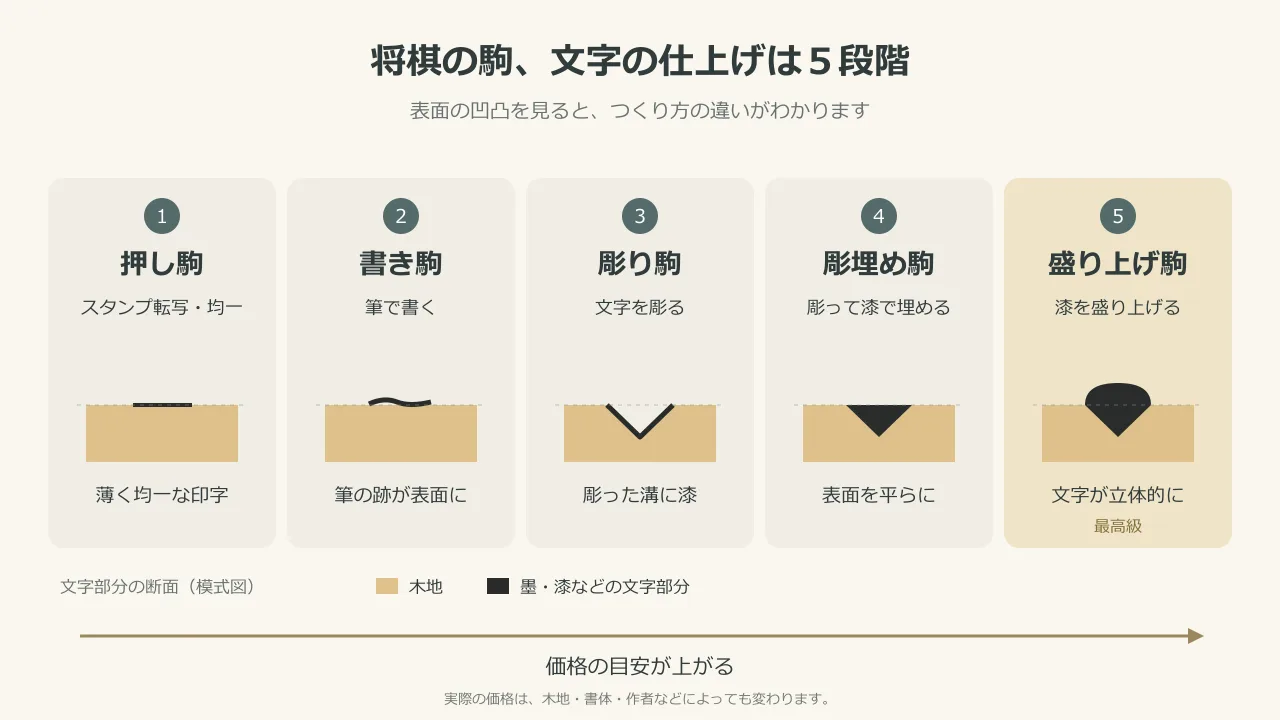
Scale one: how the characters are made — five levels
From least to most expensive:
- Oshi-goma (stamped): characters transferred by stamp. Suited to mass production.
- Kaki-goma (written): written with a brush, so every piece's stroke is different.
- Hori-goma (carved): characters cut in with a carving knife. The recess is felt by the fingertip, which makes it harder to grab the wrong piece in fast play — a practical reason, not only a visual one.
- Horiume-goma (carved and filled): the carved groove is filled with lacquer and levelled flat.
- Moriage-goma (raised): lacquer is built up so the characters stand in relief — the top finish, used in professional title matches.
Scale two: the wood, from maple to boxwood
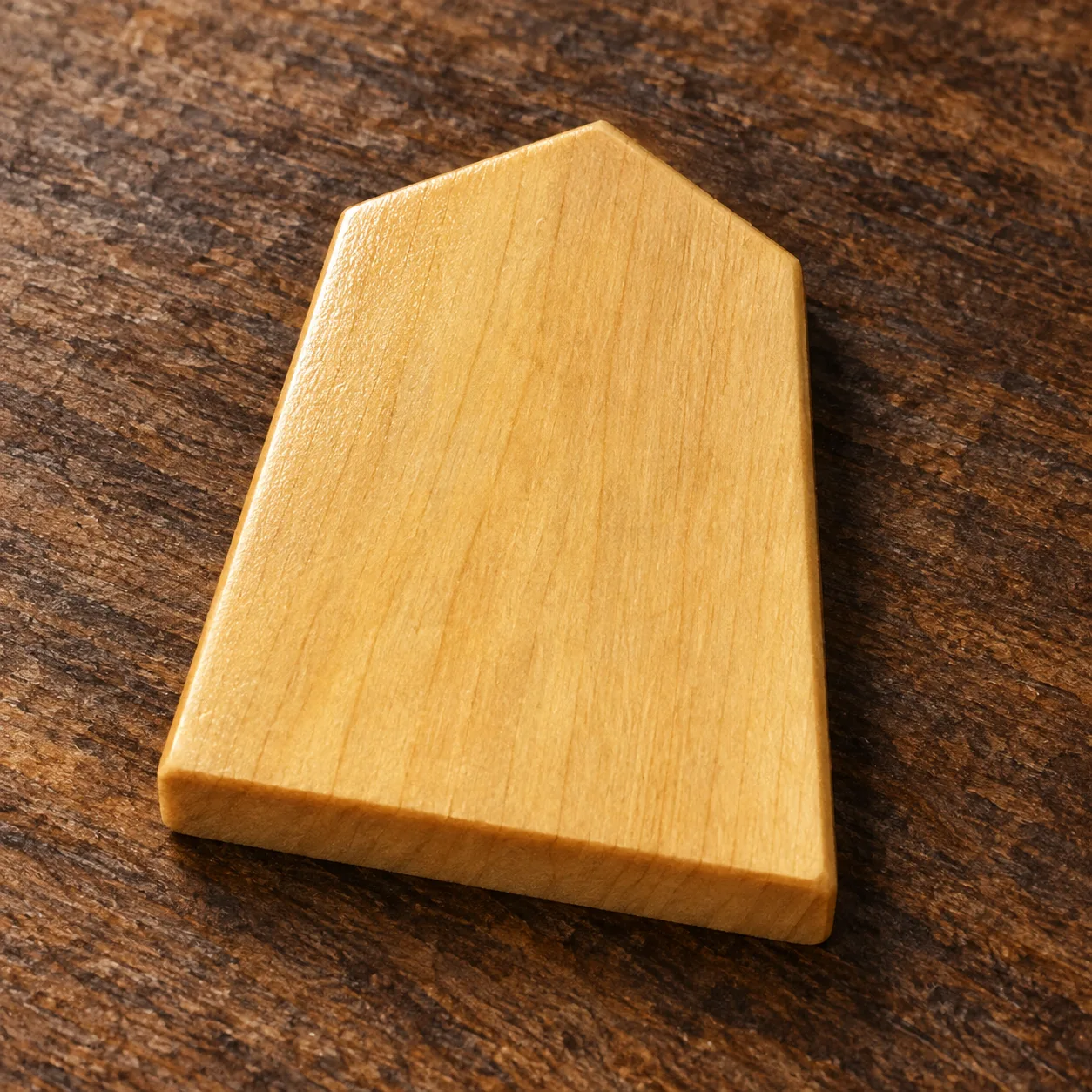
That was how the characters are made. The wood is an entirely separate scale. Itaya maple has a clean grain and costs less than true boxwood — good for beginners. Boxwood (tsuge) grows slowly, with a dense grain that resists cracking, and sits well above maple. The same "carved" grade can differ a great deal in price because of the wood alone.
Japanese boxwood has its own regions
Domestic true boxwood comes mainly from two places: shima-tsuge from Mikurajima in the Izu Islands, and Satsuma-tsuge from Kagoshima. Both are slow-growing and rare, and it shows in the price. The three sets below share the same craftsman, the same script (Kinkisho), and the same grade (tokujō-bori) — only the origin of the wood changes, so the price difference is the difference in wood.
Boxwood, tokujō-bori carved, Kinkisho script — the boxwood baseline
Carved pieces in boxwood without a stated region. One step up in wood from maple. Use this as the baseline for the two below, which share its script and grade.
Satsuma true boxwood, tokujō-bori, Kinkisho — boxwood with a stated origin
True boxwood from Satsuma in Kagoshima, in the same script and grade, priced above the baseline. A known origin gives the wood firmer credentials. Compared with Mikurajima, it's the more reachable of the two named regions.
Mikurajima true boxwood, tokujō-bori, Kinkisho, by Seigetsu — the rarest wood
True boxwood from Mikurajima in the Izu Islands, carved by the craftsman Seigetsu in the same script and grade. The carving work is the same; only the rarity of the wood raises the price. Mikurajima is regarded as the home of shogi-piece boxwood, and this is the highest of the three.
3. Boards Are Kaya — and Hyuga Kaya Is the Peak
What makes kaya special
The most prized wood for shogi (and go) boards is kaya (Japanese torreya). It is rich in oils and fairly heavy, with just the right hardness and spring and a distinctive scent; it has a glossy pale-yellow colour and a fine, dense, beautiful grain. That spring is part of how a piece sounds and feels when it's played.
Among kaya, Hyuga kaya from Miyazaki in Kyushu is considered the finest. The climate — big swings in temperature, heavy rain, strong sun — and rocky ground make the trees grow slowly, packing the growth rings tight. Wood with a really good grain is said to need trees over 300 years old.
"Shin-kaya" is not kaya
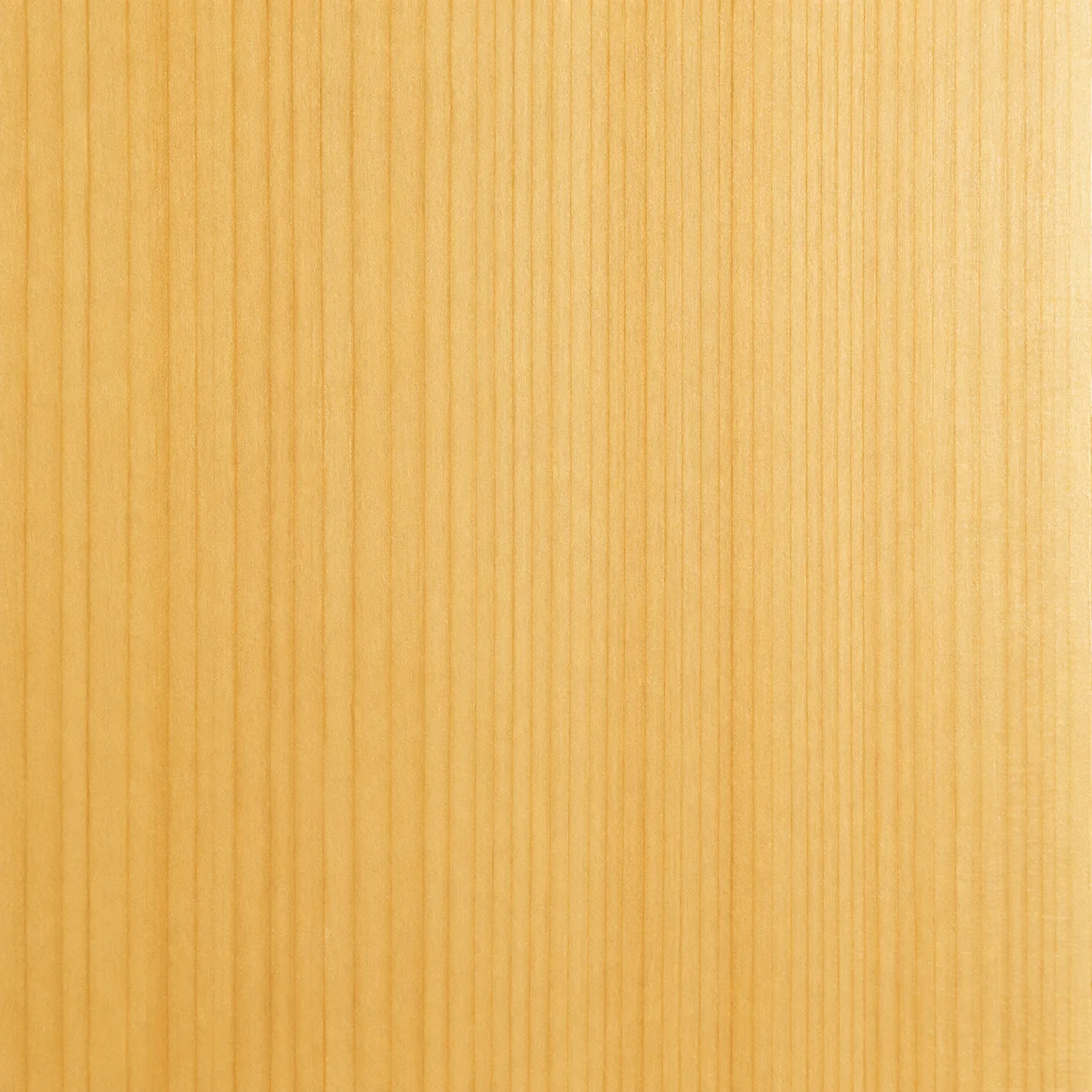
You'll see boards sold as "shin-kaya" (literally "new kaya"). Worth knowing: shin-kaya is a different timber from true kaya — a spruce imported from North America. It is known for an even grain and a whiter colour, and is said to have a shorter working life than true kaya. Only the name contains "kaya."
That doesn't make it a bad product. It is an honest way to keep the price below true kaya. The problem is only buying it on the name and thinking you've bought a kaya board. Get into the habit of reading the material line on the listing.
Straight grain (masame) is rarer than flat grain (itame)
Grain comes as masame (straight lines) or itame (arching). Masame is cut along the radius of the trunk, so it needs a very large tree; it can cost 1.5 to over 2 times as much as itame, and it warps and cracks less. There's also kiura and kiomote — the face nearer the centre of the tree and the face nearer the bark. The bark-side face takes a better shine and is normally used for the playing surface.
4. Thickness Decides the Feel and Where It Lives
Boards come in three forms. Legged boards are the traditional style, placed on the floor of a tatami room, usually 4 to 7 sun thick (about 12–21 cm; 1 sun is roughly 3 cm). Tabletop boards are for playing at a table on chairs, 1 to 3 sun thick. Folding boards prioritise storage.
Around 1 sun suits people who value lightness: a lighter feel in play, an easier price, and easy to carry. 2 sun and above is for a more serious feel and proper games. For a first board, a 1-sun tabletop board is the usual recommendation. Legged boards are heavy and become more furniture than equipment — something you place and leave.
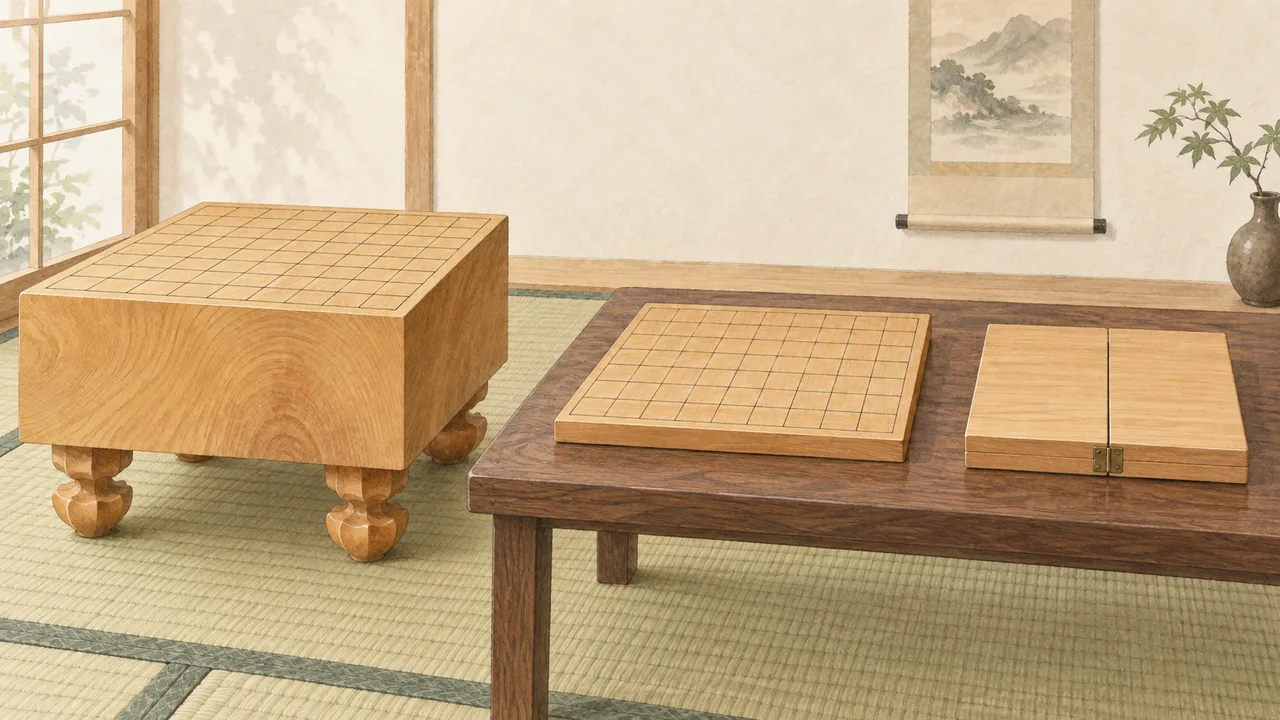
Yamaya shin-kaya 1-sun tabletop shogi set — board, piece stands, and pieces together
A tabletop board 27 mm thick (about 0.9 sun), sold with piece stands and pieces — a set someone starting out can simply buy and play. Made in Japan. The board is shin-kaya, and the listing says so plainly. It meets the "1 sun, tabletop" brief at a lower price. The stands and pieces are kuromaki (black podocarpus); if you care about the wood of the pieces, you can swap in a boxwood set from section 2.
5. Sunlight and Humidity Are the Enemies
Day to day, a dry cloth is enough
A true kaya board is finished with wax, so a gentle wipe with a soft dry cloth is all it needs. Never wipe it with a damp cloth — natural-wood game equipment doesn't like water.
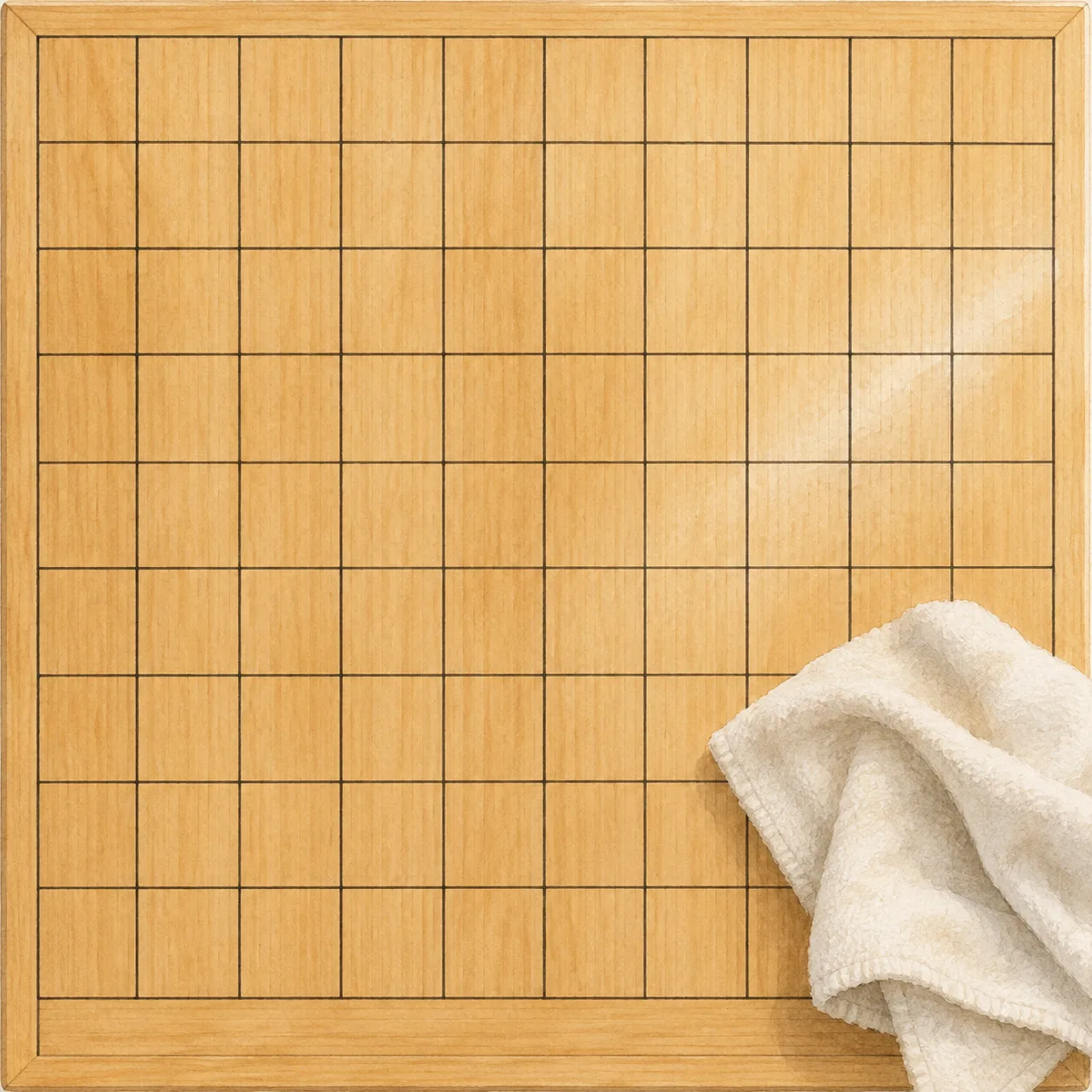
In humid weather, the surface "sweats"
In humid seasons the surface can look damp, and if left, blue mould can appear — wipe it dry now and then. Keep it away from direct sun, heaters and air conditioners, and drafty spots: rapid changes in temperature and humidity cause cracks, warping, and sun damage. This applies to true kaya and shin-kaya alike; both are natural wood. A paulownia cover over the board when it's not in use helps.
6. Buying From Outside Japan
The pieces and boards in this guide are sold mainly through Japanese specialist shops, and we haven't confirmed an English-language route to buy them directly, so we won't claim one. Whoever you buy from:
- For pieces, look for both scales in the listing: the finish (stamped, written, carved, filled, raised) and the wood (maple, boxwood, and the boxwood region if stated).
- For boards, read the material: true kaya (hon-kaya), and where it's from, or shin-kaya. And check the thickness in sun or centimetres.
We will add listings you can buy from abroad here as we confirm them, one product at a time.
7. Frequently Asked Questions
Can I buy the board and pieces separately?
Yes. Pieces (Tendo) and boards (kaya regions) come from different places to begin with. You can start with an inexpensive shin-kaya set and swap the pieces for boxwood later.
Carved or raised pieces — which should a beginner choose?
Carved pieces are plenty. You can feel the characters with your fingertip, and the price stays reasonable. Raised (moriage) pieces are the top lacquer finish and cost a level more — consider them once you know you'll keep playing.
Should I avoid boards labelled "shin-kaya"?
No need. Shin-kaya is North American spruce, a different wood from true kaya, but it's an honest way to keep the price down. Just don't buy it believing it's kaya — check the material line and know which one you're getting.
How thick should my shogi board be?
For a first board, 1 sun (about 3 cm) tabletop is the usual choice — light and affordable. For a more serious feel, 2 sun or more. For playing on the floor, a legged board of 4 sun or more.
Should I wax the pieces like the board?
No — pieces generally only need a dry wipe. Wax or oil can attract grime from your hands. Board and pieces are both wooden, but they're looked after slightly differently.
Are pieces made outside Tendo worse?
Not at all. Tendo making over 90% of them is a fact, but pieces from other areas and individual craftspeople exist too. Concentration of production and quality are separate things — treat "Tendo" as one useful marker when you choose.
Final Thoughts: Read Pieces by Their Wood, Boards by Their Material
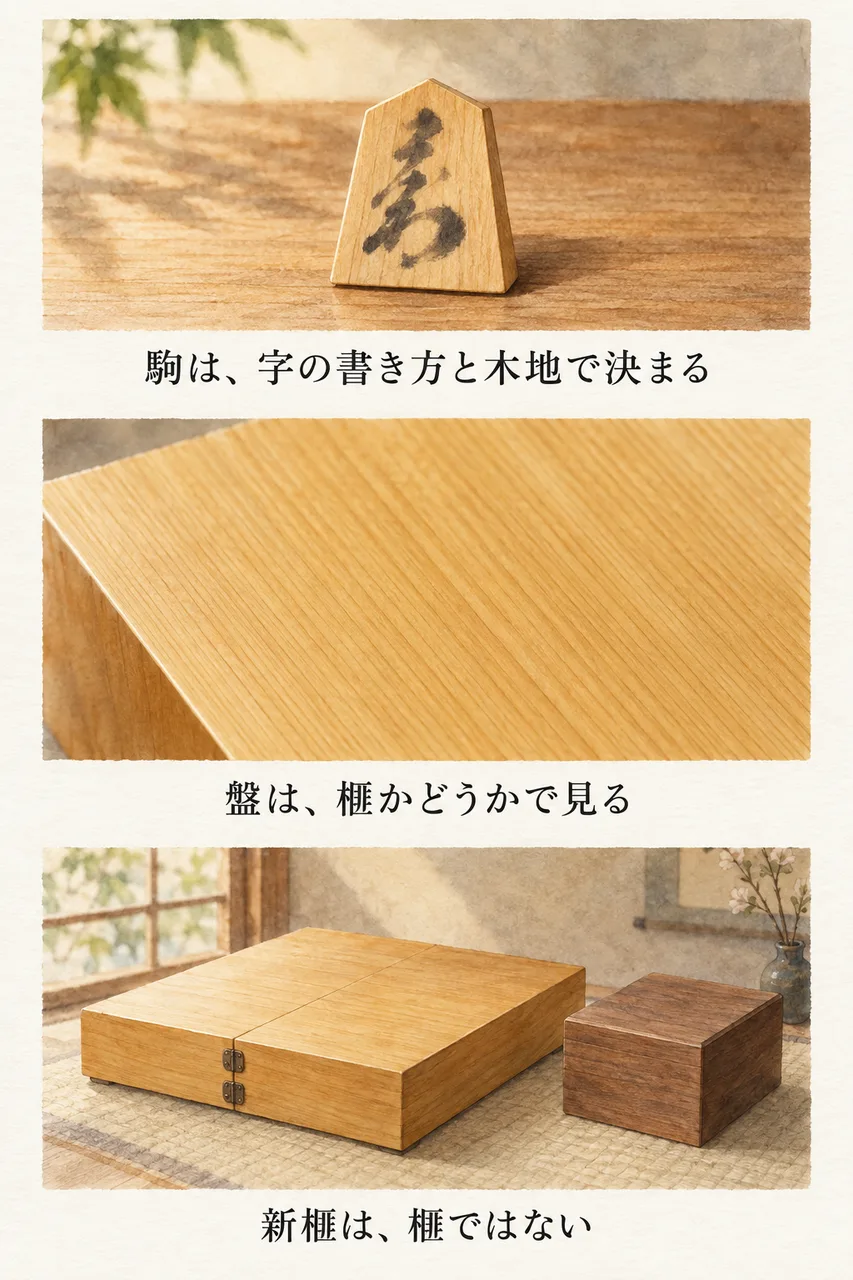
Over 90% of shogi pieces are made in Tendo, Yamagata, the only nationally designated production area, which grew from a samurai side job in a domain short of money.
Piece grades run on two separate scales: how the characters are made (stamped, written, carved, filled, raised) and the wood (maple, boxwood). Compare three sets with the same script and grade but different wood origins, and the rarity of the wood becomes the price difference.
For boards, Hyuga kaya from Miyazaki is regarded as the finest — but "shin-kaya" is not kaya; it's North American spruce. Not a bad choice, as long as you read the material. Choose 1 sun for lightness, 2 sun and above for a serious feel. Wipe dry, never wet, and keep it out of sun and humidity.
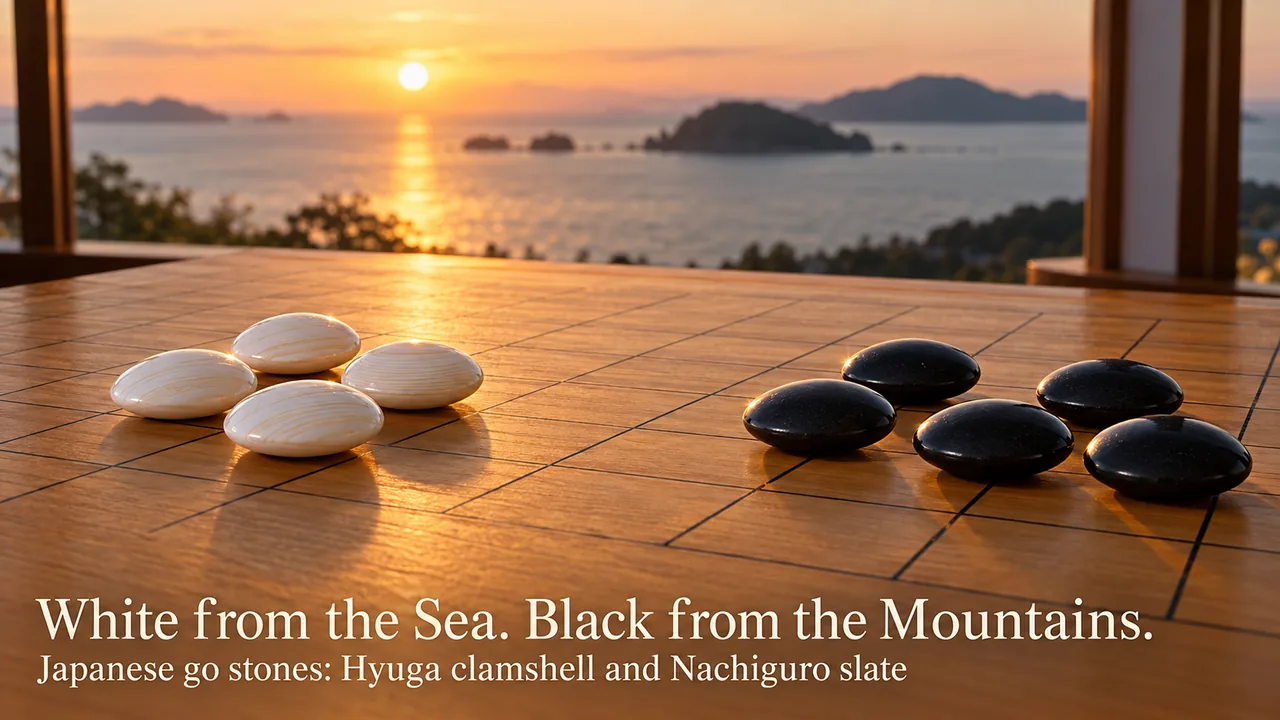
Japanese Go Stones: Clamshell Grades and Nachiguro Slate
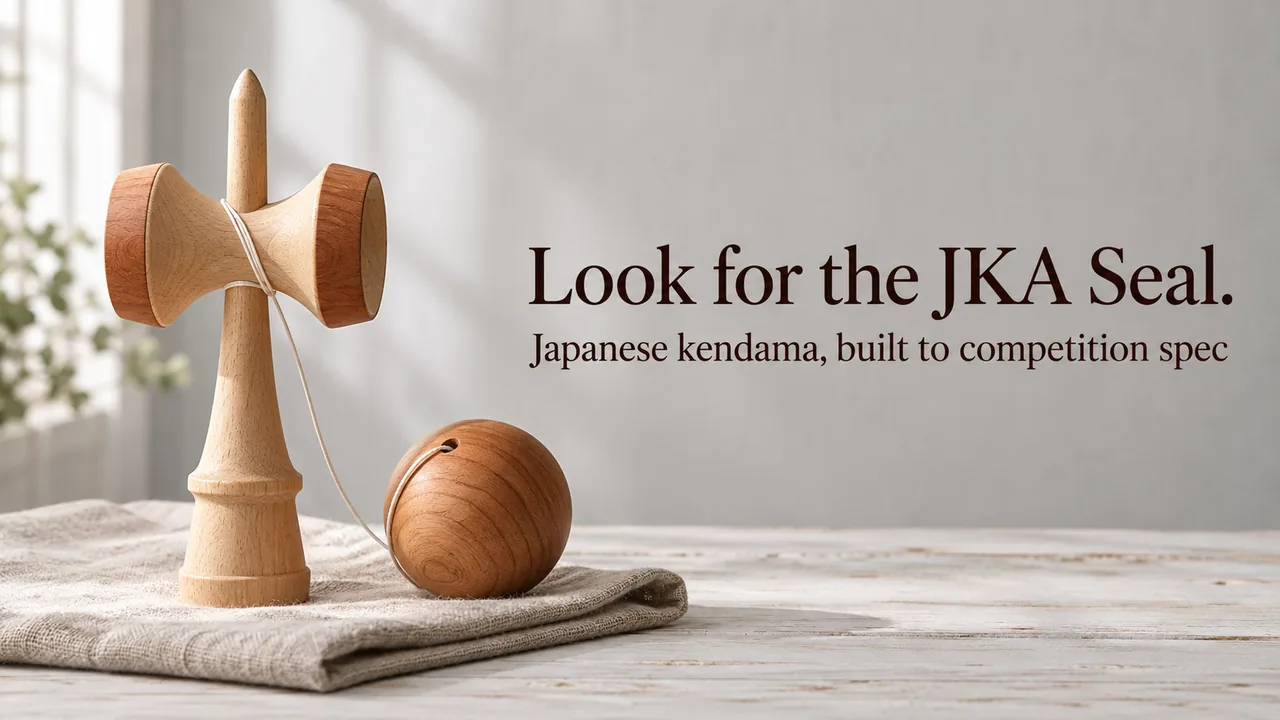
Japanese Kendama: JKA-Certified Ozora and How to Choose