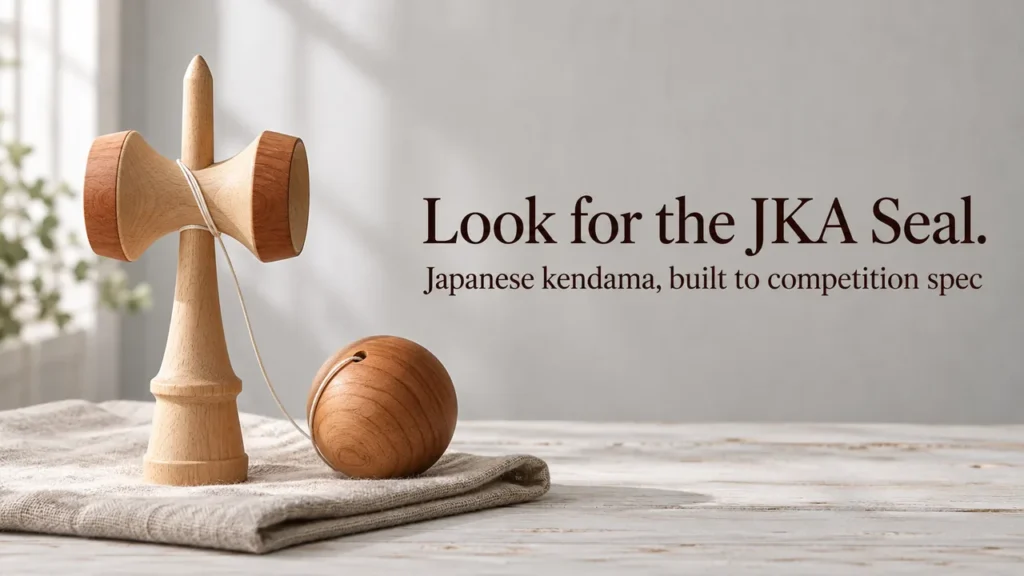
If you are buying a Japanese kendama, look for one certified by the Japan Kendama Association (JKA). A certified kendama is built to the association's competition standard, so if a trick won't land, you know it is the practice and not the toy.
Plenty of people tried kendama as children and never got the ball onto the big cup. Often that wasn't a lack of skill — it was a kendama that was never built to the competition specification. The fix is simple: check for the JKA certification on the box and the sticker on the kendama itself.
The word itself needs no translation any more. "Kendama" is used as-is around the world, with players, videos, and world championships. The modern form is said to have been born in Hatsukaichi, Hiroshima, and today's standard competition kendama is made in Nagai, Yamagata — two places far apart, both still making them. This guide covers what certification means, how to set the string length, which woods and finishes to choose, and how to keep one going for years. It does not teach tricks.
Quick Reference: Which Kendama for Whom
| Who it's for | What to choose | String length |
|---|---|---|
| Adults and older kids starting out | A JKA-certified competition kendama (Ozora) | 38–40 cm (15–16 in) |
| Young children, returning players, older adults | A model with larger cups (Taisei) | Shorten to about 35 cm (14 in) |
| Players building tricks | A grippy "sticky" paint finish (Ozora Street) | 38–40 cm |
| A gift or keepsake | Urushi lacquer or fine-wood models | 38–40 cm |
| Check first | The Japan Kendama Association certification on the box and sticker | |
1. It Might Not Have Been You: What JKA Certification Means
Kendama all look alike: a wooden ball, a cross-shaped wooden handle. Prices run from almost nothing to well over a hundred dollars, and it is hard to tell what the difference is.
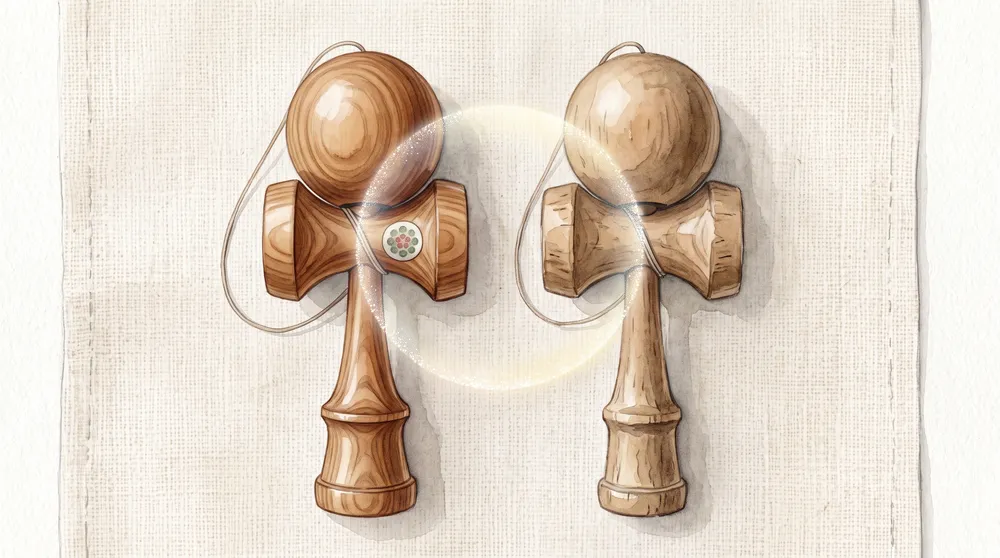
There is one difference that matters: whether it was made to the Japan Kendama Association's competition standard. Kendama built to the standard carry a certification sticker, and the packaging says so.
The standard controls every surface the ball touches
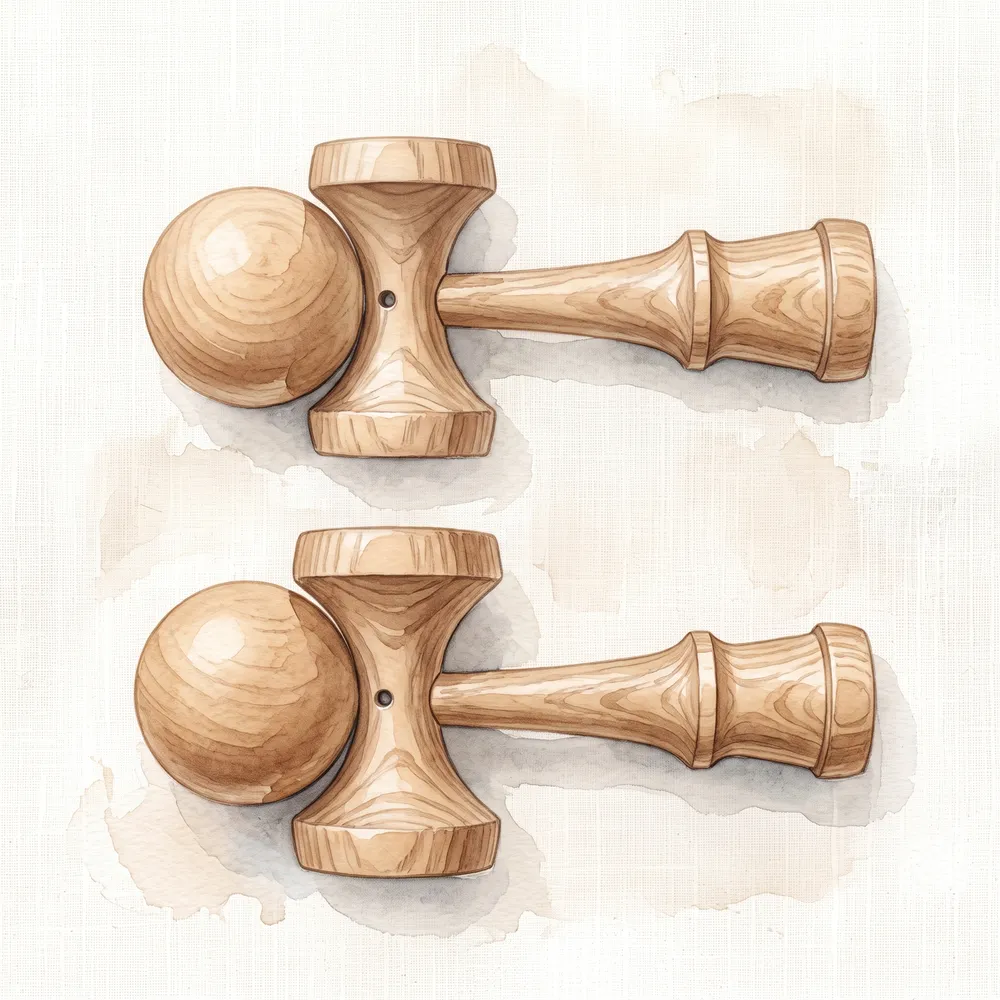
Competition kendama follow a standard called type 16-2, and only finished pieces that pass inspection are certified. Overall length 18 cm, the spike (ken) 16 cm, the cup body 7 cm wide, and a ball 6 cm in diameter.
It isn't only dimensions. The rounding of the cup rims, the anti-slip rounding, the slip angle, and even how the string is attached are all specified. Every surface the ball meets is the same on every certified kendama. Outside the standard, none of that is guaranteed — and when a trick fails, you can't tell whether to blame the toy or yourself. For a first kendama, that is the most frustrating problem to have.
Certified kendama are also required for dan (grade) examinations from first dan up, and for association-run tournaments, so everyone competes on equal terms. They carry Japan's ST toy-safety mark too, which is reassuring when you hand one to a child.
A cheap kendama isn't a bad start
An inexpensive wooden kendama is a perfectly good way to find out whether you — or your child — enjoy it. The fork in the road comes when you decide to keep going. You can manage the big and small cups on almost anything, but beyond that, the difference in the standard shows up directly in your results. The moment it becomes fun, move to a certified one.
2. Change the String Length and It's a Different Toy
The rule of thumb: the ball at knee height
This is the one thing you can check the day you buy it, and it matters most. Hold the ken with your arm hanging down: the ball should hang at about knee height. The standard is about 38–40 cm (15–16 in).
Too long, and the ball swings too far to aim. Too short, and there's no room to pull it up. Both produce the same symptom — tricks that won't land — which is why string length is so easy to overlook.
For small children, try shortening it to about 35 cm (14 in). If the string is long for their height, the ball swings back into their body. It's a matter of retying a knot, not buying a new kendama.
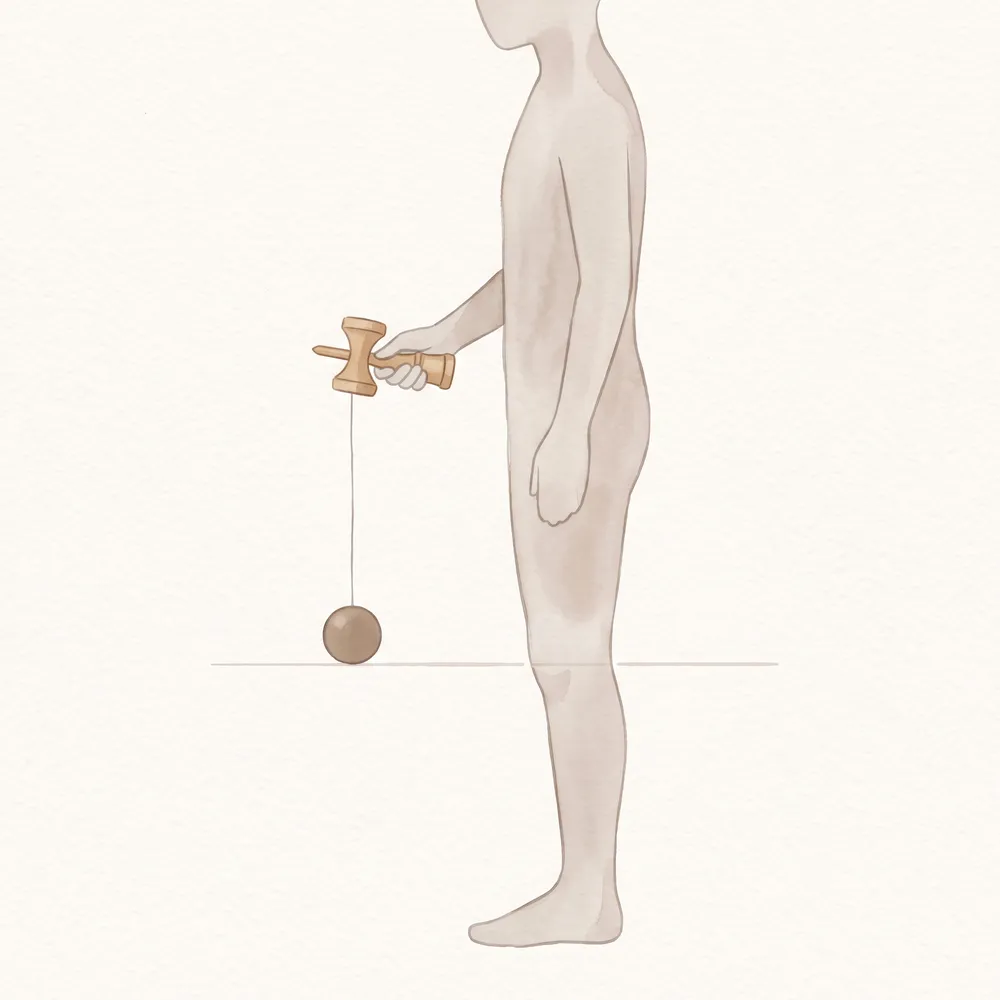
The string is simply threaded through the ken and the ball and knotted. Slide the bead off, retie it, and you can set any length. If a family shares one kendama, retie it for whoever is playing.
One note if you plan to take exams or enter tournaments: a certified kendama stops counting as certified if you add or remove paint. Adjusting the string length and adding a signature are the exceptions, so feel free to adjust it. At official association tournaments, the string must be at least 38 cm (35 cm for elementary-school players) — the rule of thumb above lines up exactly with that minimum.
3. Why Japanese: Born in Hiroshima, Made in Yamagata
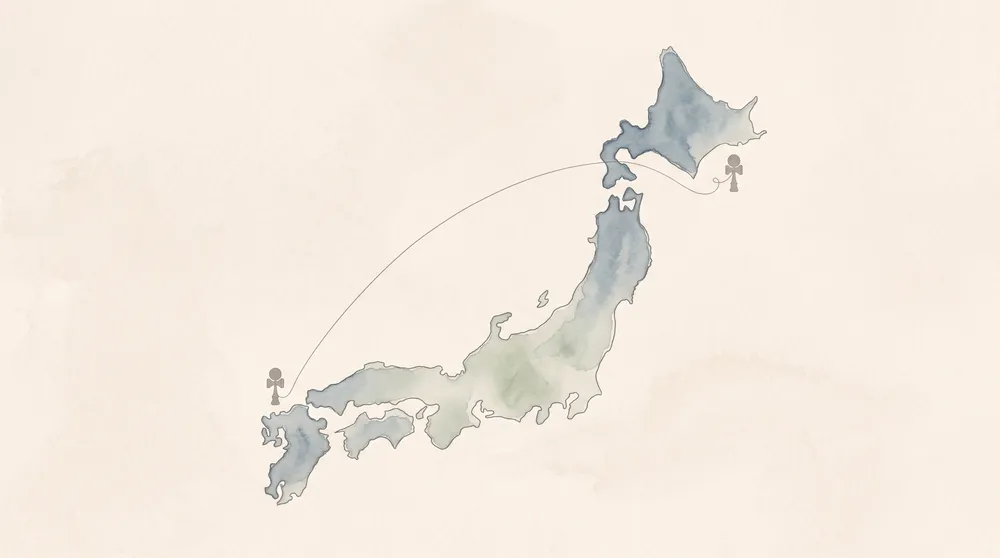
The modern kendama is said to have been born in Hatsukaichi, Hiroshima Prefecture, a woodworking town where Iwata Mokko still makes competition kendama today.
The name most associated with competition kendama, though, is Yamagata Koubou in Nagai, Yamagata Prefecture. It began as a workshop making turned-wood toys and folk crafts, started producing competition kendama in 1977, and became a designated factory of the Japan Kendama Association in 1978. Its flagship model, the Ozora, is listed on the company's own site with "country of production: Japan," and its English page describes it as an "Official Kendama (officially approved by the Japan Kendama Association)."
A Japanese word that the world kept
Kendama is one of the few Japanese words used abroad without translation. There are competitive players and world championships. Outside Japan it has grown into something closer to skateboarding than a children's toy: combos shared on video, new paint finishes developed for them, and Japanese workshops answering with new models. It didn't survive as an old-fashioned pastime — it went abroad and grew in a different direction.
Cherry for the ball, beech for the ken
The Ozora uses cherry (sakura) for the ball and beech for the ken and cup body. They are different woods for a reason: the two parts strike each other constantly, and pairing woods of different hardness wears them less. Length 18 cm, ken 16 cm, both cups 7 cm, ball 6 cm. Because these numbers are fixed, anyone holding one competes under the same conditions.
4. How to Choose: Cup Size, Paint, Wood
Once you've confirmed certification, the rest is matching it to the player. The dimensions are fixed by the standard, so there are only three things to choose.
1. Cup size: how easily the ball lands
Competition cups are 7 cm, large and small. Some models make the cups about 25% larger, and the ball lands more easily. For small children or someone picking one up after many years, this is the better start — getting that first success instead of giving up makes a real difference. Larger-cup models can still be used for kyu grades and the pre-first-dan (jun-shodan) exam, so it doesn't close the path forward.
2. Paint: slick or sticky
The same shape behaves differently with different paint. A slick finish lets the ball slide; a tacky, "sticky" finish helps it stop. The more tricks you want to learn, the more you'll want the sticky kind. Street-oriented models are finished for that grip on purpose. Your first kendama can be a standard one — think about this once it starts to feel limiting.
3. Wood: not only for looks
The standard is beech and cherry, but there are versions in keyaki (zelkova), itaya maple, and enju (Japanese pagoda tree), with the grain left visible — closer to a craft object than a toy. Above those sit urushi-lacquered and fine-wood models such as rosewood and mahogany, which are better thought of as gifts or keepsakes than competition tools.
5. Japan-Made Picks by Use
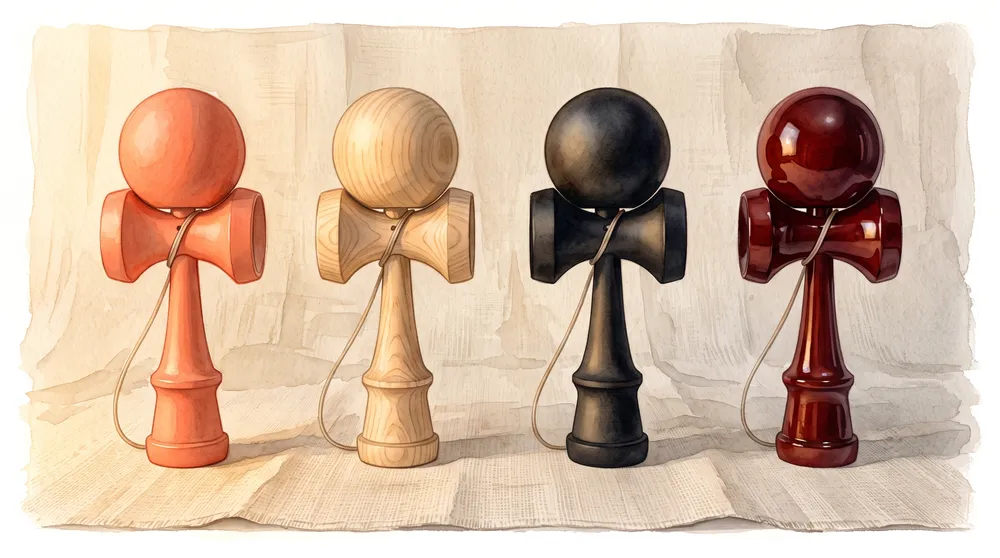
Choose by who will use it, not by which is "best." Each of these is made in Japan and is certified or recommended by the Japan Kendama Association.
The first one: Yamagata Koubou Ozora (standard colours)
If in doubt, start here. JKA-certified, so it's valid for grade exams and official tournaments. Length 18 cm, cherry ball, beech ken and cup body, roughly 140–150 g, for ages 5 and up. In Japan it costs a few thousand yen, and it will last you indefinitely. It comes in eight colours; choose by looks — they're identical inside.
Yamagata Koubou Ozora Kendama (JKA certified)
Loading product details…
For young children and returning players: Taisei (Well-being Kendama)
Cups about 25% larger, so the ball lands. Yamagata Koubou made this model for beginners: larger cups and a lighter build, so you get that first "it stayed on" moment. It is a JKA recommended product and can be used for kyu grades and the pre-first-dan exam — not just an easy toy, but something you can keep progressing on.
To enjoy the wood: Ozora in sakura, keyaki, or itaya maple
Show the wood instead of painting over it. The grain differs from piece to piece, so each one has its own face. Still certified, so still valid for exams and tournaments. For an adult choosing one for themselves, this is the sweet spot.
To build tricks: Ozora Street
A finish that makes the ball stop. Built for the street-style tricks that grew up outside Japan, with a tacky surface that helps the ball settle on the cups and spike. For players chasing combos. It doesn't need to be your first kendama — move to it once a standard one feels limiting.
From the birthplace: Iwata Mokko Mugen Musou (Hatsukaichi, Hiroshima)
From the town where kendama is said to have been born. The "Mugen," made from 2003 to 2008, returned in 2013 as the Mugen Musou, co-produced with GLOKEN. It breaks from the conventional shape and is designed so balance tricks settle more easily. It feels completely different in the hand from Yamagata's Ozora — a deliberate second kendama from a different workshop is a good way to buy.
As a gift or keepsake: urushi lacquer and fine woods
From a toy to something you display. Yamagata Koubou's urushi-lacquered Ozora and its fine-wood versions in rosewood and mahogany are woodcraft as much as toys. They are JKA "special recommended" products — think of them as gifts and keepsakes rather than competition tools. Japan's woods and craftsmanship, in the palm of your hand.
6. Buying From Outside Japan
Yamagata Koubou has an English page with its address in Nagai, Yamagata, and links to its online shop and contact form. When we checked in October 2026, it did not say whether it ships internationally, and we would rather not guess.
- Look for the certification wherever you buy. On any listing, check that it states Japan Kendama Association certification. If it doesn't, assume it isn't certified.
- Check the maker's name. Yamagata Koubou (Ozora, Taisei) and Iwata Mokko (Mugen Musou) are the makers covered here.
- Ask the maker if you want a specific model. Its English page links to a contact form.
We will add listings you can buy from abroad here as we confirm them, one product at a time.
7. Making It Last: String and Ball Care
The string is a consumable
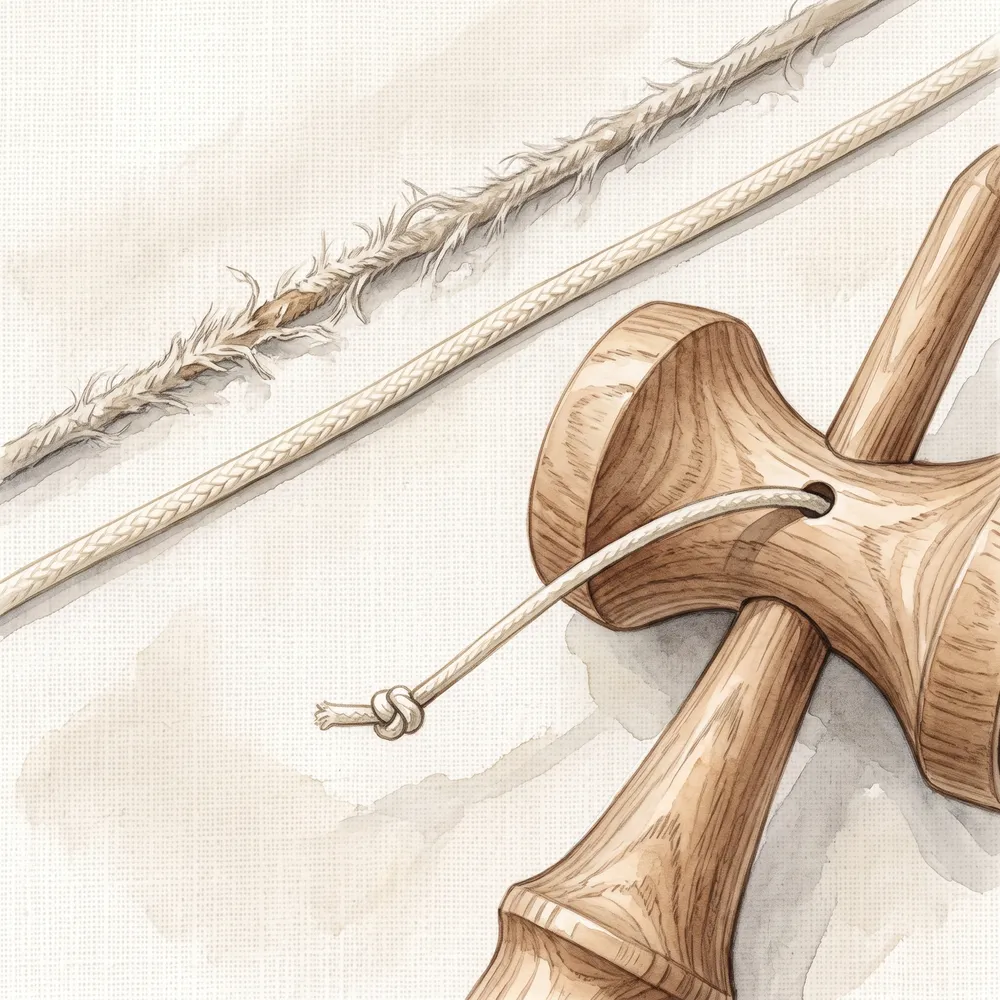
The string wears out first. It rubs in the hole of the ken and frays from there. When it gets thin, replace it before it snaps — a snapped string sends the ball flying, which is dangerous in itself. Certified kendama often come with a spare string, so check the box first; strings are also sold on their own.
A worn ball is normal
With use, the edge of the ball's hole and the cup rims wear down. That isn't damage; it's the record of play — a slightly softened edge can even help the ball seat without catching. What to watch for is moisture: it's wood, so if it's left damp it can swell or crack. Wipe it with a dry cloth after playing with sweaty hands. Replacement balls are sold too, so if the ken feels right in your hand, you can renew just the ball.
8. Frequently Asked Questions
What does "JKA certified" mean on a kendama?
It means the kendama was made to the Japan Kendama Association's competition standard and passed inspection. The standard (type 16-2) fixes the dimensions and the shape of every surface the ball touches, so certified kendama behave the same. They're required for dan exams from first dan up and for association tournaments.
What age can children start?
Competition kendama are generally for ages 5 and up. For younger children, choose a larger-cup model and shorten the string to about 35 cm. Shortening the string matters more than making it lighter — a long string swings the ball back into a small child.
How do I know if a kendama is certified?
Look at the packaging and the kendama itself. Certified kendama say so on the box and carry a sticker. When buying online, check that the listing mentions Japan Kendama Association certification — if it doesn't, it's safer to assume it isn't.
My string broke. Do I need a new kendama?
No — replace the string. It is simply threaded through the ken and ball and knotted, so you can do it yourself. Certified kendama often include a spare. While you're at it, set the length for the person who plays.
Can I take grading exams with a larger-cup kendama?
Yes, up to kyu grades and the pre-first-dan exam, because it is a JKA recommended product. Higher dan grades need a competition kendama — but by then, you'll probably want a second one anyway. Learning that the ball can land is what keeps people playing.
Is a Japanese kendama a good gift?
Yes. "Kendama" needs no explanation in most countries, and a natural-grain or lacquered one carries Japanese wood and craftsmanship without a word. Add a spare string and it's a thoughtful gift.
Final Thoughts: Check the Sticker, Set the String
If the ball never landed, it may not have been you. First, look for the Japan Kendama Association certification — the dimensions and surfaces are fixed by the standard, so a certified kendama behaves honestly.
Then set the string: arm down, ball at knee height, about 38–40 cm, or around 35 cm for small children. After that, match it to the player — larger cups for a first success, sticky paint for tricks, natural wood or lacquer to turn a toy into a craft object.
Kendama was born in Hatsukaichi, Hiroshima, and its competition standard is made in Nagai, Yamagata, where Yamagata Koubou started in 1977. In the meantime the word went around the world. A certified Ozora sits right at the centre of that story.