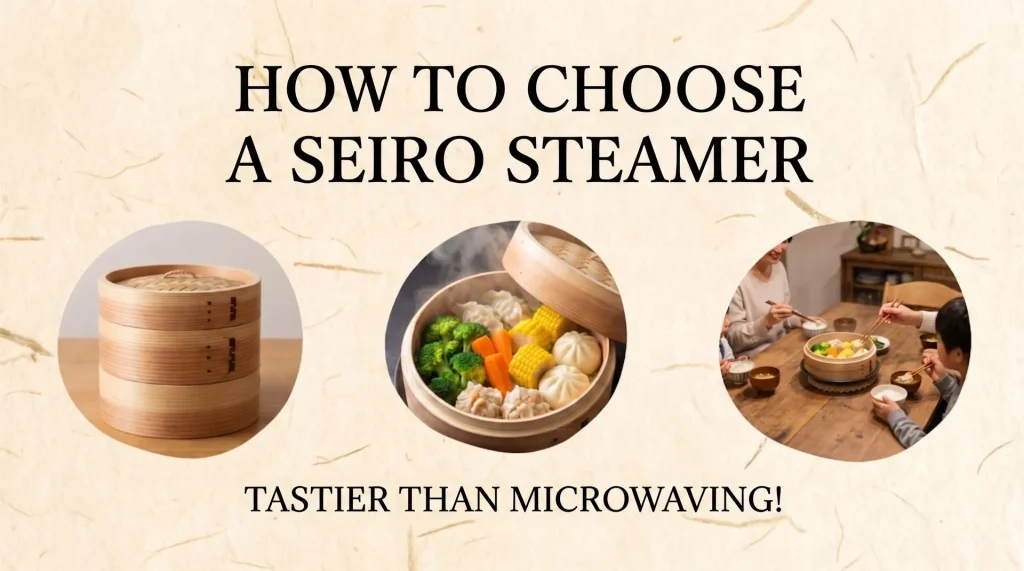
"Microwaving vegetables is good enough, isn't it?"
Scientifically speaking, microwaving and steaming are completely different cooking methods.
The defining advantage of a seiro (Japanese steamer) is that steam adds moisture as it cooks — so food stays delicious even after it cools down.
Chicken that normally dries out becomes tender and juicy. Vegetables turn remarkably sweet.
Bring the seiro straight to the table: it's both cooking vessel and serving dish, which means fewer dishes to wash.
"Won't wood mold?" — only if you put it away wet. Follow two rules: "wet it before use" and "dry it completely after", and a seiro becomes a lifetime kitchen companion.
This guide covers how to choose between Japanese hinoki (cypress) and cedar seiro, and how to keep yours mold-free for decades.
1. Microwave vs. Seiro: Why Steam Keeps Food Better
There's a clear scientific reason why seiro-steamed food tastes better.
Here's the key difference from microwave cooking.
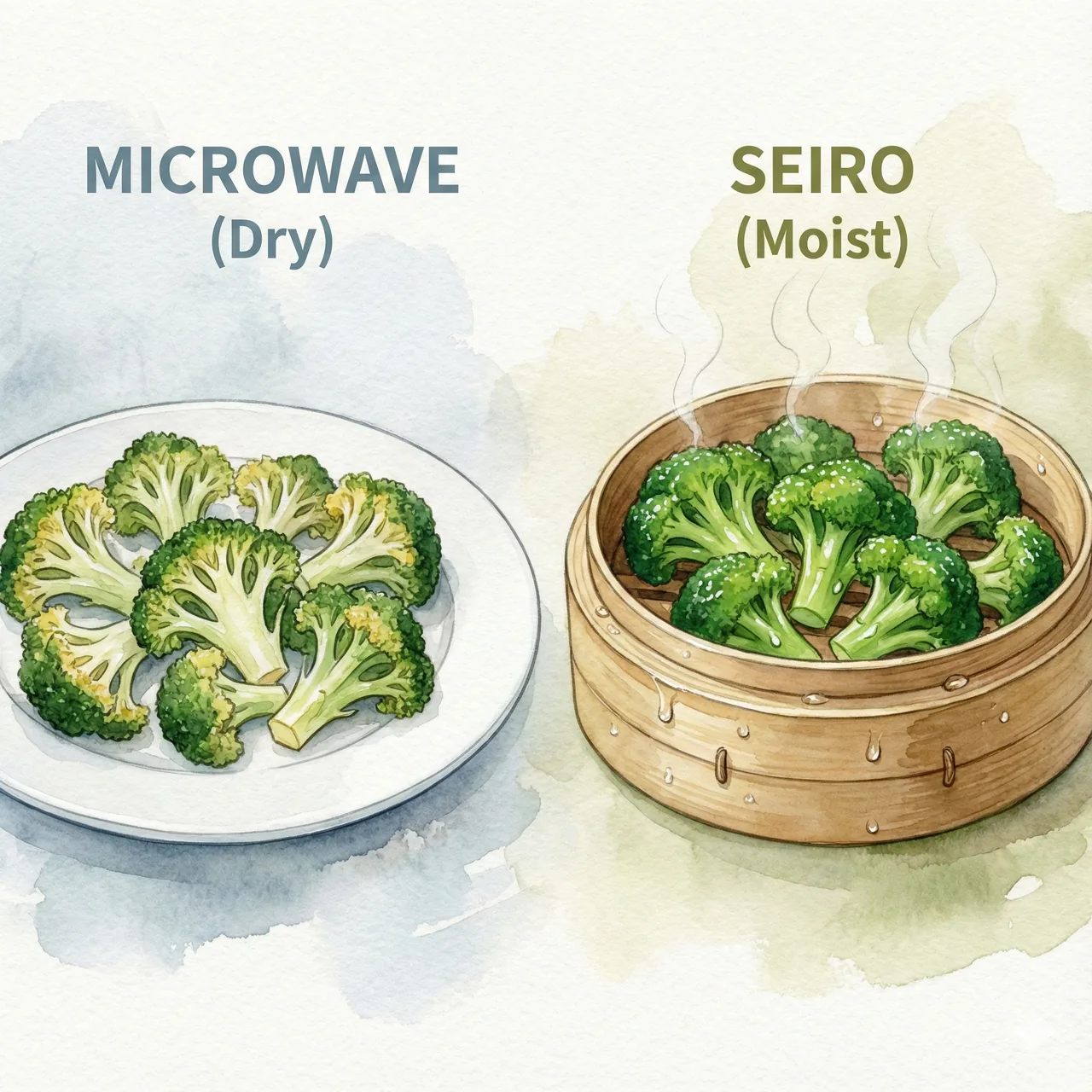
Microwaves Strip Moisture; Seiro Adds It
Microwaves generate heat by vibrating the water molecules already inside food. During this process, water escapes as steam — and when the food cools, it dries out.
A seiro, by contrast, surrounds food with abundant steam (moisture) while cooking.
Rather than losing moisture, food is infused with it as heat penetrates from every side. The result stays moist and tender even cold — ideal for reheating leftover rice or mochi too.
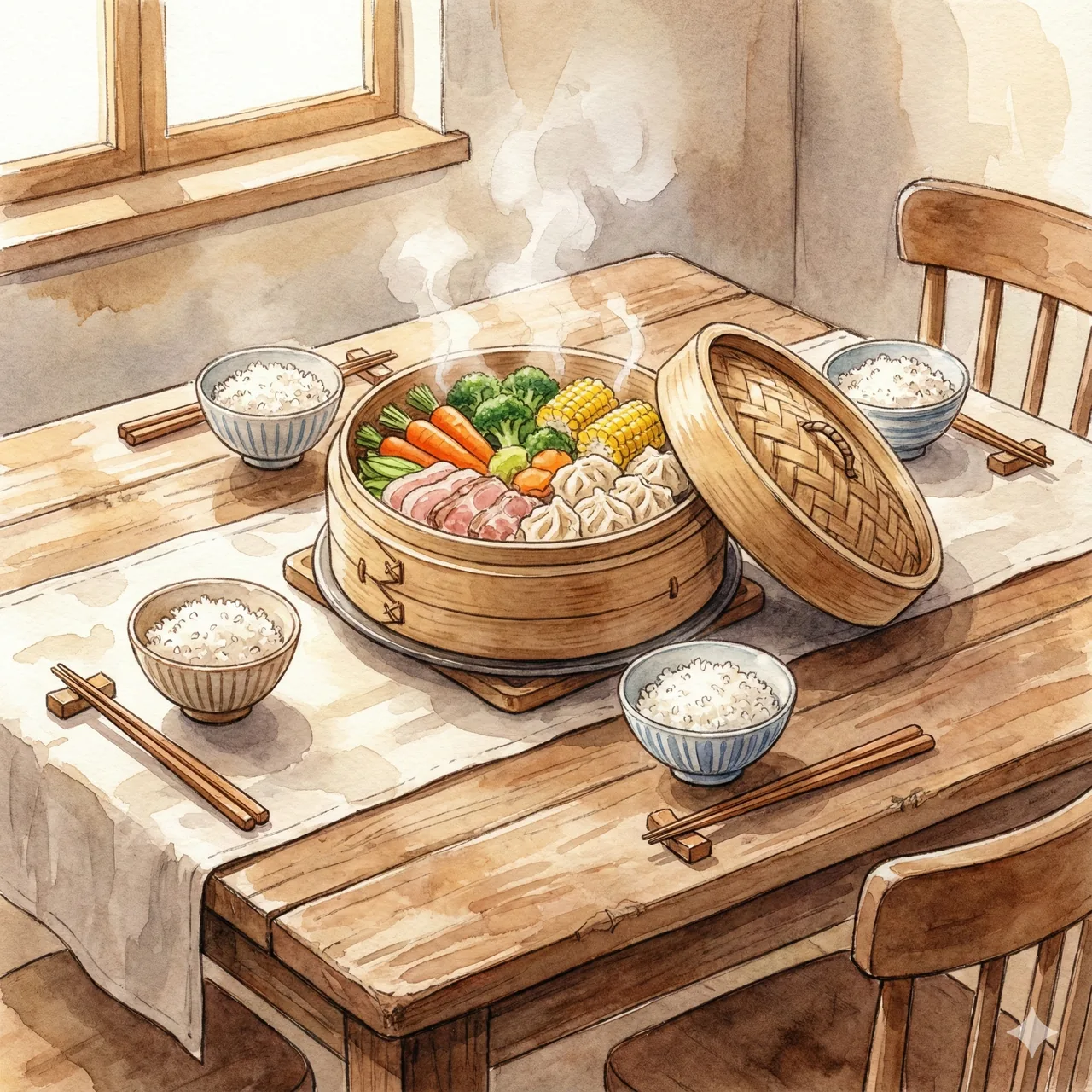
Bring It Straight to the Table — Fewer Dishes
A seiro is both a cooking vessel and a serving dish.
No need to transfer food to a plate — when it's done, it goes straight to the table.
The moment you lift the lid, a cloud of steam and the scent of wood is part of the meal.
No large serving plates, no cling wrap — a practical tool for busy people who want to eat well.
2. Hinoki, Cedar & Bamboo: Which Material Is Right for You?
Three main materials are used for seiro.
Choose based on your budget, how long you want it to last, and how much you enjoy the scent.
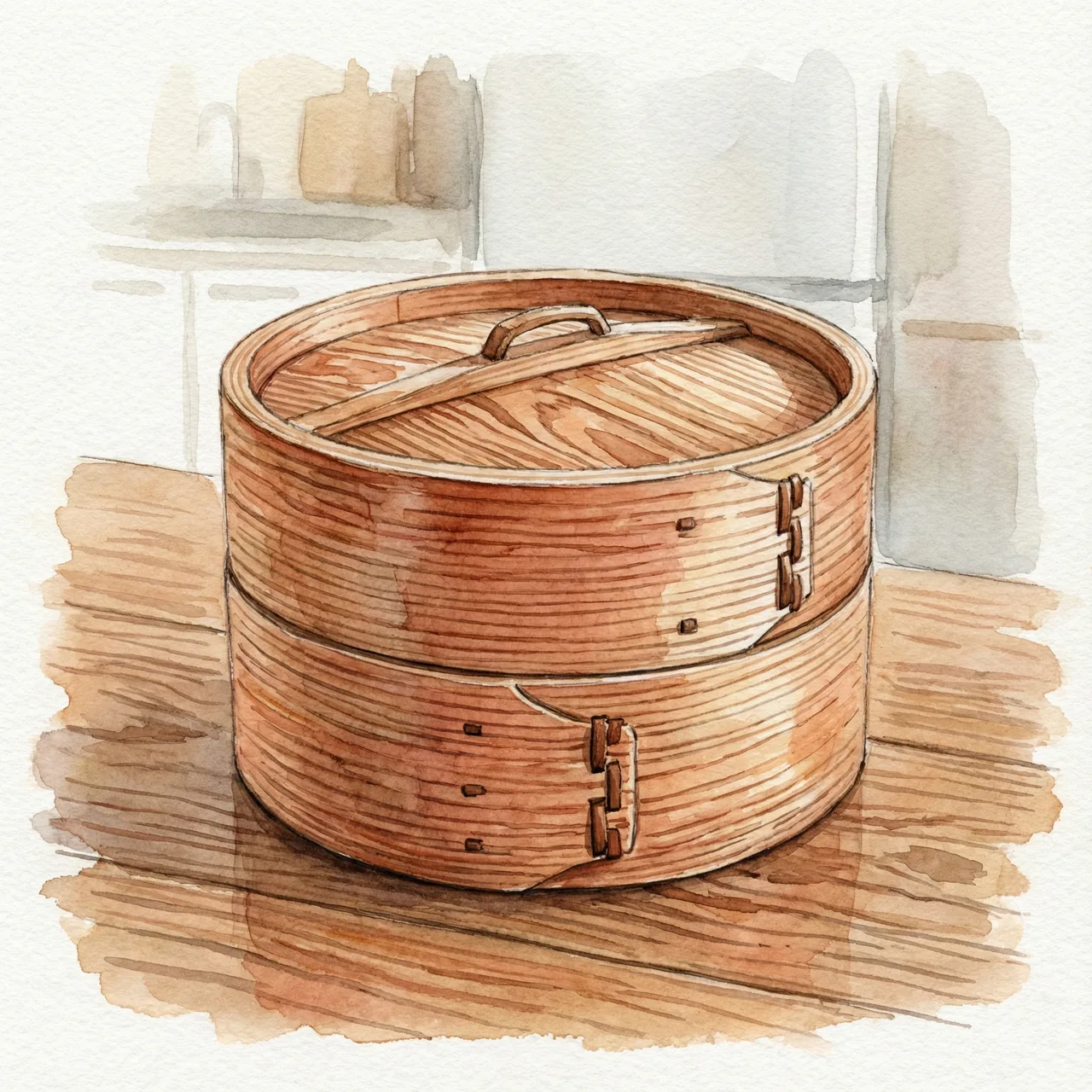
Hinoki (Japanese Cypress) — Most Durable, Professional Choice
Beautiful grain and exceptional strength.
The signature quality is its calming forest aroma — it transfers subtly to food, adding a sense of luxury.
Higher in price, but hinoki's natural resin makes it highly water-resistant. Cared for properly, it lasts 10+ years.
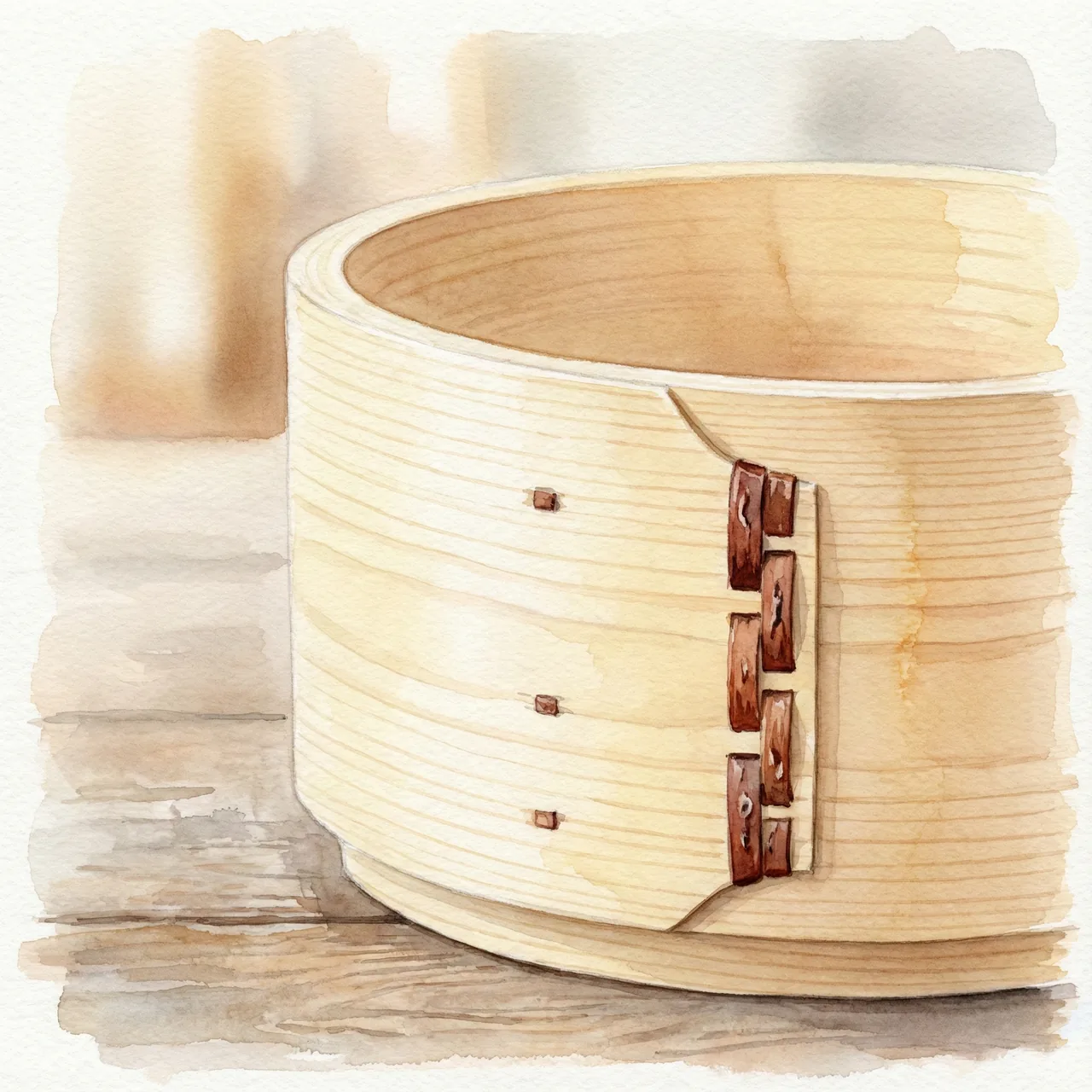
Fine craftsmanship details like cherry-bark fasteners are common on quality hinoki models.
Cedar (Sugi) — Excellent Moisture Absorption, Gentle Aroma
Prominent grain, light weight, and outstanding moisture-regulation properties.
Cedar absorbs excess condensation from food, making it especially good for steaming rice dishes.
More affordable than hinoki and well-balanced for everyday use.
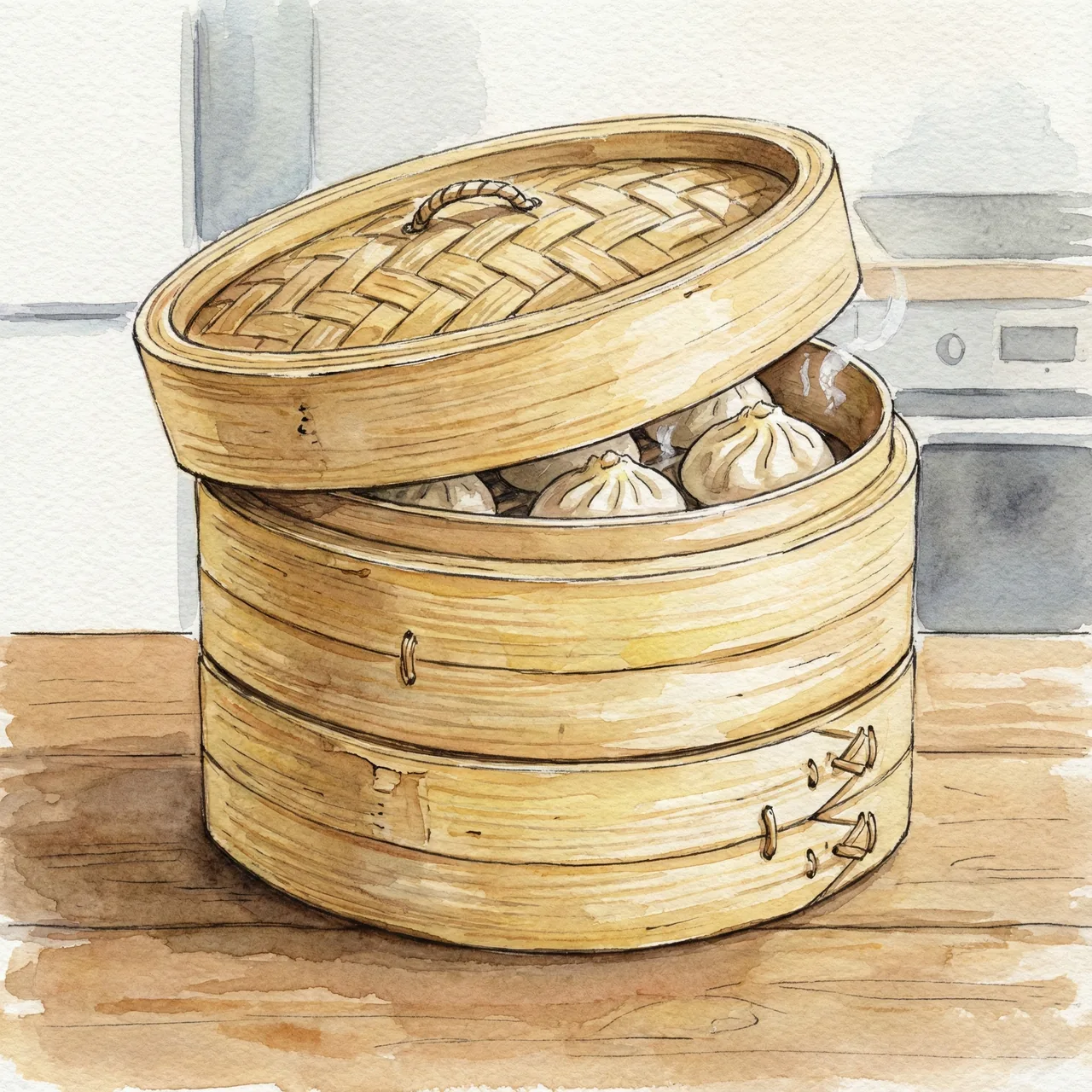
Bamboo — Affordable but Requires Careful Drying
Common in Chinese-style dim sum steamers. The most accessible price point.
Lower moisture absorption than wood means condensation droplets may drip onto food. Bamboo fibers also mold more easily if not dried thoroughly — diligent care is essential.
3. Size Guide & the Mushita Plate: No Dedicated Pot Needed
Size and pot compatibility are the two questions that puzzle first-time buyers.
A mushita (steaming plate) solves both at once.
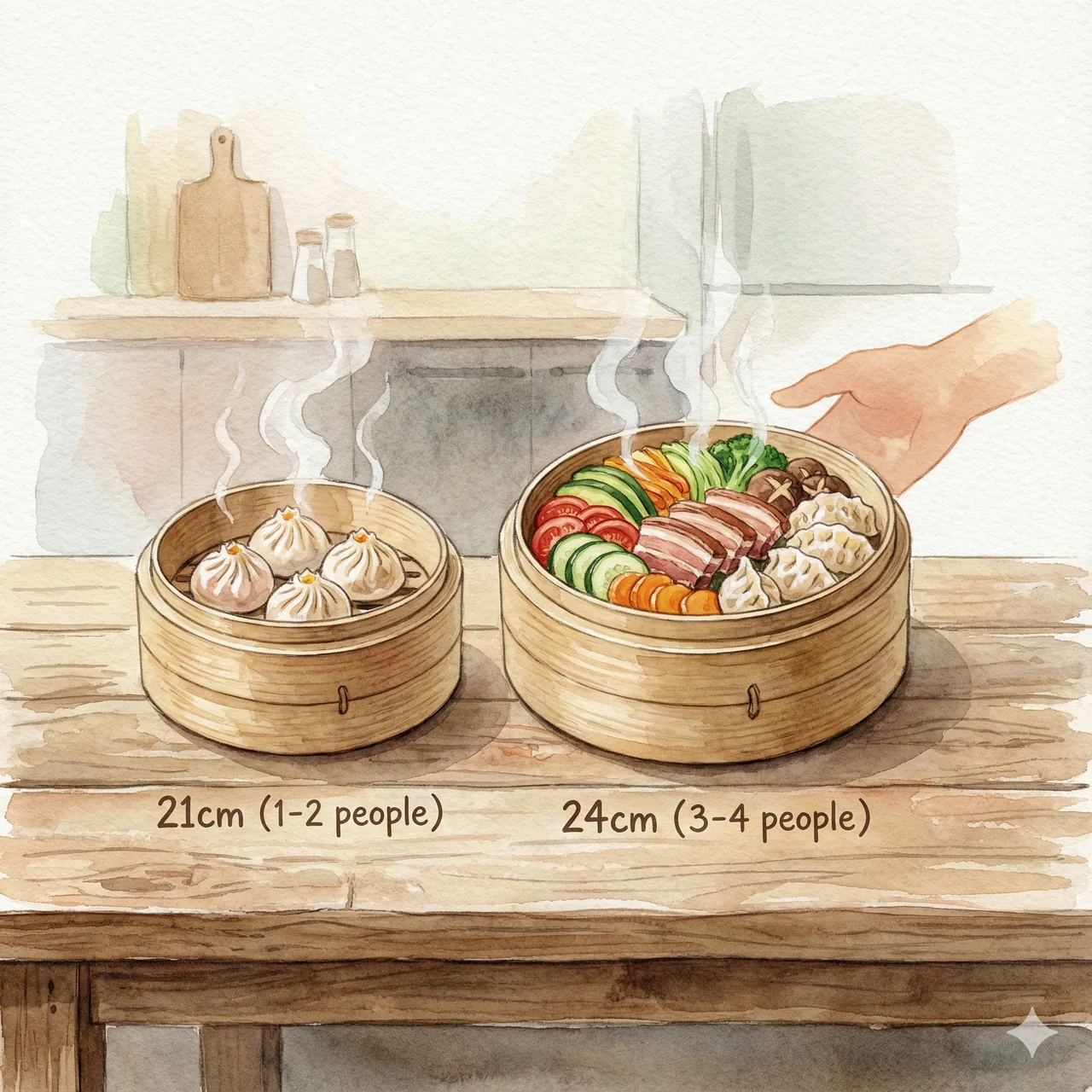
Recommended Sizes by Household
18–21 cm (1–2 people): Perfect for side dishes and dumplings. Small enough not to dominate the table.
24 cm (3–4 people): The right size for main courses and family-sized steamed buns.
27 cm and above: For large families or steaming a whole fish.
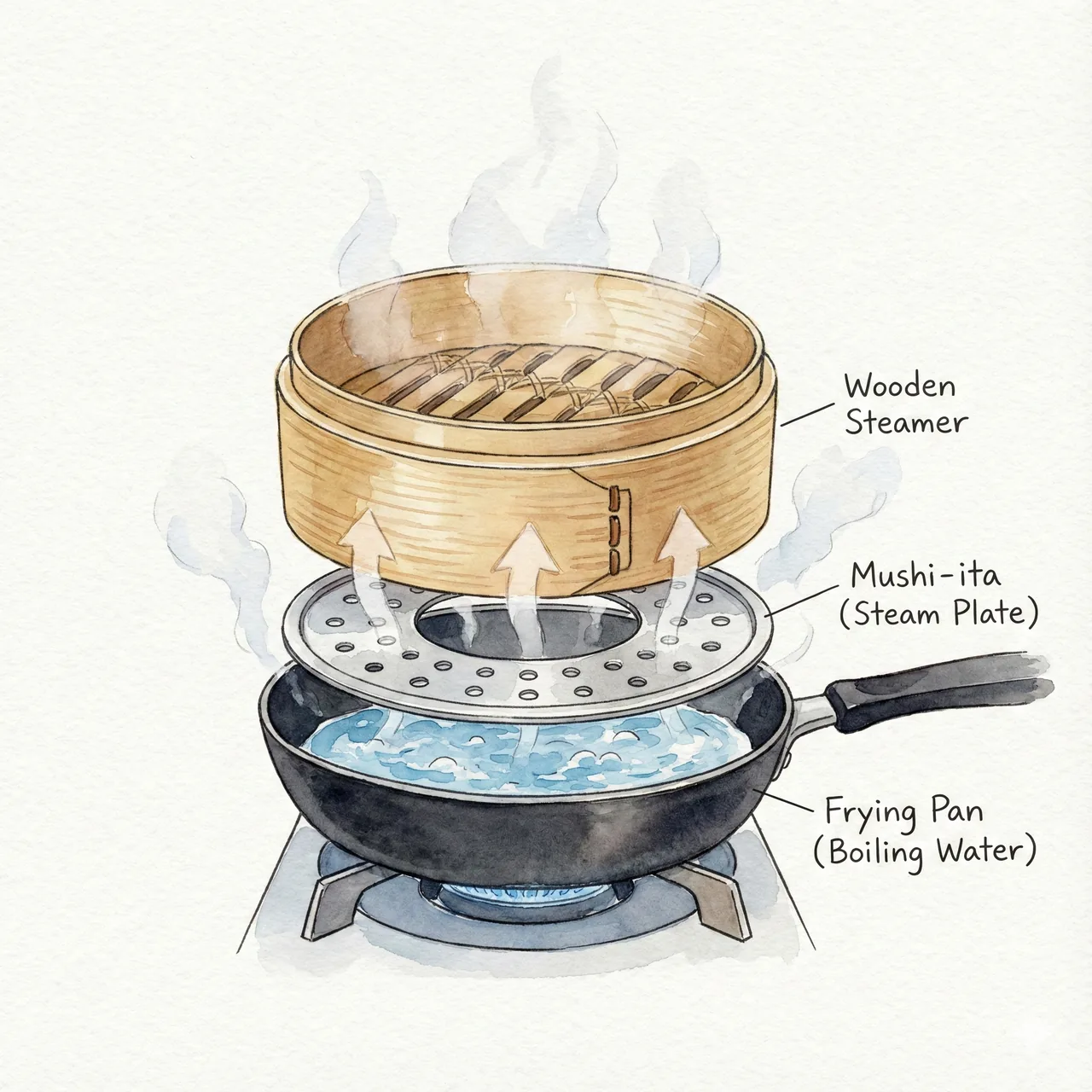
The Mushita Plate: Use Any Pan You Already Own
You don't need a seiro-specific pot.
A mushita (stabilizing ring plate) — a donut-shaped metal disc — lets you rest a seiro stably on any frying pan or saucepan you already have.
It also prevents direct flame from scorching the seiro's rim. Strongly recommended as a bundle purchase with your first seiro.
4. Top Japanese-Made Seiro Brands: Kiso Hinoki & Akita Cedar
Inexpensive imports can carry adhesive odors — a concern with something used directly on food. Japanese traditional craft seiro are made without food-unsafe adhesives and are safe from day one.
Kiso Magewappa Craftsmen — Hinoki Seiro (Nagano)
Crafted from Kiso hinoki — one of Japan's three great forest timbers.
Built using the same magewappa (bentwood) joinery techniques that make Kiso bento boxes famous, the lid fits with precision that seals in steam completely.
Thick hinoki construction gives it high durability and makes it a true lifetime-keep. The woven ajiro (lattice) pattern on the lid is also a work of craftsmanship in its own right.
Shibata Keishin Shokai — Akita Cedar Seiro (Akita)
The pinnacle of magewappa seiro in unfinished white cedar.
This storied brand's commitment to uncoated (shiraki) Akita cedar means the natural wood actively absorbs excess moisture from food — steamed rice and root vegetables come out sweeter than you'd believe.
The deep, tight-fitting lid traps steam with precision, and the meticulous construction has made it a first-choice pick among professional cooking instructors and food writers.
5. Mold-Prevention Care: Why Wetting Before Use Changes Everything
Keeping a seiro for life comes down to two rules:
"Don't scorch it" and "Don't let it mold." Here's how.
Before Use: Wet the Entire Seiro (Most Important Step)
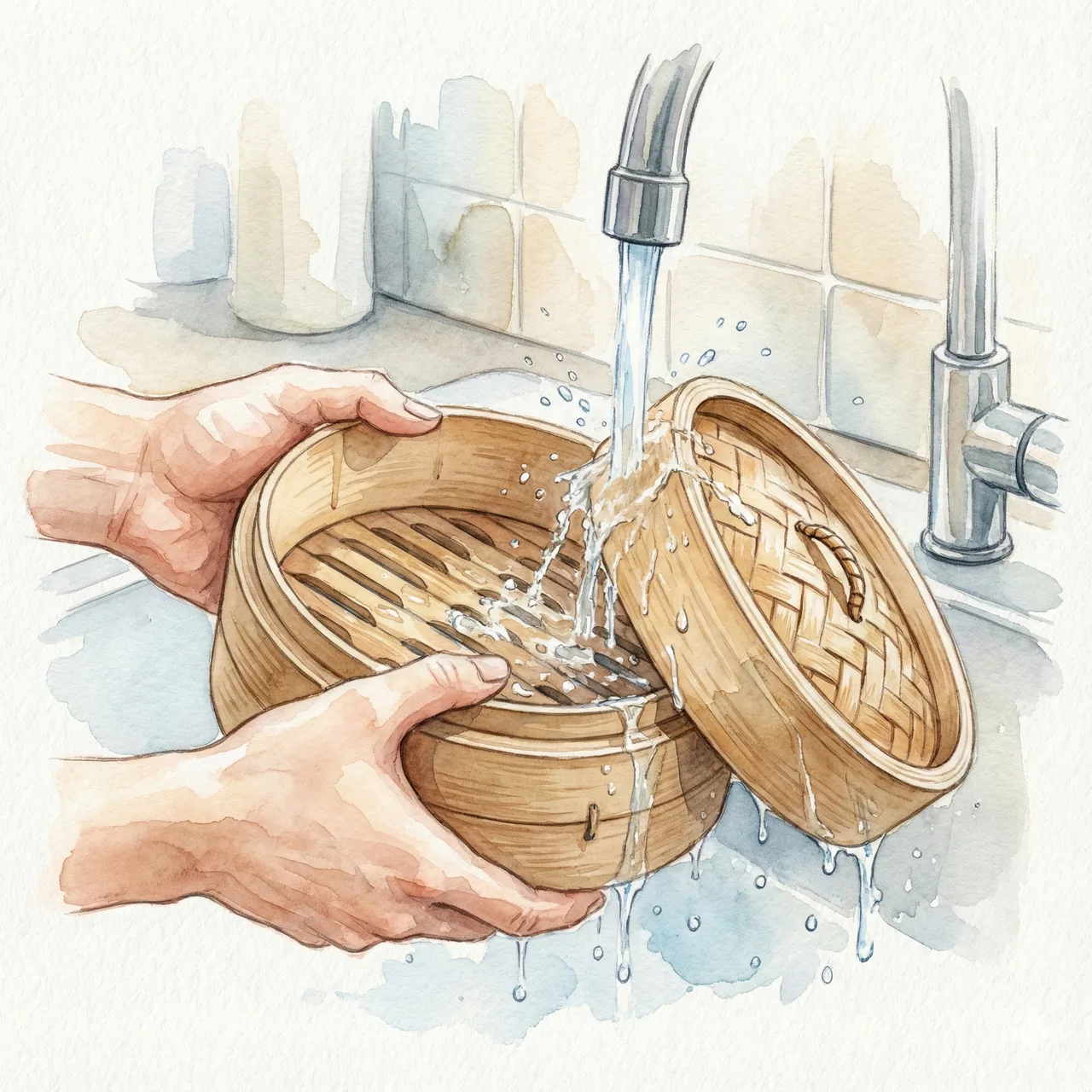
Before every use, quickly rinse the entire seiro — lid and body — under running water.
Saturating the wood prevents food odors and oil from soaking in.
It also keeps the pot's heat from scorching the seiro's base.
After Use: No Soap — Hot Water Rinse & Shade Dry
To protect the wood's natural oils, use only hot water and a tawashi brush for regular cleaning.
If meat fat has built up heavily, a small amount of diluted dish soap is acceptable — rinse immediately and thoroughly.
After washing, dry completely in a shaded, ventilated spot.
For storage, never seal in a plastic bag — store in a paper bag or leave it out in a well-ventilated kitchen cabinet.
You might also enjoy:
Pair your seiro meals with great Japanese seasonings and tools.
6. Final Thoughts: A Table Filled with Steam and Warmth
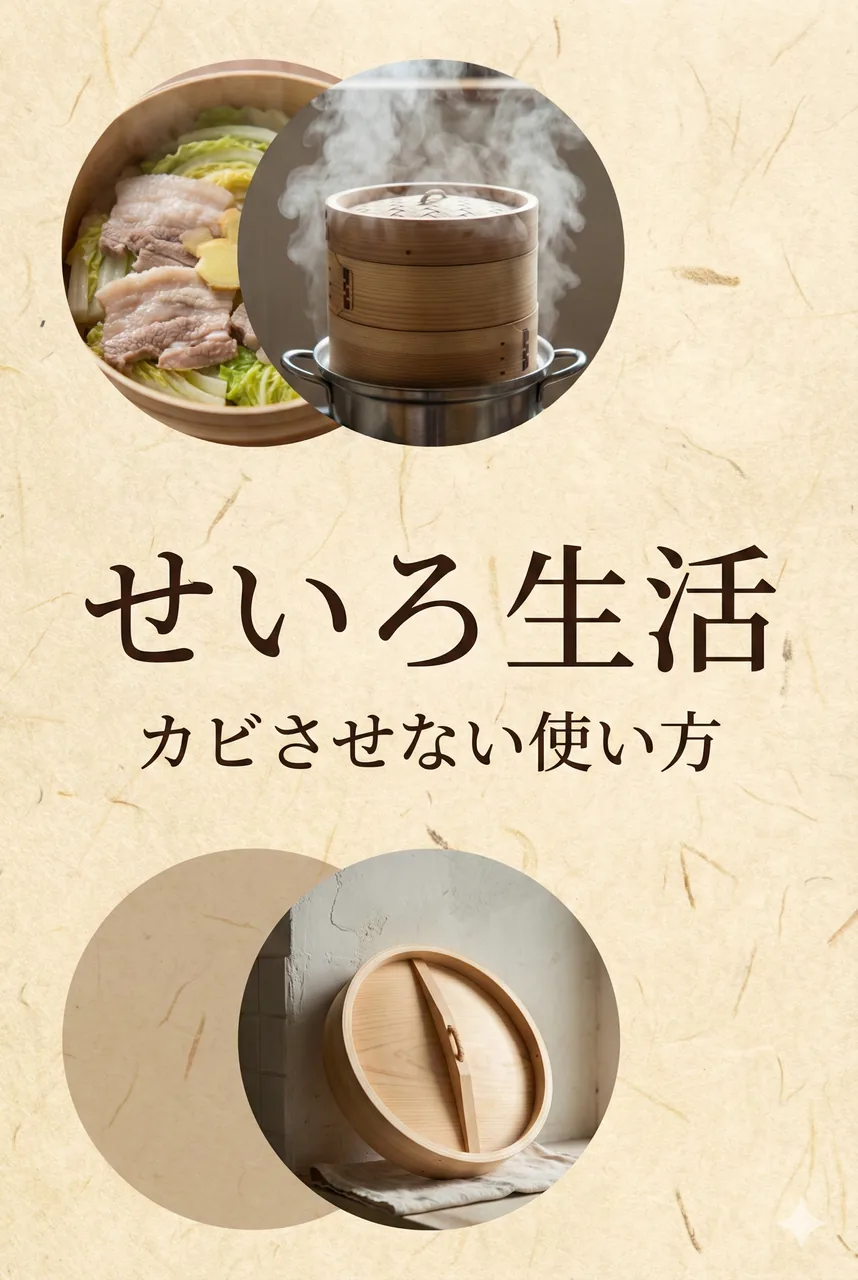
A seiro life is simpler and richer than you might expect.
Pack whatever vegetables are left in the fridge, steam for a few minutes, and you have a naturally sweet, vibrant dish.
Summary: How to Choose
· For aroma and longevity, choose Kiso hinoki seiro
· To use with pots you already own, always add a mushita plate
· For side dishes or a 1–2 person household, 21 cm is the ideal starting size
The rush of white steam and the scent of warm wood when you lift the lid.
Bring that small, beautiful moment to your table every day.