Kiso Koma-jirushi
Japanese-hinoki steamers and bent-wood kitchen tools, built for strength.
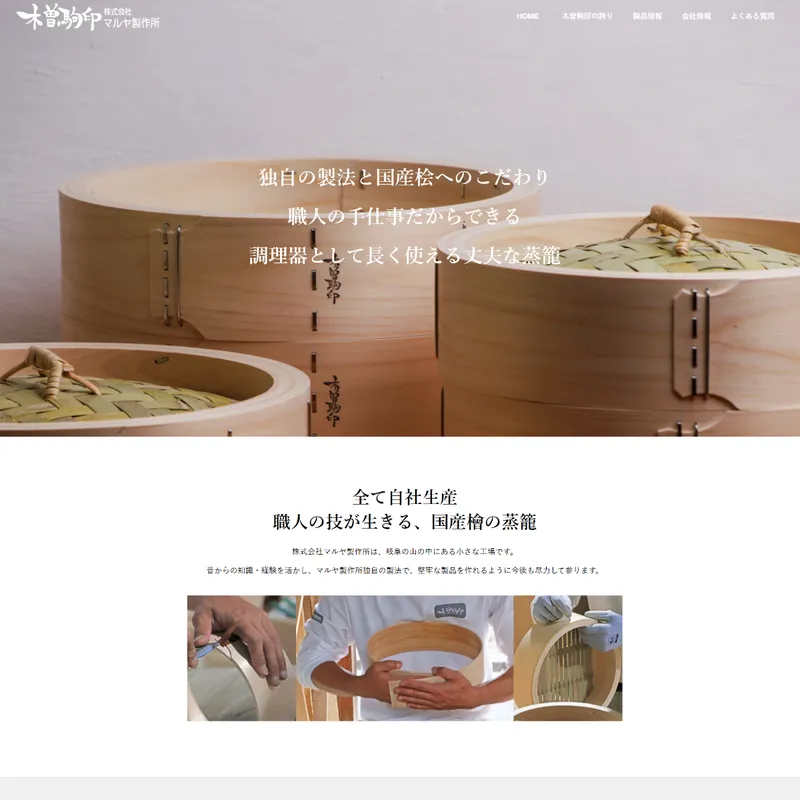
Maruya Seisakusho Co., Ltd. runs a small workshop in Tsukechi, Nakatsugawa (Gifu), and builds kitchen tools under the Kiso Koma-jirushi mark. Their core work is professional Chinese-style steamers (seiro), alongside Japanese steamers, ohitsu rice tubs, buckets, flour sifters, and uragoshi strainers. They use Japanese hinoki such as Tono and Kiso hinoki, bending boards in-house through a process that spans nearly 30 steps. The goal is simple: steady fit, dependable strength, and tools you can keep using in real kitchens. The Kiso Koma-jirushi mark represents the wish to deliver "tools made in Japan" honestly — from standard sizes to large custom orders and handle specifications, accompanying every "this is how I want to use it" in the kitchen.
Why We Love It
If you're choosing your first seiro, start with a standard size from 21-30cm. From 24cm and up, the body is taller and built thicker for added strength. Stack a few tiers for shumai or bao, steam vegetables and serve right at the table, or pick the compact 15cm for single portions. Before steaming, wet the wood to help prevent scorching, then rinse and dry in the shade. A light spray of rubbing alcohol can help reduce mold and darkening during storage.
PROFILE About the Company / Workshop
Maruya Seisakusho is based at 11002-3 Tsukechi-cho, Nakatsugawa, Gifu. The company focuses on bent-wood kitchen tools used every day, with professional steamers at the center. Their main sales channel is business-to-business, working with wholesalers and distributors for professional use. Phone and fax support is available, and their stated contact hours are 10:00-17:00.
The history begins in September 1953, when the founder's great-grandfather, Yoneichi Yasue, started making hand-split hoops. In September 1970, the first generation, Kenichi Yasue, began producing Chinese steamers, Japanese steamers, and uragoshi strainers. After training in Tokyo to learn seiro-making, he returned to Tsukechi and started production. In February 1970, the workshop also built the base for machine-assisted production using sawn hinoki boards. A new factory was established in 1994. In 2007, the company name was changed to Maruya Seisakusho Co., Ltd., and since 2010 the CEO has been the third-generation representative, Kensuke Yasue.
A seiro goes through close to 30 steps. Maruya uses Japanese hinoki — Tono hinoki and Kiso hinoki — and bends the boards in-house. By combining long-held know-how with their own forming equipment, they aim to minimize gaps and keep quality stable. They also make use of side boards left after cutting pillar timber, a practical way to avoid waste. In their FAQ, they note that wood will age (color changes and small cracks can happen) and emphasize that, as a toolmaker, strength comes first.
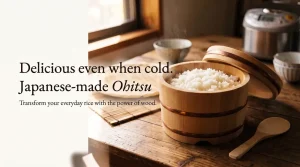
The lineup covers standard Chinese steamers (15cm and 21-30cm), plus custom sizes with movable or fixed handles and an inro-style type. For larger custom pieces, the bottom board can be woven from bamboo and reinforced with stainless bars. They also make an 18cm ohitsu (for about 3 go of rice) with carefully aligned cherry-bark stitching and no metal fittings, which allows microwave use. Other bent-wood items include Japanese steamers, flour sifters, buckets, and uragoshi strainers using horsehair mesh. Custom orders are handled when craftsmen availability allows.
In-house craft, steady fit
From bending to final fit, everything stays in-house. A seiro is said to take close to 30 steps, and Maruya combines traditional know-how with their own forming equipment. The result aims for fewer gaps and consistent stability in daily use.
Japanese hinoki, used wisely
They work with Japanese hinoki such as Tono and Kiso hinoki. One notable detail is using "side boards" left after cutting pillar timber — making the most of good wood rather than wasting it. Cleaner grain is selected for a better feel and finish.
Woven bamboo lid, smart sizes
Their lids are woven from bamboo, designed to let steam escape gently so condensation is less likely to drip onto food. Sizes include 21-30cm plus a compact 15cm. From 24cm upward, the body becomes 1.5cm taller with an extra wrap and thicker boards for added strength.
Toolmaker mindset, strength first
They describe themselves as toolmakers, not makers of decorative crafts — and strength is the priority. Large custom pieces can be reinforced with stainless bars, and bonding is kept to a minimum while using an adhesive that complies with Japan's Food Sanitation Act. It's a pragmatic, kitchen-first approach.
PRODUCTS Featured Products & Services
Contains promotional content
![[SALIU x Kiso Koma-jirushi] Wappa Ohitsu 7-sun (3-4 go)](https://made-in-japan.jp/en/wp-content/themes/mij-en/img/brands/maruyaseiro)
[SALIU x Kiso Koma-jirushi] Wappa Ohitsu 7-sun (3-4 go)
A wappa-style ohitsu (7-sun) holding about 3-4 go of rice. A model listed as Kiso Koma-jirushi production.
[SALIU x Kiso Koma-jirushi] Wappa Ohitsu 7-sun (3-4 go)
Also a 7-sun wappa ohitsu. A type listed as natural wood of hinoki/sawara — a standard frame also chosen for gift use.
[SALIU x Kiso Koma-jirushi] Wappabon Small 24cm
A round wappa tray (small). 24cm size — a type listed as natural wood of hinoki/sawara.
[SALIU x Kiso Koma-jirushi] Wappabon Large 30cm
Large size wappabon (30cm). With a round tray shape — an easy-to-use size for carrying to the dining table or as a "plating stand."
[Made in Japan] Kiso Koma-jirushi Hinoki Chinese Seiro 21cm Lid (Flat type)
Kiso Koma-jirushi "Hinoki Chinese Seiro" 21cm lid single item. Listed as the flat type.
[Made in Japan] Kiso Koma-jirushi Hinoki Chinese Seiro 24cm Body (Flat type)
24cm size body (tier) single item. Listed as a body part with lid sold separately — also a type usable for tier addition.
[Made in Japan] Kiso Koma-jirushi Hinoki Chinese Seiro 24cm Lid (Flat type)
Kiso Koma-jirushi 24cm lid single item. Listed as a part to use together with body (24cm).
Kiso Koma-jirushi Chinese Seiro Body/Lid (21cm / 24cm)
A Chinese seiro choose-able by combination of body and lid. A product noting that the "Kiso Koma-jirushi" stamp is on the side.