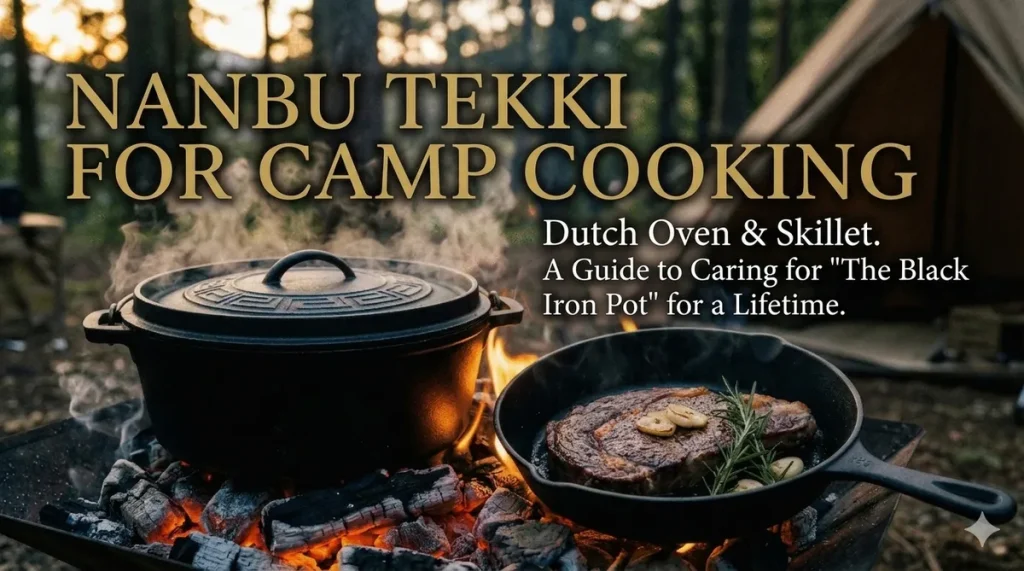
"I want my camp cooking to taste as good as restaurant food — but nothing I've tried gets there."
"Western dutch ovens are great, but they're absurdly heavy and the care routine puts me off."
There's an answer to both problems, and it comes from one of Japan's most celebrated craft traditions:
Nanbu Tekki
(南部鉄器) — cast iron from Iwate Prefecture, Japan.
You might know Nanbu Tekki as the source of those elegant iron teapots. But the same foundry craft that produces
them also makes Dutch ovens and skillets that rival — or beat — anything from abroad in terms of heat retention,
tight-fitting lids, and the way they transform ordinary ingredients into extraordinary meals.
This guide covers OIGEN and Iwachu, two of the most respected names in Japanese cast iron, along with everything you
need to know about seasoning, care, and what to cook first.
Series: This article is part 2 of the "Outdoor & Hobby Tools" series.
Quick Reference: Dutch Oven & Skillet at a Glance
| Type | Best Use | Weight | Maintenance |
|---|---|---|---|
| Dutch Oven | Braising, steaming, baking | 3–6 kg | Seasoning required |
| Skillet | Searing, stir-frying, grilling | 1–2 kg | Seasoning required |
| Grill Pan | Grill marks, char-searing | 1–3 kg | Moderate upkeep |
| Iron Rice Pot | Rice cooking, simmering | 1–4 kg | Dry & oil after use |
1. Why Cast Iron Makes Camp Food Taste Better
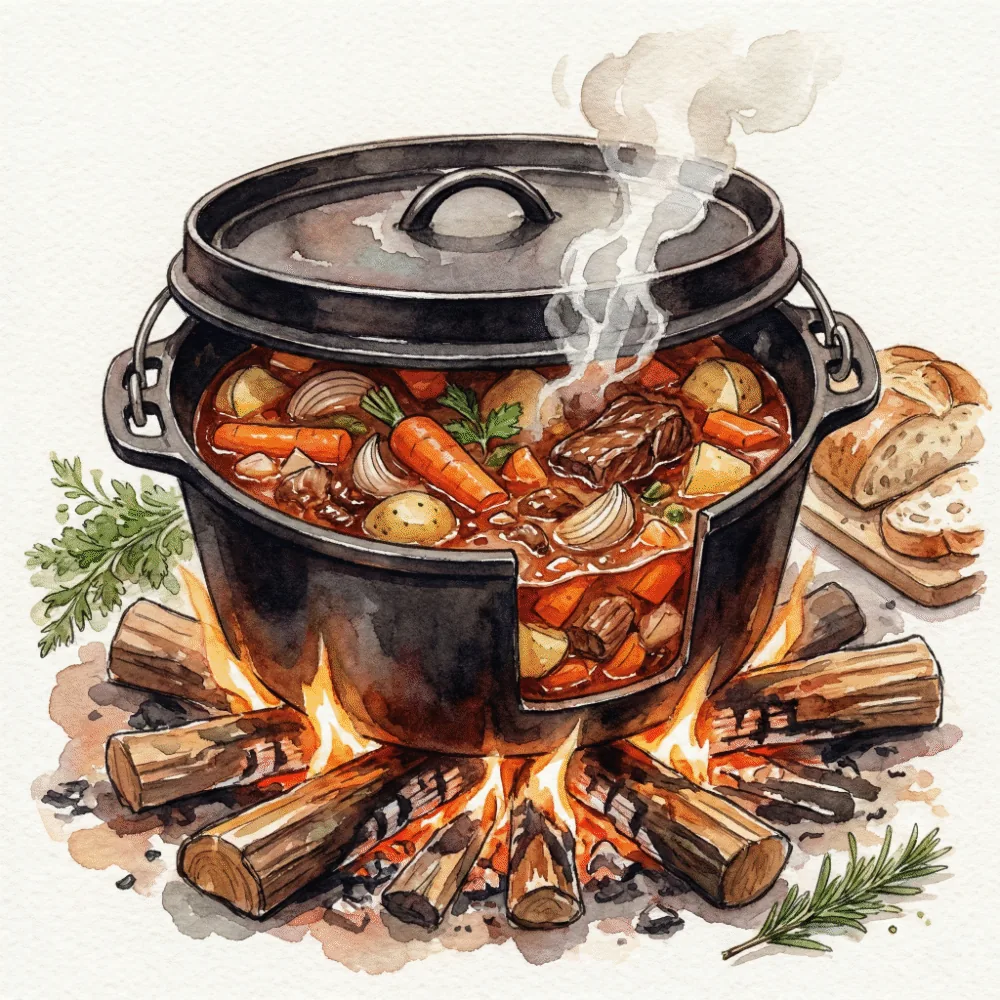
When people think of black camp cookware, the classic American Dutch oven usually comes to mind. But Japan has its own centuries-old tradition of cooking over open flames in thick cast iron — and the results speak for themselves.
What "casting" does that stamped metal cannot
Unlike stainless steel or aluminum pots, Dutch ovens and Nanbu Tekki cookware are made by pouring molten iron
into sand molds — a process called casting. This allows the walls and base to be made thick and uniform.
Thick iron gets hot slowly but stays hot. Once you hit cooking temperature, the heat is stored and released
evenly — including the gentle far-infrared radiation that penetrates food deeply, the same principle behind a
proper clay oven or tandoor.
That's why a steak seared in cast iron develops a crust no stainless pan can match, and why a curry braised in a
Dutch oven tastes like it's been slow-cooking all day even if it's only been an hour.
2. Why Nanbu Tekki Excels Outdoors — Heat Retention & Tight Seal
Iwate Prefecture's Nanbu Tekki has a delicate, refined image — but don't let that fool you. In practical outdoor cooking terms, it outperforms many imported Dutch ovens.
Precision fitting from craftsmen, not machines
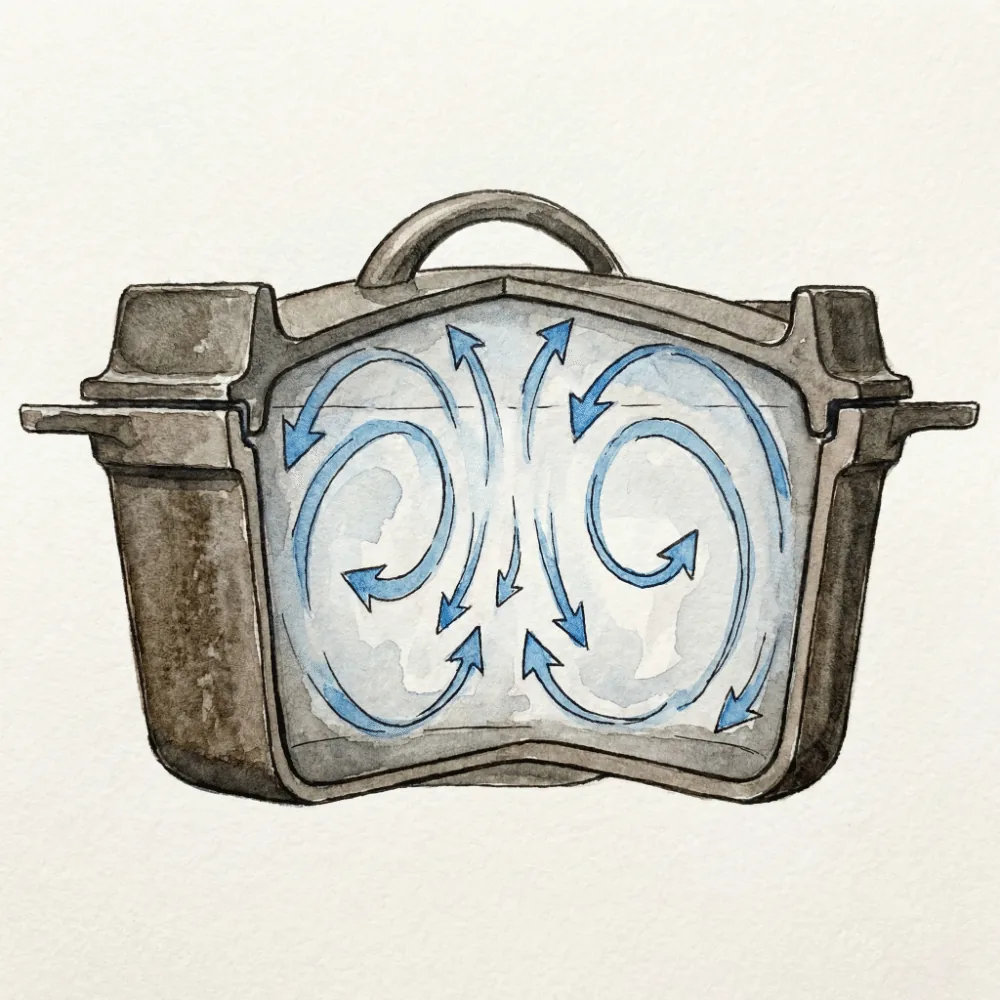
Budget Dutch ovens often let steam escape around the lid gap, losing moisture and pressure. Japanese Nanbu Tekki
craftsmen grind and hand-fit each lid to its body, creating a seal that functions almost like a pressure cooker
lid.
This tight seal enables true waterless cooking — the natural moisture in your vegetables is all you need to
braise meat or make curry from scratch.
The micro-textured surface of the cast iron also absorbs oil rapidly, becoming naturally non-stick much faster
than smooth-surface competitors.
3. OIGEN (Oigen Foundry) Dutch Oven — Functional Beauty from 1852
Founded in 1852, OIGEN is Nanbu Tekki's most forward-looking brand — traditional craft meets sleek modern design, earning fans among outdoor chefs worldwide.
OIGEN Dutch Oven (Tenka)
Flip the lid and you have a skillet — one pot, unlimited possibilities.
OIGEN's Dutch ovens are famous for a clever design detail: the lid, when inverted, becomes a flat-bottomed
skillet. That means you can braise a stew in the base while searing steaks on the upturned lid at the same
time — over the same fire.
Models with extended legs can be nested directly into coals or set over a trivet, keeping them stable over
open flames without any additional gear.
OIGEN Nanbu Tekki Dutch Oven (Tenka)
A reversible-lid Nanbu Tekki Dutch oven by OIGEN. The lid doubles as a flat-bottomed skillet — perfect for camp cooking or kitchen use. Available via the OIGEN official store.
Visit Official Site4. Iwachu Skillet — The Global Standard of Nanbu Cast Iron
Known internationally as "IWACHU," this maker sparked the global Nanbu Tekki boom with their colorful enamel teapots. Their cookware is equally exceptional.
Iwachu Cast Iron Skillet
Simple, honest performance — restaurant-quality sear marks at home or camp.
Iwachu's cookware preserves the best of traditional Nanbu Tekki while making it accessible for everyday modern
cooking.
The skillet's generous wall thickness means it holds heat long enough to produce a proper, deep sear on meat —
the kind of Maillard crust that turns a good steak into a great one.
Many Iwachu models are IH-compatible, making them equally at home on a campfire and your kitchen induction
cooktop.
Iwachu 9.5" Nanbu Tekki Cast Iron Frying Pan
A traditional Nanbu Tekki frying pan from Iwachu, built for decades of use. Ideal for searing, grilling, and everyday cooking. IH-compatible.
View on AmazonBonus: Iwachu Iron Rice Pot — Recreate the Flavor of a Kamado Oven
Beyond skillets, Iwachu has crafted one of the finest dedicated rice pots available — a piece that turns ordinary rice into something remarkable.
Iwachu Cast Iron Rice Pot (5-cup capacity)
Fluffy rice and golden okoge — the magic of the kamado, reinvented for cast
iron.
The thick cast-iron walls distribute heat so evenly that rice cooks the way it does in a traditional
wood-fired kamado stove: fluffy throughout, with an optional crispy bottom crust (okoge) that's
considered a delicacy.
The interior is finished with a traditional black firing process. Over time it absorbs oil into its
micro-pores, becoming naturally non-stick and even contributing trace amounts of iron to your food.
Cook it over a campfire for a genuinely memorable outdoor breakfast, or simply use it on your stovetop at home
to discover what your everyday rice has been missing.
Iwachu Cast Iron Rice Pot, 5-Cup (Inner Enameled)
A traditional cast-iron rice pot that replicates kamado-oven results on any heat source. 5-cup capacity with inner enamel coating. Induction compatible.
View on Amazon5. Seasoning Ritual — How to Build the Perfect Non-Stick Surface
The first thing you do with a new cast-iron pot is season it. It sounds involved, but it only takes about 30 minutes and you'll only need to do the full process once.
The five-step seasoning process
- Wash with soap: This one time only, use dish soap and hot water to remove the factory coating.
- Dry over heat: Wipe dry, then place over a flame until all moisture is gone and the metal is completely hot.
- Apply a thin oil coat: Rub a thin layer of cooking oil (vegetable, lard, or flaxseed) over every surface, inside and out.
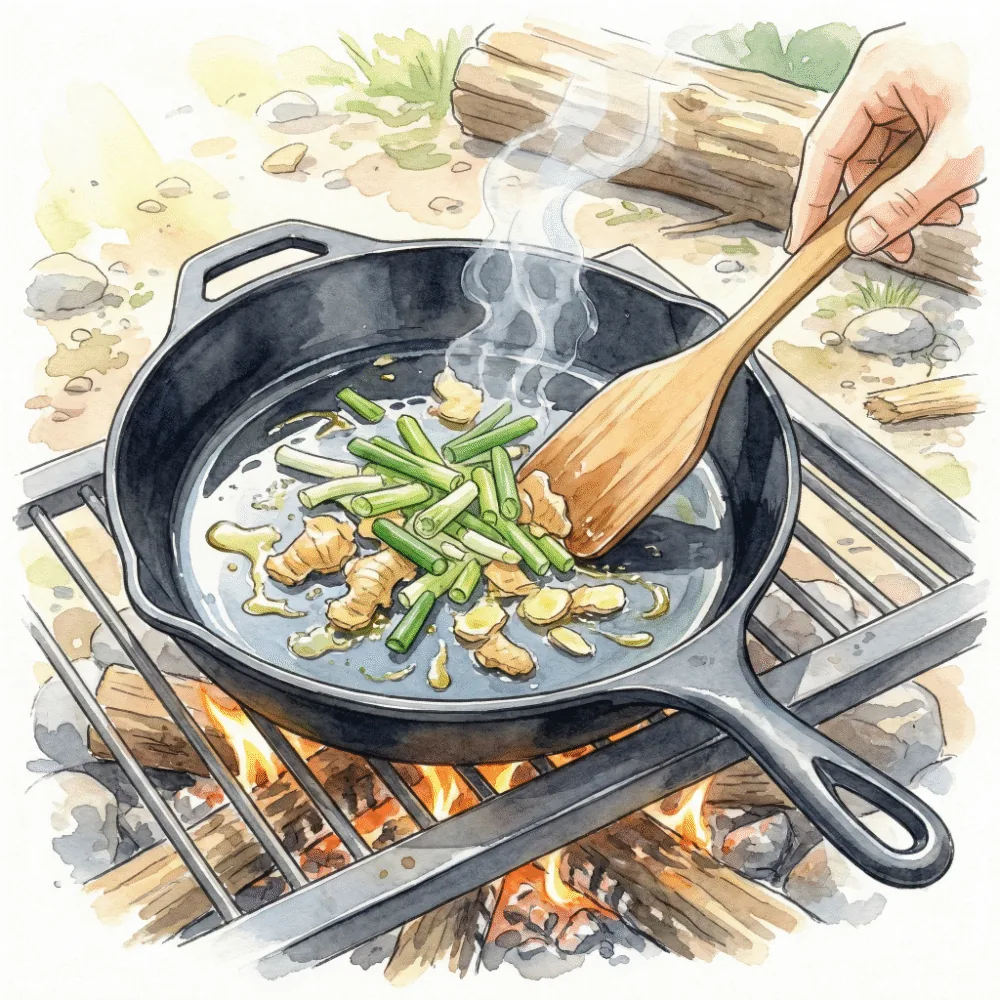
- Sauté vegetable scraps: Fry onion skins, ginger scraps, or green tops to drive away any metallic odor.
- Final oil coat: A last thin layer, wipe off the excess, and you're done.
With each use the oil layers polymerize and bond to the iron, building a natural coating that gets better over
years of cooking.
Watching your pot slowly turn jet black is oddly satisfying — it's a visual record of every meal you've made
together.
6. What to Cook First — Waterless Curry to Campfire Bread
Once your Dutch oven is seasoned and ready, here are three dishes that show off exactly what it can do.
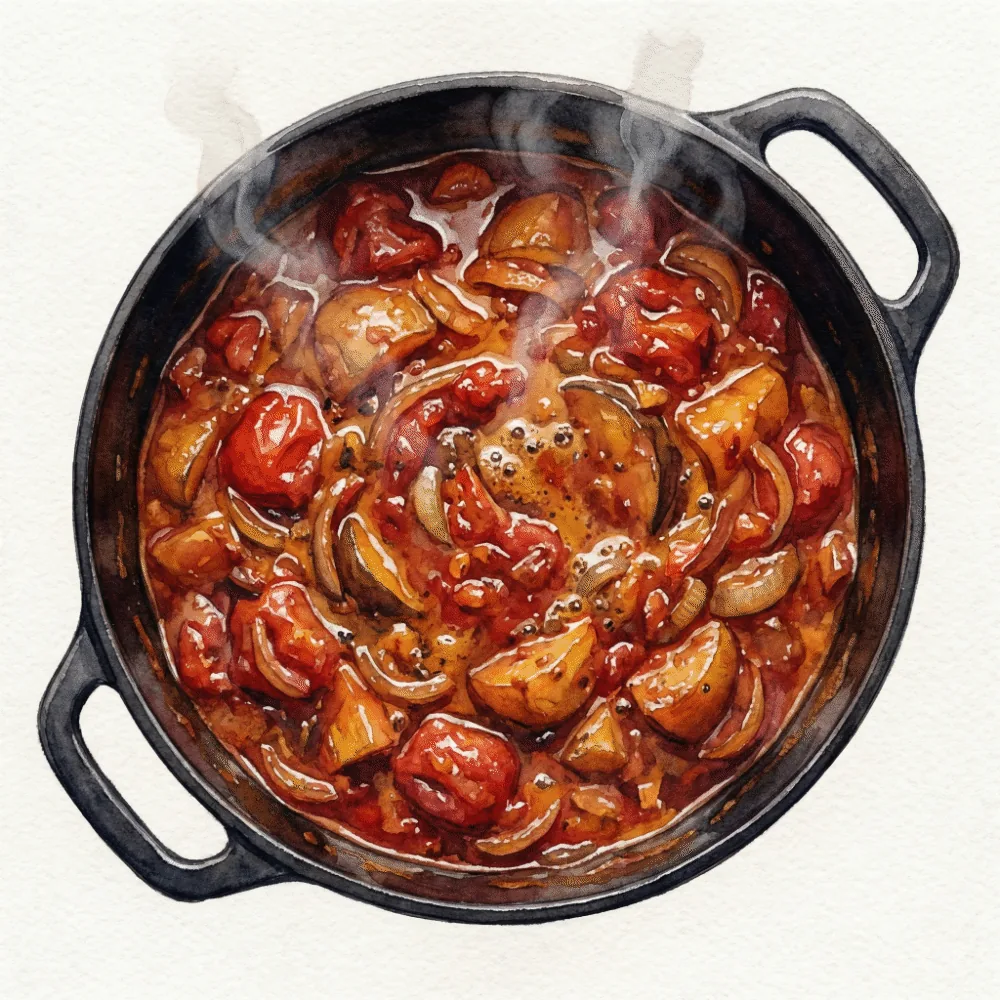
① Waterless Curry
No water at all — just the natural moisture locked inside your vegetables.
This is the dish that best demonstrates the tight-lid seal of Nanbu Tekki.
Layer in tomatoes, onions, and whatever vegetables you like, seal the lid, and braise over low heat. In 40
minutes you'll have a curry so concentrated and rich it tastes like it simmered all day.
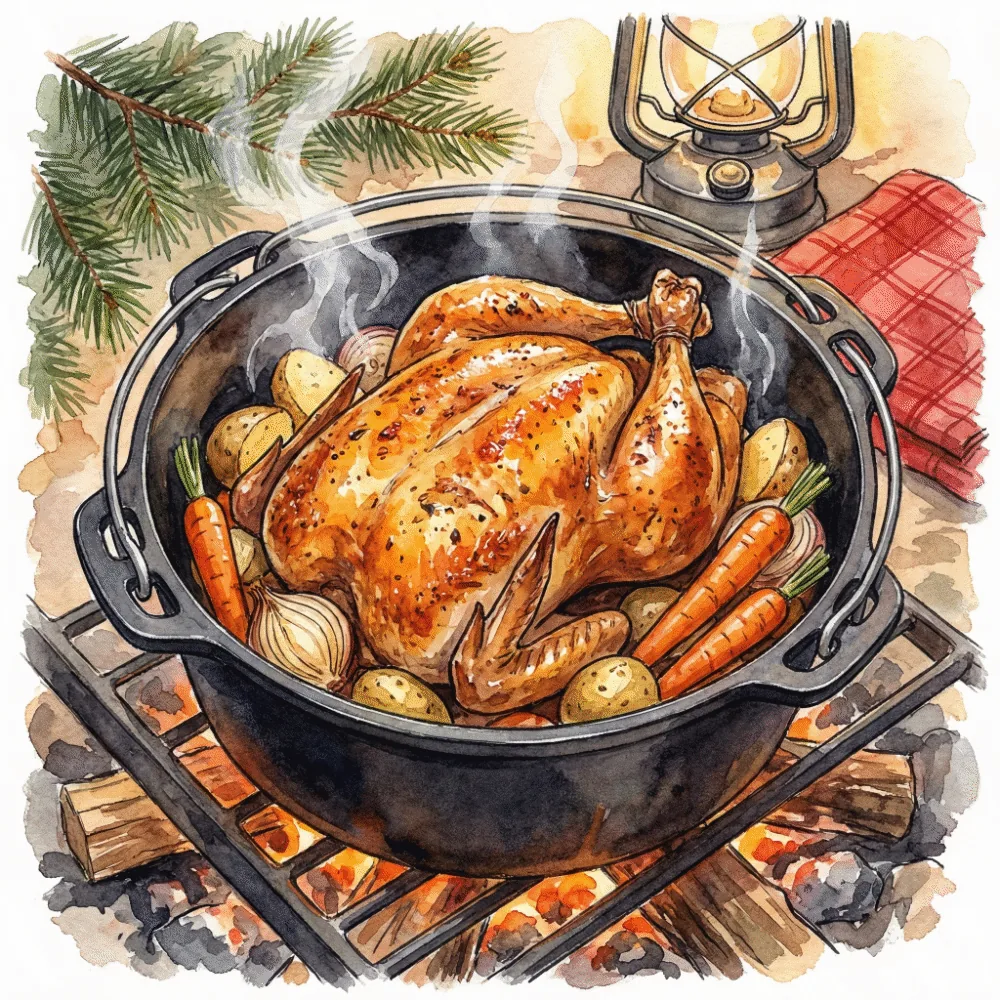
② Roast Chicken
Drop in a whole bird and let the cast iron do the work.
Using "top heat" (placing hot coals on the lid) turns your Dutch oven into a full-surround oven. The result:
crackling skin, impossibly juicy interior, and the kind of "lid reveal" moment that earns applause from everyone
at the campsite.
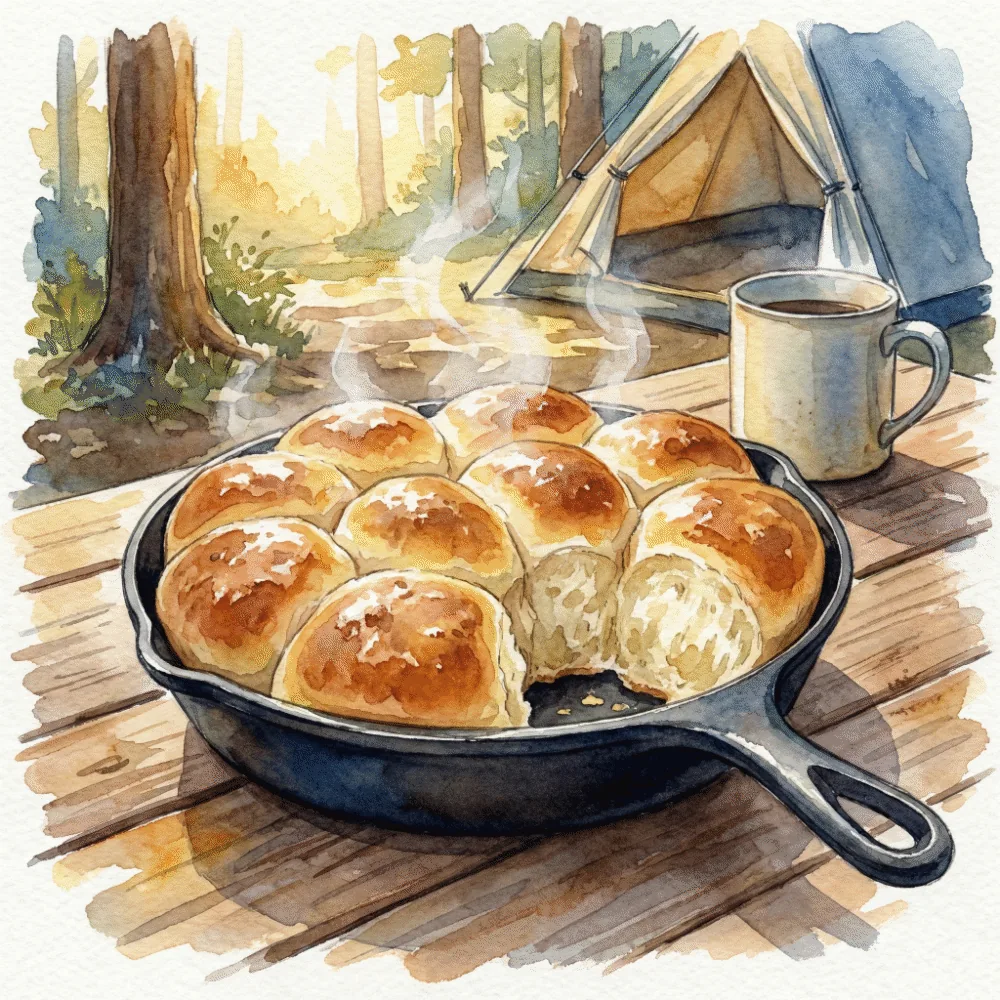
③ Campfire Bread
Fresh bread for breakfast in the woods — it's easier than it sounds.
Cast iron holds the even heat that makes bread bake properly, with a crisp crust and airy crumb.
Tear-and-share rolls or focaccia work especially well; no kneading machine needed, just a dough made the night
before.
7. Post-Use Care — The Three Steps That Prevent Rust
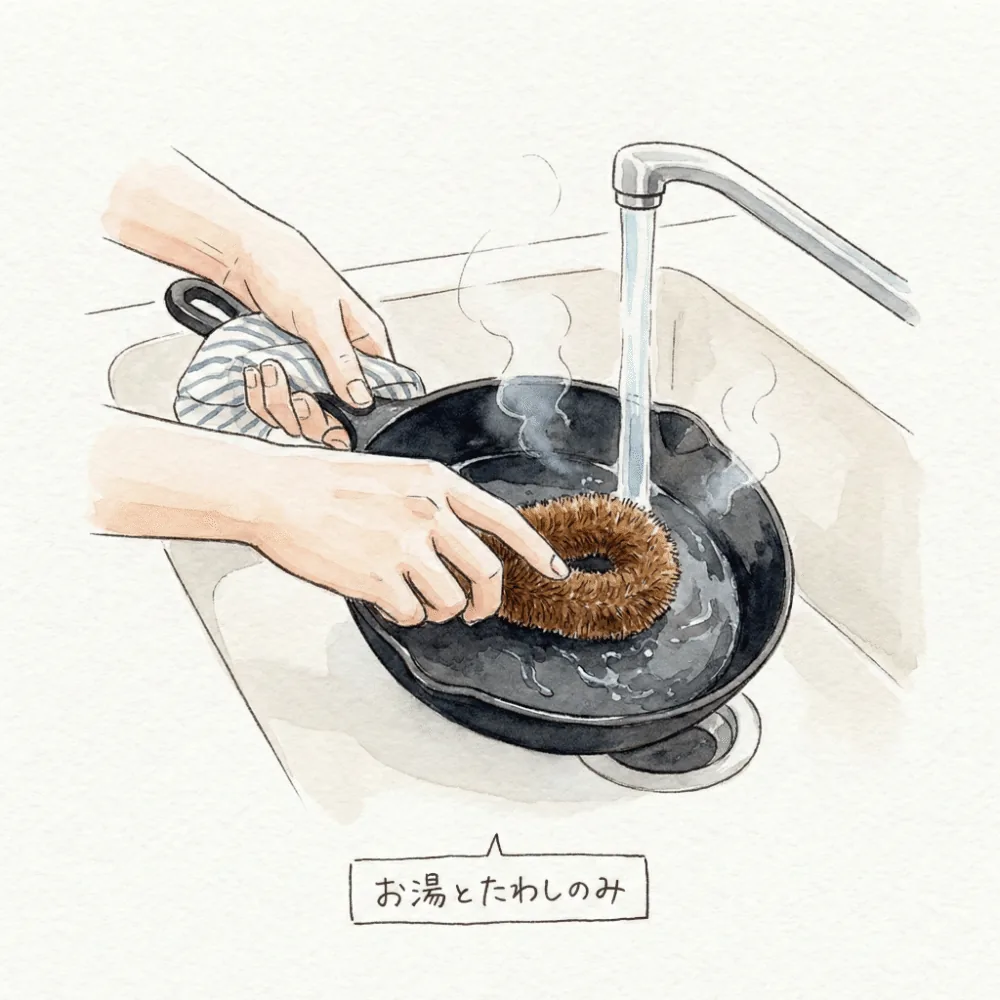
Cast iron will rust if neglected — but "care" is simpler than most people think. The rule: no soap, and never leave it wet.
Three steps after every cook
- Hot water & brush: No dish soap. Use hot water and a stiff brush or chain-mail scrubber to lift residue without stripping the seasoning. Stubborn bits: soak briefly in hot water first.
- Dry over heat: Wiping with a cloth isn't enough — place the pan back over a flame for one minute until all moisture has evaporated. This is the most important step.
- Thin oil coat: While still warm, wipe a thin film of oil over the interior with a paper towel. Wrap loosely in newspaper and store in a dry place.
Even if rust forms, it isn't the end — scrub it off with steel wool, re-season from scratch, and the pot is as good as new. Cast iron is nearly impossible to truly ruin.
8. Frequently Asked Questions
Can I use Nanbu Tekki on an IH induction cooktop?
Most models are IH-compatible — check before buying.
Flat-bottomed models (like OIGEN's Piatto line) work perfectly on induction. However, legged outdoor-only models
are not suitable for induction.
Look for "IH対応" (IH-compatible) or "200V対応" in the product listing to confirm.
Isn't it too heavy to bring camping?
Yes — cast iron is heavy, and it's worth being honest about that.
A 24cm Dutch oven weighs around 5–6 kg. Backpacking is out of the question, but for car camping (where you drive
up to your site) the weight is a non-issue.
Think of it this way: that weight is inseparable from the heat retention and durability that make it worth owning.
I accidentally used dish soap. Did I ruin it?
No — but you've stripped the seasoning and need to re-season.
After a soap wash, the interior will look grayish-white and food will start sticking. Simply heat the pan dry,
apply oil, and repeat the seasoning process. You'll be back to normal after one or two cooks.
I heard acidic foods like tomatoes react with cast iron. Is that true?
A small amount of iron can leach into the food, which is actually a bonus for iron
deficiency.
With prolonged cooking of highly acidic dishes (tomato sauce, citrus), the food may take on a slightly metallic
taste and darken. A well-seasoned pot minimizes this significantly.
After cooking acidic foods, transfer leftovers out of the pot promptly — don't store them in the cast iron.
Can I store the pot in my car after camping?
Absolutely — as long as it's completely dry and oiled before storage.
A wet pot in a sealed car boot is a rust disaster waiting to happen. Heat-dry it first, apply a thin oil coat,
then wrap in old newspaper (which absorbs residual moisture) before placing it in a bag or box.
How does Nanbu Tekki compare to budget store-brand cast iron?
The key differences are surface texture and wall uniformity.
Budget cast iron often has a rough, uneven surface that resists seasoning and sticks easily. Nanbu Tekki's
fine-grained cast surface bonds with oil quickly and evenly, developing a superior non-stick coating faster.
Uniform wall thickness also means fewer hot spots — your food cooks more evenly from the start.
Final Thoughts: A Black Iron Pot Passed Down Through Generations
A Nanbu Tekki Dutch oven demands a little attention early on — seasoning, careful drying, the occasional
re-oiling. It can feel high-maintenance compared to a disposable non-stick pan.
But once that pot has found its rhythm with you, it becomes something else entirely: a constant, reliable
partner that makes every meal better.
A well-used cast iron pot eventually reaches what's called "the black pot" — jet black, slick, and practically
indestructible. It won't break. It won't wear out. It will simply keep getting better.
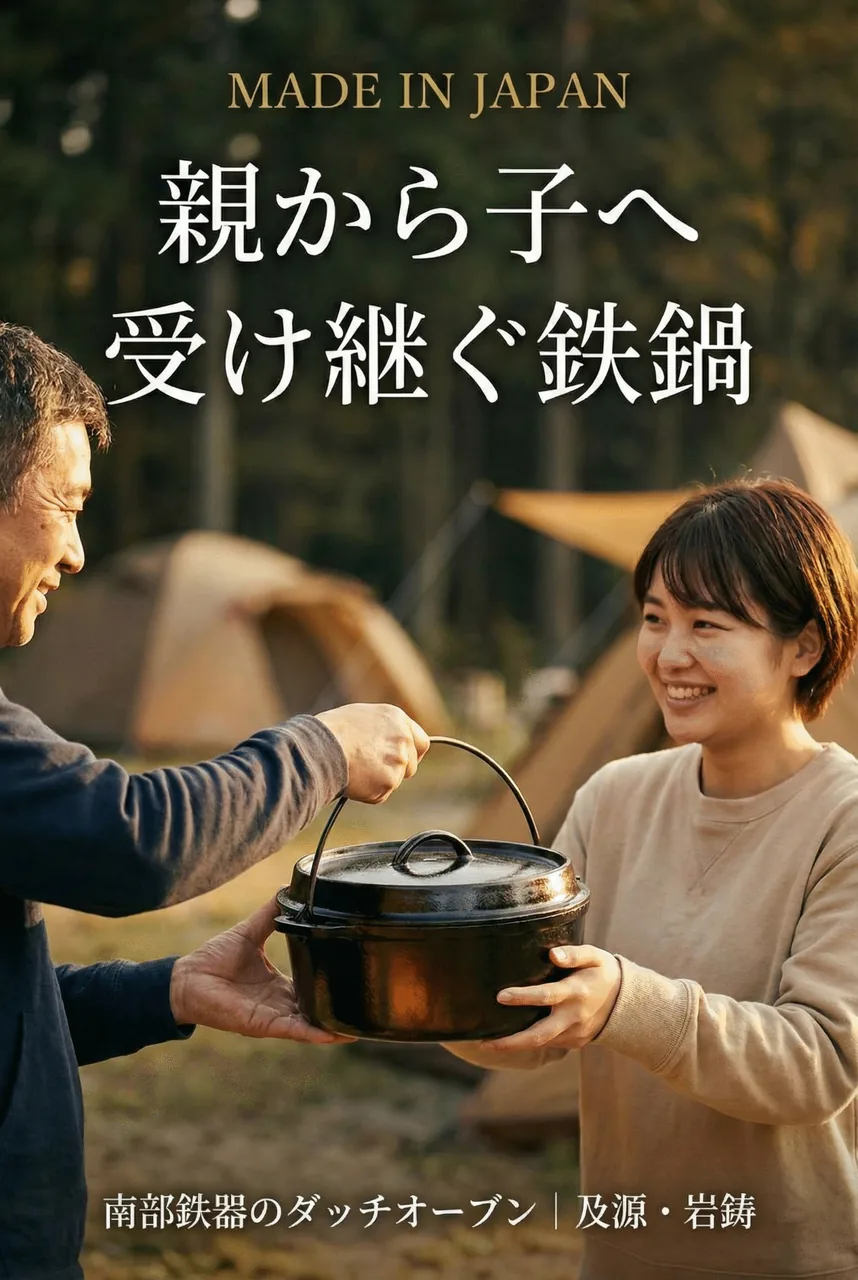
This is cookware you can genuinely pass down. Imagine the Dutch oven your parents seasoned with years of camp
meals, now making dinner for your own family around a new fire.
That's the quiet promise of Nanbu Tekki.
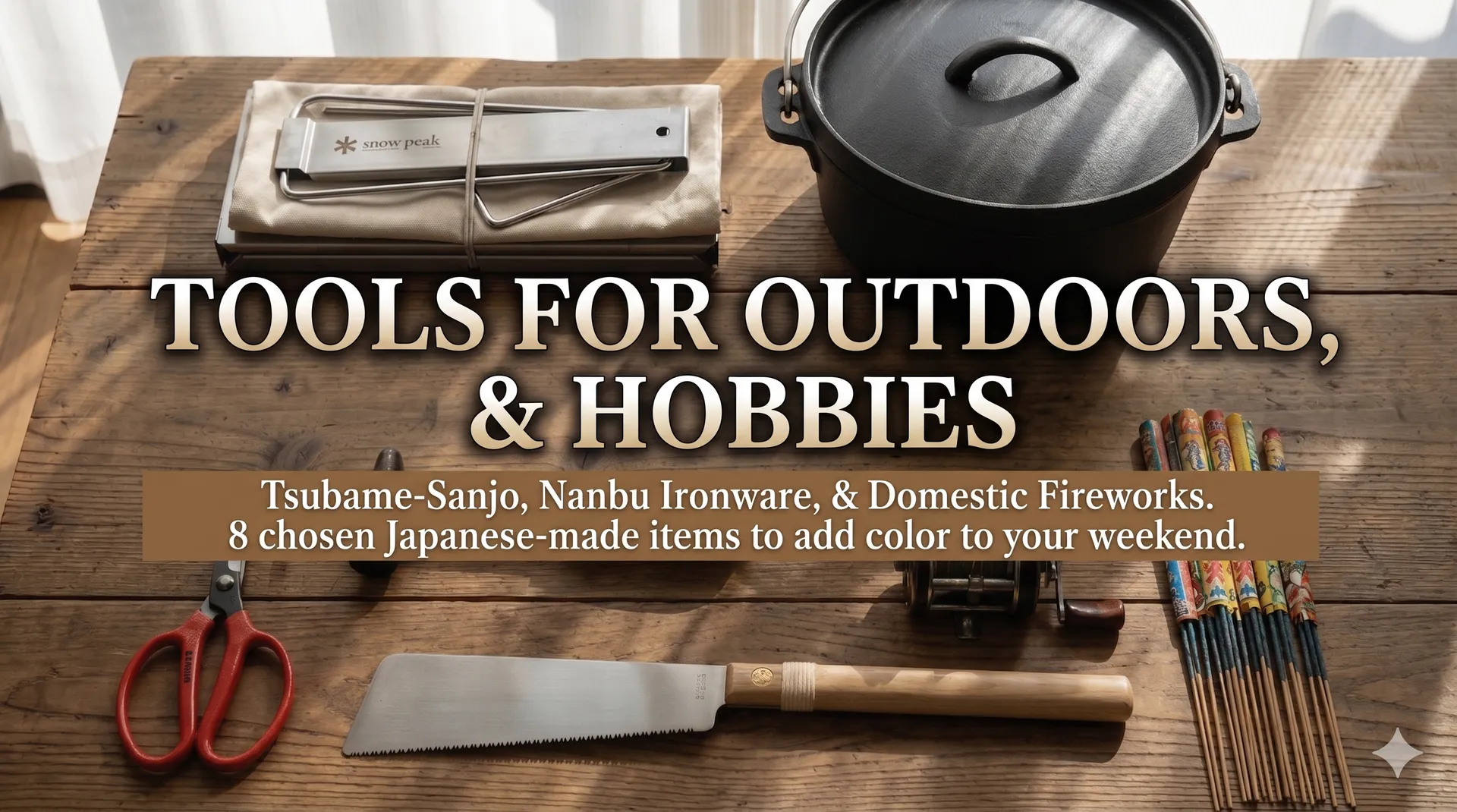
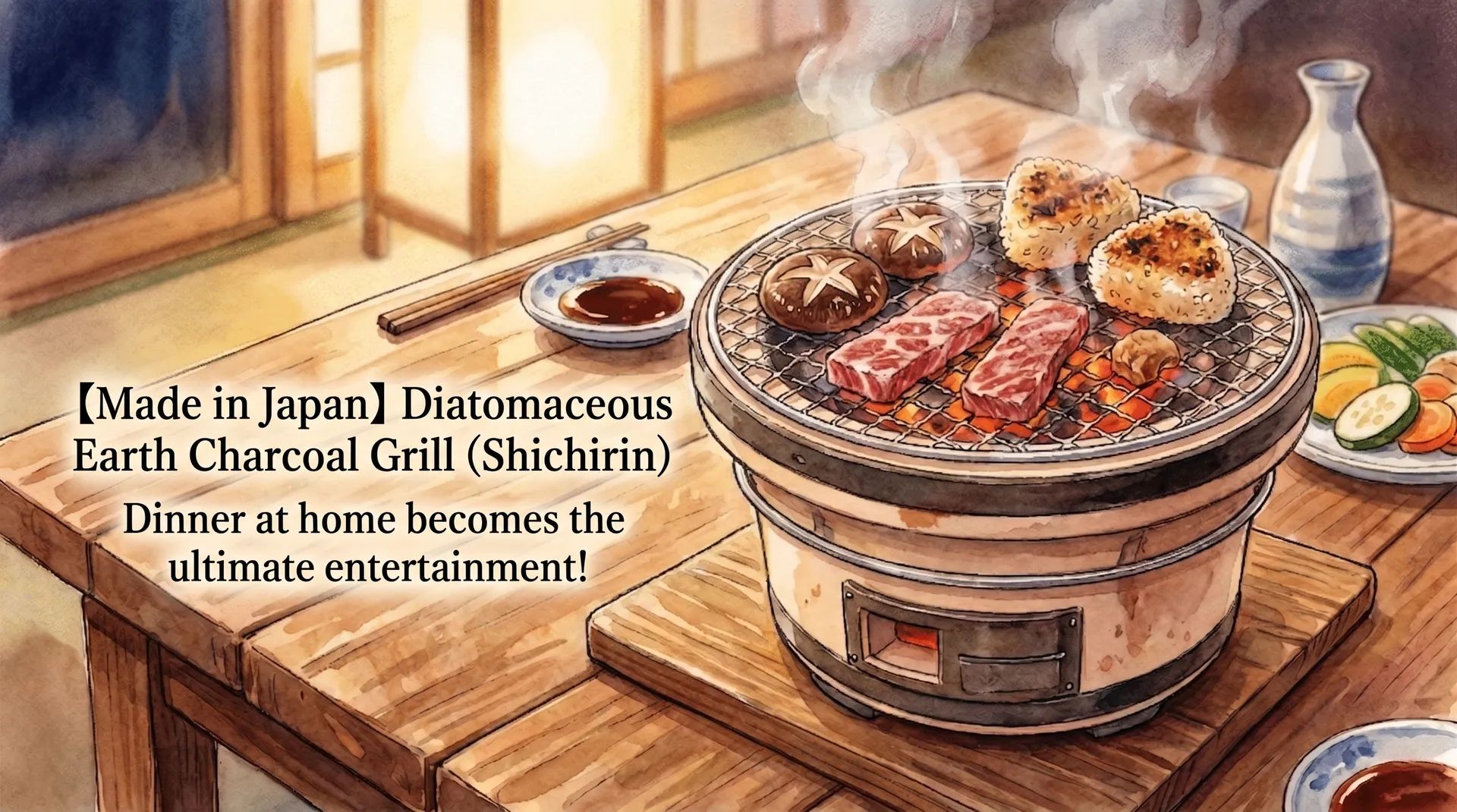
Japanese Shichirin — Charcoal Table Grilling the Traditional Way
Nanbu Tekki — Teapots, Kettles & Cookware: How to Choose