You want to eat more vegetables — but salads every day gets old, and boiling washes away the nutrients.
Have you ever microwaved vegetables only to get them dry and dull, or discolored?
The solution is Japan's traditional steamer: the seiro.
Using one is surprisingly simple: bring a pot of water to a boil and set the seiro on top. Vegetables emerge sweeter, more vibrant in color, and perfectly moist.
Bring the seiro straight to the table and an ordinary dinner becomes something genuinely special.
This guide covers everything a beginner needs: basic seiro technique, a steaming time chart by vegetable type, and how to care for your seiro so it never molds.
Quick Reference: Steaming Times at a Glance
| Category | Main Ingredients | Steaming Time |
|---|---|---|
| Root vegetables & tubers | Sweet potato, potato (cut into chunks) | 12–15 min |
| Root vegetables & tubers | Carrot, kabocha squash (bite-sized) | 8–12 min |
| Leafy & fruiting vegetables | Cabbage, napa cabbage (rough chop) | 4–6 min |
| Leafy & fruiting vegetables | Broccoli, spinach | 2–5 min |
| Meat & other | Sliced pork, chicken (bite-sized) | 8–10 min |
| Meat & other | Shumai, nikuman (frozen) | 10–15 min |
1. Why Seiro-Steamed Vegetables Taste Sweeter
Why does seiro-steaming make vegetables taste better than a microwave or boiling? The answer is in how the heat is applied.
A microwave vibrates water molecules inside the food to generate heat — fast, but water escapes as vapor, leaving vegetables dry. Boiling loses water-soluble vitamins and umami into the water.
Seiro steaming wraps food in 100°C steam — approximately the same as boiling water, but in vapor form.
Because the food is heated slowly while moisture is being added, starches in vegetables convert to sugars (saccharification) at a greater rate, drawing out maximum natural sweetness. Nutrients stay locked in, and colors remain vivid.
2. Basic Seiro Setup: Pot Size & Water Level
"Do I need a special pot?" — you don't. Any pot you already own will work.
The basics: bring a full pot of water to a rolling boil, then set the seiro on top.
What You Need & How to Choose a Pot
- The seiro body and lid
- A pot: Ideally slightly smaller than the seiro's diameter, or the same size.
If sizes don't match, use a steaming plate (mushita) to bridge the gap and stabilize the seiro. - Water: Fill the pot to about 70–80% full.
If the water runs dry during steaming, you'll get dangerous dry-boiling that can damage the pot and seiro. Keep the water level generous and top up with boiling water if needed.
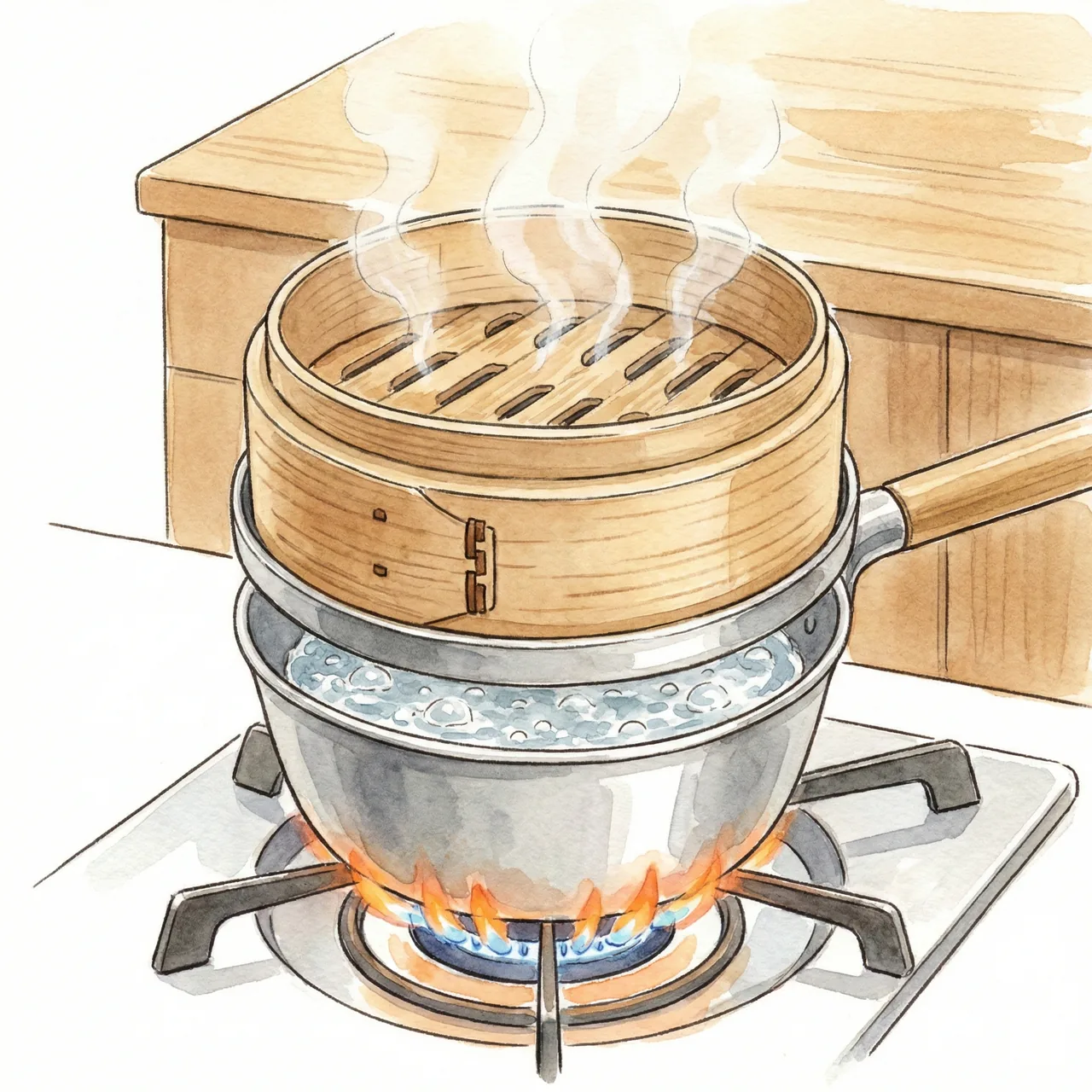
If your pot and seiro don't match in size, a mushita (steaming plate) solves it neatly:
Hokuriku Aluminum (Toyama) — Mushita Steaming Plate
Turns any pan you own into a steamer. Essential for scorch prevention.
This aluminum ring plate lets you rest a seiro stably on any frying pan or saucepan you already have — no need to buy a dedicated seiro pot.
It also keeps direct flame away from the seiro's rim, preventing scorching.
Made in Takaoka, Toyama — Japan's leading aluminum-processing region — it's lightweight, rust-resistant, and available in multiple sizes.
Before You Start: Always Wet the Seiro
This is a non-negotiable step. Before putting the seiro over heat, quickly rinse the entire seiro — body, lid, and bottom rim — with water.
Exposing dry wood directly to intense steam can damage the grain and allow the hot pot rim to scorch the seiro's edge. A damp seiro also absorbs less food odor. Give it a quick shake to shed excess water before setting it over the pot.
3. How to Arrange & Steam: Root Vegetables, Greens & Meat
Let's actually steam some vegetables.
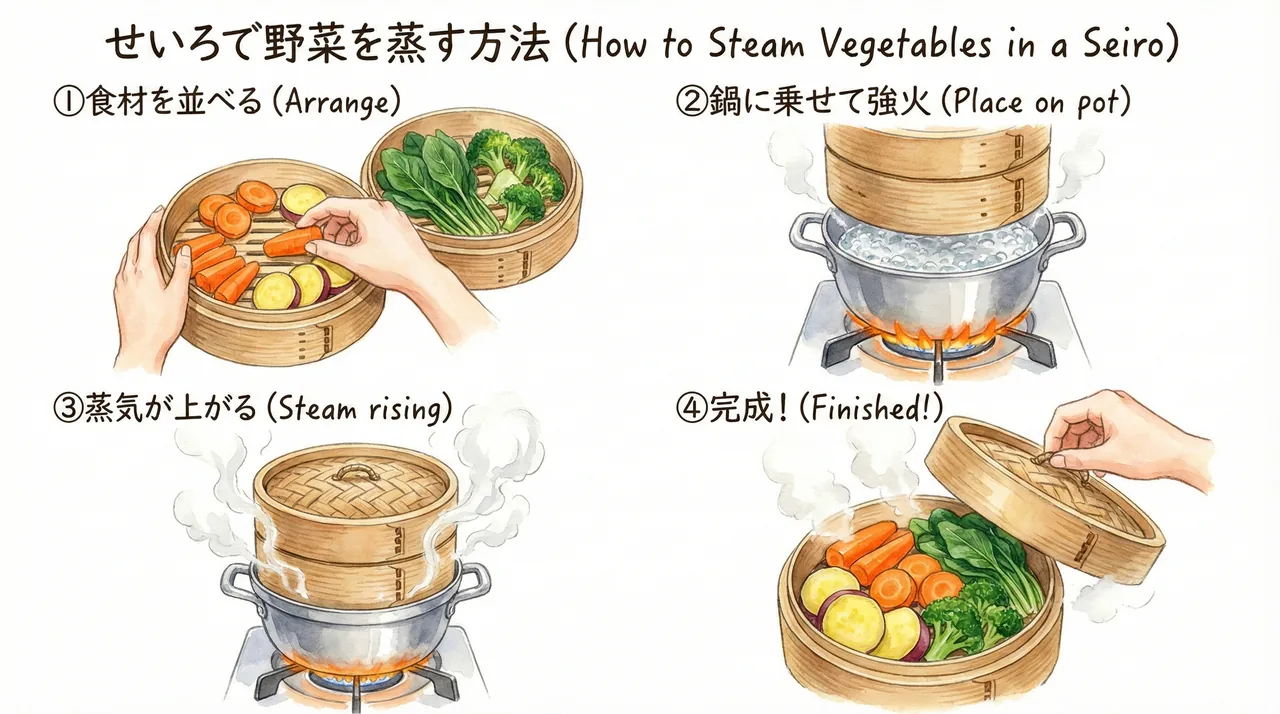
The key principle: place denser ingredients on the bottom tier, quick-cooking ingredients on top. Use two tiers stacked together for efficient multi-ingredient cooking.
Step 1: Prep and Arrange
Cut vegetables into eating-size pieces.
Line the seiro base with perforated parchment paper or a large outer cabbage leaf — food won't stick, and cleanup becomes easy.
- Bottom tier (slow-cooking): Sweet potato, carrot, kabocha and other root vegetables.
- Top tier (fast-cooking): Broccoli, cabbage, spinach and other leafy greens.
If you're adding pork or chicken, lay it across the vegetables or put it on a separate tier — the meat's juices drip down and flavor the vegetables below.
Step 2: Steam on High Heat Throughout
Confirm that the pot water is at a full rolling boil with vigorous steam rising before setting the seiro on top. Put the lid on.
Maintain strong steam throughout — high to medium-high heat. Low heat prevents the seiro from reaching temperature and leaves vegetables soggy and waterlogged.
Times vary by ingredient: about 5 minutes for leafy greens, 10–15 minutes for root vegetables.
4. Full Steaming Times Chart
Times may vary with ingredient size and quantity, but these are reliable starting points from the moment the seiro goes onto a fully boiling pot.
A bamboo skewer inserted into the thickest part with no resistance means it's done.
| Category | Main Ingredients | Steaming Time |
|---|---|---|
| Root vegetables & tubers (slow to cook) |
Sweet potato, potato (cut into chunks) | 12–15 min |
| Carrot, lotus root (thick rounds) | 10–12 min | |
| Kabocha squash (bite-sized) | 8–10 min | |
| Leafy & fruiting vegetables (fast to cook) |
Cabbage, napa cabbage (rough chop) | 4–6 min |
| Broccoli, asparagus | 3–5 min | |
| Spinach, komatsuna | 2–3 min | |
| Meat & other | Sliced pork, chicken thigh (bite-sized) | 8–10 min |
| Shumai, nikuman (chilled or frozen) | 10–15 min Check package instructions too |
These are guidelines. Feel free to peek under the lid and adjust to your preferred doneness — it won't ruin the steam.
5. Seiro Care: How to Dry It So It Never Molds
Because seiro is made from natural wood or bamboo, leaving it damp invites mold.
The good news: care is simple. The single most important habit is "no soap — just dry it completely."
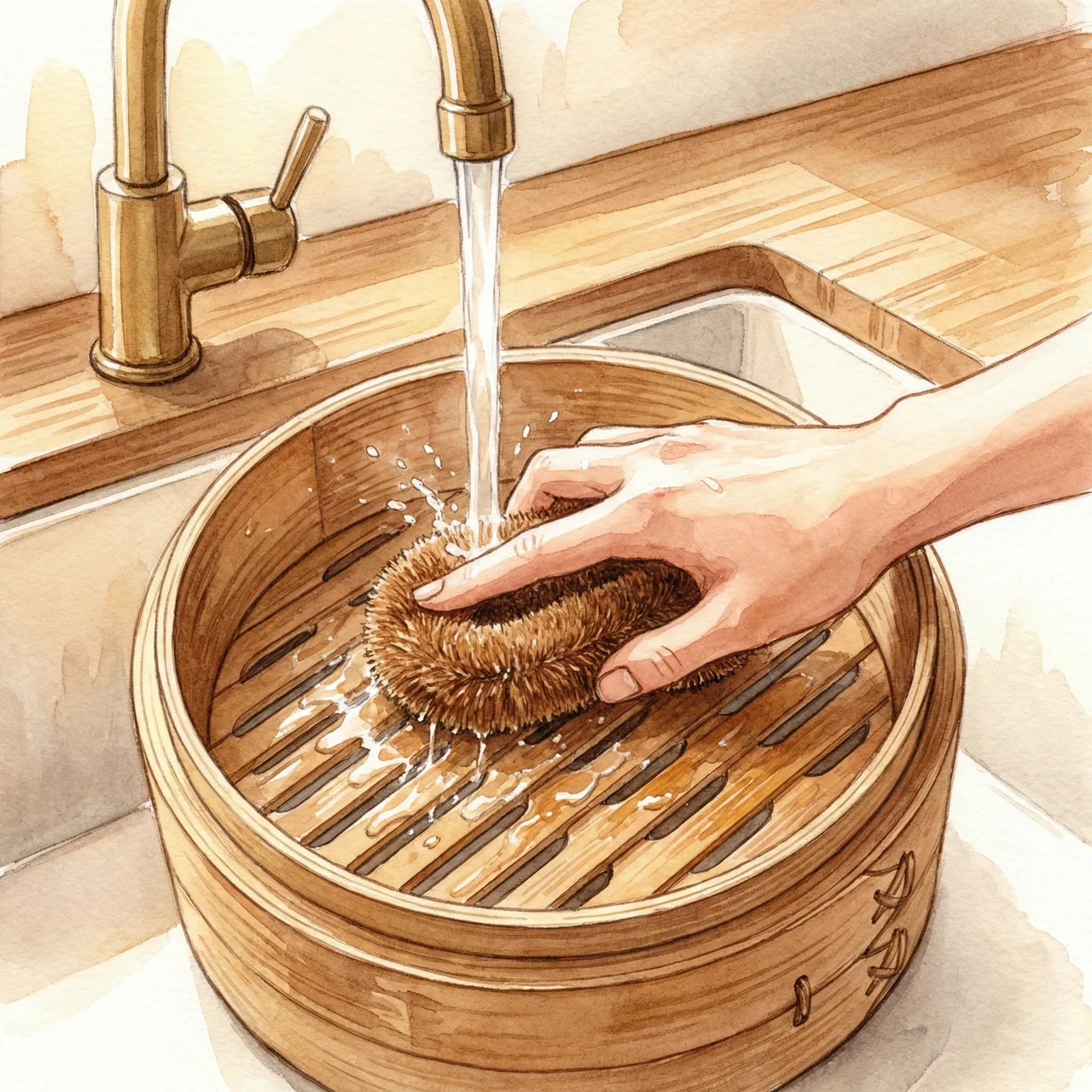
How to Wash: Hot Water and a Tawashi Brush Only
After use, scrub off residue with a tawashi (natural-fiber brush) moistened with hot water, then rinse with hot water.
Avoid dish soap as a rule. Soap soaks into the wood, removing its natural oils and leaving the grain dry and weakened.
If meat fat has built up and a light scrub won't cut it, a tiny amount of dish soap is acceptable — rinse immediately and thoroughly.
Drying & Storage: Shade-Dry in a Ventilated Spot
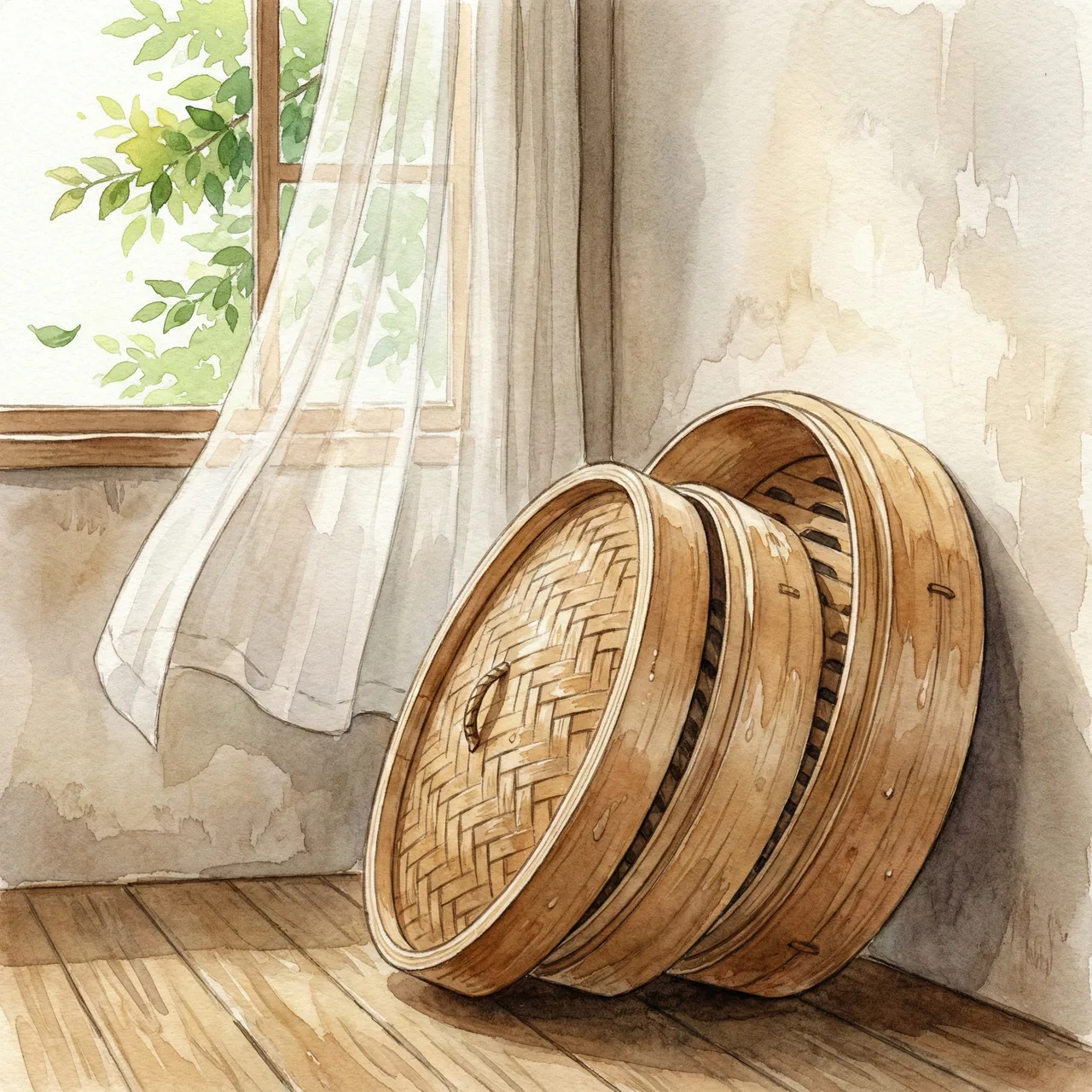
After washing, wipe off surface moisture with a cloth and leave it to dry completely in a well-ventilated spot.
Avoid direct sunlight — rapid drying can cause cracking. A shaded, airy location is ideal. Standing the seiro on its side accelerates drying.
For storage, leave it somewhere with airflow — do not seal it in a plastic bag, which traps humidity and causes mold.
Frequently Asked Questions
Does a seiro work on an IH (induction) cooktop?
Yes.
The seiro itself is made of wood or bamboo, so it's heat-source-agnostic. What you need is an IH-compatible pot to boil the water. Check that your seiro sits stably on your IH pot before use.
My pot and seiro don't match in size. What can I do?
A mushita (steaming plate) fixes this.
Place a metal steaming plate on top of your pot, then rest the seiro on it. This works even if the pot is somewhat smaller or larger than the seiro's base. It also adds a scorch-prevention buffer.
Can I steam frozen vegetables and frozen nikuman (steamed buns)?
Yes — they come out beautifully.
Arrange them in the seiro straight from frozen — no need to thaw. The skin turns far fluffier than microwave-reheated versions, and the filling stays juicy. Follow package instructions for timing and add a few extra minutes.
Does the seiro material — hinoki, cedar, bamboo — affect the taste?
It affects the aroma, not the core flavor.
Hinoki (Japanese cypress) has a distinctive, pleasant forest scent that transfers subtly to food, adding a sense of luxury. Cedar has a gentle woody aroma. Bamboo has almost no scent, which is ideal if you want the food itself to shine through.
The difference in taste is minor, but the difference in fragrance is real and enjoyable.
Mold appeared on my seiro. Is it still usable?
Mild mold can often be treated.
For early-stage white or blue mold, rinse with hot water, dry completely, then lightly sand the affected area with fine sandpaper. The seiro is usually good to go again.
However, if black mold has penetrated deeply into the wood, replace it for hygiene reasons. Daily drying is your best prevention.
The seiro is still wet inside after steaming. What should I do?
Let it vent first, then wash.
Remove the lid immediately after steaming and lift the seiro away from the pot. Allow it to cool in a well-ventilated place before washing.
Washing with cold water while the seiro is still hot causes the wood to contract suddenly, which can cause cracks. "Cool first, then wash" — make this your habit.
Final Thoughts: Start Your Seiro Life Today
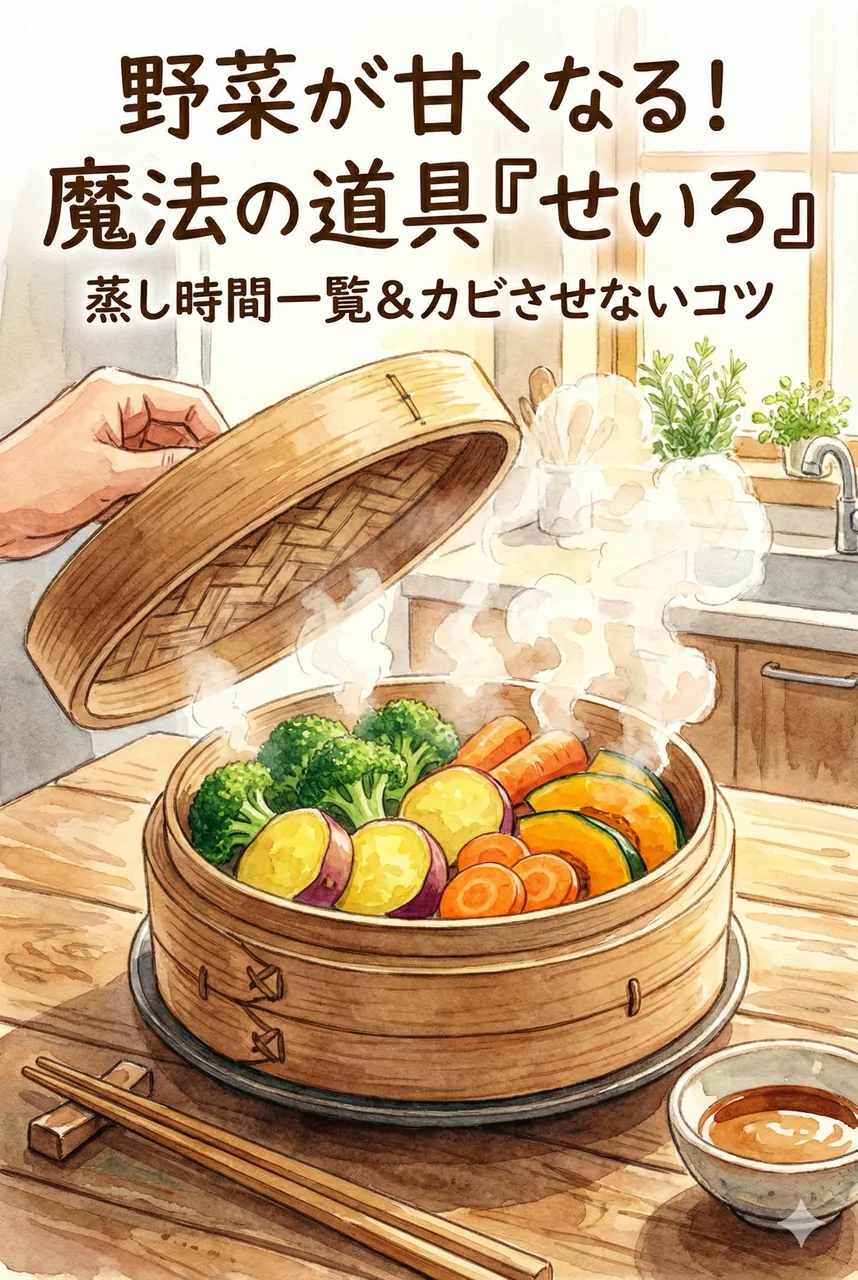
A seiro is a magical tool that makes vegetables taste extraordinary.
"Just bring water to a boil and set it on top" — deceptively simple, yet the results are remarkable. The moment you lift the lid, rising steam and the scent of warm wood make the whole kitchen feel welcoming.
Keep it dry, and it becomes a reliable partner for life.
Why not start your steamed-vegetable life with dinner tonight?
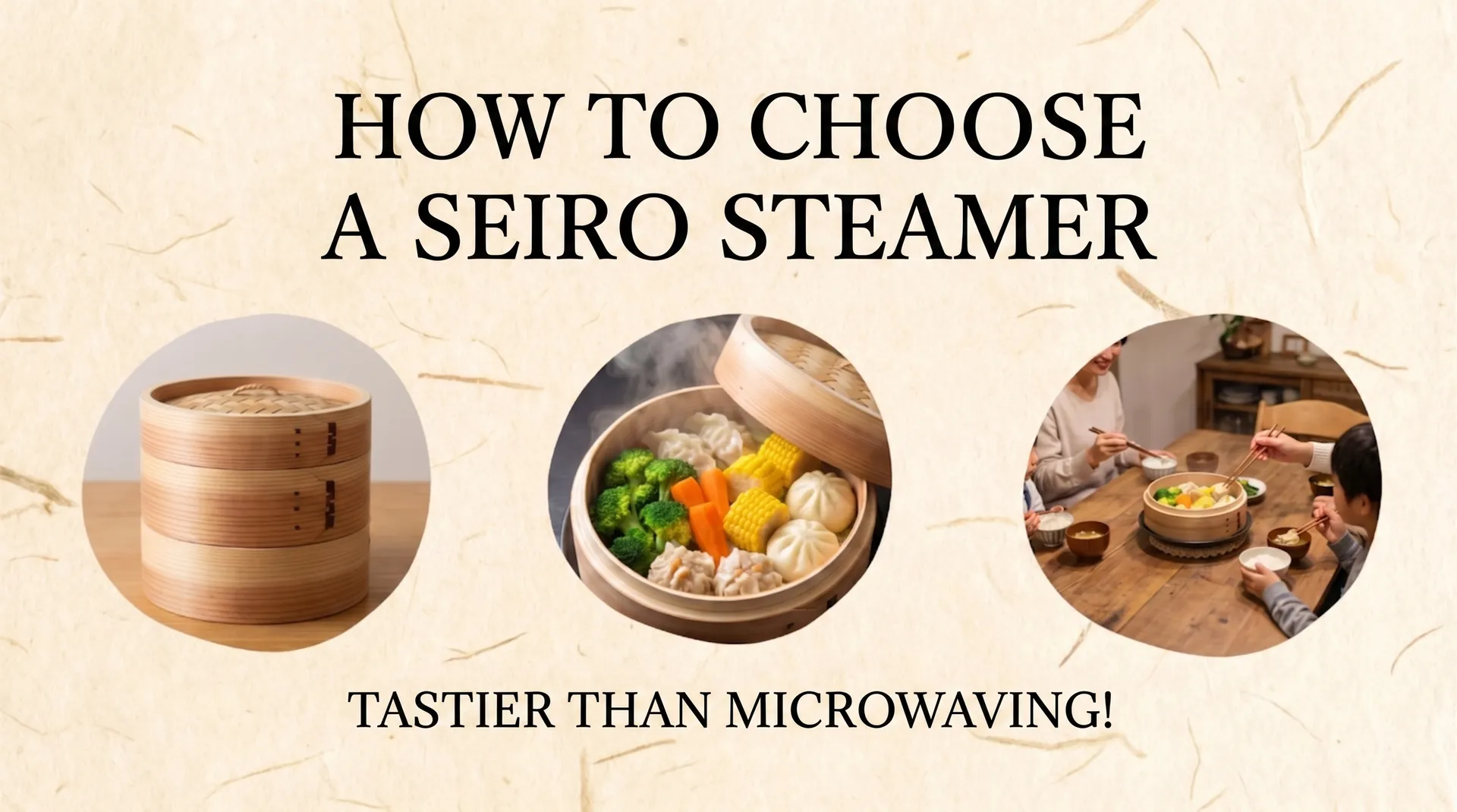
Hinoki, Cedar or Bamboo? Japanese Seiro Buyer's Guide — Top Brands Reviewed
Japanese Donabe: Best Clay Pots for Rice, Hot Pot & More — Brands Compared