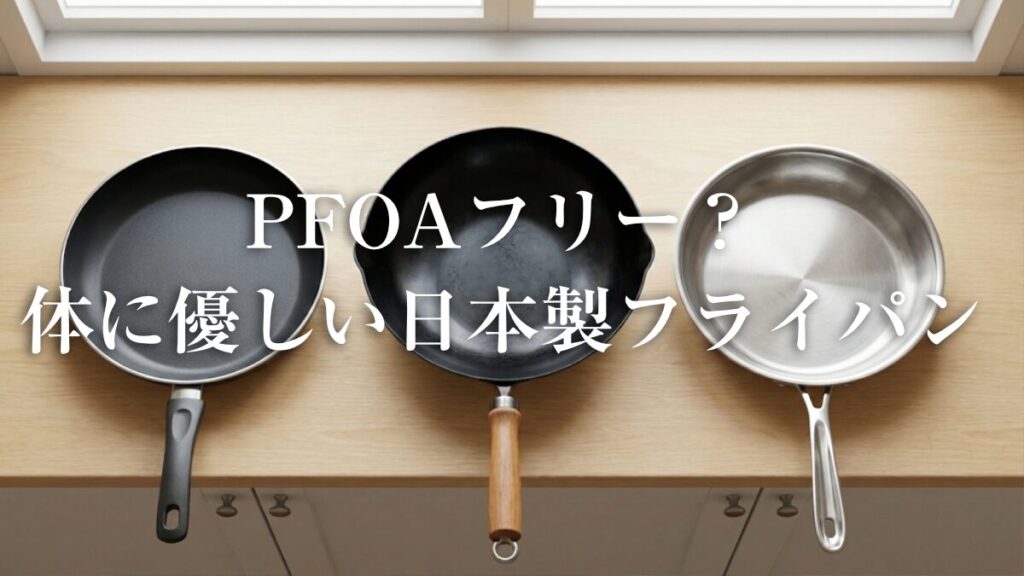
All major Japanese frying pan brands are now PFOA-free — the chemical that caused the original health concerns has been banned from manufacturing. The real question is whether you want a coated pan at all, or whether you'd rather skip coatings entirely with iron or stainless. This guide explains what the labels actually mean and which option is safest for your kitchen.
Below: a plain-English breakdown of PFOA, PTFE, and ceramic coatings, plus the Japanese brands that have gone furthest on safety — including two options with zero synthetic coatings.
Quick Reference: Safest Japanese Frying Pan Options
| Brand | Material | Coating | Best for |
|---|---|---|---|
| UMIC | Cast aluminum | Teflon™ Platinum Plus (PFOA-free) | Non-stick convenience with verified safety |
| kübell | 3-ply stainless | None (uncoated) | Zero-chemical option, lifetime pan |
| Riverlight Kiwame | Nitrided iron | None (heat-treated surface only) | Natural iron, improves with use |
What Is PFOA? (And Why It No Longer Matters)
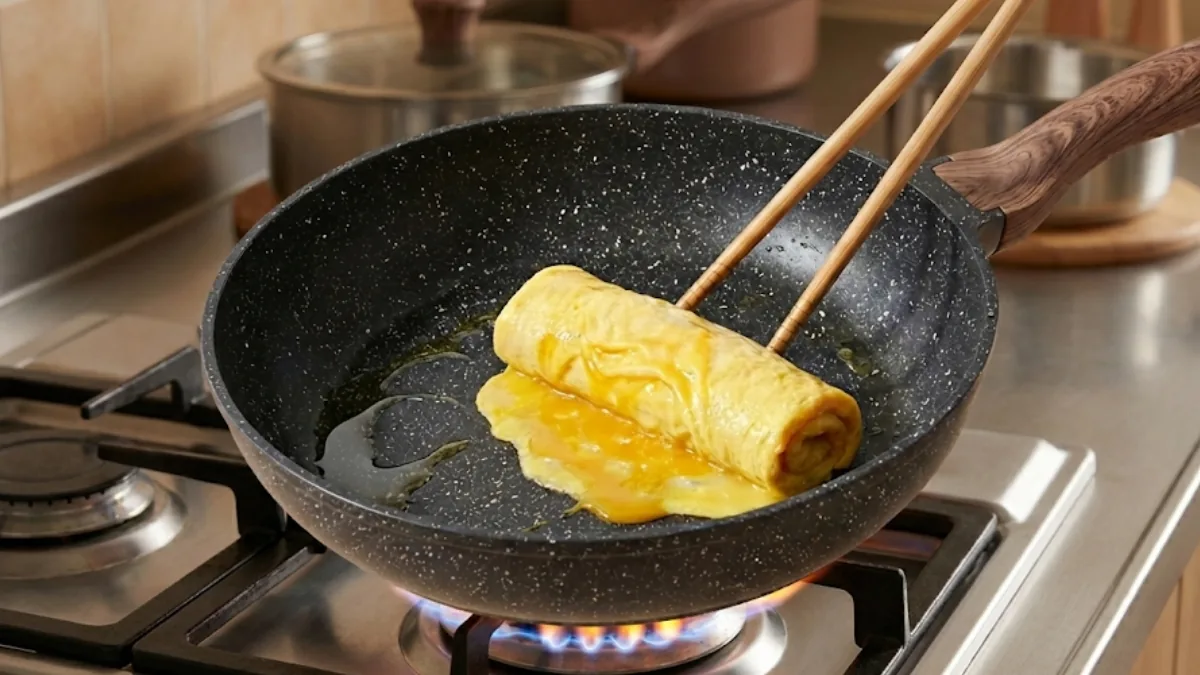
PFOA (perfluorooctanoic acid) was a processing aid used during the manufacturing of PTFE (polytetrafluoroethylene) — the fluoropolymer used in non-stick coatings. PFOA itself is not in the coating on your pan; it was used in the factory process and then removed. However, PFOA persists in the environment for decades and was found to accumulate in human blood, raising long-term health concerns.
Following international regulatory action, PFOA has been banned from manufacturing in Japan, the EU, the US, and most other major markets. All major Japanese frying pan brands have been PFOA-free since 2015 at the latest. If you buy from a reputable Japanese manufacturer today, the PFOA concern is resolved.
The current debate in the cookware industry has shifted to PFAS — a broader class of "forever chemicals" that includes PFOA. Some researchers argue that the replacement chemicals used in modern fluoropolymer coatings (such as GenX) may also be problematic. Leading Japanese manufacturers have responded by offering PFAS-free coating lines alongside their standard products.
Did you know: Japan's Food Sanitation Law
Japan's Food Sanitation Law (食品衛生法) regulates not just the finished coating but the entire manufacturing process, requiring that residual chemical levels in cookware meet strict limits. Japanese manufacturers must document and disclose coating composition — a standard that many international competitors are not held to. This is why Japanese brands are frequently recommended in safety-conscious cookware communities.
Is It Dangerous If the Coating Peels?
No — swallowing peeled PTFE coating is not a health risk. PTFE is chemically inert and is not absorbed by the digestive system. Studies cited by the FDA and European Food Safety Authority confirm that ingested PTFE particles pass through the body without being absorbed.
The real problem with a peeling pan is performance, not safety. When the non-stick surface degrades, food starts sticking, the base metal (typically aluminum) is exposed and may corrode, and the pan becomes harder to clean. A peeling pan is a signal to replace or recoat — not because of toxic risk, but because it is no longer doing its job.
The only genuine temperature risk with PTFE coatings is dry heating above 260°C (500°F) — a temperature you can only reach by leaving an empty pan on high heat. At that point, the coating begins to degrade and can release fumes. This is why "never dry-heat a coated pan" is the single most important care rule. With food in the pan, surface temperatures stay well below this threshold under normal cooking conditions.
Three Safety Approaches: Which Is Right for You?
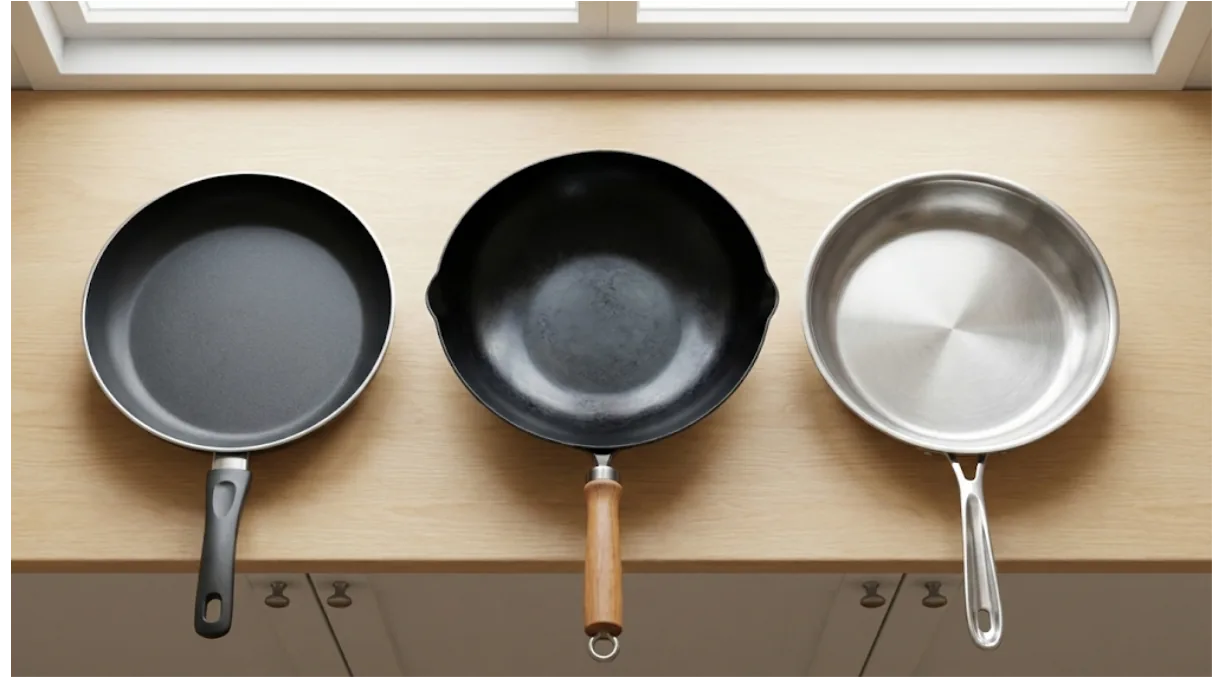
Option 1: Choose a verified PFOA-free / PFAS-free coated pan
If you want the convenience of non-stick without the original concerns, choose a coated pan from a Japanese manufacturer that explicitly states PFOA-free and PFAS-free on the product page. UMIC, Hokuriku Aluminium, and Asahi Keikinzoku all offer lines with documented PFAS-free certifications. These pans behave exactly like a standard non-stick pan — easy cleanup, low oil use, forgiving technique — but with transparent safety credentials.
Option 2: Use ceramic coating as a middle ground
Ceramic coatings are made from mineral-based materials (silica) rather than fluoropolymers. They contain no PTFE and no PFAS. They are stable at higher temperatures than PTFE and won't degrade into fumes if accidentally overheated. The downside: ceramic coatings are less slippery than PTFE and degrade faster under heavy use. Expect 1–3 years of performance before the non-stick property noticeably decreases.
Option 3: Eliminate coatings entirely — iron or stainless
The simplest solution to coating concerns is to avoid coatings altogether. Iron and uncoated stainless pans contain no synthetic materials — what you see is what's there. Iron pans leach trace amounts of iron into food, which is actually beneficial for people with low iron intake. With proper technique (sufficient preheating and fat for stainless; proper seasoning for iron), these pans achieve excellent results and will outlast any coated pan by decades.
Coating Types Compared: PTFE, Ceramic, Iron, Stainless
PTFE (fluoropolymer / "Teflon")
PTFE is the most effective non-stick surface available. Modern Japanese PTFE coatings use multiple layers — premium grades like Teflon™ Platinum Plus apply 3+ layers — which improves durability significantly over entry-level coatings. Properly cared for, a premium PTFE pan from a Japanese manufacturer should remain non-stick for 3–5 years of daily use. Safety: high when used correctly (avoid dry heating above 260°C). All Japanese brands: PFOA-free.
Ceramic coating
Ceramic coatings are fluoropolymer-free and do not produce fumes under any normal cooking temperature. They are particularly resistant to thermal shock (less likely to degrade from rapid temperature changes). The limitation is lifespan: ceramic is harder than PTFE but more brittle, and the non-stick property fades faster — typically within 12–24 months of regular use. Safety: very high — no synthetic polymers, no PFAS.
Iron (uncoated)
Uncoated iron pans contain no synthetic material of any kind. The surface builds up a natural polymerized oil layer (seasoning) through use. Iron is the only cookware material that actively adds a nutritional benefit — a small amount of dietary iron enters food during cooking, which is particularly useful for people with low iron intake. Safety: maximum — zero synthetic chemicals. Requires proper drying after use to prevent rust.
Stainless steel (uncoated)
Stainless steel contains no coatings and is extremely resistant to corrosion, staining, and chemical interaction. It is dishwasher-safe, oven-safe, and requires no seasoning. The one caveat: stainless steel contains nickel, which can migrate in very small quantities into acidic foods. This is not a concern for most people, but those with diagnosed nickel sensitivity should use iron instead. Safety: very high — no coatings, no PFAS, caveat for nickel sensitivity only.
Which is safest? Summary
If you want coating: choose PFAS-free PTFE from a Japanese manufacturer (UMIC or Hokuriku
Aluminium) and follow proper use guidelines.
If you want zero synthetic chemicals: choose iron (Riverlight) or uncoated stainless (kübell).
If you want a middle ground: ceramic coating — no PFAS, higher temperature tolerance, shorter
lifespan.
Safest Japanese Frying Pan Brands
UMIC (Urushiyama Metal Industries) — Best PFAS-free coated pan
UMIC is one of the few Japanese manufacturers that performs casting and coating in-house, in Niigata Prefecture. This full vertical integration means they control every step of the coating process and can certify exactly what goes into each pan. Their top-tier models use Teflon™ Platinum Plus — a 3-layer PFOA-free and PFAS-free fluoropolymer coating with significantly higher durability than standard PTFE.
- Coating
- Teflon™ Platinum Plus (PFOA-free, PFAS-free)
- Base material
- Cast aluminum
- Made in
- Niigata, Japan
- Best for
- Anyone who wants proven non-stick with maximum transparency
Perfect for: Cooks who want the convenience of non-stick but need confidence in what the coating actually contains.
Riverlight Kiwame JAPAN — Best uncoated iron option
Riverlight's Kiwame JAPAN series uses a proprietary nitriding and oxidation process to harden the iron surface and make it significantly more rust-resistant than traditional seasoned iron. There is no coating — only heat-treated iron. As you cook with it, fats polymerize into the surface creating a natural non-stick layer that improves over time. Trace amounts of iron enter food during cooking, which is a mild nutritional benefit for many people.
- Coating
- None — nitrided and oxidized iron surface
- Material
- Pressed iron (nitrided)
- Made in
- Japan
- Best for
- Natural cooking, high-heat dishes, long-term ownership
Perfect for: Health-conscious cooks who want the simplest possible cookware — just iron and heat.
How to Make Any Coated Pan Last Longer
Never dry-heat a coated pan
This is the only rule that matters for safety. PTFE begins to degrade above 260°C — a temperature only reachable by leaving an empty pan on high heat. Always add oil or food before turning on the burner, or at minimum add them within 30 seconds of preheating on medium heat. This single habit extends coating life and eliminates any temperature-related concern.
Five things that destroy coated pans prematurely
① Metal utensils: scratches accelerate coating breakdown — use silicone, wood, or nylon.
② Thermal shock: dunking a hot pan in cold water causes the coating to contract rapidly and crack —
let it cool first.
③ Abrasive cleaning: steel wool and rough sponges wear through coating layers — use a soft sponge
with mild dish soap.
④ Dishwasher use: the combination of heat, strong detergent, and high-pressure water is harsh on
coatings — hand-wash coated pans.
⑤ Stacking without protection: storing pans stacked without a cloth or pan protector scratches the
surface from below.
When to replace a coated pan
Replace your coated pan when: the coating peels in large sections; food sticks even with oil and medium heat; the base has warped and no longer sits flat; or visible scratches cover the cooking surface. Peeled coating is not a safety emergency, but a degraded pan no longer cooks well. Japanese brands like Asahi Keikinzoku offer recoating services if you'd rather restore than replace.
FAQ
What does PFOA-free mean on a frying pan?
PFOA-free means the pan was manufactured without using perfluorooctanoic acid, a processing chemical once used in fluoropolymer coating production. PFOA is now internationally banned. All reputable Japanese frying pan brands have been PFOA-free since at least 2015. The label confirms compliance with current safety standards — it does not mean the pan has no fluoropolymer coating, just that the banned manufacturing chemical was not used.
Is Teflon safe? I heard it causes cancer.
Modern Teflon (PTFE) is safe under normal cooking conditions. The cancer concerns were related to PFOA, the manufacturing chemical — not to PTFE itself. PTFE is chemically inert: it does not react with food, is not absorbed by the body, and does not release harmful chemicals below 260°C. The only risk is overheating an empty pan above that temperature, which releases fumes. Used correctly — never dry-heated — PTFE coatings from reputable Japanese manufacturers are not a health concern.
What is the safest frying pan for a family with children?
Iron or uncoated stainless steel are the safest choices because they contain no synthetic coatings of any kind. For a family that wants non-stick convenience, a PFAS-free coated Japanese pan (UMIC or Hokuriku Aluminium) is a sound choice — verifiably safe when used correctly. The key practice in any home with children: never leave a coated pan heating empty on the stove.
What is the difference between PFOA and PFAS?
PFOA is one chemical; PFAS is a broader category of thousands of related chemicals, often called "forever chemicals" because they don't break down in the environment. PFOA belongs to the PFAS family. Regulations have banned PFOA specifically, but the PFAS category includes replacement compounds like GenX that are now under scientific scrutiny. Some Japanese brands now offer "PFAS-free" products that eliminate this broader class. If you want the highest assurance, look for brands that explicitly state PFAS-free, not just PFOA-free.
Is it safe to use a scratched non-stick pan?
Yes — eating small amounts of PTFE is harmless. PTFE is biologically inert and passes through the digestive system without being absorbed. A scratched pan is not a safety hazard. It is, however, a performance problem: food sticks more easily, the base metal is exposed, and the pan will continue to degrade. Replace when you notice consistent sticking or widespread peeling.
Are Japanese frying pans safer than other brands?
Japanese-made pans are generally more transparent about safety credentials than many international alternatives. Japan's Food Sanitation Law requires manufacturers to document coating composition and meet residual chemical limits. Japanese brands routinely publish detailed product specifications including coating type, layer count, and safety certifications. This traceability is harder to find in budget cookware from regions with less stringent manufacturing oversight.
The safest frying pan is not necessarily the most complicated one. If you want non-stick: choose a Japanese brand with documented PFAS-free certification and never dry-heat it. If you want to eliminate synthetic materials entirely: choose iron or stainless. Either way, buying Japanese cookware gives you a level of safety documentation that most other markets simply don't provide.
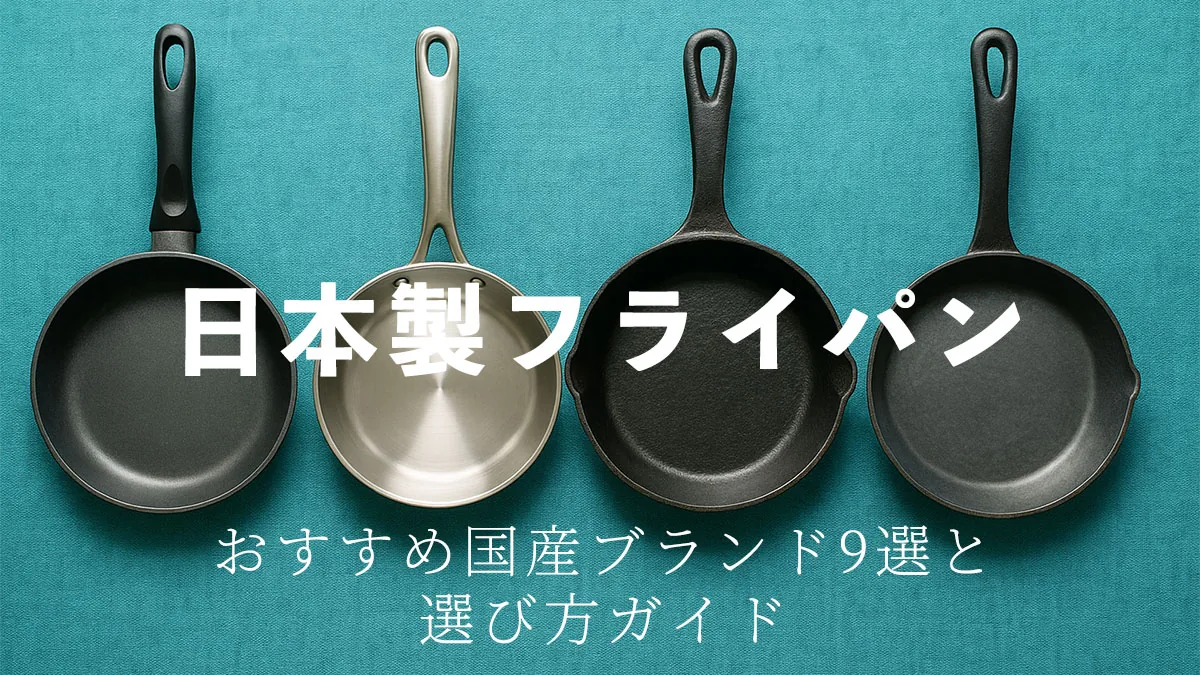
Best Japanese Frying Pans: Materials, Brands & Buying Guide
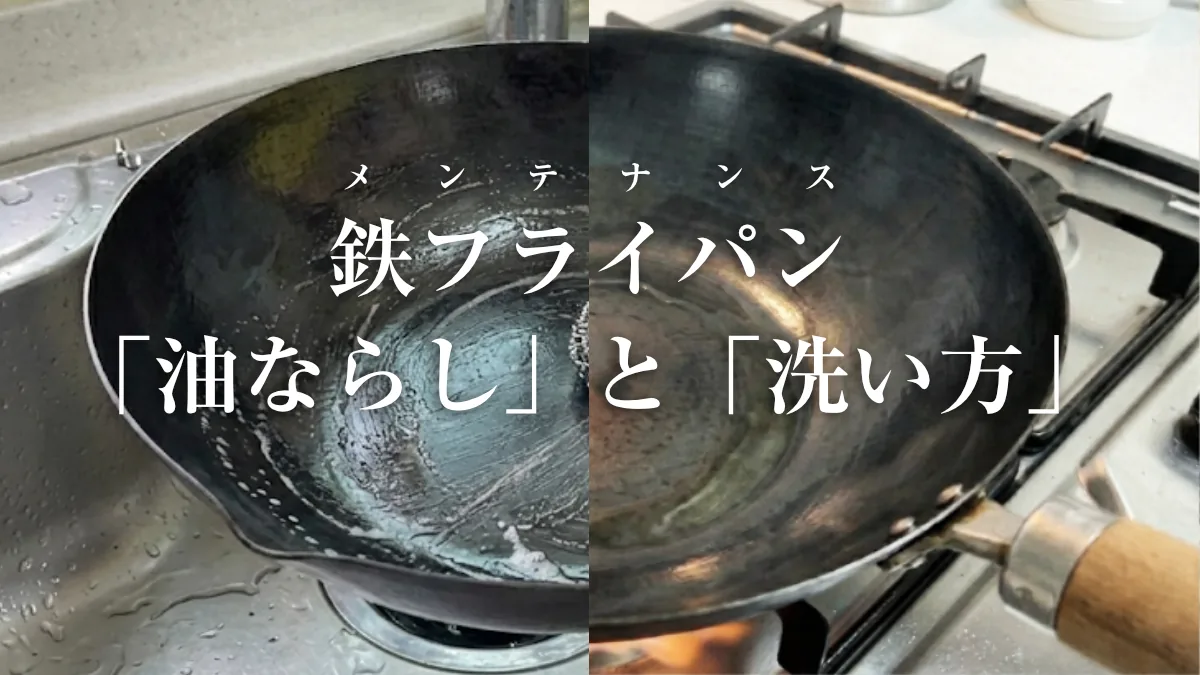
How to Season and Care for a Japanese Iron Frying Pan