When a coated pan starts sticking, most people buy a new one. But the metal body is usually still structurally fine — only the surface has degraded. Some Japanese manufacturers have built their business around a different premise: sell a well-made pan once, support it for decades. They offer recoating services, sell replacement handles as spare parts, and provide long-term maintenance programs so you don't need to replace a pan just because the coating wore out.
This guide explains how pan repair works, what types of repair are available, and which Japanese brands offer the strongest after-service — including a 15-year warranty, part-by-part replacement, and factory recoating services.
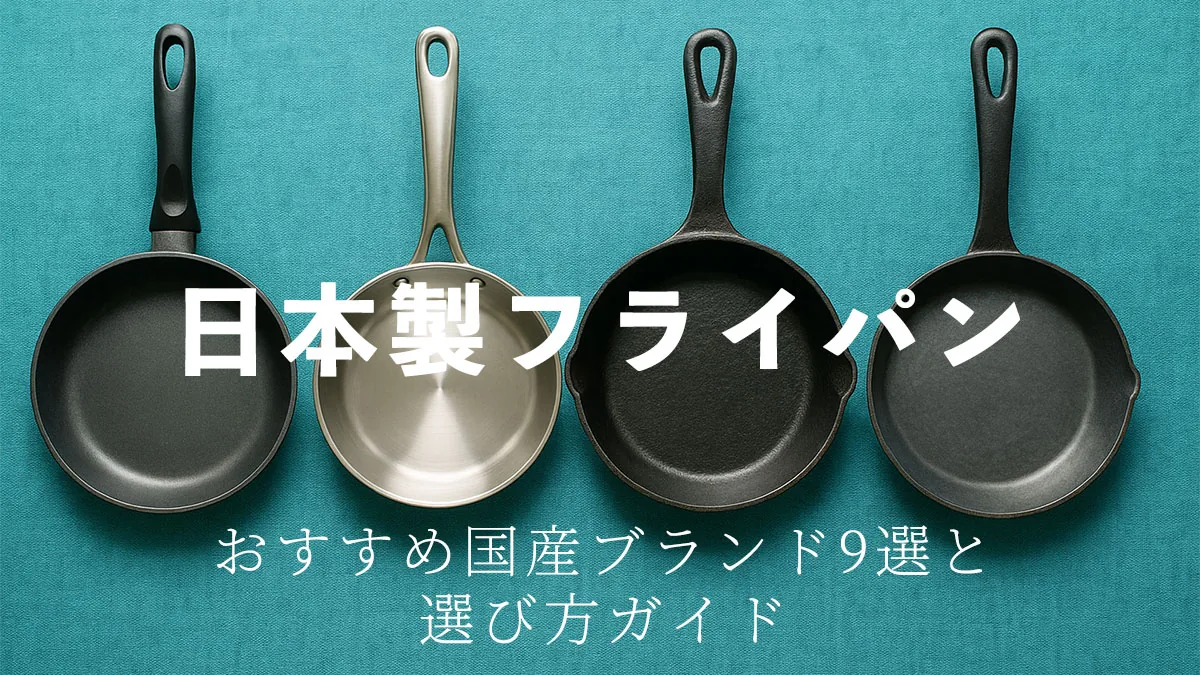
Repairable Pan Types: Quick Reference
| Type | Characteristics | Repair option | Price range |
|---|---|---|---|
| Cast iron (skillet) | High heat retention, heavy | Self-reseasonable — no factory needed | ¥3,000–¥15,000 |
| Iron frying pan | Improves with use, oil-seasoned | Scrub and re-season yourself | ¥5,000–¥20,000 |
| Stainless multi-ply | Rust-resistant, long lifespan | Polishing, manufacturer warranty, part replacement | ¥8,000–¥30,000 |
| Aluminum (coated) | Lightweight, excellent non-stick | Factory recoating (PTFE reapplication) | ¥2,000–¥15,000 |
The case for repairing instead of replacing
Long-term cost comparison
Replacing a ¥3,000–¥5,000 non-stick pan every 2–3 years costs ¥15,000–¥25,000 over a decade, plus the decision fatigue of repeated purchasing and the inconvenience of disposing of old cookware. A ¥12,000–¥15,000 Japanese pan with manufacturer recoating at ¥3,000–¥5,000 every 3–5 years works out similarly on cost — but you keep a pan that's already broken in, that you know the feel of, and that performs better than a new cheap pan.
PTFE coating degradation and heat risk
PTFE (polytetrafluoroethylene, the main fluoropolymer used in non-stick coatings) begins to degrade at around 260°C (500°F). Above 360°C (680°F), it releases decomposition gases that are harmful in enclosed spaces and lethal to pet birds. A momentary accidental dry-heating — common on any stove — can reach these temperatures in under two minutes. The practical implication: a visibly worn coating with scratches or peeling is a coating that should be replaced or discarded, not used until it fails completely. Manufacturer recoating lets you refresh the surface before it reaches that point, rather than using a degraded pan out of inertia.
Familiarity as a cooking asset
A pan you've used for years has shaped itself to your cooking habits — you know its hot spots, how it behaves on your burner, how its handle sits in your hand. Replacing it means re-learning a new pan. Repairing means keeping everything you've calibrated around.
Why Japanese manufacturers lead in after-service
Japanese manufacturing culture has a strong tradition of monozukuri — literally "the making of things" — which encompasses not just production quality but the relationship between maker and user over the product's lifetime. For cookware manufacturers, this shows up as unusually robust after-service programs: replacement parts available for discontinued models, factory recoating services, and warranty terms measured in years, not months.
The practical reason this works is that Japanese manufacturers typically control their supply chains more tightly than overseas brands. When a brand makes the pan, the handle, and the coating in-house or through closely managed partners, they can continue to source parts and perform repairs long after a product generation ends. A brand that outsources everything to the cheapest available manufacturer can't make the same commitment.
Did you know? Japan's Act for Promotion of Effective Utilization of Resources (循環型社会形成推進基本法) encourages manufacturers to design products for long-term use and maintenance. Several Japanese cookware brands cite this framework as a reason for maintaining active repair programs — it's not just brand positioning, but part of a broader regulatory push toward a circular economy.
Types of pan repair
1. PTFE recoating (factory reapplication)
For coated aluminum pans, this is the most common form of repair. The old coating is stripped by abrasion, the bare aluminum surface is cleaned and primed, and a new PTFE layer is heat-cured onto the surface. The result is functionally equivalent to a new pan at a fraction of the cost — typically ¥3,000–¥6,000 for a standard frying pan, versus ¥8,000–¥15,000 for a replacement of equivalent quality. Turnaround time including shipping is typically 2–4 weeks.
2. Handle replacement
Wooden handles char, crack, and develop splinters. Resin handles can warp or break. For iron pans especially — where the body genuinely lasts indefinitely — a deteriorating handle is the only reason to consider replacing the pan. Japanese manufacturers who sell replacement handles as separate purchasable parts let you extend the pan's useful life without sending it anywhere. This is a self-service repair: most handle replacements require only a screwdriver and take under five minutes.
3. Polishing and straightening (stainless and iron)
Heavy use can warp a pan's base over time (especially with induction, which heats the center faster than the edges). Some manufacturers offer precision press-straightening to restore flatness. Mirror-polished stainless pans can also be factory-polished to remove discoloration and surface oxidation. These are premium repair services — they cost more than recoating — but they restore both function and appearance.
4. Iron pan self-restoration
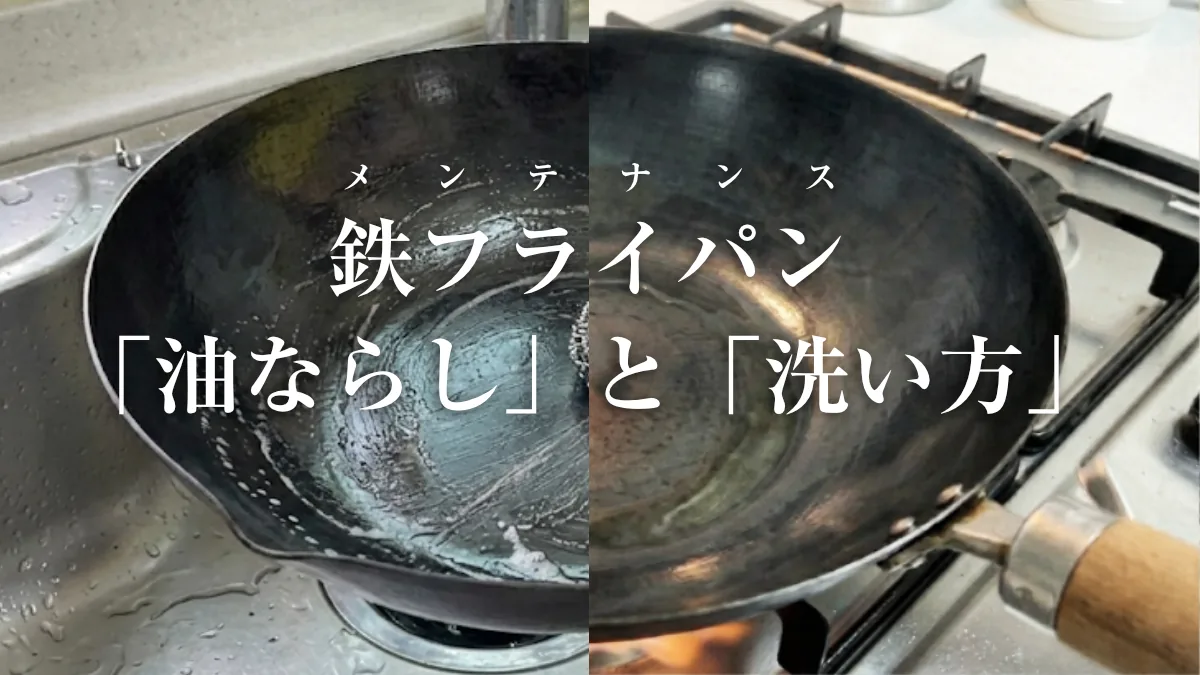
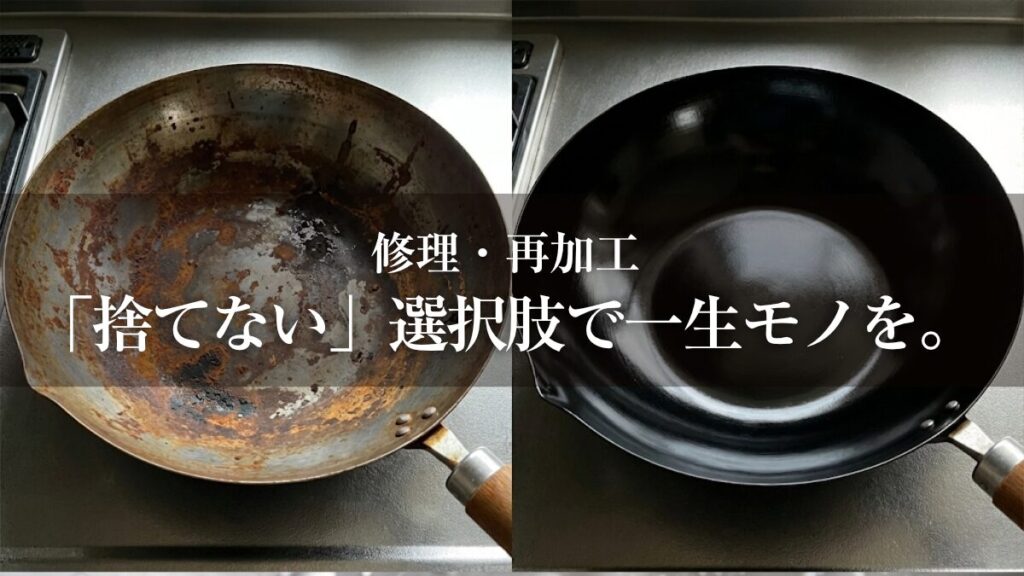
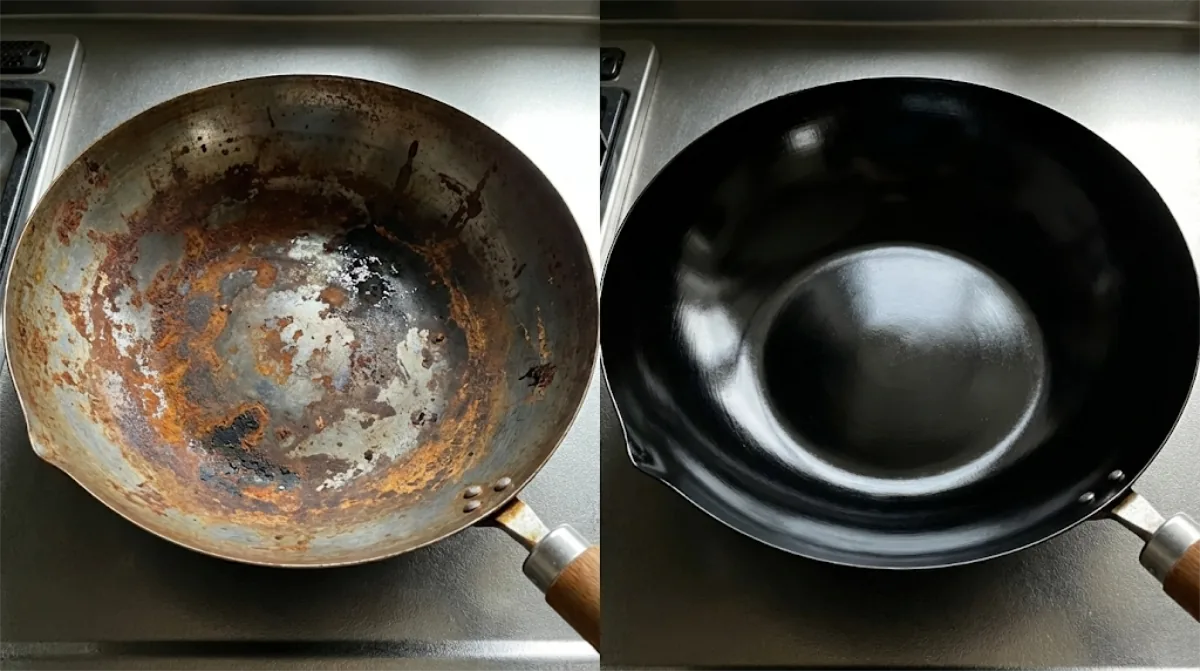
Iron pans — both traditional pressed iron and nitrided iron — don't technically require factory repair. Rust, burnt-on residue, and stripped seasoning can all be remediated at home: scrub off the damage, heat-dry, and re-season with the oil return technique. The pan will cook as well as before within a few uses. This self-restorability is one of iron's most compelling long-term advantages.
Two Japanese brands with exceptional after-service
Riverlight (Kiwame JAPAN) — Handle-by-Handle Replacement
Riverlight's Kiwame JAPAN iron pan is built around the premise that the pan body should last far longer than any handle. The wooden handle is designed to be user-replaceable: remove two bolts, swap the handle, done. Replacement handles for all sizes and all current models are sold separately through the official site and major retailers.
The pan body itself — nitrided iron with a rust-resistant surface — is essentially indestructible under normal use. Any rust that does appear is remediable at home without returning the pan to the manufacturer. The repair story for Riverlight is: you never need to send it anywhere, because the maintenance cycle is entirely within your control.
- Pan material
- Nitrided iron (窒化鉄)
- Made in
- Shiroi City, Chiba Prefecture
- Repair service
- Replacement handles sold separately; iron body self-serviceable
- Best for
- Cooks who want maximum longevity with minimum dependence on manufacturer services
Miyazaki Seisakusho (Geo Product) — 15-Year Warranty + Repair Service
Miyazaki Seisakusho, based in Tsubame City, Niigata, backs their Geo Product stainless multi-ply cookware with a 15-year manufacturer warranty — among the longest in the Japanese cookware market. Normal use failures are repaired or replaced at no charge. For user-caused damage (burnt interiors, accidental deformation), they offer paid maintenance services including polishing and straightening.
They also maintain a stock of replacement parts — handles, knobs, lids — for current and past product lines. Unlike many manufacturers that discontinue spare parts within a few years of a model change, Miyazaki Seisakusho's inventory policy is explicitly long-term. They call the broader program "Zutto Care" (ずっとケア — "Care, Always").
- Pan material
- Multi-ply stainless (7-ply for full-clad versions)
- Made in
- Tsubame City, Niigata Prefecture
- Warranty
- 15 years from purchase date
- Repair service
- Polishing, straightening, part replacement via Zutto Care program
- Best for
- Anyone who wants a premium stainless system backed by genuine long-term manufacturer commitment
When your brand doesn't offer repair
If you have a pan you love but the manufacturer doesn't offer recoating or repair services, third-party options exist. Japan has a small but active category of independent recoating specialists — companies that accept pans by mail regardless of brand, strip the old coating, and apply a new fluoropolymer surface.
The quality of third-party recoating varies significantly. Before sending a pan, look for a company that specifies the coating type they apply (PTFE grade, number of coats, cure temperature), provides before/after photos of past work, and clearly states whether they return the pan if the base metal is damaged or too thin. A well-reviewed specialist can do work equivalent to a manufacturer service; a poorly reviewed one can return your pan in worse condition.
For pans with sentimental value — a gift, a discontinued model you can't replace — third-party recoating is often worth the extra research. For standard pans without that personal attachment, weigh the recoating cost against simply upgrading to a Japanese pan with official manufacturer support.
FAQ
How much does factory recoating cost?
Official manufacturer recoating typically runs ¥3,000–¥6,000 for a standard frying pan, depending on size. Third-party services are sometimes slightly cheaper. The pan also needs to be shipped to the service center and back, which adds ¥1,000–¥1,500 in shipping costs. Total out-of-pocket is usually ¥4,500–¥8,000 — significantly less than replacing with a comparable quality pan.
How long does it take to get my pan back from recoating?
Including shipping both ways, expect 2–4 weeks. During busy seasons (end of year, summer), some services can take 4–6 weeks. If your pan is your primary everyday pan, plan the repair around a period when you have backup cooking equipment, or buy an inexpensive temporary pan for the interim.
Can iron pans be recoated?
Iron pans don't use an applied coating — they use a polymerized oil layer (seasoning) that's inherent to how the pan is used. There's no factory coating to reapply, and none needed. Rust, burnt residue, and stripped seasoning are all self-fixable at home: scrub, rinse, heat-dry, re-season. The cost is zero, and the pan can be restored in under 30 minutes.
When should I consider recoating rather than continuing to use the pan?
The trigger signs: visible peeling or flaking of the coating, a coating that's scratched down to bare metal in multiple spots, or food sticking consistently despite correct heat and oil technique. Early degradation — light discoloration, minor scratches — doesn't yet require recoating. Deep scratches or peeling warrant either recoating or replacing. Don't continue cooking on a pan with visible bare metal patches under high heat.
Is "PFOA-free" coating still safe if it degrades?
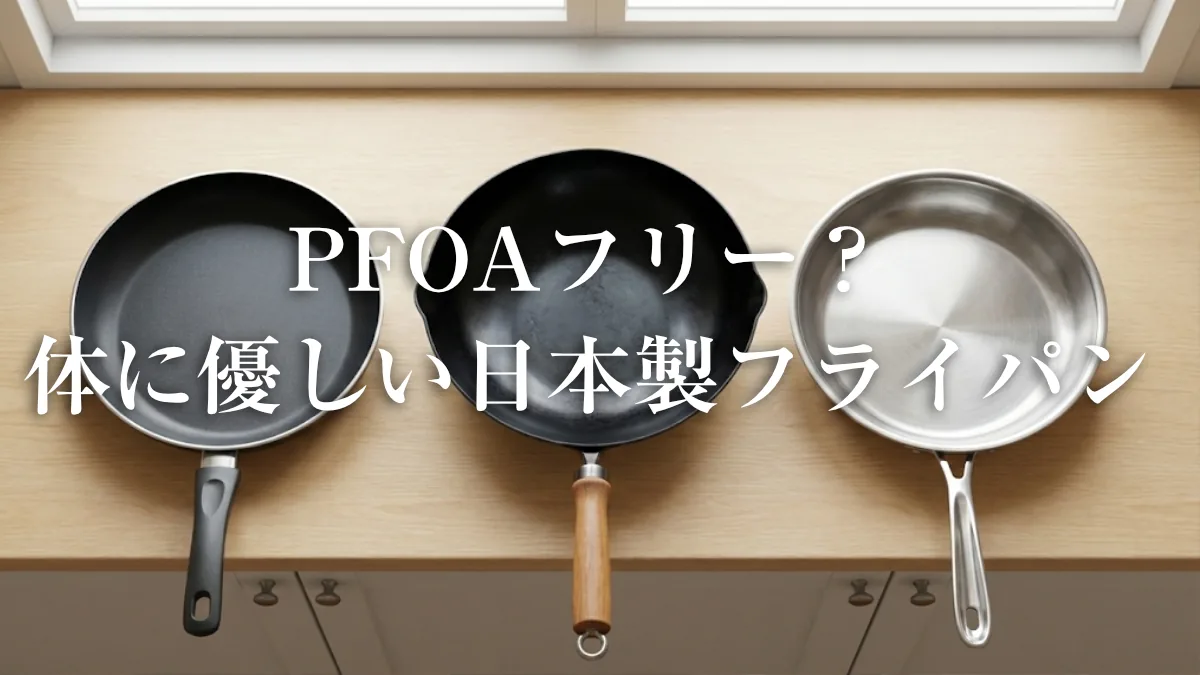
PFOA was a manufacturing aid used to apply PTFE; its elimination from the production process removes a specific carcinogenic risk. The PTFE coating itself — which is still used in PFOA-free pans — remains a subject of ongoing research. PTFE is considered safe at normal cooking temperatures (below 230°C/445°F). Above that, it begins to degrade. A degraded or heavily scratched PFOA-free coating should be treated the same as any worn PTFE coating: refresh it before continuing use at high heat.
How can I make a recoated pan last longer?
The two biggest factors are heat and abrasion. Use medium heat or below — PTFE coatings degrade faster above 230°C, and most everyday cooking doesn't require higher than that. Avoid metal utensils, abrasive scrubbers, and the dishwasher. Never heat an empty coated pan (the surface can exceed 300°C in under 90 seconds with no thermal mass from food or oil to absorb the heat). Let the pan cool naturally before washing — sudden cold water on a hot pan can cause thermal shock that physically lifts the coating.
Summary
"Buy once, repair when needed, use for decades" is a straightforward alternative to the replace-every-two-years cycle — and it costs about the same or less over time. The brands that make this possible are those that have built after-service into their business model from the start, not as an afterthought.
For coated pans, Asahi Keikinzoku's Pan Hospital service is the most accessible recoating option in Japan. For iron, Riverlight's handle-replacement system means the pan never needs to leave your home for repair. For stainless, Miyazaki Seisakusho's 15-year warranty and Zutto Care program is among the most comprehensive manufacturer commitments available. Any of the three is worth the higher initial price if your cooking frequency justifies a long-term relationship with your cookware.