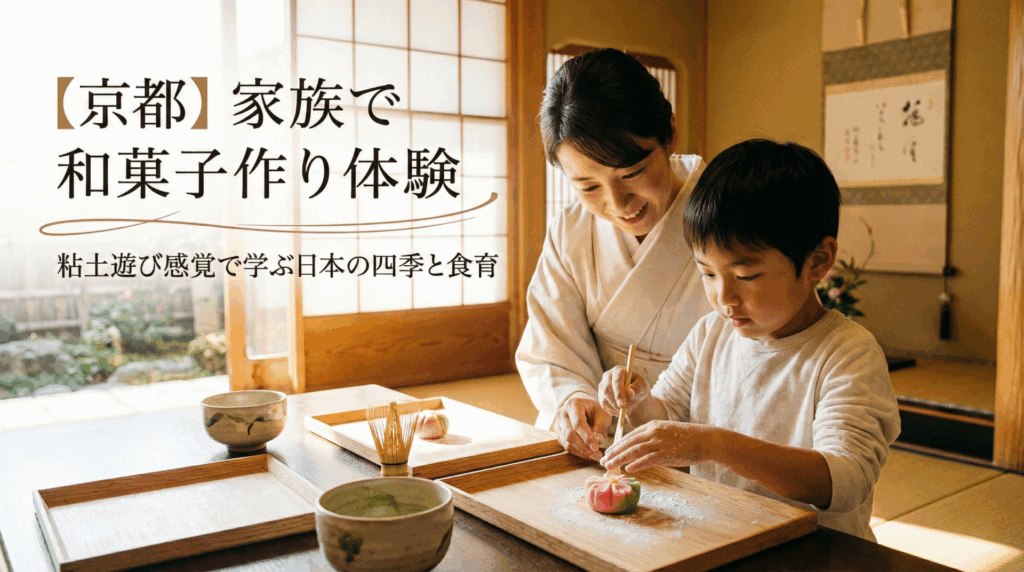
"I made a pink flower!" "Let's add the veins to the leaf!"
For moms and dads worried that their children might get bored with just temple-hopping in Kyoto, our wholehearted recommendation is the "wagashi (nerikiri) making experience."
Rolling colorful bean paste in your palms and pressing patterns into it with a spatula is just like "luxurious playdough — but sweet-smelling and delicious." Children become completely absorbed in it.
What makes it even more wonderful is that you get to eat the finished confectionery — a work of art — right there with a bowl of "matcha" tea. Because you made it yourself, even children who normally dislike bean paste will magically say "Delicious!" and finish every bite.
This article is an ultimate "food education" outing guide for learning about Japan's four seasons and food culture through taste and touch.
Tips for Enjoying the Wagashi Making Experience with Your Family (30 seconds)
- Just like playdough!: No sharp tools or fire are involved, so it's safe and fun from toddler age
- A lifesaver on rainy days: Completely indoors, so it's easy to work into your Kyoto sightseeing schedule whatever the weather
- Keep nails trimmed short: You use your palms directly to shape the bean paste — short nails are recommended for hygiene and ease of work
- Paired with matcha: At the end of the experience, you enjoy your creation with tea whisked by yourself (or prepared for you)
- The design changes with the season: Cherry blossoms in spring, morning glories in summer — the design varies depending on when you visit
1. [Before You Go] Wash hands thoroughly! What to wear and personal grooming
Wagashi making is a delicate process of touching and shaping food directly with your bare hands. Approach it with the same cleanliness standards as a craftsman.
Absolutely essential! 3 golden rules
- ① Keep nails short and avoid nail polish
Trim your nails short to prevent nail marks from appearing in the bean paste or paste getting caught underneath them. For hygiene reasons, some facilities ask participants with nail art to wear gloves. - ② Remove rings, watches, and bracelets
The work involves using your hands and wrists extensively. Remove accessories in advance and put them in your bag. - ③ No strong perfume or hand cream
Wagashi is an art form enjoyed through "fragrance" too. It is good manners to avoid strong-smelling products that would interfere with the delicate aromas of the tea and confectionery.
📝 About aprons
Most workshops provide aprons, but to be safe, wear clothes you don't mind getting stained, or bring disposable aprons for the children.
2. [Background Knowledge] What is "nerikiri"? Japan's four seasons expressed in confectionery
The main sweet made in experience workshops is almost always called "nerikiri."
An "edible work of art" showcasing the craftsman's skill
Nerikiri is a soft, malleable dough made by kneading white bean paste together with mochi (gyuhi) and similar ingredients. It is colored vividly with food dye and then shaped using the hands and wooden spatulas into the forms of flowers, birds, landscapes, and more.
Its defining feature is a sense of "seasonality." In spring, cherry blossoms; in summer, water and goldfish; in autumn, maple leaves; in winter, snow rabbits — the beautiful four seasons of Japan are expressed inside a palm-sized confection.
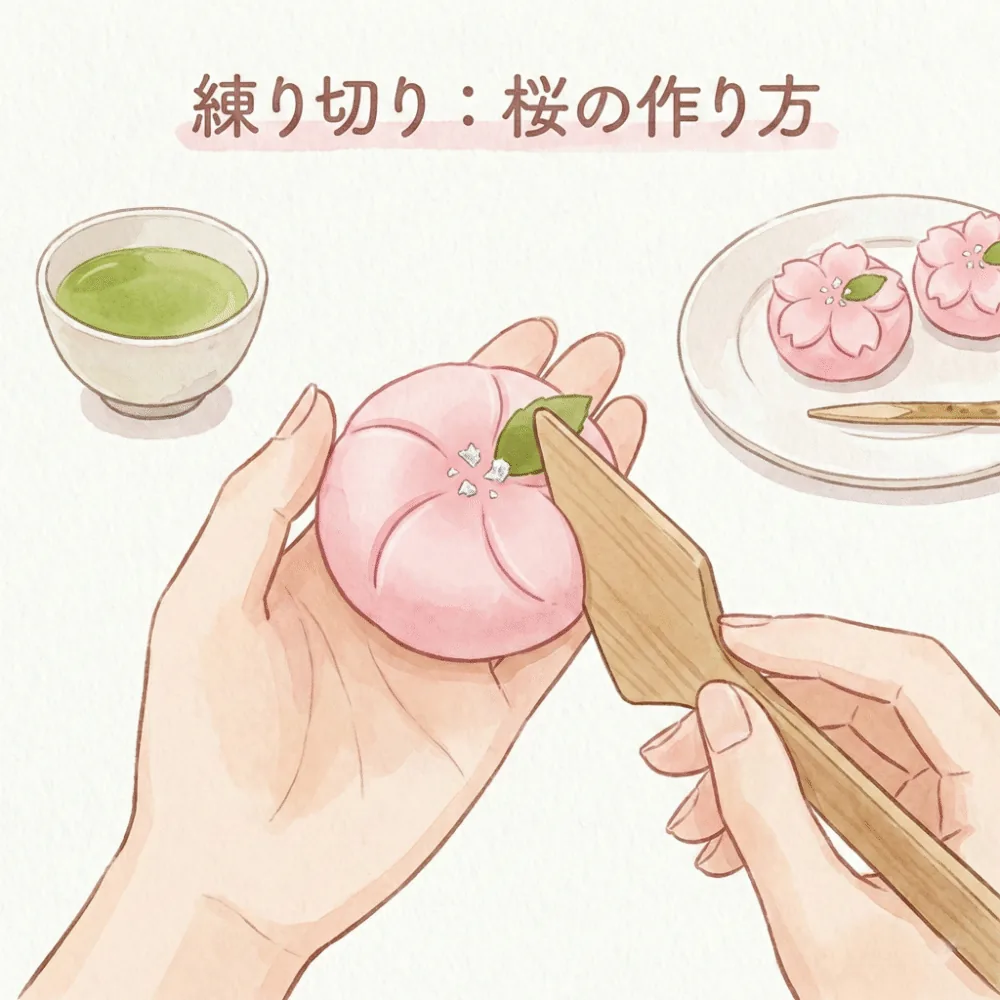
💡 Trivia Why does wagashi go with "matcha"?
Sweet wagashi paired with slightly bitter matcha — this is Japan's greatest flavor combination. The robust sweetness of wagashi softens the bitterness of matcha, while in turn the matcha cleanses the palate after the sweetness. "Finish all the wagashi first, then drink the tea" is the most delicious way to enjoy them!
3. When to go? A comparison of "wagashi motifs" that change by season
The designs you create in a wagashi experience change completely depending on the time of year you visit. Planning your trip around "I want to make that flower!" is highly recommended.
| Season | Common motifs (examples) | Children's reactions and highlights |
|---|---|---|
| Spring (March–May) | Cherry blossoms, bush warblers, butterflies, canola flowers | Vivid pinks and yellows — the season children get most excited about! |
| Summer (June–August) | Morning glories, goldfish, water peony, sunflowers | Some workshops let you make sparkling transparent sweets using agar — gorgeous! |
| Autumn (September–November) | Maple leaves, chrysanthemums, chestnuts, moon-viewing rabbits | Gradient expressions and other techniques result in a more artistic, mature finish. |
| Winter (December–February) | Snow rabbits, camellias, plum blossoms, pine | Many menus feature the adorable round "rabbit" shape, hugely popular with toddlers! |
4. [Kyoto] Top 3 family-friendly wagashi experience spots (with map)
Here are popular long-established workshops with easy tourist access where even children can make authentic wagashi.
※ Pins on the map indicate spots introduced in this article. Please check the official websites for the latest information on prices and opening days.
① Kanshundo (Higashiyama / Sagano) | Overwhelmingly popular! An authentic workshop taught by craftsmen
"Kanshundo" — a long-established wagashi shop dating back to the Edo period. With a venue near Kiyomizudera in Higashiyama and another near Arashiyama in Sagano, its biggest appeal is how easily it fits into a sightseeing route.
Craftsmen demonstrate right in front of you and teach gently and carefully. It's a satisfying, content-packed experience: make 3 premium fresh wagashi (one of which you eat there with matcha) plus dry sweets (higashi).
👨👩👧👦 Family checklist
- Location: Right in the heart of the sightseeing area — minimize travel time
- Take home: Packed in a beautiful box to take home, perfect as a gift for grandparents!
- Atmosphere: The traditional Japanese space of a long-established shop creates an authentic craftsman atmosphere
Basic Information (approximate)
- Content: 3 premium fresh wagashi + 1 dry sweet (matcha included)
- Duration: Approx. 75 minutes
- Price range: ¥3,300 (same for adults and children)
- Reservation: Advance reservation required (book several days ahead)
② Shichijo Kanshundo Kyoto Tower Sando branch | Direct connection to the station! A quick experience right before you leave
When you have "just a little time left before the Shinkansen!", the ideal location is the experience workshop inside "Kyoto Tower Sando," beneath the Kyoto Tower right in front of Kyoto Station.
In a sophisticated modern space, you make 4 premium fresh wagashi and enjoy one of them with matcha. Everything you need is provided, so you can join empty-handed with ease.
👨👩👧👦 Family checklist
- Access: Directly connected underground to Kyoto Station — no getting wet in the rain!
- Surroundings: The same floor has many excellent restaurants and stylish souvenir shops
- Ease: Drop in as casually as going to a café and enjoy a high-quality experience
Basic Information (approximate)
- Content: 4 premium fresh wagashi (matcha included)
- Duration: Approx. 60–90 minutes
- Price range: Approx. ¥3,300
- Reservation: Advance reservation recommended
③ Yatsuhashian to Shishuuyakata | Wagashi and yatsuhashi both! An experience theme park
A large-scale facility with an abundance of experience menus that children absolutely love — not just nerikiri, but also "fresh yatsuhashi handmaking" and "mitarashi dango making."
Because school trip students visit frequently, the staff's teaching flow is very smooth, and it's a completely stress-free environment for families with children.
👨👩👧👦 Family checklist
- Options: Siblings can each choose a different experience — one does "wagashi making" while another does "yatsuhashi making"
- Environment: Large facility with a parking lot. Convenient for family road trips
- 📝 Note It's a bit away from Kyoto Station, so bus or car travel is needed
Basic Information (approximate)
- Content: Nerikiri crafting (matcha included), fresh yatsuhashi making, and many more
- Duration: Approx. 60 minutes
- Price range: Nerikiri from approx. ¥2,000
- Reservation: Advance reservation recommended
🌸 Be a wagashi craftsman at home! Making kits & mail-order Kyoto confectionery
For parent-child pairs who think "We can't get to Kyoto, but we'd love to try making nerikiri!" — "wagashi making kits" you can enjoy easily at home are hugely popular! Ordering beautiful seasonal Kyoto confectionery made by craftsmen for the whole family to enjoy slowly at home is also a wonderful form of food education.
5. [Model Course] Temple-hopping and wagashi making! Kyoto day-trip timetable
The classic Kyoto plan: sightseeing around "Kiyomizudera" combined with wagashi making at "Kanshundo (Higashiyama venue)."
- 10:00 | Visit Kiyomizudera Temple
(Going early in the morning tends to be relatively less crowded — recommended!) - 11:30 | Stroll around Sannenzaka (Sanneizaka) and have lunch
(Enjoy a classic Kyoto lunch of yudofu or obanzai side dishes) - 14:00 | Wagashi making experience at "Kanshundo (Higashiyama venue)"
(An indoor seated activity in the tired afternoon is a godsend for parents too) - 15:15 | Take a relaxing break with the wagashi you made yourself and a bowl of matcha
- 16:00 | Visit "Sanjusangendo" or "Kyoto National Museum" before heading home
6. Things to do after the experience! Nearby spots recommended for families
① Kyoto Railway Museum
If the children are getting restless after temple-hopping, this is the place to send their excitement through the roof! One of Japan's largest railway museums, just a short distance from Kyoto Station.
You can ride a real steam locomotive and explore a massive diorama — it's completely indoors, making it a perfect backup plan for rainy days.
② Nishiki Market
A lively covered shopping arcade known as "Kyoto's Kitchen."
Visiting after the wagashi experience — with food on everyone's mind — doubles the fun. From rolled omelets to "tako-tamago" (octopus stuffed with a quail egg), there's plenty of street food children love (※ in designated eating areas).
③ Sanjusangendo
A breathtaking temple within walking distance of "Kanshundo (Higashiyama venue)."
The "1,001 Thousand-Armed Kannon statues" lined up inside the hall are so awe-inspiring that even children with no knowledge of history will gasp and say "Wow…!" It is said that "there is always a statue that looks like you or someone in your family" — searching for which one resembles each family member is a game everyone can enjoy.
④ Kyoto National Museum
One of Japan's leading museums, directly opposite Sanjusangendo, displaying numerous national treasures and important cultural properties.
It has a prestigious image, but in fact its official character "Tora-rin" (modeled after a tiger painting by Ogata Korin) is hugely popular with children! The spacious grounds and the magnificent Western-style Meiji Kotokan building make it an absolutely compelling spot to visit.
7. Rest your weary feet! Recommended Kyoto hotels for families with children
Kyoto sightseeing means an enormous amount of walking! After trudging up temple steps and along stone-paved lanes, both children and adults end up with aching feet.
That's why the absolute requirements when choosing a hotel with children are "convenient access to sightseeing spots" and "a large bath with room to stretch out (or a bathroom with a separate washing area)!"
♨️ Kyoto Station / Umekoji area (Perfect if you're going to the Railway Museum!)
Hotel Emion Kyoto
Direct connection to Umekoji-Kyotonomishi Station — one stop from Kyoto Station. The most powerful location for families: walking distance to both the "Kyoto Railway Museum" and "Kyoto Aquarium."
There is a spacious large communal bath exclusively for guests to thoroughly soothe tired bodies. If you're combining the wagashi experience (Shichijo Kanshundo Kyoto Tower Sando) with the Railway Museum, staying here eliminates all travel stress.
👘 Kawaramachi / Nishiki Market area (Convenient for food and shopping)
Cross Hotel Kyoto
Within walking distance of the food-lover's "Nishiki Market"! The bus stop toward Kiyomizudera (Kanshundo) is close by, making this a stylish hotel right in the heart of Kyoto sightseeing.
The biggest family-friendly point is that every room has a "separate bathroom (with a washing area)". Being able to bathe children just like at home, with a proper wash area, earns it overwhelming praise from families who find unit bathrooms inconvenient.
8. [After You Get Home] Enjoying "matcha" and wagashi at home
Enjoy the wagashi you brought back from the experience, and the sweets you bought as souvenirs, as a "special time" at home too.
With a chasen (tea whisk), your home becomes a Japanese café
After the wagashi experience, trying to buy a "chasen (a bamboo tool for whisking tea)" and some matcha powder for home is something we highly recommend.
Pouring in hot water and whisking it to a froth is a delightful task children love to help with. Even if the sweets alongside are store-bought dango or taiyaki, simply whisking the tea yourself and setting it all out together creates a genuine "Japanese food education" moment.
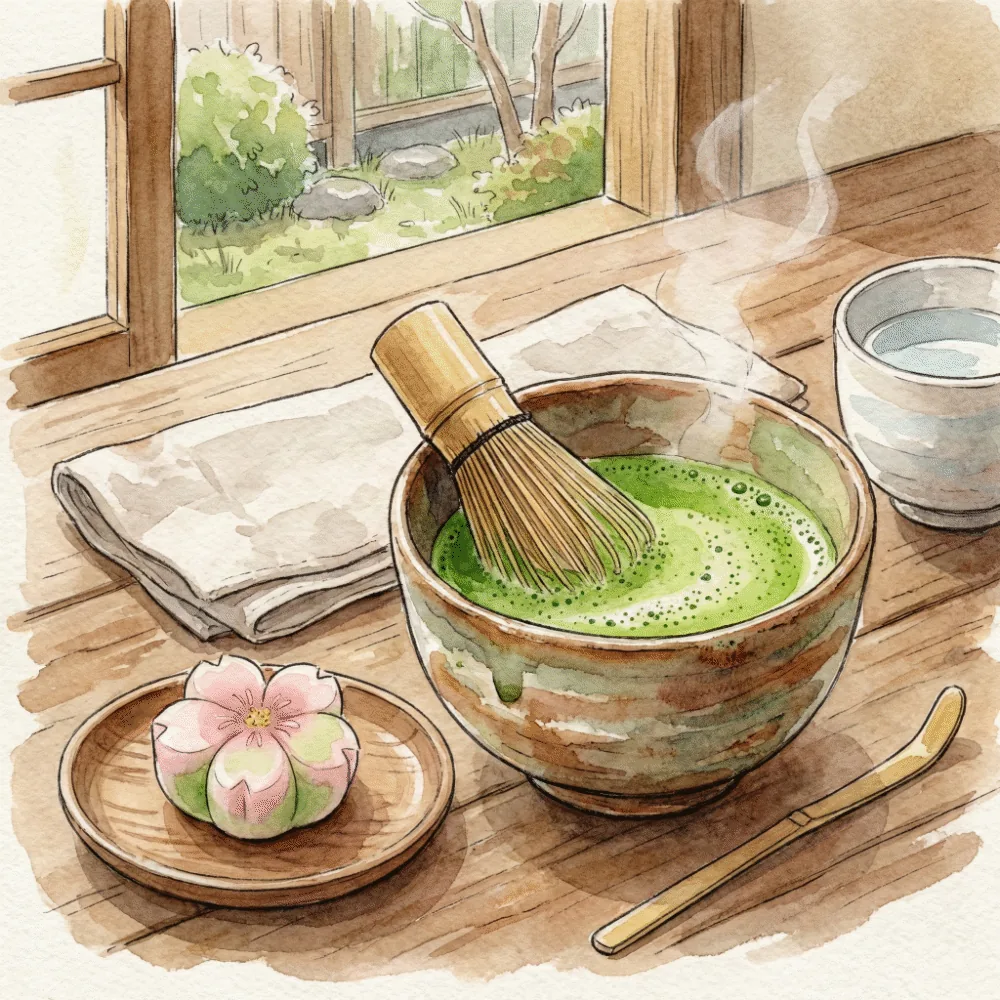
🍵 Turn your home into a Japanese café! "Matcha sets" for beginners
To enjoy wagashi at its most delicious, matcha is essential! Whisking it to a froth with a "chasen" is the ultimate fun chore for children. Why not gather a beginner-friendly set with all the tools you need, plus some cute Japanese-pattern small plates, and turn your weekend tea time into a "Japanese café" at home?
Summary: The joy of creating "the seasons" with your own hands and tasting them
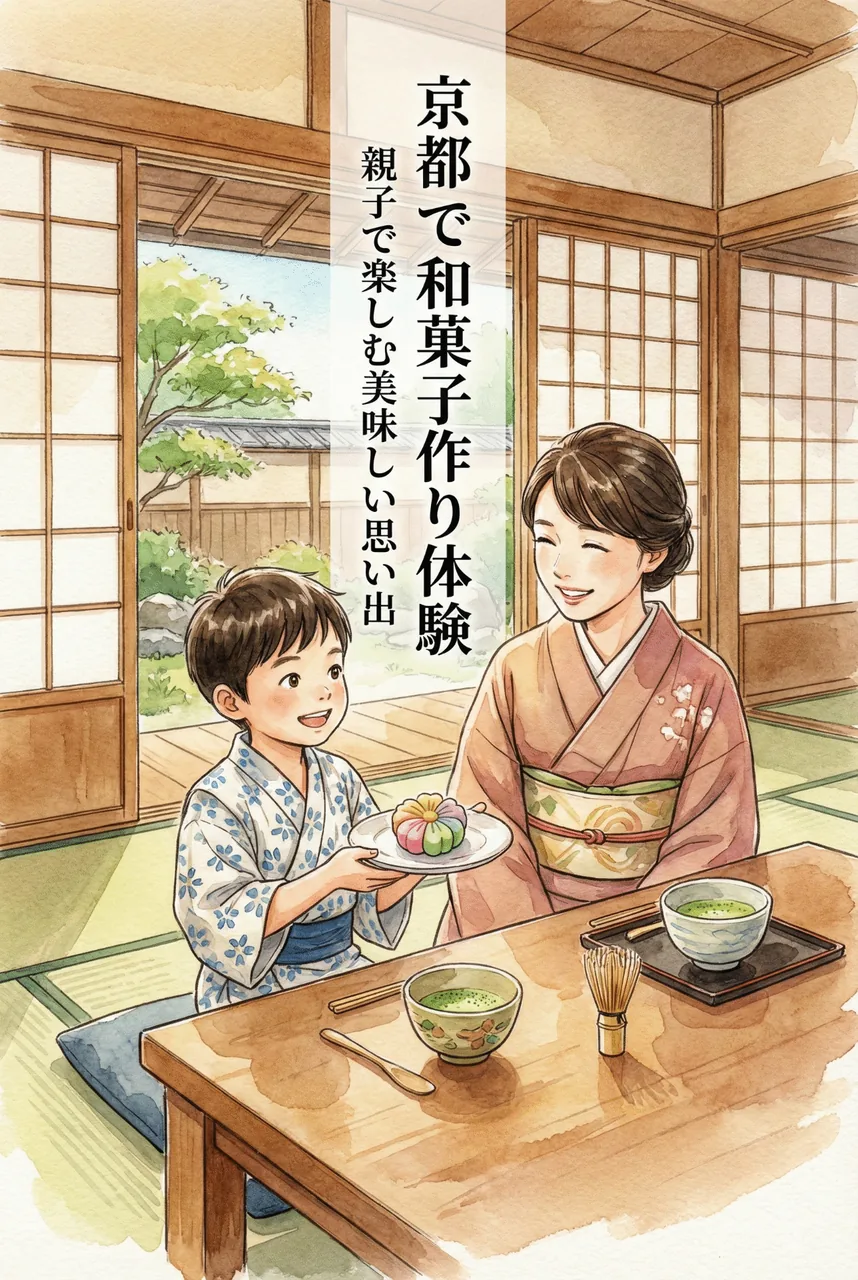
"Look at this pink gradient — pretty good, right?"
"It's almost too beautiful to eat!"
The wagashi (nerikiri) making experience is an "art" that stimulates the imagination through the fingertips, and at the end becomes the "finest sweet moment" of eating something delicious you created yourself.
Knowing what kind of handiwork by craftsmen goes into the beautiful confectionery sold in stores connects directly to a respect for things and for food.
On your next Kyoto trip, why not add the experience of "creating Japan's beautiful four seasons with your own hands" — rather than just looking at them?