What kind of "bowl" do you use every day at the dining table when drinking miso soup?
If you're using a plastic bowl, a "makie (蒔絵) experience" in Aizu-Wakamatsu City, Fukushima Prefecture, might dramatically transform your daily mealtime.
"Aizu-nuri (Aizu lacquerware)" — one of Japan's finest traditional crafts.
Its greatest feature is the gorgeous and beautiful "makie" technique, where a design is painted with lacquer (urushi) and then gold or silver powder is dusted on to adhere it.
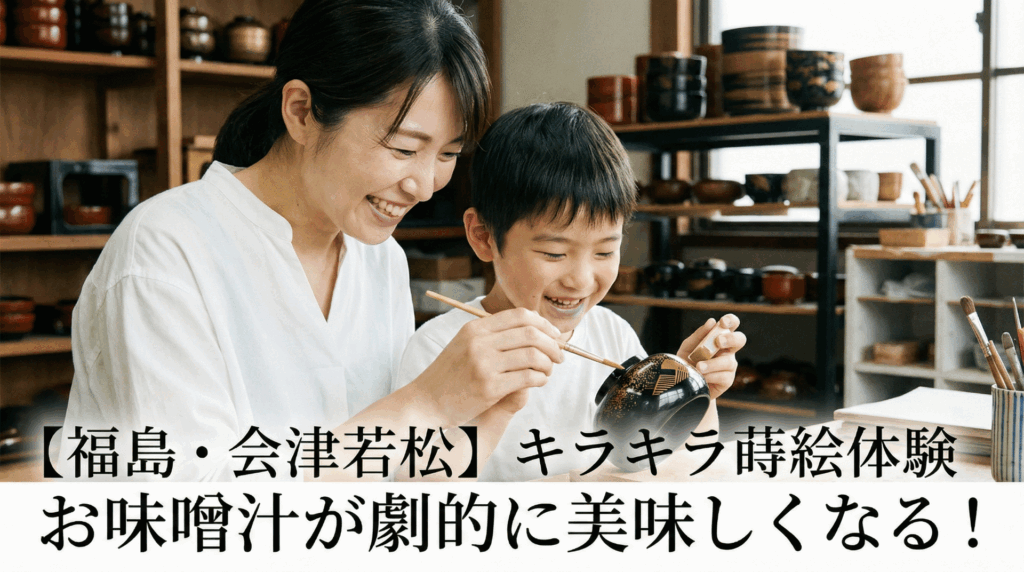
At experience workshops in Aizu, guided by artisans, you can paint your favorite designs on your own spoon or soup bowl with a brush, then cast a glittering spell on it with shimmering powder.
A bowl made from real wood and lacquer stays cool to the touch even when filled with hot soup — shockingly gentle against the lips. A meal eaten with a "my spoon" or "my bowl" that you decorated yourself tastes so much better than usual.
In this guide, we thoroughly cover everything from the fascinating reason why lacquerware doesn't get hot, to a sightseeing plan along the retro and charming "Nanukamachi Street" — a journey to discover a lifelong "one-of-a-kind tool" you'll love forever!
Tips for Enjoying a Family Makie Experience (30 seconds)
- No rash concerns — perfectly safe!: Most workshops use safe alternative paints that won't cause rashes even in real lacquer, so children can participate with complete peace of mind
- Think about your design in advance: Consider in advance what to draw in the small space on the spoon or bowl
- Take it home the same day: Thanks to quick-drying paints or drying equipment, you can take your piece home on the day
- The ultimate "tool education": Using a real vessel that might break if dropped naturally develops the beautiful habit of handling things gently with both hands
- Nanukamachi Street is so fun: The "Nanukamachi Street" where the experience workshops are concentrated is the ultimate retro street — perfect for café-hopping and browsing shops
1. [Before You Go] Detailed Work Requires Mom and Dad's Support!
Makie involves delicate work using a fine brush to paint designs. Prepare mentally so your child doesn't give up halfway through.
Absolutely Essential! Rules Before Your Visit
- ① Keep the design "simple"!
Applying thick paint with a fine brush makes even adults struggle to paint complicated character faces and such. Think in advance about simple, easy-to-fill designs like "cherry blossom petals," "a star," or "your initials." - ② The moment of dusting gold/silver powder is the highlight
Even if drawing is a bit tricky, when the final step comes — tapping gold powder on with a puff and then brushing off the excess to reveal the sparkling image — kids' excitement reaches its peak! Parents can gently support from the side with brushwork guidance.
2. [Insider Knowledge] Why Doesn't the Bowl Get Hot? The Secret of "Insulation"
Before the experience, share with your children the wonderful science behind Japanese kitchen tools: "Why do we use a wooden bowl (lacquerware) for miso soup rather than plastic or ceramic?"
The "Magic Barrier" Created by Wood and Lacquer
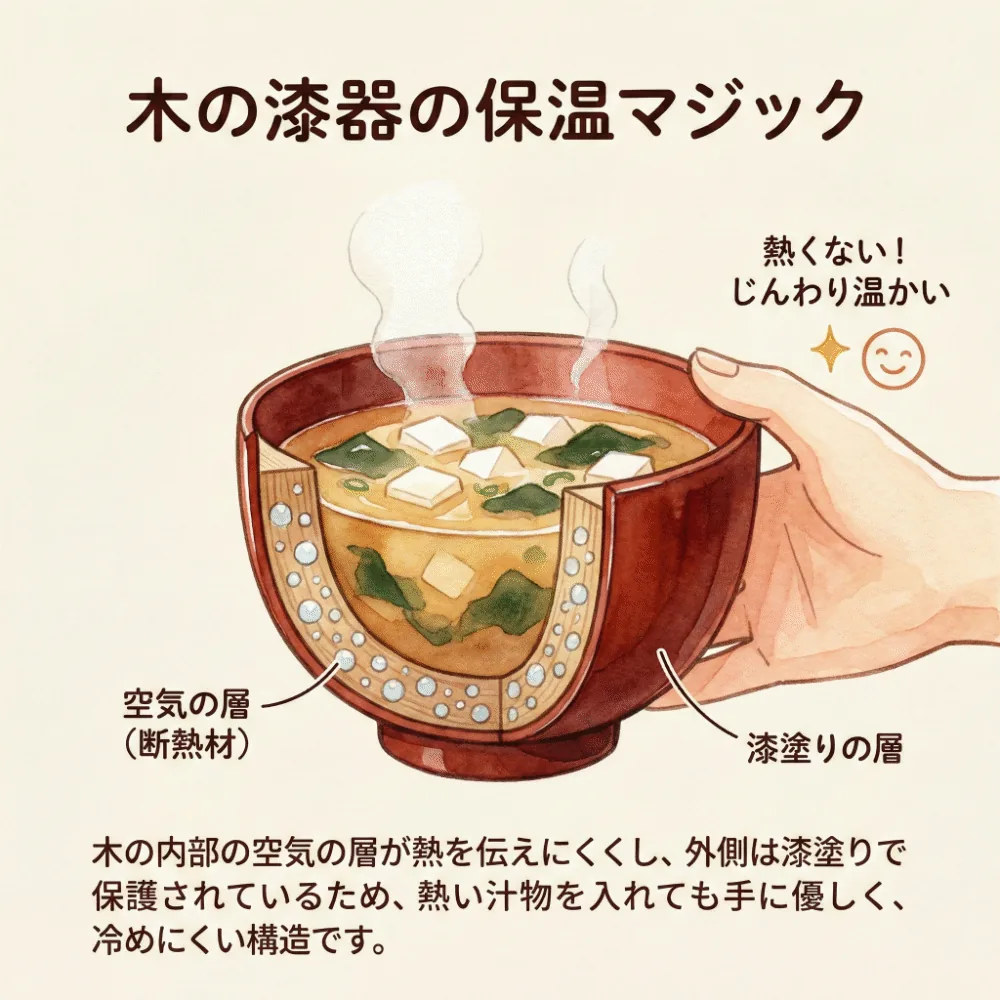
When you pour hot soup into a ceramic (pottery) rice bowl, the bowl itself heats up until you can't hold it, right? However, a bowl carved from real "wood" has countless layers of air inside the wood, giving it the characteristic of not releasing heat outward (high insulating properties).
Furthermore, the many coats of "lacquer (urushi)" applied on top create a powerful coating that protects the wood from moisture.
That's why, even with piping-hot miso soup inside, "you can hold it firmly in your hands, it's not hot against your lips, yet the contents stay warm throughout" — a truly magical sensation is realized!
3. Spoon, Bowl, or Hand Mirror? How to Choose Your Experience Menu
At the workshop, you can choose the base item to decorate with makie. Choose based on age and intended use.
| Item | Features and How to Choose |
|---|---|
| Lacquer-coated spoon |
[Ideal for Beginners & Young Children] The painting surface is small, and adding a single accent pattern to the handle is enough to make a wonderful piece. It's the ultimate food-education item that makes every daily bowl of curry or soup more enjoyable. |
| Soup bowl (for miso soup) |
[For a Lifelong "My Bowl"] Painting on a curved surface raises the difficulty slightly, but scattering cherry blossoms around the side or writing your own name creates an explosive sense of attachment. It becomes a treasured piece you can't do without at breakfast every morning. |
4. [Fukushima / Aizu-Wakamatsu] 2 Recommended Makie Experience Workshops for Families
* The pins on the map mark the spots featured in this article. Please check the official websites for the latest information on prices and opening days.
① Lacquerware Warehouse Suzuzen | The Definitive Aizu Lacquerware! Authentic Artisan Experience
Established in Tempo 3 (1832). A legendary long-established shop that carries on the tradition of Aizu-nuri to this day.
At the "Experience Warehouse" on the premises, you can learn directly from real artisans how to hold the brush and apply paint, then create makie on spoons, bowls, hand mirrors, and more. The authentic process of dusting "color powder" or "gold powder" onto the painted design to fix it is exactly what a traditional craft artisan does! Finished pieces can be taken home the same day in a dedicated box.
👨👩👧👦 Family & Safety Checklist
- Safe — no rash risk: They use "alternative paint (such as cashew lacquer)" that absolutely won't cause rashes even for children with sensitive skin — not real lacquer — so you can participate with complete peace of mind.
- A lesson in lacquerware: The warehouse on the premises houses a historical museum of Aizu-nuri where you can view beautiful lacquerware pieces free of charge.
Basic Information (Approximate)
- Experience: Makie experience (choose from spoon, bowl, hand mirror, small box, etc.)
- Duration: Approx. 60 minutes
- Approximate price: ¥3,500–¥5,000 (depending on chosen item)
- Reservation: By phone or via the website's inquiry form (note days off and temporary closures)
② Kinomoto Lacquerware Store | Makie on Glass!? A Popular Shop on the Retro Street
A stylish and popular lacquerware shop located in the heart of the Taisho-era-romanesque "Nanukamachi Street."
The most popular menu here — beyond makie on lacquerware — is a makie experience on glass items (such as wind chimes)! Paint colorful designs on transparent glass and scatter gold powder to create an original wind chime that chimes with handmade affection every time it rings. The first floor is a shop with cute Japanese accessories — satisfying mom's shopping desires too.
👨👩👧👦 Family & Sightseeing Checklist
- Super convenient location: It's right in the middle of Nanukamachi Street, so you can head straight to retro street-walking and café-hopping before and after your experience.
Basic Information (Approximate)
- Experience: Makie experience (spoon, small box, glass wind chime, glass cup, etc.)
- Duration: Approx. 60 minutes
- Approximate price: From ¥1,430
- Reservation: Please print the application form from the website and fax it, or call by phone
🥣 Enrich Your Home Dining Table! Order Beautiful Aizu Lacquerware Online
For those who can't make it all the way to Aizu — lifelong "Aizu-nuri" soup bowls and spoons that insulate heat and feel so gentle against the lips are available to order online! From natural pieces that showcase the beauty of the wood grain to modern designs, the variety is rich. Why not graduate from plastic dishes and get the whole family a set of "magic vessels" that make every meal so much more delicious?
5. [Model Course] Retro Street and Lacquerware! Aizu Day-Trip Schedule
Aizu-Wakamatsu City has retro streets, outstanding gourmet, and experience facilities all packed into walking distance. Here's a stylish, satisfying route combining experience and a stroll.
- 10:30 | Take a leisurely stroll along the Taisho-era-romanesque "Nanukamachi Street"
- 11:30 | Lunch on Aizu's local cuisine! Enjoy a superb wappa-meshi at "Kappo Takino"
(The steaming rice in a wooden magewappa vessel lets you feel the wonder of wooden tools firsthand) - 13:00 | Makie experience at "Suzuzen" or "Kinomoto Lacquerware"!
(Cast a spell on your own bowl or spoon with brush and gold powder) - 14:30 | Sweet break at a stylish old-house café on Nanukamachi Street (such as Mitsutaya)
- 15:30 | Sip matcha in the beautiful Japanese garden "Oyakuen", beloved by generations of domain lords, then head home
6. Places to Play After the Experience! 3 Powerhouse Sightseeing & Gourmet Spots Nearby
① Nanukamachi Street | A Retro Taisho-Era Street
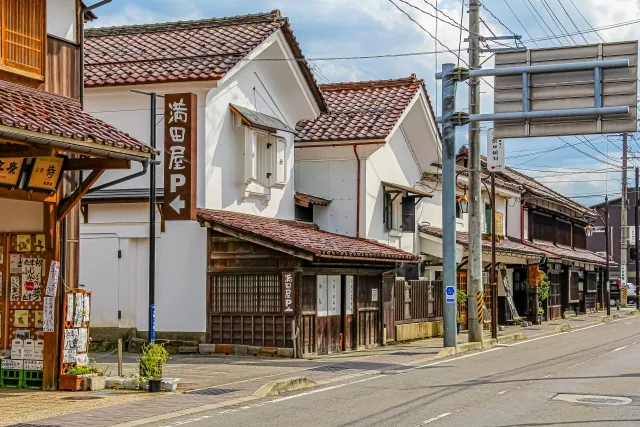
Nanukamachi Street, where the experience workshops are located, was once Aizu's premier shopping district, bustling as a wholesale merchants' quarter.
Even today, Western-style buildings from the Taisho era and beautiful black-plastered storehouses remain intact — strolling through feels like time travel! Old buildings renovated into stylish cafés and shops selling cute "Aizu cotton (Aizu-momen)" accessories line the street, making it the place where mom's shopping excitement reaches its absolute peak.
👨👩👧👦 Family & Gourmet Checklist
- Great for food stalls: Cute sweets shaped like akabeko (the red cow toy), and "miso dengaku" (skewered food grilled with miso sauce over charcoal) — plenty of street food to delight children.
② Kappo Takino | The Ultimate Restaurant for Aizu's Famous "Wappa-Meshi"
When it comes to Aizu's local cuisine, "wappa-meshi (輪箱飯)" is absolutely unmissable!
A supreme rice dish of Aizu rice and mountain bounty (salmon, crab, wild vegetables, etc.) layered into a "magewappa" vessel — a bowl bent from hinoki cypress or cedar — then gently steamed bowl and all. The wooden scent that wafts when the lid is opened, and the broth-soaked piping-hot rice, make it the ultimate restaurant for experiencing the "wonder of wood and tools" through food.
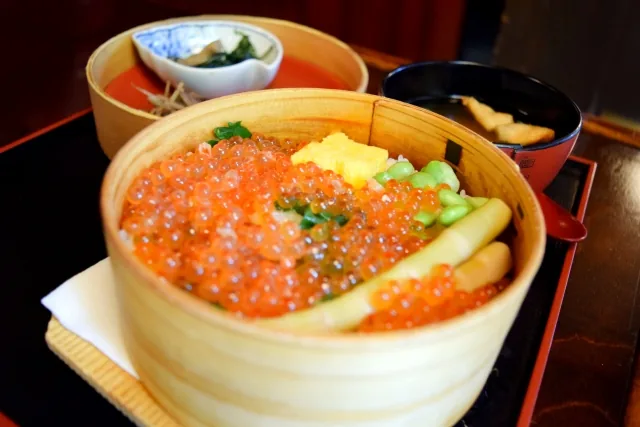
Wappa-Meshi Kappo Takino
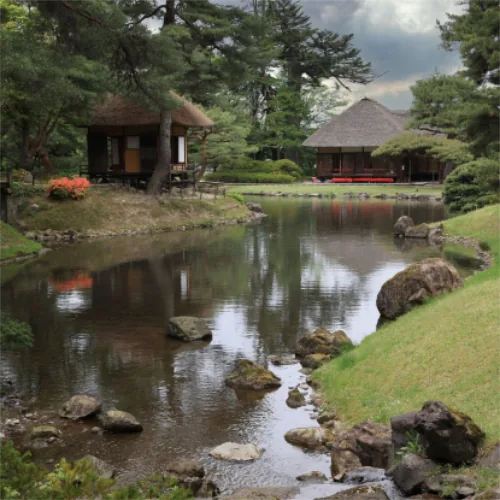
③ Oyakuen | Matcha in the Garden Beloved by Lords
A vast and beautiful Japanese garden that got its name from the generations of Aizu domain lords who loved it and cultivated medicinal herbs there.
The strolling-style garden lets you walk all the way around the pond, enjoying flowers and foliage in every season. At the "Ochaya Goten" (teahouse) inside the garden, you can enjoy matcha and yokan (sweet bean jelly) while gazing at the beautiful scenery. It's also the perfect quiet, soul-cleansing spot for a child's "first matcha experience."
7. Unleash That Makie Focus! Recommended Family Accommodation in Aizu
After pouring all your concentration into a brush tip to complete glittering makie, both adults and children need a well-earned rest.
We've picked hugely family-popular buffet & open-air bath accommodations from the renowned "Higashiyama Onsen" — just a short drive from Aizu-Wakamatsu city center and experience workshops — and from the scenic "Ashinomaki Onsen" a little further afield!
♨️ Higashiyama Onsen Area (Easy access — just 15 min by car from city center!)
Aizu Higashiyama Onsen Onyado Toho
About 15 minutes by car from the lacquerware shops on Nanukamachi Street and the experience facilities. A large ryokan (Japanese inn) with overwhelming family popularity as a base for Aizu sightseeing.
The secret to its popularity: the spectacular open-air bath "Sora no Yu" overlooking the whole town of Aizu, and a lavish buffet with superb variety! At the buffet, local Aizu specialties like "sauce katsu-don" and "Kitakata ramen" are made fresh right in front of you — fully satisfying the hungry stomach after a makie experience.
🏞 Ashinomaki Onsen Area (Like an Anime World!? A Non-Everyday Hot Spring Inn)
Ashinomaki Onsen Okawaso
About 30 minutes by car from Aizu-Wakamatsu city center. A long-established hot spring ryokan built along a stunning natural gorge.
Step inside and you're greeted by a soaring atrium "floating stage" with live shamisen music — which became famous for resembling the "Mugen Castle" from a hit anime! You can soak in the "Japanese" atmosphere of traditional crafts even at the inn. The tiered open-air baths jutting out over the gorge, and a buffet using local ingredients, create an extraordinary atmosphere that makes family trips truly unforgettable.
8. [After You Return] No Dishwasher! Washing Gently with a Sponge — How to Care for Lacquerware
After returning from your trip, bring out the makie-painted "my bowl" or spoon you decorated at the dining table. This is the start of "tool education" — learning to handle your lifelong tools with care.
3 Promises for Keeping Lacquerware Beautiful
- ① Absolutely no dishwasher or microwave! (Wood and lacquer are vulnerable to rapid temperature changes and dryness. Putting them in the dishwasher or microwave can cause cracking or the design to peel.)
- ② Hand-wash with a soft sponge (Don't use a hard scrubber or abrasive cleanser — use ordinary dish soap and a soft sponge, washing gently as if stroking it.)
- ③ Dry immediately after washing (Leaving water droplets and air-drying can leave white marks from tap-water calcium deposits. The trick to maintaining shine is to wipe off moisture right away with a soft cloth after washing.)
🧽 Don't Scratch That Precious Lacquerware! Gentle Care Tools
A lifelong lacquerware piece you painted yourself. Why not turn the time you spend washing and drying it into "tool education" — a lesson in caring for things? Here we introduce beautiful Japanese kitchen tools: 100% natural fiber soft sponges that will never scratch lacquerware, and premium mosquito-net (kaya) dishcloths that instantly absorb water droplets.
Summary: The Glittering Design You Drew Enriches Your Daily Dining Table
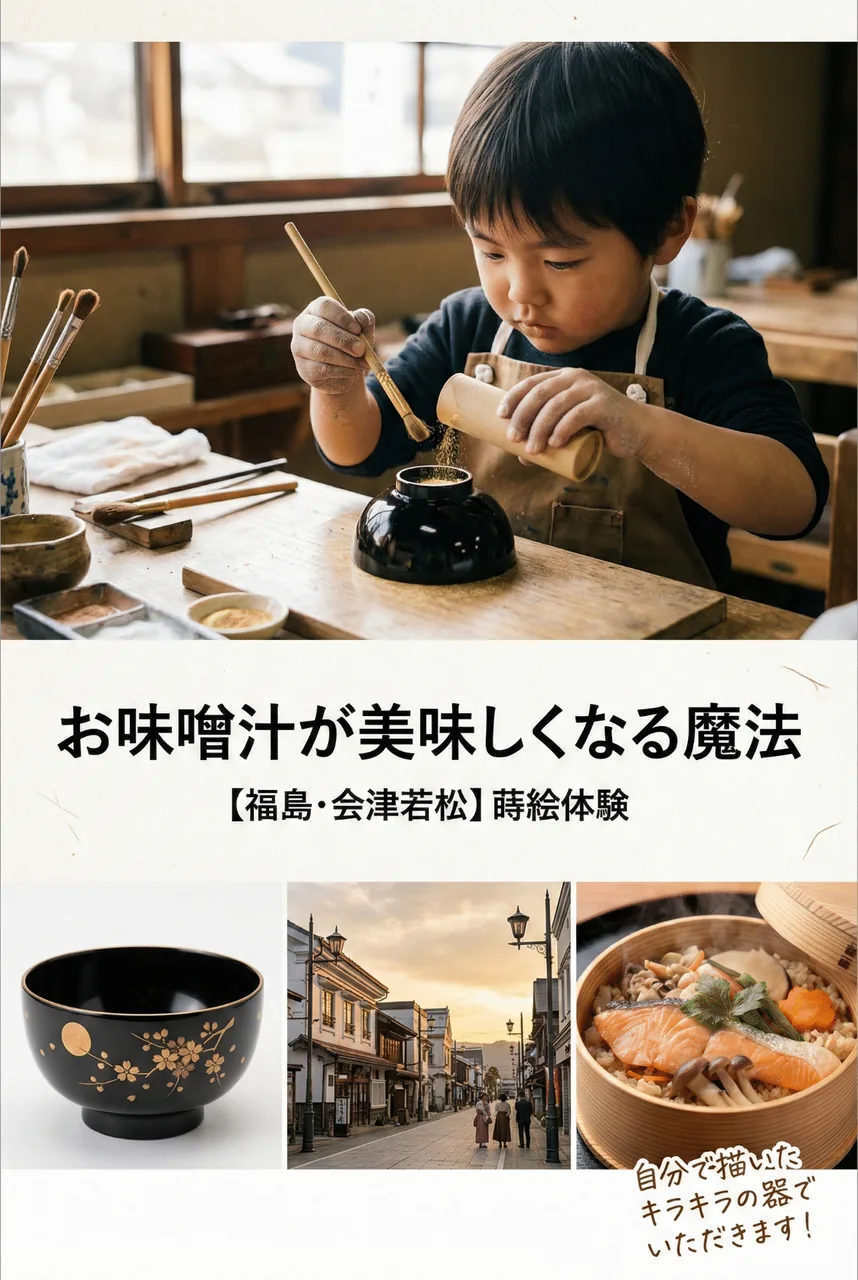
"This bowl is the one I put the gold glitter on, right!"
A "my bowl" painted with intense concentration at an Aizu workshop, brush clutched in tiny hands.
Even the same everyday tofu and wakame miso soup, when ladled into a "dedicated vessel" decorated by their own hands, is eaten by children with surprising joy — and not a drop left.
Unlike a plastic dish that ends its life tossed into the dishwasher, this one requires "a little extra effort" — gently hand-washing with a sponge and carefully wiping dry with a cloth. But that extra effort is precisely what nurtures "a rich heart" that loves things and continues to use them for years.
This coming weekend, why not head to Aizu-Wakamatsu City, Fukushima Prefecture for a stroll through the retro streets — and to create your lifelong "magic vessel"?