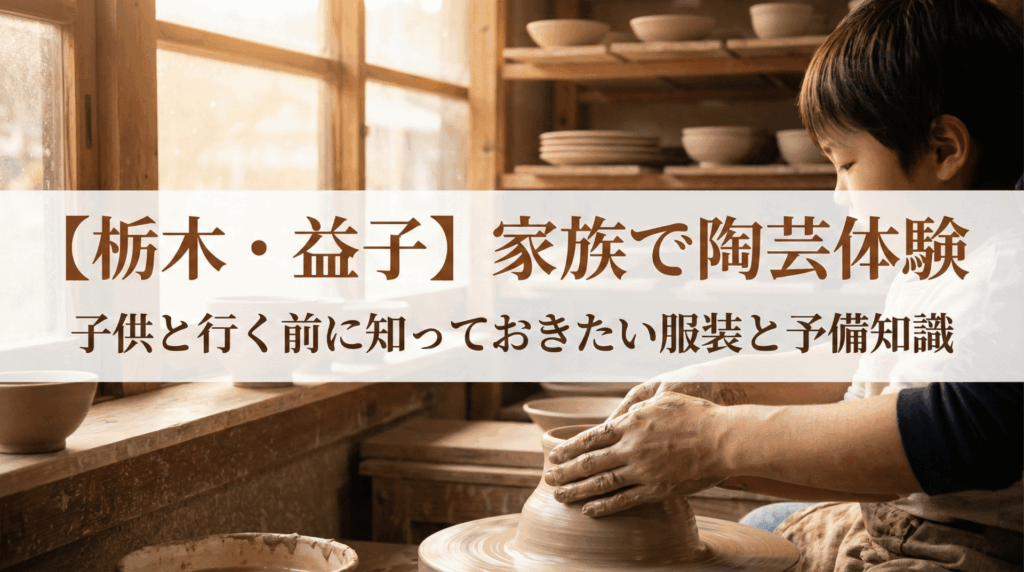
"I want to try that spinning wheel thing I saw on TV!"
A single line from your child might be all it takes to open the door to a pottery experience.
About two hours from Tokyo by car, Mashiko-machi in Tochigi Prefecture is one of the Kanto region's premier pottery towns, lined with stylish cafes and galleries.
The excitement of kneading clay with your own hands, shaping something, and then waiting for it to come back after firing.
Pottery experience goes beyond simple play — it becomes the perfect place for what you might call "vessel education", teaching kids how things are made.
In this guide, we'll share the "preparation and background knowledge" you need to have a great first family trip, along with handpicked spots that are welcoming to families with children.
Tips for Family Pottery in Mashiko (30-second version)
- Start with "hand-building" for kids: Work freely at your own pace
- Nails, clothing, and hair are the three essentials: trim nails / wear trousers / tie hair back
- Plan for 60–90 minutes on-site: Experience + instruction + cleanup takes more time than you'd think
- Pieces are finished later: Drying and firing mean you won't take your work home the same day
- Book weekends early: Popular slots fill up fast (some venues do accept walk-ins)
※ Time required, age requirements, and delivery timelines vary depending on the experience content, clay, kiln conditions, and season. Use the guidance provided at the time of booking as your reference.
1. [Before You Go] Clothing and Nail Trimming Are a Must! Fail-Safe Checklist
Avoid that "oh no!" moment after you arrive. Here's everything you need to prepare.
Absolute Must-Dos! The 3 Golden Rules
- ① Trim your nails short before you go
Long nails can scratch the clay or cause shapes to collapse. This is especially an issue in wheel-based work, so make "trim nails the night before departure" your family motto. - ② Trousers are safer than skirts
You'll be leaning forward more than you'd expect. Considering how easy it is to get dirty, comfortable pants are the practical choice. - ③ Tie your hair back
When you're looking down to work, long hair easily gets wet from clay and water. Don't forget a hair tie or pins.
Packing List
- ✅ Hand towel (essential after washing hands — bring one you don't mind getting dirty)
- ✅ Apron (some studios provide them — bring one just in case they don't have a kids' size)
- ✅ Change of clothes (for young children, just in case)
- ✅ Hair tie (if anyone has long hair)
- ✅ Wet wipes (quietly useful during the drive and inside the car)
Little Tricks for a Smooth Day
- Arrive 10–15 minutes early: Check-in, instructions, and hand-washing take more time than expected
- Plan your photo moments: Your hands will be covered in clay during the session — decide in advance when to take photos
- Confirm shipping and pick-up options: Check at the time of booking whether delivery or in-store pickup is available — it'll save you stress later
2. [Background Knowledge] "It Shrinks When Fired?" The Secrets of Clay to Share with Your Kids
To get even more out of the experience, share this "background knowledge" with your kids in the car or on the train on the way there — their curiosity will double!
The Keyword: "Make It a Little Bigger"
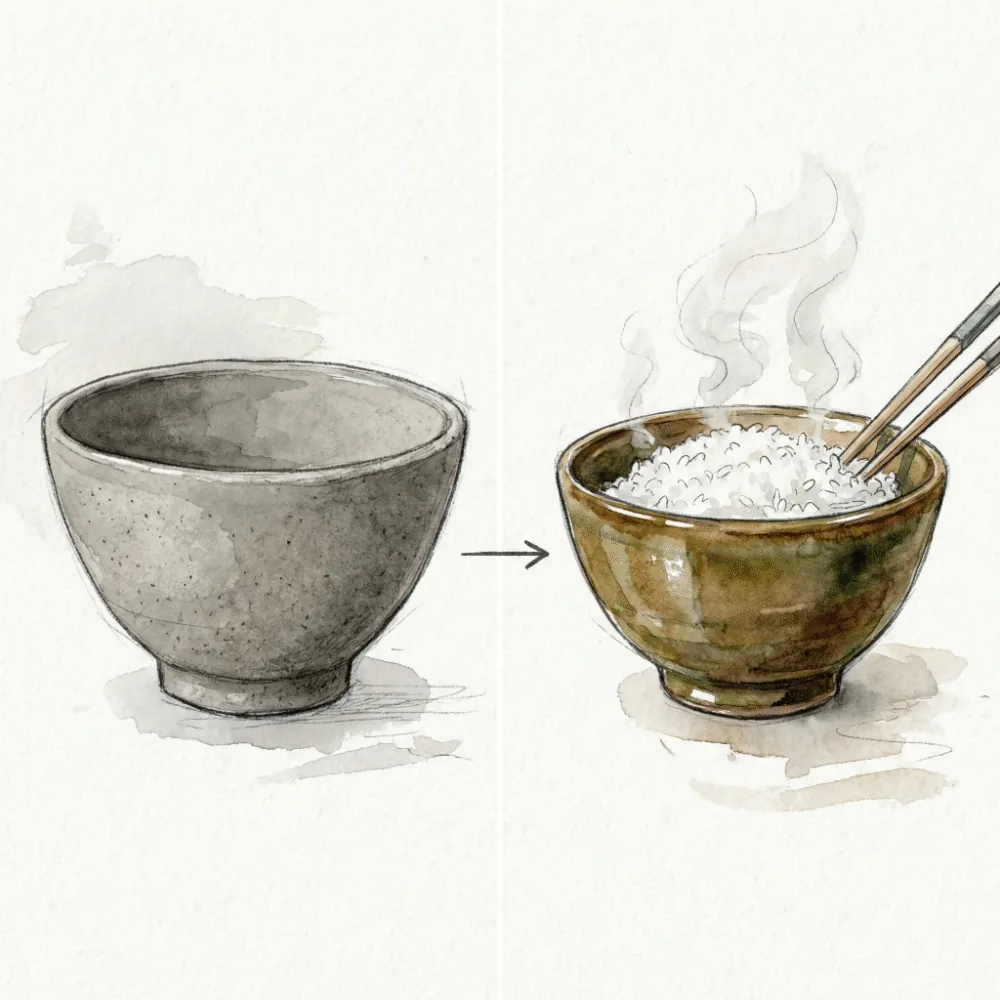
Clay contains moisture. When it dries and is fired, the moisture evaporates — so it generally shrinks a little compared to when you made it.
The commonly cited range is roughly 10–15%, though this varies depending on the clay, glaze, and firing conditions.
To avoid the disappointment of "I meant to make a rice bowl but it feels small when it arrived!," it's a good idea to make it a little larger than the size you actually want.
It Arrives "When You've Almost Forgotten About It"
In most pottery experiences, you don't take your work home the same day — it goes through drying → firing → finishing before you receive it later.
The typical wait is a few weeks to about 2 months, though this too varies by studio and time of year.
If you want to use your piece for a school project or similar, give yourself plenty of lead time and book early.
Just 3 Tips for Clay That's Less Likely to Fail
- Keep the thickness as even as possible: Thin spots are more likely to crack, and drying will be uneven
- Make the base slightly thicker: Helps prevent wobbling and chipping ("just a touch thicker" is enough)
- Don't use too much water: Over-wetting causes the clay to sag and lose its shape
※ Shrinkage rate, delivery timeline, and final appearance vary by experience content and conditions. Use the on-the-day guidance as your reference.
3. "Hand-Building" vs. "Electric Wheel" — Which Is Better? How to Choose by Age
There are mainly two types of pottery courses.
If you're not sure which to pick, use this table to help you decide.
| Feature | Hand-Building (Tebineri) | Electric Wheel (Rokuro) |
|---|---|---|
| Recommended Age (approximate) | Age 3+ (like playing with clay — totally fine!) |
Upper elementary school age+ (requires concentration) |
| Difficulty | ★☆☆ Easy | ★★☆ Slightly challenging |
| Shapes You Can Make | Highly flexible (handles, animals, freeform sculpture — anything goes) |
Mainly round shapes (ideal for clean, circular vessels) |
| Time Required (approximate) | 60–90 min (instruction + making + cleanup) | 60–90 min (instruction + making + cleanup) |
| How Messy It Gets | Mainly hands (an apron helps) | Arms and clothes may get dirty too |
| Best For | Young children / those who want to create freely / families having fun together | Those who've always wanted to try the "iconic wheel" / those aiming for neat, round vessels |
※ If you have young children, go straight for "hand-building" — no hesitation needed. You can enjoy it at your own pace, stress-free.
4. [Mashiko] Top 3 Family-Friendly Pottery Studios (With Map)
Mashiko has countless kilns, but we've handpicked spots that are easy for families to choose from.
Each entry is organized with the same categories so you can compare them side by side.
※ The pins on the map mark the spots introduced in this article. Prices, age requirements, and delivery timelines may vary by plan and season.
① Mashiko-yaki Kiln Kyohan Center | Look for the Giant Raccoon Dog
Spacious grounds with ample parking — a spot that's easy for families to navigate.
Ideal for days when you want to combine the experience with souvenir shopping all in one stop.
👨👩👧👦 Family Checklist
- Parking & flow: Spacious and easy to move around
- Strollers: Depends on how busy the venue is — check ahead to be safe
- Bonus: Easy to combine with souvenir shopping and browsing
Basic Info (Approximate)
- Experiences: Hand-building / Electric wheel / Painting
- Time required: Approx. 60–90 min
- Price: Hand-building from ¥1,600 / Electric wheel from ¥4,000 (※ includes firing fee; shipping extra)
- Recommended age: Hand-building from approx. age 3 / Wheel from elementary school age+
- Reservations: Advance booking recommended for weekends (walk-ins accepted if space available)
- Pickup: Approx. 1.5–2 months later (delivery or in-store)
② Tsukamoto | A Relaxed Experience in a Spacious Setting
Great for families who want to enjoy the experience calmly with staff guidance.
One of the nice things about this spot is how easy it is to combine the experience with nearby dining and shopping before or after.
👨👩👧👦 Family Checklist
- Atmosphere: Spacious, easy to move at the family's own pace
- Beginners: Having staff guidance gives you peace of mind (content varies by plan)
- Bonus: Easy to pair with nearby dining and rest spots
Basic Info (Approximate)
- Experiences: Hand-building / Electric wheel / Painting
- Time required: Approx. 60–90 min
- Price: Hand-building ¥3,000 / Electric wheel ¥4,500 (※ includes firing for 1 piece; shipping extra)
- Recommended age: Hand-building from approx. age 3 / Wheel from elementary school age+
- Reservations: Advance booking recommended
- Pickup: Approx. 1.5–2 months later (delivery or in-store)
③ Komine-gama | For Those Who Want to Take Their Time in a Small Group
Perfect for families who want to focus and create carefully. A small group makes it easier to concentrate and helps your vision for the finished piece come to life.
If glaze color options are available, letting your child choose their favorites is part of the fun.
👨👩👧👦 Family Checklist
- Atmosphere: Quiet (older children tend to enjoy it even more)
- Color selection: Having glaze options to choose from adds to the excitement
- Reservations: Small-group slots fill up fast — book early
Basic Info (Approximate)
- Experiences: Hand-building / Electric wheel / Painting
- Time required: Hand-building approx. 90 min / Wheel approx. 120 min
- Price: Hand-building from ¥2,750 / Electric wheel from ¥4,620 (※ base fee + firing; shipping extra)
- Recommended age: Hand-building from toddler age / Wheel from elementary school age+
- Reservations: Small-group format — advance booking required
- Pickup: Approx. 2–3 months later (delivery or in-store)
☕ Bring Mashiko Home! Handmade Vessels That Warm Your Table & Oven-Fired Clay Kits
For those who can't quite make the trip to Mashiko — the warm, chunky charm of Mashiko-yaki is available online too, with beautiful pieces from young artists and popular kilns shipped right to your door. And for a fun taste of pottery at home, "oven-fired clay kits" are perfect for indoor play on rainy days or school project ideas!
5. [Sample Itinerary] A Full Day in Mashiko! Day-Trip Schedule
Wondering how long it all takes? Here's a realistic day-trip schedule for driving from central Tokyo.
- 9:00 AM | Depart from central Tokyo (approx. 2.5 hours by car)
- 11:30 AM | Arrive in Mashiko. First stop: fuel up!
(An early lunch at "Michi-no-Eki Mashiko" or similar keeps the day moving smoothly) - 1:00 PM | Time for pottery! (Plan for approx. 60–90 min on-site)
- 2:30 PM | Browse souvenirs and explore galleries
(Pottery lovers tend to linger — build in extra time) - 3:30 PM | Coffee break at a cafe, or a breath of fresh air at a nature spot
- 4:30 PM | Head home (leave before traffic builds up)
6. Where to Play After the Experience! Nearby Lunch & Park Info
Mashiko no Mori / Forest Mashiko
After the concentration of pottery, let the kids blow off steam in nature.
Spots with wide lawns and walking paths are just right for a "reset" after the experience.
If there's an observation tower, pick a day with great views for maximum satisfaction.
Michi-no-Eki Mashiko (Mashiko Roadside Station)
A roadside stop where you can discover local ingredients, processed goods, and ceramics all in one place.
Easy to work into your drive as a rest break, and a great spot for families to decide on their next destination.
7. Soak Away the Wheel Fatigue in Hot Springs! Recommended Accommodation in Tochigi
After focusing hard on pottery, both adults and kids tend to be more worn out than expected. When you factor in the drive home and the traffic, many families in this area decide to "just stay the night and enjoy the hot springs!"
Since you've come all the way to Tochigi, why not make it a full family trip with an amazing buffet and a soak in the onsen?
♨️ Mashiko Area (Zero extra travel — straight to the hot spring after the experience!)
Mashikodachi Satoyama Resort Hotel
Just a short drive from the pottery studios — one of the rare hot spring inns right inside Mashiko Town.
The biggest appeal for families with kids: no long drive after getting covered in clay — check in right away. A spacious communal bath (Mashiko Onsen) and dishes made with fresh local ingredients let you unwind completely before the day is out.
🎢 Kinugawa Onsen Area (For Nikko & Theme Park Sightseeing the Next Day!)
Kinugawa Onsen: Asaya
About one hour from Mashiko by car. This is arguably the most famous family hotel in Tochigi — wildly popular for good reason.
A spectacular all-you-can-eat buffet with over 100 Japanese, Western, and Chinese dishes will send kids' excitement through the roof. The next day, you're just a short drive from "Edo Wonderland Nikko Edomura" and "Tobu World Square" — creating the ultimate 1-night-2-day itinerary.
8. [When It Arrives] First Care Steps for Using Your Vessel for Years to Come
When your fired piece arrives, it's finally ready to debut as your everyday companion. Here's what to do first.
The First 3 Steps
- Start with a gentle rinse (to remove any packing powder or dust)
- Let it dry thoroughly (make sure the base is completely dry too)
- First use: start with "less watery dishes" (then ease into everyday use)
Good to Know (Approximate)
- Avoid sudden temperature changes: Plunging a hot vessel straight into cold water is a common cause of cracks
- Microwave / dishwasher: Follow the guidance from the vessel, glaze, and studio (if unsure, err on the side of caution)
- Odors or color transfer: Drying well after use and washing promptly can help reduce these issues
※ How to care for a vessel varies depending on the clay, glaze, and firing conditions. Always follow the instructions included with your piece or provided by the studio.
🍴 Keep Your Special Vessel Safe for Years! The Perfect Match: Wooden Cutlery
Your precious Mashiko-yaki piece, made with your own hands. Ceramic vessels with the warmth of natural clay can develop clattering sounds or black "metal marks" when used with metal spoons and forks. We strongly recommend pairing them with Japanese wooden cutlery — gentle on the vessel, and smooth against little mouths too!
Summary: Eat a Meal with the Vessel You Made
The joy of a pottery experience doesn't end the moment you leave the studio.
The moment you open the box when it finally arrives weeks later.
"This is the vessel I made." "Look how it turned out after firing!"
Even if it's a little lopsided — that's proof that your family's "that day" has been given physical form.
Eating a meal from a vessel you made yourself will feel a little more special than usual.
This weekend, trim your nails short, put on clothes you don't mind getting dirty, and head out to Mashiko.
Time spent with your hands in the clay is a wonderful break from the busy everyday.