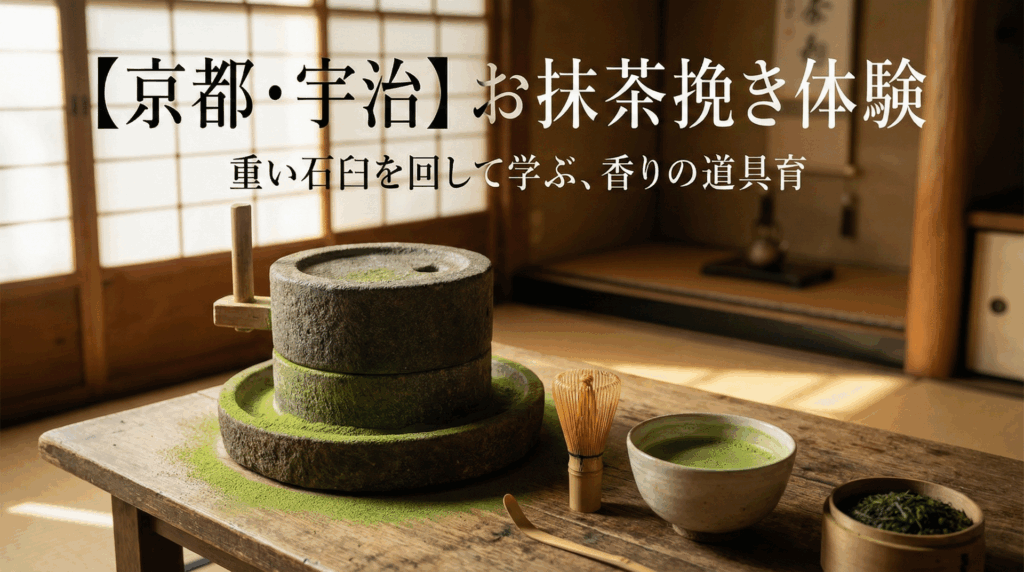
"I want my children to experience Japanese traditional culture, but a formal tea ceremony class feels too intimidating..."
"Is there something more hands-on where they can learn with all five senses?"
The most recommended weekend activity for families like yours is the "Matcha Grinding (Stone Mill Grinding)" experience in Uji, Kyoto.
In our modern age, tea is ready in an instant from a plastic bottle or powder stick.
But in the experience workshop, you use a heavy traditional Japanese kitchen tool — a "stone mill (ishiusu)" — and take the time to grind tea leaves by hand.
The surprise of "We have to turn this heavy stone!?" and "It takes this long just to make this much powder?" gives children a hands-on feel for the wisdom and effort of people in the past — the finest "tool education" there is.
Wrapped in the freshly-ground tea fragrance that wafts from the stone mill, the time spent sipping your own hand-whisked matcha with a Japanese sweet will surely leave a deep impression in a child's heart.
In this article, we'll thoroughly guide you through the appeal of the "matcha grinding experience" — perfect for food education and tool education — along with a fully satisfying sightseeing model course through Uji, Kyoto!
Tips for Enjoying the Matcha Experience as a Family (30 seconds)
- Feel the "weight" of stone: The stone mill is heavier than you'd expect. Using your whole body to turn it slowly lets you feel the raw power of traditional tools.
- Pay attention to the changing aroma: The moment the tea leaves (tencha) are crushed, a "sweet, fresh-green fragrance" unique to freshly ground matcha is released — savor it.
- Whisk it yourself with "shaka-shaka": The whisking action with a chasen (tea whisk) is like magic, and children love it.
- Pair it with Uji sightseeing: Experience workshops are concentrated in the Uji area, so you can enjoy them alongside Byodoin Temple and a matcha parfait tour for a full day out.
1. [Deep Dive] Why Grind with a "Stone Mill"? The Magical Flavor Machines Can't Replicate
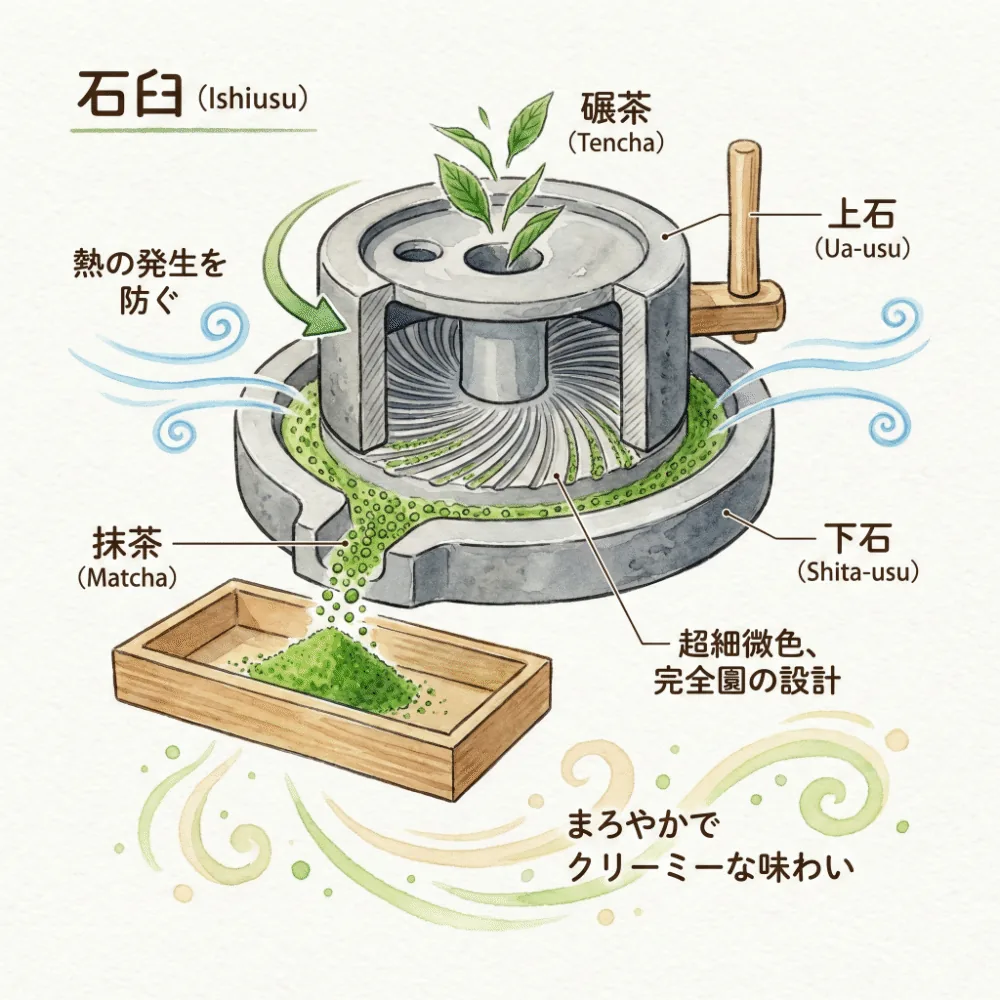
Before the experience, let's explain to children "Why do premium matcha today still use a stone mill rather than a machine mixer?" — a wonderful science lesson about Japan's traditional tools.
The Magic Stone That Produces No Heat and Rounds the Particles
When you use a high-speed food processor or mixer, friction generates "heat," which causes the tea's delicate flavor and vibrant green color to disappear.
But by slowly turning a heavy stone mill by hand, you can grind it into powder with absolutely no heat generated, preserving the tea's fragrance and color perfectly.
Furthermore, powder ground by a machine has sharp, angular particles — but powder crushed by the weight of stone becomes "rounded, ultra-fine particles." This is the greatest secret behind the "creamy, smooth mouthfeel" you get when drinking the tea!
2. Roll It, Whisk It! 3 Fun Steps of the Experience
In the experience workshop, you actually touch the stone mill and feel the weight of the tool with your whole body. Here are the 3 steps that will have children bursting with excitement.
| Step | What Happens & Key Points |
|---|---|
| ① Add Tencha (Tea Leaves) to the Stone Mill |
[The Leaf That Becomes Matcha] Drop the "tencha" — dried, unrolled tea leaves that become the raw material for matcha — one by one through the hole in the top of the stone mill. Even at this stage, the lovely fragrance of tea already wafts through the air. |
| ② Roll the Stone Mill Around and Around |
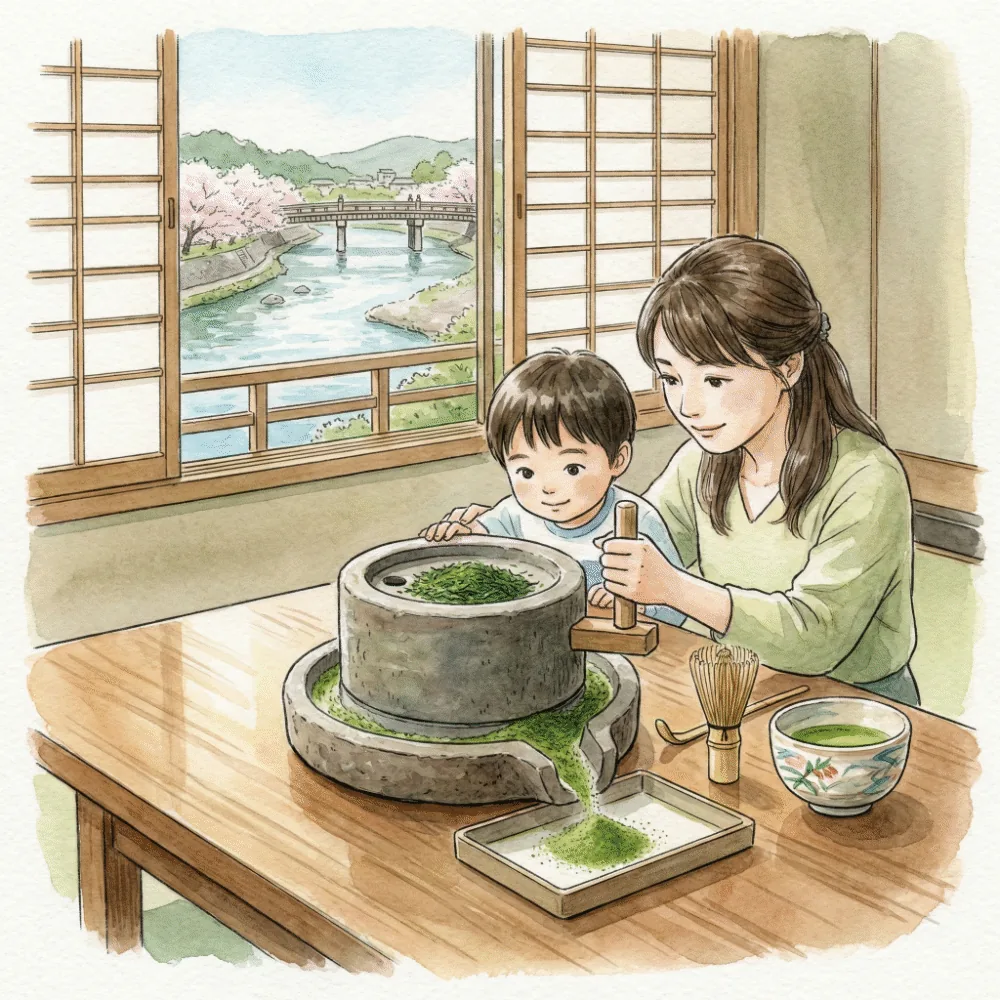
[The Main Event — A Test of Strength!] Turn the mill counterclockwise at a slow pace of one rotation per second. You'll be surprised by how much heavier it is than expected — but you'll be moved as the vivid green powder (matcha) gradually spills from the grooves. |
| ③ Whisk with the Chasen (Tea Whisk) |
[The Magical Shaka-Shaka Time] Add your self-ground matcha to a tea bowl, pour in hot water, then use a bamboo "chasen" to quickly froth it in an "m" shape motion. It's the best reward time — enjoyed with a Japanese sweet alongside your matcha. |
3. [Kyoto / Uji] 2 Recommended Matcha Grinding Spots for Families
※ The pins on the map indicate the spots introduced in this article. Please check the official websites for the latest information on prices and opening days.
① Uji Chazuna (Tea and Uji City History Park) | New & Beautiful! Museum Included
A new, beautiful experience facility right next to Keihan Uji Station, where you can learn the history of tea and Uji.
Set within a vast historic park, the experience room holds regular "matcha making" sessions using authentic stone mills. Staff explain how to turn the stone mill and how to whisk tea in a way that even children can understand — perfect as a first introduction to Japanese culture!
The adjoining museum lets you learn in a fun way about the history of Byodoin Temple (whose design features on the 10-yen coin) and how tea is produced.
👨👩👧👦 Family & Fun Checklist
- Run around in the park: After the experience, children can run freely in the beautifully maintained, expansive park.
Basic Information (Approximate)
- Experience: Matcha making with a stone mill (grind and whisk your own cup)
- Price Range: Approx. ¥2,800 (※ includes Japanese sweet)
- Reservations: Advance booking via the official website is recommended
② Fukujuen Uji Tea Workshop | Learn Authentic Tea Methods on the Banks of the Uji River
An authentic Uji tea workshop run by "Fukujuen" — a nationally famous, long-established tea manufacturer with over 200 years of history.
Set in a superb location directly overlooking the beautiful Uji River, you can enjoy matcha making with a stone mill and roasted tea (hojicha) making experiences, among others.
For families who want their children to have a genuinely authentic tea experience — with the veteran tools and calm atmosphere of a time-honored establishment — this is our strongest recommendation. The matcha parfait at the adjoining tearoom café is also exceptional.
Basic Information (Approximate)
- Experience: Stone mill matcha making, hojicha making, hand-rolled tea making, etc.
- Price Range: Stone mill matcha making from ¥2,200
4. [Model Itinerary] World Heritage and Matcha! A Uji Day Trip Schedule
The Uji area is packed within walking distance with World Heritage sites, delicious sweets, and experience workshops. Here is the classic route to enjoy a full day!
- 10:00 | Arrive at Keihan Uji Station. Head first to the World Heritage "Byodoin Temple!" Compare it with the 10-yen coin
- 11:30 | Lunch along the riverside promenade of the Uji River. Slurp down vibrant green "matcha soba noodles"
- 13:00 | Join the stone mill matcha grinding experience at "Chazuna" or "Fukujuen!"
(Turn the heavy stone, then enjoy your self-made matcha and a Japanese sweet) - 14:30 | Receive spiritual energy at the World Heritage "Ujigami Shrine" — Japan's oldest shrine building
- 15:30 | Satisfy yourself with an ultra-rich "matcha parfait" at Ito Kyuemon or Nakamura Fujikichi Honten, then head home with a smile
5. Where to Play After the Experience! 3 Powerful Sightseeing & Dining Spots Nearby
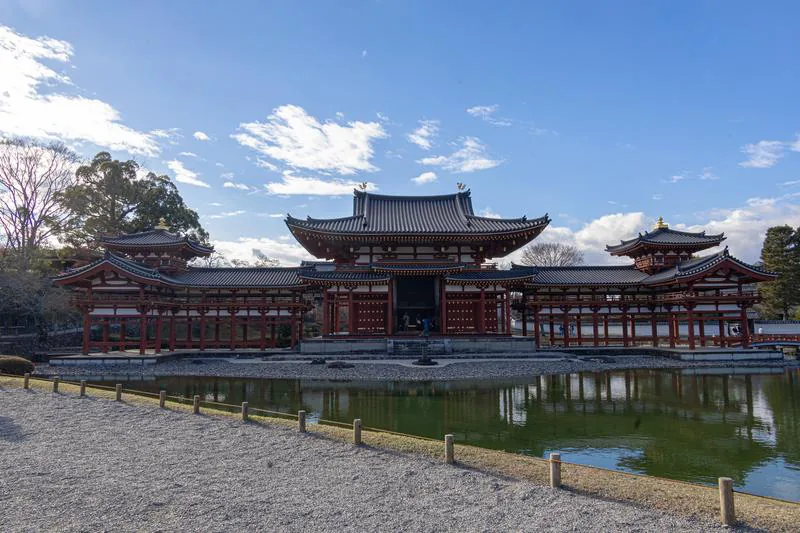
① Byodoin Temple | The World Heritage Site on the 10-Yen Coin
When it comes to Uji sightseeing, the World Heritage Byodoin Temple is absolutely unmissable.
The vermilion "Hoodo (Phoenix Hall)" that seems to float in the middle of the pond is breathtakingly beautiful! "Oh, it's the same as the picture on the 10-yen coin!" — the classic fun photo pose of kids pulling a 10-yen coin from their wallet and comparing it to the real thing never gets old.
② Intensely Rich! Uji's "Matcha Sweets (Parfait)" Tour
Walking through the streets of Uji, everywhere you look there are tea shops!
At iconic establishments like "Nakamura Fujikichi Honten" and "Ito Kyuemon," enjoying rich matcha parfaits in bamboo vessels or silky matcha jelly is pure bliss. The slightly bitter taste of premium tea alongside the sweetness creates an exquisite flavor that satisfies adults just as much as children.
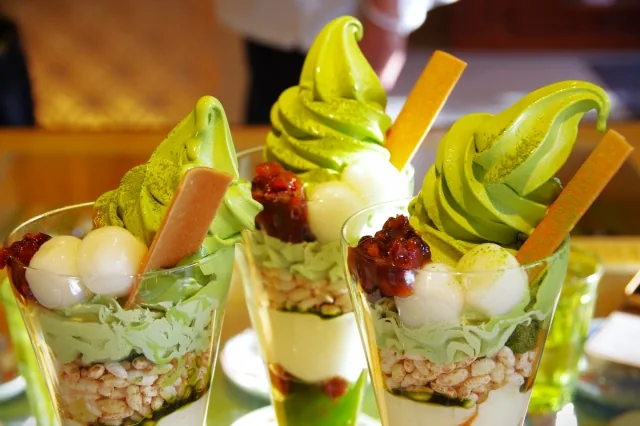
③ Ujigami Shrine & a Stroll Along the Uji River | Healing Power of Nature and History
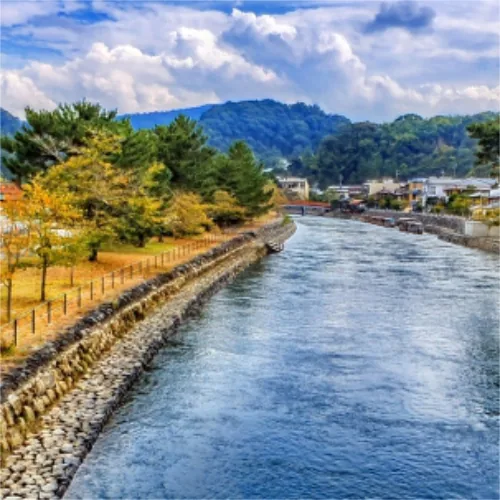
Once your stomach is full, cross the atmospheric bridge spanning the clear Uji River.
At the end of the path, listening to the babbling of the river, you'll find "Ujigami Shrine" — registered as a World Heritage Site as Japan's oldest existing shrine architecture. The shrine grounds, enveloped in lush green tranquility, have a mysterious healing power that seems to purify your heart just by walking through them.
6. [After You Get Home] Upgrade Your Home Café! Welcome a Beautiful "Chasen and Matcha Bowl"
Once you've discovered the joy of whisking your own tea "shaka-shaka," why not welcome some "matcha tools" into your home?
Actually Easy! Casual Tea Ceremony at Home
- No need to worry about etiquette: Formal procedures like sitting in seiza and turning the bowl don't apply to your home café. Enjoy it freely in whatever vessel you like, just like drinking a mug of coffee.
- Mix with milk for a matcha latte: Add sugar and warm milk to your whisked matcha for an instant café-quality matcha latte. The best snack for children.
- All you need is a "chasen (tea whisk)": Even without a dedicated tea bowl, a café au lait bowl or slightly deep small dish will work as a substitute. Just make sure to get a bamboo "chasen" for frothing.
🍵 Add a Touch of Japanese Calm to Daily Life. Recommended "Matcha Tools"
Beautiful "chasen" handcrafted by Japanese artisans from split bamboo, modern and casual "matcha bowls" you'll want to use every day — here are lifelong Japanese tools that will dramatically elevate your home café. For beginners, an "all-in-one matcha set" is also a great option.
7. Rest Your Stone Mill Arms! Recommended Accommodations in Uji / Kyoto
After working hard to turn the heavy stone mill, both adults and children will have arms that are completely worn out! Add to that the walking involved at Byodoin and other sightseeing spots, and you'll be more tired than expected.
Linger quietly on the banks of the Uji River in the afterglow of tea, or take the JR back to Kyoto Station and prepare for the next day's sightseeing — choose according to your family's travel plans!
🍵 Uji Area (Soak in the Scenic Uji River Views and the Lingering Atmosphere of the Tea Town)
Uji River Bankside Hanayashiki Ukifuneen
Walking distance from Byodoin Temple. A famous Uji inn where all rooms overlook the beautiful Uji River.
The "spacious communal bath" — rare for a Kyoto hotel — is the biggest draw for families! Soothe your arms tired from stone mill grinding in a large, relaxing bath, then the next morning take the family for a quiet stroll through the tea town — a truly luxurious experience.
🚄 Kyoto Station Area (One Train from Uji! The Ultimate Station-Direct Hotel for Families)
Hotel Granvia Kyoto
If you're returning to Kyoto Station from Uji via JR Nara Line, a "station-direct" hotel is simply unbeatable for families!
Check in immediately after coming through the ticket gates — zero stress of walking through crowds with heavy luggage and tired children. Spacious, clean rooms and a luxurious breakfast buffet where omelets are cooked in front of you will fully charge everyone's energy for the next day's Kyoto sightseeing.
7. Conclusion: The Memory of the Fragrance You Ground Yourself Makes You Love Japanese Culture
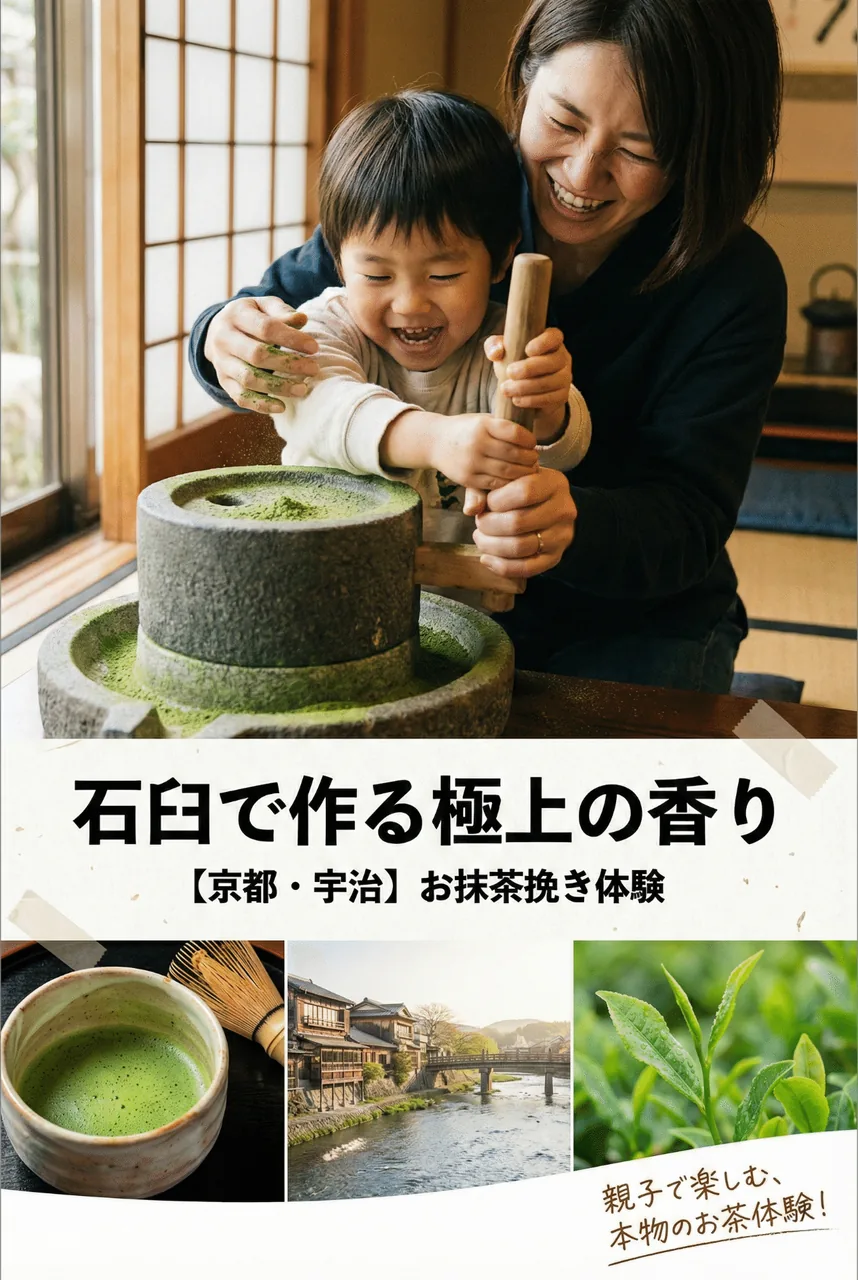
"Wow, this stone is so heavy! But it's starting to smell amazing!"
For children who usually only drink bottled green tea, the experience of turning a heavy stone mill with their own hands and then whisking the powdered tea into froth with a chasen is filled with the same thrilling excitement as a magic experiment.
Strangely, even slightly bitter matcha tastes deliciously grown-up and good when there's a sweet Japanese confection placed beside it.
Deliberately taking the time to do with a "heavy tool" what a machine could do in an instant — that "extra step" experience elevates the value of a single cup of tea and nurtures a deep respect for Japan's rich food culture.
This weekend, why not take a leisurely stroll around the World Heritage Byodoin Temple and then savor the most aromatic "matcha grinding experience" in Uji, Kyoto?