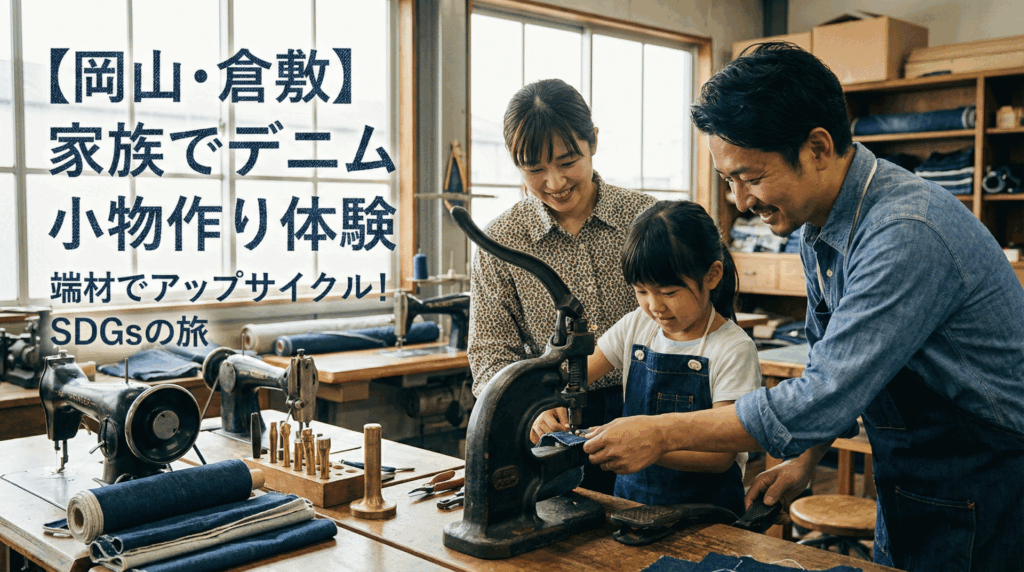
"This blue fabric is the same as Dad's jeans!"
Kojima, Okayama Prefecture — "the holy land of domestic Japanese jeans," where orders flood in from luxury brands worldwide. And Kurashiki — Japan's top-producing region for "Kurashiki canvas (hanpu)."
In this area, the hugely popular activity for families with children is crafting small items and bags from denim fabric and canvas.
Many of these experiences use "fabric scraps" — leftover material that inevitably piles up in jeans factories. Taking fabric that was about to be discarded and stamping metal hardware (rivets) into it with a click of a dedicated machine to make a cute strap or pouch — it's the best "upcycling (SDGs)" lesson a child could have.
And above all, the items you end up making are just incredibly stylish! The greatest appeal of this experience is that Mom and Dad get genuinely into the customization.
In this guide, we cover everything from the niche secrets of denim indigo dyeing to a food-walk itinerary through the Bikan district eating blue "denim soft serve" — packed full of the charm of Kurashiki and Kojima.
Tips for Enjoying the Denim & Canvas Experience as a Family (30-second read)
- Understand the value of "scraps": Tell them it's not just a craft — "it's the magic of turning rubbish into treasure (SDGs)"
- Watch out for white clothes!: New denim fabric can transfer its "blue dye (indigo)" to clothes through friction
- Rivet stamping is Dad's moment to shine: Stamping hardware with a foot-press machine feels just like being a carpenter
- Kojima and Kurashiki need a car: The "Kojima area" where the workshops are and the "Kurashiki Bikan Quarter" tourist area are a bit apart — plan carefully!
- Enjoy the aging process: Both denim and canvas look best after years of use and color-fading
1. [Before You Go] The Indigo Trap!? Best to Avoid "White Clothes"
There are a few small clothing notes unique to hands-on experiences with denim fabric.
Three Absolute Rules You Must Follow
- ① Don't wear brand-new "white clothes or shoes"!
The blue dye in jeans (indigo) has a tendency to transfer to other items through friction. Since you'll be handling lots of fabric scraps, it's safer to avoid white T-shirts and white sneakers just to be sure. - ② Wear comfortable walking shoes
Kojima Jeans Street and the Kurashiki Bikan Quarter both involve walking considerable distances between shops. Sneakers and other well-worn shoes are essential. - ③ Dad, bring extra spending money!?
A visit to the jeans heartland often ends with Dad spotting high-quality genuine denim and desperately wanting a pair for himself (laughs). Discuss the budget as a family in advance.
2. [Deep-dive Knowledge] The Secrets of "Selvedge (Red Line)" and Canvas "Number Grades"
Don't just do the experience — make the most of it! Learn a few fabric facts with your children that will impress both Mom and Dad.
The mark of premium jeans: "Selvedge (red line)"
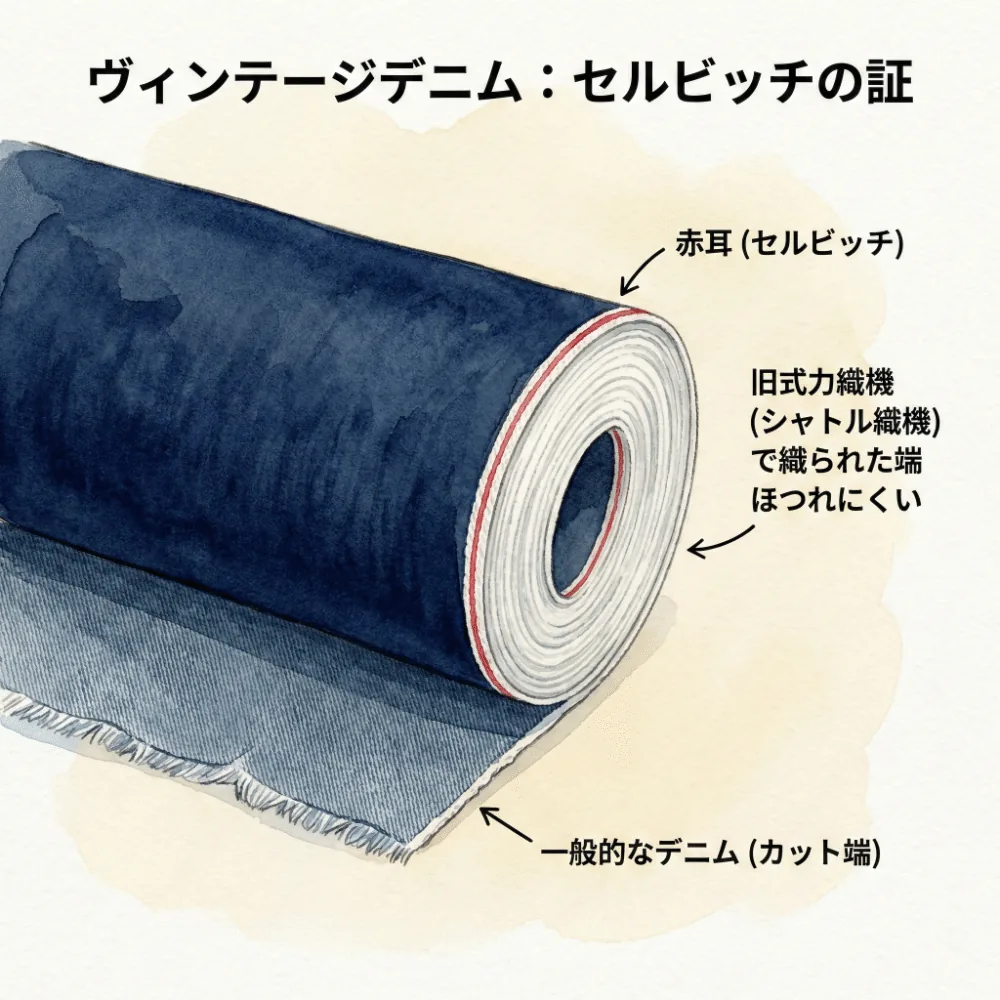
If the edge of the scrap you're using in the experience has a red thread running along it, you're in luck! That's called "selvedge (commonly known as the red line)" — proof that it's premium denim woven slowly on a traditional shuttle loom, with a self-finished edge (to prevent fraying).
The fabric is full, warm, and plump in a way modern high-speed machines cannot replicate — and as it's used and washed over the years, it develops beautiful fading patterns called "hige" (whiskers along creases) and "atari" (white rub marks along seams).
💡 Deep-dive Trivia What do canvas "number grades" mean?
Canvas was originally an extremely tough fabric used for "ship sails (ho)." It is graded from "No. 1" to "No. 11" by thickness, and the lower the number, the thicker and heavier the yarn. Tote bags commonly use "No. 6" or "No. 8," which are stiff enough to stand up on their own.
3. Full Jeans vs. Scrap Small Items! How to Choose Your Experience
Jeans factory experiences broadly fall into two categories. Choose based on your child's age!
| Experience Type | Features & Best-Suited Families |
|---|---|
| Scrap strap crafting (small items) |
[Toddlers – Elementary age] Easy and most popular! Choose leftover fabric (scraps) from the sewing factory, select your hardware, and stamp a rivet — click! — with a dedicated machine to make your original strap. Quick to complete and a great SDGs lesson. |
| Full-on jeans-making experience |
[Upper elementary – Adults] Choose a pre-sewn pair of jeans in your size, then select and stamp your own buttons, rivets, and leather patch — a full custom experience. Perfect for Mom or Dad to make a pair for themselves. |
4. [Okayama / Kojima / Kurashiki] Top 3 Recommended Experience & Shopping Spots for Families with Kids
* The pins on the map mark the spots featured in this article. Please check official websites for the latest prices and operating days.
① Betty Smith Jeans Museum & Village | The go-to for hands-on experiences!
The largest denim theme park in the Kojima area, operated by domestic jeans pioneer "Betty Smith."
The site includes a museum covering jeans history, a factory tour, and the hugely popular "experience factory." Children's eyes light up as they pick out their fabric scraps and stamp rivets — click! — with the foot-press machine. It becomes a top family travel memory.
👨👩👧👦 Family Checkpoint
- Facilities: Vast grounds with a cafe and dog run — great for a relaxed family day out
- Summer project: Perfect for a school summer research project on the history of Japan's jeans industry!
- Souvenirs: The outlet shop stocks high-quality denim at surprisingly low prices
Basic Information (Approximate)
- Experience: Jeans-making experience, strap-making experience
- Duration: Approx. 30–60 min
- Price guide: Strap making from 1,100 yen / Jeans making from 11,000 yen
- Reservation: Advance booking recommended
② Kurashiki Canvas — Bikan Quarter Store (Shopping spot) | Meet the world's most powerful fabric
Not a hands-on workshop, but a directly-managed canvas store that you absolutely must visit when in Kurashiki. Situated right in the historic townscape of the Bikan Quarter — the tourist heart of the city — it's extremely easy to access!
Inside, rows of sturdy canvas tote bags with beautiful coloring stand at attention. There are small rucksacks and pencil cases for children too, and you can experience the astonishment of "Fabric can actually be this strong and stand on its own!" It's hugely popular with parents looking for a lifelong bag.
👨👩👧👦 Family Checkpoint
- Access: On the Bikan Quarter strolling route — a casual stop alongside food walks and sightseeing
- Discovery: Compare the thickness with a regular eco-bag and watch the child's eyes widen with surprise
- Practicality: Incredibly tough — the ultimate choice for a nappy bag or camping bag
③ Kurashiki Denim Street (Bikan Quarter) | Blue meat buns!? A food-walk spot
A complex facility promoting denim within the white-walled "Kurashiki Bikan Historical Quarter."
Shopping for denim goods is of course a draw — but what sends children into a frenzy is the famous takeaway food. Incredibly, they sell bright-blue "denim-man" (steamed buns) and "denim soft serve ice cream"! The ramune-flavored refreshing blue ice cream makes for unforgettable and highly Instagram-worthy memories.
👨👩👧👦 Family Checkpoint
- Fun factor: Blue food — the sheer impact sends children's excitement levels to maximum!
- Access: On the Bikan Quarter strolling route — perfect for a rest stop
👜 Kurashiki quality at home! Lifelong canvas bags & denim accessories
"Kurashiki or Kojima is too far for us…" — this one's for you. Top-quality "Kurashiki canvas" tote bags and stylish denim pouches from Japan's jeans heartland are all available to order online. Why not bring the wonderful Japanese fabric that gets better and better the longer you use it into your everyday life?
5. [Model Itinerary] Jeans Street & the Bikan Quarter! Day-Trip Timeline
The "Kojima area" with its jeans factories and the "Kurashiki Bikan Quarter" with its beautiful white-walled townscape are about 30–40 minutes apart by car. Here's an active plan to enjoy both!
- 10:00 | Arrive in the Kojima area. Denim small-item crafting experience at "Betty Smith"!
(Select your scrap fabric, then rivet it shut — click!) - 11:00 | Stroll "Kojima Jeans Street" and pose for a photo under the giant jeans hanging in the air
- 12:30 | Drive to the "Kurashiki Bikan Quarter" (approx. 30 min)
- 13:00 | Lunch in the Bikan Quarter (the local specialty "bukkake udon" is highly recommended!)
- 14:00 | Take a break at "Kurashiki Denim Street" with the famous denim soft serve
- 15:00 | Stroll the white-walled town, shopping at "Kurashiki Canvas" and others, then head home
6. Play Here After the Experience! Recommended Nearby Spots for Families
① Kojima Jeans Street
A roughly 400-meter street at the heart of the Kojima area where the workshop (Betty Smith) is located, lined with shops from local jeans makers.
Look up and you'll see enormous pairs of jeans hanging in the air, flapping in the breeze — a strange, delightful sight that children love. Even the manhole covers and the station ticket gates have denim patterns, so playing "spot the denim" while walking is great fun.
② Kurashiki Bikan Historical Quarter
Okayama Prefecture's most iconic tourist destination — white-walled storehouses and rows of willow trees lining the Kurashiki River.
The "canal boat rides" drifting gently along the river can carry stroller-age children too, making for a leisurely time. Masking tape (mt) specialty stores and shops selling exquisite fruit parfaits are all concentrated here — Mom's excitement levels will soar.
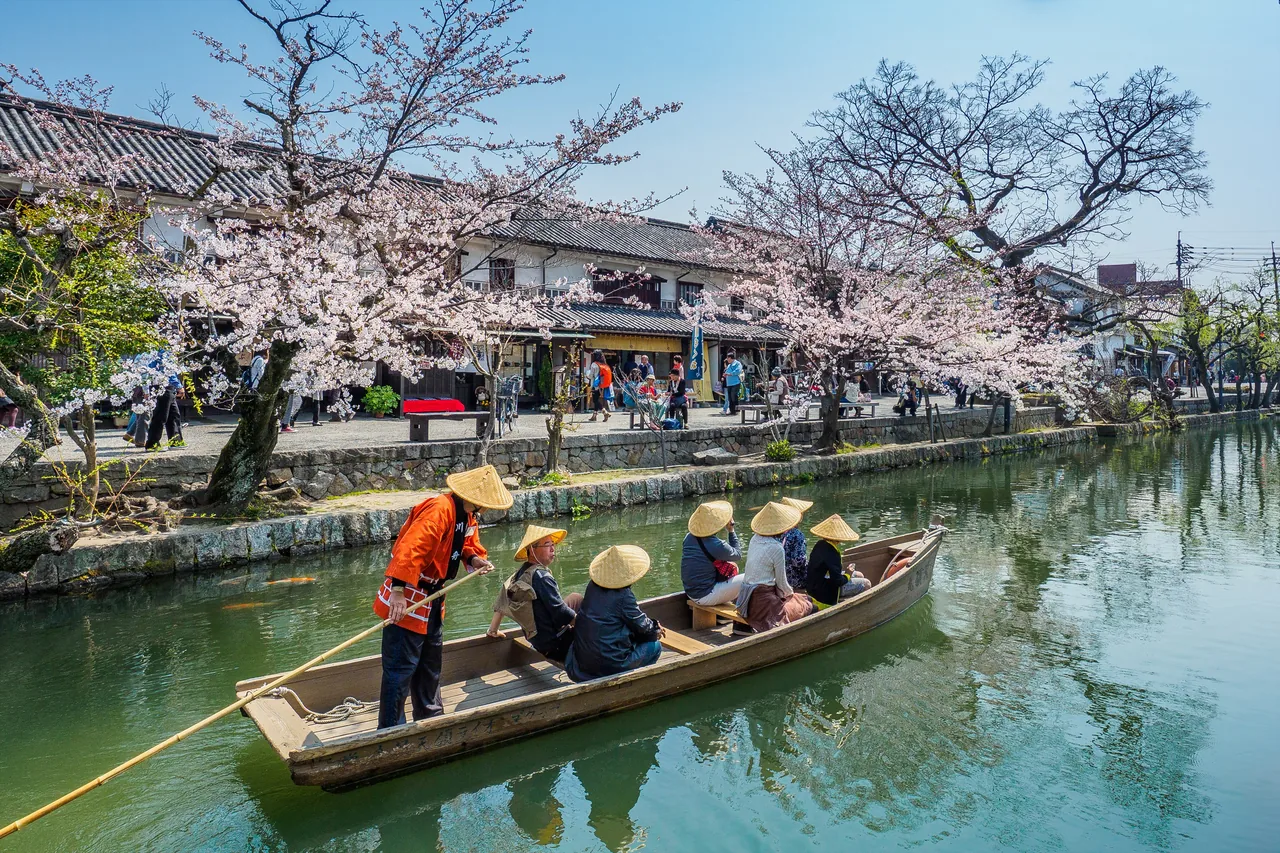
©Okayama Prefecture Tourism Federation
7. Soak in the Afterglow of Craftsmanship! Recommended Accommodations in Kurashiki and Kojima
The crafting experience in Kurashiki and Kojima, combined with a stroll through the Bikan Quarter, is wonderfully fulfilling — but surprisingly tiring on the legs.
Choose between staying at a historic hotel right in the Bikan Quarter, or refreshing at a resort hotel overlooking the spectacular Seto Ohashi Bridge — that's the classic Okayama family travel package!
🧱 Kurashiki Bikan Quarter Area (Right in the heart of the sightseeing district! A historic spinning mill turned hotel)
Kurashiki Ivy Square
Situated inside the Kurashiki Bikan Quarter — the ultimate sightseeing base location! And here's an interesting fact: this hotel is actually a renovation of the former "Kurashiki Spinning (Kurabo)" mill built in the Meiji era.
It's a perfect fit for today's craftsmanship experience, letting you feel the history of "Kurashiki — city of textiles" including canvas and denim right through the walls! A large communal bath is also available to thoroughly soothe tired family legs after a day of walking.
🌊 Kojima Area (Just from Jeans Street! Breathtaking Seto Inland Sea resort)
Setouchi Kojima Hotel
After your crafting experience in Japan's domestic jeans heartland of Kojima, this is the place to stay! Set within the Setonaikai National Park, this gleaming white resort hotel has panoramic views of the "Seto Ohashi Bridge" and beautiful sea from every room.
The spectacular open-air bath and cuisine using fresh Seto Inland Sea ingredients are hugely popular with families. The next day, you can even head to the nearby amusement park "Washuzan Highland" for a child-pleasing extension to the perfect two-day plan!
8. [After You Return] Nurture the Fading (Aging) Into "Your One-of-a-Kind Color"
Both denim and canvas (hanpu) are not at their best when brand new — they are "fabrics that become most beautiful after years of use."
Tips for nurturing your fabric into something one-of-a-kind
- Denim: enjoy the "hige" and "atari" fading (With repeated wear and handling, "hige" (whisker fades along creases) and "atari" (white rub marks along seams) develop along the folds. These become your unique personal design)
- Wash "gently and inside-out" (When washing denim, turn it inside-out to prevent excessive fading, and wash with a neutral detergent or dedicated denim detergent without fluorescent brighteners if possible)
- Canvas: brush away dust (Frequent washing removes the stiffness (the crisp starch-like body) that lets canvas bags stand upright. For daily care, a quick sweep with a clothing brush is sufficient)
🫧 Care for your precious fabric beautifully! Recommended maintenance items
Your handmade denim small item or beloved canvas bag. The rule for keeping tough fabric looking great over the long term is to avoid harsh detergents and use care products suited to the material! Try a dedicated denim detergent to preserve the indigo, and a soft horsehair brush to sweep dust from canvas — and turn weekend maintenance into an enjoyable ritual.
Conclusion: The Day Fabric Destined for the Trash Becomes a Family Treasure
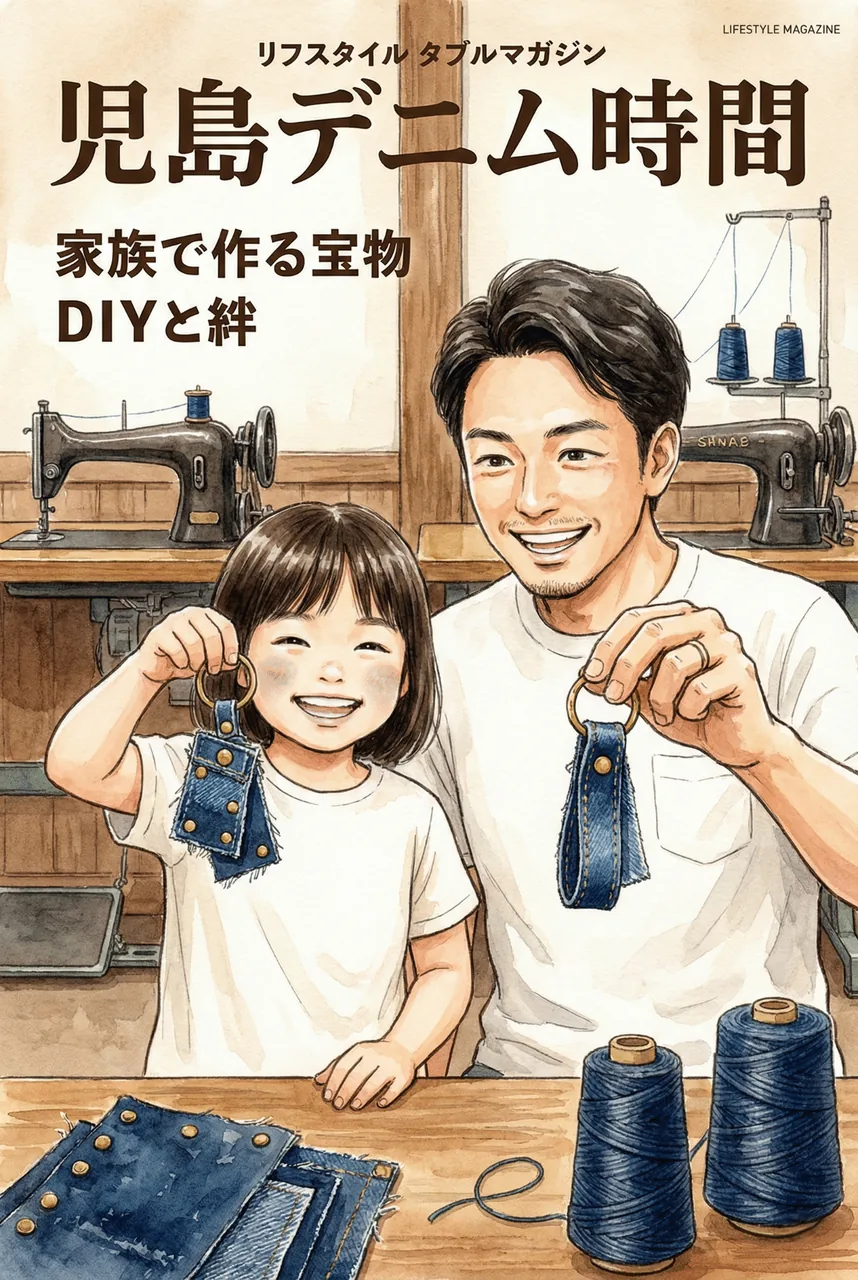
"This leftover fabric — glad it didn't end up in the bin!"
Small scraps that inevitably pile up in the jeans-making process.
Picking them up, stamping your own hardware into them, and turning them into a strap — this experience becomes the best possible opportunity for nurturing a mindset of valuing things (SDGs).
Fresh out of the workshop, the denim and canvas are stiff and a rich deep blue. But as your child clips it to their school bag every day, takes it out on errands, the fabric gradually starts to wear, the color softens, and it molds itself perfectly to the hand. That "change of color" is proof of all the time your family has spent together.
This weekend, head to Kurashiki and Kojima in Okayama Prefecture and pick up a "living fabric" — one-of-a-kind in the world — to grow alongside you.