"I bought a beautiful bag of specialty beans — but I'm storing them with the bag sealed by a rubber band."
If that sounds familiar, you're in good company.
But here's the thing: coffee beans are a fresh product.
The moment you open the bag, oxidation begins — and the aroma and flavor start to fade.
To enjoy every last cup at its best, the answer is to transfer your beans into an airtight
Japanese-made coffee
canister.
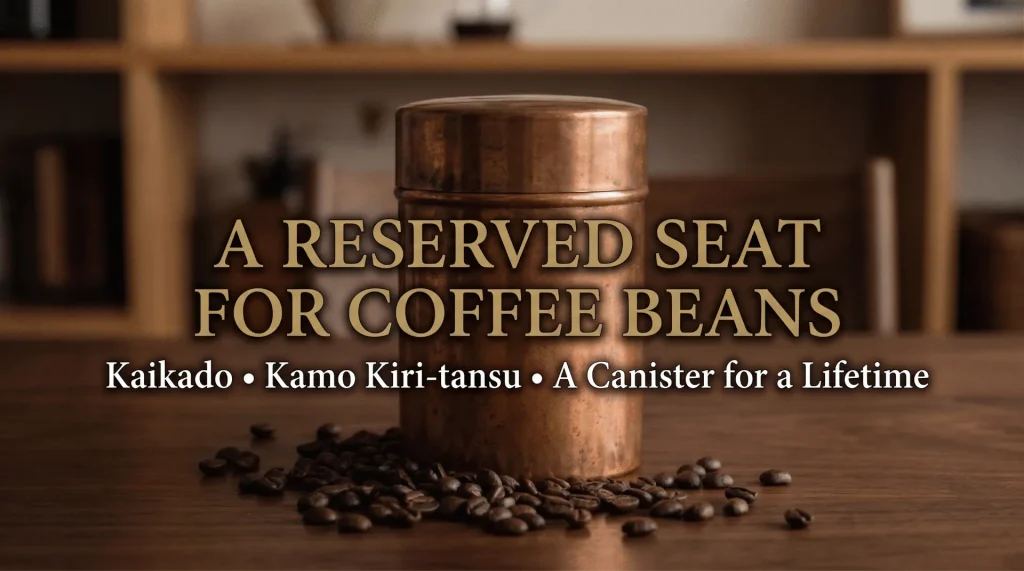
The standout choices are the tea caddies from Kyoto's Kaikado (開化堂) and the handcrafted
containers made using the woodworking tradition of Kamo Paulownia (加茂桐箪笥) from Niigata.
Originally designed to protect delicate Japanese tea leaves and silk kimono from moisture, their performance is
equally
ideal for preserving coffee beans.
This guide introduces lifetime canisters that aren't just storage containers — they're companions you raise over
years.
Series: This article is part 2 of the "Savoring (Coffee, Sake & Culture)" collection.
Quick Reference: Coffee Canister Materials at a Glance
| Material | Airtightness | Storage Life | Key Benefit |
|---|---|---|---|
| Stainless Steel | High | 3–4 weeks | Durable and rust-resistant. Easy to clean |
| Ceramic | Medium–High (lid-dependent) | 2–3 weeks | High design appeal; some heat retention |
| Glass | Medium | 1–2 weeks | Contents visible. No odor absorption |
| Aluminum | High | 3–4 weeks | Lightweight with excellent light-blocking |
1. Freshness Is Everything | Why Your Storage Container Matters
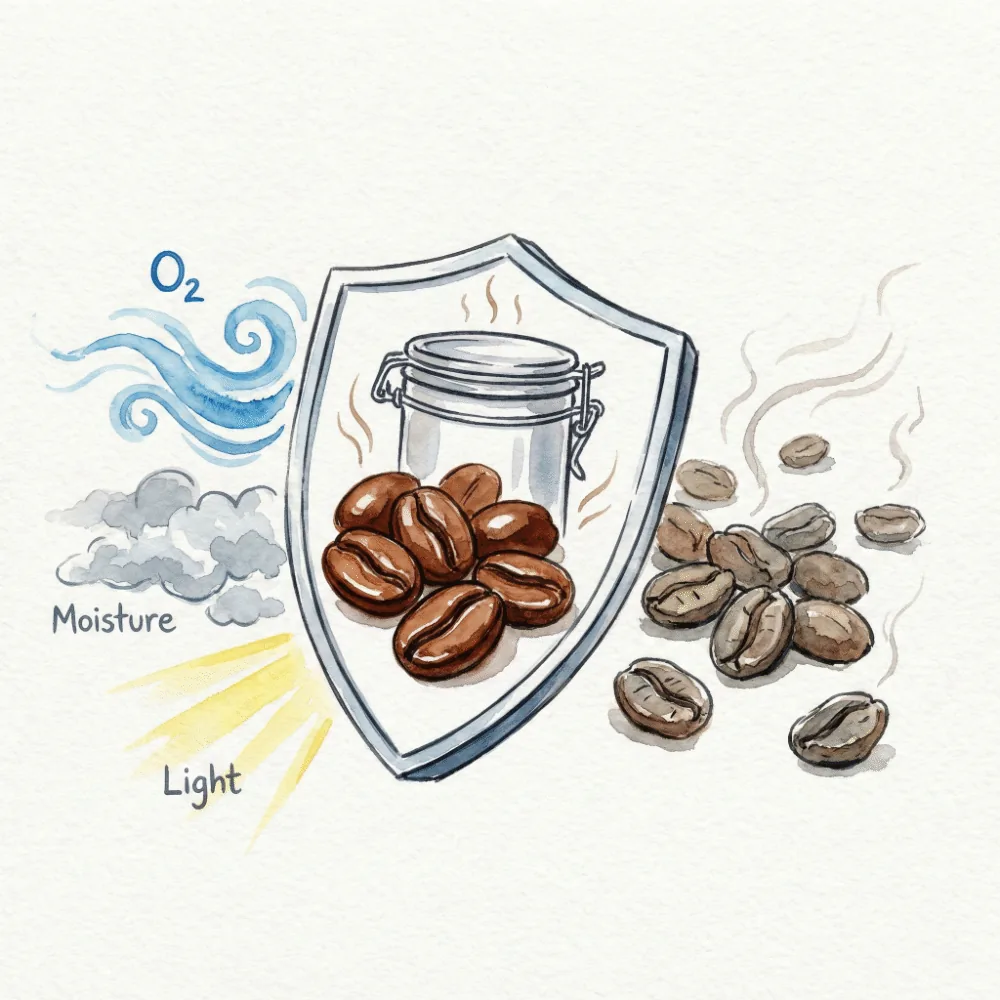
Coffee beans have three natural enemies: oxygen, moisture, and
light.
How well your container blocks these three elements is the key to choosing the right canister.
Oxidation Turns Beans Sour
Once roasted coffee beans are exposed to air, oxidation accelerates.
Oxidized beans develop an unpleasant sourness and lose their aromatic complexity — a pale shadow of what they
could be at their freshest.
The original bag works as temporary storage, but air gets in every time you open it.
That's why transferring your beans to a dedicated, airtight, light-blocking canister is the single most
important step toward a genuinely great daily coffee experience.
2. Why Japanese Tea Caddies Are the Ultimate Coffee Canister
Glass jars from overseas can be charming, but functionally, Japan's traditional chazutsu (茶筒, tea caddy) is arguably the finest coffee canister in the world.
Technology Built for Something Even More Delicate
Japanese green tea leaves are even more sensitive to moisture and light than coffee beans.
The chazutsu evolved over centuries to keep those leaves fresh year-round — and the result is a vessel with
three outstanding features:
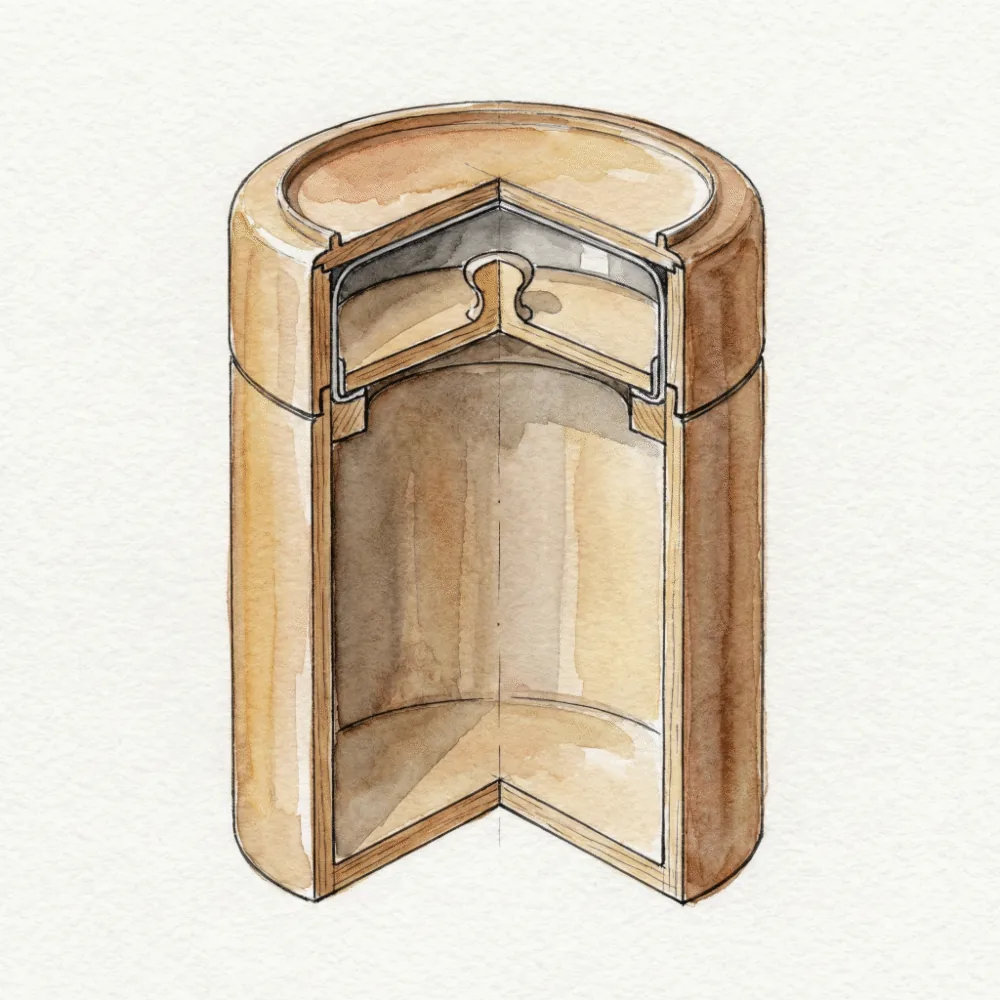
1. Superior airtightness: precision lid fitting, crafted entirely by hand.
2. Complete light-blocking: metal or wood walls cut UV completely.
3. Inner lid (naka-buta): a double-layer structure that creates a second air seal.
These three features map directly onto the requirements for an ideal coffee canister.
3. Kaikado | 100-Year Coffee Canisters in Tin, Copper & Brass
Kaikado (開化堂) of Kyoto is Japan's oldest handmade tea caddy workshop — and the most coveted canister brand among coffee lovers worldwide.
Kaikado Coffee Canister
A lid that slides closed on its own — extraordinary airtightness.
The signature feature of a Kaikado caddy is the lid: align it with the rim and it glides shut under gravity
alone, silently displacing the air as it closes.
That precision is the result of over 130 individual production steps — entirely handmade.
Available in three materials: tinplate, copper, and brass.
With daily handling, the surface develops a warm amber patina and gains depth over time.
Durable enough to pass down to grandchildren — this is the definitive "canister you raise."
4. Kamo Paulownia | A Wooden Coffee Canister That Breathes with Your Beans
If metal isn't your aesthetic, consider a wooden coffee canister made using the craft tradition of Kamo Paulownia (加茂桐箪笥) from Kamo City, Niigata Prefecture.
Asakura Furniture Paulownia Coffee Canister
Paulownia wood that breathes — naturally regulating the moisture around your beans.
Paulownia (kiri) is a wood that expands to seal gaps when humidity rises and contracts to allow airflow
when it's dry — a property known as moisture regulation.
This same quality has protected silk kimono and rice from mold and insects for centuries, and it works
equally well for coffee beans.
These canisters are built by Kamo paulownia craftspeople using mortise-and-tenon joinery (hozosgumi) — no
nails — and they're remarkably lightweight.
The warm, Japanese-modern aesthetic makes them a natural fit for any kitchen.
5. Yamanaka Lacquerware | Gato Mikio's Wood Canister with Extraordinary Precision
Yamanaka lacquerware (山中漆器) from Ishikawa Prefecture achieves a level of threading precision in wood that rivals machined metal.
Where the Wood Grain Aligns Perfectly
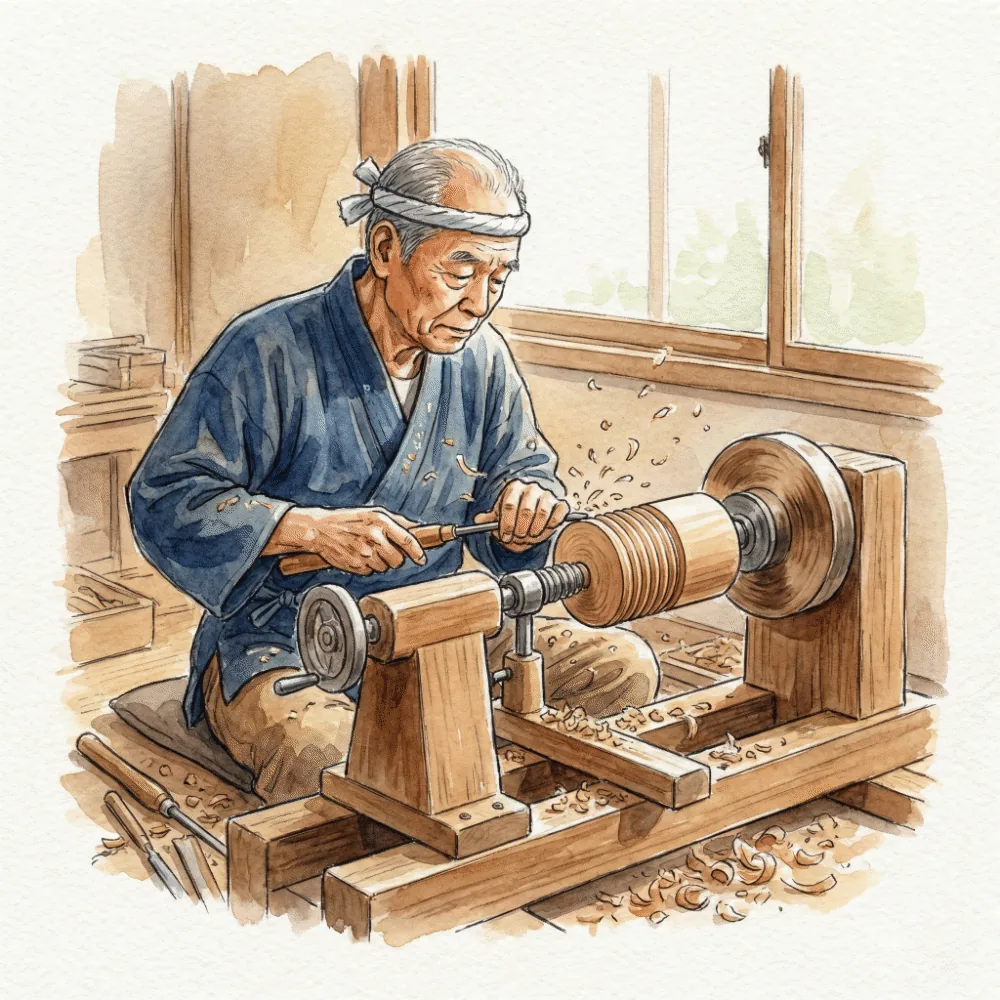
Yamanaka's specialty is "turned wood" (hikimono) — shaping wood on a lathe with extraordinary accuracy.
The canisters made by workshops like Gato Mikio (我戸幹男商店) are crafted so the wood grain
of the lid aligns perfectly with the body.
The screw-top lid can't fall off even if the canister tips over.
The fuki-urushi (wiped lacquer) finish protects the wood without sealing its ability to breathe, and the surface
grows more lustrous with every use.
Blue Bottle Coffee × Gato Mikio Collaboration Canister
Where traditional craft meets third-wave coffee.
A collaboration between Yamanaka lacquerware icon Gato Mikio and Blue Bottle Coffee.
The body is turned from Japanese zelkova (keyaki) and finished in black fuki-urushi, giving it a sense of
gravitas while remaining unmistakably modern.
The precision handcrafted screw lid creates excellent airtightness, keeping your beans safe from moisture.
As you use it over the years, the lacquer becomes more translucent and the wood grain emerges — a piece that
only gets more beautiful with time.
6. Glass, Ceramic, Metal & Wood | Pros and Cons of Every Material
Coffee canisters come in many materials. Understanding the trade-offs helps you choose the right one for your lifestyle.
Function vs. Design — What Matters Most to You?
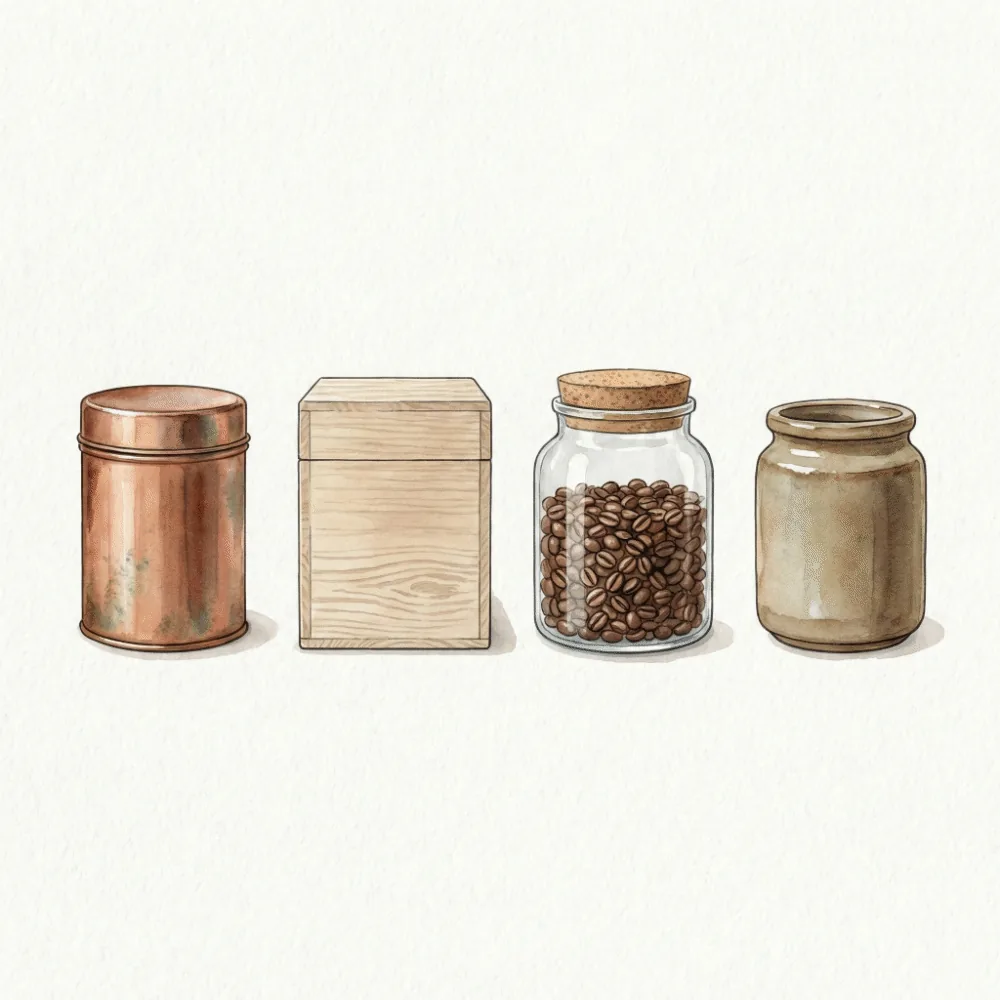
- Metal (tinplate, copper):
Pros: Best-in-class light-blocking and airtightness. Unbreakable. Ages beautifully over time.
Cons: No water washing (will rust). Higher price. - Wood (paulownia, lacquerware):
Pros: Natural humidity regulation. Warm, organic aesthetic. Lightweight.
Cons: Can absorb odors. Most cannot be water-washed. - Glass:
Pros: Contents visible. No odor transfer. Affordable.
Cons: No light-blocking (recommended to store inside a cupboard). Breakable. - Ceramic:
Pros: High design appeal. Light-blocking.
Cons: Heavy. Breakable. Some lids seal poorly (look for a rubber gasket).
Bottom line: For maximum freshness, choose metal or wood.
For convenience and budget, glass stored in a dark cupboard is a solid choice.
7. How to Care for a "Living" Coffee Canister | Polish It with Your Hands
Traditional craft canisters like Kaikado and Kamo paulownia are maintained very differently from ordinary kitchenware.
No Detergent — Your Skin's Natural Oil Is the Best Polish
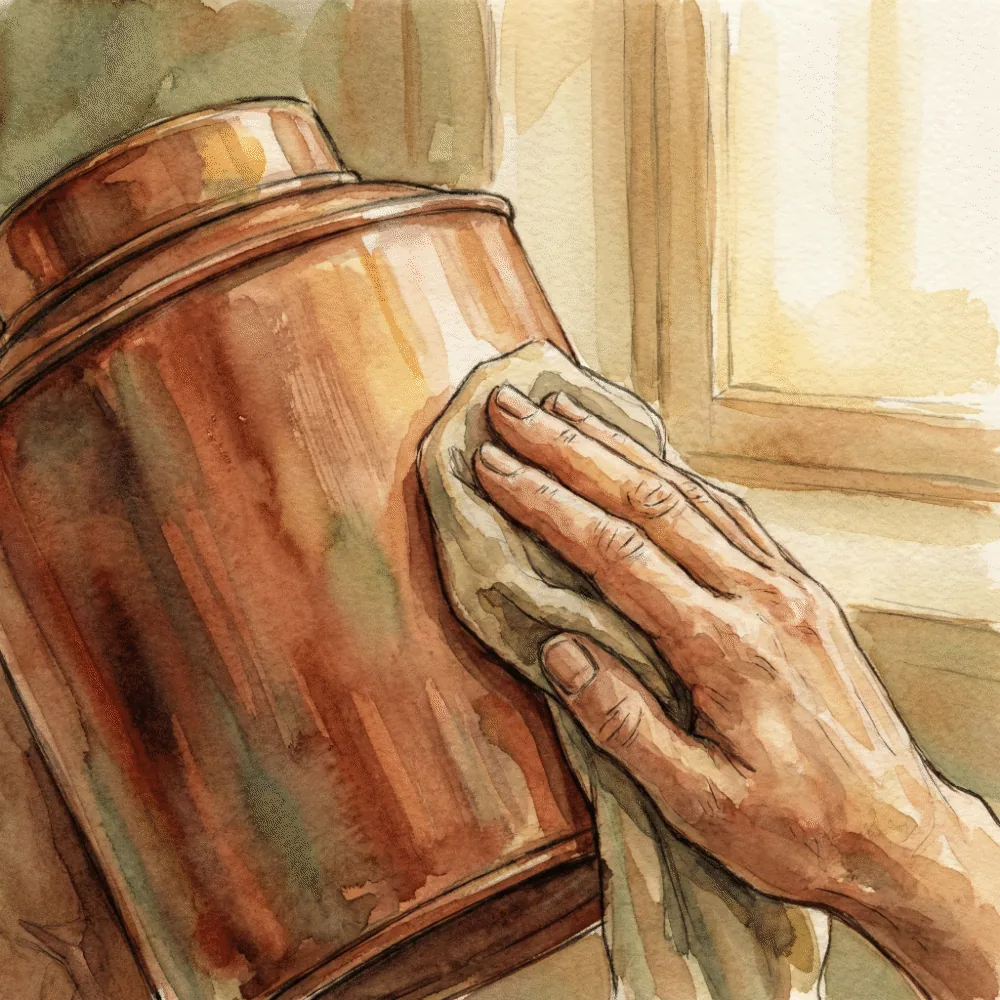
Metal canisters (Kaikado):
Water washing is essentially off-limits — moisture causes rust.
For everyday care, simply stroke the surface gently with the palm of your hand.
The natural oils from your skin penetrate the metal, prevent oxidation, and gradually develop that
beautiful amber patina.
Wooden canisters (paulownia, lacquerware):
Same principle — avoid water and wipe with a dry cloth.
If something must be cleaned, use a cloth wrung out well, wipe quickly, and dry immediately in a shaded
spot.
The secret to making these lifetime pieces last is simply giving them the affection of regular handling.
8. Frequently Asked Questions
What capacity should I choose?
Match the size to how much you typically buy at once.
Coffee beans are most commonly sold in 200g bags, so a canister that holds 200g is the most practical size.
A container that's too large means more air inside as the beans deplete — which actually accelerates oxidation.
Bigger isn't always better.
Should I store coffee beans in the refrigerator?
For daily use, room temperature in a good canister is the better choice.
Taking beans in and out of the fridge creates temperature swings that cause condensation inside the container —
introducing the very moisture you're trying to avoid.
For beans you'll use within a month, an airtight, light-blocking canister kept somewhere cool is ideal.
Only freeze beans if you're storing them long-term, and portion them out so you don't re-freeze.
Can I store other things in my canister?
It's best to dedicate it exclusively to coffee.
Wood and gasket-sealed containers in particular absorb the oils and strong aroma of coffee.
If you later put tea or other loose ingredients in the same container, the flavors will mix — so it's worth
committing to coffee and letting it become a truly personal tool over time.
Can I store pre-ground coffee in a canister?
You can, but ground coffee oxidizes much faster than whole beans.
Grinding dramatically increases the surface area exposed to air, so the deterioration rate accelerates
significantly.
Even in a canister, aim to use ground coffee within 1–2 weeks.
For the best possible cup, grind fresh just before brewing.
Is a Kaikado canister a good gift?
Absolutely — it's perfect for weddings, housewarmings, and milestone occasions.
The symbolism works beautifully too: "deepens with age," and "the lid that gently closes" evokes harmony and
settling peacefully into place.
Many Kaikado pieces can be engraved, making them a deeply personal lifetime gift you can give with confidence.
How does it compare to a vacuum canister with a pump?
Kaikado and paulownia canisters rely on natural sealing — the material itself does the work.
Vacuum canisters use a hand pump to remove air, which is effective but requires an extra step every time.
Traditional craft canisters protect beans through precision fit and material properties, and they offer something
a vacuum canister never can: the pleasure of watching them age and change alongside you.
If you want a tool that's also a daily ritual, the traditional route wins.
Final Thoughts: Savoring the Seconds Before the Lid Falls Closed
Brewing coffee is more than hydration.
Boiling the water, grinding the beans, opening the canister — every step of that ritual is a moment of calm that
resets the mind.
The few seconds the Kaikado lid takes to slide silently closed under gravity.
The faint, warm scent of paulownia wood rising from the Kamo canister as you lift the lid.
These are moments that a plastic storage container simply cannot give you.
Put your precious beans into a lifetime canister made by Japanese craftspeople — and start raising it as your
own.
By the time the metal begins to change color and the grain starts to emerge from the lacquer, your coffee life
will have deepened in ways you didn't expect.
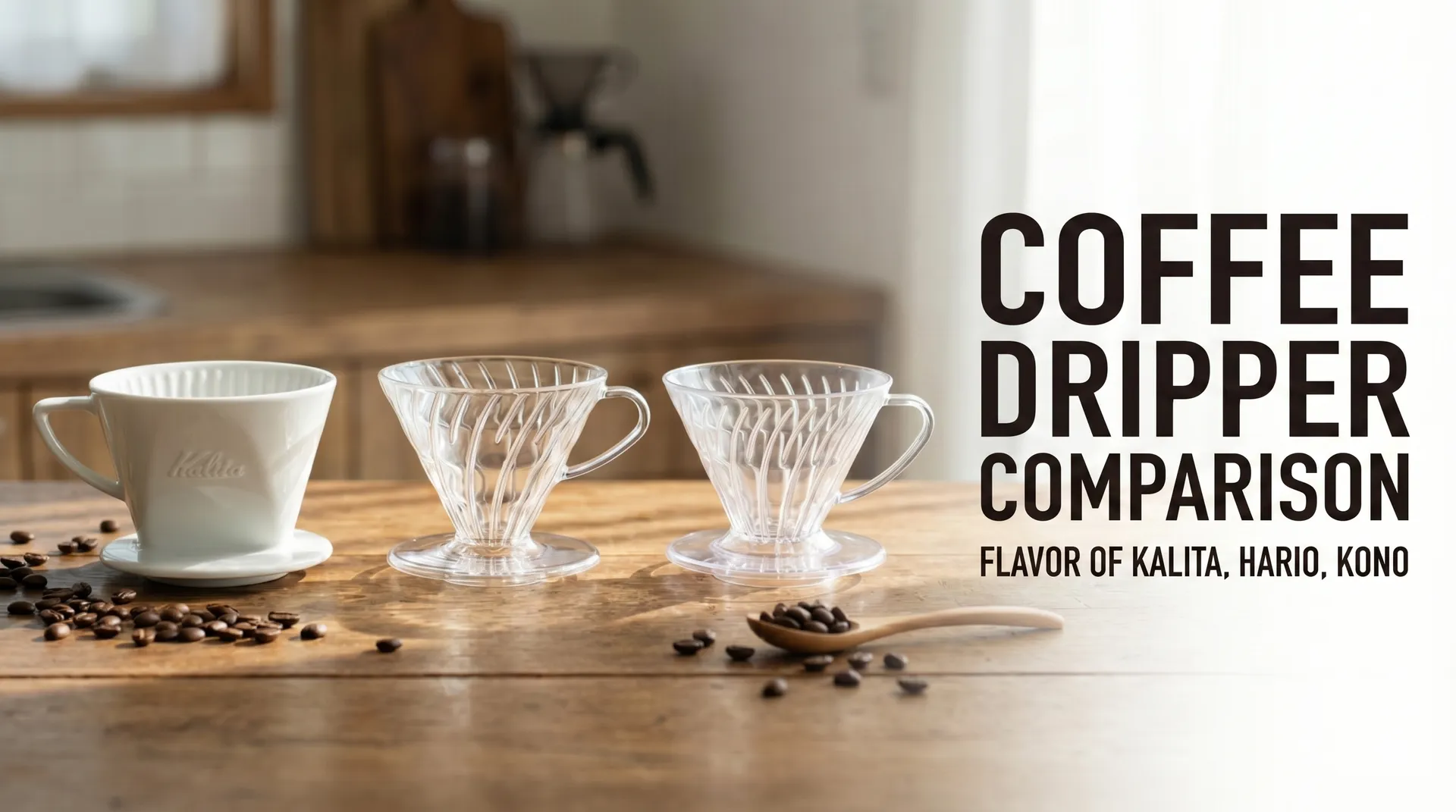
Japanese Coffee Drippers | Brewing a Considered Cup in Ceramic and Copper
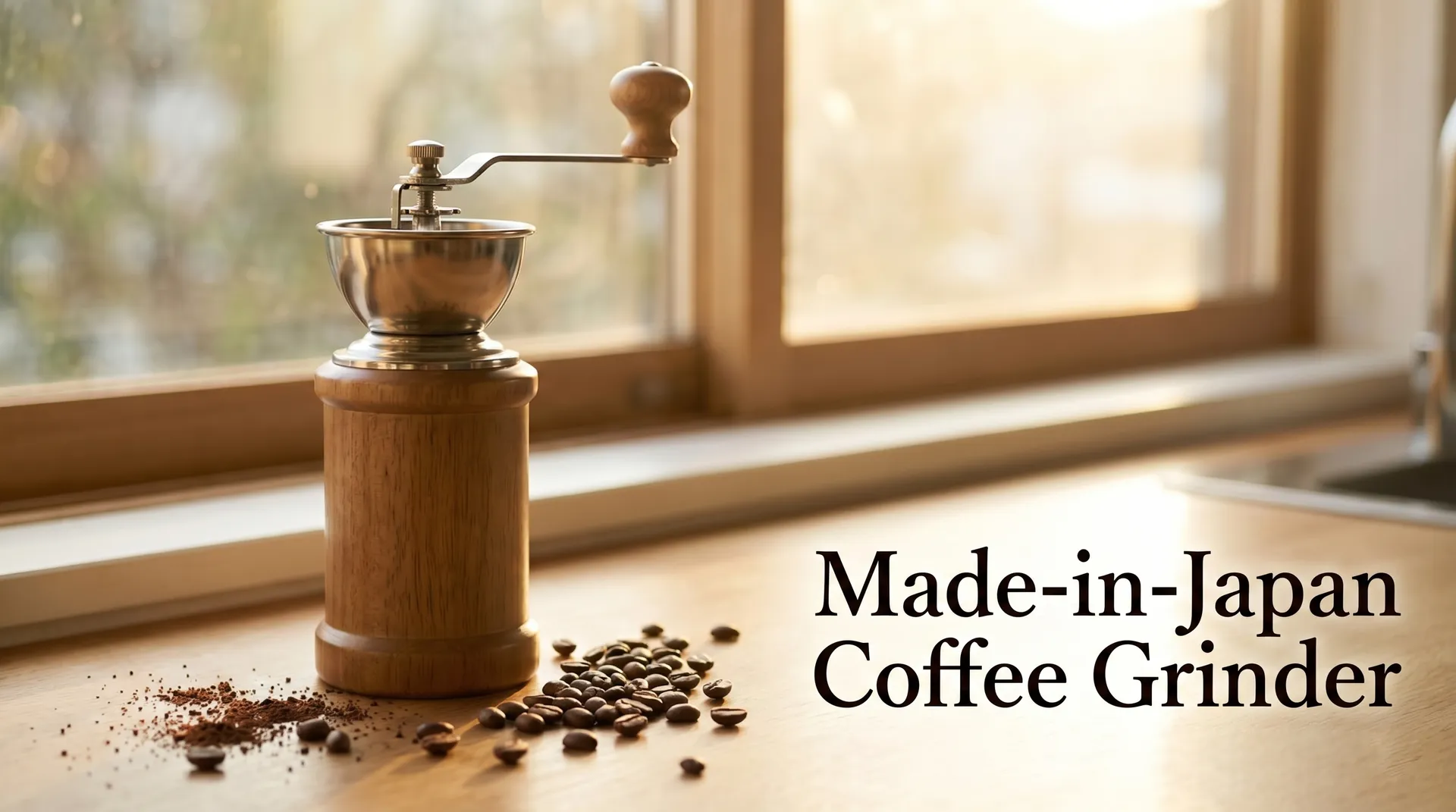
Japanese Coffee Hand-Grinders | The Silence and Aroma of Fresh-Ground Beans