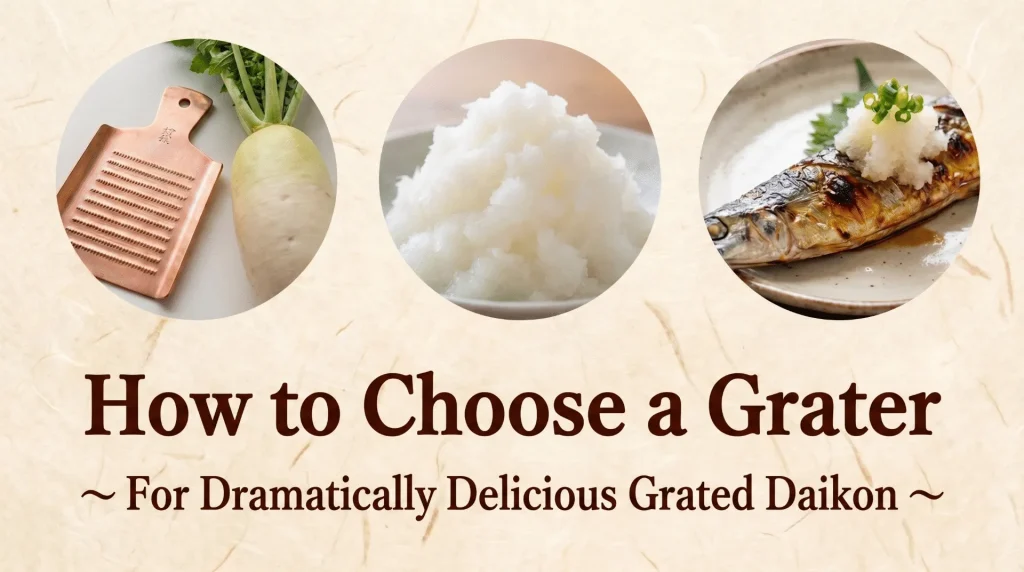
"The grated daikon at izakaya restaurants is always sweet and fluffy — but mine at home comes out watery and
sharp..."
Sound familiar?
The biggest factor behind that difference is often the quality of the grater itself. A hand-forged
copper grater from a Japanese artisan, or a precision-engineered stainless grater from Niigata Prefecture's
Tsubame-Sanjo region, cuts through vegetable fibers cleanly rather than crushing them. The result is the same
supermarket daikon, transformed into something surprisingly sweet, airy, and delicious.
This guide covers everything you need to know about Japan-made graters worth owning for life — copper,
stainless steel, and sharkskin (hon-samegawa) — including what makes them different, how to choose the
right one, and the top brands that serious cooks trust.
Quick Reference: Japan's Finest Graters by Material
| Criteria | Copper (tin-plated) | Stainless Steel | Hon-Samegawa (Sharkskin) |
|---|---|---|---|
| Sharpness | ◎ Professional-grade | ○ High quality = ◎ | △ Wasabi only |
| Best Use | Daikon, ginger, yam | Daikon, ginger (general) | Fresh wasabi only |
| Care | Sasara brush required; handle with care | Relatively easy | Rinse and dry only |
| Repair | Re-sharpening available | Replace when worn | Replace surface |
| Ideal For | Daikon purists and gift-givers | Everyday professional-level results | Fresh wasabi enthusiasts |
1. Three Reasons Japan-Made Graters Are in a Different League
The gap between a cheap imported plastic grater and one made by a Japanese artisan is not just about price. It directly changes the taste of your food, and it determines whether a grater is a disposable commodity or a tool you'll pass on to your children.
Reason 1: Hand-Forged Teeth Create Irregular Patterns That Grate Faster
Japanese copper graters are made by artisans who use a chisel and hammer to raise each tooth by hand — one by one. Unlike the perfectly uniform teeth produced by machines, the hand-forged irregularity means food doesn't track the same path twice. This allows ingredients to be grated quickly, with less force, and to a finer texture.
Reason 2: Cutting Rather Than Crushing Preserves Natural Sweetness
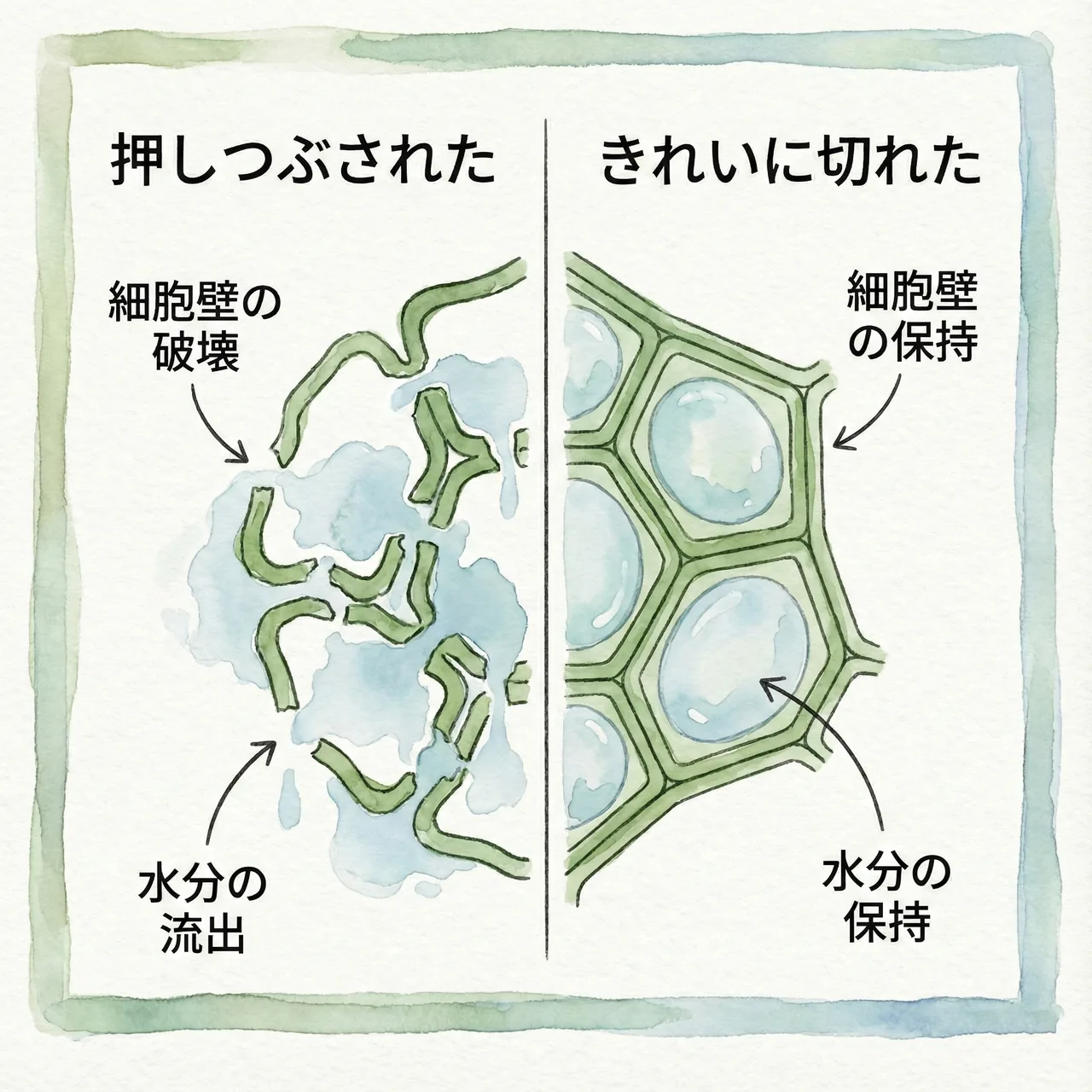
A dull grater doesn't cut — it tears. The shredded cell walls release excess moisture (drip) along with pungent
compounds (isothiocyanates), washing away the daikon's sweetness and making it watery and sharp.
A sharp Japanese grater — whether copper or high-quality Tsubame-Sanjo stainless — slices through the
vegetable's fibers cleanly. The moisture stays inside the cells, producing fluffy, tender
grated daikon with its natural sweetness fully intact.
Reason 3: Re-Sharpening Means It Can Last Generations
When a cheap grater goes dull, you throw it away. When a Japanese copper grater goes dull, you send it back to the maker (such as Oya Seisakusho) for "me-tate naoashi" — re-sharpening. The worn teeth are removed and new ones are forged in their place, restoring the grater to like-new performance. It is one of the most genuinely sustainable kitchen tools in existence — an heirloom that can pass from parent to child.
2. Choose by Material: Copper, Stainless Steel, and Sharkskin
Three main materials; three very different strengths. Choose based on what you most want to eat well.
Copper (Tin-Plated) — The Hand-Forged Pinnacle
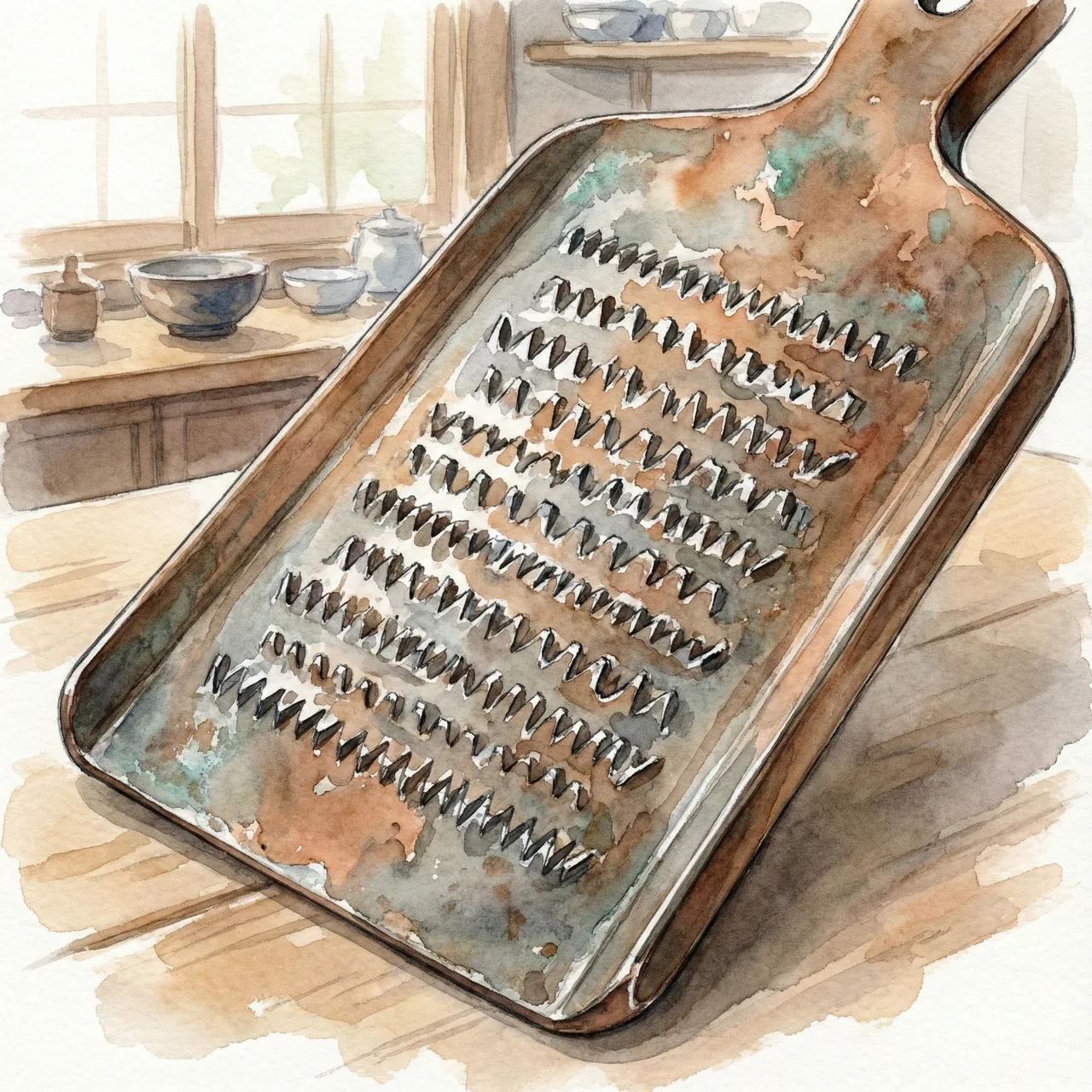
The highest-tier Japanese grater, packed with traditional craft technique. Because each tooth is raised by hand, the slight randomness of spacing creates a grating surface that no machine can replicate. That randomness translates directly to performance: less resistance, faster grating, finer texture. If you want the best possible result and something you can grow to love over decades, copper is the definitive choice.
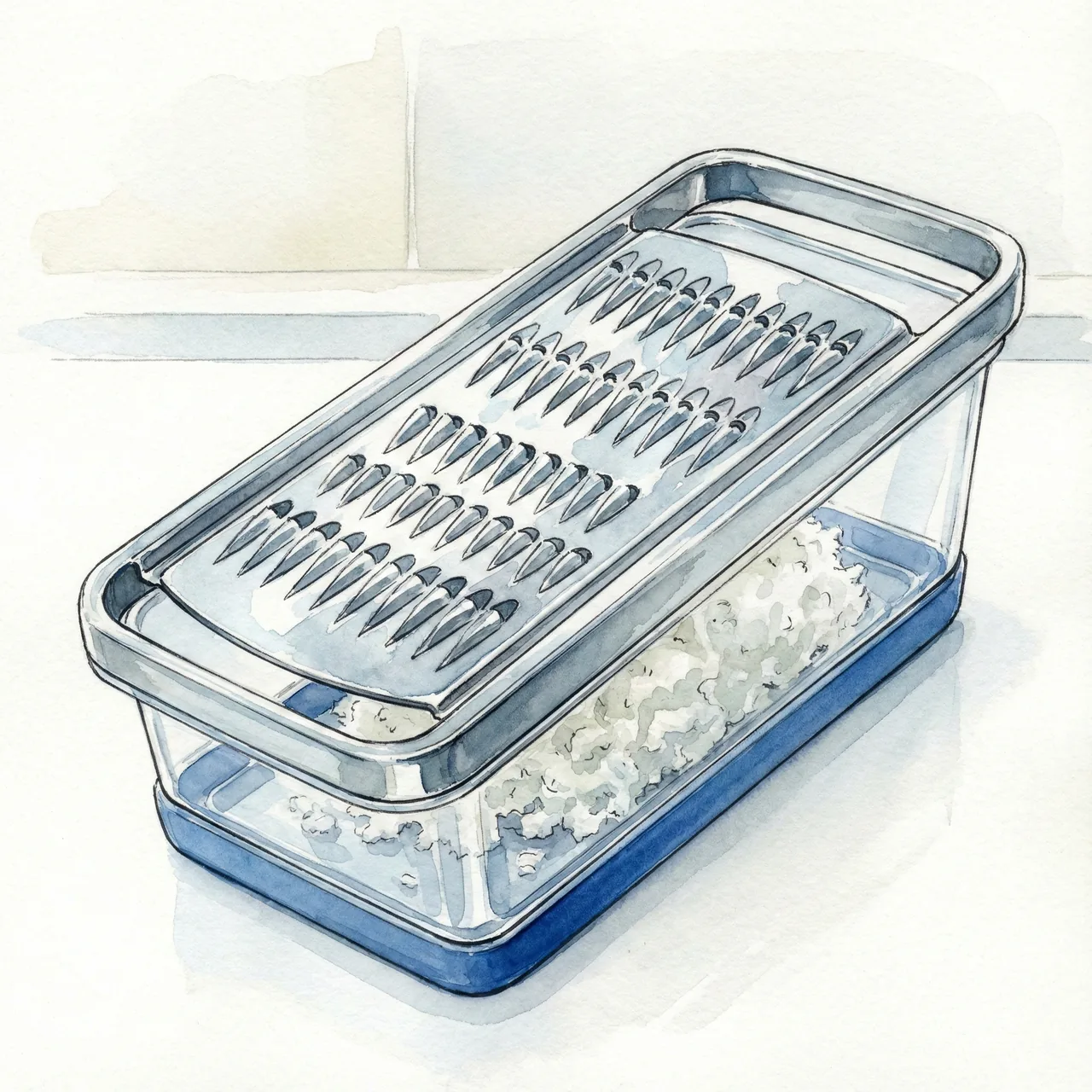
Stainless Steel — Easy Care, Professional Results from Tsubame-Sanjo
Rust-free and easy to clean, stainless is the most accessible choice for everyday use. Historically considered a step below copper in sharpness, the gap has narrowed dramatically thanks to the advanced metalworking technology of Niigata's Tsubame-Sanjo region. Today's best stainless graters rival copper in cutting edge, making them an excellent choice for anyone who wants professional-quality results without the extra care routine.
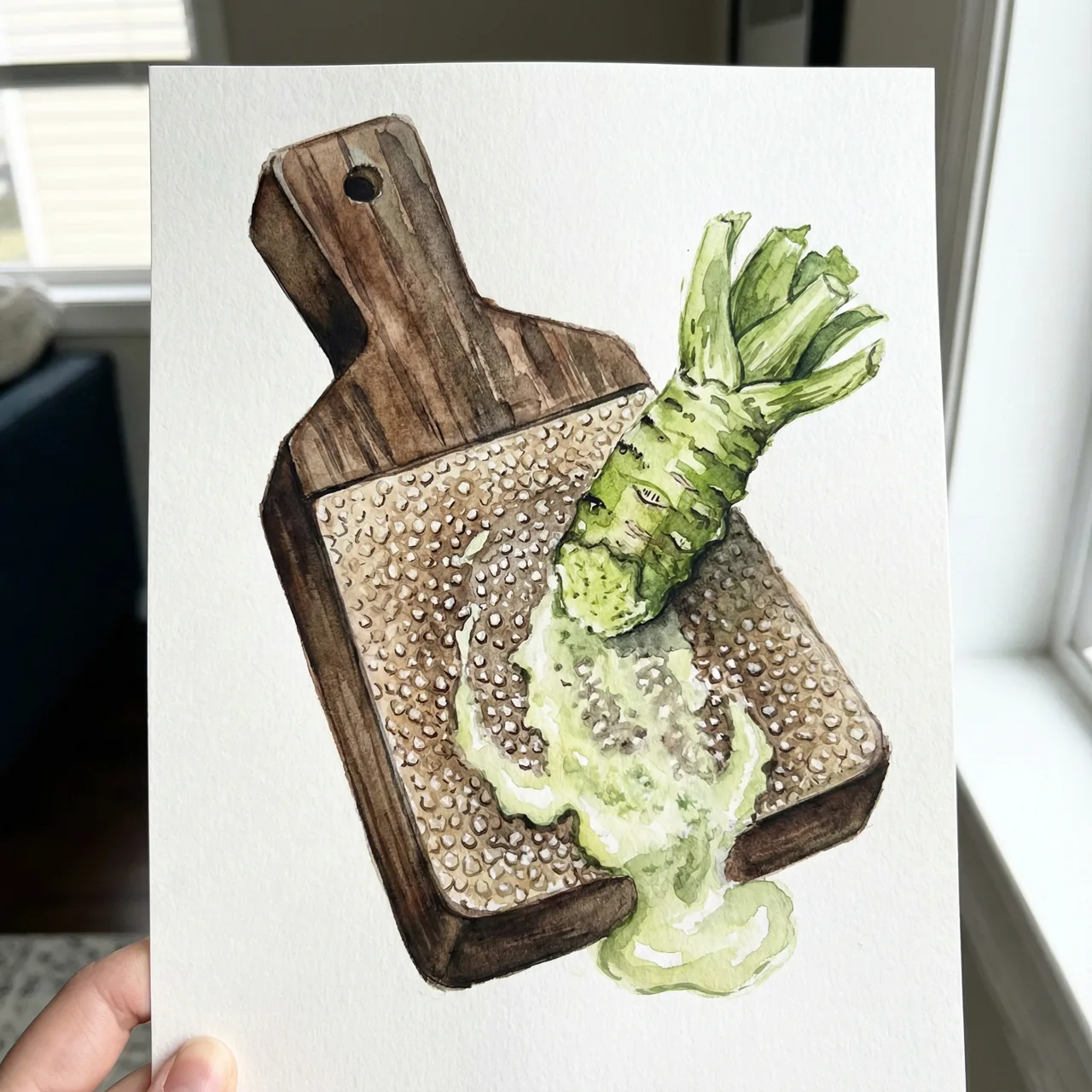
Hon-Samegawa (Sharkskin) — Wasabi-Only, Creamy Aroma Every Time
The tool used at high-end sushi restaurants: a paddle-shaped board covered with natural dried sharkskin. Wasabi has a unique property — the more thoroughly its cells are broken down, the more pronounced its heat, sweetness, and aroma become. The microscopically fine, irregular texture of sharkskin, combined with a circular grinding motion, whips air into the paste, producing exceptionally creamy, aromatic fresh wasabi unlike anything a metal grater achieves.
3. Choose by Ingredient: The Right Grater for Daikon, Ginger, and Wasabi
Matching grater to ingredient takes the results one step further. Here's what to reach for depending on what you're cooking.
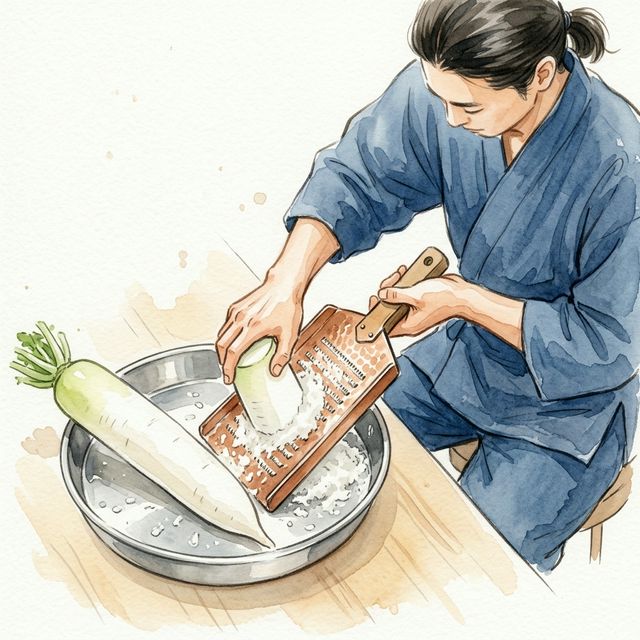
For Perfect Daikon — A Large Copper Grater
A full-size daikon calls for a large copper grater. The generous surface area means you can let the weight of the daikon do the work — no arm strain. The hand-forged teeth slice the fibers cleanly, producing fluffy, sweet grated daikon without excess moisture.
For Ginger and Garlic — A Small Stainless Grater
Small quantities of aromatics like ginger are better handled by a compact stainless grater. Ginger's stringy fibers catch easily on hand-forged copper teeth, making cleanup difficult. Stainless graters have smoother tooth geometry that rinses clean quickly — a practical advantage for condiments you prepare frequently.

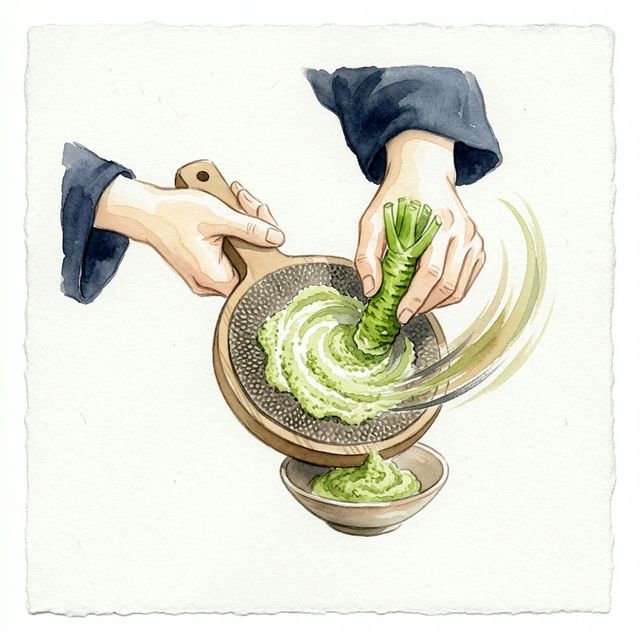
For Fresh Wasabi at Its Best — A Sharkskin Paddle
Grating wasabi on metal tears rather than grinds, releasing fewer aromatic compounds. A hon-samegawa (sharkskin) paddle used in slow circular strokes creates a paste filled with air bubbles and a rich concentration of flavor. This is the technique used at top sushi counters — and the difference in taste is unmistakable.
For Everything in One — A Double-Sided Copper Grater
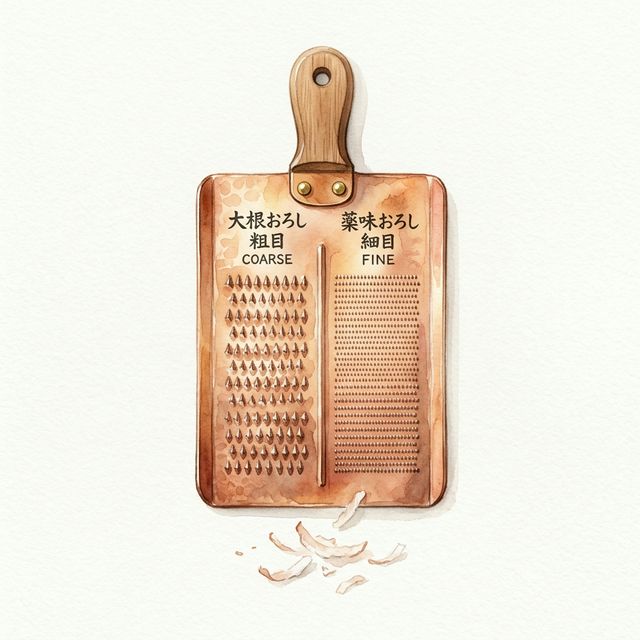
If you'd rather not juggle multiple graters, a double-sided copper grater covers all bases. One side has coarse teeth for daikon and yam; the other has fine teeth for ginger and other condiments. One tool, stored flat, handles every grating need in your kitchen.
4. Top 3 Japan-Made Graters Worth Owning for Life
Three brands you can recommend without hesitation — each representing a different facet of Japanese grater excellence.
[Saitama · Copper] Oya Seisakusho: The Master Craftsman Chefs Seek Out
The go-to name in hand-forged copper graters among professional Japanese cooks.
Based in Wako City, Saitama. Every tooth is raised by hand, one by one — producing graters that require
surprisingly little effort to use. The double-sided type (coarse for daikon, fine for ginger) is the most
practical choice for a home kitchen.
When the teeth wear down, re-sharpening
is available — making this a genuinely sustainable, lifetime purchase.
View the Oya Seisakusho brand page
Oya Seisakusho (Ooya Kinzoku) Stainless Steel Oroshigane
Precision-toothed stainless grater handcrafted by Oya Seisakusho in Saitama. The same hand-forming process as the copper models — every tooth raised individually for clean, low-effort grating. Copper models are available via the brand page.
View on Amazon[Niigata Tsubame-Sanjo · Copper] Tsuboe: The Specialist Maker with 110+ Years
A crystallization of over a century of grater-making expertise from Japan's metalworking
heartland.
Tsuboe holds a patent on their "Super High Cut" tooth geometry — an angled design that produces copper-class
sharpness. The DO-070 copper model is compact, easy to clean, and ideal for ginger, wasabi, and garlic —
delivering precisely shredded, moisture-rich results that dull metal graters simply can't match.
TSUBOE Japanese Copper Oroshigane DO-070
Compact copper grater from Tsubame-Sanjo, Niigata — Japan's metalworking capital. Patented tooth geometry for precision grating with minimal effort. Great for ginger and garlic.
View on Amazon[Sakai, Osaka · Copper] Sakai Takumi Ajimasa: Handmade Copper Oroshigane from Japan's Blade Capital
Hammered copper craftsmanship from Sakai — the city that has forged Japan's finest blades for over 600
years.
Each Ajimasa oroshigane is made entirely by hand in Sakai, Osaka Prefecture, using copper-working techniques
passed down through generations of artisans. The hand-hammered teeth shred daikon and ginger with minimal effort
while preserving cell structure — keeping more flavor and moisture intact than machine-stamped graters. Available
in multiple sizes to suit both occasional home use and high-volume prep.
Sakai Takumi Ajimasa Handmade Copper Oroshigane (#8)
Fully hand-forged copper grater from Sakai, Osaka. Each tooth is individually hammered for maximum sharpness. Size #8 is an all-purpose kitchen choice for daikon, ginger, and wasabi.
View on Amazon5. Caring for Your Grater — and Getting It Re-Sharpened
A quality Japanese grater rewards a little care with decades of service. Here's what you need to know to keep it performing at its best.
Cleaning: No Sponges — Use a Sasara Brush or Old Toothbrush
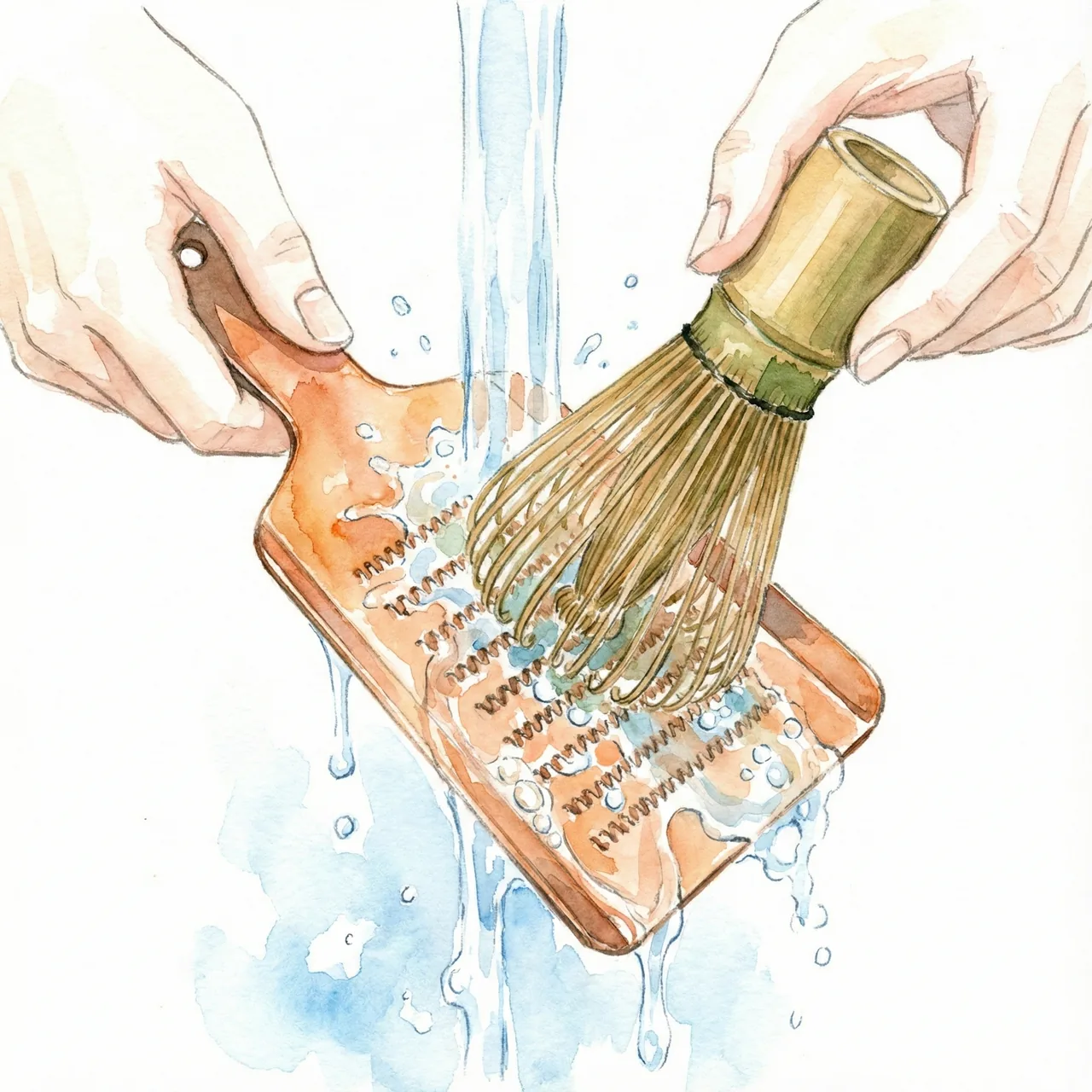
Sharp teeth shred sponges and trap fibers in the process. Always clean with a bamboo sasara brush (a traditional split-bamboo cleaning whisk) or a retired toothbrush. Run water across the surface and brush lightly along the direction of the teeth — residue releases cleanly in seconds.
Technique: Let the Weight Do the Work
Forcing the food down hard is the fastest way to damage the teeth. A good grater is designed so that the weight of the ingredient alone is enough to cut. Glide the food lightly across the surface in long, smooth strokes — not in circles for copper graters, which work best with straight up-and-down or diagonal movements aligned with the tooth direction.
Re-Sharpening: Making It Last a Lifetime
Even the finest copper grater will eventually lose its edge after years of use. Rather than discarding it, you can send it to the original maker (such as Oya Seisakusho) for me-tate naoashi — re-sharpening. The worn teeth are filed away and entirely new ones forged in their place, restoring the grater to its original performance. Caring for a tool this way is one of the most satisfying aspects of owning Japanese-made cookware.
Frequently Asked Questions
Tsubame-Sanjo stainless vs. copper — which is the better lifetime purchase?
Both are excellent long-term investments, but the choice comes down to whether you value the pleasure of nurturing
a tool or the simplicity of easy maintenance.
A copper grater (such as from Oya Seisakusho) develops character over years of use, and can be re-sharpened when
dull — the ultimate sustainable tool. A high-quality Tsubame-Sanjo stainless grater (such as Tsuboe) cannot be
re-sharpened, but it resists rust, stays hygienic effortlessly, and typically performs without degradation for
5–10+ years.
Can a Western-style cheese grater (box grater) handle Japanese daikon?
Not well. Western box graters are designed to shred hard ingredients like aged cheese or rock salt — they tear through moist, high-water-content daikon rather than cutting it. The result is drip-heavy, watery grated daikon with a sharp bite and little sweetness. For daikon that is actually good to eat, a Japanese grater with narrow, blade-like teeth is essential.
Is dishwasher use safe?
Copper graters are strictly hand-wash only. The high heat and alkaline detergent in a dishwasher will strip the tin-plating and damage the hand-forged teeth. Most premium stainless graters are also better off hand-washed to preserve the tooth edges. The cleaning routine is quick — a sasara brush and running water — so this is rarely a burden.
Can sharkskin graters be used for daikon or ginger?
Treat hon-samegawa as wasabi-only. Daikon is too hard and large to grate on sharkskin without damaging the surface, and ginger's stringy fibers get hopelessly tangled in the skin's micro-texture. That said, the creamy, aromatic wasabi a sharkskin paddle produces is in a completely different league from metal-grated wasabi — so the specialization is well worth accepting.
What size grater should I buy?
Depends on your most common use. If you grate daikon regularly, a large grater (around 27 cm / 10.5 in) is far more comfortable — the extra size means you can use the vegetable's weight naturally without forcing it. For mostly garlic and ginger, a small oval grater is more practical and can even be brought to the table. A double-sided grater (coarse on one face, fine on the other) is the most space-efficient option if you want to cover all uses with a single tool.
Is a Japanese grater a good gift?
An excellent one for anyone who cooks seriously. Copper graters are often sold in paulownia wood boxes (kiri-bako), giving them a weighty, luxurious presentation. Their high practical value — improving the taste of everyday cooking — combined with their "lifetime tool" story makes them ideal for wedding gifts, housewarming presents, or Mother's Day.
6. Final Thoughts: Elevate Your Table with Japanese Craftsmanship
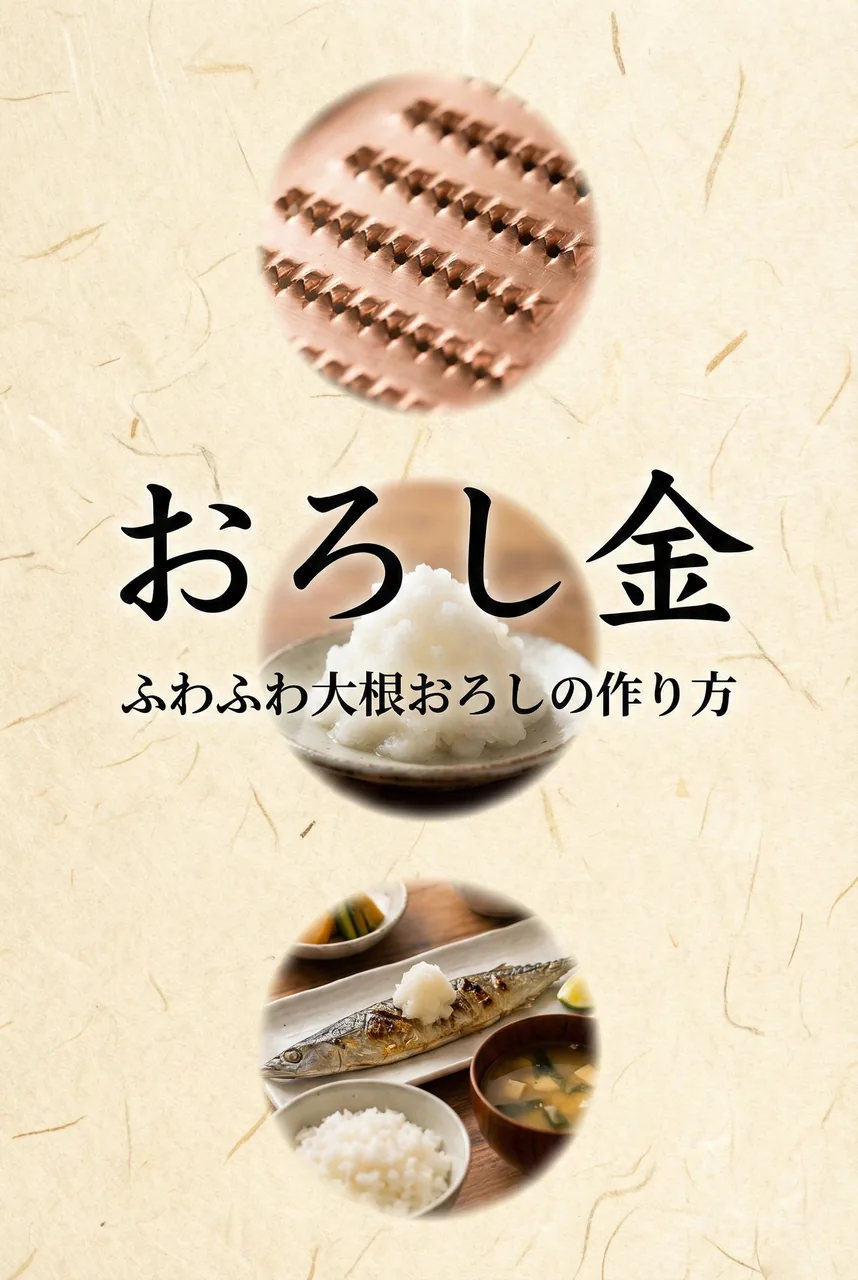
It's easy to dismiss grated daikon as a supporting role. But when it's done right — with a real Japanese grater
— the result transforms everything it accompanies: grilled fish, tempura, pan-fried tofu, Japanese-style hamburg
steak. When the side dish is that good, the whole meal goes up a level.
Graduating from a mass-produced import to a Japan-made grater with genuine craftsmanship behind it is one of the
most accessible upgrades you can make in your kitchen.
In summary:
· For the finest results and the pleasure of re-sharpening it for life: Copper (Oya
Seisakusho)
· For effortless care and Tsubame-Sanjo's outstanding engineering: Stainless (Tsuboe or Wada
Shouten)
· For wasabi at its absolute aromatic best: Hon-Samegawa sharkskin
Find your perfect Japanese grater and make every meal a little more remarkable.

Japan-Made Kitchen Knives: Carbon Steel vs. Stainless vs. Ceramic

Bamboo Strainers (Zaru): Japan-Made Picks for Soba, Somen & More