When did you buy the bottle of vinegar in your kitchen?
Most of us don't use much, so it lasts forever. Vinegar is that kind of seasoning.
Look at Japanese vinegar brewery by brewery, though, and something quite different appears: a brewery using 200 grams of rice per liter of vinegar; a brewery that lines up clay pots in an open field and leaves them outdoors for more than a year; a brewery that made vinegar from discarded sake lees — and changed Edo-style sushi.
This guide looks at Japanese vinegar by the brewery that makes it — and almost all of them can be bought outside Japan. At the end is something to try tonight: gyoza with nothing but vinegar and black pepper. Your usual dumplings become a different dish.
Quick Reference: Japanese Vinegar by Brewery at a Glance
| If you want… | Brewery | What makes it different |
|---|---|---|
| One really good bottle | Iio Jozo (Miyazu, Kyoto) ▾ | 5× the standard rice; 100 days' fermentation + up to 300 days' aging |
| Japanese dishes | Murayama Zosu (Kyoto) ▾ | Since the 1720s; "Chidorisu," used by Kyoto's restaurants |
| Aroma and body | Sakamoto Jozo (Fukuyama, Kagoshima) ▾ | Named "kurozu" in 1975; a year or more in outdoor pots |
| Serious sushi rice | Mizkan (Handa, Aichi) ▾ | Began with discarded sake lees; red "akazu" vinegar |
| Salads and marinades | Uchibori Jozo (Yaotsu, Gifu) ▾ | Faster fermentation, long aging in tanks and wooden barrels |
| What to read on the label | The ingredients | "Rice" only, or other things too (section 1) |
1. Why Japanese: Miyazu, Kyoto — Five Times the Rice
In Miyazu, in the north of Kyoto Prefecture facing the Sea of Japan, is a vinegar brewery called Iio Jozo, founded in 1893. Its "Junmai Fujisu" uses 200 grams of rice for every liter of vinegar.
To be called "rice vinegar," 40 grams is enough
Is 200 grams a lot? Japan's Agricultural Standard (JAS) says only this: rice vinegar must use at least 40 grams of rice per liter. Iio Jozo's 200 g is five times that, and its top grade, "Fujisu Premium," uses eight times.
In other words, the label "rice vinegar" marks only a floor. Above it there's room for five or eight times as much. Bottles side by side on a shelf can be worlds apart in substance.
Two years, counting from the rice paddy
The brewery uses only rice grown without agricultural chemicals in its own Tango region, and water from the mountains. Brewing starts with about 100 days of still (static) fermentation, followed by 240–300 days of aging. Counting from growing the rice, each bottle takes more than two years.
At the store, read one line on the back
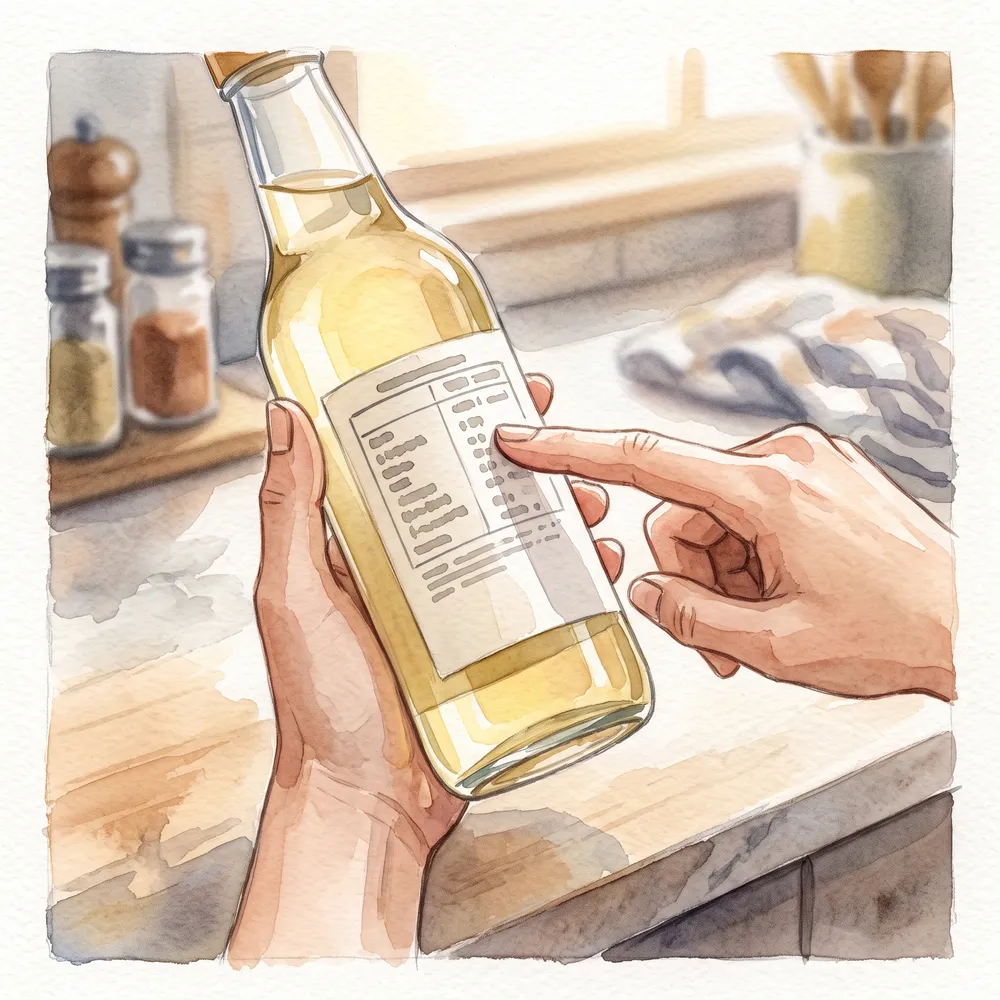
You don't need to memorize breweries. The ingredients line tells you on the spot:
- "Rice" only — made from rice alone (junmai-su, pure rice vinegar)
- "Rice, alcohol" — brewed with added alcohol
- "Rice, wheat, corn," etc. — other grains as well
Vinegar made with added alcohol isn't inferior. It's cheaper and lighter, which makes it easier for prep work where you use a lot. But it's worth knowing what you're buying.
2. Kyoto: Since the 1720s, Named for the Plovers of the Kamo River
Kyoto's Murayama Zosu has been brewing vinegar since the Kyoho era (1716–1736). The family moved to Kyoto from the Bizen-Ikeda domain, traded in sake while handling vinegar and soy sauce, and eventually focused on vinegar. Its signature "Chidorisu" is named for the chidori — plovers — that once flocked over the Kamo River. Made with rice from Omi and Kyoto water, it's said to contain more than 70 acids, including amino and succinic acids besides acetic acid, and has long been used by Kyoto's restaurants.
Why this brewery takes its time
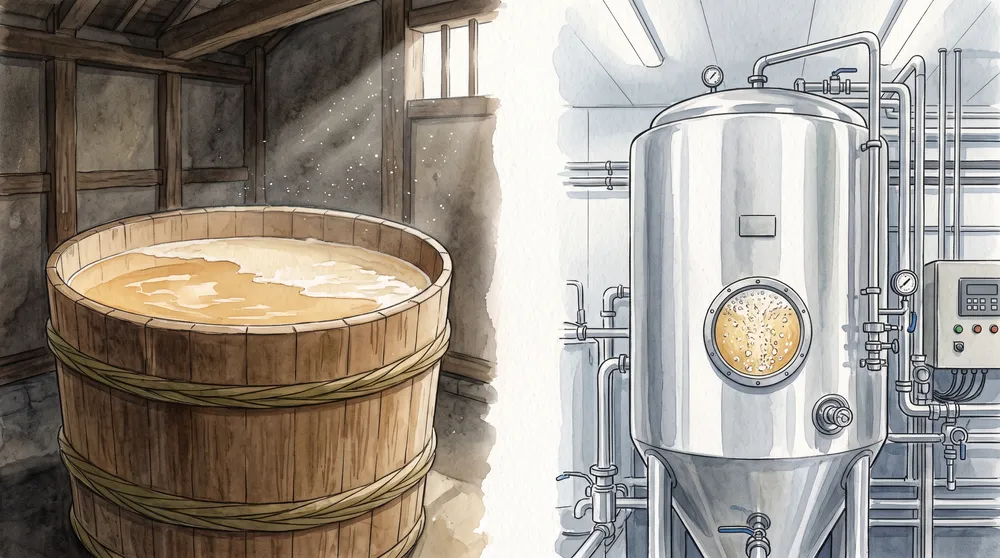
Where does a gentle acidity come from? Vinegar is made in broadly three ways. Still fermentation leaves the liquid undisturbed: acetic acid bacteria form a film on the surface and the liquid circulates slowly on its own — over one to three months. Fast methods that pump air through the liquid finish in one to three days. The same label, "brewed vinegar," can hide a 30-fold difference in time.
But "fast" doesn't mean "cutting corners"
It would be tidy to stop here and say slow vinegar is better. It isn't that simple. Uchibori Jozo in Yaotsu, Gifu, used to make vinegar by still fermentation and deliberately switched to aerated fermentation — pumping fine air through the whole liquid so the bacteria work evenly and fermentation is stable.
It then ages the vinegar in more than 200 tanks and wooden barrels, where sharp acidity rounds off. Ferment faster, age longer. You can't judge a vinegar by the name of its method; look at where the brewery spends its time.
3. Fukuyama, Kagoshima: A Field Full of Pots
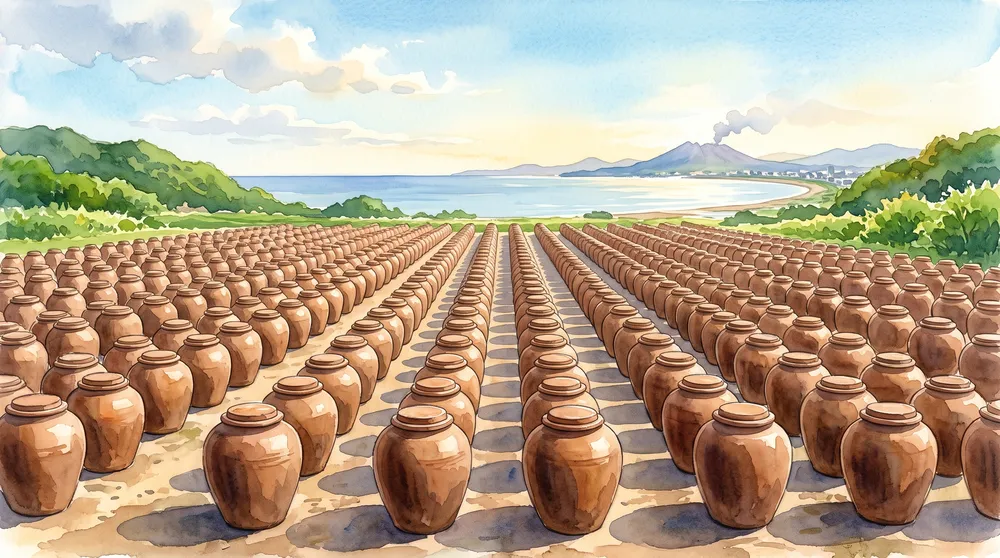
In Fukuyama, Kirishima City, Kagoshima, rows of round clay pots stand in an open field with no roof. It's called a tsubobatake, a pot field, and what's made in it is kurozu — black vinegar.
The name "kurozu" dates only from 1975
Surprisingly recent. In 1975, Sakamoto Jozo, a brewery here, named its pot-brewed rice vinegar "kurozu." The word now sounds generic, but it traces back to this brewery.
Four fermentations, in sequence, inside one pot
Ordinary vinegar is made in stages: first an alcohol, then vinegar. Pot-brewed kurozu does it all in a single pot: saccharification → lactic fermentation → alcoholic fermentation → acetic fermentation, one after another, in the same pot left outdoors for more than a year.
It's described as a method found nowhere else in the world, and it works because of the land: hills on three sides, Kagoshima Bay to the south, an average temperature around 18°C (64°F), and almost no frost. Few places let you leave pots outdoors through a whole year. "Kagoshima pot-brewed kurozu" is registered as a Geographical Indication in Japan, and the process uses no fossil fuel and produces no industrial waste.
What brown rice and a year leave behind
Kurozu is made from brown rice, and spends over a year fermenting and aging in the pot. Meanwhile the rice's proteins break down into amino acids; kurozu's higher amino-acid and mineral content compared with ordinary rice vinegar comes from that ingredient and that time. Its dark color develops during aging — nothing is added. When it goes into the pot, it looks like ordinary rice vinegar.
Kurozu isn't all-purpose. Its aroma and body are strong enough to drown delicate vinegared dishes. It shines in dishes that push back — sweet-and-sour pork, stir-fries.
4. Handa, Aichi: From Discarded Sake Lees
At some sushi counters, the rice is pale brown. That isn't coloring — it's akazu, red vinegar. It's made from sake lees.
A brewery that began with waste
Nakano Matazaemon, a sake brewer in Owari (today's Handa, Aichi), began making vinegar from sake lees — which were thrown away at the time. Using them made vinegar cheap to produce.
That was the start of Mizkan. The story goes that when the founder tasted Edo's "han-nare" sushi, he was sure his lees vinegar suited it better. Helped by its low price, it spread through the sushi rice of Edo-style sushi. A vinegar used because it was cheap is now the vinegar of serious sushi — that reversal is the most interesting thing about akazu.
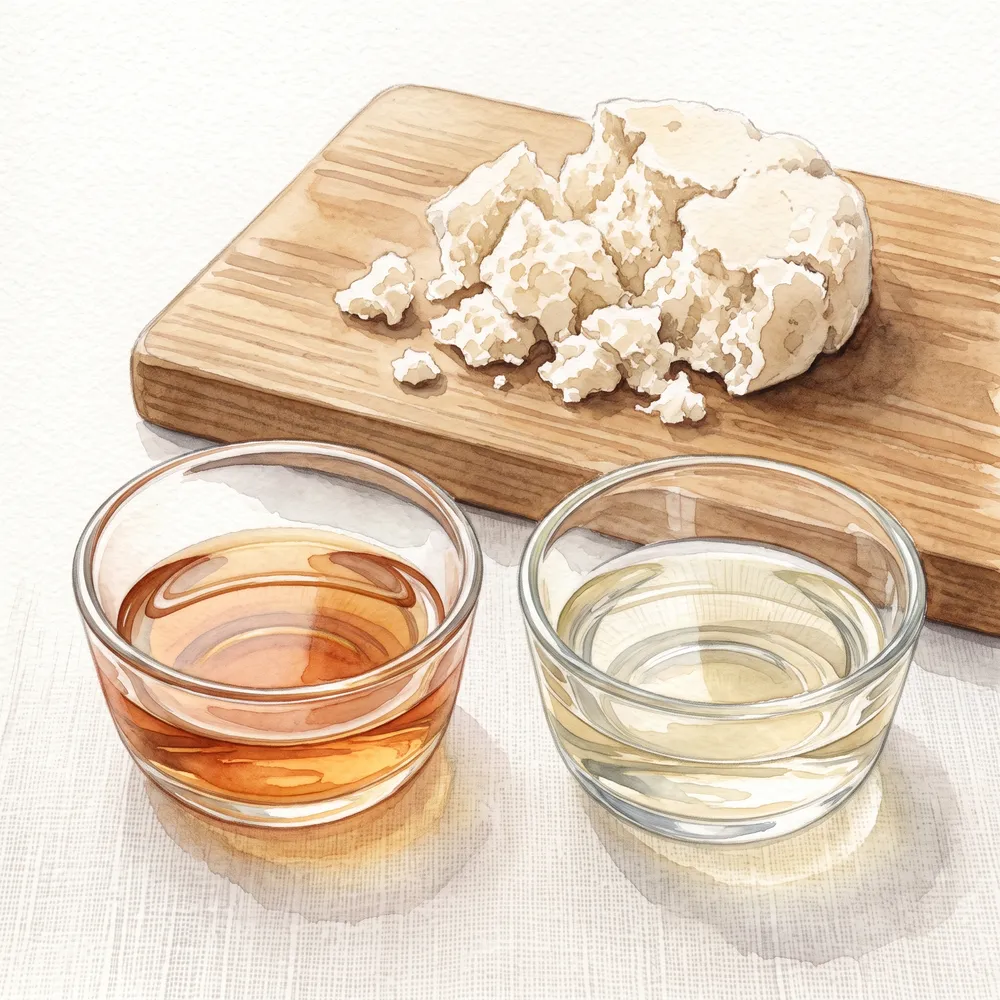
Acidity that supports from behind
Akazu is mellow in acidity and deep in aroma — not the bright lift of rice vinegar but acidity that supports from behind, so it doesn't get in the way of delicate fish. Start with sushi rice at home; it colors food, so it's not for dishes you want white.
5. Choosing by Brewery: Six Picks
You don't need to buy them all. Keep your everyday vinegar, and add one good bottle for dishes where the vinegar is tasted directly. All five breweries below sell on Amazon.com.
Iio Jozo (Miyazu, Kyoto) — Pure Rice Vinegar (Fujisu)
If you add one bottle, make it this. Founded 1893. 200 g of rice per liter — five times the minimum for "rice vinegar." Only Tango-grown rice and mountain water; 100 days of still fermentation, then 240–300 days of aging.
Start with sunomono (vinegared salads) and dressings.
Iio Jozo Pure Rice Vinegar (900 ml)
Loading product details…
Murayama Zosu (Kyoto) — Chidorisu
For leaning toward Japanese food. A Kyoto brewery since the 1720s; Chidorisu is named for the plovers of the Kamo River, made with Omi rice and Kyoto water, and long used by Kyoto's restaurants.
Gentle acidity with a full, savory depth. For sunomono, sushi rice and finishing simmered dishes.
Murayama Chidori Vinegar (900 ml × 2)
Loading product details…
Sakamoto Jozo (Fukuyama, Kagoshima) — Sakamoto Kurozu
For aroma and body. The brewery that named "kurozu" in 1975. In pots standing in an open field, saccharification through acetic fermentation proceed in turn, outdoors for at least a year.
Too strong for delicate sunomono — use it in sweet-and-sour pork and stir-fries.
Sakamoto Kurozu Brown Rice Vinegar
Loading product details…
Mizkan (Handa, Aichi) — Mitsuban Red Vinegar
For serious sushi rice. The brewery began by making vinegar from discarded sake lees; its "Mitsuban" line is the red akazu of sushi counters — mellow in acidity, never in the way of the fish.
It colors the rice. If you like white shari, stay with rice vinegar.
Mitsuban Kamoshibi Red Vinegar (Akazu)
Loading product details…
Uchibori Jozo (Yaotsu, Gifu) — Mino 3-Year Aged Rice Vinegar
A brewery that moved where it spends its time. It switched to aerated fermentation, then ages in more than 200 tanks and wooden barrels. In Japan it's also known for apple vinegar made by first fermenting apple juice into cider; on Amazon.com you'll find its three-year aged rice vinegar.
For salads, marinades and nanbanzuke (fried fish in vinegar).
Uchibori Mino 3-Year Aged Rice Vinegar (500 ml)
Loading product details…
Your everyday grain vinegar — no need to replace it
Whatever is in your kitchen now is fine. Pickling liquid, a splash in blanching water, cleaning — where you use a lot, a low price matters more.
Cheap vinegar isn't bad vinegar. Using it alongside one good bottle is what lasts.
6. Ways to Use Them First
Add a good vinegar to your usual cooking and the difference can be hard to notice. The quickest way is to try a dish where the vinegar is the star.
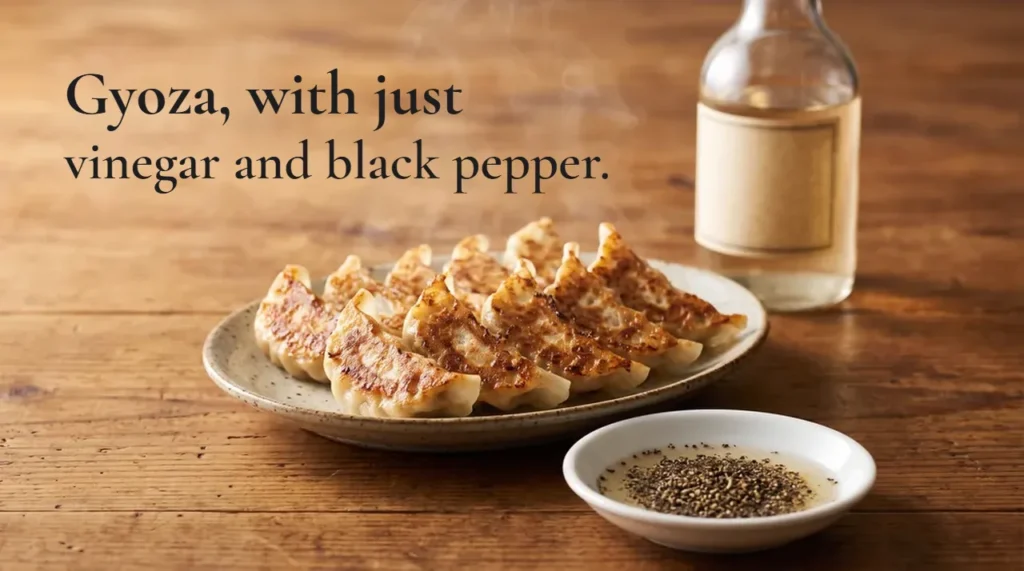
Gyoza with just vinegar and black pepper
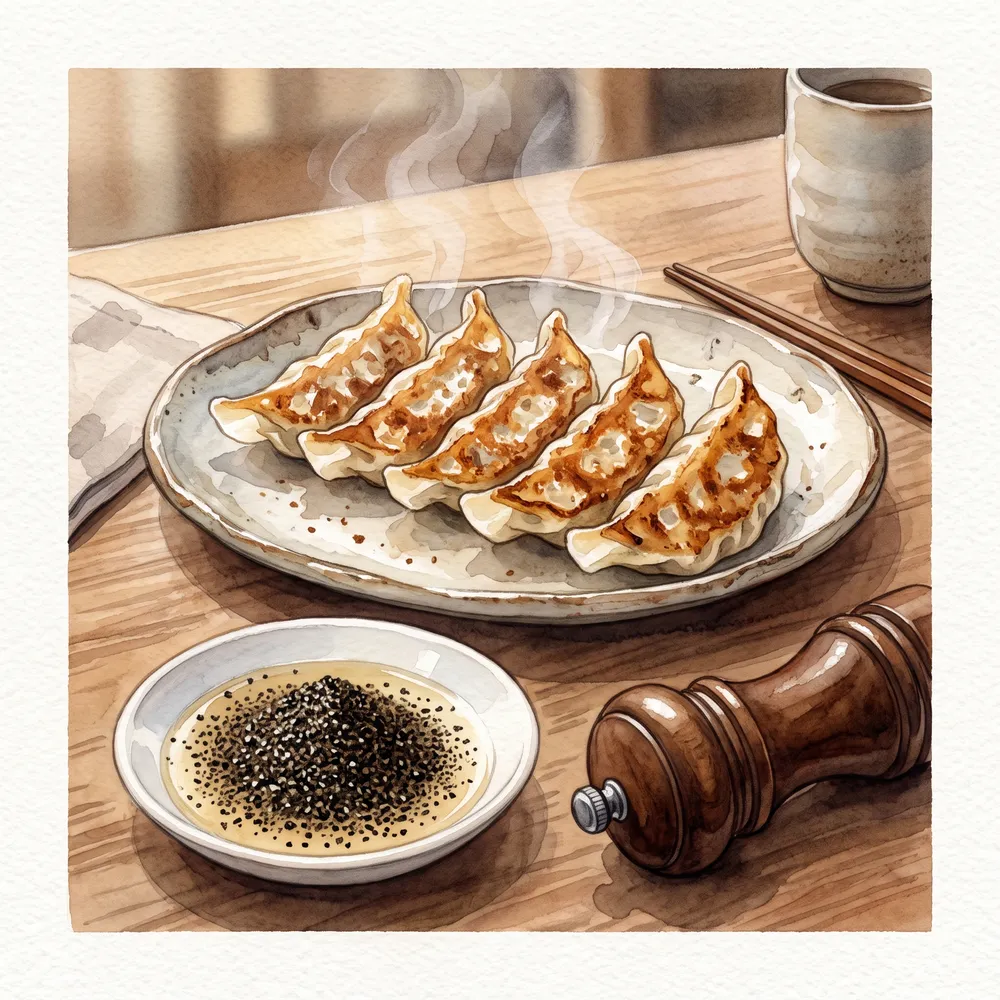
Gyoza usually comes with soy sauce and vinegar. Try it without the soy sauce: pour vinegar into a small dish and grind in black pepper — enough to turn the surface dark. Too little and it's just sour vinegar.
It's not a whim. It's recorded as created around 2000 by the second-generation owner of Akasaka Minmin in Tokyo, "so people would eat more without getting tired of it." His reasoning: soy sauce cancels the vinegar's acidity, and soy-vinegar is strong enough to tire of. The restaurant doesn't put soy sauce on the table.
This is where a brewery's vinegar earns its place. With the vinegar tasted directly, a sharp, fast-brewed vinegar clashes with the pepper; a gentle, savory one like Chidorisu or Fujisu comes together smoothly.
Sushi rice: start from 4 tablespoons per 2 cups
A starting point for sushi vinegar: for 2 rice-cooker cups of rice (360 ml, about 1.5 US cups, uncooked), 4 tbsp vinegar, 2–3 tbsp sugar and about 1 tsp salt. Sugar varies most with taste, so start low and add next time. For white rice, use Chidorisu or Fujisu; for pale-brown rice, akazu. The same toppings make a completely different impression.
Dressing you don't need to buy
One part vinegar to two or three parts oil, salt and pepper. That's all. A fruit vinegar brings sweetness and aroma so you need no sugar; a little grated onion takes it close to restaurant flavor.
Add kurozu after the heat is off
Add kurozu mid-stir-fry and its aroma cooks off. Turn off the heat, then pour it over; the residual heat blends it in and keeps the aroma. After more than a year in a pot, don't lose it in the last thirty seconds.
Store at room temperature — but mind the spot
- Keep it away from direct sun and heat — not next to the stove
- Close the cap tightly once opened; aroma fades with air
- Pure rice vinegar and kurozu may form sediment (ori) — not a defect, a sign it isn't over-filtered
Refrigeration generally isn't needed, but fruit vinegars and "drinking vinegars" often contain sugar, so refrigerate those after opening.
7. Buying Japanese Vinegar Outside Japan
Good news: Iio Jozo, Murayama Zosu, Sakamoto Jozo, Mizkan's Mitsuban red vinegar and Uchibori Jozo are all on Amazon.com (cards in section 5). Vinegar isn't restricted the way alcohol is, so these ship like any pantry item.
One thing to check: some Japanese brands' everyday rice vinegars sold in the US are brewed in America. If you want vinegar brewed in Japan, look for "Product of Japan" on the label — and then read the ingredients line, as in section 1.
8. Frequently Asked Questions
Which brewery should I start with?
Murayama's Chidorisu for Japanese cooking, Iio Jozo's Fujisu to taste the depth of vinegar itself. Chidorisu is the gentle vinegar of Kyoto restaurants; Fujisu uses five times the standard rice and over two years of time. Both show their difference in sunomono and dressings — in simmered dishes it's harder to tell.
Is cheap vinegar bad quality?
Not bad — made differently, for different uses. Much inexpensive vinegar is fast-brewed with air pumped in, finishing in one to three days versus one to three months for still fermentation; that shows in the price. But fast isn't automatically worse: Uchibori switched to aerated fermentation and spends the time on aging instead. Look at where the brewery spends its time.
Can kurozu replace ordinary vinegar?
Not as a straight swap. Its aroma and body overpower delicate vinegared dishes. It shines where flavors push back — sweet-and-sour pork, stir-fries, rich meat dishes.
Which vinegar for sushi rice?
Rice vinegar or red vinegar. For white rice, Chidorisu or Fujisu; for the pale-brown rice of serious sushi counters, akazu like Mizkan's Mitsuban — mellow and never in the way of the fish.
There's sediment in the bottle. Has it gone bad?
Usually not. It's ori, common in vinegars that aren't over-filtered, like pure rice vinegar and kurozu. Pour gently to leave it, or shake it in. If it smells off or has a moldy film, don't use it.
Should I refrigerate vinegar after opening?
Rice, grain and black vinegars are fine at room temperature; vinegar keeps well by nature. Refrigerate fruit vinegars and drinking vinegars, which often contain sugar.
Final Thoughts: Choose Vinegar by Who Brews It
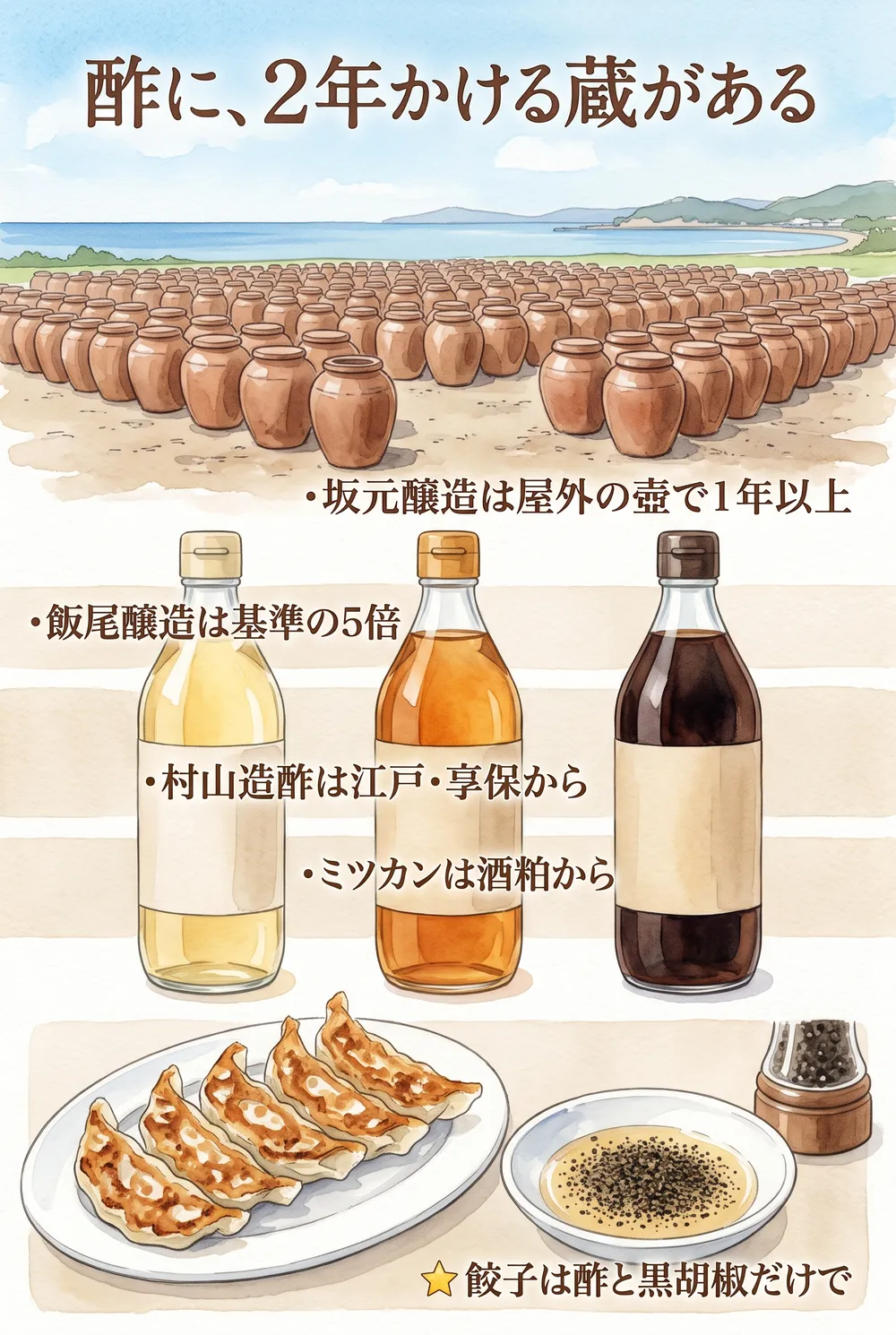
A brewery in Miyazu using five times the rice. A Kyoto vinegar named for plovers on the Kamo River, used by its restaurants. Pots in an open field in Kagoshima, four fermentations in each. Discarded sake lees in Handa that ended up in Edo's sushi. And a Gifu brewery that ferments fast so it can age long.
Read the ingredients line, choose by brewery — and tonight, try your gyoza with just vinegar and black pepper.
Japanese Seasoning Gifts: Premium Soy Sauce, Miso & Vinegar

Japanese Dashi Packs & Miso Soup Guide: 6 Best Picks