You tried on frame after frame before you finally chose your glasses.
The case you put them in every day deserves the same care.
Some Japanese makers bring traditional crafts to the glasses case: a Sabae workshop carrying on the skills of lacquerware wood-turners, a Niigata company that bends a single piece of solid wood, an inden house founded in 1582, a leather workshop that began with school backpacks, and a new material from a thousand-year-old washi town.
This guide covers five Japan-made glasses cases in wood, bentwood, lacquered deerskin, cowhide and a material born of washi technology — plus how to choose hard or soft, how to care for each material, and what you can buy outside Japan.
Quick Reference: 5 Japan-Made Glasses Cases at a Glance
| Maker | Material | Type | For you if… |
|---|---|---|---|
| Hacoa ▾ | Solid wood, carved | Hard, hinge and magnet | You want it on your desk too |
| STORIO ▾ | Solid maple, bent | Upright, springs open | It goes in a jacket pocket |
| Inden-ya ▾ | Deerskin with lacquer patterns | Hard, snap closure | You want a traditional pattern |
| Tsuchiya Kaban ▾ | One piece of cowhide | Soft, with D-ring | Thin and light to carry |
| SIWA ▾ | Naoron, from washi technology | Flat, spring opening | One-handed access |
| Edo komon / NOREN ▾ | Patterned fabric | Soft / hard | Buying outside Japan |
Click a maker to jump to it.
1. Why Japanese: Craft Inside the Box You Keep Your Glasses In
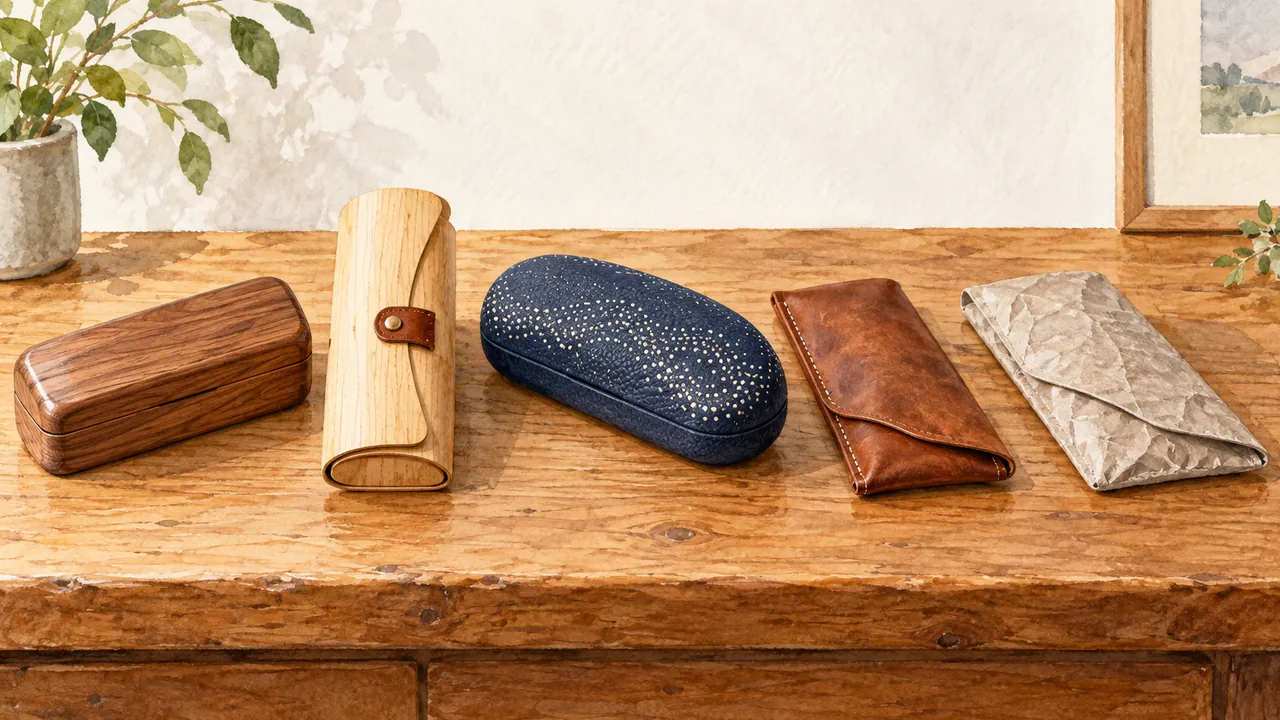
A small box you open many times a day
A glasses case is opened in the morning, closed at night, and picked up again and again when you're out. So how it feels in your hand and how it opens and closes become a small daily pleasure.
Each of the five here pours an existing craft into a case: a craftsman who turned wooden bases for lacquerware, a company that developed a way to bend solid wood, a house that has passed down lacquering on deerskin from parent to one child, a leather workshop that has made school backpacks for decades, and a maker from a washi town. Choosing the case is choosing that craft.
2. Hacoa: One Wood-Turner, Start to Finish
Unlacquered wood has value of its own
Hacoa is a wooden design goods brand born in the Kawada district of Sabae, Fukui — home of Echizen lacquerware. Its parent is Yamaguchi Kogei, founded in 1962 by a certified traditional craftsman who made kiji: the wooden bases of trays and stacked boxes before they're lacquered.
The current head learned the craft from his father-in-law, the founder. When he proposed selling unlacquered wood to local wholesalers, he was told it was "worthless unless lacquered." Believing wood made with such skill had value in itself, he began selling it under his own brand in 2001: Hacoa.
Choosing, carving, assembling, sanding, inspecting
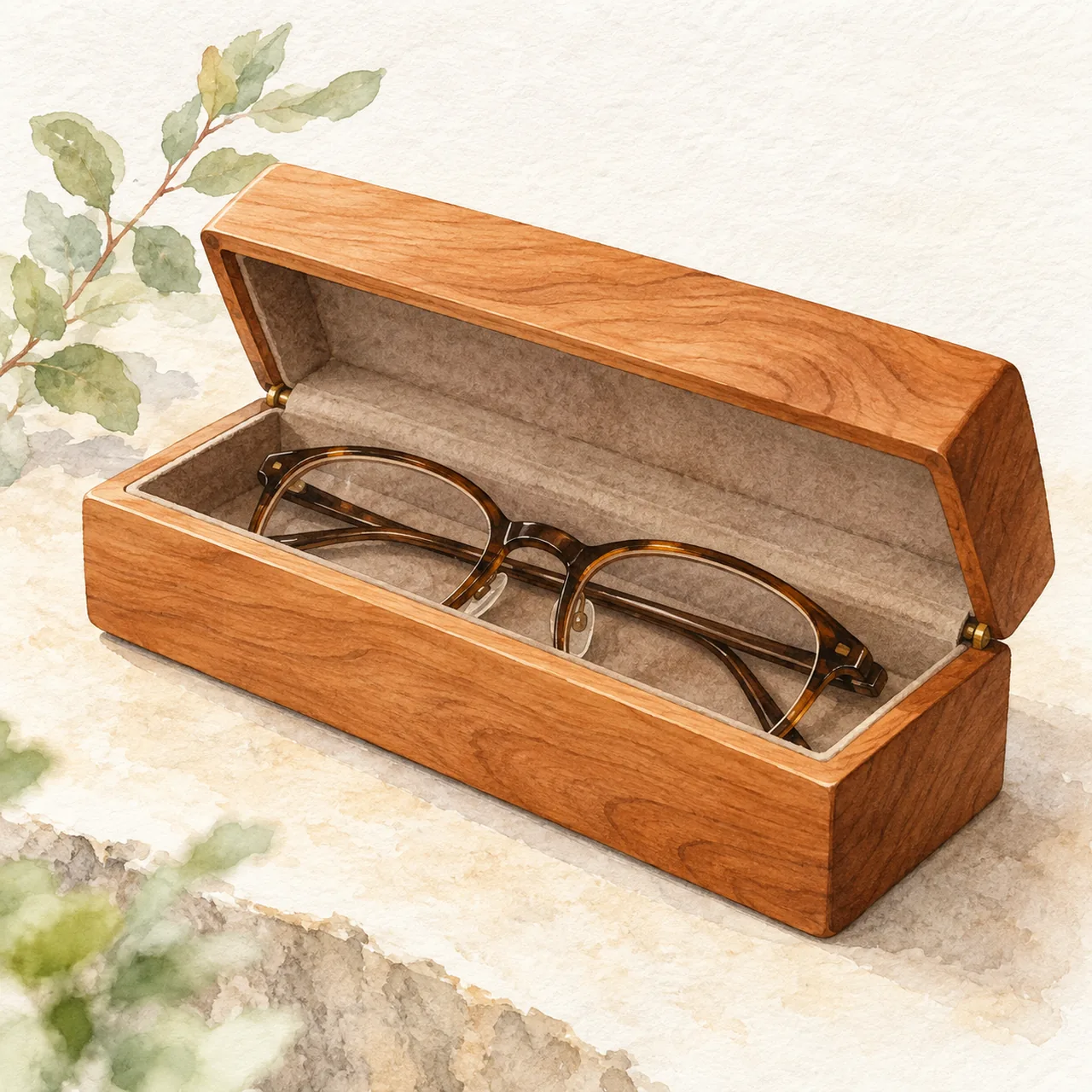
At Hacoa, one craftsman is entrusted with every step of a product — choosing the wood, carving, assembling, sanding and final inspection. The brand puts it this way: "Of course, dividing the work would be more efficient. But there's no other way to raise a craftsman to full skill." The case in your hand holds one person's work, beginning to end.
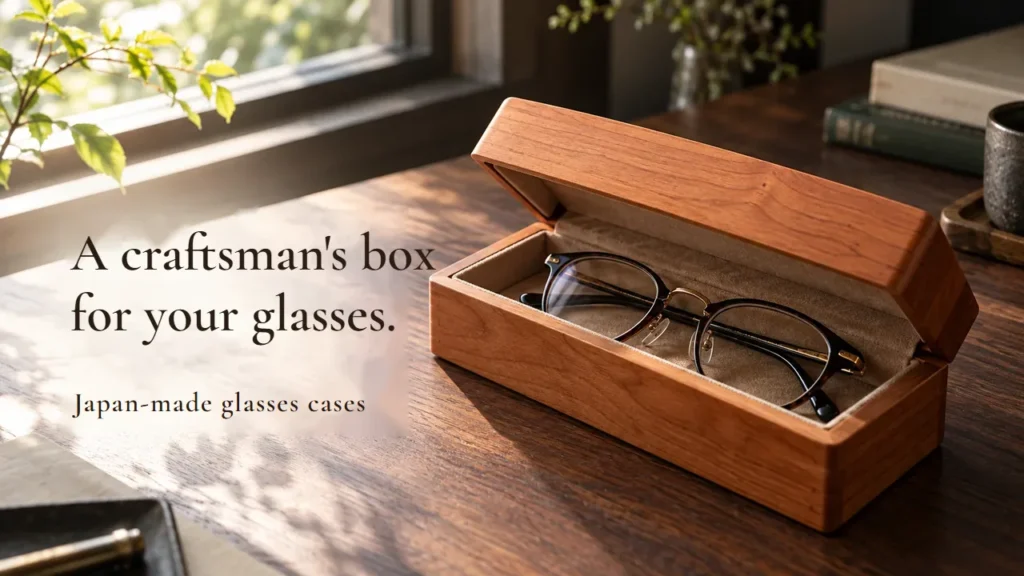
Hacoa Wooden Glasses Case "Classy" — glasses laid gently in a wooden box
A hard, box-shaped case carved from natural wood by a kiji craftsman. The suede lining protects the lenses; an outer hinge and strong inner magnet keep the lid closed in a bag. A cleaning cloth is included.
162 × 66 × 48 mm (6.4 × 2.6 × 1.9 in), 100 g (3.5 oz). Fits glasses up to 147 × 50 × 32 mm (5.8 × 2 × 1.3 in) folded. Name engraving is available — a gift for a new job, Father's Day or retirement. Sold in Japan.
3. STORIO: A Single Piece of Solid Wood, Bent
Bentwood without laminating
Most bentwood today is molded plywood — thin sheets glued together and bent. STORIO, in Ojiya, Niigata, took on the alternative: it developed "AvanWood," a process for bending a single piece of solid wood as it is, which it calls a world first.
Because it's one piece, the grain runs unbroken across cut edges and changes in thickness. For shapes with tight bends, it uses resilient maple, sourced from the forest of Oshirakawa in Uonuma, Niigata.
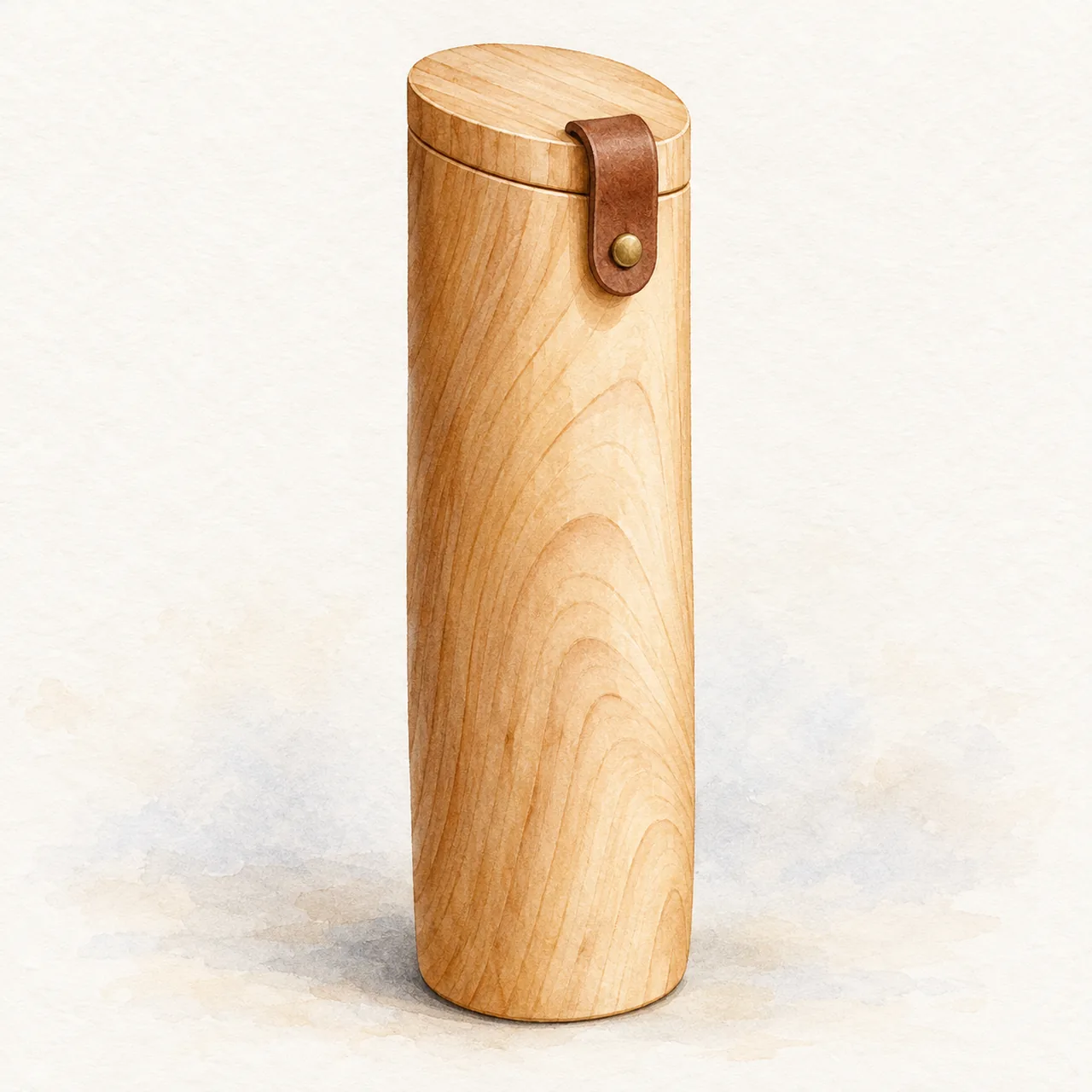
STORIO Bentwood Glasses Case, Multi — unhook the tab and the wood springs open
Unfasten the leather tab and the bentwood's own spring opens the mouth. A rounded upright shell shaped around a pair of glasses — easy to slip into a jacket's inside pocket or a crowded bag, and you can take the glasses out while the case stays in the bag.
Solid Niigata maple outside; leather flap, tab and insole. About 163 × 53 × 32 mm (6.4 × 2.1 × 1.3 in), about 75 g (2.6 oz). Natural, black, blue or vermilion. STORIO also repairs them — tab and button replacement, refinishing. Sold in Japan.
4. Inden-ya: Lacquer on Deerskin, the Last of Kofu's Inden Houses
Lacquer pressed through hand-cut stencils
Inden-ya traces its beginnings to 1582. In the Uehara family, who settled in Kai province (today's Yamanashi), the ancestor Uehara Yushichi devised a technique for applying lacquer to deerskin — the start of Koshu inden. Each head of the family has taken the name "Yushichi," and the method was passed from parent to a single heir.
In urushi-zuke, a hand-cut paper stencil is laid on dyed deerskin and lacquer is pressed through it to form the pattern. Inden-ya describes deerskin as light, strong, and said to be closest in softness to human skin.
Three inden shops in old Kofu — one remains
According to a Kofu shopping guide published in 1854, the castle town had three inden workshops, including Inden-ya Yushichi. With time, only Inden-ya survived. The once-secret technique was opened up under the 13th generation, leading to Koshu inden as it is today.
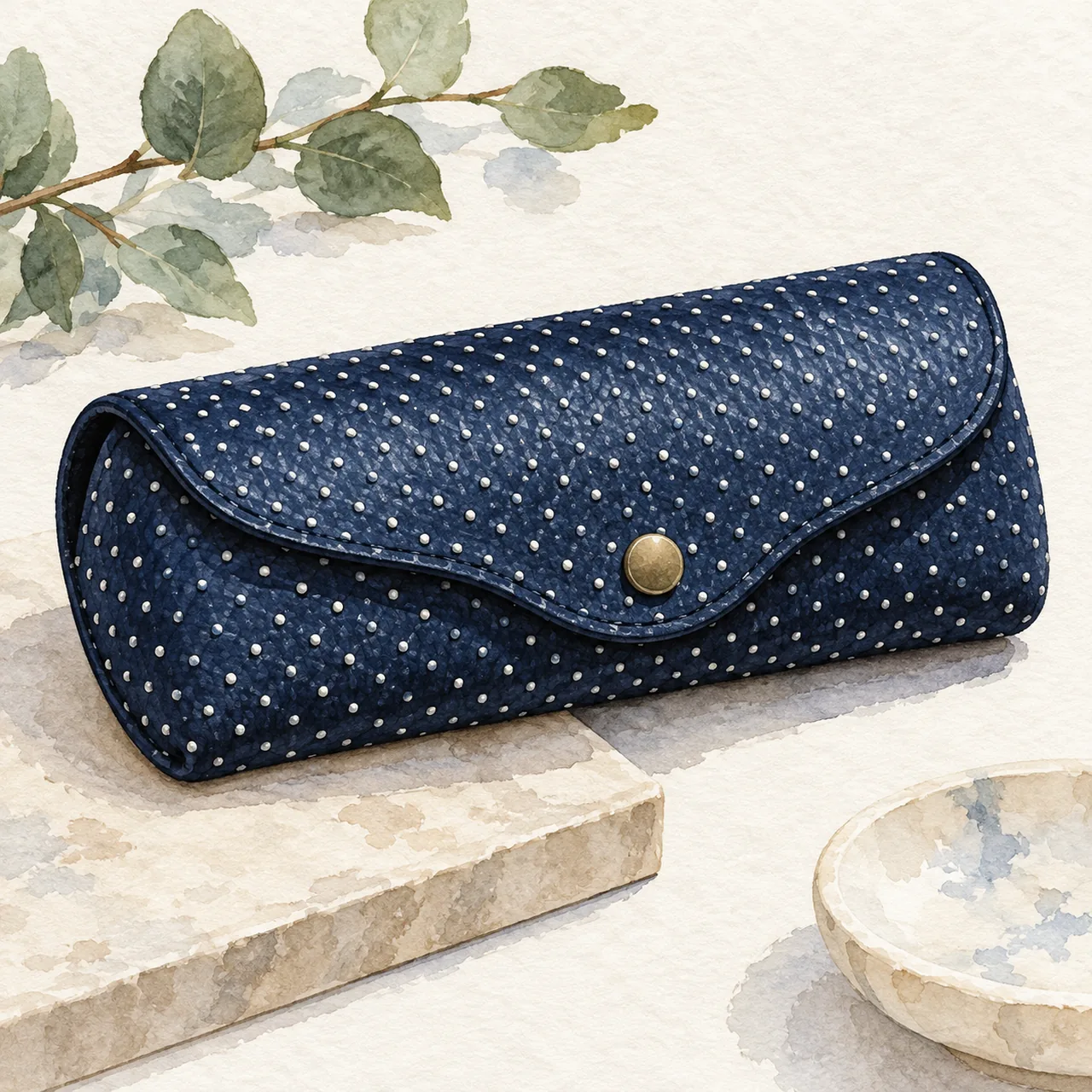
Inden-ya Koshu Inden Hard Glasses Case 4206 — lacquer patterns you can feel
The softness of deerskin and the texture of lacquer. A hard case with a snap closure, 6 × 16 × 3 cm (2.4 × 6.3 × 1.2 in). Choose from traditional patterns: wave scales, variant checks, grapes, plum, wickerwork and more.
Each pattern carries a meaning, so there's pleasure in choosing one with the recipient in mind. One buyer gave it as a 70th-birthday gift for their mother. Sold in Japan.
5. Tsuchiya Kaban and SIWA: Thin and Light to Carry
One piece of leather, from a randoseru workshop
Tsuchiya Kaban began in 1965, making randoseru — the school backpacks that carry Japanese children through six years. It moved into adult goods 35 years later, and says its aim, "creating value that's loved across time," hasn't changed since the start.
Its soft glasses case is made from a single piece of fine leather: 2.0 cm thick, about 60 g. Care and repairs are available after purchase.
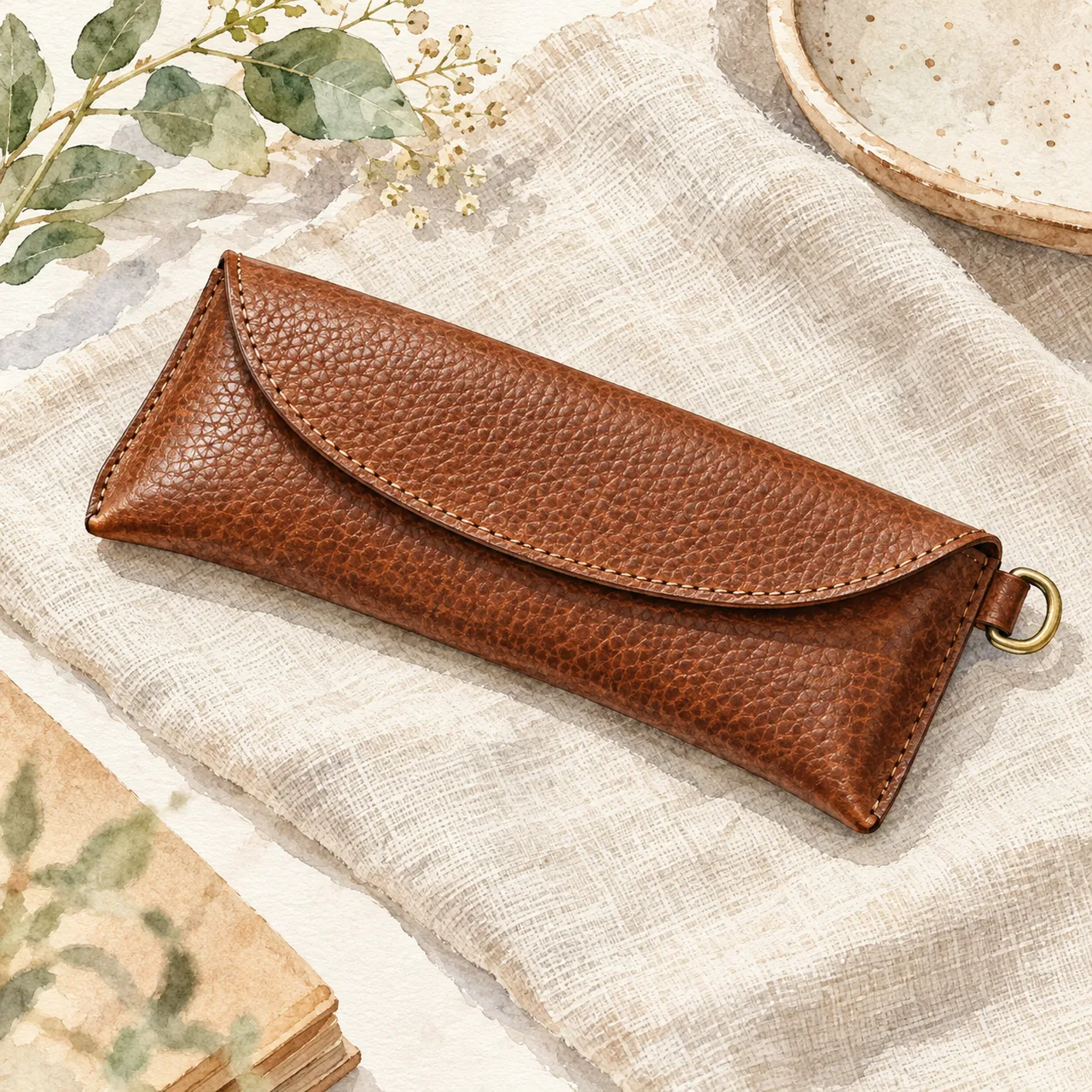
Tsuchiya Kaban Sinome Soft Glasses Case — hang it from your neck
An understated shape with the quality of one piece of leather. Outside, "Calm Grain" cowhide with a natural grain and soft hand; inside, smooth leather that shapes to what you put in. 8.3 × 16.3 × 2.0 cm (3.3 × 6.4 × 0.8 in). Country of origin: Japan.
A D-ring lets you attach the matching leather strap (sold separately) to wear it around your neck or clip it to a bag handle. Sold in Japan.
A tear-resistant material from a thousand-year washi town
SIWA was born in 2008 in Ichikawamisato, Yamanashi, a washi town with a thousand years of history. Ohnao, a longtime washi maker, applied its papermaking technology to develop "Naoron," a strong, water-resistant material.
Product designer Naoto Fukasawa, also from Yamanashi, was drawn to how Naoron looks crumpled and how soft it feels, and designed it into everyday tools. The more it's used, the softer and more characterful it becomes.
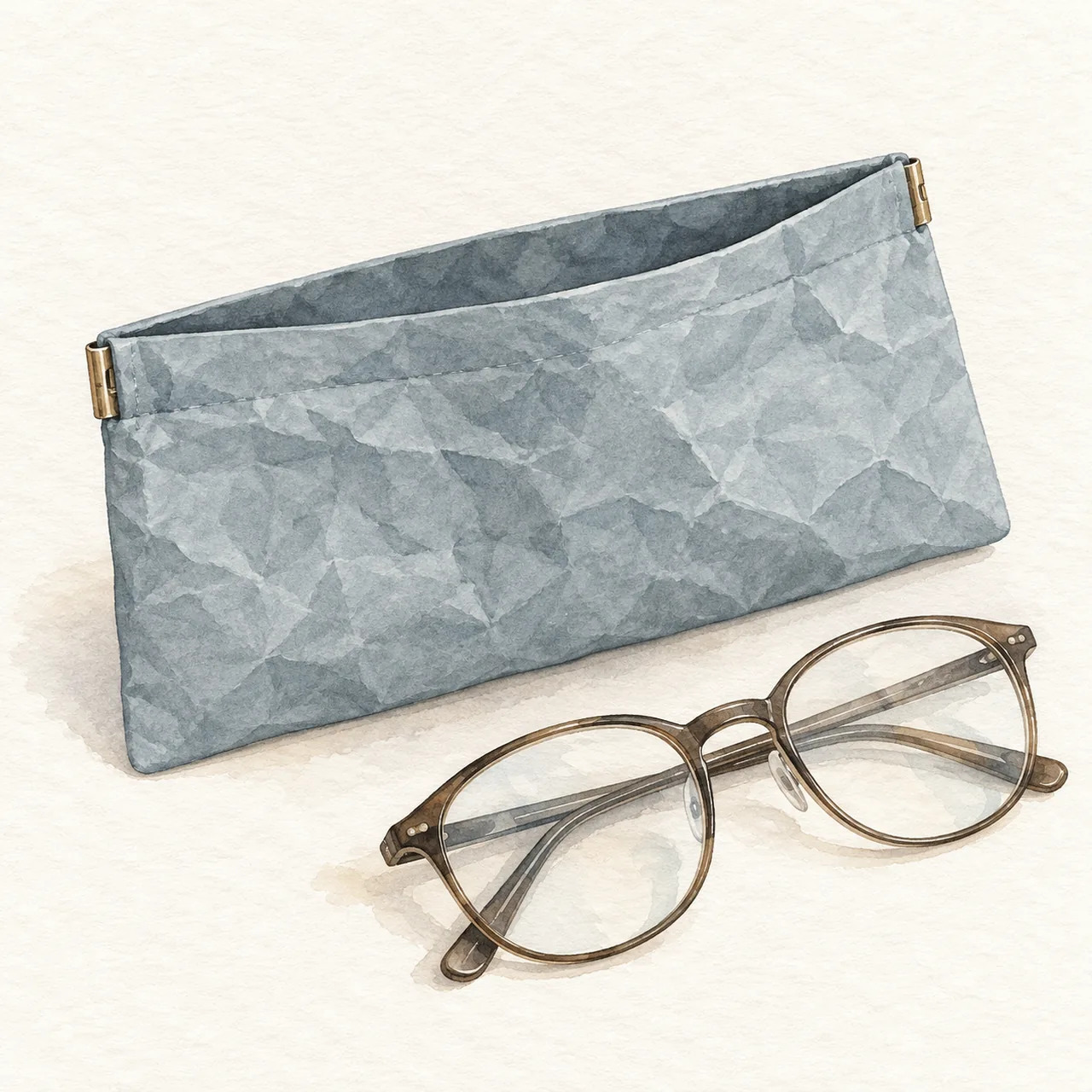
SIWA Accessory Case — opens with one hand, feels like paper
A spring-frame opening snaps open and shut with one hand — handy when your hands are full or you're in a hurry. Made of "Hard Naoron," with strength and body; it doesn't tear when wet, so it can ride in your bag every day.
Flat and slim. For glasses or sunglasses — or as a pen case. Sold in Japan.
6. How to Choose, and Caring for Each Material
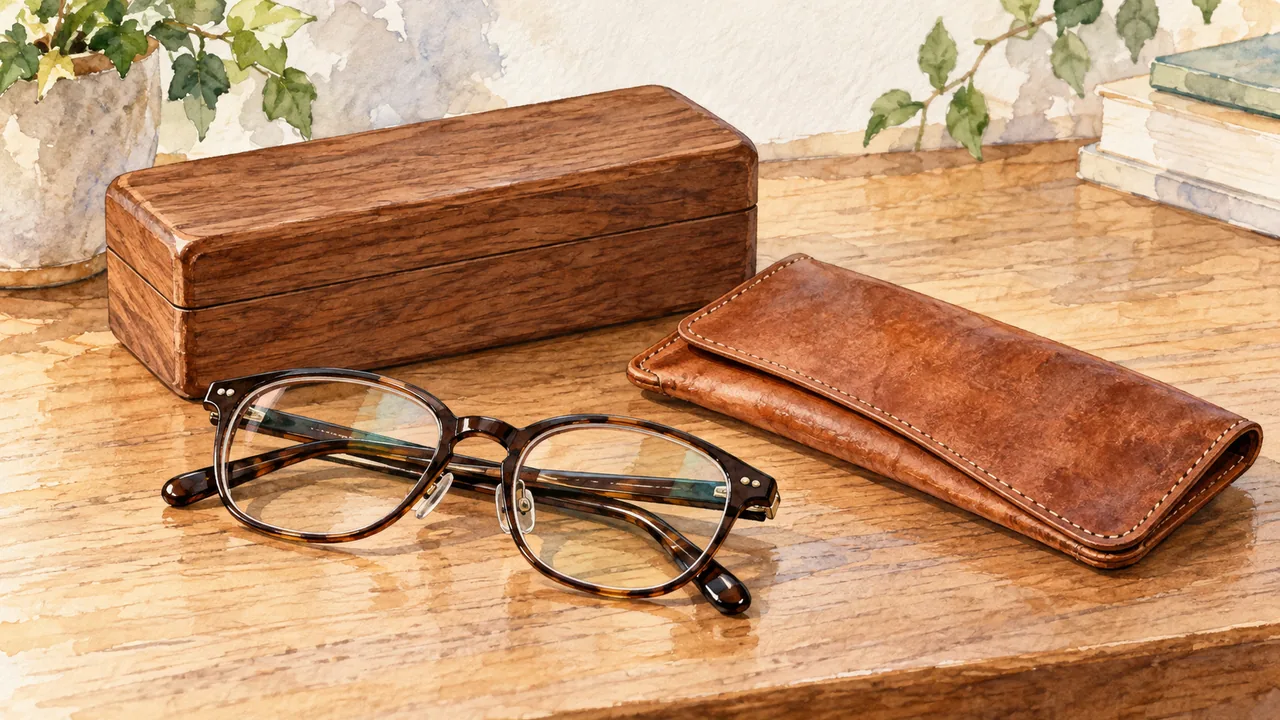
Hard to protect, soft to carry
To protect your glasses best, choose a hard case — Hacoa's wooden box or Inden-ya's hard type. At home it can sit on a desk or nightstand, giving your glasses a fixed place.
To carry them light and slim, choose a soft or flat case: Tsuchiya's leather is 2.0 cm thick, SIWA is flat, and STORIO — though wooden — is a rounded upright shape that fits an inside pocket.
Fold your glasses and measure before you buy
Hard cases fit glasses only up to a certain size. Hacoa gives 147 × 50 × 32 mm folded as its guide; large frames or sunglasses may not fit depending on shape. Fold the glasses you use now and measure width and height first.
Keep wood from heat and damp; keep leather from alcohol
Keep wooden cases away from fire, damp, very dry or very hot places (Hacoa's guidance); a drop or hard knock can crack wood, so handle it gently.
Leather is sensitive to alcohol, so check the ingredients before spraying sanitizer near it. Use a leather cleaner or cream for care (Tsuchiya's guidance).
"SIWA": two readings in one name
The name SIWA holds two meanings: "shiwa," the creases of crumpled paper, and "washi" read backward ("shi-wa"). Creases are what give paper its expression — and with use, each piece gains its own.
7. Buying a Japanese Glasses Case Outside Japan
The five cases above are sold in Japan; we couldn't find them on Amazon.com. Two Japan-made glasses cases that are listed there are a soft case in Edo komon — the fine, repeating stencil patterns of Edo-period kimono — and a hard case from NOREN in a retro floral print.
Edo Komon Soft Eyeglass Case (Plum, Black)
A soft case in a traditional Edo komon plum pattern, made in Japan. Light and slim for a pocket or bag. Several patterns are available.
Edo Komon Soft Eyeglass Case (Plum, Black)
Loading product details…
NOREN Hard Glasses Case (Retro Flower, Blue)
A hard-shell case in a retro Japanese floral print, made in Japan. For protecting glasses in a bag.
NOREN Hard Glasses Case (Retro Flower, Blue)
Loading product details…
Shopping in Japan? Look for 眼鏡ケース or メガネケース (glasses case), and 日本製 (made in Japan).
8. Frequently Asked Questions
Will sunglasses fit?
It depends on size. Hard cases have a maximum — Hacoa's is 147 × 50 × 32 mm folded. Fold your sunglasses and measure width and height before choosing.
Won't a wooden case open in my bag?
Hacoa's case uses an inner magnet and outer hinge so the lid stays shut in a bag. STORIO's case closes with a leather tab.
Can I have a name engraved?
Hacoa's official shop offers laser engraving of names or logos, with a choice of position and font at checkout.
How do I choose an inden pattern?
By the recipient's favorite color, or by the meaning behind a pattern. The 4206 comes in wave scales, variant checks, grapes, plum, wickerwork and more.
Can they be repaired?
STORIO and Tsuchiya Kaban both repair their products after purchase. STORIO replaces tabs and buttons and refinishes cases for a fee; you send photos by email to start.
SIWA is paper-like — is it OK when wet?
Naoron, SIWA's material, is strong and water-resistant. Ohnao developed it from washi-making technology; the "Hard Naoron" used for this case is made from polyester fiber.
Final Thoughts: A Craftsman's Box for the Glasses You Chose
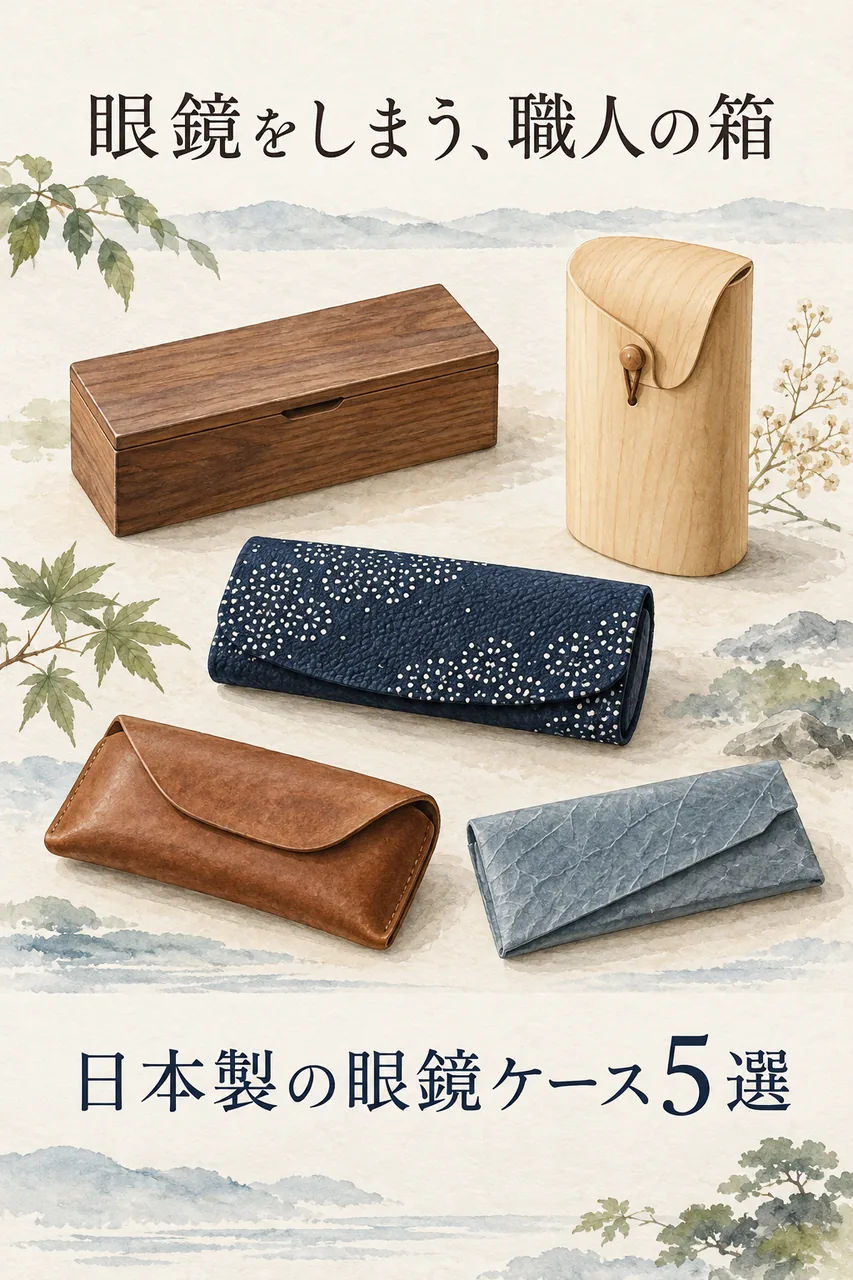
You choose glasses carefully. The box you keep them in can carry a craft too.
Hacoa's wood from Sabae, made start to finish by one craftsman. STORIO's solid maple, bent in one piece. Inden-ya's lacquered deerskin, from the last inden house in Kofu. Tsuchiya's single piece of leather. And SIWA, from a washi town.
Fold your glasses, measure them, and give them a Japanese box to come home to.
Sabae Glasses: Celluloid, Titanium & 2 Brands Worth Buying
Inden Wallet Guide | Japanese Deer Leather & Lacquer Craft