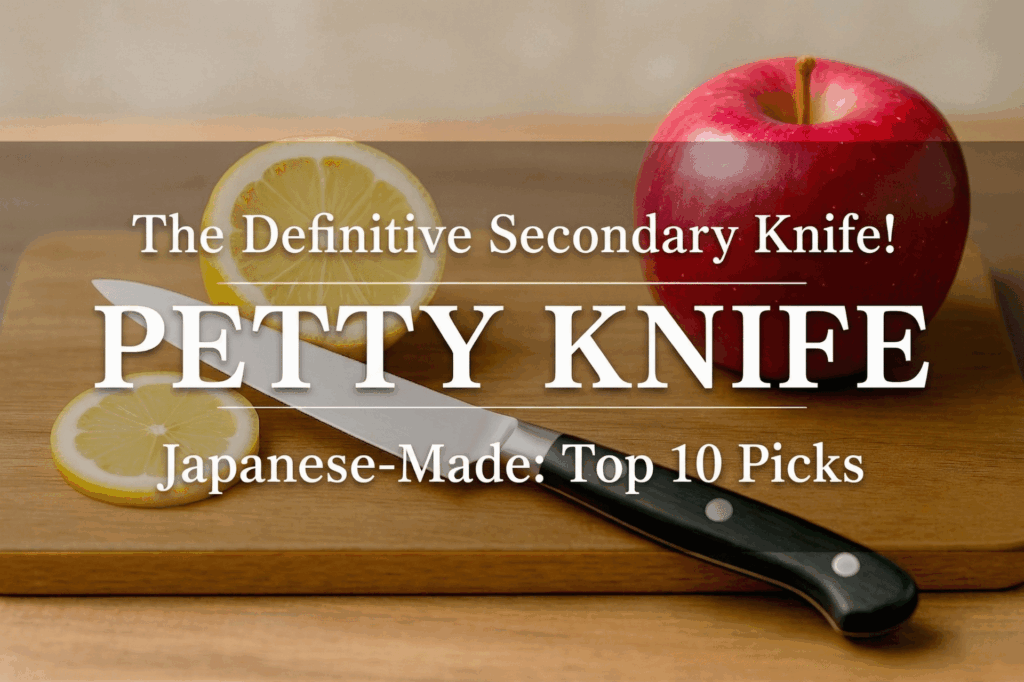
The best Japanese petty knife for most home cooks is the Tojiro DP Petty 150mm at around $65
— VG10 precision in a size that handles everything a main knife can't reach. If you already own a santoku
or gyuto, a petty is the knife that completes your kitchen.
Skip to our top picks if you know what you need. If you're not sure whether
a petty is right for you or what size to choose, read on.
Quick Reference: Best Japanese Petty Knives at a Glance
| Knife | Length | Best For | Price |
|---|---|---|---|
| Tojiro DP Petty | 150mm | Best overall value — VG10 precision under $70 | ~$65 |
| GLOBAL GS-5 Petty | 140mm | Best design — seamless, low-maintenance, worldwide bestseller | ~$90 |
| Misono UX10 Petty | 150mm | Best for serious cooks — professional Swedish steel | ~$160 |
| Yaxell Ran Petty | 120mm | Best Damascus — VG10 core with 69-layer pattern | ~$120 |
| Kai Wasabi Black Petty | 150mm | Best budget — genuine Japanese quality under $40 | ~$35 |
What Is a Petty Knife? Why You Need One
The petty knife is Japan's utility knife — a compact 120–150mm blade designed for tasks where a santoku or gyuto is too large to control precisely. The name comes from the French petit (small), reflecting the hybrid Japanese-Western design tradition.
If your main knife covers 80% of kitchen work, a petty knife covers much of the remaining 20%: peeling fruit while holding it in your palm, trimming herbs, removing eyes from strawberries, coring peppers, scoring fish skin. Tasks where a 180mm santoku is clumsy and a paring knife would struggle.
Do you need one? If you already own a quality Japanese main knife — yes. The petty completes the setup. If you're buying your first Japanese knife, start with a santoku or gyuto and add a petty after.
Choosing the Right Size: 120mm, 135mm, or 150mm?
- 120mm (4.7 inch)
- Best for hand-held peeling work — fruit, small vegetables, in-palm trimming. Closest to a Western paring knife in use. Feels very controlled in the hand. Limited on a cutting board for larger tasks.
- 135–140mm (5.3–5.5 inch)
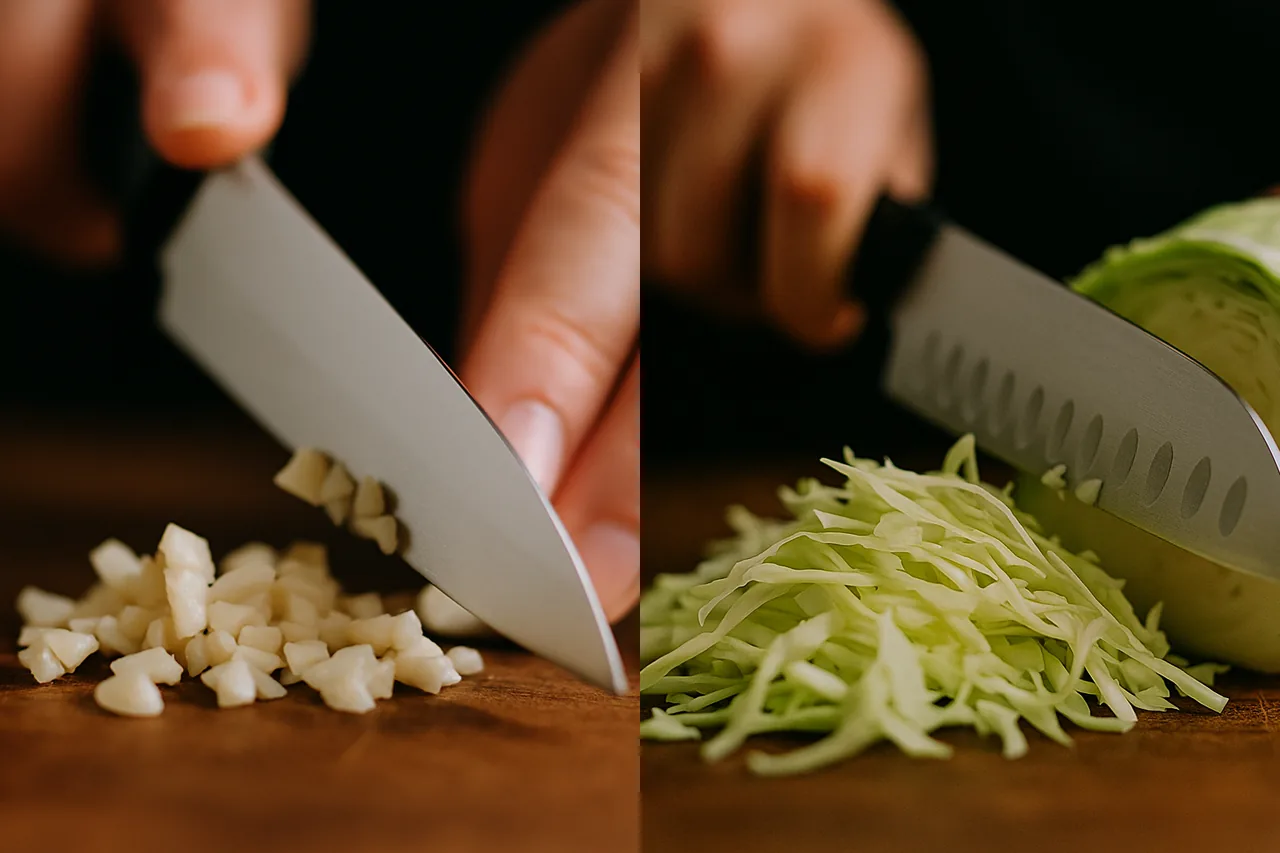
- The sweet spot for most cooks — long enough for light board work (mincing garlic, trimming green onions) while still nimble enough for hand-held peeling. GLOBAL GS-5 is this size.
- 150mm (5.9 inch)
- The most versatile petty size. Can substitute for a small santoku in a pinch while still handling precision work. For cooks who cook solo or in small portions, a 150mm petty and a main knife covers almost everything.
If you're unsure: go with 150mm. It's flexible enough to be genuinely useful as a daily tool, not just a specialty item pulled out occasionally.
Top 5 Japanese Petty Knives Available Internationally
#1 Best Value — Tojiro DP Petty 150mm
The same VG10 core, laminated construction, and professional sharpness as the Tojiro DP santoku — in a compact 150mm blade. If you already own a Tojiro main knife, this is the obvious companion. If you don't, it's still the highest value petty in the category at this price. The slim profile makes it excellent for precision work while the VG10 steel holds an edge long enough that you won't need to sharpen it frequently.
- Steel
- VG10 core with stainless outer layers (DP Series), HRC 60
- Length
- 150mm blade
- Made in
- Tsubame-Sanjo, Niigata
- Handle
- Western-style black laminate, full tang
- Price
- ~$65
Perfect for: Anyone who wants Japanese knife performance in a utility size. Pairs naturally with Tojiro santoku or gyuto owners.
#2 Best Design — GLOBAL GS-3 Utility Knife (13cm)
GLOBAL's GS-3 brings the same seamless all-stainless design philosophy to utility knife size. No seams to trap bacteria, sand-filled handle for counterbalance, and the same Cromova 18 steel used across the GLOBAL range. The 13cm pointed-tip blade sits squarely in petty territory — comfortable on the board for detail work and nimble enough for hand-held tasks. For GLOBAL owners, this is the natural companion to a G-2 gyuto or G-46 santoku.
- Steel
- Cromova 18 stainless (proprietary), HRC 56–58
- Length
- 13cm blade
- Made in
- Tsubame-Sanjo, Niigata
- Handle
- Seamless all-stainless, sand-filled for balance
- Price
- ~$85
Perfect for: GLOBAL knife owners looking for a matching utility blade. Also the top choice for gifting alongside a GLOBAL main knife.
#3 Best for Serious Cooks — Misono UX10 Petty 150mm
The Misono UX10 petty is what professional cooks pair with their UX10 main knife. Swedish Sandvik stainless steel at HRC 59–60, the nickel silver bolster for perfect balance at pinch grip, and Misono's reputation for the finest edge geometry in the category. At 150mm, it can handle board work cleanly while still being precise enough for detail tasks. If you're building a serious kit, this is the petty that belongs beside a Misono main knife.
- Steel
- Swedish Sandvik stainless, HRC 59–60
- Length
- 150mm blade
- Made in
- Seki, Gifu
- Handle
- Full-tang Western with nickel silver bolster
- Price
- ~$160
Perfect for: Cooks who own or plan to own a Misono main knife and want a precision companion at the same level of quality.
#4 Best Damascus — Yaxell Ran Petty 120mm
Yaxell's Ran petty brings the 69-layer Damascus VG10 construction to utility size. The 120mm blade is ideal for hand-held peeling and delicate prep work. The canvas micarta handle is non-slip even when wet — particularly useful when working with wet fruit. For cooks who want a petty that performs at the highest level and looks striking on a magnetic strip, this is the pick.
- Steel
- VG10 core with 69-layer Damascus stainless, HRC 61
- Length
- 120mm blade
- Made in
- Seki, Gifu
- Handle
- Black canvas micarta with red accent spacers
- Price
- ~$120
Perfect for: Yaxell Ran owners who want a matching petty. Also an excellent gift for home cooks who appreciate Japanese craftsmanship.
#5 Best Budget — KAI 5000ST Petty 150mm
KAI's 5000ST petty is genuine Japanese manufacturing at an accessible price — made by Kai, the parent company behind Shun. High-carbon stainless steel, a comfortable handle, and a clean 150mm blade that handles daily utility work without complaint. For a first-time petty purchase or a kitchen where knives see regular use, this delivers solid Japanese-made performance well above its price point.
- Steel
- High-carbon stainless steel
- Length
- 150mm blade
- Made in
- Seki, Gifu
- Handle
- Stainless composite
- Price
- ~$40
Perfect for: First-time petty buyers, budget-conscious cooks, or anyone who wants to try the petty format before investing in a premium model.
How to Use a Petty Knife: Tasks It Does Best
Hand-held work (off the board)
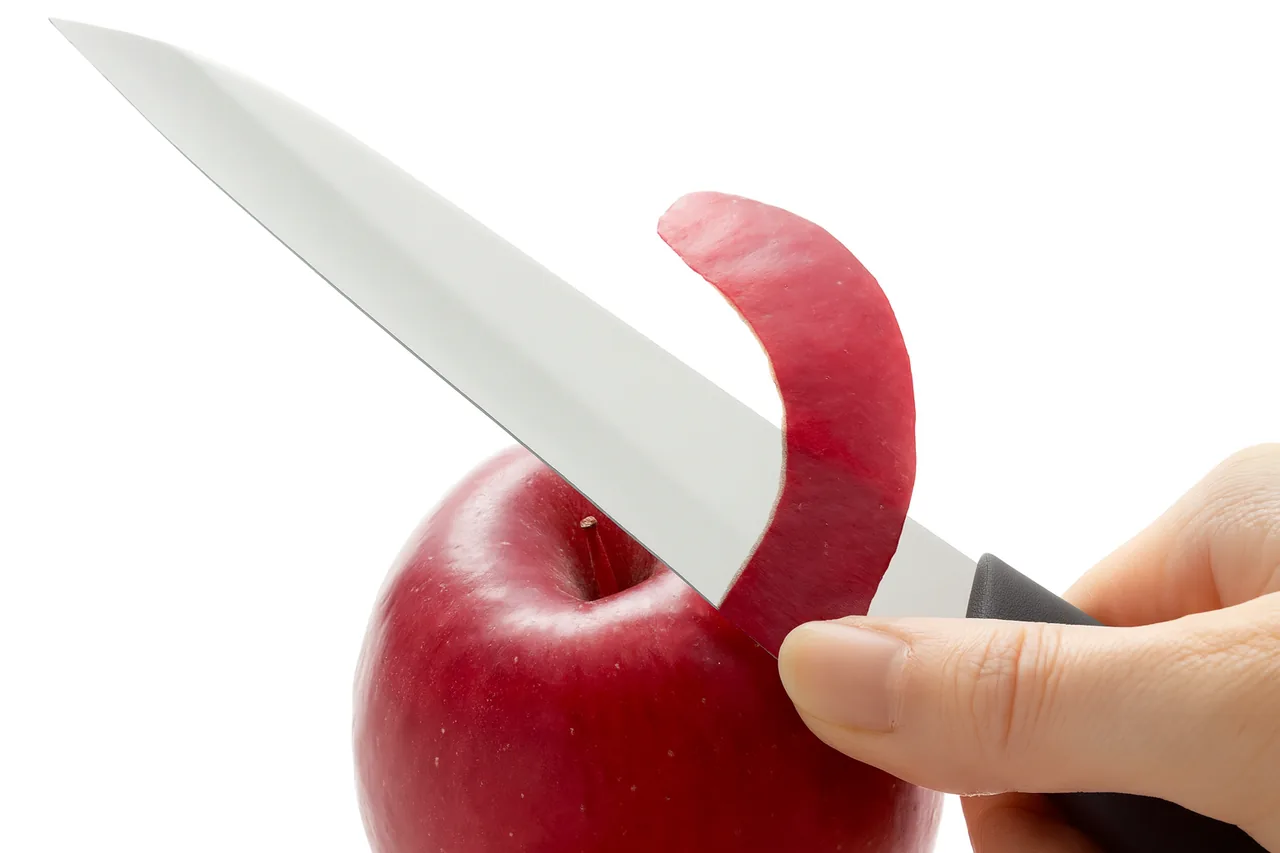
The petty's primary advantage over a main knife is that it's safe and comfortable to use in-hand
— holding the food in one palm while cutting with the other. This is how most fruit peeling, carving
decoration, and trimming is done in Japanese home cooking.
Technique: hold fruit or vegetable firmly in your non-dominant hand. Use your thumb as a guide,
pressing against the flat of the blade. Work in short, controlled strokes toward your body —
never away from it. Keep the blade below waist height.
Precision board work
For fine mincing (shallots, ginger, herbs), scoring, and detail cuts where a large blade would be unwieldy, the petty's compact length gives you more control. Use the same push-cut technique as a santoku, but take advantage of the narrower tip for precision.
Tasks the petty handles better than any other knife
Peeling citrus or apples in-hand • Trimming green onion roots • Removing strawberry hulls • Coring bell peppers • Scoring fish skin before cooking • Portioning cheese • Cutting garnish slices in small quantities • Opening sealed bags or packages cleanly
FAQ
Is a Japanese petty knife the same as a paring knife?
Similar purpose, but different design. A Western paring knife is typically 80–100mm with a thick spine and compact blade. A Japanese petty is longer (120–150mm), thinner, and designed for both in-hand work and light board tasks. The petty is more versatile — a paring knife can't handle board work well, but a 150mm petty can. If you can only have one, the petty covers more ground.
Can a petty knife replace a santoku for solo cooking?
A 150mm petty can — for small quantities. Single servings of rice, one portion of vegetables, one piece of protein — a 150mm petty handles all of this comfortably. If you regularly cook for one or two people and want a minimalist setup, a 150mm petty plus any main knife covers almost everything. For larger quantities, you'll want the santoku or gyuto.
What's the difference between a 120mm and a 150mm petty?
120mm for in-hand work; 150mm for board + in-hand flexibility. A 120mm petty is close to a paring knife in feel — excellent for fruit peeling and delicate hand-held tasks, less useful on a cutting board. A 150mm petty gives you enough length for light board work (mincing a shallot, slicing herbs) while still being nimble enough for precision detail. Most new petty buyers prefer 150mm for versatility.
Is it safe to use a petty knife in-hand?
Yes, with proper technique. Use your thumb as a guide — press it against the flat of the blade above the cutting edge, not across the edge path. Work in short controlled strokes. Keep the blade below waist height and always cut in a direction that moves the blade away from your thumb. The thin, sharp edge of a Japanese petty is actually safer than a dull knife — it cuts predictably without slipping.
How do I sharpen a Japanese petty knife?
Exactly the same as any double-bevel Japanese knife: whetstone at 15°. The smaller size actually makes the petty easier to sharpen than a gyuto — there's no long belly to rotate through and the flat edge is consistent heel to tip. A King #1000 stone is sufficient. 5–8 strokes per section on the front face, 3–4 to remove the burr on the back. The small size means the full process takes 5–8 minutes.
Should my petty knife match my main knife brand?
It helps but isn't required. Matching brands (e.g., Tojiro petty + Tojiro santoku) means the steel type, HRC, and handle aesthetics are consistent. Sharpening angle is the same across all. Matching brands also creates a cleaner look on a magnetic strip. That said, a Kai Wasabi petty works perfectly alongside a Misono gyuto — they just look different. Performance compatibility is based on steel grade, not brand.
Final Thoughts: The Knife That Completes the Set
The petty isn't a beginner's knife or a specialty tool — it's the finishing piece of a serious
kitchen setup. Once you've worked with a good 150mm petty for a month, you'll wonder how you
managed citrus, herbs, and small garnish work before.
Start with the Tojiro DP Petty for the best value. Upgrade to the
Misono UX10 when you're ready to invest in a precision tool you'll use for decades.
Whatever you choose: get the 150mm — the versatility justifies it every time.
Best Japanese Santoku Knives: Top Picks for Every Budget
Best Japanese Gyuto Knives for Home Cooks