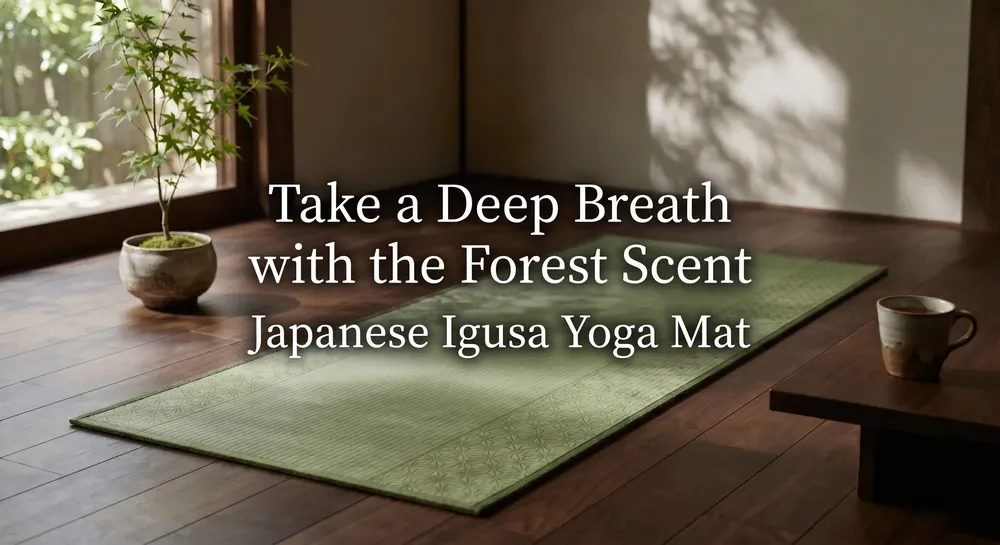
Every new yoga mat smells of rubber. You unroll it, and for the first few weeks
you are breathing the mat rather than the room — which is an odd thing to accept from a surface
designed for deep breathing.
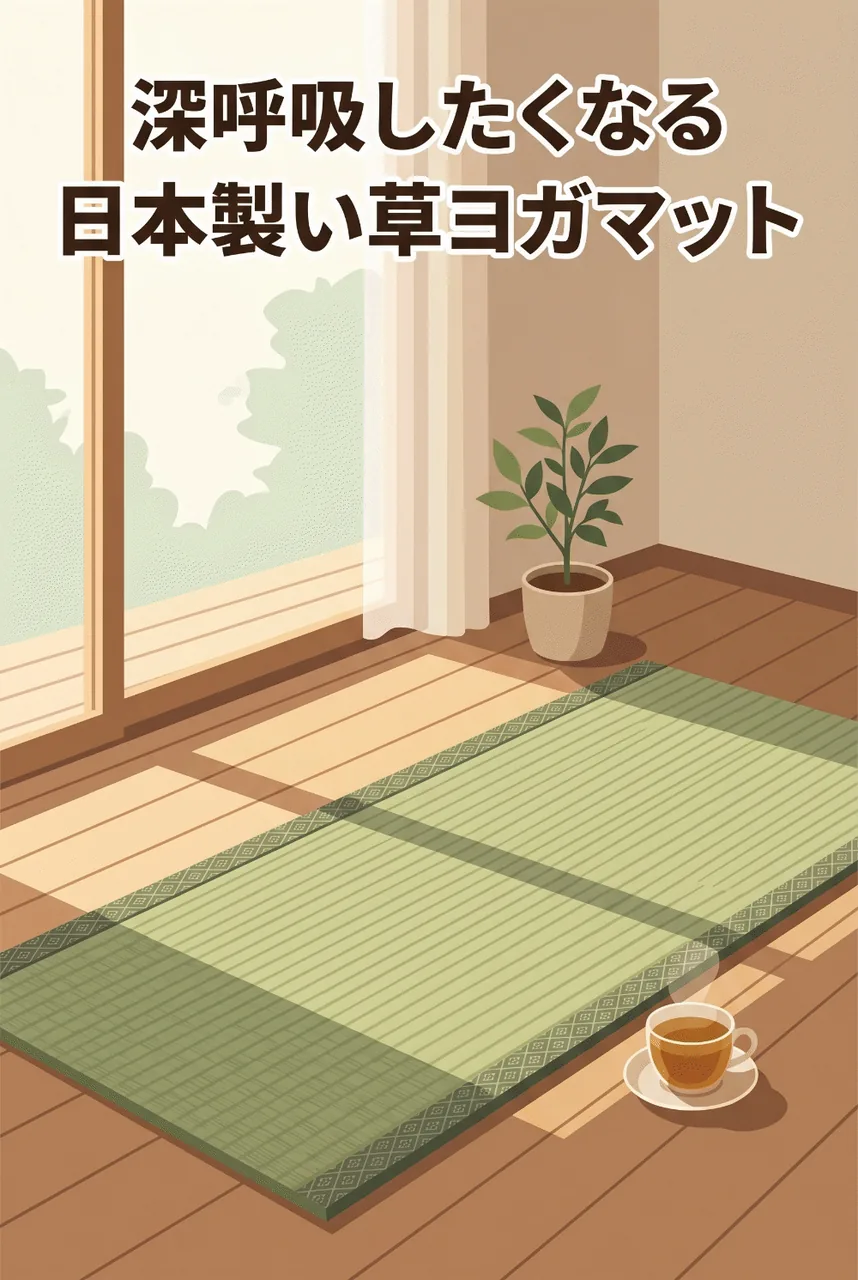
A Japanese igusa mat smells of cut grass and green tea instead. It is
woven rush — the same grass used for tatami flooring — with a non-slip backing, in a standard
60 × 180 cm mat you roll up like any other.
It is also not a replacement for your rubber mat, and this guide starts with why.
Two limitations rule it out for a lot of people, and you should know both before you spend $100.
Quick Reference: Is an Igusa Mat for You?
| Your practice | Verdict |
|---|---|
| Yin, restorative, meditation | Excellent — this is what it is for |
| Pilates, stretching, floor work | Very good |
| Gentle hatha, morning practice | Fine |
| Power vinyasa, ashtanga | No — not enough grip |
| Hot yoga | No. You will grow mould in it |
| Roughly: if your practice needs a mat you can wipe down afterwards, this is the wrong mat. If you mostly sit, kneel and lie on it, it is the best one you can buy. | |
Read This First: Two Things That Rule It Out
Most guides to these mats put the limitations at the bottom. They belong at the top, because they decide whether the rest of this article is relevant to you.
1. You cannot wash it. Not even with a damp cloth, really
Rush grass is dried plant material, and water is what destroys it. Moisture soaks into the stalks, discolours them and grows mould — and once mould is in the weave, the remedy is wiping it with ethanol, which is not a thing anyone wants to do to their yoga mat.
So the entire habit of spraying and wiping your mat after class does not transfer.
Cleaning an igusa mat means a dry cloth along the grain and airing it in the shade.
Which is why hot yoga is out. Not because a heated room harms the grass, but
because you will finish soaked, and you have no way to clean what you just left in
it.
2. It grips less than rubber
The woven surface is smooth and dry, and your hands will slide in downward dog
in a way they do not on a good rubber mat.
The backing is not the problem — a proper igusa yoga mat has 4–6 mm of PVC
underneath and will not move on a wooden floor. It is the top surface, against your
palms. For power vinyasa or ashtanga, that is disqualifying.
If either of those describes your practice, stop here. There is no version of this mat that solves them, and no amount of it being beautiful makes a slippery mat safe to flow on.
If they do not — if you mostly sit, kneel, lie down and breathe on your mat — then the rest of this is for you, because in that use everything an igusa mat does is better.
What You Get Instead
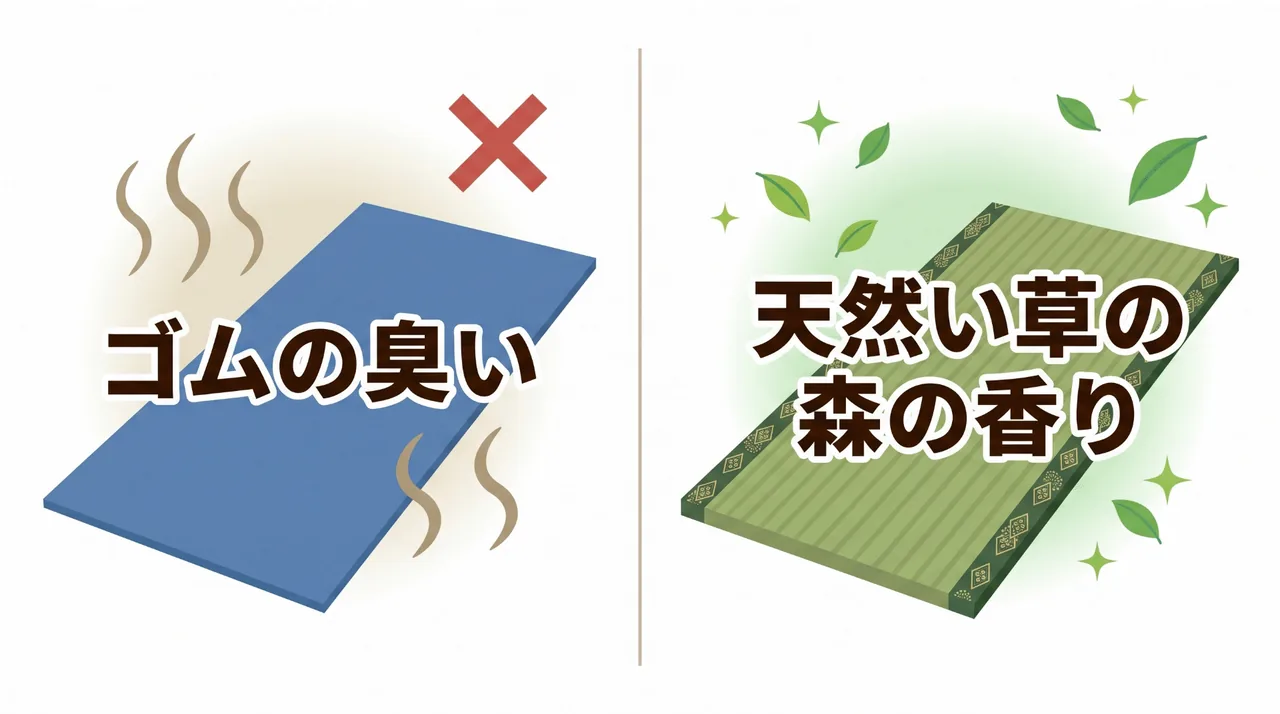
It does not smell of rubber
This is the real reason people switch, and it is worth being plain about it. New PVC and TPE mats off-gas for weeks. It is the single most common complaint about new yoga mats, and it is at its most noticeable in exactly the position where your face is closest to the mat.
Rush smells like cut grass with something like green tea behind it. Whether that is pleasant is a matter of taste; what is not debatable is that it is a plant smell rather than a plastics smell.
It fades. Expect the strong scent to settle down over six months to a year, and the mat to shift from green toward a golden straw colour as it ages. Neither is a fault — it is what dried grass does.
Light sweat makes it less slippery, not more
This is the interesting inversion. A rubber mat gets slick when you sweat on
it, because the moisture sits on the surface with nowhere to go.
Rush stalks are hollow, with a sponge-like core — IKEHIKO puts the absorbency
at about 2.5 times that of cotton — so light perspiration goes into the
material rather than pooling on it, and the surface stays dry under your hands.
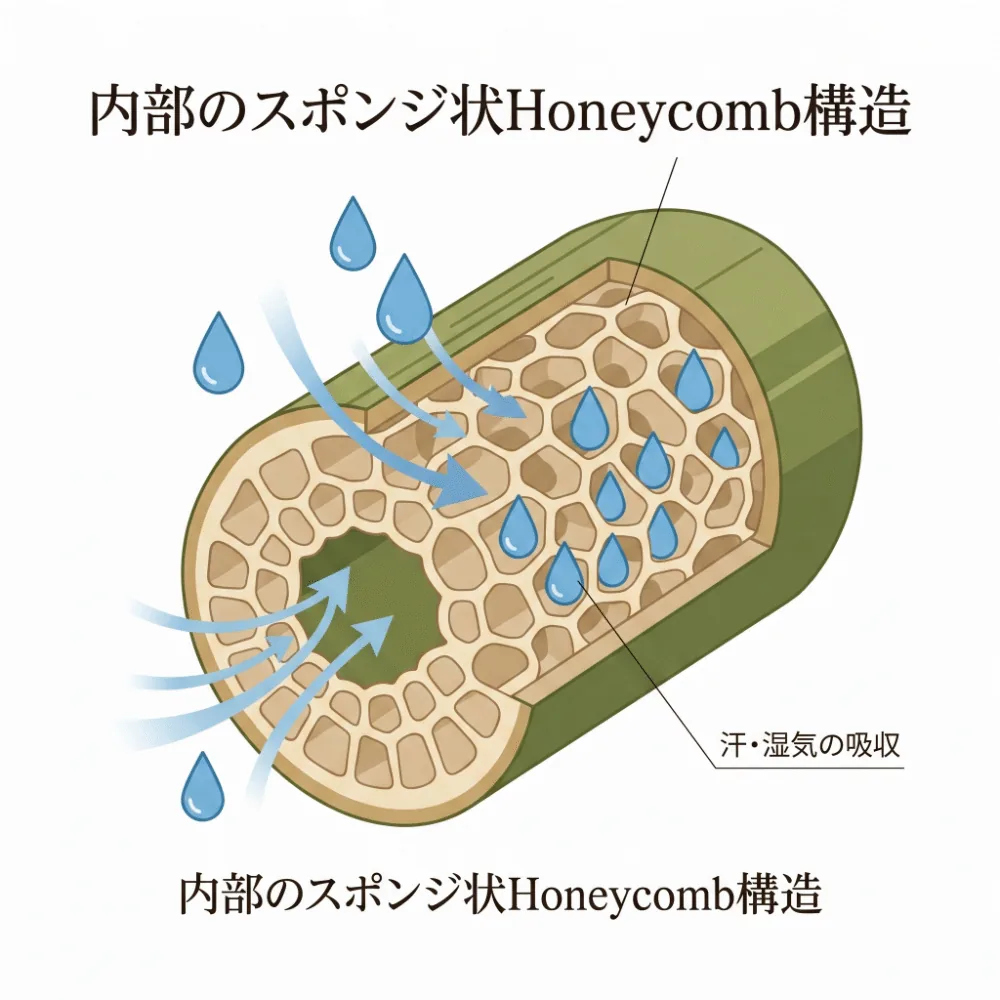
That capacity is finite, and it is the same physics as the mould warning above. A mat that absorbs your sweat is excellent when there is a little of it and a liability when there is a lot, because absorbed water has to leave again by evaporation and nothing else.
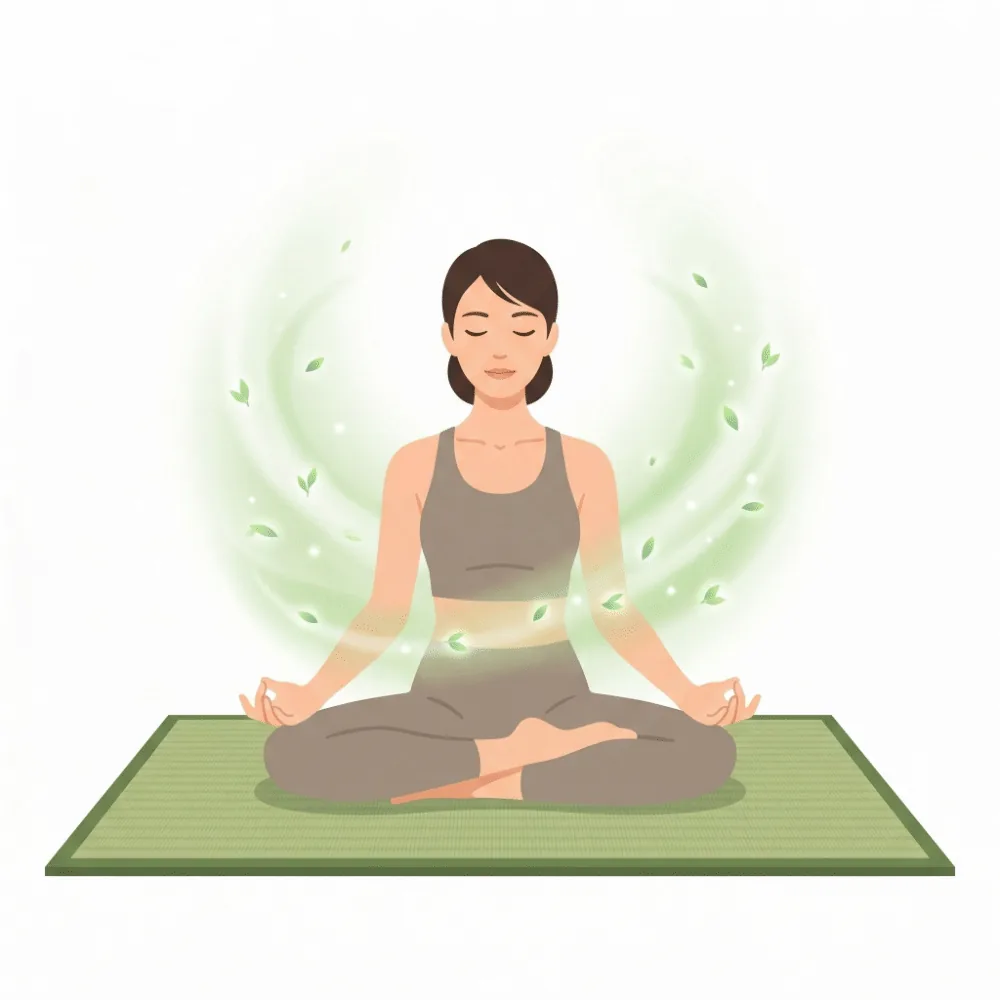
You can leave it out, which is the point
A rubber mat looks like gym equipment, so it gets rolled up and put behind a
door. An igusa mat looks like a floor covering, so it stays where it is.
That matters more than any material property, because the practical obstacle
to a home practice is the twenty seconds of setting up. A mat that is already on the
floor removes it. Plenty of owners use theirs as a summer rug or a nap mat and only
occasionally as a yoga mat.
Why Kumamoto Rush, and Why It Is Worth Checking
Most rush products sold worldwide are woven from imported grass, and it is genuinely a different material. Imported rush tends to be thinner-stalked and sheds its outer skin more readily, which is what produces the fine splinters people complain about.
Japanese-grown rush is concentrated almost entirely in one place. The Yatsushiro area of Kumamoto Prefecture accounts for roughly 80–90% of all rush grown in Japan — it is not a regional speciality so much as the entire domestic industry.
Usefully for a buyer abroad, "Kumamoto Kensan Igusa" is a registered Geographical
Indication under Japan's Ministry of Agriculture, Forestry and Fisheries — the same
framework used for named agricultural products elsewhere.
So "domestic rush" is a claim with something behind it, rather than a phrase a
seller can simply write. If a listing does not say where the grass was grown, assume it was
imported.
What that buys you is stalk thickness, which translates into a surface that resists splintering and holds up to being knelt on. It does not change how the mat grips, and it will not make a slippery surface less slippery.
What to Buy — and the Listing Trap to Avoid
⚠ Search "igusa yoga mat" and you will mostly find rugs
A large number of listings put "Zen Yoga" in the title of what is actually a goza — a woven rush area rug. They are real products from real makers, but they are room-sized floor coverings, sold in squares of 176 cm, 191 cm, 261 cm and up. Some are explicitly listed as having no backing at all.
Two things tell you it is an actual yoga mat:
① The size is roughly 60 × 180 cm (24 × 70 in). Anything square is a rug.
② The listing names a PVC or foam backing, usually 4–6 mm thick.
An unbacked goza on a wooden floor will slide out from under you, which on a
hard floor is how people get hurt.
IKEHIKO "Joy" — the standard, and the one to start with
IKEHIKO has been in the tatami business since 1886 and effectively created this
product category. The "Joy" is their best-known yoga mat: Japanese-grown rush dyed
and woven into a graduated colour, with PVC bonded to the back.
It is sold on Amazon in the US under Sports & Outdoors rather than Home,
which is the quickest way to tell you have found the mat and not the rug.
- Size
- 60 × 180 cm (24 × 70 in)
- Thickness
- About 6 mm (1/4 in), PVC backed
- Rush
- Japanese-grown
- Made
- Japan
- Best for
- Yin, restorative, meditation, stretching
FULI "Sakura Fuji" — if you want a pattern rather than a colour
Same construction, different look — rush surface, PVC backing, made in
Japan, at the same 24 × 70 inch size and quarter-inch thickness. The difference is that the
pattern is woven rather than a graduated dye.
FULI also sell tatami mattresses, so check you are on the yoga mat listing
and not a tri-fold floor mattress.
- Size
- 24 × 70 in (about 61 × 178 cm)
- Thickness
- 1/4 in, non-slip backed
- Weight
- About 4 lb (1.8 kg)
- Made
- Japan
If you want the full range, buy direct
IKEHIKO run their own English shop, and it carries designs that never reach Amazon — including editions with denim edging from Kaihara, the Hiroshima mill that supplies denim to a great many labels you have heard of.
They ship worldwide with duties and taxes included, which for a bulky item from
Japan is unusual and worth knowing. Prices display in yen by default; a currency selector is on
the site.
BECOS is a second option, listing around nine IKEHIKO mats in dollars, roughly
$85 to $180.
Care: The Rule Is "No Water"
- Wipe with a dry cloth, along the grain. Across the grain catches the fibres and lifts them.
- For a mark, use a cloth wrung out until it is barely damp, blot rather than rub, then go over it again with a dry cloth immediately. Leave no water sitting on it.
- Vacuum on low, along the grain, with no rotating brush head. A beater bar will pull the weave apart. Use the hard-floor attachment.
- Air it in the shade about once a week. Direct sun bleaches the colour and dries the stalks until they crack — shade and moving air is the whole method.
- If it lives on the floor permanently, lift it every few days so the underside and the floor can dry.
- Splinters: cut, never pull. A raised fibre snipped at the base stops there; a pulled one takes its neighbours with it.
None of this is difficult, but none of it is optional either — and it is a genuinely different relationship with a mat than owning a piece of rubber you hose down.
Frequently Asked Questions
Will my hands slip in downward dog?
More than on a rubber mat, yes. The surface is smooth and dry by design, and it
does not offer the tackiness a good rubber mat does.
For yin, restorative, pilates, stretching and meditation this is a non-issue, and
for power vinyasa or ashtanga it is a reason to use a different mat.
Can I use it for hot yoga?
No. Rush absorbs moisture and you cannot wash it out — so a mat repeatedly
soaked in sweat will eventually grow mould, and the only remedy is wiping it with ethanol.
This is the one hard rule, and it is worth stating plainly because some
descriptions of these mats suggest the opposite on the grounds that rush handles moisture well.
It handles a little moisture well. Hot yoga is not a little.
Is it hard on the knees on a wooden floor?
Not if it has a proper 4–6 mm backing, which any mat actually sold as a yoga mat
will have. Kneeling and lying down are comfortable.
An unbacked goza rug is a different matter — it offers essentially no cushioning
and will slide as well.
How long does the scent last?
The strong initial smell settles over roughly six months to a year, then stays
faintly present rather than disappearing.
Airing it in the shade brings some of it back, as does a barely-damp wipe
followed immediately by a dry one — though that is a mild effect, not a reset.
Will it splinter?
Eventually, at wear points. Rush is dried grass and friction will lift fibres
after enough use.
Japanese-grown rush has thicker stalks and resists this considerably longer than
imported grass, which is the main practical argument for paying more.
Snip raised fibres at the base — do not pull them.
Can I just leave it on the floor as a rug?
Yes, and most owners do. It reads as a floor covering rather than as equipment,
which is a large part of why people who buy one keep using it.
Lift it every few days so that neither the underside nor the floor beneath it
stays damp.
Final Thoughts: The Right Mat for the Slower Half of Your Practice
This is a specialist mat, and it is better to say so than to oversell it. It gives up grip and washability, and there is no version that does not.
What it gives back is a surface made of grass rather than plastic, that does not off-gas, does not get slick under light sweat, and looks enough like furniture that it stays unrolled on your floor instead of behind a door.
If you already own a rubber mat for flowing, this is the second one. And for a practice that is mostly sitting, breathing and lying still, it is the better of the two — which is probably more of your practice than you would like to admit.
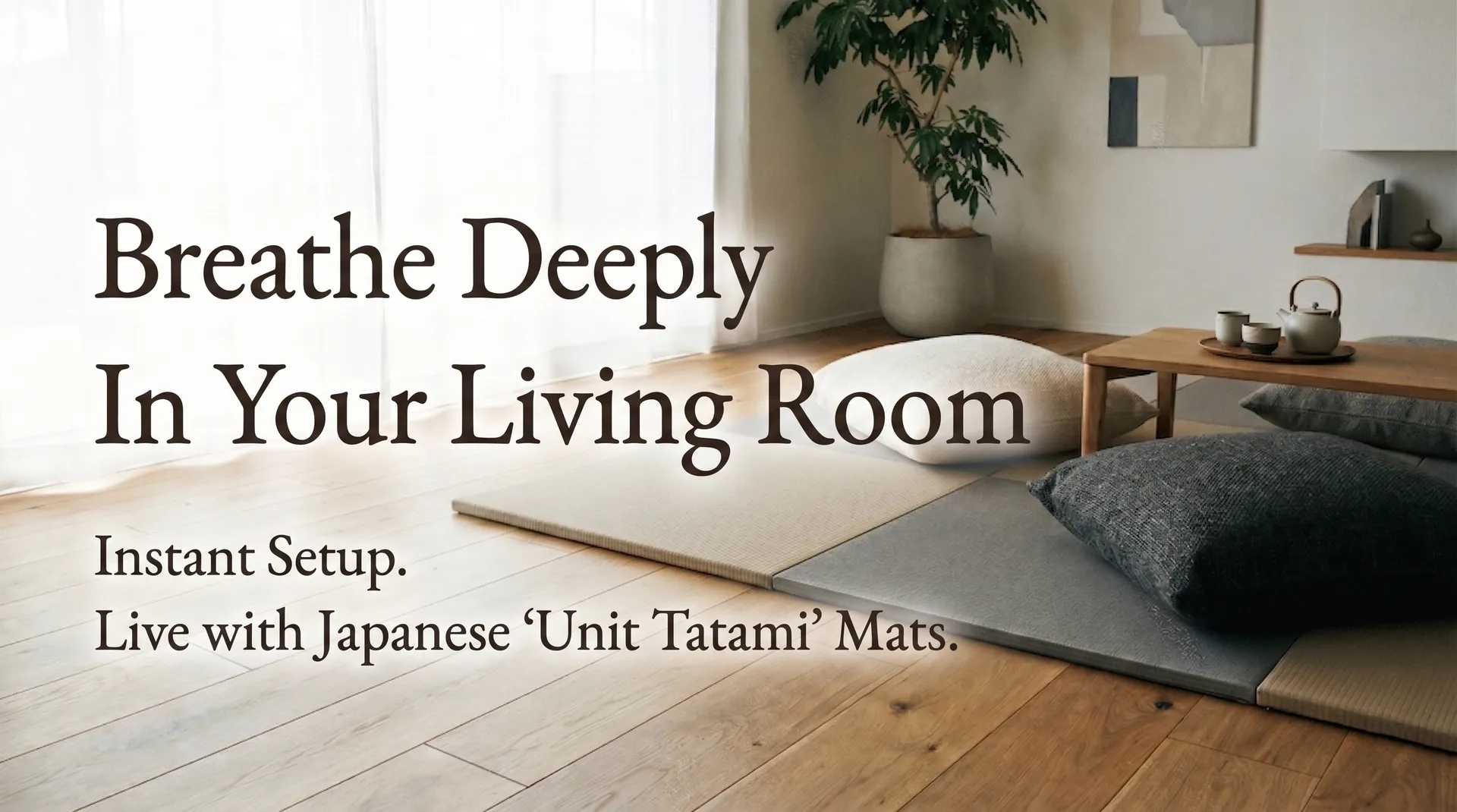
Japanese Igusa Tatami Mats: Humidity Control on Any Floor
Haramaki: Why Japan Warms the Middle, Not the Ends