Every sauna hat you have seen is wool felt. That is the Russian banya tradition, it came west
through Finland, and it is what every sauna shop sells.
Japan went a different way. The sauna hat that took over Japan's bathhouses is
made of terry towel — specifically Imabari towel, the certified cotton from Ehime that
Japan treats as its best. It looks like a small bucket. It costs about the same as felt.
And you can put it in the washing machine, which felt has never managed.
This is not a case of one being better. Felt insulates more; towel absorbs more and stays
clean. Which one you want depends on how hot your sauna runs and how often you use it —
and this guide will tell you honestly which side you fall on.
Quick Reference: Wool Felt vs Imabari Towel
| Wool felt Russian / Finnish |
Imabari towel Japanese |
|
|---|---|---|
| Insulation | Better. Trapped air in felted fibres | Good, not equal to felt |
| Washing | Hand wash only. Felt shrinks and mats | Machine washable |
| Getting it wet | Slow to dry; can develop odour | Designed to be soaked. Dries fast |
| Sweat | Repels, then saturates | Absorbs it before it runs into your eyes |
| Best for | Hot Finnish sauna, 90–110°C with löyly | Frequent use, cold plunges, shared facilities |
| The deciding question is how often you go. A hat used twice a week gets washed constantly, and that is the argument towel wins on. | ||
Why Japanese Sauna Hats Are Made of Towel
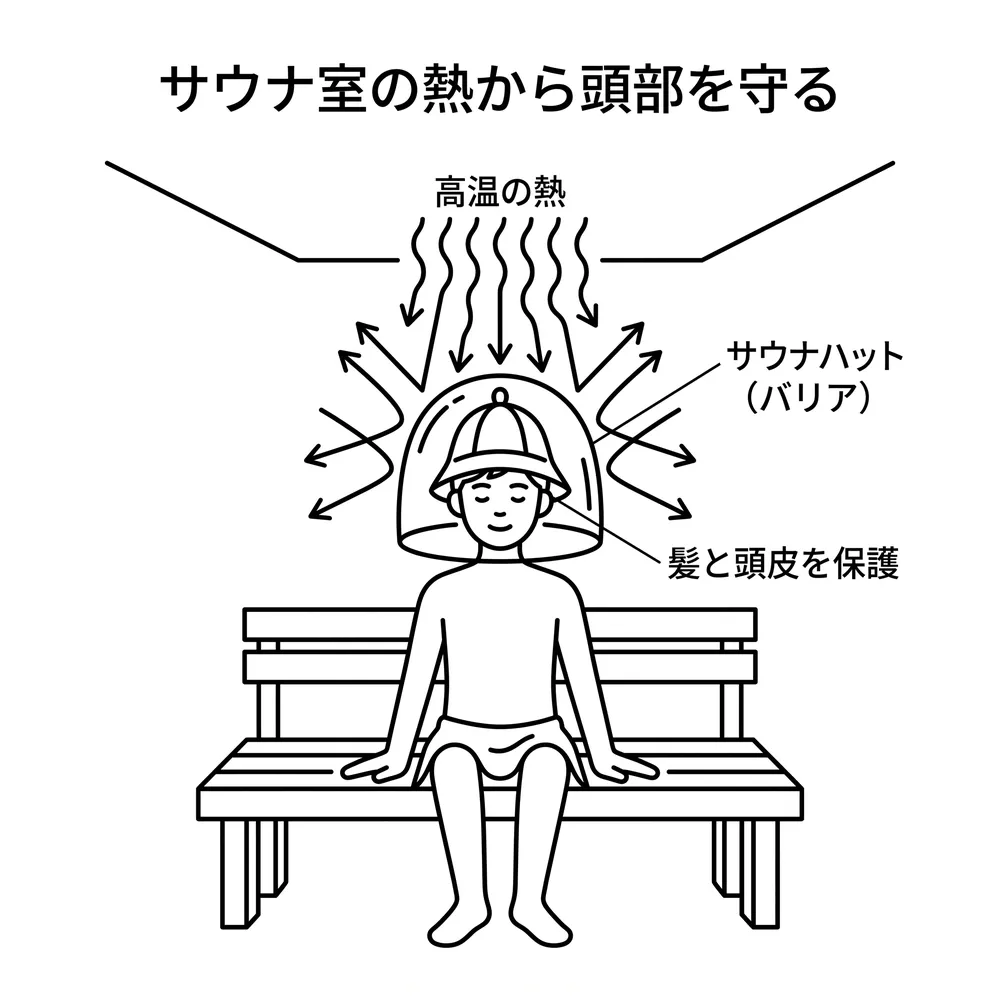
Start with what a sauna hat is for. Your head sits in the hottest air in the room
— heat rises, and on an upper bench your scalp can be many degrees hotter than your chest. It
overheats before the rest of you does, which is why people leave a sauna long before their body
has finished warming through.
A hat slows that down. Hair is protein, and heat denatures protein, so the
same barrier that keeps your head comfortable also stops your hair drying out.
Felt does that job well. So the question is not why Japan needed a hat, but why Japan rejected the material everyone else uses. Three reasons, and they are all about how Japanese people actually use saunas.
1. It gets soaked every single session
In Japan the sauna is not a room, it is a sequence: sauna, then straight into a cold bath, then sitting outside. The cold plunge is not optional and it is not a plunge pool at the end of the night — it happens after every round, and most people do three rounds.
Under that pattern a hat is wet within twenty minutes and stays wet. Wool felt handles being wet badly: it takes a long time to dry, and a damp felt hat in a gym bag smells within days.
2. It has to go in the washing machine
Japanese sauna culture is built around public facilities — sento bathhouses and the larger super sento — which people visit several times a week. A hat used that often needs real washing, not airing. Felt cannot take a machine cycle; it shrinks and mats. Terry cotton can take hundreds.
3. Absorbency was already Japan's speciality
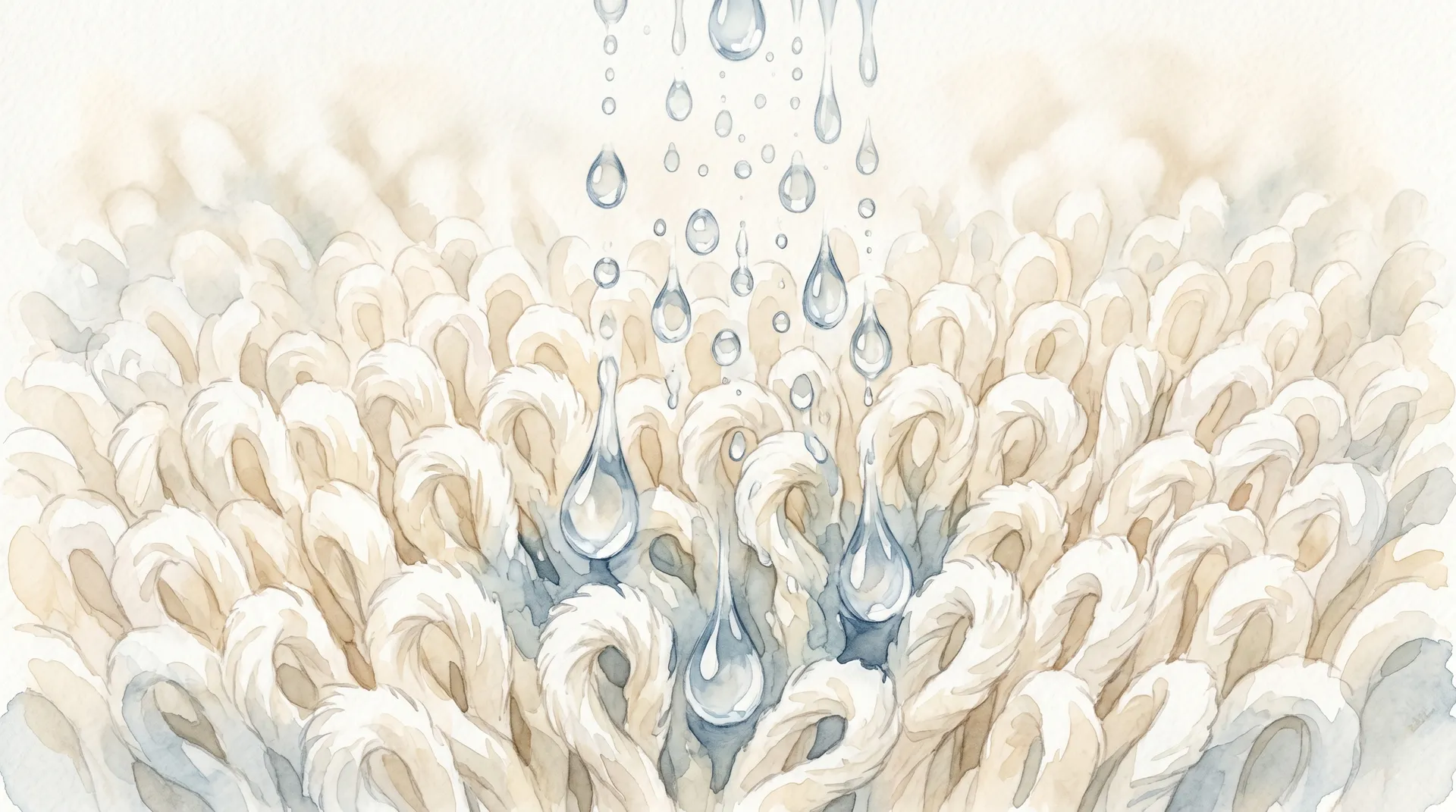
Imabari, in Ehime prefecture on the island of Shikoku, has been making towels for over
a century and operates a certification mark — the red, white and blue tag — that a
towel only carries if it passes the association's testing. Absorbency is the headline test.
A material that pulls sweat off your forehead before it reaches your eyes turns out to be
exactly what you want on your head in a sauna. Japan did not invent a new fabric for this. It
reached for the one it was already best at.
Totonou: What Japan Added to the Sauna
Japan imported the sauna and then built a vocabulary around it that does not exist in Finnish or Russian. The central word is totonou (整う).
Look it up in a dictionary and you get "to be put in order", "to be arranged", "to be brought back into balance" — the word you would use for tidying a room or getting your affairs straight. That is the literal sense, and it is not what anyone means by it in a sauna.
Among Japanese sauna-goers the word has drifted into naming something much more specific: the altered state that arrives after two or three full rounds — body completely slack, head unusually clear, a floating, almost trance-like rush of wellbeing. Not calm. Not sleepy. Something closer to the moment after very hard exercise, except you have been sitting down.
English has no single word for it. The closest thing is what people call the "sauna high" or the afterglow — but that is a description, not a name, and Japanese sauna culture treats totonou as the actual objective. People do not go to sweat. They go to totonou, and if it does not arrive, the session did not work.
A word that changed meaning, like "sick" did
This shift is worth knowing about because you will meet both senses. The original meaning is neutral and medical-adjacent — restoring a body and mind that had gone out of order back to normal. The current popular meaning is the opposite of neutral: a distinct, sought-after high.
Japanese has done this before. Yabai (ヤバい) originally meant "dangerous" or "dodgy" and is now used for anything overwhelming, good or bad. Totonou has travelled the same road, and the newer sense is now the ordinary one. If a Japanese friend at a sauna says they have totonotta, they are not telling you their nervous system has returned to baseline. They are telling you it feels incredible.
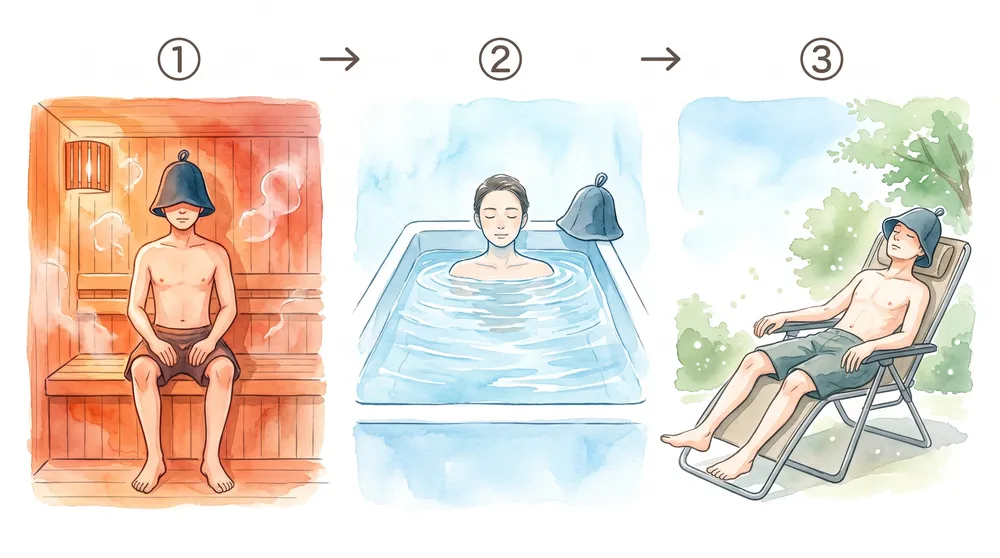
Whatever you call it, it is reached through a fixed sequence:
| Step | Japanese | Typical |
|---|---|---|
| 1. Sauna | サウナ | 8–12 minutes, dry, around 90°C |
| 2. Cold bath | mizuburo 水風呂 | 1–2 minutes, around 15°C. Not optional |
| 3. Outdoor rest | gaikiyoku 外気浴 | 5–10 minutes sitting outside in ordinary air. This is where totonou happens |
Repeat two or three times. The third step is the one outsiders skip and Japanese bathers treat as the point of the whole exercise — because that is where totonou actually arrives. Not in the hot room, not in the cold water, but sitting still afterwards while your body works out what just happened to it. Not a heated relaxation lounge either: outside, in whatever the weather is, usually on a reclining chair, doing nothing at all.
Which is why cutting the outdoor rest short to get back into the sauna does not make the session more intense. It removes the part everyone came for.
None of this changes what a sauna hat has to do. But it explains the shape of the Japanese one: a deep bucket brim that comes down past the ears, so you can sit through all three stages without taking it off and without making eye contact with anyone.
Felt or Towel — Which Suits Your Sauna
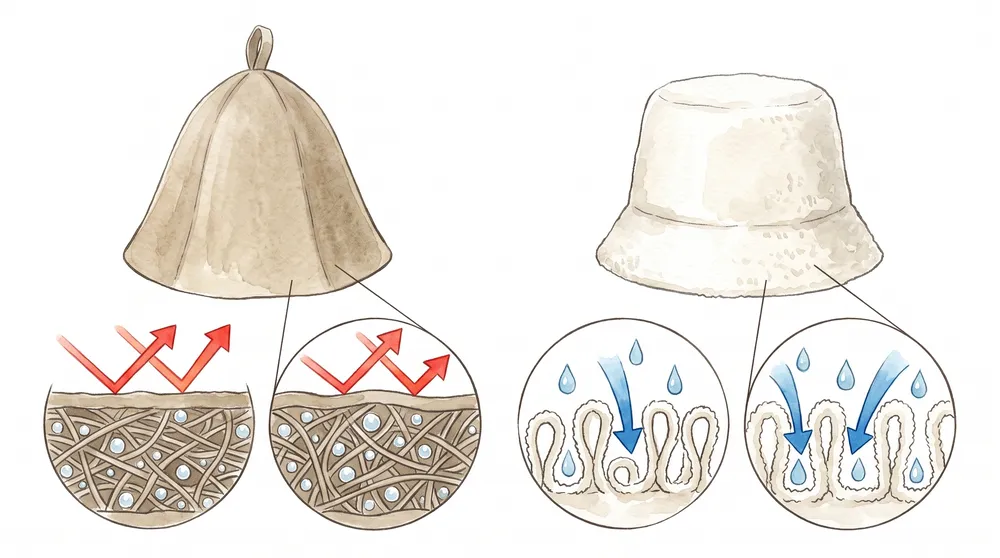
Honest version: if you go to a very hot Finnish sauna once a week, felt is still the better tool. Felted wool traps air in a way woven cotton cannot, and at 100°C with steam that margin is real.
Towel wins on everything else, and "everything else" describes how most people actually use a sauna.
| If this is you | Buy | Why |
|---|---|---|
| Traditional Finnish sauna, 100°C+, löyly | Wool felt | Maximum insulation is the only thing that matters at that heat |
| Gym or hotel sauna, 2–4 times a week | Imabari towel | It will be washed constantly. Felt will not survive that |
| Contrast therapy with cold plunges | Imabari towel | The hat gets soaked every round. This is what it was built for |
| You sweat into your eyes | Imabari towel | Absorbency is the whole point of the fabric |
| Infrared cabin | Either, or neither | Air temperature is low. A hat matters far less here |
One thing towel does that felt cannot
You can wet a towel hat deliberately before you go in. A damp hat runs cooler than a dry one for the first several minutes, and Japanese bathers use this on purpose. Try it with felt and you have a heavy, slow-drying hat and no cooling benefit.
What to Actually Buy
Availability outside Japan is noted honestly. One Japanese brand exports properly; the rest are domestic.
Totonoi Japan — the one you can actually get
Imabari-certified terry cotton, cut in the deep bucket shape Japanese bathers use, and the only Japanese sauna hat with proper international availability. Machine washable, unisex, one size. The brim comes down far enough to sit below the ears, which is the detail that separates a real sauna hat from a novelty one.
- Material
- Imabari towel (certified terry cotton)
- Shape
- Deep bucket, brim below the ears
- Care
- Machine washable
- Made in
- Japan
- Colours
- Black, navy, white, khaki, bordeaux, blue-grey
- Price range
- $30–$45
Perfect for: Anyone outside Japan who wants the towel approach without arranging a proxy purchase.
A wool felt hat — if your sauna is genuinely hot
No Japanese maker to recommend here, and pretending otherwise would not help you.
If you use a traditional Finnish sauna at 100°C with steam, buy felt — from
any of the established Finnish or Baltic makers. The insulation advantage is real and it is
the reason the tradition exists.
Look for 100% wool rather than a wool blend, and a thickness of at least
4–5mm. Thin felt is decoration.
- Material
- Felted wool, ideally 100%
- Care
- Hand wash cold, dry flat. Never machine wash
- Best for
- High heat, low frequency, minimal water contact
- Price range
- $25–$60
Perfect for: Löyly. If you throw water on rocks, this is your hat.
Japanese brands worth knowing — but domestic only
These are the names Japanese sauna regulars actually buy. None of them currently sells internationally, so treat this as a list for a trip to Japan or a proxy service rather than a shopping link.
- Kontex — an Imabari mill with a strong design reputation. Their sauna hat folds flat into a bag.
- IKEUCHI ORGANIC — organic cotton, Imabari. Sells a sauna towel designed to be wrapped as a hat, which solves the packing problem entirely.
- Minamoto Shoten — deeper brim than most, favoured by people who want the full visual cut-off.
Washing, Drying and Not Ruining It
A towel hat is a towel. Treat it like one and it will last years; treat it like a hat and it
will stiffen and start to smell.
The one rule that matters more than the rest: no fabric softener. Softener
leaves a film on the cotton that makes water bead up and run off. On a sauna hat that means
sweat goes into your eyes instead of into the fabric — you have paid for Imabari absorbency and
then coated it away.
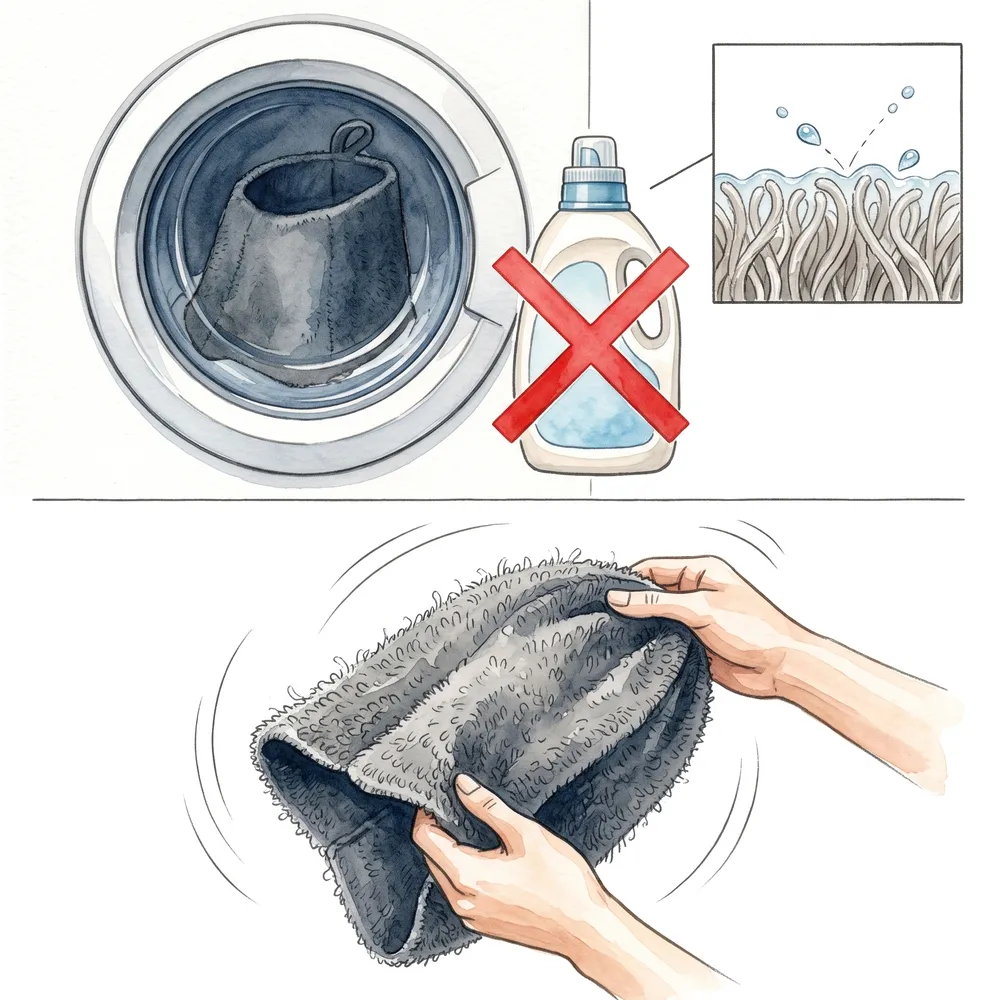
- Machine wash it often — after every second or third session at minimum. This is the advantage you paid for; use it.
- No fabric softener. Softener coats cotton fibres and destroys absorbency, which is the entire reason for buying Imabari towel. This is the single most common mistake.
- Shake it out hard before drying. Snapping a terry towel lifts the loops back up and is why line-dried Japanese towels feel soft without softener.
- Dry it fully before it goes in a bag. Damp cotton in a sealed gym bag grows the smell you were trying to avoid.
- Replace it when the pile flattens. Once the loops are crushed, absorbency is gone and it is no longer doing its job. Two to three years of regular use is normal.
For felt, the rules invert entirely: hand wash in cool water, never wring it, dry flat and away from heat. Hot water will felt it further and shrink it a size.
Frequently Asked Questions
Is a towel sauna hat actually as good as felt?
Not for pure insulation — felt wins there. Towel wins on everything around it:
machine washing, drying fast, absorbing sweat, and surviving repeated soaking.
If your sauna runs 100°C with steam and you go weekly, choose felt. If you go often, plunge cold,
or share a facility, choose towel.
Should I wear it dry or wet?
Either, and wet is a deliberate technique. A damp towel hat runs noticeably
cooler for the first several minutes, which is why Japanese bathers often rinse it before going
in.
Do not try this with felt — you get weight and slow drying without the cooling.
Can I wear it into the cold plunge?
Take it off first. Most Japanese facilities ask you to rinse before entering the cold bath, and a sweat-soaked hat going into shared water is exactly what those rules exist to prevent. Leave it on the bench or on a hook, then put it back on for the rest outside.
Can I just fold a normal towel over my head?
It works, and it slides. A wrapped towel loosens every time you move and gives no coverage over the ears — which are the part that actually hurts first. It is a reasonable way to test whether you want a hat at all before buying one.
What is "totonou"?
The euphoric, trance-like state that arrives after two or three full rounds of sauna,
cold bath and outdoor rest — body completely slack, head unusually clear. Japanese
sauna-goers treat reaching it as the objective of the whole session.
The dictionary meaning is much flatter — "to be put in order", "brought back into balance" — but
that is not how the word is used any more. It has drifted the way yabai drifted from
"dangerous" to "amazing", and the newer sense is now the ordinary one.
Why does everyone say not to use fabric softener?
Softener leaves a coating on the cotton fibres that repels water. On a normal towel that means it stops drying you. On a sauna hat it means sweat runs into your eyes instead of being absorbed — you have removed the only reason to choose Imabari towel in the first place.
Final Thoughts: The Hat Follows the Ritual
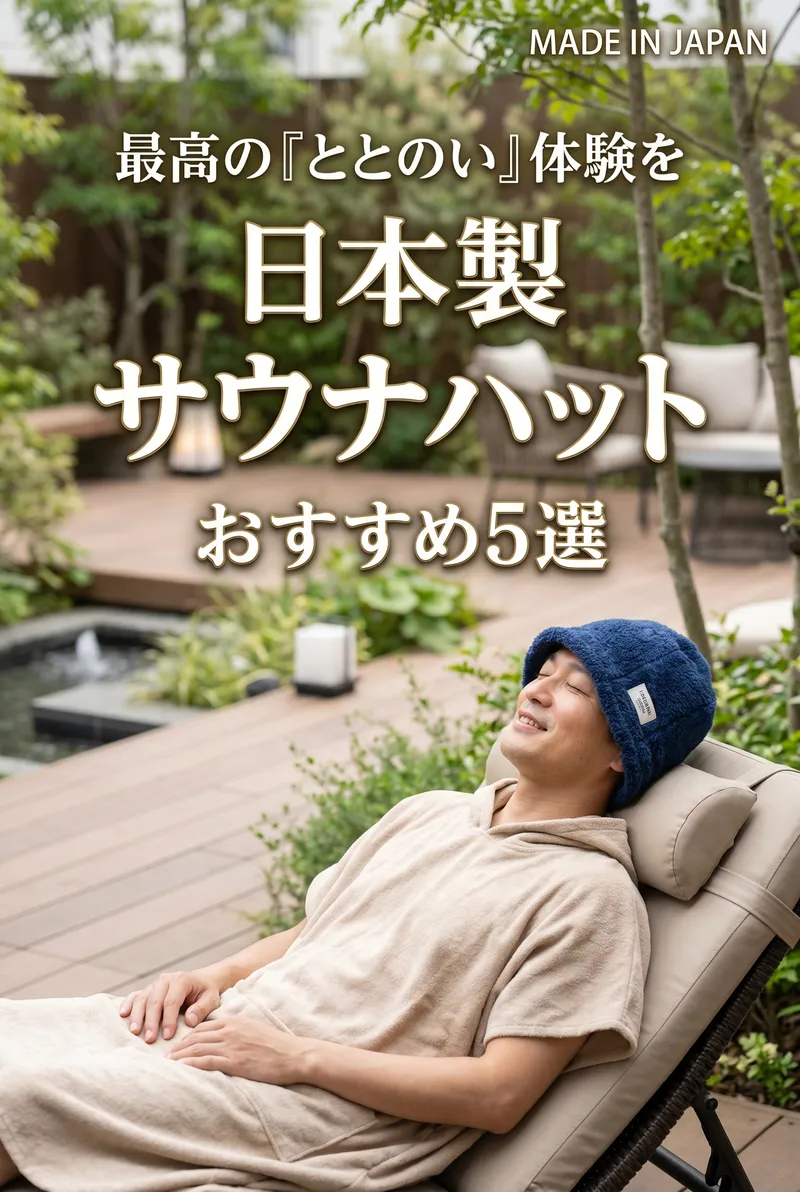
Japan did not switch to towel because felt was wrong. It switched because the Japanese way of using a sauna soaks the hat three times a night, several nights a week — and under those conditions, washability beats insulation.
So the question is not which material is superior. It is which problem you have. Very hot sauna, used occasionally, stays dry: felt. Frequent sessions, cold plunges, a shared gym: Imabari towel, every time.
And whichever you pick — no fabric softener. It is the one mistake that turns a good hat into a useless one, and almost nobody warns you about it.
Japanese Towels: Imabari and Osaka Compared
How to Wash Towels So They Stay Soft