If you already own a UPF 50+ sun umbrella, you might reasonably assume a Japanese one is the same
thing with different branding. It is not, and the difference is in what is being
measured.
UPF rates how much ultraviolet a fabric blocks. The Japanese specification that
matters — kanzen shakō, "complete light blocking" — rates how much visible light it
blocks, and the target is 100%.
Those are different claims, and the second one is why standing under a Japanese parasol on a hot
day feels like standing under a tree rather than under a piece of fabric. This guide explains the
distinction, what to buy, and the thing almost no English article mentions: the coating
wears out.
Quick Reference: Two Different Specifications
| UPF 50+ | 100% light blocking | |
|---|---|---|
| Measures | Ultraviolet transmitted through the fabric | Visible light transmitted through the fabric |
| Typical claim | Blocks 98%+ of UV | Blocks 100% of light — and therefore the UV in it |
| Feels | Shaded, but bright and still warm | Dark and noticeably cooler |
| Sold by | Western sun-protection brands | Japanese parasol makers |
| ⚠ The coating that does this has a service life. Most Japanese makers state one, and it is measured in years, not decades — see the durability section. | ||
UPF and "100%" Are Not the Same Claim
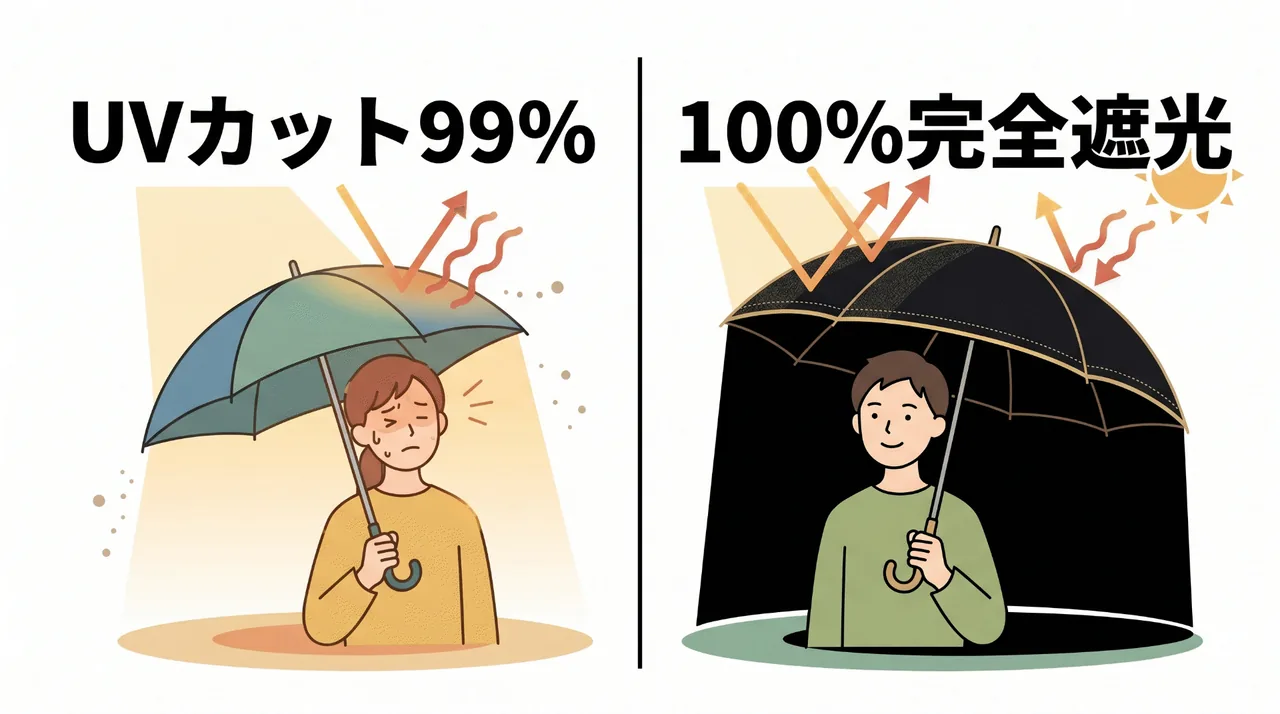
UPF (Ultraviolet Protection Factor) is a textile rating: UPF 50 means one fiftieth of the UV reaching the fabric passes through it, so roughly 98% is blocked. It is a good standard and a UPF 50+ umbrella is genuinely protective.
Japanese parasols are commonly specified on a different axis: shakō-ritsu, the proportion of visible light the fabric blocks. The premium category advertises 100% — meaning no visible light passes through at all.
Why "99%" and "100%" are not nearly the same
A one-percent difference in a number sounds negligible, and here it is not, because
the last percent is the difference between a fabric that transmits light and one that
does not. A 99% fabric still glows when you hold it up. A 100% one is opaque.
More usefully: a fabric that stops all visible light is also stopping near-infrared,
which is what you feel as radiant heat. That is why the temperature under a full-blackout parasol
is noticeably lower — a benefit UPF does not measure at all.
So the honest summary: if your goal is purely UV protection, a good UPF 50+ umbrella does that job. If your goal is also to be cooler — which in high summer is most of the point — the light-blocking specification is the one to shop on.
Why Japanese Parasols — the Fabric as a Wall
Most sun umbrellas are ordinary fabric with a UV-absorbing treatment applied to
it. The fabric is still fabric — light passes through the weave, and the coating
handles the ultraviolet.
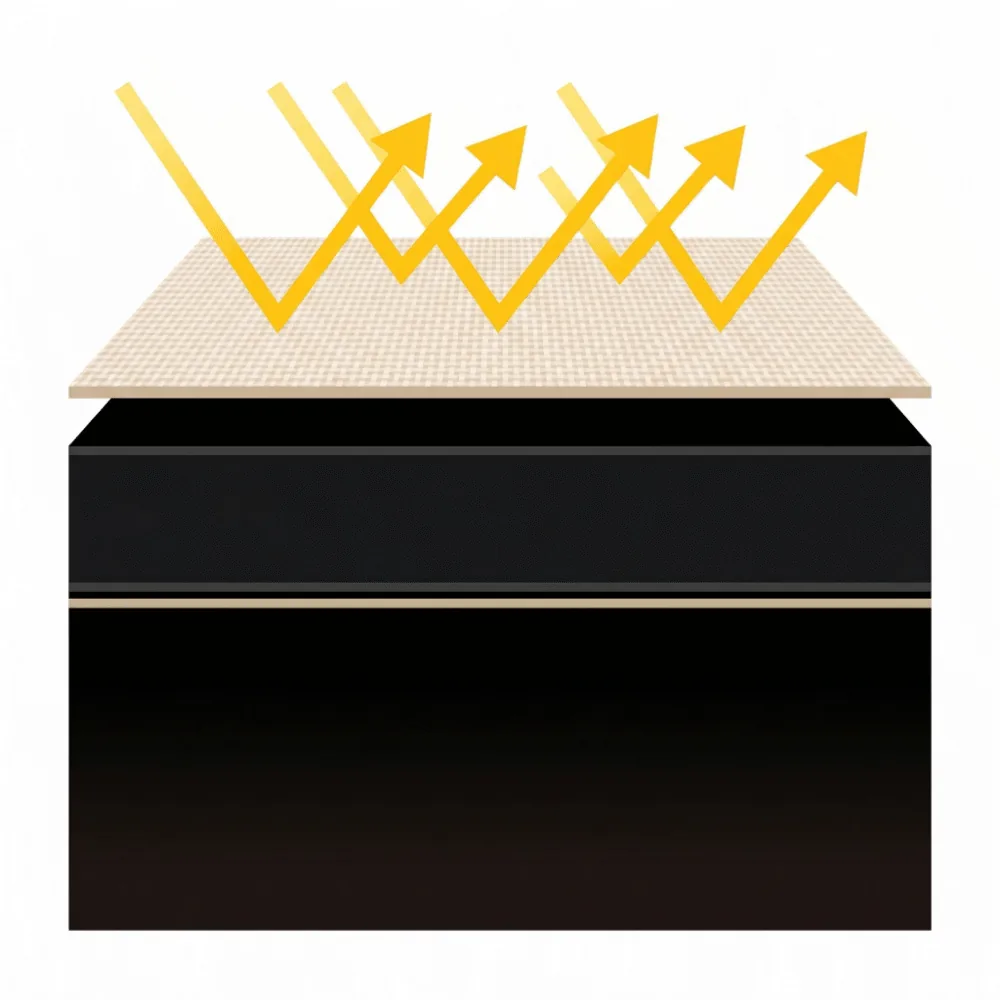
The Japanese full-blackout approach is structural instead. Layers are laminated
together so that the canopy is physically opaque — the fabric is not filtering light,
it is stopping it, in the way a wall does. That is why these parasols feel heavier and stiffer
than a normal umbrella, and why they cost what they cost.
There is a cultural reason the category exists at scale. Sun umbrellas are unremarkable daily equipment in Japan — carried by a large share of the population through summer, for both skin protection and simple comfort. That volume supports specialist manufacturers who make nothing else.
In English-speaking countries the same object still reads slightly unusual, particularly for men, though that is changing quickly as skin cancer awareness grows. Western brands like Coolibar and UV-Blocker have built the UPF 50+ end of this market — the Japanese contribution is the tier above it.
Choosing: Lining Colour and Size
Two decisions matter more than the brand, and both are counter-intuitive.
1. The inside colour matters more than the outside
Once a canopy blocks 100% of light, the outer colour stops affecting how much gets through — it is already all of it. What the outer colour does affect is how much heat the fabric itself absorbs.
The lining is the surface facing you, and it determines what happens to light reflecting up off the ground:
- Black or dark lining — absorbs light bouncing up from pavement. This is the one to choose if you are serious about not catching reflected UV.
- Silver lining — reflects that light back down at you. Common and popular, and working against you on a bright pavement.
- White or pale lining — scatters it. Brighter and more pleasant to walk under; slightly less protective.
Dark outside, dark inside is the most protective combination, and also the hottest to hold. Light outside, dark inside is the usual compromise.
2. Buy a bigger canopy than feels necessary
The sun is rarely directly overhead, so a small canopy shades a patch of ground somewhere beside you. Diameter is what determines whether your shoulders and arms are actually covered when the sun is at 40 degrees.
Folding parasols are more convenient and shade less. A long, non-folding parasol shades considerably better and is the one Japanese users buy when protection rather than portability is the priority.
What to Buy
Availability is mixed. Japanese parasols reach international buyers mainly through eBay sellers and Japanese-goods specialists rather than through brand storefronts.
A 100% light-blocking parasol — the category itself
What you are buying is the laminated canopy, so the specification to check is
the light-blocking figure rather than the brand. Look for a stated 100%, a
dark lining, and the largest diameter you will tolerate carrying.
Several Japanese sellers list these internationally with import duties included in the
price, which removes the usual customs unpleasantness.
- Check for
- 100% light blocking stated, not just "UV cut"
- Lining
- Dark, if protection is the priority
- Type
- Long canopy shades better; folding travels better
- Weight
- Heavier than a normal umbrella. That is the lamination
- Price range
- $60–$180
Perfect for: Anyone who already owns a UPF umbrella and wants the cooling effect it does not provide.
Rain-and-shine (seiu-kenyō) — check before you assume
Japanese parasols come in two kinds: sun-only, and seiu-kenyō
— usable in rain as well. A sun-only parasol used in rain will have its coating
damaged, and that is the coating you paid for.
If you will carry one umbrella rather than two, buy the dual-purpose version
and accept that it is slightly heavier. If you already carry a rain umbrella, sun-only is
fine.
- Sun-only
- Lighter, often prettier. Keep it out of the rain
- Rain-and-shine
- Water-resistant treatment added. Heavier
- How to tell
- Japanese listings state 晴雨兼用. English ones say "rain and shine"
- Price range
- $70–$200
Perfect for: Anyone who wants one object rather than a summer-only accessory.
The Japanese names, and one that is deliberately hard to buy
- Ashiya Rosa Blanc — the specialist most associated with the 100% category in Japan. Domestic distribution.
- Wakao — a Tokyo umbrella workshop making handmade parasols with bamboo handles. Domestic.
- UVO (by Wpc.) — the accessible end of the 100% category, widely sold in Japan.
Sunbarrier100 deserves a note because people ask about it. It is highly regarded and the company sells almost exclusively direct, without a dealer network — so it does not appear in guides like this one, including the Japanese original of this article, for that reason rather than any quality judgement. Buying one from abroad means dealing with a direct-sales operation aimed at Japanese customers.
The Coating Wears Out
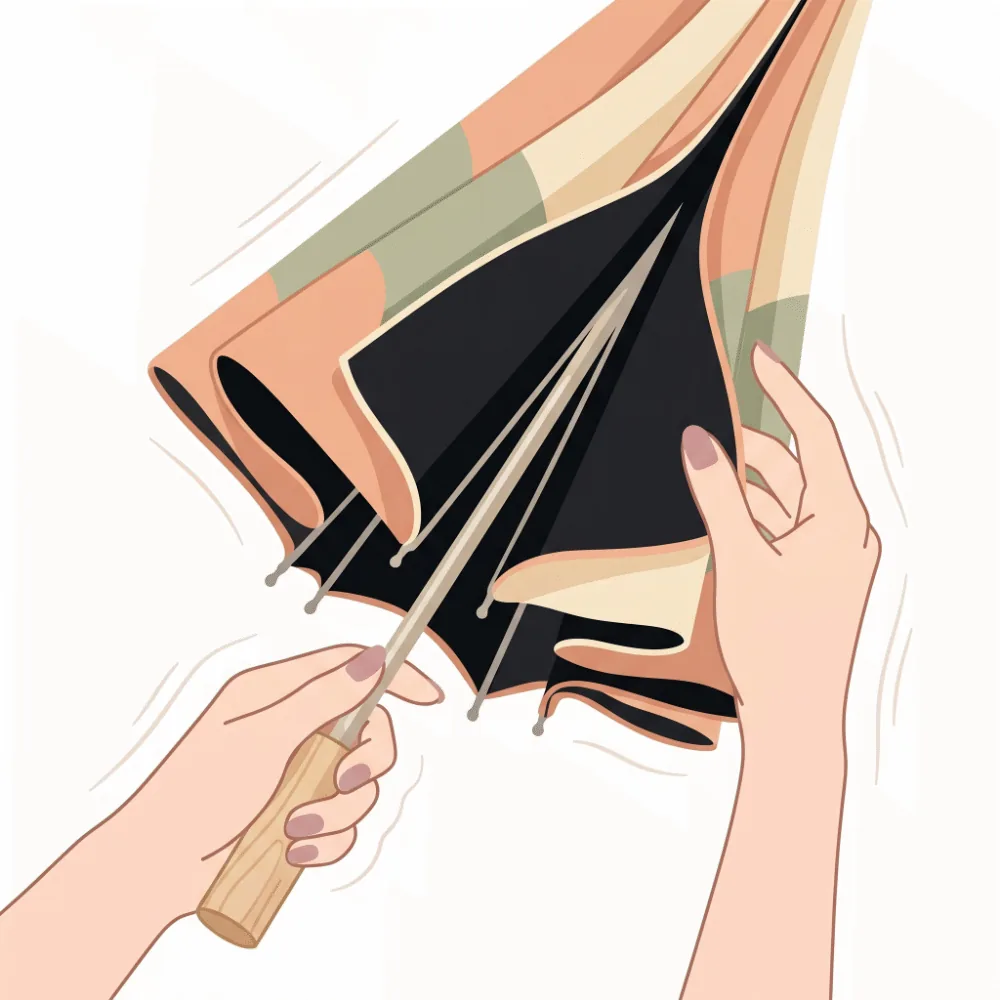
This is the section English sun-umbrella articles almost never include, and it is the
one that decides whether you got value.
The light-blocking performance lives in a laminated layer on the canopy. That layer is
vulnerable to abrasion — and the most abrasive thing that happens to an umbrella is
being rolled up tightly, repeatedly, every single day.
Japanese makers generally state a service life for the coating, and it is measured in years rather than decades — commonly in the region of two to three years of regular summer use. Treat it as a consumable object with a long life, not an heirloom.
Making it last
- Fold it loosely, do not wrap it tight. The friction of rolling the canopy against itself is the primary wear mechanism.
- Do not scrub the inside. The coating is on the inner surface of the canopy on many designs. Wipe gently with a damp cloth, nothing more.
- Dry it open after rain, in shade. Closing it wet traps moisture against the laminate.
- Keep it out of a crushed bag. Creasing the same lines repeatedly is what produces the pinholes you eventually see when you hold it up to the sun.
- Check it annually. Open it and look up at the sun through it. Pinholes of light mean the coating has failed locally, and it cannot be repaired.
That last test is the whole maintenance regime in one action. If light is getting through, the thing you paid for is gone, regardless of how the parasol looks from outside.
Frequently Asked Questions
I have a UPF 50+ umbrella. Is a Japanese one different?
Yes — they are specified on different measurements. UPF rates ultraviolet
blocking; the Japanese premium spec rates visible light blocking, targeting 100%.
A fabric that stops all visible light also stops much of the near-infrared you feel as heat, which
is why it is cooler underneath. UPF does not measure that at all.
Is 100% really different from 99%?
Yes, because the last percent is the difference between transmitting light and not.
Hold a 99% canopy up to the sun and it glows; a 100% one is opaque.
The practical consequence is temperature: an opaque canopy blocks radiant heat as well as light.
Should the lining be silver or black?
Black, if protection is the priority. A silver lining reflects light bouncing up
off pavement straight back at your face; a dark lining absorbs it.
Silver is common and looks technical. It is working against you on a bright street.
Can I use it in the rain?
Only if it is sold as rain-and-shine (seiu-kenyō). A sun-only parasol
used in rain will have its coating damaged — and the coating is the product.
If you want to carry one umbrella year-round, buy the dual-purpose version and accept the extra
weight.
How long does one last?
Makers commonly state a coating life of a few years of regular summer use, not
decades. The failure mode is abrasion from rolling the canopy tightly.
Test it annually: open it and look up at the sun. Pinholes of light mean the
coating has gone locally, and it cannot be repaired.
Why is Sunbarrier100 not in the list?
Because the company sells direct rather than through dealers, so it does not
appear in retailer-based guides — including the Japanese original this article is based on.
That is a distribution fact, not a quality judgement. Buying from abroad means dealing with a
direct-sales operation set up for Japanese customers.
Final Thoughts: Buy Dark, Buy Big, Fold It Loosely
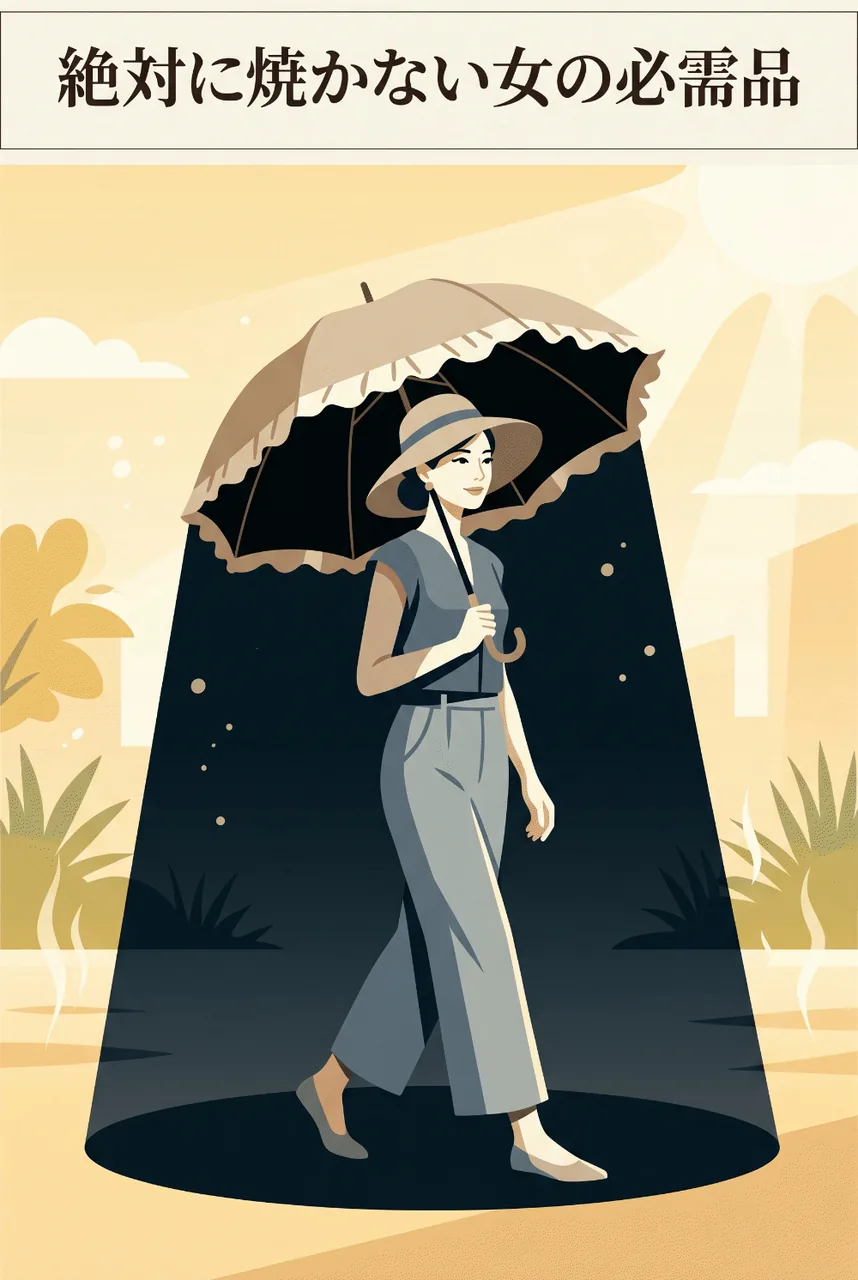
UPF and light blocking are different specifications. If you only want UV protection, a Western UPF 50+ umbrella already does it. The Japanese category exists for the other half — blocking the light and the heat that comes with it.
Choose on a stated 100%, a dark lining and the largest canopy you will carry. The outer colour barely matters once the fabric is opaque; the lining and the diameter decide how much of you is actually covered.
And treat it as a consumable. Fold it loosely, dry it open, and once a year look up at the sun through it. When you see pinholes, the thing you bought has quietly stopped existing — and the parasol will look perfectly fine from the outside.
Japanese Skincare: Sunscreen, Sake Lees, Rice Bran
Japanese Hair Brushes: Pig Bristle vs Wild Boar