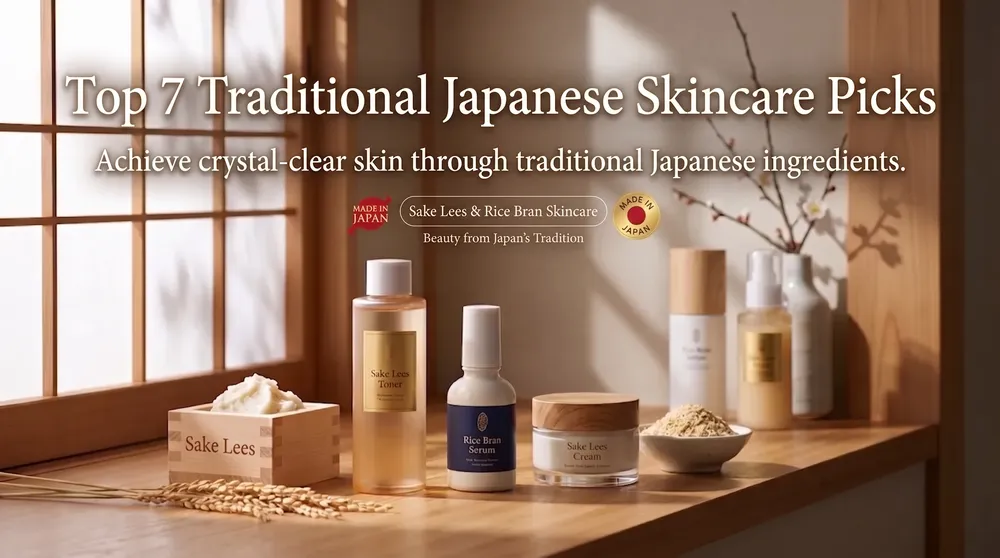
There are two reasons people outside Japan buy Japanese skincare, and only one of them gets talked
about.
The first is regulatory. The United States went more than twenty-five years without
approving a new ultraviolet filter, while Japan, Europe and Australia approved several. The
result is that Japanese sunscreen genuinely is different from American sunscreen — not better
marketed, chemically different — and that is why people import it.
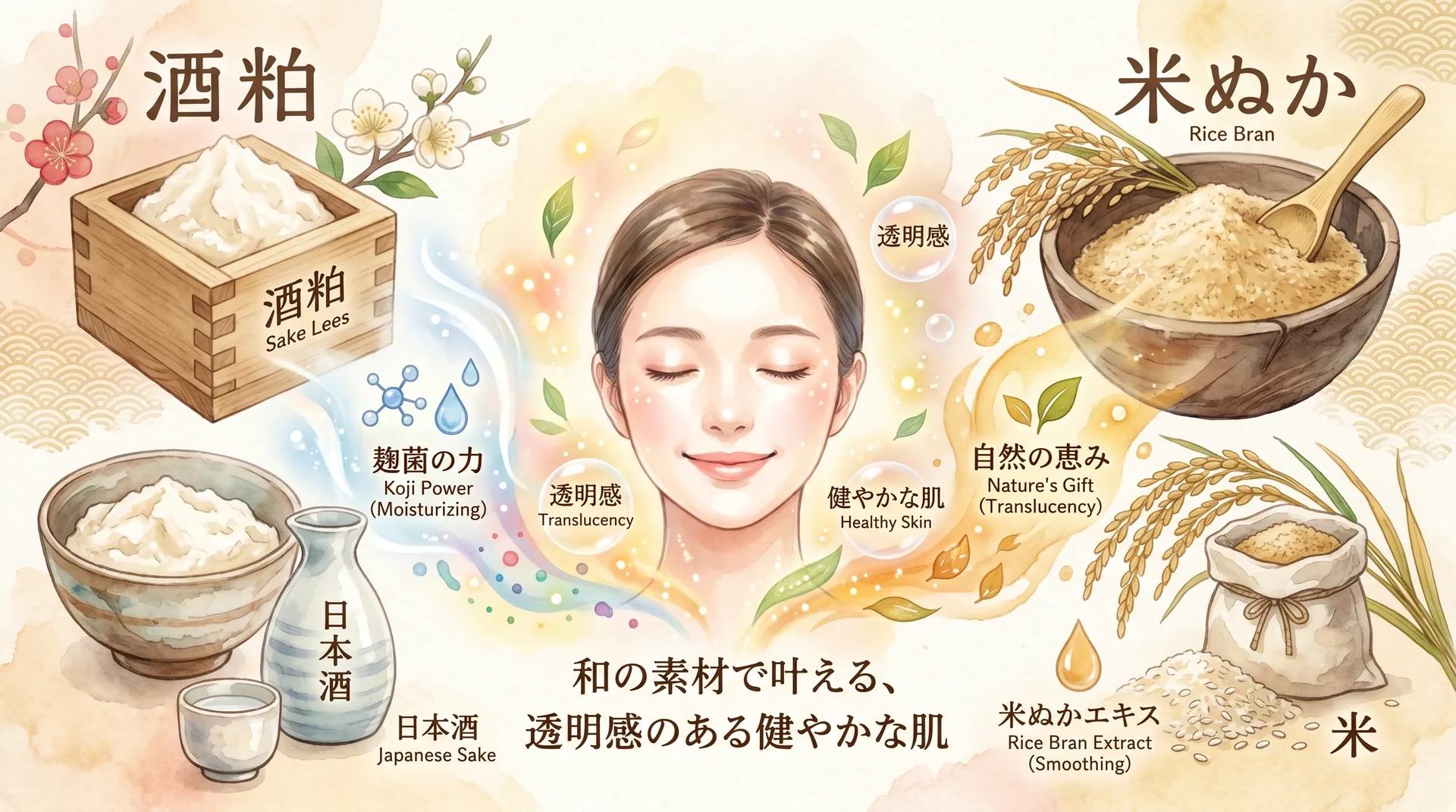
The second is older and stranger: sake lees and rice bran. Two by-products of
making rice into food and drink, used on Japanese skin for centuries, and now the base of a whole
category of domestic cosmetics.
This guide covers both — including the trap that catches almost everyone buying Japanese
sunscreen abroad.
Quick Reference: What Japan Actually Does Differently
| Category | Why it is different | Can you buy it abroad? |
|---|---|---|
| Sunscreen | UV filters the US has not approved | Careful — US versions are reformulated |
| Hydrating lotion | Watery texture, layered rather than piled on | Yes. Hada Labo has a US line |
| Sensitive-skin lines | Ceramide-focused, fragrance-free by default | Yes. Curel is widely stocked |
| Wa-cosme sake lees, rice bran |
Fermentation by-products used as actives | Mostly domestic. A few brands export |
The Sunscreen Situation — and the Reformulation Trap
This is the part worth understanding properly, because it is the one place where "Japanese is different" is a statement about chemistry rather than about branding.
Why the US fell behind
The United States regulates sunscreen as an over-the-counter drug, not as a cosmetic. Japan, the EU, Australia and Korea regulate it as a cosmetic. That single classification difference is the entire story.
Treating a UV filter as a drug means any new one needs the kind of expensive, lengthy trial programme a drug requires. The practical consequence: the US went from the late 1990s without approving a new filter, while the rest of the world adopted several — including Uvinul A Plus, Tinosorb S and M, and Mexoryl XL, which cover UVA better, stay stable longer in sunlight, and feel far lighter on skin.
That gap is finally starting to close. In June the FDA permitted bemotrizinol — the ingredient sold elsewhere as Tinosorb S — the first new sunscreen filter allowed in the US in more than twenty-five years. The others remain unapproved.
To be clear about safety
These filters are not unapproved because anyone found a problem with them. They have decades of use across Japan, Europe, Australia and Korea behind them. What they lack is an FDA review, which is a regulatory backlog rather than a safety finding. Anyone framing this as "unsafe foreign chemicals" has the situation backwards.
⚠ The trap: the version sold in your country is not the same product
Here is what catches people out, and it is not obvious from the listing.
Japanese brands that sell into the US reformulate the product to use FDA-approved filters while keeping the name, the bottle and the branding. Bioré UV Aqua Rich is sold on Amazon in the US — and it is not the Japanese formula. Same name, same look, a different set of UV filters underneath.
- If you specifically want the Japanese formulation, you have to buy the Japanese-market product — via importers, proxy services, or Asian grocers — not the domestic version of the same brand.
- Read the active ingredients, not the front label. If it lists avobenzone and octocrylene, it is a US formulation. If it lists Uvinul A Plus or Tinosorb, it is not.
- The US version is not bad. It is a competent sunscreen. It just is not the thing people are describing when they rave about Japanese sunscreen texture.
- Buying imports has its own risks: counterfeits exist, and heat during shipping and storage degrades sunscreen. Buy from sellers who handle it properly.
The most useful habit is simply to check the actives list before you buy. It takes ten seconds and it is the only thing that reliably tells you which product you are holding.
Why Japanese Skincare: Sake Lees and Rice Bran
The other Japanese speciality has nothing to do with regulation. It comes from rice.
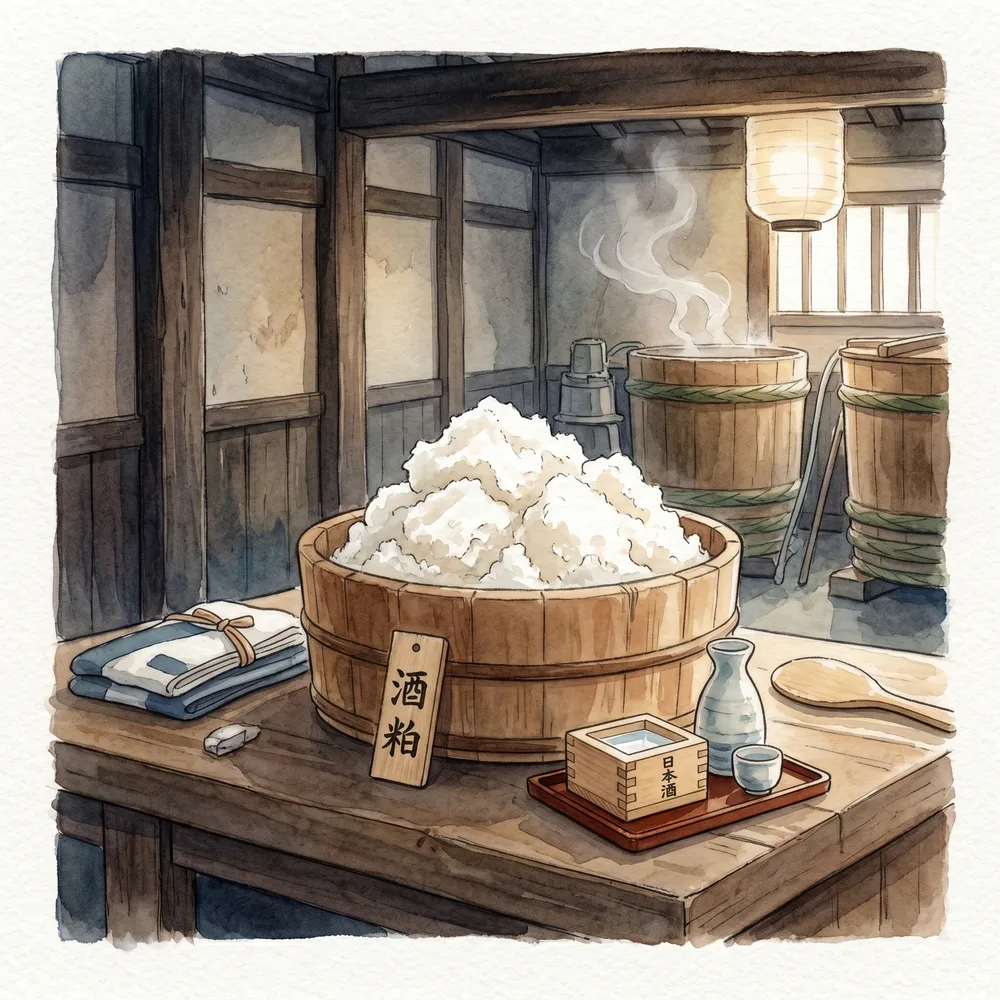
Sake lees (sake kasu)
When rice is fermented into sake, what remains after pressing is a white paste called
sake kasu. It is food in Japan — used in soups and marinades — and it has been rubbed
into skin for as long as sake has been brewed.
The observation behind it is the famous one: brewery workers who spent their days with
their hands in the mash were noted for the condition of their hands. Whether that is
the ferment or simply constant moisture, it produced a tradition that is now a product
category.
Rice bran (komenuka)
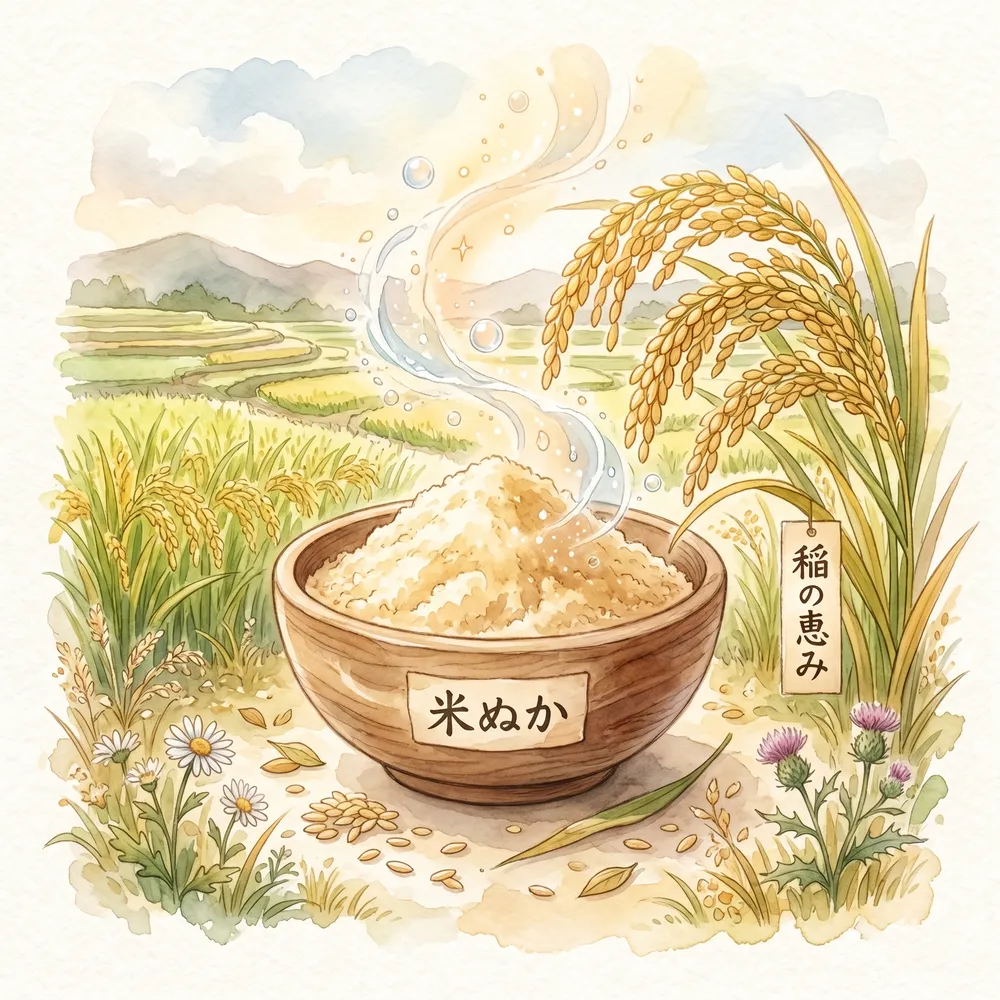
The layer polished off brown rice to make it white. Rich in oils and vitamin E, and
traditionally used as a cleanser — a small cloth bag of bran, squeezed in warm water,
was Japan's face wash long before soap arrived.
Modern versions use it as an enzyme cleanser, which is a gentler mechanism than the physical
scrubs Western exfoliants often rely on.
If you know fermented skincare from K-beauty, this is the same idea, older
English-speaking readers usually meet fermentation-derived skincare through Korean products — galactomyces, bifida ferment. Japan's version predates the marketing category by centuries and comes from a different source: the sake and rice industries rather than laboratory strains.
Other ingredients you will see on Japanese labels, and what they are:
- Tsubaki (camellia) oil — pressed from camellia seeds. High in oleic acid, traditionally used on hair and skin.
- Yuzu and hyuganatsu — citrus peel extracts, used for scent and antioxidant claims.
- Getto (shell ginger) — an Okinawan plant, the basis of several southern Japanese brands.
- Hyaluronic acid — not Japanese in origin, but Japanese brands built entire lines around it earlier and cheaper than most Western ones did.
What to Actually Buy
Hada Labo — the hydrating lotion, and the easiest place to start
Rohto's hyaluronic acid line is the best-selling skincare range in Japan and
has a proper US line with an official Amazon storefront. The signature
product is the lotion — which in Japanese usage means a watery hydrating step, not a
Western body lotion, and this mistranslation confuses everybody at least once.
Pat it into damp skin with your hands, layer a second pass if you want more, then seal with a
moisturiser.
- Type
- Hydrating lotion (Japanese sense: watery, not creamy)
- Key ingredient
- Multiple molecular weights of hyaluronic acid
- Fragrance
- Typically none
- Availability
- Official US line on Amazon
- Price range
- $12–$20
Perfect for: Anyone curious about Japanese skincare who does not want to import anything. Cheap enough that a mistake costs nothing.
Bioré UV Aqua Rich — with the caveat above
The sunscreen that made Japanese SPF famous in English-speaking skincare circles: SPF 50,
water-light, no white cast, sits under makeup. The version sold in the US is
reformulated with FDA-approved filters — still a good product, not the formula
people describe online.
Check the active ingredients list against what you are actually looking for
before ordering either version.
- SPF
- 50 / PA++++ (Japanese version)
- Texture
- Watery essence. Almost no residue
- ⚠ Note
- US version uses different UV filters from the Japanese version
- Price range
- $10–$18
Perfect for: Daily face SPF under makeup — the use case Western sunscreens have historically been worst at.
Curel — the sensitive-skin default
Kao's ceramide-focused line, and what Japanese dermatologists tend to point at for irritated or barrier-compromised skin. Fragrance-free and colourant-free as standard rather than as a special variant, which is the opposite of how most Western ranges are built.
- Focus
- Ceramide replenishment, barrier repair
- Fragrance
- None, across the range
- Availability
- Widely stocked on Amazon
- Price range
- $15–$30
Perfect for: Reactive skin, eczema-prone skin, or anyone whose current routine stings.
The wa-cosme brands — mostly domestic
These are the sake lees and rice bran brands Japanese buyers actually use. Most do not export, so treat this as a list for a trip or a proxy service.
- SHIRO — sake lees and rice bran lotion. The exception: SHIRO runs a US site, so this line is reachable.
- MAKANAI — originally hand cream made by workers at a gold-leaf workshop in Kanazawa. Domestic.
- pdc Wafood Made — the sake lees wash-off mask, a drugstore staple in Japan. Domestic.
- Nihonsakari and Kikumasamune — sake breweries selling rice bran and sake lotion at supermarket prices. Domestic.
- RUHAKU — Okinawan organic line built on shell ginger. Limited export.
The Japanese Routine Is Not Ten Steps
English-language coverage tends to merge Japanese and Korean routines into one Asian skincare stereotype involving a great many bottles. The Japanese approach is generally the opposite of elaborate.
- Cleanse — often two stages: an oil to remove sunscreen and makeup, then a foaming wash. This part is not optional if you wear the sunscreen properly.
- Lotion — the watery hydrating step. Applied with the hands, warmed first, pressed rather than rubbed. Layer it two or three times rather than using more at once.
- Seal — an emulsion or cream to hold the water in.
- Sunscreen — every morning, including indoors near windows and in winter. This is the step Japanese routines treat as non-negotiable and Western ones treat as seasonal.
The technique matters more than the product count. Warming lotion in your palms before it touches your face, and pressing rather than dragging, is the part Japanese instructions insist on and English translations usually drop.
Two words that cause confusion in translation
"Lotion" (化粧水) in Japanese cosmetics means a watery hydrating liquid, closer
to what English calls an essence or toner — never a thick cream.
"Milk" or "emulsion" (乳液) is the light moisturiser that follows it. Neither
word means what it looks like it means, and buying the wrong one is a very common first mistake.
Frequently Asked Questions
Is Japanese sunscreen actually better than American sunscreen?
It uses filters the US has not approved — Uvinul A Plus, Tinosorb, Mexoryl XL —
which give better UVA coverage, more photostability and a much lighter texture. The US only
permitted its first new filter in over twenty-five years recently, with bemotrizinol.
That said, a sunscreen you apply properly beats a better one you skip, and
texture is exactly why people apply Japanese sunscreen more consistently.
I bought a Japanese brand on Amazon. Is it the Japanese formula?
Probably not, if it was sold as a US product. Japanese brands reformulate for the
US market with FDA-approved filters while keeping the name and packaging.
Check the active ingredients. Avobenzone and octocrylene mean a US formulation;
Uvinul A Plus or Tinosorb mean an imported one.
Are the unapproved UV filters unsafe?
No — they are unreviewed, not rejected. They have decades of use in Japan, Europe, Australia and Korea. The delay comes from the US regulating sunscreen as an over-the-counter drug rather than a cosmetic, which makes approving a new ingredient slow and expensive.
Does sake lees skincare smell of alcohol?
Some of it does, and it is usually faint and bready rather than boozy. Brands
aimed at export tend to scent over it. If you are sensitive to the smell, look for rice bran
products instead — they carry the same tradition without the ferment note.
Most sake lees cosmetics contain little or no ethanol, but check the label if alcohol irritates
your skin.
What does "lotion" mean on a Japanese product?
A watery hydrating liquid — what English would call an essence or a hydrating
toner. Never a thick cream. The moisturiser step is labelled "milk" or "emulsion".
Buying a Japanese "lotion" expecting body lotion is the single most common first-purchase
mistake.
Can I buy the sake lees and rice bran brands outside Japan?
Mostly no. MAKANAI, pdc Wafood Made and the brewery lines from Nihonsakari and
Kikumasamune are domestic products at domestic prices.
SHIRO is the exception — it runs a US site, so its sake lees and rice bran
lotion is the reachable entry into this category.
Final Thoughts: Read the Actives, Warm the Lotion
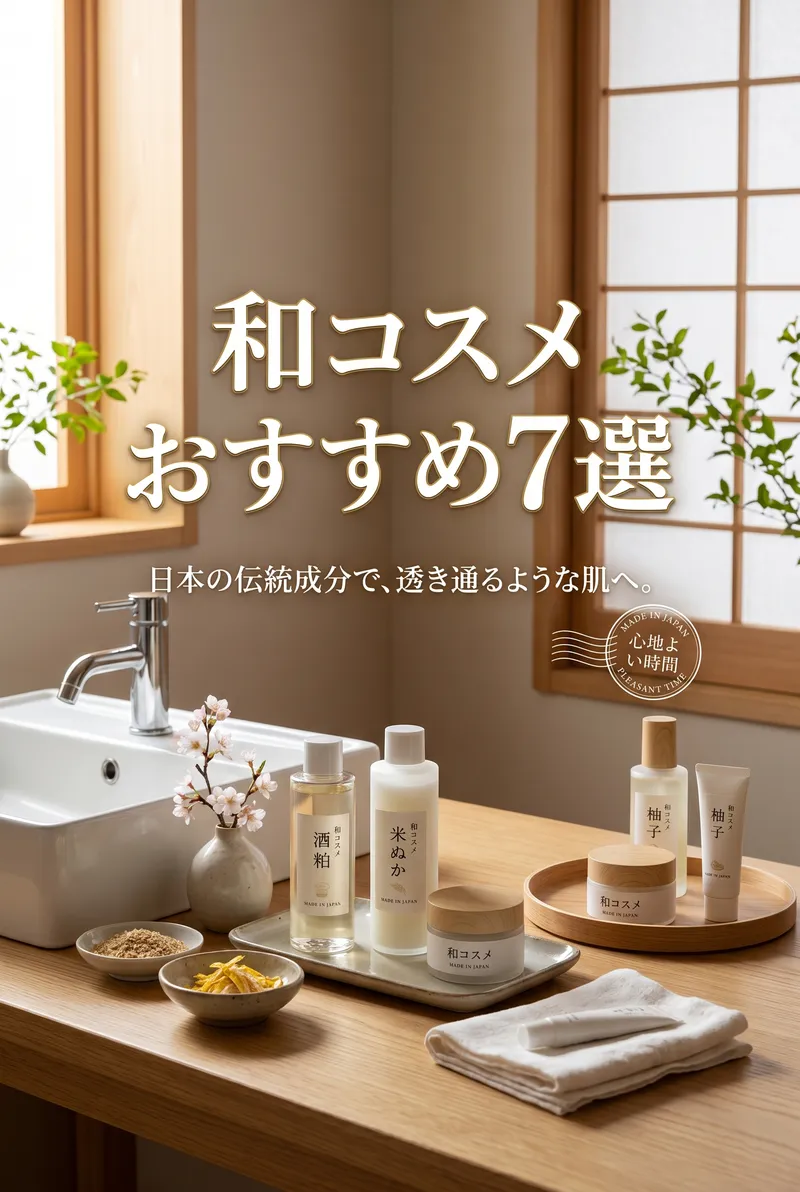
Two genuinely different things are being sold under the same heading. The sunscreen difference is regulatory and real — and the version on your local Amazon is probably not the one people are recommending, so check the actives list before you order.
The sake lees and rice bran side is older and quieter, and mostly stays in Japan. SHIRO is the one that made it out.
And if you take one habit from any of it: warm the lotion in your palms and press it in rather than wiping it on. It costs nothing, it is what every Japanese instruction insists on, and it is the first thing lost in translation.
Japanese Perfume: 4 Brands and Where to Buy Them
Japanese Soap: 5 Best Artisan Bar Brands, Compared