In professional kitchens, "mandoline" often just means Benriner. The Japanese
plastic-bodied slicer has been the working standard for seventy years, and it costs a fraction of
the heavy French steel ones it replaced.
It is also, by some distance, the most dangerous object in a domestic kitchen.
Mandolines send an estimated 24,000 people to American emergency rooms every year,
and the injuries are not nicks — they are stitches and reattached fingertips.
Both things are true at once, and neither is a reason to avoid the tool. This guide covers
which Benriner to buy, which blade actually gets used, why the blade is a consumable
— and the one piece of equipment you should order at the same time.
Quick Reference: Which Benriner
| Model | Width | Buy it if |
|---|---|---|
| Standard | ~64mm | You cook for two to four people. This is the default |
| Super / No. 95 | ~95mm | You slice cabbage, or anything wider than a cucumber |
| Jumbo | ~120mm | Restaurant volume, or whole daikon |
| Turning slicer | — | Vegetable noodles and long continuous ribbons |
| Buy a cut-resistant glove with it. ANSI A5 or higher, or EN 388 Level C or higher. The supplied hand guard is not enough on its own — see the next section before you order anything. | ||
Read This Before You Buy One
Most mandoline guides put safety at the end, after you have already decided to buy. That is the wrong order, so here it is first.
US injury surveillance data attributes roughly 25,000 emergency room visits a year to slicers and choppers, with mandolines specifically accounting for an estimated 24,000 of them. The cause is overwhelmingly the same: the hand guard was missing, or it was not being used.
The last slice is what gets you
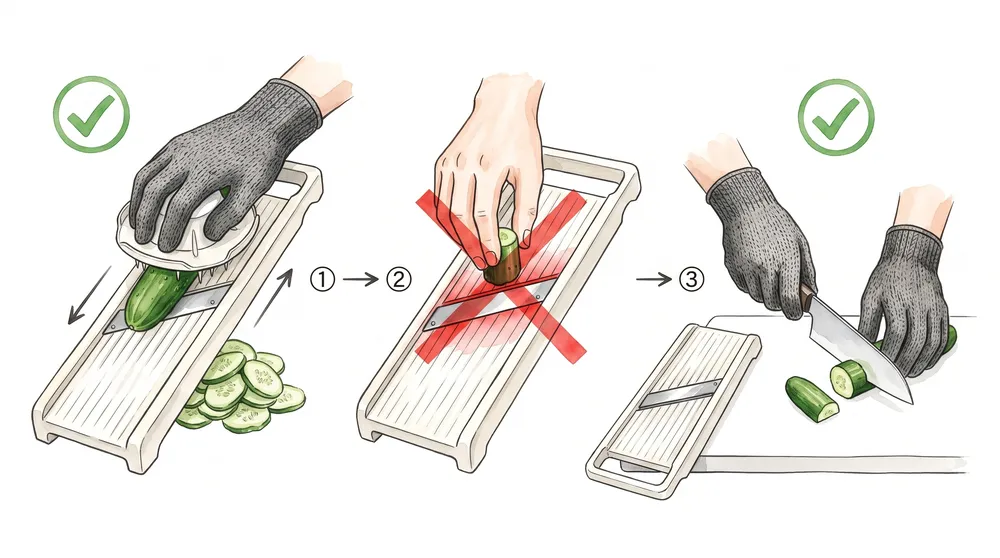
This is the single most useful fact in this article. The majority of mandoline injuries happen on the final piece — when the vegetable has become too short to hold safely and your fingers are now the thing travelling over the blade.
Japanese cooks have a rule for this: once it is down to the last inch, stop and finish with a knife. That advice long predates the American injury statistics, and the statistics turn out to agree with it exactly. The offcut is worth less than your fingertip.
Buy a glove, and buy the right grade
The plastic hand guard that comes in the box works, but it is awkward on round vegetables and people abandon it. A cut-resistant glove is what professional kitchens actually rely on, and it is worth about fifteen dollars.
Grade matters. Look for ANSI cut level A5 or higher, or EN 388 cut level C or higher if you are buying in Europe. Anything below that is a food-prep glove, not a blade glove, and will not stop a mandoline.
- Use the guard for as long as it works, then switch to the glove, then stop entirely.
- Slice away from yourself on a stable surface. A Benriner bridged across a bowl slides; brace it against the counter edge or use the legs.
- Never run a mandoline while distracted. The blade is sharper than any knife you own and gives no resistance to warn you.
- Store it with the blade covered. Reaching into a drawer is the second most common way people cut themselves on these.
Why Japanese Mandolines Cut Differently
A blunt blade crushes a vegetable cell before it parts it. The wall ruptures,
water escapes, and what you get is limp and weeping within minutes — which is why home-shredded
cabbage goes soggy while the mound next to a tonkatsu stays upright for an hour.
A sharp enough blade parts the cells instead of bursting them. The cut surface
stays closed, the moisture stays inside, and the shred stays crisp.
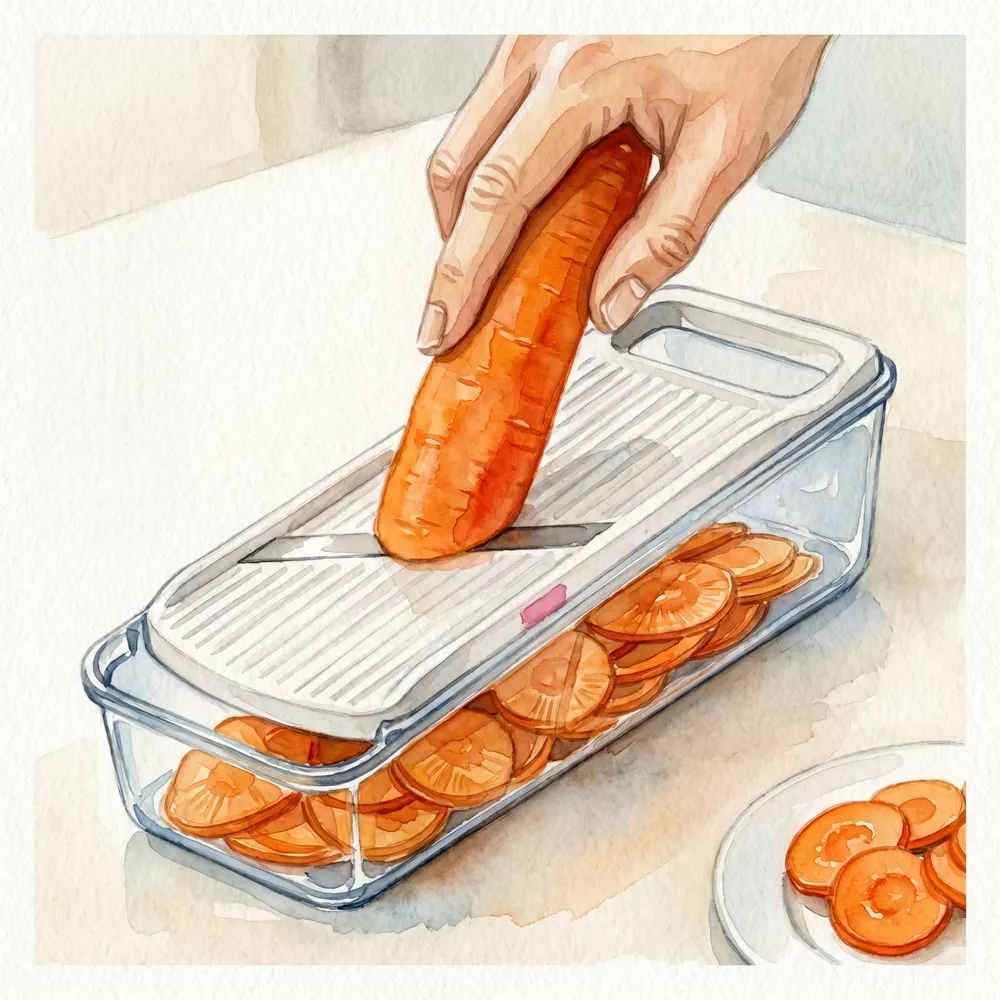
This is the same reasoning that produced Japanese kitchen knives, and it is not a marketing story — it is why a mandoline exists at all. No amount of knife skill produces a shred as thin, as even, or as fast as a fixed blade with a screw-adjusted gap under it.
Why Benriner specifically became the default
Benriner has been making these since the 1940s, and the design has barely changed because it did not need to. What made it the professional choice over the heavy French mandolines:
- It costs about a fifth as much. A tool that gets dropped, abused and replaced in a commercial kitchen should not cost $200.
- Continuous thickness adjustment by a screw underneath, rather than a few fixed presets.
- Replaceable julienne blades that slot in from the side, so one body covers straight slices and three widths of matchstick.
- It weighs nothing and washes in seconds, which matters more in a real kitchen than heft does.
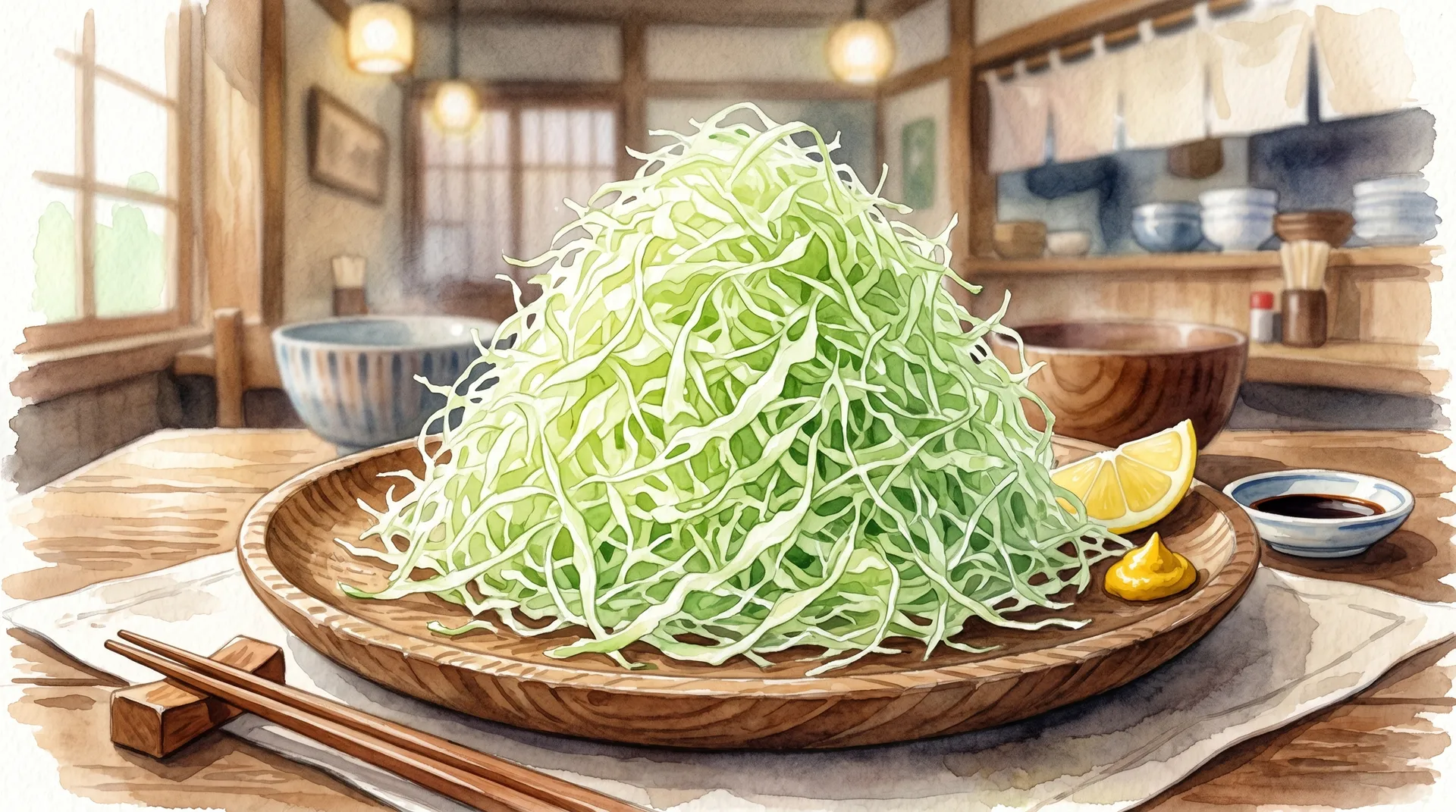
The cabbage test
If you want to know whether a slicer is any good, shred cabbage on it and leave it fifteen
minutes. Good shreds stay separate and stand up. Bad shreds settle into a wet
mat.
The difference is entirely blade sharpness, and it is the reason a Japanese cutlet restaurant
can serve a mound of cabbage that eats like a salad rather than like coleslaw.
Which Benriner to Buy
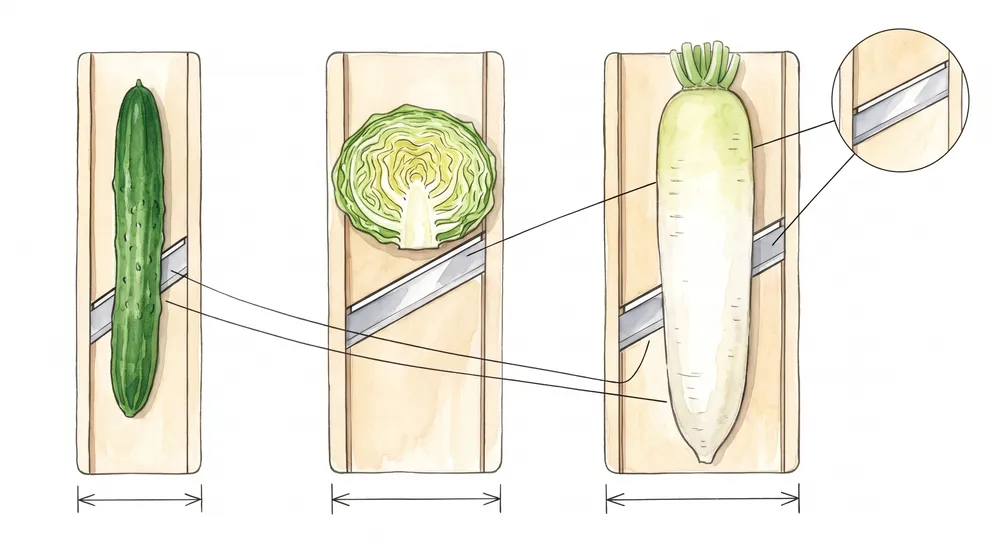
Look for "Official US Version" in the listing. Benriner is widely counterfeited, and the fakes have visibly worse blades — which on this particular tool is the entire product.
Benriner Super Slicer — the one to buy
The wider body, and the model most people should own. At roughly 95mm the bed is wide enough to take half a cabbage or a whole onion, which the standard Benriner is not. Ships with the three julienne inserts. This is the version that shows up in professional kitchens.
- Bed width
- ~95mm
- Blades
- Fixed straight blade + 3 julienne inserts
- Thickness
- Continuously adjustable by screw
- Made in
- Japan
- Price range
- $40–$60
Perfect for: Nearly everyone. If you are buying one Benriner and are not sure which, buy this.
Benriner Standard — small kitchen, small budget
The original narrow body. The blade is identical — you are only giving up width. Fine for cucumber, carrot, radish and potato; frustrating for cabbage, because you end up quartering it first and the shreds come out short.
- Bed width
- ~64mm
- Blades
- Fixed straight blade + 3 julienne inserts
- Made in
- Japan
- Price range
- $28–$40
Perfect for: Cramped kitchens, one or two people, or testing whether you will actually use a mandoline.
Benriner Jumbo — restaurant volume
Around 120mm across, which takes a whole daikon or a large cabbage without quartering. Overkill for a domestic kitchen and exactly right if you are prepping in quantity — the wider bed means fewer passes and far less handling of short offcuts, which is also the safer way to work.
- Bed width
- ~120mm
- Made in
- Japan
- Watch for
- Needs real counter space. It does not fit most drawers
- Price range
- $70–$110
Perfect for: Small restaurants, caterers, or anyone who preserves and pickles in bulk.
The Blade Is a Consumable
English-language reviews of Benriners are full of one-star complaints along the lines of "it was amazing and then after a year it stopped cutting properly". That is not a defect. That is the tool working as designed.
A mandoline blade is thin, fixed, and takes the entire load of every pass on one edge. It dulls, and unlike a knife you cannot practically sharpen it — the geometry is unforgiving and the blade is not thick enough to survive being reground by hand.
How to tell, without touching the blade
The symptom is crushing, not tearing — and it shows up on the plate long
before the edge feels dull to a fingertip.
Shred cabbage and leave it five minutes. A sharp blade gives you shreds that stand up dry and
separate. A tired one gives you a flat mat with water pooling under it,
because the cells were burst rather than parted. That puddle is the entire test.
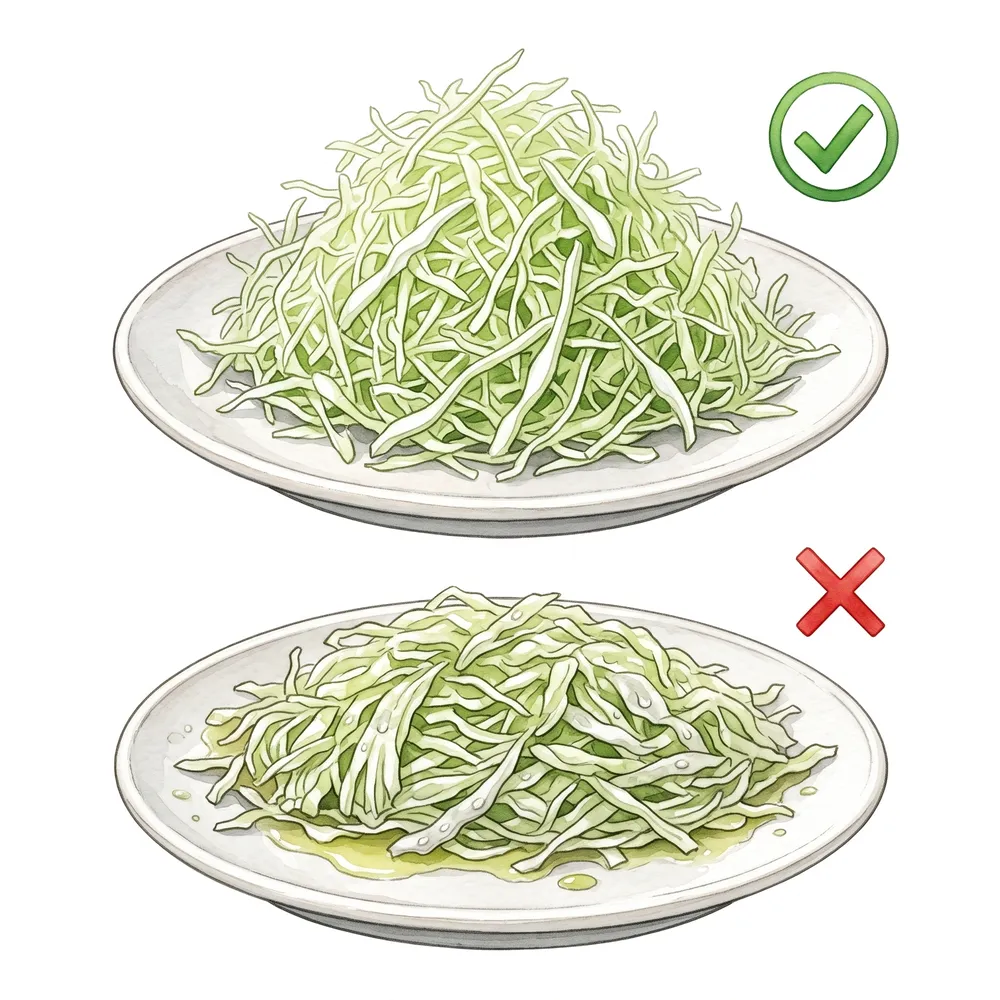
So treat it like a razor cartridge:
- Expect one to three years of home use before the edge is noticeably tired. Heavy use, months.
- Replacement blades are sold separately and are far cheaper than a new unit — this is the reason to buy the genuine article rather than a counterfeit with no parts supply.
- Hand wash, dry immediately. Dishwashers are hard on both the blade edge and the plastic body, and a wet blade left in a rack will spot.
Ceramic blades: a real trade-off, not an upgrade
Some Japanese slicers use ceramic blades, which hold an edge far longer and never rust — genuinely attractive for a tool you cannot sharpen. The cost is brittleness: ceramic chips if you drop it or hit a frozen edge, and a chipped ceramic blade is finished. Steel dulls gracefully; ceramic fails suddenly. Choose accordingly.
What It Is Actually For
Beyond the obvious, three things a mandoline does that a knife realistically cannot.
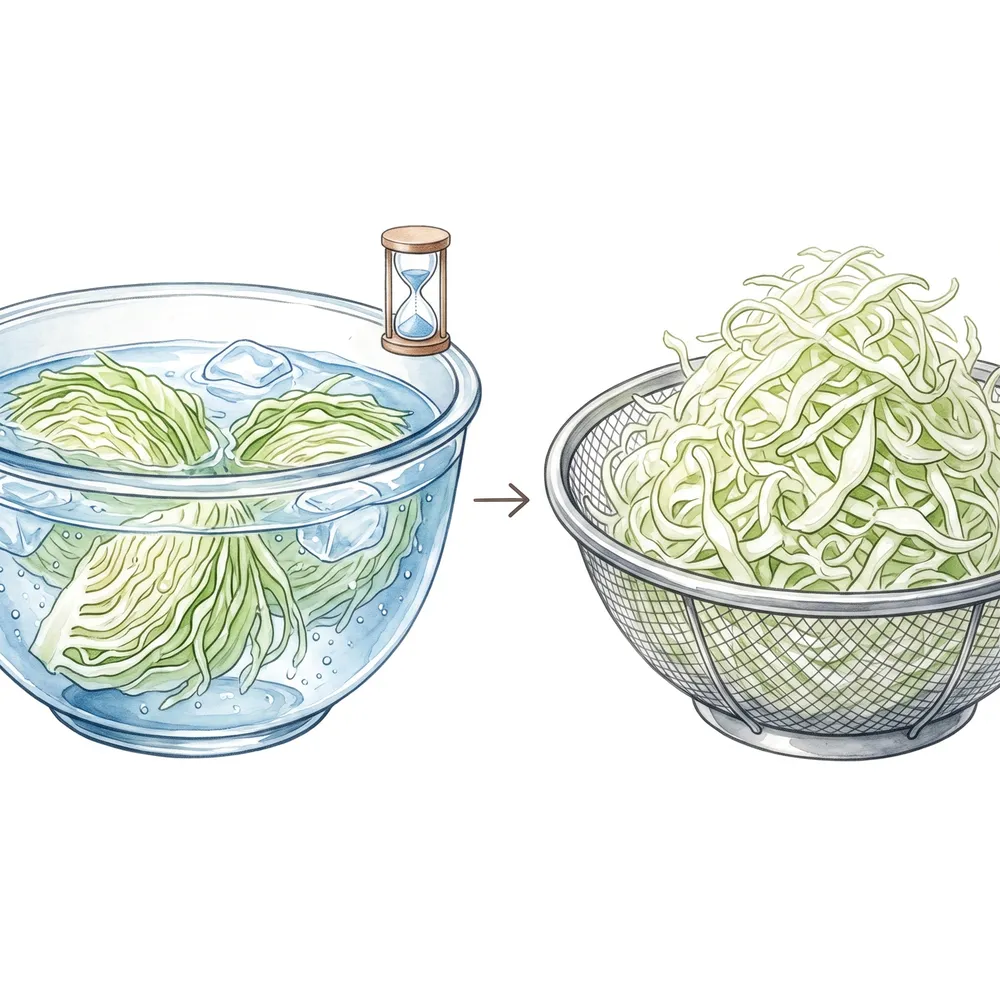
Cabbage that eats like a salad
The mound served with tonkatsu is cut fine enough that it barely needs dressing. Cut across the
leaf rather than along it, and set the blade thin.
Then the step that changes everything: drop the shreds into ice water for five
minutes. They take up water, curl, separate and go crisp. This is what home
cooks skip and restaurants never do — and it costs nothing but a bowl.
Tsuma — the shredded daikon under sashimi
Those fine white threads are daikon, and they are there to be eaten rather than as decoration. A julienne insert plus ice water produces them directly. Traditionally this is done by katsuramuki, peeling the radish into one continuous sheet with a knife and then shredding it — a skill that takes years, which the mandoline sidesteps entirely.
Anything that needs to be identical
Potatoes for a gratin, fennel for a salad, cucumber for pickling: evenness matters more than thinness. Uneven slices cook unevenly and pickle unevenly, and a screw-set blade removes that variable completely.
Frequently Asked Questions
Is a mandoline really that dangerous?
Yes, and the risk is concentrated in one specific moment. US data attributes
around 24,000 emergency room visits a year to mandolines, and the majority happen on the last
slice, when the vegetable is too short to hold safely.
Use the guard, wear an ANSI A5 glove, and stop at the last inch and finish with a
knife. Do those three things and it is no more dangerous than a chef's knife.
Which Benriner should I buy?
The Super (~95mm) for most people. The blade is the same across the range; you are choosing bed width. The narrow standard model struggles with cabbage, and the Jumbo is restaurant equipment that will not fit in a drawer.
Can I sharpen the blade?
Not practically. It is too thin and the bevel geometry is unforgiving — attempts
usually make it worse. Buy a replacement blade instead; they are sold separately and cost far
less than the unit.
Expect one to three years of home use before you need one.
Is it dishwasher safe?
Technically yes, practically no. Heat and detergent are hard on the plastic body, and the blade dulls faster. Rinse it under the tap immediately after use with a brush — it takes about twenty seconds — and dry it before storing.
Are there left-handed models?
The Benriner is symmetrical, so handedness is not really the issue. You push food down the bed with your dominant hand either way. What does vary is which side the julienne blades slot in from, which is a minor annoyance rather than a barrier.
How do I know if I am buying a genuine one?
Look for "Official US Version with Authentic Retail Packaging" in the listing.
Benriner is heavily counterfeited and the copies have noticeably inferior blades — which, on a
tool whose entire value is the blade, means you have bought nothing.
Genuine units also have replacement blades available, and fakes do not.
Final Thoughts: Buy the Glove With It
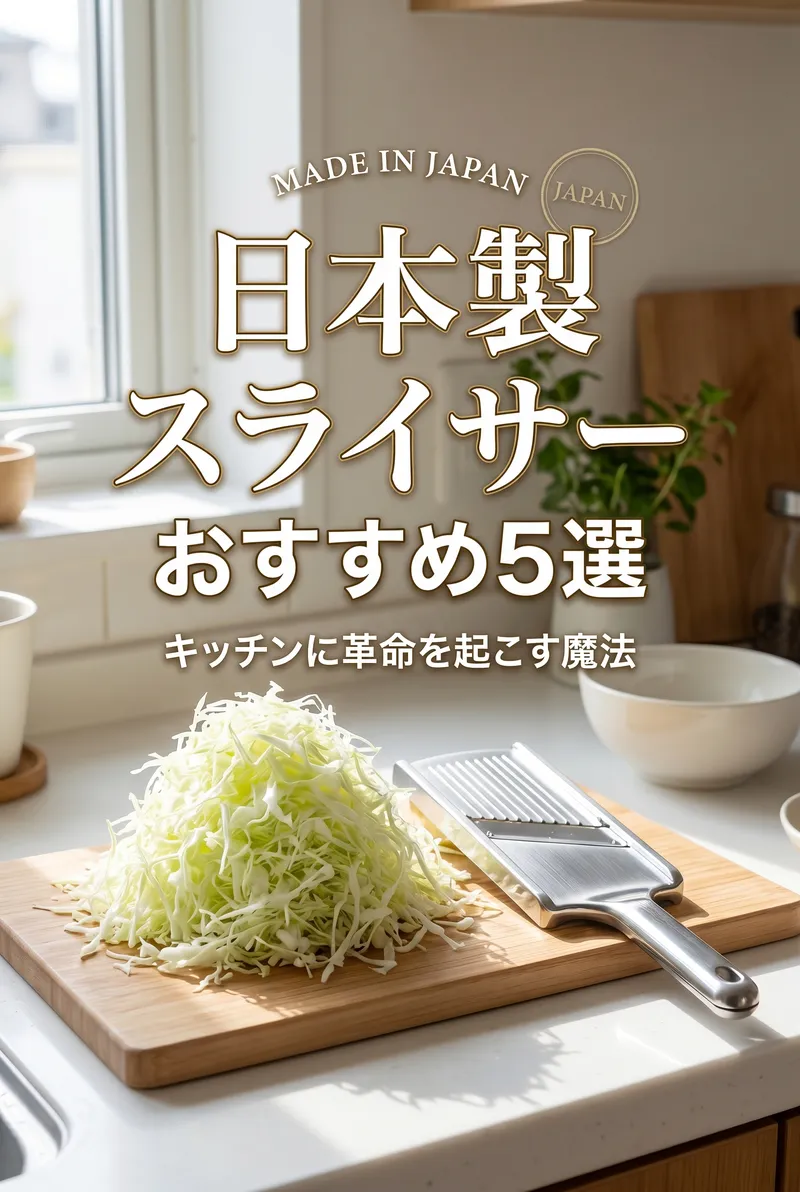
A Benriner is a $50 tool that does something no knife skill can match, which is why it has sat in professional kitchens for seventy years without needing a redesign. Buy the Super, look for the official US packaging, and treat the blade as a consumable.
And order a cut-resistant glove in the same basket. Twenty-four thousand people a year find out the hard way that the last slice is not worth it — and every one of them thought they would be careful.
Then shred a cabbage as fine as the setting will go, drop it in ice water for five minutes, and you will understand what the tool is actually for.

Japanese Kitchen Knives: Brands and Types
How to Sharpen a Japanese Knife