
Japanese audio does not start at the top. It starts at about fifty dollars, with a
small metal earphone called the final E3000 that has spent years being recommended to every person
who asks where to begin.
Above that sits a range most people never see: Audio-Technica models hand-assembled in
Tokyo, Fostex planars that spawned an entire modding subculture, and custom in-ears you cannot buy
outside Japan at all.
This guide maps that range by price, explains which of these are actually made in Japan
rather than designed there — the two are not the same, and the distinction matters — and
tells you honestly when you need an amplifier and when you do not.
Quick Reference: Japanese Audio by Price
| Budget | What to look at | Do you need an amp? |
|---|---|---|
| $40–$80 | final E3000. The default first recommendation | No. A phone dongle drives it fine |
| $150–$250 | Fostex T50RP — the modding platform | Yes. Planar, inefficient, genuinely needs power |
| $500–$1,500 | Audio-Technica wood-housing and open-back lines | Helpful, not mandatory |
| $2,000+ | ATH-ADX3000, final A-series, Acoustune | Yes, and a source worth the headphone |
| "Designed in Japan" and "Made in Japan" are different claims. Several of the best-known Japanese brands manufacture in two countries — see the section below before you assume. | ||
Why Japanese Audio — And the Jack You Already Own
Japan's audio industry grew up alongside its camera and instrument industries, and it shows in
the same places: machined metal housings, wood turned for acoustic reasons rather than
appearance, and tolerances held tighter than the price suggests.
But the strongest argument is one you can check on your own desk.
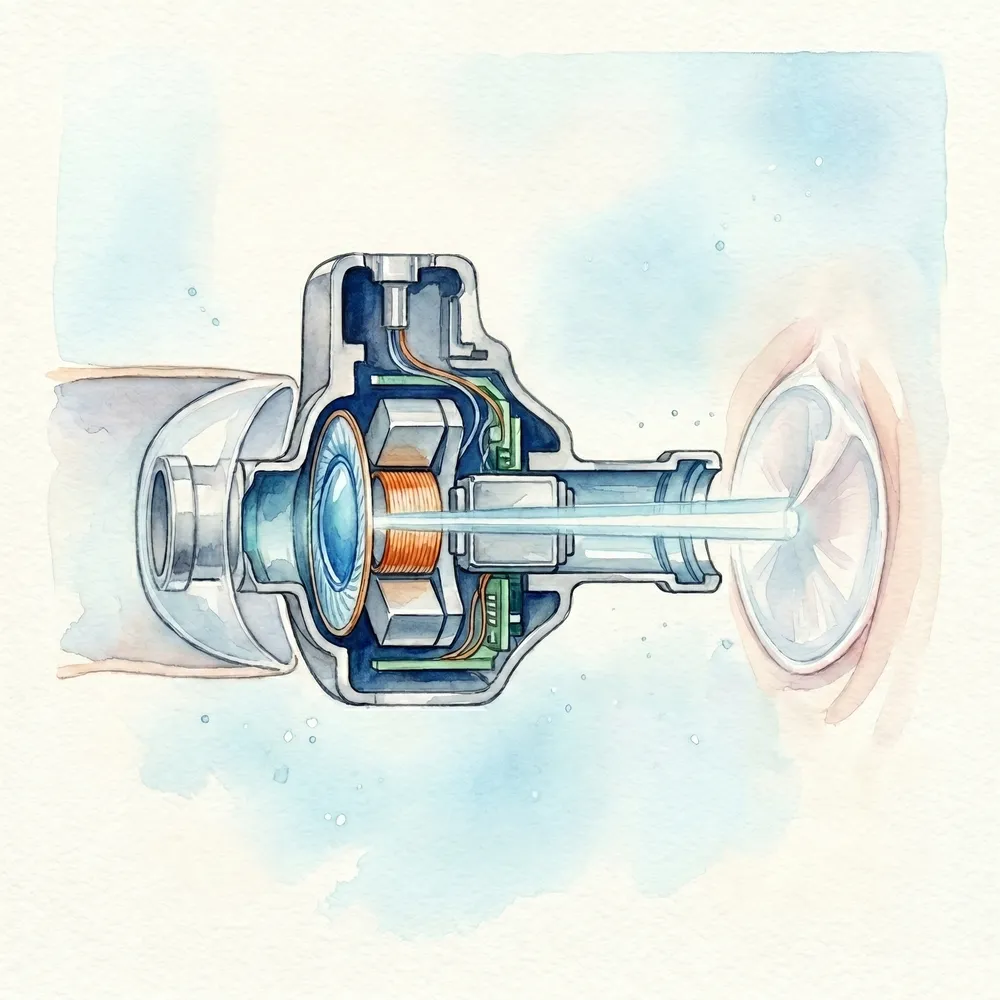
The 4.4mm balanced jack is a Japanese standard
If you own anything portable and remotely serious, it probably has a 4.4mm balanced output next to the 3.5mm. That connector is called Pentaconn, and it is not an industry convention that emerged by accident.
It was standardised by JEITA — the Japan Electronics and Information Technology Industries Association — as RC-8141C in 2016, and pushed into the market by Sony. Five contacts: separate positive and negative for each channel, plus a common ground, which is what allows true differential signalling and the lower crosstalk that comes with it.
In under a decade it went from a Japanese specification to the de facto balanced connector on portable players, desktop amplifiers and professional interfaces worldwide. Most people using it have no idea where it came from.
Why wood keeps appearing
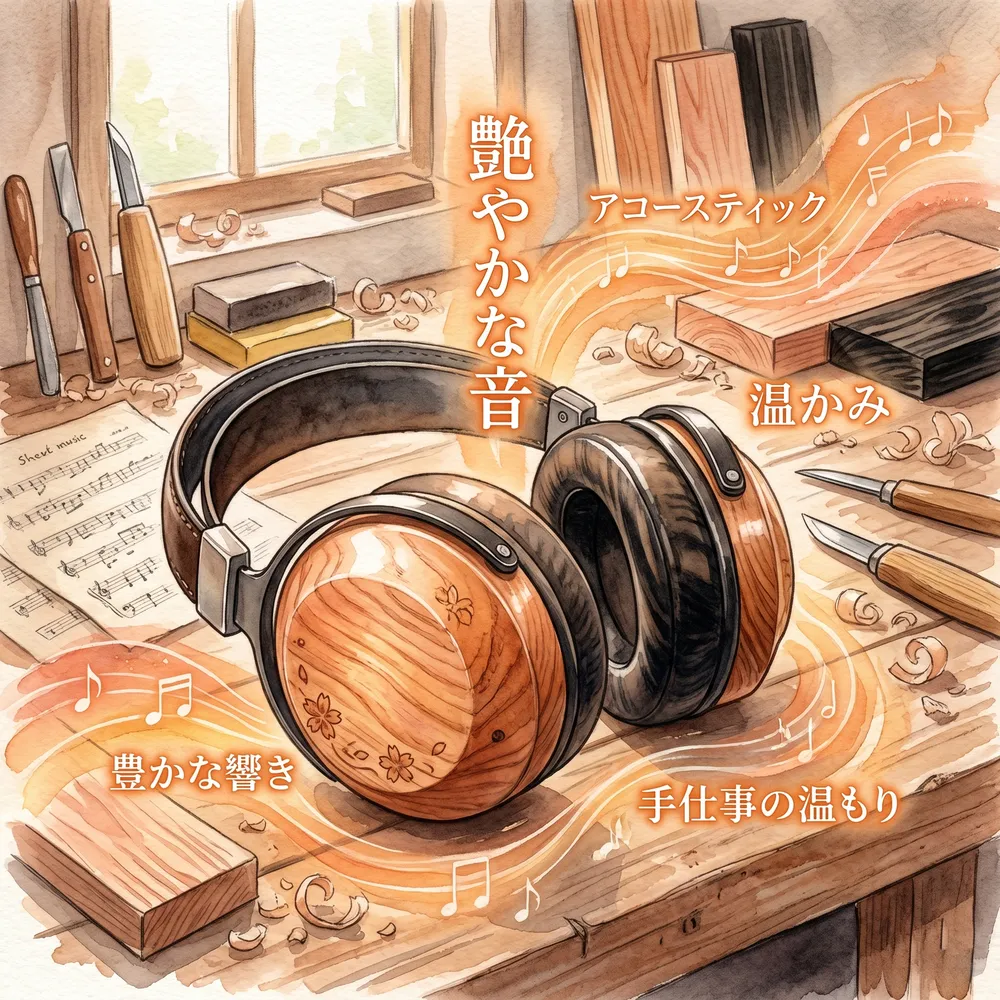
Japanese makers use wooden housings more than anyone else, and it is not decoration.
Wood damps resonance differently from metal or plastic — it absorbs rather
than ringing — which softens the hard edge that closed-back designs tend to develop.
The trade is consistency: no two pieces of wood are identical, so a wooden housing is a
deliberate choice to accept variation in exchange for character.
"Made in Japan" vs "Designed in Japan"
This site is about Japanese manufacturing, so it would be dishonest to blur this line — and in audio it is blurred constantly.
Take Audio-Technica. The company runs a mass-production factory in Fukui, Japan and a large plant in Hangzhou, China. It also operates the Naruse factory in Machida, Tokyo, which hand-assembles selected models — the ATH-ADX3000 is built there, piece by piece, from in-house components.
All three are Audio-Technica. Only some of them are made in Japan.
How to check before you buy
- Read the listing wording carefully. "Designed in Japan", "Japanese brand" and "Japanese engineering" all specifically avoid saying where it was built.
- Flagship and hand-built lines are the ones made domestically. Mass-market models are where offshore production sits, across almost every brand.
- This is not a quality warning. A well-run Chinese plant building to a Japanese spec makes excellent products — the E3000 being the obvious example.
- It only matters if country of manufacture is what you are buying. If you want the thing made in Machida or Fukui, you have to check which model that is.
Where this guide is not certain, it says so. Anything below described as made in Japan has been checked; anything else is described by brand only.
The T50RP: The Most Modified Headphone Ever Made
The Fostex T50RP is a closed-back planar magnetic headphone that has been in production, in various revisions, for decades. Stock, it is a competent studio monitor with a reputation for being unexciting.
It is also the single most modified headphone in the history of the hobby, and that is not marketing language — it is what the English-speaking audio community calls it.
Why this particular headphone
- The driver is far better than the enclosure. A planar diaphragm in a cheap plastic cup — so improving the cup improves the headphone dramatically.
- It is inexpensive. Nobody experiments destructively on a $2,000 headphone.
- It comes apart easily, and Fostex never made that difficult.
- It has stayed available for decades, so a mod documented in 2012 can still be performed on a unit bought today.
The result is an entire cottage industry. ModHouse Audio's Argon is the best-known: a rebuilt T50RP aiming to give a closed-back the soundstage of an open one, arrived at through dozens of iterations. Forums including Head-Fi, diyAudio and SuperBestAudioFriends host long-running threads, and there is a community-maintained Mods Compendium documenting what has been tried.
What the mods actually do
Almost all of it is damping. Acoustic foam lining the cups, modelling clay on the driver baffle, felt over the driver, wool or cotton filling the cavity. You are not improving the driver — you are stopping the plastic housing from colouring what the driver already does. Pads then change the tuning again, which is why pad-rolling is half the hobby.
Buy it stock only if you intend to modify it, or you want a neutral closed monitor. If you want a finished product at that money, buy something else. The T50RP's value is that it is a starting point, and it has been one for longer than most people in the hobby have been in it.
What to Buy at Each Tier
final E3000 — start here, and possibly stop here
A stainless steel earphone with a single 6.4mm dynamic driver, from a company based in
Kawasaki. It has been the standing answer to "what should I buy first" for years, and the
reason is that it does not try to impress you. No boosted bass, no lifted
treble — an even response and an unusually wide stage for the size and price.
Note the wording: final describes it as designed in Japan, which is not a
claim about where it was assembled.
- Type
- In-ear, 6.4mm dynamic driver
- Housing
- Stainless steel
- Cable
- Fixed, 3.5mm
- Origin
- Japanese brand (Kawasaki). Designed in Japan
- Price range
- $50–$70
Perfect for: Literally anyone starting out, and plenty of people who never feel the need to move on. It runs off a phone dongle.
Fostex T50RP — the platform, not the destination
Covered in full above. Buy it because you want to open it up, or because you need a flat closed monitor for tracking. It is inefficient enough that a phone will not drive it properly, so budget for an amplifier in the same purchase.
- Type
- Closed-back planar magnetic
- Reputation
- The most modified headphone in the hobby
- Stock sound
- Flat, controlled, deliberately unexciting
- Needs
- A real amplifier. This is not optional
- Price range
- $150–$250
Perfect for: Anyone who enjoys the project as much as the listening — and studio use, where flat is the requirement.
Audio-Technica ATH-ADX3000 — genuinely built in Tokyo
An open-back flagship hand-assembled at the Naruse factory in Machida, Tokyo,
from components the company makes in house. This is the model to point at when someone asks
whether Audio-Technica still builds anything in Japan — it does, and this is
it.
Open-back, so it leaks sound in both directions. Not a commuting headphone under any
circumstances.
- Type
- Open-back dynamic, full size
- Made in
- Machida, Tokyo — hand-assembled
- Use
- Quiet room, seated listening
- Needs
- A proper source and amplifier to be worth it
- Price range
- $2,500–$3,500
Perfect for: Someone at the end of the upgrade path who wants domestic manufacture as part of what they are buying.
The tier above, which mostly stays in Japan
Japan's true high end is harder to reach from abroad, and it is worth knowing the names anyway.
- FitEar — custom in-ear monitors moulded to your ears, sold through Japanese fitting appointments. Effectively unobtainable without going to Japan, since the process requires ear impressions taken there.
- final A-series — the flagship line above the E-series, at fifty to a hundred times the price. Limited export distribution.
- Acoustune — machined metal IEMs with replaceable driver modules. Has international distributors, so this is the reachable one of the three.
- Audio-Technica wood-housing models — the ATH-AW and ATH-W lines, turned from a named species of wood. Some reach export markets, some do not.
Do You Actually Need a DAP or an Amp?

Japanese audio writing tends to say that a phone gets you "half the potential" of a good headphone. That is true of some equipment and simply false of others, and the difference is not subtle.
| What you have | Amp needed? | Why |
|---|---|---|
| Efficient IEMs (E3000 and similar) | No | Low impedance, high sensitivity. A dongle DAC is plenty |
| Planar magnetics (T50RP) | Yes, genuinely | Inefficient by design. Underpowered, they sound thin and lifeless |
| High-impedance full-size (250Ω+) | Yes | A phone cannot deliver the voltage swing |
| Modern phone with no headphone jack | A dongle DAC, at least | You need the conversion somewhere. $30 buys a competent one |
Spend on the headphone first. The difference between a $50 and a $500 headphone is obvious to anybody; the difference between a $30 dongle and a $600 player, on efficient gear, is the kind of thing people argue about in forums for a reason.
Balanced connection, briefly
A balanced connection — the 4.4mm Pentaconn above, or 2.5mm on older gear — gives each channel its own positive and negative path rather than sharing a ground. The reliable benefits are lower crosstalk and, usually, more output power. Whether it sounds better beyond that depends entirely on how the amplifier was built. It is not magic, and a good single-ended output beats a mediocre balanced one.
Frequently Asked Questions
What should I buy first?
The final E3000, unless you have a specific reason not to. It is inexpensive,
runs off anything, and has an even tuning that will not mislead you about what your music
actually sounds like.
Move on when you can name what you want changed. If you cannot, an upgrade will not deliver it.
Is Audio-Technica made in Japan?
Some models, not all. The company has a mass-production factory in Fukui, Japan
and another in Hangzhou, China, plus a hand-assembly facility in Machida, Tokyo where models such
as the ATH-ADX3000 are built.
If country of manufacture matters to you, check the specific model — the brand
name alone does not tell you.
Why is the T50RP always being modified?
Because the driver is much better than the plastic housing around it. Damping
the cups, the baffle and the cavity removes colouration the enclosure adds, and the headphone is
cheap enough and available long enough that a modification documented years ago still applies to
one bought today.
ModHouse Audio's Argon is the best known of these rebuilds.
Do I need a DAP, or is my phone enough?
For efficient in-ears, your phone plus a dongle DAC is genuinely enough. For
planar magnetics or high-impedance full-size headphones, it is not — those need real power and
will sound thin without it.
Buy the headphone first and find out whether you have a problem before solving it.
Is the 4.4mm balanced jack worth using?
Yes, mostly for output power and lower crosstalk. It is a Japanese standard —
JEITA RC-8141C, 2016 — that became the international default for portable balanced connections.
It is not automatically better sounding. A well-designed single-ended output beats a poorly
designed balanced one every time.
Can I buy FitEar or final's flagships outside Japan?
FitEar, realistically no — they are custom in-ears requiring ear impressions taken in Japan. final's A-series has limited export distribution. Acoustune is the high-end Japanese IEM brand with proper international distributors, so start there if you want that tier without a trip.
Final Thoughts: Start Low, Move Deliberately
Buy the E3000. Live with it for a few months. If you reach a point where you can say precisely what you want it to do differently, that sentence is your upgrade brief — and without it, spending more is guesswork with a bigger number attached.
If you like taking things apart, the T50RP is waiting, and a decade of documented modifications is waiting with it. If you want something built by hand in Tokyo, the ADX3000 is that thing, and it says so honestly.
And when you plug into the 4.4mm socket on whatever you end up with — that connector is Japanese too. Standardised in 2016, on almost everything by now, and almost nobody knows.
Japanese Mechanical Pencils: Precision You Can Hold

Japanese High-End Tweezers: Pain-Free Precision