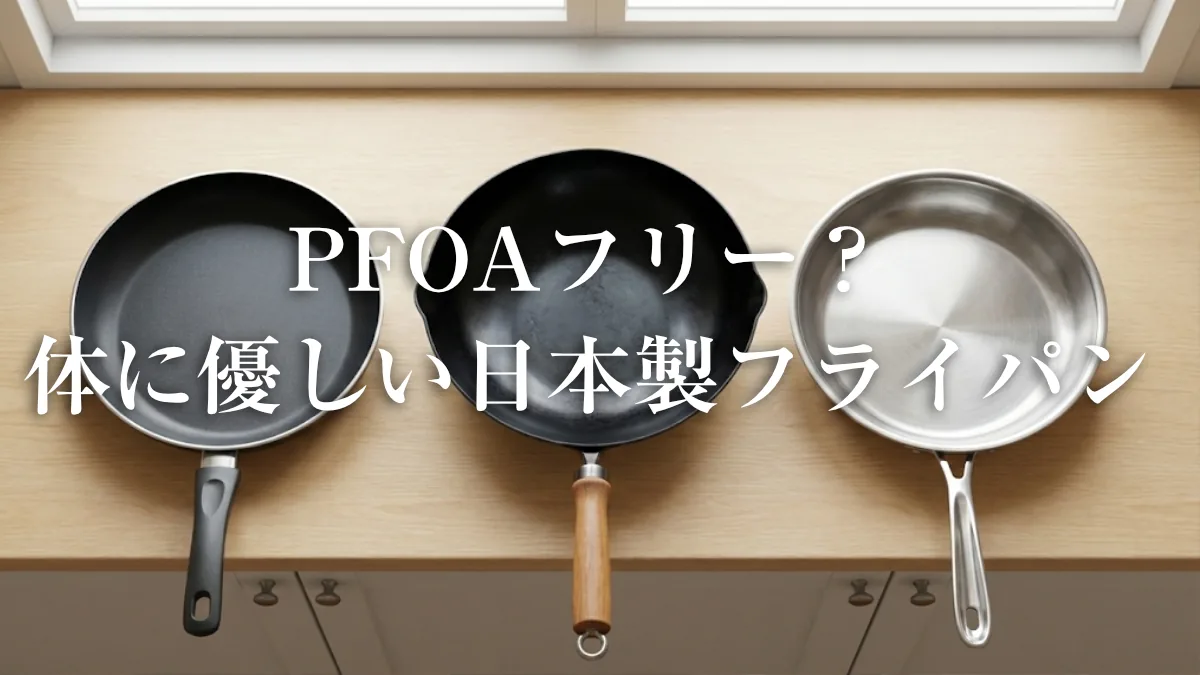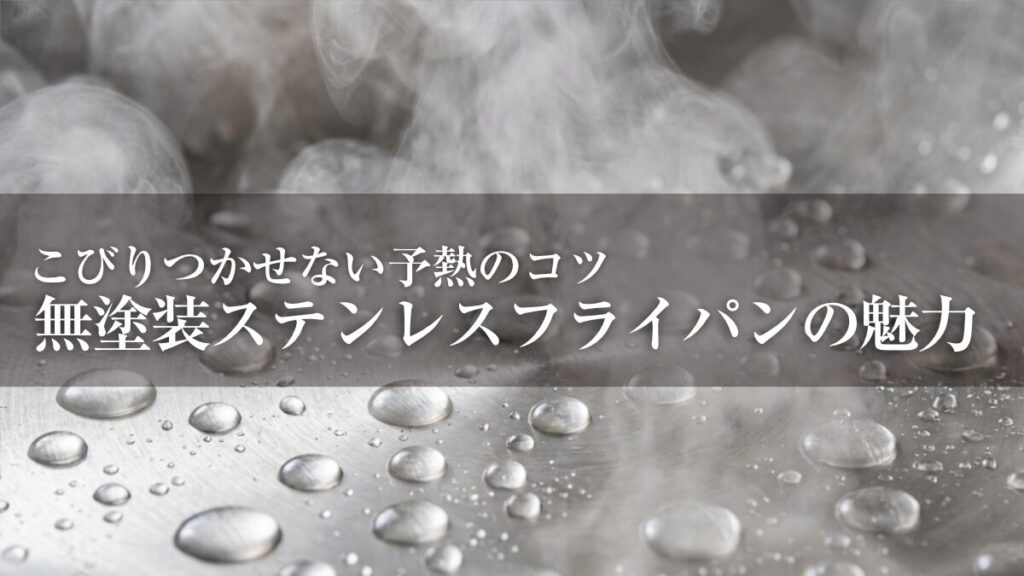
Stainless steel frying pans stick for one reason: the pan was not preheated enough. Master the water bead test — a simple 10-second check before adding oil — and you can cook eggs, fish, and steak in uncoated stainless without them sticking. No coating to degrade, no seasoning routine, and no replacements ever. This guide shows you exactly how, and which Japanese stainless pans are worth buying.
Japanese manufacturers have produced multi-ply stainless cookware at a high level since the 1970s. Brands like Miyazaki Seisakusho (Geo Product) and Fujinos, both from the Tsubame-Sanjo metalworking region, offer pans with 20+ year warranties — something no coated pan can credibly offer.
Quick Reference: Stainless Steel Pan Construction Types
| Type | Heat | Weight | Best for |
|---|---|---|---|
| Single-layer stainless | Uneven (avoid) | Light | Budget option — not recommended |
| 3-ply (base only) | Good at base | Medium | General home cooking |
| Full-clad 3–7 ply | Excellent throughout | Medium-heavy | Serious cooking, searing, braising |
| All-metal handle | Same as above | Heavier | Oven use, professional style |
Why Stainless? Three Advantages Over Coated Pans
No coating to degrade
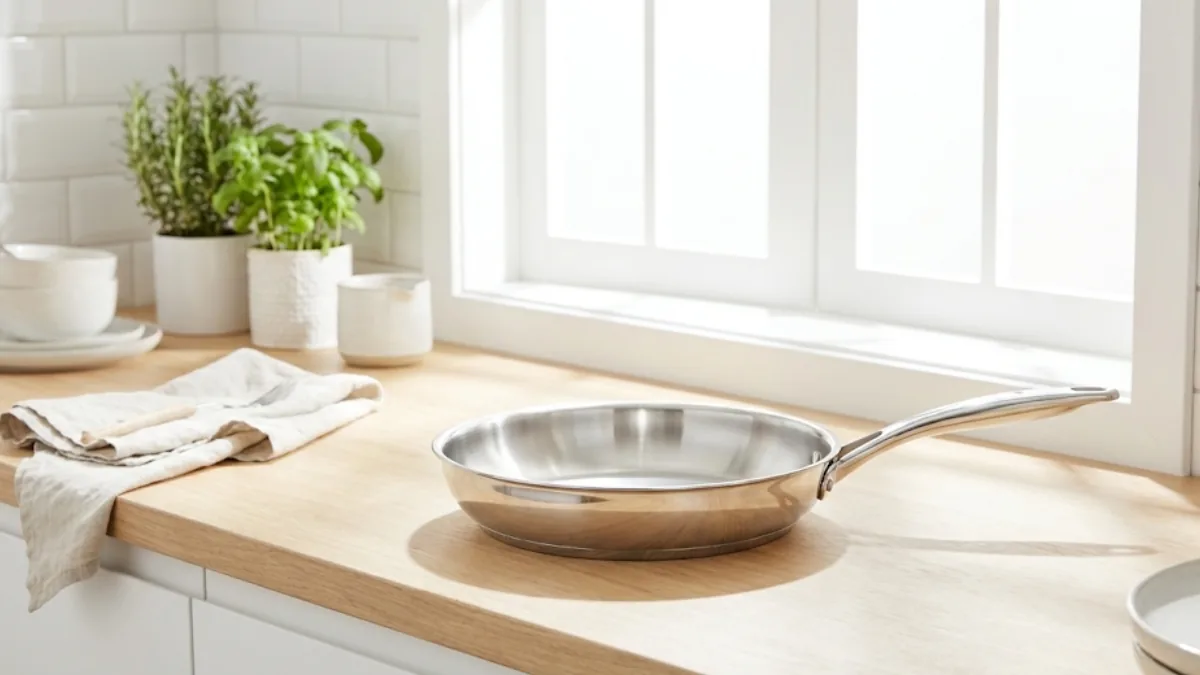
A stainless pan has no fluoropolymer, no ceramic layer, nothing that can chip, peel, or wear through. You can use metal spatulas without worry. You can scrub it aggressively when it burns. You can put it in the dishwasher (check handle material first). The cooking surface is exactly the same on year one as it is on year fifteen — because it is just metal.
Heat retention that improves results
Stainless steel, especially full-clad multi-ply construction, has excellent heat retention. When you add cold meat to a hot stainless pan, the surface temperature drops less than in a coated aluminum pan. That means the Maillard reaction (the browning that creates flavor and crust) happens faster and more evenly. A sear in stainless produces a better crust than a sear in coated aluminum — this is why professional kitchens use stainless or carbon steel, never PTFE.
The same heat retention also makes stainless excellent for low-heat applications. You can bring a multi-ply stainless pan to medium heat, add ingredients, then reduce to a very low flame — the retained heat carries the cooking. Japanese brands like Miyazaki Seisakusho specifically design their pans for residual-heat cooking (余熱調理), which reduces energy use and produces more consistent results.
Works with acidic foods (unlike iron)
Iron pans react with acidic ingredients — tomatoes, citrus, vinegar — producing metallic flavors and degrading the seasoning. Stainless steel is completely neutral with all food acids. You can deglaze with wine, simmer tomato sauce, make hollandaise, or reduce balsamic vinegar without any concern. This is the single biggest functional advantage of stainless over iron for a broad home cook.
Did you know: Tsubame-Sanjo stainless heritage
The Tsubame-Sanjo area of Niigata Prefecture has produced metalwork since the early Edo period (1600s), originally making hand-forged nails for shrine construction. The region transitioned to spoons, Western cutlery, and eventually precision cookware over the following centuries. Today Tsubame-Sanjo produces over 90% of Japan's stainless steel tableware and is home to leading cookware brands including kübell, Miyazaki Seisakusho, and Fujinos.
Stainless vs. Iron vs. Non-stick: Which Is Right for You?
| Comparison | Stainless | Iron | Non-stick (coated) |
|---|---|---|---|
| Non-stick | Needs preheating | Improves over time | Excellent (when new) |
| Durability | Lifetime | Lifetime | 3–5 years |
| Daily care | Wash with soap, done | Dry + light oil | Easy but fragile |
| Acidic foods | No problem | Avoid (metallic taste) | No problem |
| Oven use | Yes (metal handle) | Yes | Usually no |
| Weight | Medium-heavy | Heavy | Light |
| Best for | Searing, braising, acidic dishes | High-heat, stir-fry, steak | Eggs, fish, quick cooking |
Recommendation: if you cook a wide variety of dishes and want one pan that handles everything without replacement, choose multi-ply stainless. If high-heat stir-fry is your main cooking style, add iron. If you want the simplest possible experience and plan to replace every few years, non-stick aluminum is fine.
The Water Bead Test: How to Preheat for Zero Sticking
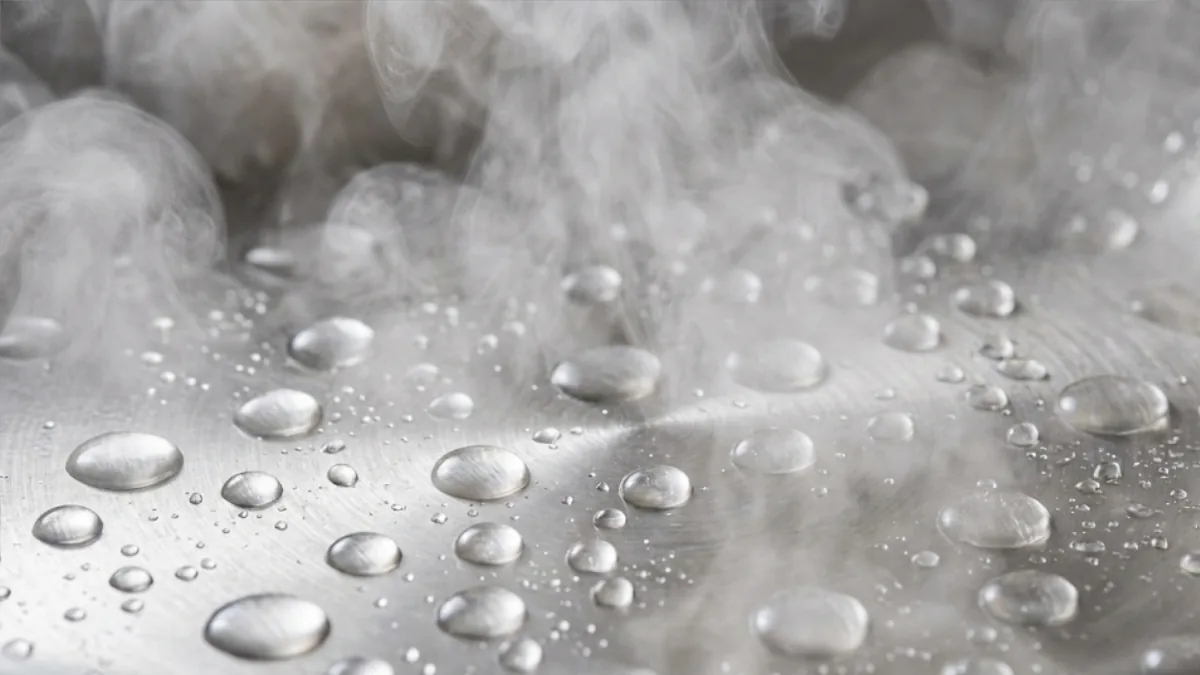
The secret to stainless steel cooking is the Leidenfrost effect: when a pan reaches approximately 180°C (356°F), water droplets dropped onto the surface instantly vaporize into a steam cushion and roll around as beads rather than spreading and evaporating flat. That same steam cushion forms between the pan and your food when oil is added, preventing direct contact and sticking.
The three-step preheat routine
- Heat empty on medium: Place the pan on medium heat with no oil. Wait 2–3 minutes — longer than you think necessary.
- The water bead test: Flick a few drops of water into the pan. If they immediately sizzle and evaporate: not ready. If they form mercury-like balls that roll freely around the surface: ready.
- Add oil, then food: Reduce to medium-low, add your oil, let it flow across the surface for 20–30 seconds, then add food. For steak, keep heat at medium-high after adding oil.
The first time you get the water bead test right, the experience is genuinely surprising — food that would have stuck badly in an underheated stainless pan lifts cleanly. Two or three sessions and the technique becomes automatic.
What to Cook in Stainless (and What Not To)
Steak — the strongest use case
High heat retention is stainless steel's greatest cooking advantage, and nothing demonstrates it better than steak. Preheat thoroughly, add a thin layer of oil, then place the steak and leave it entirely alone for 2–3 minutes. The first contact with hot stainless creates a powerful crust. Once that crust forms, the steak releases naturally — fighting it before that moment is the only mistake you can make. After searing both sides, the brown fond left in the pan is pure flavor: deglaze with wine or stock, add butter, reduce, and you have a restaurant-quality pan sauce in 2 minutes.
Tomato sauce, braising, acidic dishes
This is where stainless is unbeatable versus iron. Simmer tomatoes, wine, vinegar, citrus, or lemon juice directly in a stainless pan without any metallic interaction. The fond from browned meat or vegetables dissolves into your sauce cleanly, creating a flavor base that non-stick surfaces cannot match (non-stick pans don't develop fond effectively).
Eggs — possible but demanding
Fried eggs in stainless are achievable with proper technique but unforgiving of mistakes. Use the water bead test without exception, reduce heat after adding oil, and keep heat low once the egg is in. Cover the pan to steam-cook from above. A perfectly cooked fried egg in stainless releases cleanly — but the margin for error is narrower than with iron or non-stick. Until you have the preheat routine down reliably, eggs in a coated pan remain a reasonable choice.
What stainless does less well
Delicate fish (sole, thin flounder fillets) that are prone to breaking — the moderate sticking risk during flipping can tear fragile fish before the crust sets. Very high-heat stir-fry — iron handles extreme BTU better. Situations where you need to add food to a cold pan (certain sauces, gentle poaching) — stainless works but requires attention to heat management.
Cleaning and Care: Easier Than You Think
Normal cleaning
Wash with dish soap and a soft sponge while the pan is still warm (not hot). Warm pans release residue more easily than cold ones. Dish soap is fine — unlike iron pans, stainless has no oil layer to protect. Rinse and dry. That's the entire routine.
Stainless can go in the dishwasher if the handle material allows it. All-metal handles (Miyazaki Geo Product, Fujinos all-stainless line) are dishwasher-safe. Wooden handles (kübell) are not.
Removing burnt-on residue
Fill the pan with enough water to cover the burnt area, add 1 tablespoon of baking soda, and bring to a boil. Simmer for 5–10 minutes, then let cool. The burnt residue lifts off easily with a sponge or spatula. For stubborn spots, Bar Keepers Friend (or equivalent oxalic acid cleaner) removes staining and restores the surface to near-original condition.
Rainbow discoloration
After high-heat cooking, you may see iridescent rainbow colors inside the pan. This is called "tempering color" (テンパーカラー) — an optical effect caused by the oxidation layer on stainless reflecting light. It is completely harmless and does not affect cooking. If you want to remove it, simmer water with a splash of white vinegar or a pinch of citric acid in the pan for a few minutes.
Best Japanese Stainless Frying Pan Brands
The brand below is made in the Tsubame-Sanjo region of Niigata Prefecture, Japan's metalworking heartland, and represents the benchmark for multi-ply stainless construction available internationally.
Miyazaki Seisakusho — Geo Product
Founded in 1960, Miyazaki Seisakusho's Geo Product line uses full-clad 7-layer construction (alternating stainless and aluminum) that extends all the way up the sides — not just the base. The result is exceptionally even heat distribution across the entire cooking surface. All-stainless handles make every piece oven-safe up to 250°C. Miyazaki's core design philosophy is residual-heat cooking: bring to temperature, reduce heat, let the retained energy do the work. The Geo Product line carries a 15-year repair service commitment.
- Construction
- 7-ply full-clad stainless and aluminum
- Made in
- Niigata, Japan
- IH compatible
- Yes
- Oven safe
- Yes (up to 250°C)
Perfect for: Serious cooks who want the best full-clad construction and a pan designed for low-energy cooking.
FAQ
Why does food stick to stainless steel pans?
Almost always because the pan was not preheated enough. Stainless steel has microscopic pores that expand and contract with temperature. When cold, food proteins bind to the metal at these pores. When properly preheated (the Leidenfrost point — water beads and rolls), a steam cushion forms between the food and the surface, preventing direct bonding. Preheat on medium heat for 2–3 minutes and verify with the water bead test before adding oil.
Can I use a stainless steel pan on an induction stove?
Multi-ply stainless pans with a stainless exterior are IH-compatible by default. All three brands featured in this guide (Miyazaki, kübell, Fujinos) offer IH-compatible models. Confirm the product listing includes "IH対応" before purchasing, particularly if you have a commercial-power IH burner. Single-layer stainless without a magnetic base may not work on all IH cooktops.
Is a stainless frying pan easier to maintain than an iron pan?
Yes, significantly. Iron pans require drying immediately after washing, a light oil application before storage, and re-seasoning if they rust or if acidic food degrades the seasoning. Stainless pans need none of this: wash with soap, dry or rack-dry, done. Stainless is also tolerant of acidic ingredients, which strip the seasoning from iron pans.
What does "full-clad" mean for stainless pans?
Full-clad means the multi-ply construction extends up the sides of the pan, not just across the base. Disk-bottom pans have a multi-ply layer only at the base, bonded to a single-layer stainless body. The sides heat unevenly. Full-clad (or "all-clad") pans have the full layer structure throughout the entire cooking vessel. For searing and braising, full-clad produces significantly more even heat distribution. Miyazaki Geo Product is full-clad 7-ply; kübell is full-clad 3-ply.
How do I remove burnt food from a stainless pan?
Boil water with baking soda in the pan. Add enough water to cover the burnt area, add 1 tablespoon of baking soda, bring to a boil, simmer 5–10 minutes, let cool. The burnt material softens and lifts with a soft sponge. For stubborn discoloration, Bar Keepers Friend or a similar oxalic acid cleaner restores the surface completely. Avoid steel wool — it scratches the surface and embeds metal particles that cause rust spots.
Are Japanese stainless pans worth the price premium?
Over a 10-year horizon, yes. A ¥15,000–¥25,000 Japanese full-clad stainless pan bought once compares favorably to three or four rounds of coated pan replacement over the same period, especially when the time and inconvenience of replacement is factored in. The cooking performance — particularly for searing and braising — is also meaningfully better than any coated aluminum pan. For cooks who cook seriously more than 3–4 times per week, the investment pays off quickly.
Japanese stainless steel frying pans reward technique — and reward it well. The water bead test is the only skill to acquire, and once you have it, stainless becomes the most versatile pan in your kitchen: searing, braising, acidic sauces, oven finishing, and cleanup that takes 90 seconds. The Japanese brands featured here have been refining multi-ply stainless construction for decades. Any of them will outlast every coated pan you would otherwise buy.
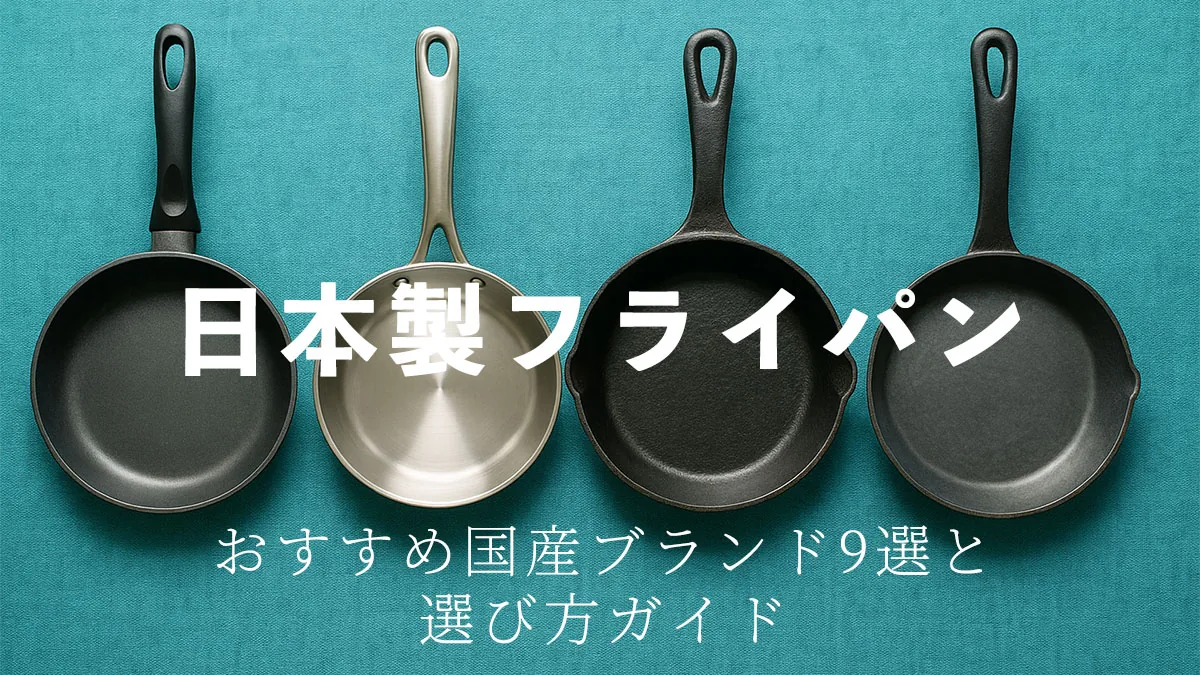
Best Japanese Frying Pans: Materials, Brands & Buying Guide
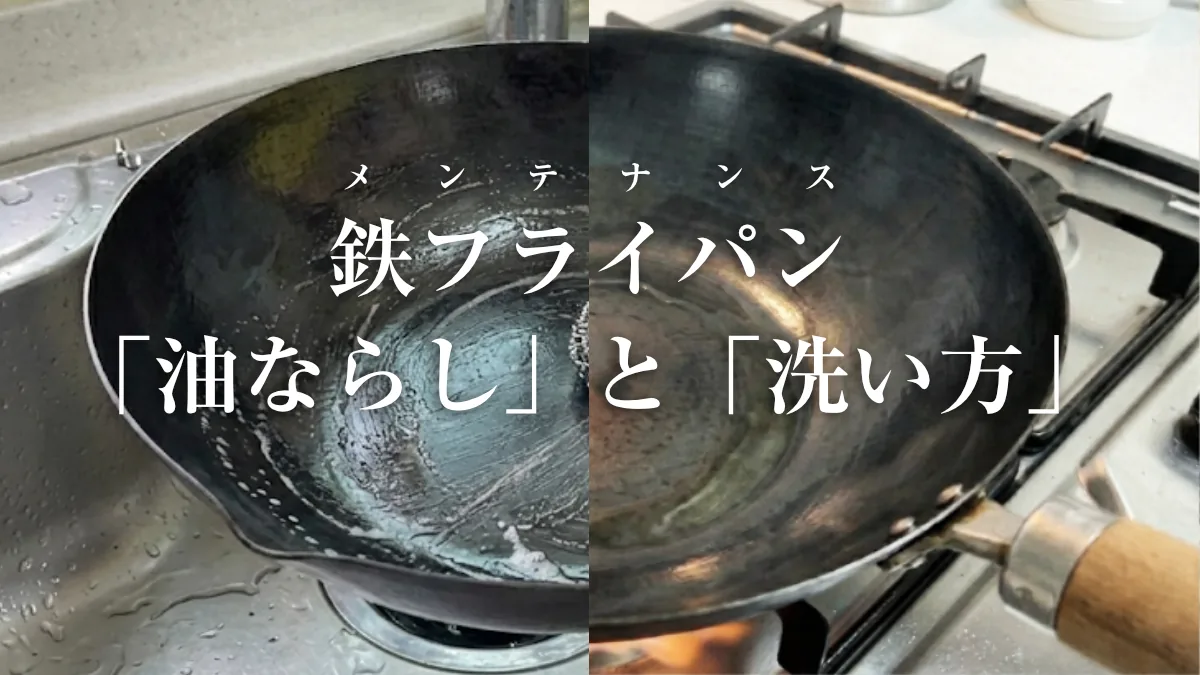
How to Season and Care for a Japanese Iron Frying Pan